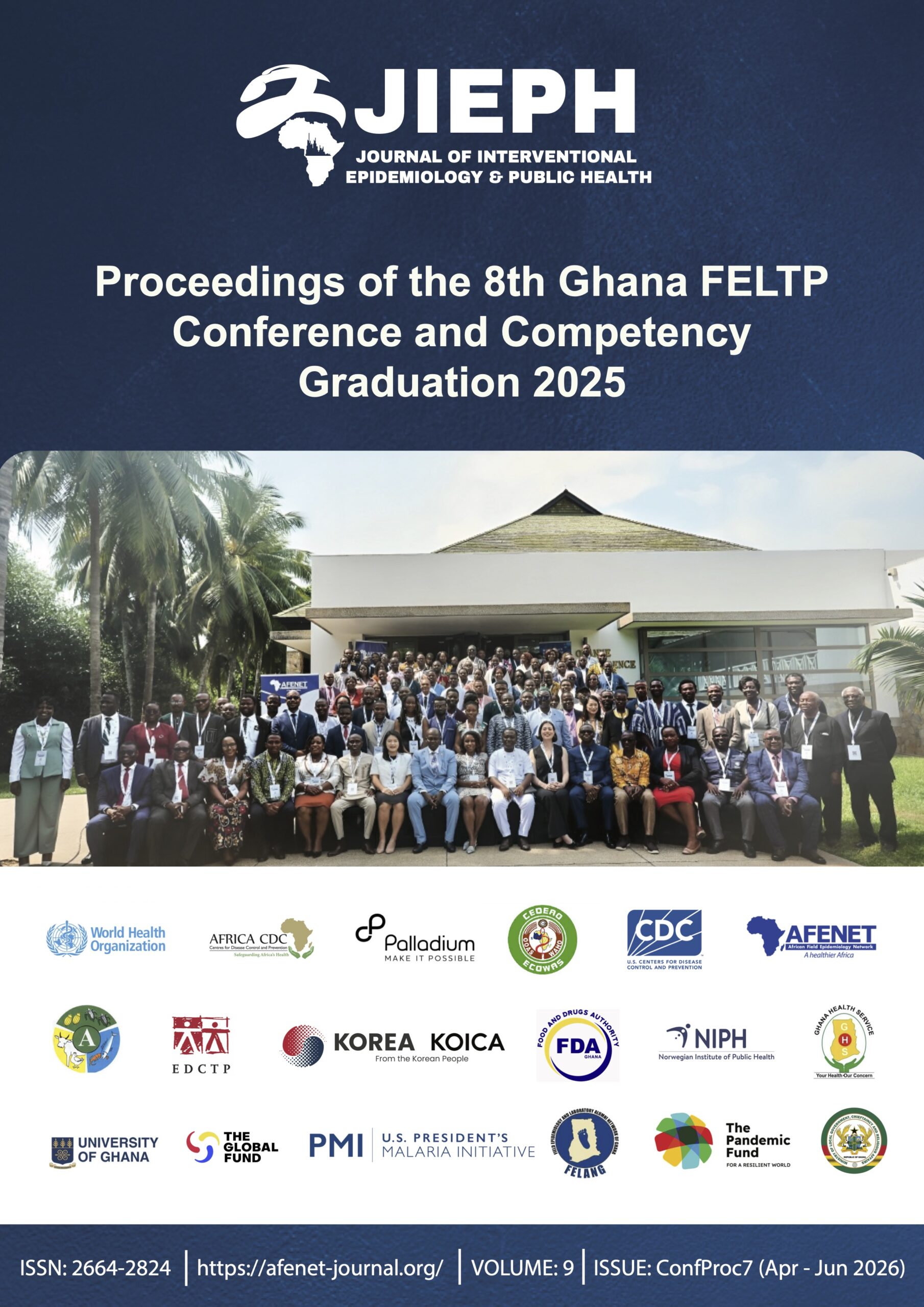
The Ghana Field Epidemiology and Laboratory Training Programme (GFELTP) held its 8th Scientific Conference and Competency Graduation on 10–11 December 2025 at the Labadi Beach Hotel in Accra, Ghana. The conference was organized under the theme “Artificial Intelligence Innovations in Public Health Surveillance and Outbreak Response”, with over 250 participants, including public health professionals, policymakers, researchers, and development partners from Benin, Burkina Faso, Ghana, Namibia, Nigeria, Sierra Leone, South Africa, South Korea, Uganda, Togo, and Zimbabwe. In alignment with the conference theme, AI-supported tools were used by the organisers to enhance conference management, including abstract handling, scheduling, and participant communication.
The conference provided a platform for deliberations on the relevance of Artificial Intelligence in field epidemiology. Key activities included technical sessions, a competitive debate on AI integration in public health curricula, a panel discussion on multiplex pathogen detection and metagenomic diagnostics, and oral and poster presentations from residents and alumni of various FETP training levels.
During the conference, a significant milestone was achieved: the official launch of GFELTP innovations. These include the GFELTP Nexus, an alumni network and database for rapid deployment during outbreaks and an AI-incorporated online mentorship training course.
The conference concluded with a competency graduation ceremony for about 120 professionals from the various training tiers. These included the Frontline (Cohort 20), Intermediate (Cohorts 9 & 10), and Advanced (Cohort 17) tiers, as well as the pioneering Global Laboratory Leadership Program trainees who are laboratory leaders from human, veterinary and Environmental laboratories in Ghana and the Upper Intermediate trainees from the University of Health and Allied Sciences.
This event successfully reinforced the GFELTP’s position as a premier regional training hub in West Africa, dedicated to building integrated capacity for human, animal, and environmental health through the One Health principle.