
Research | Open Access | Volume 9 (Suppl 14): Article 03 | Published: 19 Aug 2026

Views: 576
Menu, Tables and Figures
| Table 1: Demographic characteristics of residents enrolled in the South Africa Field Epidemiology Training Program, 2007–2017 | |
|---|---|
| Characteristic | N (%) |
| Enrolled | 104 |
| Completed | 84 (80.8) |
| Sex | |
| Female | 66 (63.5) |
| Male | 38 (36.5) |
| Age at enrollment, median [range] | 32.6 [21.6–54.9] |
| Highest degree at time of enrollment1 | |
| Bachelors | 43 (46.7) |
| Honors | 11 (12.0) |
| Masters | 15 (16.3) |
| Veterinarian or Physician | 21 (22.8) |
| PhD | 2 (2.2) |
| Professional Background | |
| Laboratory Scientist | 26 (28.6) |
| Nurse | 17 (18.7) |
| Surveillance, M&E Officer | 10 (11.0) |
| Researcher | 10 (11.0) |
| Physician | 7 (7.7) |
| Student/Fellow | 7 (7.7) |
| Veterinarian | 6 (6.6) |
| Clinician, other | 4 (4.4) |
| Other | 2 (2.2) |
| Province of Origin | |
| Gauteng | 62 (62) |
| Eastern Cape | 7 (7) |
| Western Cape | 6 (6) |
| Limpopo | 6 (6) |
| Mpumalanga | 5 (5) |
| Free State | 4 (4) |
| Northern Cape | 3 (3) |
| KwaZulu-Natal | 2 (2.2) |
| North West | 0 |
| Non-South Africa3 | 5 (5) |
| Population in millions (Percent of total population)2 | |
| Gauteng | 14.3 (25.3) |
| Eastern Cape | 6.5 (11.5) |
| Western Cape | 6.5 (11.5) |
| Limpopo | 5.8 (10.2) |
| Mpumalanga | 4.4 (7.9) |
| Free State | 2.9 (5.1) |
| Northern Cape | 1.2 (2.1) |
| KwaZulu-Natal | 11.1 (19.6) |
| North West | 3.9 (6.8) |
| Field Placement site | |
| Provincial Department of Health (DoH) | 40 (38.8) |
| NICD/NHLS | 31 (30.1) |
| National DoH | 13 (12.6) |
| Other government departments4 | 6 (5.8) |
| Non-Governmental Organizations | 5 (4.9) |
| District DoH | 4 (3.9) |
| Non-South African DoH5 | 3 (2.9) |
| Large municipal DoH | 1 (1.0) |
| 1Missing information: highest degree at the time of enrollment (12), professional background (15), province of origin (4), field placement site (1). | |
| 22017 mid-year population estimates from Statistics South Africa (http://www.statssa.gov.za). | |
| 3Province, Non-South Africa: Liberia (2), Burkina Faso (1), Lesotho (1), Togo (1). | |
| 4Field Placement site, other governmental departments: Department of Agriculture, Forestry, and Fisheries (2), National Institute of Occupational Health (1), Medical Research Council-University of South Africa (1), Human Sciences Research Council (1), Department of Correctional Services (1). | |
| 5Field Placement site, Non-South African DoH: Burkina Faso (1), Togo (1), Lesotho (1). | |
Table 1: Demographic characteristics of residents enrolled in the South Africa Field Epidemiology Training Program, 2007–2017
| Table 2: Activities conducted by residents enrolled in the South Africa Field Epidemiology Training Program, 2007–2017 | |
|---|---|
| Characteristic | N (%) |
| Outbreaks | |
| N=190 | |
| Location by province | |
| Gauteng | 72 (40.0) |
| Limpopo | 19 (10.6) |
| Mpumalanga | 17 (9.4) |
| Western Cape | 14 (7.8) |
| Northern Cape | 13 (7.2) |
| Eastern Cape | 11 (6.1) |
| KwaZulu-Natal | 10 (5.6) |
| International deployment* | 9 (5.0) |
| Northwest | 8 (4.4) |
| SA National/multiple provinces | 4 (2.2) |
| Free State | 3 (1.7) |
| Disease category | |
| Food and water-borne | 59 (31.1) |
| Enteric diseases | 39 (20.5) |
| Vaccine preventable diseases | 25 (13.2) |
| Other | 20 (10.5) |
| Respiratory diseases | 17 (9.0) |
| Zoonotic diseases | 11 (5.8) |
| Nosocomial Infections | 10 (5.3) |
| Vector-borne diseases | 9 (4.7) |
| Outbreaks per resident, median [range] | 3 [3-6] |
| Conference Abstracts | |
| N=154 | |
| Disease Topic | |
| Malaria/vector borne diseases | 28 (20.7) |
| Food and water-borne outbreaks | 16 (11.9) |
| Enteric disease outbreaks | 15 (11.1) |
| HIV and other STI’s | 14 (10.4) |
| Tuberculosis | 13 (9.6) |
| Nosocomial infections | 11 (8.2) |
| Vaccine preventable diseases | 8 (5.9) |
| Noncommunicable diseases | 8 (5.9) |
| Other | 7 (5.2) |
| Maternal and Child Health | 6 (4.4) |
| Influenza and other respiratory illnesses | 6 (4.4) |
| Zoonotic diseases | 3 (2.2) |
| Abstracts submitted per resident, median [range] | 3.5 [1-8] |
| Large Database Analysis | 99 |
| Surveillance Evaluations | 96 |
| Hypothesis Driven Research | 94 |
| *International deployment: Lesotho (2), Burkina Faso (1), Lesotho (1), Liberia (1), Swaziland (1), Togo (1), Uganda (1), Zimbabwe (1). | |
| Table 3: Employment of South African Field Epidemiology Training Program graduates, 2007–2016 cohorts (N=75) | |
|---|---|
| Characteristic | N (%) |
| Province | |
| Gauteng | 48 (64.0) |
| Non-South Africa1 | 7 (9.3) |
| Eastern Cape | 4 (5.3) |
| Limpopo | 4 (5.3) |
| KwaZulu-Natal | 4 (5.3) |
| Northern Cape | 2 (2.7) |
| Free State | 2 (2.7) |
| Mpumalanga | 2 (2.7) |
| Western Cape | 1 (1.3) |
| North West | 1 (1.3) |
| Job Category | |
| Epidemiologist | 36 (48.0) |
| Manager | 16 (21.3) |
| Director | 9 (12.0) |
| Other health-related | 5 (6.7) |
| Lecturer | 3 (4.0) |
| Medical Scientist | 2 (2.7) |
| Researcher | 2 (2.7) |
| Veterinary Officer | 2 (2.7) |
| Organization type | |
| Parastatal (NICD) | 32 (42.7) |
| Nongovernmental organization | 21 (28.0) |
| Government | 18 (24.0) |
| Academia | 4 (5.3) |
| Government types | |
| SA National | 7 (38.9) |
| SA Provincial | 7 (38.9) |
| Non-South African2 | 3 (16.7) |
| Large municipal | 1 (5.6) |
| 1Destination, non-South Africa: Liberia (2), Togo (1), Burkina Faso (1), Ethiopia (1), Canada (1), Switzerland (1). | |
| 2Non-South African government: Liberia (2), Burkina Faso (1). | |
| Table 4: Literature Review of South Africa Field Epidemiology Training Program Resident and Graduate Publications, 2007–2016 Cohorts | |
|---|---|
| Characteristic | N (%) |
| Disease Topic | |
| Infectious Disease (ID) | 133 (89.3) |
| Non-communicable disease (NCD) | 7 (4.7) |
| Other | 5 (3.5) |
| ID + NCD | 4 (2.7) |
| Infectious Disease Subtopic | |
| HIV and coinfections | 39 (29.3) |
| Enteric diseases | 20 (15.0) |
| Vaccine preventable diseases | 20 (15.0) |
| Influenza | 14 (10.5) |
| Tuberculosis | 12 (9.0) |
| Nosocomial Infections | 9 (6.8) |
| Other | 9 (6.8) |
| Zoonotic disease | 6 (4.5) |
| Malaria | 4 (3.0) |
| Related to SAFETP training activities | |
| Yes | 45 (30.2) |
| No | 99 (66.4) |
| Unclear | 5 (3.5) |
| For publications related to SAFETP training (n=45) | |
| Resident first author | 33 (73) |
| Years after graduation, median [range] | 1 [0-2] |
| Journal Impact Factor, median [range] | 2.592 [1.843-2.845] |
| Article describes intervention to prevent illness | 7 (15.6) |
| Table 5: Key themes from the stakeholder and graduate interviews | |
|---|---|
| Stakeholders | |
| Theme 1 | Residents add capacity while in field placements and bring specific skills in epidemiology, biostatistics, and public health practice. |
| Theme 2 | Importance of selecting high quality candidates |
| Theme 3 | Need for epidemiologists, but lack of political and financial support |
| Theme 4 | Challenges with advancement and career path at NICD and DoH |
| Theme 5 | Relationship with the Department of Health |
| Theme 6 | Sustainability of program funding |
| Theme 7 | Advertise the program and epidemiology |
| Theme 8 | Impact of FETP overall, and through evidence-based decision making and building capacity. |
| Graduates | |
| Part A: Impact of graduates and program on improving epidemiological capacity | |
| Theme 1 | Employment in public health roles, including Provincial Epidemiologists |
| Theme 2 | Increasing epidemiological skills and capacity, including outbreak response, research, and surveillance evaluations |
| Theme 3 | Increasing awareness of public health |
| Part B: Suggestions for improvement | |
| Theme 1 | Assistance with establishing a career path and supporting graduate employment; Register with Health Professions Council of South Africa (HPCSA) |
| Theme 2 | Alumni networking support and forums for discussion, connect with current residents as mentors |
| Theme 3 | Improved connection with the NDoH |
| Theme 4 | Increase awareness of epidemiology and the program |
| Theme 5 | Expand program: take in more residents, expand to other provinces, increase staff, include non-communicable diseases, offer short courses for other health professionals and as continuing education for graduates |
| Theme 6 | Improve networking with other public health organizations |
| Table 6: Quantitative responses to the South African Field Epidemiology Training Program Graduate survey (n=32) | ||||||
|---|---|---|---|---|---|---|
| Question | 1 | 2 | 3 | 4 | 5 | Mean |
| How did the SAFETP experience compare to your initial goals? | 3% | 0 | 9% | 21% | 68% | 4.5 |
| How has the program impacted your career path? | 3% | 3% | 6% | 24% | 65% | 4.5 |
| How confident do you now feel doing the following activities: | ||||||
| Leading an outbreak investigation | 0 | 0 | 21% | 56% | 24% | 4.0 |
| Conducting hypothesis-driven research | 0 | 3% | 9% | 35% | 53% | 4.4 |
| Evaluating a surveillance system | 0 | 0 | 24% | 44% | 32% | 4.1 |
| Analysing a large database | 0 | 3% | 9% | 44% | 44% | 4.3 |
| Writing scientific communications, such as reports, abstracts, manuscripts? | 0 | 0 | 6% | 53% | 41% | 4.4 |
| Giving a presentation on a public health topic? | 0 | 0 | 3% | 50% | 47% | 4.5 |
| Training and mentoring other public health professionals? | 0 | 3% | 6% | 47% | 44% | 4.3 |
| Scale: 1=lowest score (below expectations, did not advance career, not confident) 5=highest score (exceeded expectations, improved career advancement, very confident) | ||||||
Hetani Mdose1,2,&, Mary Gaeddert3, Carl Reddy4, Natalie Mayet2, Lazarus Kuonza1,2
1South Africa Field Epidemiology Training Program, Johannesburg, South Africa; 2National Institute for Communicable Diseases, National Health Laboratory Service; Johannesburg, South Africa; 3Department of Infectious Disease and Tropical Medicine, Heidelberg University Hospital, Heidelberg, Germany; 4Training Programs in Epidemiology and Public Health Interventions Network, The Task Force for Global Health, Atlanta, GA 30345, USA
&Corresponding author: Hetani Mdose; South Africa Field Epidemiology Training Program, Johannesburg, South Africa, Email: hetanim@nicd.ac.za
Received: 18 Nov 2025, Accepted: 09 Aug 2026, Published: 19 Aug 2026
Domain: Field Epidemiology
Keywords: Field epidemiology, public health, training, South Africa, outbreak, surveillance, International Health Regulations
©Hetani Mdose et al. Journal of Interventional Epidemiology and Public Health (ISSN: 2664-2824). This is an Open Access article distributed under the terms of the Creative Commons Attribution International 4.0 License (https://creativecommons.org/licenses/by/4.0/), which permits unrestricted use, distribution, and reproduction in any medium, provided the original work is properly cited.
Cite this article: Hetani Mdose et al., Impact of the South African Field Epidemiology Training Program, 2007–2018: A mixed-methods evaluation. Journal of Interventional Epidemiology and Public Health. 2026; 9(Suppl 14):03. https://doi.org/10.37432/jieph-d-25-00289
Introduction: Since its inception, field epidemiology training programs (FETPs) have been strengthening the ability to prevent, detect, and respond to public health threats through workforce development across the world, hence strengthening global health security. The South African FETP (SAFETP) has enrolled a cohort of residents every year since 2007. This evaluation assessed the impact of SAFETP on increasing field epidemiology capacity in South Africa.
Methods: We employed a mixed-methods approach and analysed both quantitative and qualitative data from multiple sources, including a descriptive analysis of SAFETP resident tracking data, a literature review of resident publications, key informant interviews with program stakeholders, and an online survey of graduates.
Results: A total of 104 residents were enrolled in the past 11 SAFETP cohorts. There is a clear geographic clustering of activities and graduates in a few provinces, particularly Gauteng. The literature search revealed 149 articles with 49 residents as authors. Among the published papers directly related to training, 73% involved a resident as the first author, and 15% described an intervention that likely prevented illness. Informant interviews revealed themes related to the program’s impact on increased evidence-based decision-making and national epidemiological capacity and highlighted the need for a defined career path in epidemiology and increased visibility of the program.
Conclusions: Noted impacts include providing trained graduates to the public health system, strengthening data-based decision-making, and disseminating results in scientific journals. The results confirm that FETPs can be effective at building epidemiologic capacity, but in-country institutional factors can limit their potential impact.
The International Health Regulations (IHR) of 2005 require countries to strengthen their capacity for disease surveillance and effective public health response systems, including the goal of having one trained field epidemiologist per 200,000 people [1]. Field Epidemiology Training Programs (FETP) were modelled on the Epidemic Intelligence Service (EIS) program of the United States Centers for Disease Control and Prevention (CDC) [2]. Over the past four decades, FETPs have been established in more than 70 countries as essential workforce development tool to improve the epidemiological capacity of the population [2]. All FETPs aim to improve global health security by enhancing the capacity of applied epidemiology to prevent, detect, and respond to public health threats [3]. The Joint External Evaluation (JEE) process for evaluating each country’s compliance with IHR 2005 requirements includes the presence of an FETP or a similar training program as a core indicator for measuring progress toward workforce development in each country [4].
South Africa’s health system is organised through a national structure and decentralized provincial health services. The country is divided into nine provinces, namely; Eastern Cape, Free State, Gauteng, KwaZulu-Natal, Limpopo, Mpumalanga, Northern Cape, North West and the Western Cape Province. South Africa’s health system combines the public and private sectors; the public sector serves the majority of the population. The system operates as three main levels, namely; National, Provincial and District levels [5].
The South African Field Epidemiology Training Program (SAFETP) began in 2006 as a collaboration between the South African National Department of Health (NDoH), the National Institute for Communicable Diseases (NICD) of the National Health Laboratory Service (NHLS), the U.S. CDC, and the University of Pretoria (UP). The SAFETP 2-year program provides supervised training and mentoring in applied epidemiology, with residents spending 25% of their time in classroom modules and 75% at designated field placement sites. Residents are required to complete the following activities: outbreak investigations, surveillance system evaluation, analysing epidemiological data, and conducting hypothesis-driven research. Scientific communication skills are developed through writing reports, presenting at stakeholder meetings and scientific conferences, and preparing manuscripts for publication in scientific journals. A new cohort of residents has been enrolled every year since 2007, and the program originally included a laboratory training component that was discontinued in 2014. Upon completion, residents received a Master of Public Health (MPH) degree from UP. In 2018, the SAFETP was accredited by the Training Programs in Epidemiology and Public Health Interventions Network (TEPHINET). Additional details of the program have been previously described [6,7].
Descriptions of FETPs in other countries have been published [8-12], and tools to monitor and evaluate the implementation of FETPs have been developed, including an internal scorecard monitoring approach [13] and an externally assessed accreditation process [14]. Other anecdotal reports have described the contributions of FETP residents and graduates in addressing health challenges in specific regions [15]. However, there are few examples of comprehensive evaluations of the impact of FETPs on their respective public health systems. The EIS program was evaluated through the analysis of peer-reviewed publications by EIS officers and the job choices of graduates [16]. The impact of FETPs in Uganda and Zimbabwe was evaluated by analysing graduates’ career paths [11], and the Indian Chennai FETP was evaluated using a mixed-methods approach that included qualitative interviews with graduates [9]. The South African FETP is a suitable candidate for an evaluation of its impact, as there are 11 years of graduates and well-defined data available on program activities.
The purpose of this evaluation is to assess the impact of the SAFETP and whether the program’s goals for increasing field epidemiology capacity in South Africa have been met. The specific objectives of this evaluation are to 1) describe the residents and their activities, 2) review the career path of graduates and their role in the South African health system, 3) evaluate the public health usefulness of the SAFETP, and 4) identify areas to enhance the program’s impact. The evaluation results will be used in setting priorities to further strengthen and position the SAFETP within South Africa’s public health system.
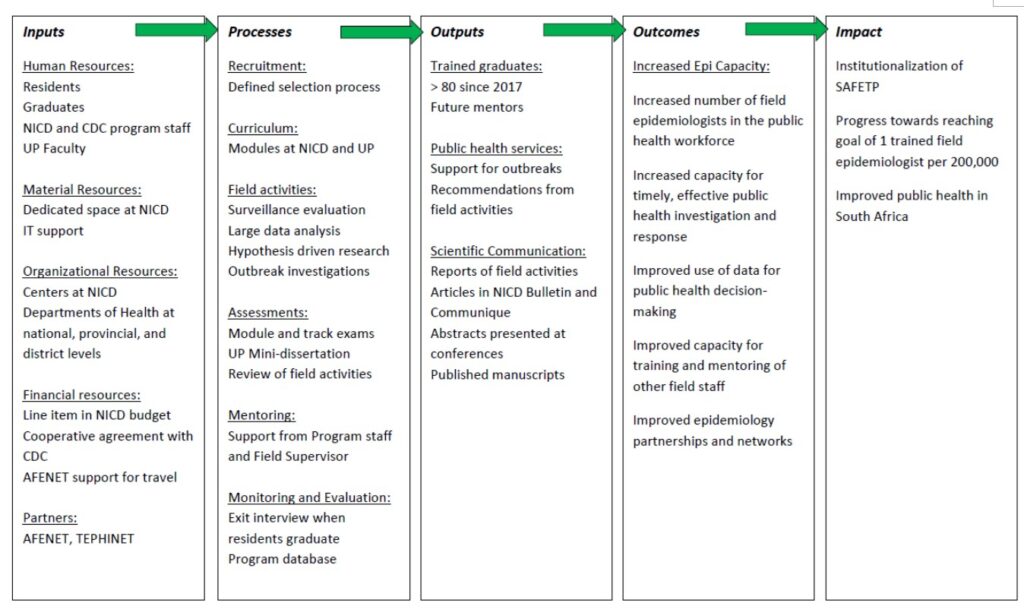
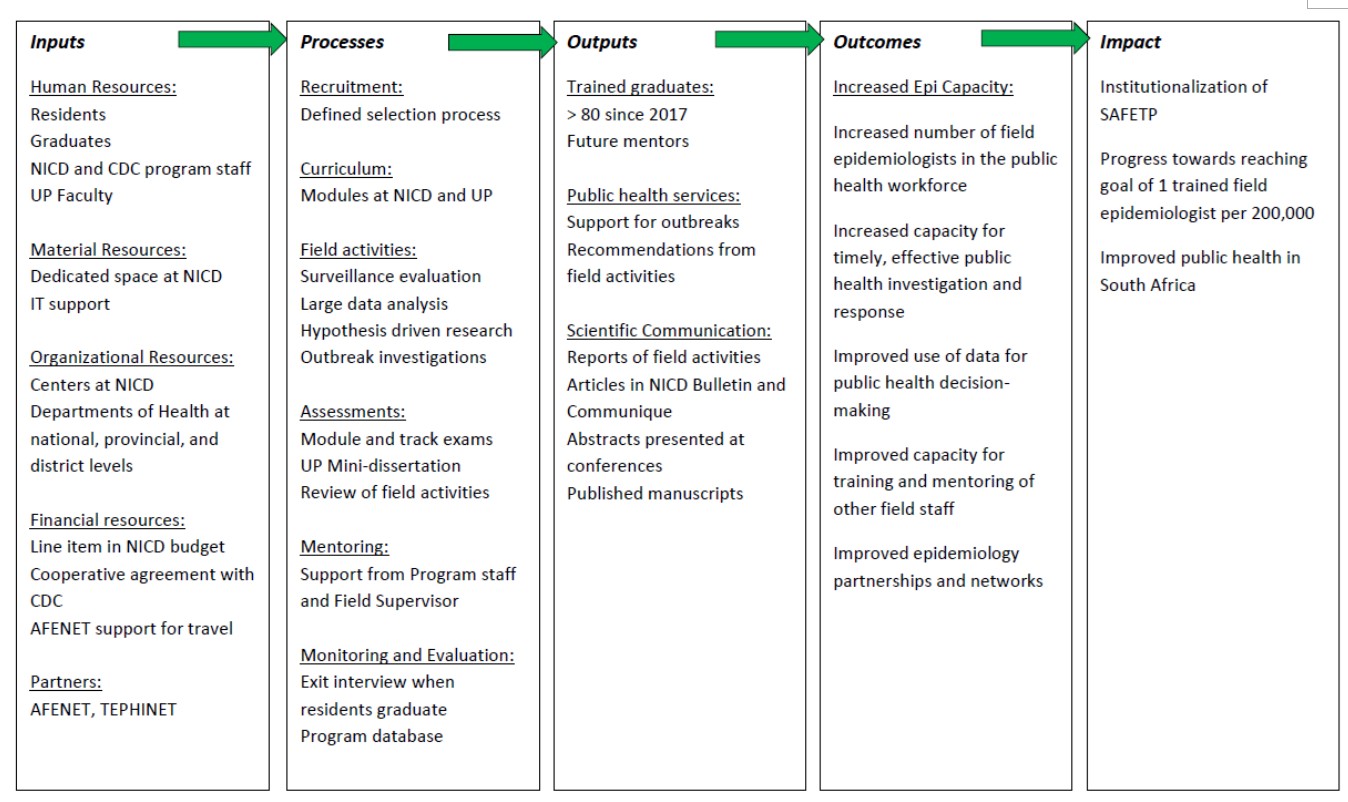
A logic model of the SAFETP was developed to guide the evaluation, including program components and desired outcomes (Figure 1). We employed a mixed-methods approach, analysing both quantitative and qualitative data from multiple sources. These included 1) a descriptive analysis of demographics and program outputs for SAFETP residents, 2) a literature review of graduate publications, 3) key informant interviews with program stakeholders, and 4) a survey of graduates. Further details of each data source are provided below.
Program database
The SAFETP maintains a database of all residents, which includes demographic characteristics, training prior to enrollment, outputs completed during training, and employment following graduation. Owing to the limited data available for earlier cohorts, the summary of resident outputs was calculated using only recent cohorts (2012–2017). A descriptive analysis was performed to summarize the residents’ demographic characteristics, program activities, and employment.
Literature review
A literature search was conducted in Scopus and PubMed to identify all publications up to December 2018 in peer-reviewed biomedical and public health journals in which a SAFETP resident or graduate was listed as an author. Specific instances were noted in which publications described a public health intervention that likely led to the prevention of illness, such as a vaccination campaign or active steps in outbreak control. The impact factor of each publication was taken from the Journal Citation Reports 2017/2018 [17]. Publications directly related to training were defined as those in which the residents’ affiliation was listed as SAFETP or the work was directly linked to activities recorded in the program database. Publications completed before residents began training were excluded.
Key informant interviews
Stakeholders who had long-term experience with the program, including faculty and field site supervisors, were identified. Ten stakeholders were interviewed from UP (n=3), NICD (n=4), and the Department of Health at the national (n=1), provincial (n=1), and district (n=1) levels. A semistructured questionnaire was developed to encourage discussion and was piloted with a coauthor (NM). The interviews were conducted in person (n=9) and over the phone (n=1) from March–July 2018. All the interviews were audio-recorded and transcribed verbatim, and field notes reflecting key points were documented. Stakeholders gave permission to be recorded prior to the interview and were assured that their responses would remain confidential. An identification code was assigned to maintain the anonymity of the responses.
Graduate survey
For the program graduates, an online survey containing multiple-choice and open-text questions was developed and piloted using Google Forms. All the residents who successfully completed the program were contacted by email and invited to participate. Graduate retention time was calculated as the time from graduation to analysis; the standard is defined as being employed in the country for 3 years after graduation [11].
Data analysis
Quantitative data from the resident database, literature review, and graduate survey were analysed using Stata version 14.1 (StataCorp Limited, College Station, TX). The qualitative results from the stakeholder interviews and graduate surveys were analysed using NVivo (QSR International Pty Ltd. Version 11, 2015). Content analysis was performed by identifying themes and categorizing quotations into these themes. The coding framework was developed by an author (MG) using the question topics and other themes that emerged and was reviewed by a team member (HN) for verification. The quotations presented in the text underwent minor grammatical editing for clarity.
Ethical Consideration
The study protocol was reviewed and approved by the U.S. Centres for Disease Control and Prevention, Centre for Global Health, and determined to be a public health program evaluation, non-research, and exempt from further biomedical ethics review requirements (CGH 2017-525). Informed consent was obtained from all the subjects, and there were no minor subjects. Stakeholders and graduates consented to participate in the interviews with the assurance that their names would not be used in the results. All methods were conducted in accordance with the relevant guidelines and regulations.
Descriptive analysis
A total of 104 residents were enrolled in the 11 SAFETP cohorts from 2007 to 2017, 84 (81%) of whom completed the program (Table 1). Most of the residents were female (64%) and had a bachelor’s degree (47%) at a median age of 33 years.
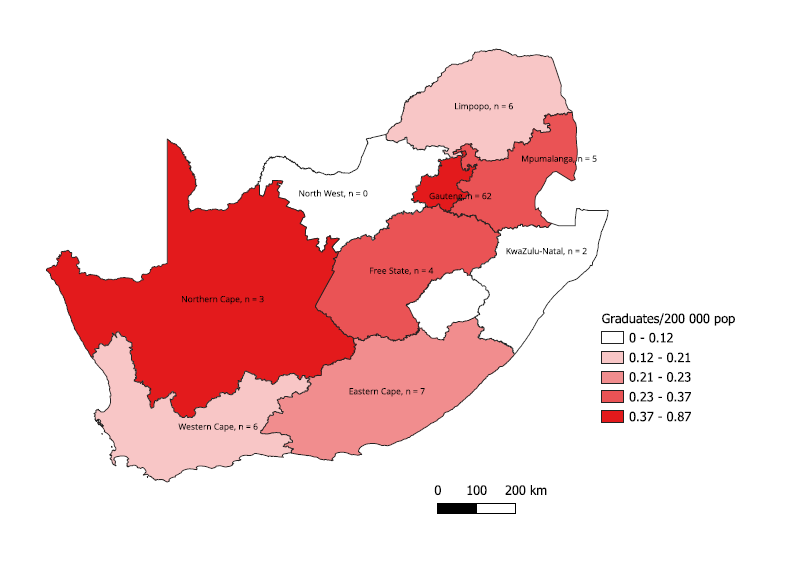
Twenty-nine percent of incoming residents were previously employed as laboratory scientists, which is consistent with the program’s earlier inclusion of a laboratory training component. There were 21 (23%) residents with advanced degrees in medicine or veterinary science. The residents came mainly from Gauteng Province (62%), where NICD and SAFETP are based, and a much lower proportion of the residents came from the other eight provinces in South Africa (Figure 2). The field placement sites were a mix of departments of health at the national (13%), provincial (39%), and district (4%) levels and other national organizations, primarily NICD (30%).
Outbreak investigations are a key component of field training activities. Forty percent of the outbreaks investigated were also in Gauteng Province, and there were nine international deployments to other African countries (Table 2). The main topics investigated were related to food and water-borne agents (31%) and enteric diseases (21%). Residents disseminated the results of their work through abstracts presented at conferences, with a median of 3.5 abstracts submitted per resident. Approximately 30% of the other required training activities (large database analyses, surveillance evaluations, and hypothesis-driven research) were related to HIV or TB.
All the residents who were originally from South Africa remained in the country for at least three years after graduation except three, and 64% stayed in Gauteng Province (Table 3). Almost half (48%) were employed specifically as epidemiologists, and many graduates held leadership roles as managers (21%) or directors (12%). Most graduates were employed in public health organizations, including NICD (43%), nongovernmental organizations (28%), and government departments of health at different levels (24%). Approximately 60% (21/35) of all epidemiologists employed at the NICD and 63% (5/8) of the provincial epidemiologists placed by the NICD in the provinces are graduates of the SAFETP (personal communication), a notable contribution to the workforce of a Public Health Institute.
Literature review
The literature search identified 149 articles with 49 different residents as authors (Table 4). Thus, approximately 63% (49/78) of the residents had documented publication experience as first authors or co-authors. The majority of publications were related to infectious diseases, including HIV, enteric diseases, and vaccine-preventable diseases. Among publications directly related to training, 16% (7/45) described an intervention that likely contributed to the prevention of illness in one or more people. A resident was the first author for 73% (33/45) of the articles, and they were published within a median of one year following graduation (range: 0–2).
Examples of high-impact publications from SAFETP residents include efforts to control a national measles outbreak [18], a Pseudomonas outbreak at an academic hospital [19], an investigation of a large Rift Valley fever outbreak [20], the implementation of a screening program for cryptococcal disease [20], and a large typhoid fever outbreak in Zimbabwe [21]. A full list of the SAFETP-related publications reviewed is available at the National Institute of Clinical Science (NICD) website [22].
Stakeholder interviews
The stakeholders’ views on the program were mostly positive, including many references to the value the residents added during their field placements by providing skills in epidemiology and data analysis (Table 5). They reported that SAFETP residents had higher graduation rates and were more likely to publish manuscripts than their peers were in the standard MPH program at UP. Themes related to the program’s impact on the increased use of evidence-based decision-making and increased national epidemiologic capacity emerged. There were also overlapping themes related to the continued need to increase epidemiologic capacity, which is limited by the lack of a defined career path for epidemiologists, financial constraints that limit the hiring of qualified graduates, and insufficient political will for addressing these challenges. There were overarching themes about the lack of understanding of epidemiology and the need to both advertise the SAFETP itself and increase awareness of the role of epidemiologists more generally.
Examples of related comments are included below:
“We use them to the max, because it’s truly useful for us. In general, the caliber of residents coming through our center has been excellent; they truly add to the Center.”
“Remember it’s a new thing in South Africa. Prior to when this FETP program started…nobody looked at outbreak response, at surveillance, nobody talked about epidemiologists. However, now it’s like a buzzword. The proof is in the pudding; they’re doing very well wherever they are.”
“Epidemiology is a scarce skill in South Africa. I think FETP has done a huge lot to address it; they’ve graduated a lot of residents.”
“In our department, there are few evidence-based decisions being made. We don’t have the passive and active surveillance working properly; things are very much reactive… I think that having epidemiologists in the system truly helps to know where we are and where we are planning to go and to react in time.”
When asked for recommendations to improve the program’s impact, stakeholders emphasized the importance of recruiting high-quality candidates, including more physicians. Other recommendations included conducting an economic evaluation of the program to demonstrate the value for money and expanding the program with shorter courses that would not require participants to leave their current employment.
Graduate survey
Among the 77 graduates contacted, 32 (42%) responded; the response rate was the highest among more recent graduates. The graduates provided their perspective on how the program has increased its epidemiological capacity and suggestions on how to support a network of public health professionals with greater impact (Table 5). Themes relating to challenges with employment and career paths overlapped considerably with the stakeholders, including the need to improve the relationship between different agencies of the national government and advertise the program to promote the field of epidemiology.
Examples of related comments are included below:
“A few years ago, a few centers at NICD did not have an epidemiologist. Today, most centers have one or more epi’s that have brought previously lacking but valuable epi skills.”
“Since the program started, the number of outbreaks investigated in the country has increased.”
“Almost all public health surveillance [systems] in the country have been evaluated, and this has been done for the first time by epidemiologists produced by SAFETP.”
“We are able to analyse the department’s data and display the burden of diseases with the data which was never analysed and come up with recommendations.”
“The program is developing capacity, and it is now the responsibility of government and health authorities to recognize the value of SAFETP graduates and create employment opportunities where these skills can be utilized to benefit public health in SA.”
The quantitative survey questions asked about the graduates’ experience with the program and confidence in performing activities related to the key areas of training. Graduates responded with mean scores of 4.5/5 on questions related to SAFETP experience compared to their initial goals and the program influencing their career path (Table 6).
These findings show the wide-ranging impacts of the SAFETP—an increased number of people trained in epidemiology, the employment of graduates in key positions, increased use of evidence-based decision-making, field investigations that prevented morbidity and mortality, and improved dissemination of scientific findings via peer-reviewed publications. This evaluation represents the first comprehensive effort to understand the impact of the SAFETP on field epidemiology capacity building in South Africa. Our assessment is one of the few evaluations regarding the impact of FETPs and one of the only impact evaluations to use mixed quantitative and qualitative methods.
These results demonstrate how the SAFETP affected the development of epidemiologic capacity through training many residents who contributed to public health activities during training and after graduation. However, larger institutional factors may limit their potential to have greater impact. The stakeholder and graduate interviews elicited numerous recommendations, including improving the understanding of epidemiology, recruiting more physicians and veterinarians, strengthening NDoH ownership and funding of the program, and creating more epidemiology positions. Similar challenges and recommendations were also mentioned in the 2011 program publication [6], an internal evaluation in 2012 (unpublished), and the 2018 TEPHINET accreditation report (unpublished).
Another factor mentioned in the interviews and clearly shown in the descriptive analysis was the clustering of activities and graduates in Gauteng Province. While NICD provides services at the national level, a straightforward approach to expand the impact of the program would be to further strengthen and expand its scope to provinces outside of Gauteng.
The analysis of abstracts and published manuscripts quantified how residents are disseminating the results of their work. They not only are included as authors but are also often the first authors of publications from activities directly related to their training, and their work is being published soon afterwards. The literature review also revealed that approximately 16% of published papers described a public health intervention that likely prevented morbidity and mortality, highlighting the program’s focus on interventional epidemiology, where residents serve the public health system during training. Stakeholder interviews revealed that SAFETP residents are more likely to publish than UP students are in other MPH programs, supporting the conclusion that increased publications are an important impact of SAFETP relative to alternative graduate programs. Another literature review of research output from the African region revealed that the presence of in-country epidemiology and public health training programs was a predictor of increased research productivity [23].
A 2018 meeting of global FETP leaders supported the need for operational research studies to measure program impact and develop an investment case to encourage financial support for FETPs [24]. Although our evaluation did not include any economic or cost‒benefit analysis, we recommend that future efforts address the costs of FETPs and estimate the economic benefits to the public health system of providing trained field epidemiologists who strengthen disease control efforts.
This evaluation had at least four limitations. First, an ideal impact evaluation would have a counterfactual model for comparison, which would be a control group of South Africa over the same time period without the SAFETP. This was not possible, and there are other changing factors in the South African public health system; thus, it is difficult to attribute the changes solely to the program itself. Second, the number of responses to the graduate survey was low. The responses may be biased toward more recent graduates who are employed and residing locally and may have more favourable views of the program. Third, the program database contains less complete information for earlier cohorts, resulting in some missing information on demographics and activities. Finally, given the delays between data collection and publication, the study has temporal gap concerns, and readers should therefore interpret the results with this context in mind.
This evaluation focused on the impact of residents and graduates from the 2-year course and did not measure the impact of the SAFETP short course. However, these short courses included more than 500 participants across South Africa from 2008 to 2017. The evaluation also did not include the contributions of SAFETP staff to various strategic interventions to develop the epidemiologic capacity for South Africa and the region.
The results of this evaluation demonstrate how the SAFETP is building epidemiologic capacity in South Africa and has indirect effects, such as increased use of data to guide decision-making. However, there are still challenges at the structural level that may limit the full impact of program graduates.
What is already known about the topic
What this study adds
MG, CR, and NM conceived and designed the protocol for the study. HM and MG developed data collection tools and conducted stakeholder interviews. HM and LK contributed to data acquisition. HM and MG were major contributors to manuscript writing and revision. All the authors read and approved the final manuscript.
List of Abbreviations
CDC: Centers for Disease Control and Prevention
EIS: Epidemic Intelligence Service
FETP: Field Epidemiology Training Program
IHR: International Health Regulations
JEE: Joint External Evaluation
MPH: Master of Public Health
MSc: Master of Science
NDoH: National Department of Health
NHLS: National Health Laboratory Service
NICD: National Institute for Communicable Diseases
TEPHINET: Training Programs in Epidemiology and Public Health Interventions Network
SAFETP: South African Field Epidemiology Training Program
UP: University of Pretoria
| Table 1: Demographic characteristics of residents enrolled in the South Africa Field Epidemiology Training Program, 2007–2017 | |
|---|---|
| Characteristic | N (%) |
| Enrolled | 104 |
| Completed | 84 (80.8) |
| Sex | |
| Female | 66 (63.5) |
| Male | 38 (36.5) |
| Age at enrollment, median [range] | 32.6 [21.6–54.9] |
| Highest degree at time of enrollment1 | |
| Bachelors | 43 (46.7) |
| Honors | 11 (12.0) |
| Masters | 15 (16.3) |
| Veterinarian or Physician | 21 (22.8) |
| PhD | 2 (2.2) |
| Professional Background | |
| Laboratory Scientist | 26 (28.6) |
| Nurse | 17 (18.7) |
| Surveillance, M&E Officer | 10 (11.0) |
| Researcher | 10 (11.0) |
| Physician | 7 (7.7) |
| Student/Fellow | 7 (7.7) |
| Veterinarian | 6 (6.6) |
| Clinician, other | 4 (4.4) |
| Other | 2 (2.2) |
| Province of Origin | |
| Gauteng | 62 (62) |
| Eastern Cape | 7 (7) |
| Western Cape | 6 (6) |
| Limpopo | 6 (6) |
| Mpumalanga | 5 (5) |
| Free State | 4 (4) |
| Northern Cape | 3 (3) |
| KwaZulu-Natal | 2 (2.2) |
| North West | 0 |
| Non-South Africa3 | 5 (5) |
| Field Placement site | |
| Provincial Department of Health (DoH) | 40 (38.8) |
| NICD/NHLS | 31 (30.1) |
| National DoH | 13 (12.6) |
| Other government departments4 | 6 (5.8) |
| Non-Governmental Organizations | 5 (4.9) |
| District DoH | 4 (3.9) |
| Non-South African DoH5 | 3 (2.9) |
| Large municipal DoH | 1 (1.0) |
| 1Missing information: highest degree at the time of enrollment (12), professional background (15), province of origin (4), field placement site (1). | |
| 22017 mid-year population estimates from Statistics South Africa (http://www.statssa.gov.za). | |
| 3Province, Non-South Africa: Liberia (2), Burkina Faso (1), Lesotho (1), Togo (1). | |
| 4Field Placement site, other governmental departments: Department of Agriculture, Forestry, and Fisheries (2), National Institute of Occupational Health (1), Medical Research Council-University of South Africa (1), Human Sciences Research Council (1), Department of Correctional Services (1). | |
| 5Field Placement site, Non-South African DoH: Burkina Faso (1), Togo (1), Lesotho (1). | |
| Table 2: Activities conducted by residents enrolled in the South Africa Field Epidemiology Training Program, 2007–2017 | |
|---|---|
| Characteristic | N (%) |
| Outbreaks | |
| N=190 | |
| Location by province | |
| Gauteng | 72 (40.0) |
| Limpopo | 19 (10.6) |
| Mpumalanga | 17 (9.4) |
| Western Cape | 14 (7.8) |
| Northern Cape | 13 (7.2) |
| Eastern Cape | 11 (6.1) |
| KwaZulu-Natal | 10 (5.6) |
| International deployment* | 9 (5.0) |
| Northwest | 8 (4.4) |
| SA National/multiple provinces | 4 (2.2) |
| Free State | 3 (1.7) |
| Disease category | |
| Food and water-borne | 59 (31.1) |
| Enteric diseases | 39 (20.5) |
| Vaccine preventable diseases | 25 (13.2) |
| Other | 20 (10.5) |
| Respiratory diseases | 17 (9.0) |
| Zoonotic diseases | 11 (5.8) |
| Nosocomial Infections | 10 (5.3) |
| Vector-borne diseases | 9 (4.7) |
| Outbreaks per resident, median [range] | 3 [3-6] |
| Conference Abstracts | |
| N=154 | |
| Disease Topic | |
| Malaria/vector borne diseases | 28 (20.7) |
| Food and water-borne outbreaks | 16 (11.9) |
| Enteric disease outbreaks | 15 (11.1) |
| HIV and other STI’s | 14 (10.4) |
| Tuberculosis | 13 (9.6) |
| Nosocomial infections | 11 (8.2) |
| Vaccine preventable diseases | 8 (5.9) |
| Noncommunicable diseases | 8 (5.9) |
| Other | 7 (5.2) |
| Maternal and Child Health | 6 (4.4) |
| Influenza and other respiratory illnesses | 6 (4.4) |
| Zoonotic diseases | 3 (2.2) |
| Abstracts submitted per resident, median [range] | 3.5 [1-8] |
| Large Database Analysis | 99 |
| Surveillance Evaluations | 96 |
| Hypothesis Driven Research | 94 |
| *International deployment: Lesotho (2), Burkina Faso (1), Lesotho (1), Liberia (1), Swaziland (1), Togo (1), Uganda (1), Zimbabwe (1). | |
| Table 3: Employment of South African Field Epidemiology Training Program graduates, 2007–2016 cohorts (N=75) | |
|---|---|
| Characteristic | N (%) |
| Province | |
| Gauteng | 48 (64.0) |
| Non-South Africa1 | 7 (9.3) |
| Eastern Cape | 4 (5.3) |
| Limpopo | 4 (5.3) |
| KwaZulu-Natal | 4 (5.3) |
| Northern Cape | 2 (2.7) |
| Free State | 2 (2.7) |
| Mpumalanga | 2 (2.7) |
| Western Cape | 1 (1.3) |
| North West | 1 (1.3) |
| Job Category | |
| Epidemiologist | 36 (48.0) |
| Manager | 16 (21.3) |
| Director | 9 (12.0) |
| Other health-related | 5 (6.7) |
| Lecturer | 3 (4.0) |
| Medical Scientist | 2 (2.7) |
| Researcher | 2 (2.7) |
| Veterinary Officer | 2 (2.7) |
| Organization type | |
| Parastatal (NICD) | 32 (42.7) |
| Nongovernmental organization | 21 (28.0) |
| Government | 18 (24.0) |
| Academia | 4 (5.3) |
| Government types | |
| SA National | 7 (38.9) |
| SA Provincial | 7 (38.9) |
| Non-South African2 | 3 (16.7) |
| Large municipal | 1 (5.6) |
| 1Destination, non-South Africa: Liberia (2), Togo (1), Burkina Faso (1), Ethiopia (1), Canada (1), Switzerland (1). | |
| 2Non-South African government: Liberia (2), Burkina Faso (1). | |
| Table 4: Literature Review of South Africa Field Epidemiology Training Program Resident and Graduate Publications, 2007–2016 Cohorts | |
|---|---|
| Characteristic | N (%) |
| Disease Topic | |
| Infectious Disease (ID) | 133 (89.3) |
| Non-communicable disease (NCD) | 7 (4.7) |
| Other | 5 (3.5) |
| ID + NCD | 4 (2.7) |
| Infectious Disease Subtopic | |
| HIV and coinfections | 39 (29.3) |
| Enteric diseases | 20 (15.0) |
| Vaccine preventable diseases | 20 (15.0) |
| Influenza | 14 (10.5) |
| Tuberculosis | 12 (9.0) |
| Nosocomial Infections | 9 (6.8) |
| Other | 9 (6.8) |
| Zoonotic disease | 6 (4.5) |
| Malaria | 4 (3.0) |
| Related to SAFETP training activities | |
| Yes | 45 (30.2) |
| No | 99 (66.4) |
| Unclear | 5 (3.5) |
| For publications related to SAFETP training (n=45) | |
| Resident first author | 33 (73) |
| Years after graduation, median [range] | 1 [0-2] |
| Journal Impact Factor, median [range] | 2.592 [1.843-2.845] |
| Article describes intervention to prevent illness | 7 (15.6) |
| Table 5: Key themes from the stakeholder and graduate interviews | |
|---|---|
| Stakeholders | |
| Theme 1 | Residents add capacity while in field placements and bring specific skills in epidemiology, biostatistics, and public health practice. |
| Theme 2 | Importance of selecting high quality candidates |
| Theme 3 | Need for epidemiologists, but lack of political and financial support |
| Theme 4 | Challenges with advancement and career path at NICD and DoH |
| Theme 5 | Relationship with the Department of Health |
| Theme 6 | Sustainability of program funding |
| Theme 7 | Advertise the program and epidemiology |
| Theme 8 | Impact of FETP overall, and through evidence-based decision making and building capacity. |
| Graduates | |
| Part A: Impact of graduates and program on improving epidemiological capacity | |
| Theme 1 | Employment in public health roles, including Provincial Epidemiologists |
| Theme 2 | Increasing epidemiological skills and capacity, including outbreak response, research, and surveillance evaluations |
| Theme 3 | Increasing awareness of public health |
| Part B: Suggestions for improvement | |
| Theme 1 | Assistance with establishing a career path and supporting graduate employment; Register with Health Professions Council of South Africa (HPCSA) |
| Theme 2 | Alumni networking support and forums for discussion, connect with current residents as mentors |
| Theme 3 | Improved connection with the NDoH |
| Theme 4 | Increase awareness of epidemiology and the program |
| Theme 5 | Expand program: take in more residents, expand to other provinces, increase staff, include non-communicable diseases, offer short courses for other health professionals and as continuing education for graduates |
| Theme 6 | Improve networking with other public health organizations |
| Table 6: Quantitative responses to the South African Field Epidemiology Training Program Graduate survey (n=32) | ||||||
|---|---|---|---|---|---|---|
| Question | 1 | 2 | 3 | 4 | 5 | Mean |
| How did the SAFETP experience compare to your initial goals? | 3% | 0 | 9% | 21% | 68% | 4.5 |
| How has the program impacted your career path? | 3% | 3% | 6% | 24% | 65% | 4.5 |
| How confident do you now feel doing the following activities: | ||||||
| Leading an outbreak investigation | 0 | 0 | 21% | 56% | 24% | 4.0 |
| Conducting hypothesis-driven research | 0 | 3% | 9% | 35% | 53% | 4.4 |
| Evaluating a surveillance system | 0 | 0 | 24% | 44% | 32% | 4.1 |
| Analysing a large database | 0 | 3% | 9% | 44% | 44% | 4.3 |
| Writing scientific communications, such as reports, abstracts, manuscripts? | 0 | 0 | 6% | 53% | 41% | 4.4 |
| Giving a presentation on a public health topic? | 0 | 0 | 3% | 50% | 47% | 4.5 |
| Training and mentoring other public health professionals? | 0 | 3% | 6% | 47% | 44% | 4.3 |
| Scale: 1=lowest score (below expectations, did not advance career, not confident) 5=highest score (exceeded expectations, improved career advancement, very confident) | ||||||