
Research | Open Access | Volume 9 (4): Article 183 | Published: 09 Nov 2026

Views: 44
Menu, Tables and Figures
| Attributes | Number of evaluated indicators | Mean score | Performance |
|---|---|---|---|
| Data quality | 3 | 3 | Good performance |
| Timelines | 2 | 3 | Good performance |
| Stability | 4 | 2 | Moderate performance |
| Acceptability | 2 | 3 | Good performance |
| Simplicity | 5 | 3 | Good performance |
| Representativeness | 2 | 2 | Moderate performance |
| Flexibility | 2 | 3 | Good performance |
| Sensitivity | — | — | — |
| Predictive value positive (PVP) | — | — | — |
| TOTAL | 3 | Good performance |
Table 1: Mean indicator scores and overall performance classification for the nine evaluated attributes of the Community Malaria Surveillance System, Bukombe District Council, 2024–2025
| Ward | Village | Expected reports | Submitted report | Reported on time | Percentage of reports submitted on time |
|---|---|---|---|---|---|
| Igulwa | Kerezia | 9 | 9 | 9 | 100% |
| Runzewe Mashariki | Burumbaga | 9 | 9 | 9 | 100% |
| Busonzo | Nampalampala | 9 | 9 | 9 | 100% |
| Katome | Ihako | 9 | 9 | 9 | 100% |
| Ng’anzo | Msingo | 9 | 9 | 9 | 100% |
| Ushirombo | Igulike | 9 | 9 | 9 | 100% |
Table 2: Number and proportion of community malaria reports submitted on time to affiliated health facilities, Bukombe District Council, December 2024–February 2025
Edna Baraka Kibango1,2, Ally Hussein1,2, Abdallah Lusasi3, Onesmo Mwegoha3, Billy Ngasala4
1Tanzania Field Epidemiology and Laboratory Training Program, Dar es Salaam, Tanzania, 2Muhimbili University of Health and Allied Sciences, School of Public Health and Social Sciences, Department of Epidemiology and Biostatistics, Dar es Salaam, Tanzania,3Ministry of Health, National Malaria Control Program, Dodoma, Tanzania, 4Muhimbili University of Health and Allied Sciences, School of Public Health and Social Sciences, Department of Parasitology and Entomology, Dar es Salaam, Tanzania
&Corresponding author: Edna Baraka Kibango, Tanzania Field Epidemiology and Laboratory Training Program, Dar es Salaam, Tanzania, Email: edkibango@gmail.com ORCID: https://orcid.org/0009-0000-0735-4950
Received: 01 Dec 2025, Accepted: 03 Nov 2026, Published: 09 Nov 2026
Domain: Infectious Disease Epidemiology
Keywords: Malaria, Community Surveillance, Integrated Community Case Management, Public Health Surveillance, Data Quality, Timeliness, Flexibility, Tanzania, Health Information Systems, Unified Community System
©Edna Baraka Kibango et al. Journal of Interventional Epidemiology and Public Health (ISSN: 2664-2824). This is an Open Access article distributed under the terms of the Creative Commons Attribution International 4.0 License (https://creativecommons.org/licenses/by/4.0/), which permits unrestricted use, distribution, and reproduction in any medium, provided the original work is properly cited.
Cite this article: Edna Baraka Kibango et al. Evaluation of the community malaria surveillance system in Bukombe District Council, Geita Region, Tanzania, December 2024 – February 2025. Journal of Interventional Epidemiology and Public Health. 2026; 9(4):183. https://doi.org/10.37432/jieph-d-25-00307
Introduction: Malaria remains a major public health challenge in Tanzania, particularly in hard-to-reach communities where access to health facilities is limited. Malaria control in these areas requires an effective surveillance system. The malaria surveillance system in the Bukombe District Council, Geita Region, was evaluated to assess its usefulness and performance in line with set objectives.
Methods: We conducted a descriptive cross-sectional evaluation using the updated United States Centers for Disease Control and Prevention guideline for evaluating surveillance systems. The surveillance system’s key attributes were quantitatively and qualitatively assessed. We obtained data from the District Health Information System 2 (DHIS2), Unified Community System (UCS), and monthly summary forms from December 2024 to February 2025. We administered a semi-structured questionnaire to ten stakeholders representing national, district, facility, and community levels. Quantitative indicators were scored: 1 (weak), 2 (moderate), and 3 (good). Data were cleaned and analyzed using Microsoft Excel and summarized in tables and charts.
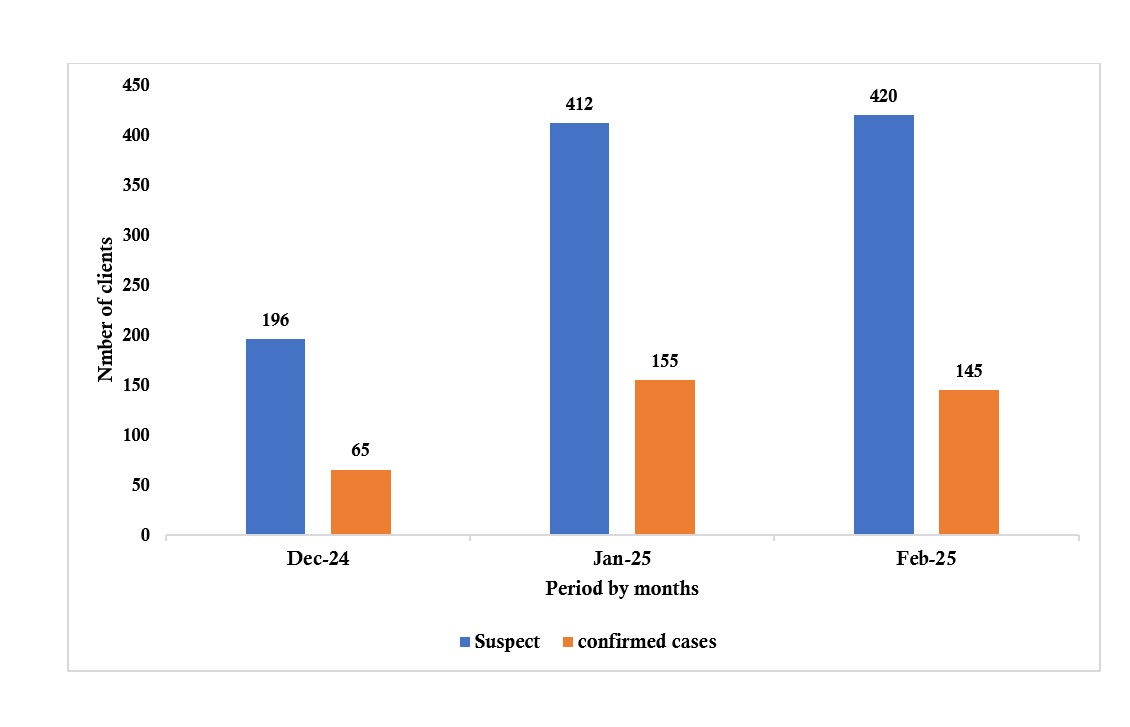
Results: Between December 2024 and February 2025, the system recorded 365 malaria cases out of 1,028 suspected cases, with 28 severe malaria cases referred to nearby health facilities for proper management. The system proved useful, timely, and simple for early detection and treatment of malaria at the community level. About 83% of iCCM providers reported that case definitions and data tools were easy to use, and all (100%) found electronic reporting via the Unified Community System (UCS) convenient. The overall mean attribute score was 3, indicating good performance. However, representativeness and stability were moderate. Reported limitations included underreporting from some councils and discontinuation of iCCM activities in 16 councils following the withdrawal of funding by the President’s Malaria Initiative (PMI).
Conclusion: The community malaria surveillance system in Bukombe District is useful, simple, acceptable, and timely, but moderately representative and stable. To sustain and expand this community-based approach, internal government funding should be prioritised to maintain operations in PMI-exit areas, strengthen supervision, and improve data completeness and reporting coverage.
Malaria remains a significant public health challenge in sub-Saharan Africa, caused by Plasmodium parasites and transmitted through bites from infected female Anopheles mosquitoes. In Tanzania, the main malaria vectors are Anopheles fenustus and the Anopheles gambiae complex, with Anopheles fenustus responsible for more than half of malaria transmission [1]. Among the Plasmodium species present, P. falciparum is dominant, causing most infections and the majority of severe cases [1].
Despite decades of control efforts, malaria continues to impose a heavy disease burden. Globally, an estimated 263 million malaria cases occurred in 2023, resulting in about 597,000 deaths, with 94% of fatalities occurring in WHO African countries [2]. Tanzania ranks among the top four countries contributing to global malaria deaths, accounting for 4.3% of them. Transmission intensity varies across the country, from very low transmission areas (prevalence of <1%) to very high transmission areas (prevalence >30%). Geita Region, including Bukombe District, is classified as a high-transmission zone, with prevalence exceeding 13% [3,4].
High malaria morbidity and mortality are driven by limited healthcare access, delays in diagnosis and treatment, and systemic healthcare challenges [5]. Fortunately, malaria is both preventable and treatable, with interventions such as insecticide-treated bed nets, indoor residual spraying, larval source management, and prompt case management using rapid diagnostic tests (RDTs) and artemisinin-based combination therapies (ACTs) for uncomplicated malaria, as well as Artesunate injection plus ACTs for severe malaria treatment [2,4].
Strong surveillance is essential for malaria control, providing vital data for tracking trends, guiding interventions, and efficiently allocating resources [6]. Tanzania’s National Malaria Control Program aligns with the Global Technical Strategy for Malaria 2016–2030, aiming to reduce malaria burden and eliminate malaria-related deaths. In high-transmission areas, surveillance data are integrated into routine health information systems to support planning, stratification, and targeted actions [5,6].
In 2022, Tanzania introduced community-based malaria management through a standalone Community Malaria Case Management (CMCM) program, targeting underserved populations. In September 2024, this program was incorporated into the broader Integrated Community Case Management (iCCM) strategy, which addresses malaria, pneumonia, and diarrhoea in children under five [7,8]. Trained community health workers, known locally as WAJA, conduct diagnostic testing, treatment, and referrals for severe cases (NMCP, 2024). Originally paper-based, the system faced data quality challenges. In late 2024, it was digitized using the Unified Community System (UCS) on the Open Smart Register Platform (OpenSRP), enabling real-time data collection via WAJA and KITUONI apps, with artificial intelligence supporting case management [8–9].
Although the system has expanded to 36 councils, its performance and usefulness remain unassessed. Reliable surveillance data are essential for tracking malaria trends, guiding interventions, and enhancing community health results. Therefore, evaluating the system in Bukombe District, Geita Region, is crucial to developing effective malaria control strategies.
Study design and setting
The evaluation utilised a descriptive cross-sectional design to assess the performance of the community malaria surveillance system in the Bukombe District Council, Geita Region. The study was carried out in Bukombe District Council, one of the six councils in Geita Region, northwestern Tanzania. The district is largely rural with a population of approximately 426,000 people, living in 26 wards and 122 villages. Malaria transmission in the district remains perennial, with prevalence above 13.4% based on national malaria indicator surveys. Health services are delivered through 33 health facilities (one health center and 32 dispensaries). Community-based malaria surveillance through the iCCM program began in December 2024 and was operational in six service delivery points: Kerezia, Burumbaga, Nampalahala, Ihako, Msingo, and Igulike [8]
Description of the community malaria surveillance system
Case definitions
Suspected malaria: Any individual presenting with fever, with or without any other symptoms. All patients with suspected malaria should receive a diagnostic test for malaria, by microscopy or a rapid diagnostic test [1].
Confirmed malaria: Suspected malaria cases in which malaria parasites have been demonstrated in a patient’s blood by a rapid diagnostic test (RDT) [1].
Uncomplicated malaria case: Patient with symptomatic malaria parasitaemia without signs of severity or evidence of vital organ dysfunction [1].
Severe/complicated malaria case: A patient with symptomatic malaria parasitaemia with the presence of one or more of the following clinical features classifies the patient as suffering from severe malaria: impaired consciousness, generalised weakness, failure to feed, multiple convulsions (more than two episodes in 24 hours), deep breathing, circulatory collapse or shock, and clinical jaundice [1,2].
Population under surveillance and flow of information
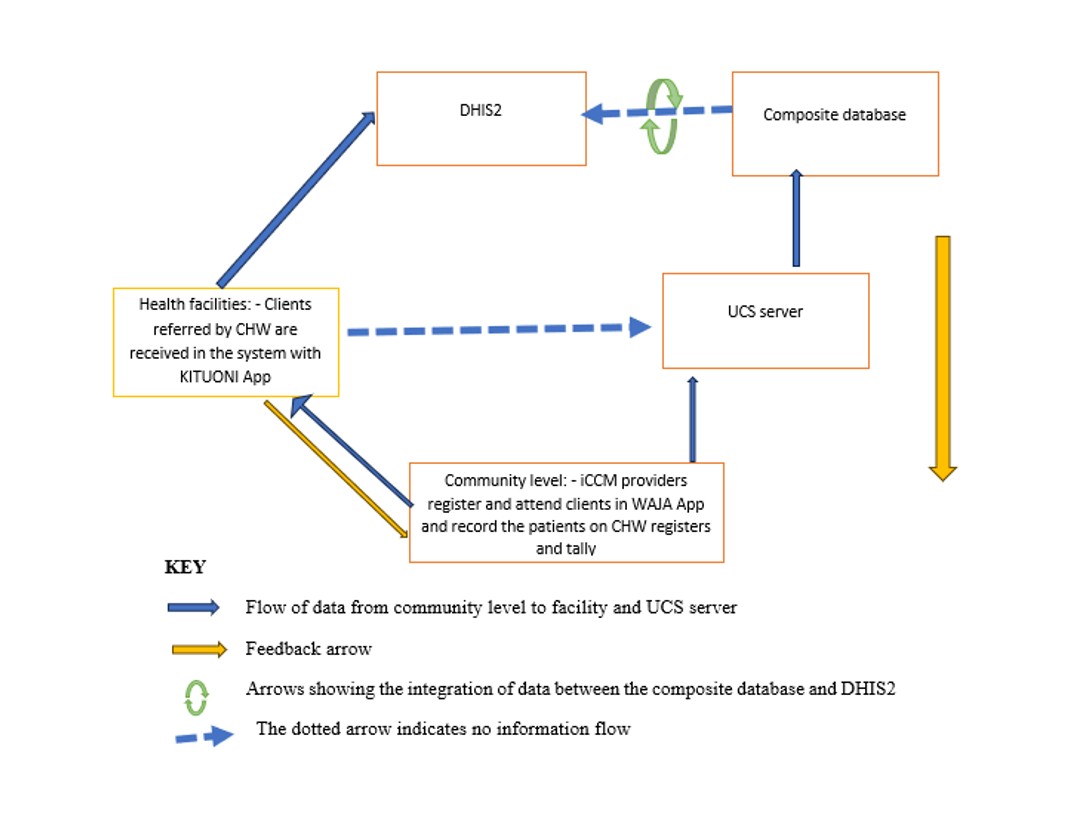
People of all ages residing in high-endemic and hard-to-reach areas are included in the surveillance system. The flow of information within the community malaria surveillance system begins at the community level, where iCCM providers (Community Health Workers) register clients using the WAJA application, as well as paper-based registers and tally sheets. Data entered into the WAJA application is synchronised to the Unified Community System (UCS) dashboard, making it accessible at the district and national levels. iCCM providers are primarily responsible for data entry and can also generate monthly reports from the system. At the health facility level, paper reports submitted by iCCM providers are received monthly, validated, and archived for record-keeping and verification against electronic data. These reports are also used for commodity management, including monitoring the availability of diagnostic tools and medications.
The District Malaria Focal Person (DMFP) compiles aggregated malaria data from health facility reports using standardised reporting templates and submits them to the National Malaria Control Programme (NMCP). At the national level, data are uploaded and analysed using both the UCS dashboard and the District Health Information System 2 (DHIS2), although integration between the two systems remains partial. Feedback is then disseminated from the national level to regional, district, and community levels through meetings, training sessions, and workshops to support continuous improvement of the surveillance system
Purpose and objectives of the system
The broad system objective was to provide universal access to malaria services among all age groups. The specific objectives were to reduce malaria burden in high-burden councils through early detection and treatment; strengthen referral linkages between communities and nearby health facilities; and improve community health-seeking behaviour through health promotion and prevention.
Data extraction
Data is collected daily by iCCM providers from clients at the community level. Recorded in registers, UCS (WAJA App), tally sheets, and monthly summary forms. Summaries are sent to health facilities, then to DMFP and NMCP for aggregation and analysis.
Data storage and confidentiality
Data is stored in both paper-based and electronic systems (UCS, DHIS2). Access is limited to authorised personnel at health facilities and the NMCP. Patient information is handled confidentially and stored securely at source facilities.
Data analysis and presentation
Data collected through this surveillance is analyzed at the facility, council and national level. The presentation of data is done in the form of notes, tables, graphs, and reports, depending on the needs and the targeted audience.
Resources needed to operate the system
Funding sources: Global Fund (GF), President’s Malaria Initiative (PMI), and the Government of Tanzania (MOH/NMCP).
Personnel: Community Health Workers (CHWs/iCCM providers), clinicians, nurses, DMFPs, RHMTs, CHMTs, and NMCP coordinators.
Materials and equipment
• Medical supplies (MRDTs, ACTs, gloves, thermometers).
• Stationery, bicycles, boots, raincoats, mobile phones, and internet access.
• ICT systems: UCS dashboard, WAJA & KITUONI applications, DHIS2.
Data sharing: De-identified data may be shared upon request and after approval of a proposal and a signed data access agreement (via MOH/NMCP).
Study population
The study included key stakeholders engaged in the design, coordination, and implementation of the community malaria surveillance system. These included iCCM providers, facility-based healthcare workers, the district malaria focal person (DMFP), and the National Malaria Control Program (NMCP) iCCM coordinator.
Sampling and sample size
A purposive sampling technique was applied to select ten respondents who were directly involved in the design, implementation, supervision, and use of the surveillance system. These comprised one NMCP coordinator (national level), one District Malaria Focal Person (DMFP) (district level), two healthcare providers from affiliated health facilities, and six iCCM providers (community level), one provider per service delivery site.
The two health facilities were purposively selected as referral and reporting centres supporting iCCM implementation. The six service delivery sites (Kerezia, Burumbaga, Nampalahala, Ihako, Msingo, and Igulike) represent community-level implementation areas, with one iCCM provider selected from each site. Sampling continued until thematic saturation was achieved, where no new information emerged from additional interviews
System attributes evaluated
The performance of the community malaria surveillance system was evaluated using seven surveillance attributes: simplicity, acceptability, data quality, timeliness, representativeness, flexibility, and stability. For each attribute, specific indicators were developed and assessed using both quantitative and qualitative methods, in accordance with the Centers for Disease Control and Prevention (CDC) guidelines for evaluating public health surveillance systems. The CDC guidelines were selected due to their comprehensive framework and widespread application in evaluating public health surveillance systems, particularly in low- and middle-income settings.
Data collection techniques, tools, and data sources
Data were collected at the national, district, facility, and community levels. At the national level, an interview was conducted with the NMCP iCCM Coordinator to understand system design, objectives, funding mechanisms, and data flow. At the district level, the District Malaria Focal Person (DMFP) was interviewed to assess coordination, data management, and feedback processes. At the facility level, two healthcare providers were interviewed to evaluate operational attributes of the system, while at the community level, six iCCM providers were interviewed to understand how the system operates and how data collection and reporting are conducted. Mixed methods were applied, combining document review, electronic data extraction, and key informant interviews.
Semi-structured questionnaires were used at both national and subnational levels, and a data review checklist guided the assessment of timeliness, completeness, and accuracy of UCS and DHIS2 data. The main data sources included the Unified Community System (UCS) reports, DHIS2 malaria database, iCCM reference and user manuals, facility-based monthly summary forms, and interview responses from iCCM providers, facility staff, and district and national coordinators.
Data analysis
All extracted data were cleaned before analysis, and no records were excluded. Therefore, 100% of the extracted dataset was retained and analysed using Microsoft Excel 2021. A direct comparison of data was not conducted due to incomplete interoperability between UCS and DHIS2 during the evaluation period.
Quantitative indicators were scored using a 3-point scale adapted from studies that evaluated surveillance systems in Africa: less than 60% scored 1 (weak performance); 60–79% scored 2 (moderate performance); and equal to or greater than 80% scored 3 (good performance). For each attribute, mean scores were calculated to determine overall system performance. Results are presented in tables, graphs, and charts [10]
Usefulness: The usefulness of the system was assessed by reviewing how surveillance data were used to inform malaria control actions, resource allocation, and expansion of community services. Indicators assessed included the number of malaria cases detected and treated in the community, evidence of data use for planning and policy, and health education or awareness activities conducted by iCCM providers.
Representativeness: Representativeness was determined by reviewing the demographic and geographical coverage of reported malaria cases between December 2024 and February 2025. Indicators included the proportion of councils implementing iCCM among high-risk malaria councils with hard-to-reach areas and the demographic distribution of malaria cases by age group (under-five and above five years).
Timeliness: Timeliness was evaluated by comparing the number of reports submitted on time to those expected. Each iCCM provider is required to submit three reports (client summary, test summary, and dispensing summary) by the 30th of each month. The timeliness percentage was calculated as:
$$ \text{Timeliness (\%)} = \left( \frac{\text{Reports submitted on time}}{\text{Expected reports}} \right) \times 100 $$
Indicators assessed included the percentage of reports submitted on time and the timeliness of data upload to UCS.
Data quality: Data quality was assessed by reviewing the validity, accuracy, and completeness of key data fields in UCS and DHIS2. Validity was defined as the absence of data entry errors, accuracy as consistency between UCS and facility-based reports, and completeness as the proportion of filled data fields relative to expected entries. The assessment examined the percentage of valid records, the proportion of missing or incomplete records, and consistency between data sources.
Simplicity: Simplicity was evaluated by assessing the ease of data collection, entry, and reporting using the WAJA App and manual registers. Indicators included the proportion of trained iCCM providers, the average time taken to assess, diagnose, and report a client (less than 20 minutes), and the providers’ perception of system usability.
Flexibility: Flexibility was assessed by examining the system’s ability to adapt to changes and integrate additional services. The assessment considered integration of pneumonia and diarrhea management under iCCM and the system’s functionality in both online and offline modes.
Acceptability: Acceptability was measured through the willingness of providers and facilities to use the system and comply with reporting requirements. Indicators included the percentage of providers submitting complete reports monthly, provider satisfaction, community acceptance, and the level of training provided to participants, along with their perceived ease of use of the system.
Stability: Stability was assessed using both primary data from sampled sites and secondary data from routine program reports covering all councils implementing the community malaria surveillance system. The assessment focused on operational and financial sustainability of the system. Indicators included functionality of the Unified Community System (UCS) in both online and offline modes, availability of essential commodities such as rapid diagnostic tests (RDTs) and artemisinin-based combination therapies (ACTs), funding sources and continuity of support from partners such as the Global Fund and the President’s Malaria Initiative (PMI), and the frequency of service interruptions.
Sensitivity and predictive value positive (PVP): Sensitivity and predictive value positive (PVP) were intended to assess the accuracy of the system in detecting malaria cases. However, due to the short evaluation period and absence of a comparison dataset for undetected or false-positive cases, these indicators were not calculated.
Ethical considerations
This evaluation utilised routine surveillance data and did not involve experimental procedures. Therefore, formal ethical clearance was not required. Permission to conduct the evaluation was obtained from the Ministry of Health through the National Malaria Control Programme (NMCP). The Geita Regional Secretariat granted additional approvals, as did the Bukombe District Council CHMT and the respective health facilities. Verbal informed consent was obtained from all interview participants, and no personal identifiers were collected to ensure confidentiality.
Characteristics of respondents
A total of ten respondents participated in the evaluation. Six were iCCM providers, two were healthcare providers from affiliated health facilities, one was the DMFP, and one was the national iCCM coordinator. The majority (70%, 7/10) were male, and half had one to three years of experience in malaria community surveillance. About 83% (5/6) had received formal iCCM training, and all iCCM providers (100%; 6/6) reported using the UCS system for malaria data reporting.
Usefulness of the System
The community malaria surveillance system was effective in early detection, treatment, and referral of malaria cases. During the evaluation, 1,028 suspected cases were identified, 365 confirmed and treated, and 28 severe cases referred to health facilities (18 from Nampalahala, 9 from Ihulike, and 1 from Lulamba). Respondents acknowledged that the system strengthened community–facility linkages and provided reliable data used by CHMT and NMCP to track trends, identify hotspots, allocate mRDTs and ACTs, and guide outreach and health promotion activities.
Simplicity
All six iCCM providers (100%) reported using the WAJA mobile application for data collection. Five providers (83.3%) had received formal iCCM training and found it easy to assess and diagnose clients using case definitions from the iCCM manual. All providers (100%) reported that completing client registration, testing, treatment, and reporting was straightforward, although 50% completed the process within 15–20 minutes, while the remaining took slightly longer. Overall, the system was considered simple, with a mean performance score of 3 (good).
Acceptability
The system demonstrated high acceptability among providers and community members. All monthly reports were submitted on time to the affiliated health facilities and the UCS dashboard, resulting in a 100% reporting rate. Providers reported positive engagement from the communities they served and expressed satisfaction with the system, confirming strong acceptability.
Flexibility
The system accommodated changes in data collection and reporting requirements without disruption. It successfully integrated other child health services, such as pneumonia and acute watery diarrhea, for children under five years. Providers and stakeholders confirmed that modifications in data tools and processes were smoothly implemented. The system’s flexibility was rated as good, with a score of 3.
Representativeness
The surveillance system captured cases from villages where the six iCCM providers operate. Children under five years represented 21.4% of malaria cases, and those aged five and above accounted for 78.6%. While the system provided useful data for these communities, geographic coverage was limited, resulting in a representativeness score of 2 (moderate performance).
Timeliness
All providers (100%) submitted reports by the end of each month, and health facility staff and the District Malaria Coordinator confirmed timely receipt. The overall timeliness of reporting was therefore 100%, reflecting good performance.
Data quality
The data quality assessment reviewed 48 out of 54 expected reports (88.9%) from six community sites. Data submitted to the system was accurate and valid, with no errors detected. Completeness and consistency could not be fully assessed due to limited access to some records; however, the evaluated records were reliable. The mean score for data quality was 3, indicating good performance.
Stability
Stability was assessed using system-level data from all councils implementing the community malaria surveillance system, supplemented by findings from sampled sites. The system generally operated reliably in both online and offline modes. However, funding gaps were reported in 16 of the 36 implementing councils following the withdrawal of PMI support, affecting sustainability. Most providers (83.3%) reported consistent availability of iCCM commodities, with only brief stockouts observed. Service delivery was, however, limited to three days per week in some areas due to staffing constraints. Overall, the system demonstrated moderate stability
Sensitivity and predictive value positive (PVP)
Sensitivity and predictive value positive (PVP) were not assessed due to the absence of complete data on untested individuals and lack of a reference dataset.
The community malaria surveillance system in Bukombe District has shown its potential to support Tanzania’s malaria control efforts by improving early detection, treatment, and reporting of malaria cases at the community level. The system’s value lies in its ability to generate timely and reliable data that guide district health planning and facilitate coordination between iCCM providers, health facilities, and the district malaria control office. The system was found to be useful, simple, acceptable, timely, and flexible, with moderate representativeness and stability.
The usefulness of the Bukombe surveillance system was demonstrated by its ability to identify malaria cases early and ensure timely treatment at the community level. The system not only captured confirmed malaria cases but also facilitated the referral of severe cases to nearby health facilities for appropriate management. These results underscore the critical role of community health workers in expanding access to malaria services in hard-to-reach areas, aligning with findings from studies in Kenya, where CHWs were similarly responsible for detecting and treating malaria at the community level [11].
The integration of the Unified Community System (UCS) strengthened data flow. It supported decision-making at facility and district levels, consistent with evidence from other surveillance programs in Ghana and Nigeria, where digital reporting improved data use for planning and monitoring [12,13]. The system demonstrated simplicity, as all iCCM providers could collect and report data using electronic tools with minimal difficulty. The WAJA App improved efficiency in reporting; however, paper-based reporting was still maintained alongside electronic systems. This finding aligns with the World Health Organization (WHO) guidance, which emphasizes using simple, easy-to-use reporting tools to enhance data quality and participation among community workers [5]. These findings also align with a multi-country assessment of Community Health Workers (CHWs) on using digital tools, involving respondents from 28 countries, which found that CHWs are highly receptive to digital health and do not see themselves as obstacles to its adoption, believing the tools can increase their impact in their communities [14].
Acceptability of the system was high among providers and community members. All providers expressed willingness to continue reporting through the UCS, and all reports were submitted on time. Communities also appreciated the services, which reduced the need to travel long distances for malaria testing and treatment. This high acceptance and successful implementation is supported by similar findings from a study on Community Case Management of Malaria (CCMm) in the Democratic Republic of Congo (DRC), which also demonstrated high community acceptance and evidence of reducing malaria morbidity and mortality [15]. However, this is in contrast with the reality found in places like the Livingstone District of Zambia, where a lack of essential supplies (RDTs/drugs) and poor remuneration caused the majority of CHWs to perform substandard service, proving that poor systemic support quickly overrides high worker willingness and jeopardises service quality [16].
Timeliness was generally good, with all reports submitted on schedule and the UCS platform enabling instant data transmission from community to facility and district levels, supporting rapid response to malaria trends. Similarly, a study conducted in South Africa found that for each diagnosed case of malaria, there was an improved reporting speed, which was well-accepted by users and proved technically feasible, with follow-up times faster than in other clinics [17]. These findings were in contrast with a study in Zanzibar, where delays in notification and procedures by private health care providers hindered timely coverage of the malaria case notification system [18].
Data quality in Bukombe was strong, though some gaps in documentation remained. Strengthening record-keeping and supervision will improve community malaria data, unlike findings from other parts of Tanzania, where tool use and data accuracy vary widely, revealing weaknesses in the routine HMIS [19]. The system showed only moderate representativeness, as surveillance was limited to implementation areas where the system was operational, which likely led to an underestimation of the actual community malaria burden. Expanding coverage to more wards and more mapped councils would help address this gap. A similar pattern was observed in Uganda, where incomplete surveillance areas resulted in routine facility data missing a substantial portion of the true disease burden [20].
The system showed strong flexibility, integrating pneumonia and acute watery diarrhoea services for under-five children without disrupting malaria reporting. This ability to handle multiple conditions aligns with findings by Guenther et al., who highlight the adaptability of integrated community reporting systems. The shift from paper to electronic reporting further demonstrates this adaptability, consistent with Youssef et al., who show that moving to DHIS2 improves timeliness and supports integration despite some implementation challenges [21,22].
System stability was moderate. Although the UCS functioned well and could operate offline, its long-term sustainability is uncertain due to declining donor support. Nearly 44% of previously supported councils faced service interruptions once external funding ended, a challenge echoed in findings from studies, which report significant program risks when donor support is withdrawn. Similar concerns are highlighted in AMREF analyses, which show that loss of donor funding often disrupts service delivery in African settings [23–26].
All things considered, the Bukombe community malaria surveillance system has demonstrated significant progress in strengthening malaria control at the community level. It provides reliable and timely data that are already being used to guide programmatic decisions. However, addressing issues of coverage, stability, and resource availability will further enhance its capacity to contribute to national malaria elimination targets.
Limitation
This evaluation was conducted in one district over a short period and used a purposive sample of ten respondents, which may limit the generalizability of the findings to other settings implementing community malaria surveillance. Additionally, secondary data were used to assess some attributes, and sensitivity was not measured due to limited availability of reference data. To mitigate the effect of the short study period and enhance the validity of the findings, data triangulation was applied through multiple sources, including key informant interviews, routine surveillance data (UCS and DHIS2), and document review. Despite these limitations, the study provides valuable insights into the performance of the community malaria surveillance system in a real-world setting and serves as a baseline for future evaluations.
Overall system performance was satisfactory, with the Bukombe community malaria surveillance system demonstrating good usefulness, simplicity, acceptability, timeliness, and flexibility, though limited by moderate representativeness and stability. The system is vital for early case detection in hard-to-reach populations but requires strengthened funding, supervision, and scale-up to maximize its contribution to malaria elimination goals in Tanzania. Data from the system are already guiding malaria planning and decision-making at the district level.
Recommendation
1. Strengthen financial sustainability by increasing domestic funding to support iCCM activities, particularly in areas previously supported by external donors.
2. Expand geographic coverage of the surveillance system to improve representativeness.
3. Enhance supportive supervision and mentorship to improve data quality and consistency.
4. Strengthen integration and interoperability between UCS and DHIS2 to improve data consistency and national reporting.
5. Conduct periodic evaluations to monitor system performance and guide improvements.
What is already known about the topic
What this study adds
The authors sincerely thank the National Malaria Control Program (NMCP), Tanzania Field Epidemiology and Laboratory Training Program (TFELTP), and Muhimbili University of Health and Allied Sciences (MUHAS) for technical guidance. Special appreciation goes to Prof. Billy Ngasala, Dr. Ally Kassim Hussein, Dr. Abdallah Lusasi, and Dr. Onesmo Mwegoha for their supervision and mentorship. Gratitude is extended to the Bukombe District Council Health Management Team, iCCM providers, and facility staff for their cooperation during data collection.
Conceptualization: Edna Baraka Kibango, Onesmo Mwegoha
Data curation: Edna Baraka Kibango
Formal analysis: Edna Baraka Kibango
Investigation: Edna Baraka Kibango
Methodology: Edna Baraka Kibango
Project administration: Edna Baraka Kibango
Resources: Edna Baraka Kibango
Supervision: Ally Hussein, Abdallah Lusasi, Onesmo Mwegoha, Billy Ngasala
Writing – original draft: Edna Baraka Kibango
Writing – review & editing: Ally Hussein, Abdallah Lusasi, Onesmo Mwegoha, Billy Ngasala
| Attributes | Number of evaluated indicators | Mean score | Performance |
|---|---|---|---|
| Data quality | 3 | 3 | Good performance |
| Timelines | 2 | 3 | Good performance |
| Stability | 4 | 2 | Moderate performance |
| Acceptability | 2 | 3 | Good performance |
| Simplicity | 5 | 3 | Good performance |
| Representativeness | 2 | 2 | Moderate performance |
| Flexibility | 2 | 3 | Good performance |
| Sensitivity | — | — | — |
| Predictive value positive (PVP) | — | — | — |
| TOTAL | 3 | Good performance |
| Ward | Village | Expected reports | Submitted report | Reported on time | Percentage of reports submitted on time |
|---|---|---|---|---|---|
| Igulwa | Kerezia | 9 | 9 | 9 | 100% |
| Runzewe Mashariki | Burumbaga | 9 | 9 | 9 | 100% |
| Busonzo | Nampalampala | 9 | 9 | 9 | 100% |
| Katome | Ihako | 9 | 9 | 9 | 100% |
| Ng’anzo | Msingo | 9 | 9 | 9 | 100% |
| Ushirombo | Igulike | 9 | 9 | 9 | 100% |