Lessons from the Field | Open Access | Volume 9 (Suppl 14): Article 06 | Published: 28 Sep 2026

Views: 117
Menu, Tables and Figures
Table 1: Demographic Characteristics of Advanced Level Kenya FELTP Residents, 2004–2024 (n=328)
| Variables | Number | Proportion (%) |
|---|---|---|
| Sex | ||
| Male | 212 | 64.6 |
| Female | 116 | 35.4 |
| Cadre | ||
| Medical Doctors | 121 | 36.9 |
| Medical Laboratory Scientists | 92 | 28.0 |
| Veterinary Doctors | 40 | 12.2 |
| Public Health Officers | 25 | 7.6 |
| Nursing Officers | 24 | 7.3 |
| Pharmacists | 14 | 4.3 |
| Clinical Officers | 6 | 1.8 |
| Dentists | 3 | 0.9 |
| Nutritionists | 3 | 0.9 |
| Country | ||
| Kenya | 304 | 92.7 |
| South Sudan | 16 | 4.9 |
| Tanzania | 4 | 1.2 |
| Uganda | 2 | 0.6 |
| Burundi | 1 | 0.3 |
| Ghana | 1 | 0.3 |
Table 2: Competencies for the advanced level FELTP and their Evaluation Methods
| Competency | Expected Demonstration | Evaluation Methods |
|---|---|---|
| Public Health Surveillance | Design, implement, evaluate, and improve surveillance systems; analyze surveillance data; recommend actions. | Review of surveillance evaluation reports, supervisor assessments, field observation, oral presentations, competency checklists. |
| Investigation and Response to Acute Public Health Events | Verify outbreaks, conduct descriptive and analytic epidemiology, generate hypotheses, implement control measures, communicate findings. | Assessment of outbreak investigation reports, field performance during investigations, mentor evaluations, case presentations, after-action reviews. |
| Conduct Epidemiologic Studies | Design and conduct cross-sectional, case-control, cohort, or operational research studies; analyze and interpret data. | Protocol review, research proposal approval, assessment of completed study reports, manuscript preparation, conference presentations. |
| Data Management and Biostatistics | Manage datasets, perform statistical analyses, interpret results, and produce epidemiologic summaries. | Practical data analysis exercises, review of statistical outputs, coding assignments (e.g., R, Stata, Excel), supervisor feedback. |
| Scientific Communication | Prepare technical reports, abstracts, manuscripts, policy briefs, and deliver oral presentations. Communicate public health risks effectively to technical and non-technical audiences. | Evaluation of written reports, conference abstracts, manuscripts submitted for publication, oral presentation scoring rubrics. Observation during media briefings, stakeholder presentations, communication products, mentor assessment. |
Table 2: Competencies for the advanced level FELTP and their evaluation methods
Table 3: Broad Thematic Areas of Protocol-Based Studies Conducted by Advanced-Level KFELTP Residents, 2004–2024 (n=321)
| Broad thematic area | Frequency (n=321) | Proportion (%) |
|---|---|---|
| Infectious diseases and outbreak-prone conditions | 153 | 47.7 |
| Non-communicable diseases and injuries | 44 | 13.7 |
| Reproductive, maternal, child and adolescent health | 35 | 10.9 |
| Zoonotic, vector-borne and One Health conditions | 34 | 10.6 |
| Vaccine-preventable and immunization-related diseases | 19 | 5.9 |
| Health systems, UHC and service delivery | 12 | 3.7 |
| Neglected tropical and parasitic diseases | 8 | 2.5 |
| Mental health, nutrition and substance use | 5 | 1.6 |
| Mortality studies | 2 | 0.6 |
Table 4: Areas of Deployment of FELTP Alumni, Kenya, 2004–2024
| Area of Deployment | Position Held by KFELTP Alumni |
|---|---|
| LOCAL (Kenya) | |
| Disease Surveillance and Response Unit | Head and Deputy Head |
| Kenya FELTP | Head and Coordinators |
| Vaccines | Deputy Head |
| M/E- Monitoring and Evaluation | Head |
| Tuberculosis | Infection Control and Epidemiology Leads |
| Non-Communicable Disease | Epi Lead |
| National Public Health Lab | Monitoring and Evaluation |
| Violence & injury | Unit Head |
| Disaster and Preparedness unit | Head |
| County Governments | County Epidemiologists, Various |
| Zoonotic Disease Unit | Veterinary Coordinator, Epi Lead |
| CDC Kenya | |
| Trachoma Program | Control Coordinator |
| Preventative Health | Director-General |
| Research Unit | Head |
| REGIONAL | |
| Rwanda FELTP | Epidemiology Advisor |
| Namibia FELTP | Epidemiology Advisor |
| Tanzania FELTP | Laboratory Advisor |
| Nigeria FELTP | Regional Technical Advisor |
| INTERNATIONAL | |
| WHO/Kenya | Head of Expanded Program on Immunization |
| WHO/South Sudan | Head of Expanded Program on Immunization |
Maurice Owiny1,2,&, Jane Githuku2, Caren Ndeta1, Athman Mwatondo2, Bonface Waweru1
1Kenya Field Epidemiology and Laboratory Training Program, Nairobi; 2African Field Epidemiology Network, Nairobi Kenya
&Corresponding author: Maurice Owiny, Kenya Field Epidemiology and laboratory Training Program, Email: mowiny@feltp.or.ke ORCID: https://orcid.org/0000-0002-3047-5723
Received: 22 Dec 2025, Accepted: 25 Sep 2026, Published: 28 Sep 2026
Domain: Field Epidemiology
Keywords: Field epidemiology, training, outbreaks, surveillance, Kenya
©Maurice Owiny et al. Journal of Interventional Epidemiology and Public Health (ISSN: 2664-2824). This is an Open Access article distributed under the terms of the Creative Commons Attribution International 4.0 License (https://creativecommons.org/licenses/by/4.0/), which permits unrestricted use, distribution, and reproduction in any medium, provided the original work is properly cited.
Cite this article: Maurice Owiny et al., Twenty years on: The local and regional impact of Kenya’s Field Epidemiology Training Program. Journal of Interventional Epidemiology and Public Health. 2026; 9(Suppl 14):06. https://doi.org/10.37432/jieph-d-25-00331
Introduction: Training in applied and laboratory epidemiology contributes to strengthening the public health workforce, with trainees and graduates taking part in response to disease outbreaks. Kenya Field Epidemiology and Laboratory Training Program (KFELTP), established in 2004, has been a key contributor to training a competent workforce for the country and the region. We highlight the contribution of the advanced level of the program for the period 2004–2024.
Processes: The advanced level KFELTP combines didactic and field-based learning that involves experiential competency building with service provision while emphasizing the development of epidemiologic judgment that allows utilization of data for decision-making.
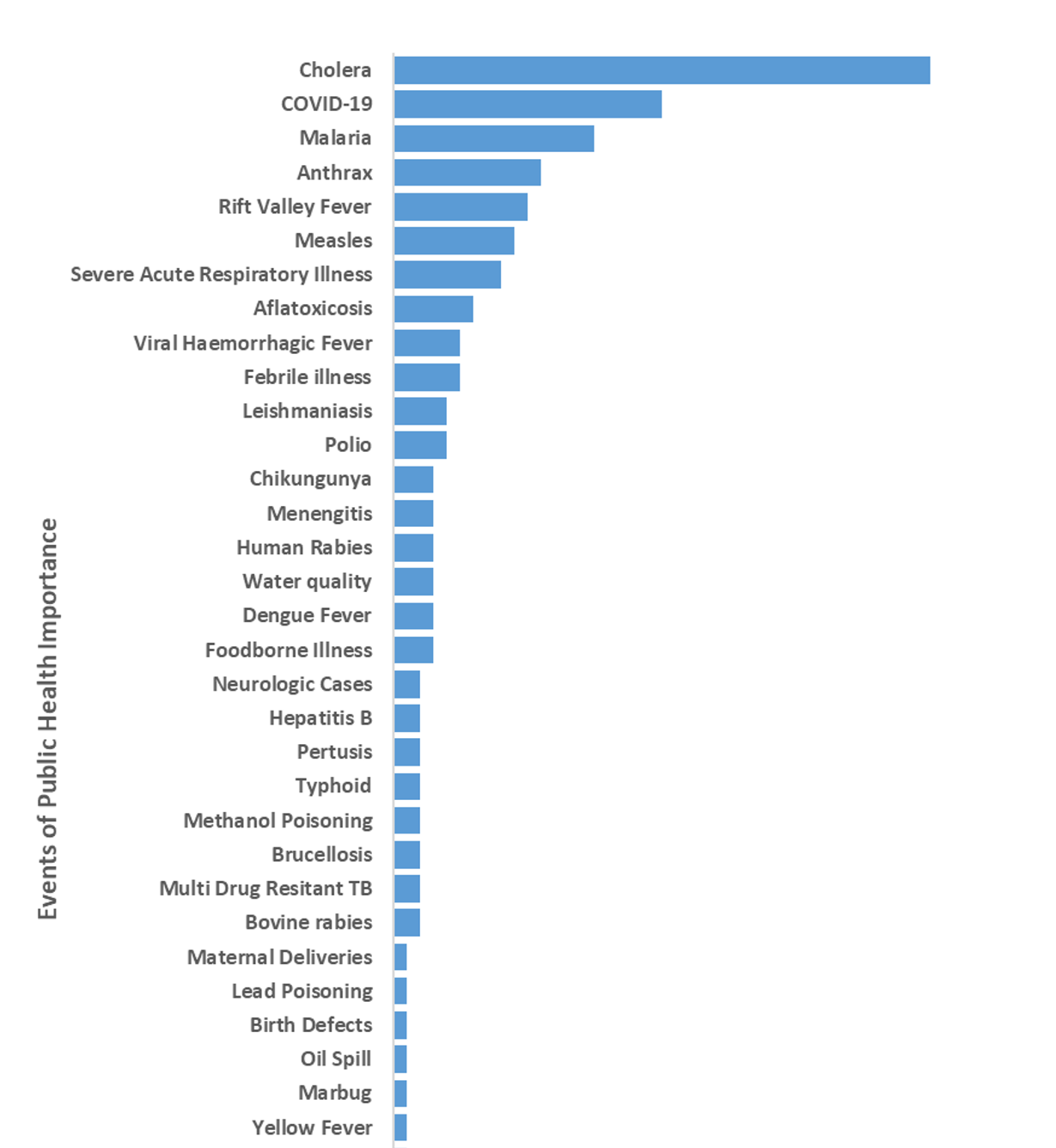
Achievements: The program admitted 20 cohorts made up of 328 trainees into the advanced level program from 2004 through 2024, with 212 (64.6%) of them being male, 304 (92.7%) Kenyan and 16 (4.9%) South Sudanese nationals. Of those admitted, 121 (36.9%) were medical doctors, 92 (28.0%) were medical laboratory scientists, and 40 (12.2%) were veterinary doctors. The disease outbreaks investigated included cholera (40), COVID-19 (20), malaria (15) and anthrax (11). The number of trainees admitted increased over the years from seven in 2004 in cohort one to stabilize at an average of 20 trainees per cohort from 2014 to 2024.
Conclusion: The KFELTP continues to contribute to improving the health of the population by strengthening surveillance and improving response to public health emergencies and containment of outbreaks. There is a need for greater support to ensure continuity of the training program and consolidation of the gains already made.
With the frequent occurrence of disease outbreaks and public health emergencies across the world, prompt response and control of these events by skilled disease detectives contribute greatly to saving lives. The need to have frontline public health practitioners who can help to contain disease outbreaks at the points of occurrence led to the establishment of field epidemiology training programs in different countries. These training programs have been modelled on the US Epidemic Intelligence Service (EIS), with an African chapter under the African Field Epidemiology Network (AFENET) headquartered in Uganda serving sub-Saharan Africa [1,2]. In Africa, the Field Epidemiology and Laboratory Training Programs (FELTPs) flagship course is a competency-based two-year advanced field epidemiology fellowship. Some of the FELTPs also offer three months and nine months of in-service field epidemiology courses for frontline health care workers [2]. Training in the field of applied and laboratory epidemiology continues to contribute to the strengthening of the public health workforce and leadership, with trainees and graduates taking part in an effective response to outbreaks with pandemic potential like Ebola, polio, and Influenza virus, among others. In addition, trainees and graduates of field epidemiology play important roles in establishing and analysing public health surveillance systems, synthesising evidence to inform various interventions, public health program management and research development, promoting the ‘One Health’ approach, publication, documentation, and dissemination of findings [3–6].
The Kenya FELTP is one of the programs in Africa. The program has evolved over the years while achieving several milestones, among which was the accreditation of the program by the Training Programs in Epidemiology and Public Health Network (TEPHINET) [7]. The accreditation process was based on the Minimum Indicator and Standards Framework developed by TEPHINET, which graded the program on managerial, infrastructure and operations, integration with public health service, staffing and supervision, and the selection and training of residents [8,9]. The process took one year from 2016 to 2017.
The program collaborates closely with the United States Centers for Disease Control and Prevention (CDC), which has provided financial and technical support through the deployment of locally placed program advisors and access to a broad range of subject matter experts. Other key collaborating partners that provide various levels of financial, technical, and programmatic support include the Kenya Medical Research Institute (KEMRI), that assist with laboratory diagnoses; the Ministry of Health, that house KFELTP, deploys staff to the program and provides trainees to the program; Ministry of Agriculture, Livestock, Fisheries and Irrigation that provides technical support (especially on zoonotic diseases) and trainees through the veterinary directorate. The World Health Organization (WHO) funds some projects and mobilises resources during disease outbreaks or whenever events of public health importance that require multi-stakeholder engagement occur. The World Bank, the US Department of State and the US Department of Defence have assisted with funding for the rollout of the frontline courses, while TEPHINET has collaborated with KFELTP in many areas, including establishing Improving Public Health Management for Action (IMPACT) and organising a biennial scientific conference where trainees and graduates from the program showcase what they have learned during their residency in the program. African Field Epidemiology Network (AFENET) assisted KFELTP and IMPACT with capacity building, sponsorship of trainees to various conferences and workshops, and human resource support.
This manuscript describes the evolution, accomplishments, and challenges faced by the advanced-level KFELTP in the development of the epidemiological workforce and documents the areas of deployment and operation of graduates of the program.
Operational definition
Trainees: Individuals undergoing structured learning or professional development. For the advanced level of Kenya FELTP, this includes postgraduate healthcare workers attending the two-year course leading to the award of a Master of Science degree or healthcare workers attending the intermediate and frontline levels of FELTP. This term is used interchangeably with resident in this article.
Residents: These are health workers enrolled in the Kenya FELTP advanced level training pursuing a Master of Science degree in Field Epidemiology. They provide supervised public health duties while training to become Field Epidemiologists. This term is used interchangeably with trainee in this article
Senior residents: Residents who are in the second year of the advanced level Kenya FELTP and have greater epidemiological skills that can enable them to mentor residents in the first year of the Kenya FELTP.
Medical officers (MOs): These are health workers who have completed a Bachelor of Medicine and Surgery (MBChB) degree, internship, obtained licensure from the Kenya Medical Practitioners and Dentists Council, and are employed to provide general medical care.
Clinical officers (COs): These are health workers trained in clinical medicine through a Diploma or Bachelor of Science in Clinical Medicine and Surgery (or related qualifications), licensed by the Clinical Officers Council. They diagnose, treat, and manage patients independently within their scope of practice.
Program description
KFELTP is anchored as a division within the Kenya Ministry of Health. The program uses a three-tiered, pyramidal approach comprising three months of basic and six months of intermediate field epidemiology in-service short courses and an advanced two-year full-time residency program. The KFELTP courses combine the processes of experiential competency building with service provision while emphasizing the development of epidemiologic judgment that allows an epidemiologist to correctly utilize data for decision-making [3,4,10]. The two-year program was started in 2004 and has been in operation for over 20 years. To be enrolled on the advanced-level program, one is required to have a minimum of a basic degree in any medical field (medicine, dentistry, nursing, public health, nutrition, laboratory science) or veterinary field and must be a government employee at the county or national level.
Between 2004 and 2014, the trainees were awarded MSc degrees by Jomo Kenyatta University of Agriculture and Technology (JKUAT), divided into MSc in Applied Epidemiology and MSc in Laboratory Management and Epidemiology. However, from 2014 to 2024, trainees were awarded an MSc in Field Epidemiology by Moi University (MU). The agreement between the program and JKUAT was to run until 2013, and at the lapse of the period, a call for partnership was made that was open to all universities in Kenya. Moi University was successful in the call. In the MU curriculum for FELTP, the epidemiology and laboratory tracks were merged, as epidemiology and degree named Field Epidemiology. There were no additional requirements for trainees when the program transitioned to MU since both institutions are guided by the requirements from the Commission for University Education (CUE) that regulates higher education in Kenya
The two-year advanced-level field epidemiology training involves 30% of in-class training, with four blocks of didactic courses lasting three to six weeks and spread across the two-year calendar. The field placement for the advanced program takes up 70% of the two-year course time spent at various field placement sites at the national Ministry of Health and agriculture programs, county departments of health and livestock and partner organisations doing public health work. Trainees also spend two weeks of mandatory rotation at the national public health emergency operations centre. At the field placement sites, experienced public health experts and KFELTP alumni provide mentorship and supervision to the trainees. While providing service at field placement sites, trainees also accomplish core training competencies including analysis of surveillance data, investigations of acute public health events, conducting a protocol-based epidemiological study, preparing and delivering oral or poster presentations, and scientific manuscript development.
In addition to the advanced-level FELTP, the program implements six months of intermediate-level field epidemiology training, comprising four weeks of didactics staggered over four months with a weekly workshop every month and five months of project data collection, data analysis, and report writing. In between didactics, trainees return to their workstation to provide service. The three months of basic field epidemiology training consist of two weeks of didactics with one week of workshop every month, and nine weeks of secondary data analysis and report writing. The short in-service courses of basic and intermediate target all cadres of human health workers and veterinary workers and focus on competencies as envisaged in the WHO advice on essential public health functions [11–13]. Basic and intermediate courses are meant for building skills in data management, decision-making from the analysed data and effective response to public health events at the local and national levels. In addition to the three tiers of post-graduate applied training, FELTP has also carried out training for pre-graduate trainees via medical elective courses for medical students and veterinary students, before their graduation.
In a bid to improve the leadership and management capacity of public health managers and advisors, CDC, TEPHINET, AFENET, and KFELTP established an in-service training for senior managers in public health leadership positions under the Improving Public Health Management for Action (IMPACT) program. The IMPACT program was a fellowship program that aimed to build a cadre of highly-trained public health managers who are expected to help the country translate research, theory, and scientific innovation into successful public health action [14]. It was implemented through a partnership with Kenyatta University and used a service-based learning model where fellows gain knowledge and skills through didactic sessions that account for 25%, as well as on-the-job training, supervision, and mentorship that account for 75% of the course. The program had two tracks, a two-year-long course (master’s program) for early public health practitioners and a six-month short course (Distinguished Fellows Program, DFP) for senior-level managers in the public health service. During these courses, IMPACT fellows learnt the core principles of public health practice and progress towards mastery of the eight competency domains.
Trainee recruitment to the advanced level FELTP
To give all potential trainees an equal chance of joining the program and to demonstrate transparency and public participation as envisaged in the Kenyan Constitution, every year the program advertises for competitive recruitment of trainees into the two advanced level programs in two national newspapers with the largest circulation. The targeted audience for both programs includes medical officers, dentists, laboratorians, environmental health officers, pharmacists, nutritionists, health records and information officers working within the Kenyan Ministry of Health. FELTP also targets veterinary doctors working for the Ministry of Agriculture and Livestock (Table 1).
The program receives applications, which are reviewed, and those meeting the required qualifications are invited to continue the application process and provide a statement of purpose. After reviewing the statements of purpose and evaluating their previous skills and experiences, shortlisted candidates are then interviewed by a panel of senior officials from the relevant Kenyan ministries and collaborating institutions, including the CDC, KEMRI, and the university awarding the degree. For FELTP, having successfully gone through the basic/frontline or the intermediate frontline course is considered an added advantage for the applicants to the advanced level training. The advanced level KFELTP mainly focused on training Kenyan citizens but remained open to requests from any African country that wanted to train their personnel. An example of such a request was from Burundi that entered into a bilateral exchange program with KFELTP in 2016 to train the Ministry of Health (MoH) employees from Burundi in the two-year advanced field epidemiology course.
Trainee recruitment to the basic and intermediate level FELTP and the IMPACT Distinguished Fellows Program (DFP)
Until 2014, the KFELTP had a one-tier program at the advanced level, training field epidemiology human and animal health professionals including medical officers, clinical officers, veterinary officers, laboratorians, pharmacists, dentists, nurses, nutritionists, and environmental health officers working for MoH and the Ministry of Agriculture/livestock. To build epidemiological capabilities at devolved sub-national levels, KFELTP adopted a four-tiered approach in the training of field epidemiologists with an additional six-month intermediate-level course, three months basic level course targeting frontline human and animal health workers in the counties, and an epi elective for pre-service veterinary and medical students.
Recruitment of participants into these short course programs starts with a call for applications to sub-national departments of health. The county directors of health nominate participants performing surveillance activities for FELTP, and they nominate mid-to-senior managers for IMPACT DFP. The participants are drawn from different cadres, including health records information officers, medical doctors, clinicians, public health officers, nurses, and laboratorians. To be admitted into the basic FELTP or IMPACT DFP, the participants were expected to have basic knowledge and skills in computers. For the intermediate level FELTP, trainees are competitively recruited from different pools of graduates from the basic FELTP.
Structure of the program
The advanced level FELTP structure and curriculum revolve around the achievement of key competencies that are considered essential in the practice of field epidemiology. The competencies include public health surveillance, investigation of acute public health events like disease outbreaks, conducting epidemiological studies and scientific communication. The residents achieve these competencies during periods of field placement at the various public health programs at the national or county sites. Evaluation of residents on the achievement of the competencies is done using standard tools developed for each competency, including review of surveillance evaluation reports, supervisor assessments, field observation, assessment during oral and poster presentations and competency checklists (Table 2)
In their two-year residency under the advanced-level course, trainees are expected to participate in daily activities at the placement sites, conduct surveillance system evaluations and data analysis at their placement sites, and possibly conduct an outbreak investigation. Each trainee is expected to lead at least one outbreak investigation and be a participant in at least one outbreak investigation. Among the events investigated by the trainees are outbreaks of infectious diseases and assessment of vaccination coverage following outbreaks (Figure 1). Reports on the outbreak investigations and dissertations from protocol-based studies are used to develop manuscripts that are submitted to peer-reviewed journals for publication.
During parts of the first year, residents are also expected to attend three modules of didactic coursework. These didactic courses last four to eight weeks, and two of them are followed by one week of revisions and one week of exams. The didactic courses cover a range of topics in epidemiology, statistics, scientific communication, and laboratory management necessary for achieving the field competencies, as well as elective blocks that include additional topics such as health economics, epidemiology of non-communicable diseases, and One Health.
In the second year, residents are expected to conduct a protocol-based planned epidemiological study that culminates in the thesis required for the award of MSc degrees by the host university. Some of the topics for the theses are listed in Table 3. After collecting and analysing their thesis data, residents are taken through a scientific writing workshop from which manuscripts are developed for submission to peer-reviewed journals for publication. A resident is considered to have completed the advanced-level course after achieving the expected competencies and submitting a manuscript derived from activities they had taken part in for publication in a peer-reviewed journal. Upon completion of the program, graduates are expected to join the alumni association where professional and personal issues are shared.
Admissions and graduation
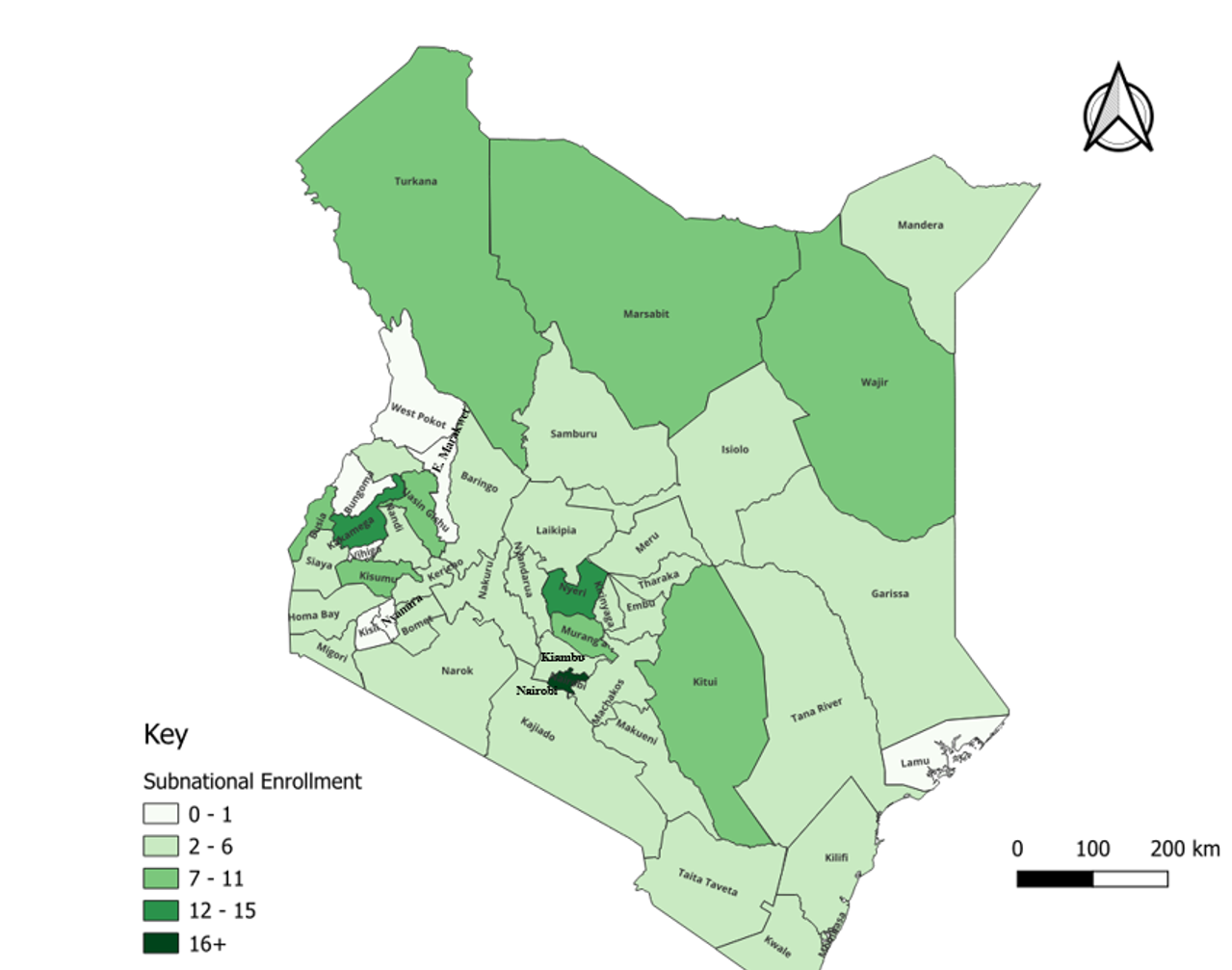
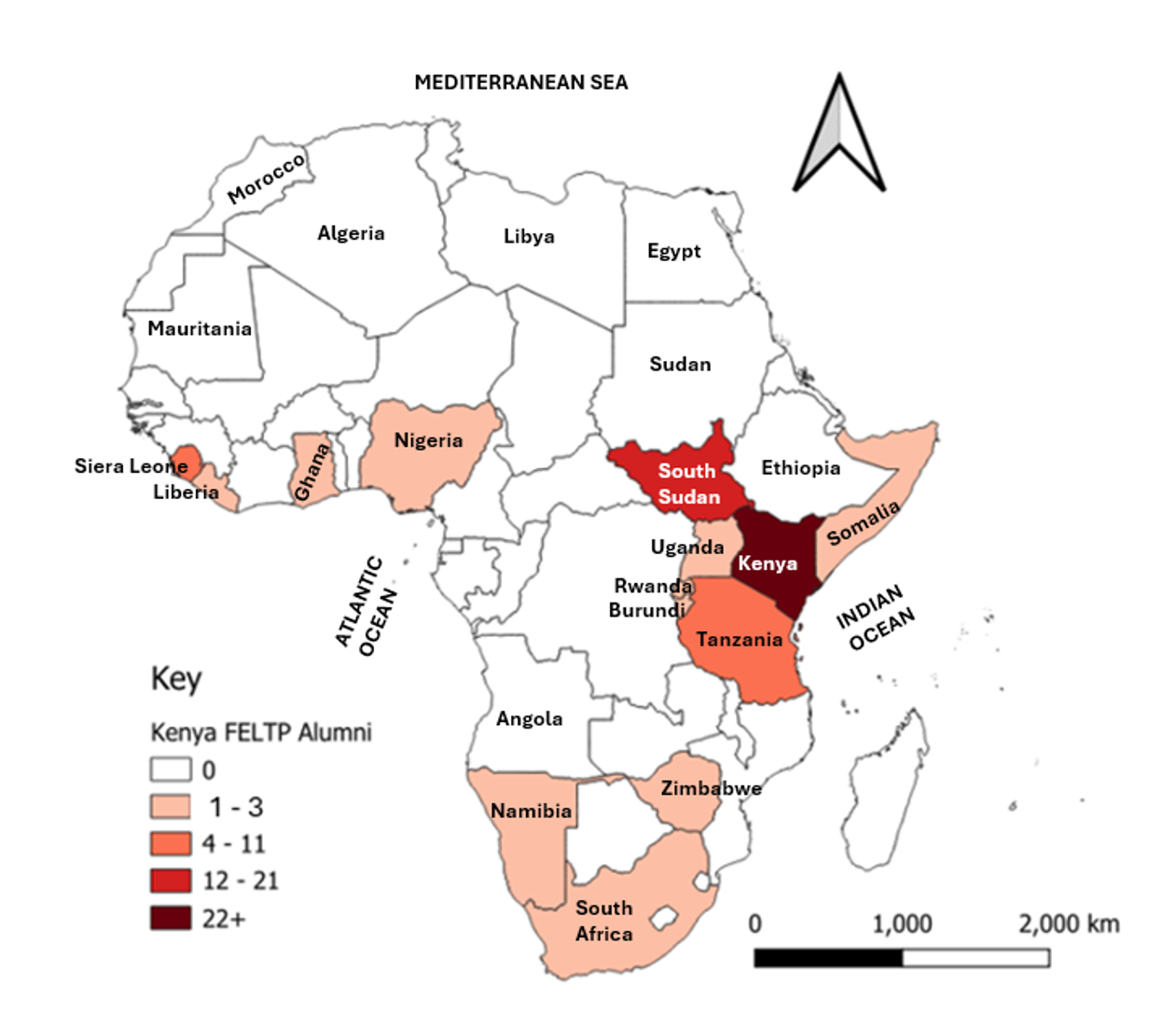
The FELTP advanced program admitted uninterrupted 20 cohorts made of 328 trainees into the advanced level program from 2004 through 2024, with 212 (64.6%) of them being male, 304 (92.7%) Kenyan and 16 (4.9%) South Sudanese nationals (Table 1). As of December 2023, frontline courses had seen 548 participants complete the basic course and 95 participants complete the intermediate course. In the IMPACT program, two cohorts made up of 16 fellows, of whom 10 (62.5%) were male, were admitted into the long course, while 27 fellows were admitted into the short course. Graduates of the programs are spread in various parts of the country and the continent, though a significant majority are working in Kenya, with Nairobi, the capital city, hosting most of the graduates (Figures 2 and 3).
During the 2004–2013 period, the number of trainees admitted to the advanced level under the KFELTP and JKUAT partnership stood at 133, with males at 93 (69.9%), while 95 (71.4%) were enrolled in the MSc in Applied Epidemiology and 38 (28.5%) in the MSc in Laboratory Management and Epidemiology. In terms of professional background of the residents, 64 (48.1%) were medical doctors, 47 (35.3%) medical laboratory scientists, 11 (8.3%) veterinary doctors, 2 (1.5%) dentists, 6 (4.5%) nurses and 1 (0.8%) nutritionist. From 2014 through 2024, under the KFELTP and Moi University partnership, 195 trainees were admitted to pursue an MSc in Field Epidemiology, with 119 (61.0%) of them being male. The cadres enrolled included 57 (29.2%) medical doctors, 45 (23.1%) medical laboratory scientists, 29 (14.9%) veterinary doctors, 18 (9.2%) nurses and 24 (12.3%) public health officers. Professional backgrounds of fellows admitted to the IMPACT program included seven Medical Officers, three Clinical Officers, three Laboratory Scientists, two nurses, and one public health officer. Over the two decades, the program has had uninterrupted enrollment of 20 cohorts in the advanced level training, making it possible to have at least a graduate from each of the counties in Kenya (Fig. 2). The graduates have been deployed in various parts of the country and the continent to perform various roles, including establishing other FETPs and offering technical support for the FETPs (Table 4)
Response to events of public health importance
One major contribution of the program since its inception has been in responding to public health emergencies and disease outbreaks in Kenya and the region. The first three cohorts of trainees played key roles in responding to recurrent outbreaks of aflatoxicosis in Kenya from 2004 to 2007. They participated in systematic investigations of the outbreak, conducting specific further analytical studies that informed important prevention and control measures that have contributed to the reduction of this public health challenge over the years, consequently saving hundreds of lives [15,16]. In 2006 – 2007, a major regional outbreak of Rift Valley Fever (RVF) occurred in Kenya and Tanzania [17–19]. The program trainees helped with characterizing the outbreak, identifying the drivers, and informing the short term and long term control measures [20,21]. In addition to outbreak investigation, the trainees have participated in other activities of public health importance like water quality analyses and assessment of lead levels in the environment [22] (Figure 1).
KFELTP graduates and trainees have become the first-line responders during outbreaks of national concern including meningitis, cholera, measles, and polio [23,24]. Other regional outbreaks that the residents have participated in include the Chikungunya outbreak in Comoros, Avian Influenza in Nigeria, Ebola outbreak in Uganda, Rift Valley Fever in Lesotho, and Cholera outbreaks in Zimbabwe and Cameroon [25,26]. KFELTP trainees have also been called upon to participate in other humanitarian emergencies like the post-election violence that occurred in Kenya after the 2007 general elections, during which the trainees conducted rapid health assessments, established and managed disease surveillance in the internally displaced persons’ camps, and affected districts [27]. Graduates from the frontline courses have been engaged by teams from the advanced level training during outbreak investigations, including RVF in the northern part of Kenya and Cholera in Nairobi and parts of northern Kenya (Figure 1).
During the COVID-19 pandemic, the KFELTP residents conducted case searches, contact tracing, rapid response and data management at the national and county levels as part of response activities geared towards containment of the pandemic [28–30]. Since COVID-19 was a novel disease, a lot of information on the epidemiology of the disease was still being gathered around the world; the Kenya FELTP residents contributed to these efforts by sharing their findings with the wider regional and global audience as part of the Kenya FELTP competency [29].
The residents in the advanced level program have conducted surveillance system evaluations in diverse public health areas, including surveillance systems for major endemic diseases like HIV/AIDs, malaria, tuberculosis, and outbreak-prone diseases like influenza, cholera, and measles. They have also completed planned protocol-based studies covering a wide range of public health themes, with infectious diseases and outbreak-prone conditions accounting for the largest share of studies (153; 47.7%), followed by non-communicable diseases and injuries (44; 13.7%), reproductive, maternal, child and adolescent health (35; 10.9%), and zoonotic, vector-borne and One Health conditions (34; 10.6%) (Table 3).
At the continental level, graduates and residents of the program have been involved in activities in various countries in Africa (Figure 3). During the Ebola outbreak in West Africa in 2014-2016, senior residents and graduates were involved in response activities in Sierra Leone, where they helped with contact tracing, case registration, risk assessment and communication, among others. They contributed to the information that was generated in relation to the outbreak [31,32]. The graduates and residents also took part in response activities for the Rift Valley Fever outbreak that affected the Eastern Africa region in 2007–2008, with some of them being deployed to Tanzania [33,34]. Alumni of the program have taken lead roles in various projects supported by partners in West Africa, Southern Africa and in the East African region, focusing on disease surveillance and evaluation of outbreak investigations and responses [35–38].
Communication of findings and accomplishments
One of the principles of epidemiology in public health is the sharing of information and relevant study findings with relevant stakeholders and interested parties for action. Towards this, KFELTP residents and alumni published papers in peer-reviewed journals across the world, with over 45 publications from the advanced-level course, three from the frontline courses, and one from IMPACT. In addition, the residents shared their findings in several fora and scientific conferences locally, regionally, and internationally. KFELTP in 2015 initiated a local annual dissemination forum where residents share their findings with partners, FELTP alumni, and the various divisions within the Ministry of Health. Eight of these dissemination meetings had been held as of the end of December 2024.
Having successfully met the set criteria for accreditation as spelt out in the TEPHINET minimum requirements for accreditation, KFELTP received the accreditation in 2017. The accreditation allowed the program to align with common standards that support quality training and increased recognition of KFELTP’s value in supporting public health priorities in Kenya.
Deployment of graduates and participation in alumni association
Over the years, graduates of the program have been deployed to various leadership positions in Kenya, Uganda, Tanzania, South Sudan, Rwanda, and Nigeria (Table 4). The graduates of the program serve in key public health leadership positions within the country. KFELTP staff, trainees, and graduates have also been instrumental in the institutionalisation of “One Health” initiatives in Kenya. The program, due to its unique position of jointly training veterinarians and physicians, provided the initial platform by bringing together the human and animal health sectors in the country to discuss common issues at the human and animal health interface. These forums eventually culminated in the establishment of the Zoonotic Technical Working Group and later the Zoonotic Diseases Unit in Kenya. These institutions now foster closer collaboration, such as joint disease surveillance, regular information sharing, and outbreak response, resulting in better control and prevention of zoonotic diseases in Kenya.
An umbrella body, the Field Epidemiology Society of Kenya (FESK) was formed by alumni of the program to provide a forum where alumni of the program can interact and explore ways of improving epidemiological interventions in public health in Kenya. The FESK has been instrumental in sharing information on grant availability, career growth opportunities, publications of interest, and disease situations locally and internationally. At the end of 2018, FESK conducted three grant writing workshops facilitated by invited grant masters with support from AFENET. About USD 400,000 worth of funds had been secured by the alumni of the program to implement several projects of public health significance.
KFELTP has supported the effort geared towards effective response to public health events by equipping government officers with key competencies in epidemiology and laboratory management through its experiential service-oriented training. The program has contributed to an increase in the number of competent epidemiologists that has led to improved human resource capacity. Events of public health importance require effective response coordinated and implemented by epidemiologists at the local, regional, and international levels. The trainees and graduates of the various courses in the program are providing critical technical leadership in important public health activities locally, regionally, and internationally by applying the acquired competencies.
The program emphasises the attainment of competencies in public health surveillance, which is one of the important pillars in public health practice. Trainees have evaluated several surveillance programs, often highlighting critical areas of improvement. In Kenya, the roll-out of the Integrated Disease Surveillance and Response (IDSR) strategy has largely been led by FELTP trainees and graduates. The initiation of the weekly epidemiological bulletin by graduates and residents of FELTP has contributed to the improvement of reporting by sub-county, county, and national surveillance in general. Following the introduction of IDSR in the WHO African Region, FELTP graduates assumed key positions in national epidemiology units and played a central role in surveillance implementation, outbreak investigation, data analysis, and dissemination of weekly epidemiological bulletins across several countries, including Kenya, Uganda, Zimbabwe, Tanzania, and Ghana [39]. However, while the current finding suggests that IDSR implementation has been largely driven by FELTP trainees and graduates, the literature emphasizes that sustainable surveillance systems require institutionalization of field epidemiology capacity across all levels of the health system. Countries with limited numbers of trained epidemiologists continue to face challenges in maintaining surveillance quality, underscoring the need to expand FETP coverage while integrating graduates into permanent surveillance and emergency response structures [40].
The short courses in basic applied epidemiology have also contributed to the creation of a pool of mid-level public health players with whom the epidemiologists can build networks, work with and contribute to better surveillance in the whole country. During the investigation of outbreaks, the frontline graduates are normally incorporated into the investigation teams, thus creating synergy at the national and sub-national levels. The frontline graduates at the local levels play vital roles since they are conversant with their areas of operation, thus making community entry easier. In theory, a wider prevalence of epidemiologists and managers at the county level would lead to better integration of national and sub-regional level functions; Inclusion of frontline graduates in response activities helps in the generation of quality and reliable data that can be used in informing the implementation of appropriate interventions for disease control and prevention tailored for the local level where the health events have occurred and ensuring containment of disease outbreaks at the sites or regions of occurrence [31,40].
During the RVF outbreak that occurred in Kenya in 2006–2007, one lesson that emerged was the need to sustain and enhance the linkages between the human health and animal health sectors. This informed the decision to admit trainees from the Ministry responsible for Livestock Development to undergo training in applied epidemiology within the same setting as their Ministry of Health counterparts. Since then, veterinarians, laboratorians, and medical doctors have teamed up to respond to outbreaks at the human-animal interface in various areas in the country. These experiences provided a platform to establish and institutionalize the Zoonotic Diseases Technical Working Group, for which KFELTP was the initial secretariat and eventually culminated in the establishment of the Zoonotic Diseases Unit, which is run by Kenya FELTP graduates from both animal health and human health ministries. This finding is also consistent with recent global guidance on the Competencies for One Health Field Epidemiology (COHFE), which recognises that effective management of zoonotic diseases requires field epidemiologists capable of working across sectors and institutions. The COHFE framework, jointly developed by FAO, WHO, and World Organization for Animal Health (WOAH), specifically identifies collaboration with veterinary, environmental, and agricultural stakeholders as a core competency for FETP graduates, reinforcing the role observed in this article [41].
Graduates of K- FELTP have continued to contribute back to the program through their participation in teaching, supervision, and mentoring of newer cohorts. As at the time of writing this article, the Program Director, Resident Advisor, and three field coordinators were graduates of the program. In the region, other graduates have contributed to the establishment and provision of technical support for newer FELTP programs in Africa. Apart from the Kenyan program, KFELTP graduates are providing technical support in four other FETPs in sub-Saharan Africa. They are working as regional coordinators or resident advisors in Nigeria (West Africa), Tanzania, Rwanda, and Namibia. As part of ensuring sustainability in FETPS, and reduction of reliance on external international expertise, many African countries have leveraged graduates from established programs to develop curricula, mentor trainees, build faculty capacity, and establish quality assurance systems. This approach has promoted local context learning, strengthened regional ownership, and enhanced the sustainability of newly established programs [40,42]. Even though there is emphasis on the significant contribution of graduates to establishing new FETPs, several persistent challenges exist. The expansion of FETPs has often depended on external technical and financial support, particularly during the early phases of program establishment [43]. In many Low to Medium Income Countries workforce development is impeded by shortages of experienced faculty, inadequate domestic financing, and limited institutionalization necessitating the need for partnerships, and deliberate succession planning to maintain program quality and reduce dependence on external partners [42,43].
Challenges
The Kenya FELTP has had some challenges that might prevent it from achieving full potential. One of the critical challenges has been how to balance the academic requirements of the university while allowing sufficient time to achieve field placement competencies like outbreak investigations. To maximise field experiences, the didactic course blocks were originally arranged into five 2–5-week sessions followed by examinations at the end of the first and second semesters of the first year. However, the courses may not be in synchrony with the university calendar, and this may have led to the review and change to three longer sessions. Although it could be possible to achieve the field competencies, the longer sessions in class could imply that students might often not be available as and when required to respond to public health emergencies.
The changing global funding landscape, where many traditional donors are shifting their priorities toward emerging global issues, resulting in reduced and less predictable funding for existing public health programs, has had a negative impact on the program. The changes in funding could affect the sustainability of the program, especially if the government of Kenya does not add more resources to support the program.
Future prospects
The program is embedded within the MoH, with a full-time program director and field coordinators deployed by the Ministry of Health and Ministry of Agriculture, an indication of greater recognition of the contribution of FELTP towards the mission of the Kenya government agenda on health. However, the long-term impact on capacity building in the country could be achieved through improved resource mobilization and utilization by MOH and partners. Although the number of trained field epidemiologist increased over the 20 years of Kenya FELTP existence, there is still a need to train more epidemiologists for the country due to natural attrition and movement of trained personnel within and out of the country. This will enable the country to meet and maintain the required ratio of number of epidemiologists per population as advocated for by the WHO and other stakeholders [45–47]. The mid-to-long-term goals remain to promote the building of health systems to benefit the graduates and contribute to the improvement of public health indicators in the country. To do this, the program will have to seek additional partnerships and advocate for support for the various activities by the MoH and MALF to augment the current assistance from the development partners.
The Kenya Field Epidemiology continues to contribute to improving the health of the population by strengthening surveillance and improving response to public health emergencies and containment of outbreaks. While it is meeting its objectives, there is a need for greater support to ensure continuity of the training program and consolidation of the gains already made.
What is already known about the topic
What this study adds
The authors wish to acknowledge the Ministry of Health, Kenya, Ministry of Agriculture, Livestock, Fisheries and Irrigation, Kenya, the US Centers for Disease Control and Prevention, the Training Programs in Epidemiology and Public Health Intervention Network, the African Field Epidemiology Network and the World Health Organization. We wish to thank the former heads of the Kenya FELTP, Dr Josephine Githaiga, Dr Zeinab Gura, Dr Jared Omolo and the late Dr. Samuel Amwayi, for their immense contribution to the program. Our gratitude also goes to the former resident advisors, Dr Ahmed Abade, Tura Galgalo, Dr. Kariuki Njenga, Wences Alvelo and the late Dr Sara Lowther for their support and guidance during their tour of duty with the KFELTP. We are very thankful to Dr Shahnaaz Sharrif for his dedication to the success of the program at its formative stages when he headed the public health docket in the Ministry of Health. We extend our gratitude to the field coordinators, supervisors and mentors who have helped train the residents.
Conceptualization: Maurice Omondi Owiny, Jane Githuku, Caren Ndeta, Athman Mwatondo, Bonface Waweru
Formal Analysis: Maurice Omondi Owiny, Bonface Waweru
Investigation: Bonface Waweru
Methodology: Maurice Omondi Owiny, Jane Githuku, Caren Ndeta, Athman Mwatondo, Bonface Waweru
Resources: Bonface Waweru
Supervision: Bonface Waweru
Writing – Original Draft: Maurice Omondi Owiny, Bonface Waweru
Writing – Review & Editing: Maurice Omondi Owiny, Jane Githuku, Caren Ndeta, Athman Mwatondo, Bonface Waweru
Table 1: Demographic Characteristics of Advanced Level Kenya FELTP Residents, 2004–2024 (n=328)
| Variables | Number | Proportion (%) |
|---|---|---|
| Sex | ||
| Male | 212 | 64.6 |
| Female | 116 | 35.4 |
| Cadre | ||
| Medical Doctors | 121 | 36.9 |
| Medical Laboratory Scientists | 92 | 28.0 |
| Veterinary Doctors | 40 | 12.2 |
| Public Health Officers | 25 | 7.6 |
| Nursing Officers | 24 | 7.3 |
| Pharmacists | 14 | 4.3 |
| Clinical Officers | 6 | 1.8 |
| Dentists | 3 | 0.9 |
| Nutritionists | 3 | 0.9 |
| Country | ||
| Kenya | 304 | 92.7 |
| South Sudan | 16 | 4.9 |
| Tanzania | 4 | 1.2 |
| Uganda | 2 | 0.6 |
| Burundi | 1 | 0.3 |
| Ghana | 1 | 0.3 |
Table 2: Competencies for the advanced level FELTP and their Evaluation Methods
| Competency | Expected Demonstration | Evaluation Methods |
|---|---|---|
| Public Health Surveillance | Design, implement, evaluate, and improve surveillance systems; analyze surveillance data; recommend actions. | Review of surveillance evaluation reports, supervisor assessments, field observation, oral presentations, competency checklists. |
| Investigation and Response to Acute Public Health Events | Verify outbreaks, conduct descriptive and analytic epidemiology, generate hypotheses, implement control measures, communicate findings. | Assessment of outbreak investigation reports, field performance during investigations, mentor evaluations, case presentations, after-action reviews. |
| Conduct Epidemiologic Studies | Design and conduct cross-sectional, case-control, cohort, or operational research studies; analyze and interpret data. | Protocol review, research proposal approval, assessment of completed study reports, manuscript preparation, conference presentations. |
| Data Management and Biostatistics | Manage datasets, perform statistical analyses, interpret results, and produce epidemiologic summaries. | Practical data analysis exercises, review of statistical outputs, coding assignments (e.g., R, Stata, Excel), supervisor feedback. |
| Scientific Communication | Prepare technical reports, abstracts, manuscripts, policy briefs, and deliver oral presentations. Communicate public health risks effectively to technical and non-technical audiences. | Evaluation of written reports, conference abstracts, manuscripts submitted for publication, oral presentation scoring rubrics. Observation during media briefings, stakeholder presentations, communication products, mentor assessment. |
Table 3: Broad Thematic Areas of Protocol-Based Studies Conducted by Advanced-Level KFELTP Residents, 2004–2024 (n=321)
| Broad thematic area | Frequency (n=321) | Proportion (%) |
|---|---|---|
| Infectious diseases and outbreak-prone conditions | 153 | 47.7 |
| Non-communicable diseases and injuries | 44 | 13.7 |
| Reproductive, maternal, child and adolescent health | 35 | 10.9 |
| Zoonotic, vector-borne and One Health conditions | 34 | 10.6 |
| Vaccine-preventable and immunization-related diseases | 19 | 5.9 |
| Health systems, UHC and service delivery | 12 | 3.7 |
| Neglected tropical and parasitic diseases | 8 | 2.5 |
| Mental health, nutrition and substance use | 5 | 1.6 |
| Mortality studies | 2 | 0.6 |
Table 4: Areas of Deployment of FELTP Alumni, Kenya, 2004–2024
| Area of Deployment | Position Held by KFELTP Alumni |
|---|---|
| LOCAL (Kenya) | |
| Disease Surveillance and Response Unit | Head and Deputy Head |
| Kenya FELTP | Head and Coordinators |
| Vaccines | Deputy Head |
| M/E- Monitoring and Evaluation | Head |
| Tuberculosis | Infection Control and Epidemiology Leads |
| Non-Communicable Disease | Epi Lead |
| National Public Health Lab | Monitoring and Evaluation |
| Violence & injury | Unit Head |
| Disaster and Preparedness unit | Head |
| County Governments | County Epidemiologists, Various |
| Zoonotic Disease Unit | Veterinary Coordinator, Epi Lead |
| CDC Kenya | |
| Trachoma Program | Control Coordinator |
| Preventative Health | Director-General |
| Research Unit | Head |
| REGIONAL | |
| Rwanda FELTP | Epidemiology Advisor |
| Namibia FELTP | Epidemiology Advisor |
| Tanzania FELTP | Laboratory Advisor |
| Nigeria FELTP | Regional Technical Advisor |
| INTERNATIONAL | |
| WHO/Kenya | Head of Expanded Program on Immunization |
| WHO/South Sudan | Head of Expanded Program on Immunization |