
Research | Open Access | Volume 9 (3): Article 131 | Published: 07 Aug 2026

Views: 1,249
Menu, Tables and Figures
Table 1: Operational definitions and assessment of the contagious pustular dermatitis surveillance system attributes
| Attributes | Operational definitions | Indicators used |
|---|---|---|
| Stability | The reliability and availability of the CPD surveillance system to consistently collect, manage, store, and report surveillance data without interruption, including the availability of trained personnel, funding, logistics, office infrastructure, and data management systems. | Source of funding for the system and partners contribution to the operation of the system |
| Acceptability | The willingness of veterinary staff, farmers, and other stakeholders to participate in and comply with the CPD surveillance system through timely reporting, completion of surveillance forms, and cooperation with surveillance activities. | Proportion of facilities submitting reports and the completeness of reports |
| Representativeness | The extent to which the CPD surveillance system accurately describes the occurrence and distribution of suspected CPD cases by person, place, and time within the municipality. | Variability in the distribution of cases by sub-district and variability in monthly and yearly distribution of cases |
| Flexibility | The ability of the CPD surveillance system to adapt to changes in information needs, reporting requirements, case definitions, surveillance procedures, or integration with other animal disease surveillance activities without substantial additional resources, time, or personnel. | Integration with other systems, modification of case definition at any level over the period |
| Simplicity | The degree to which the structure and operation of the CPD surveillance system are easy to understand and implement, including ease of case identification, data collection, completion of reporting forms, data flow, and reporting procedures by veterinary staff. | Surveillance staff knowledge of the case definition and application of the case definition, and number of reporting sources |
| Sensitivity | The ability of the CPD surveillance system to detect and report suspected CPD cases and identify possible outbreaks occurring within the municipality during the evaluation period. | Number of outbreaks and/or cases detected |
| Data quality | The completeness, validity, accuracy, consistency, and reliability of data recorded in the CPD surveillance system, assessed through review of surveillance forms and records for missing, inconsistent, or incomplete information. | Variability in data at different levels, storage and back-up systems, completeness of the data |
| Timeliness | The speed between the occurrence of a suspected CPD case and subsequent steps in the surveillance process, including case detection, reporting, investigation, response, and submission of surveillance reports. | Mean time between case detection and treatment, timeliness of reporting to next level |
| Positive Predictive Value (PPV) | The proportion of reported suspected CPD cases that are confirmed as true CPD cases through laboratory diagnosis. Due to the absence of laboratory confirmation during the evaluation period, PPV could not be quantitatively assessed. | Proportion of suspected cases testing positive |
| Usefulness of system | The extent to which the CPD surveillance system contributes to the detection, reporting, prevention, control, treatment, and monitoring of contagious pustular dermatitis cases and supports public health decision-making and response activities in the municipality. | Proportion of cases treated and cured. Public health actions taken as a result of recommendation of the system |
Table 1: Operational definitions and assessment of the contagious pustular dermatitis surveillance system attributes
Table 2: Annual distribution of contagious pustular dermatitis cases in West Mamprusi, 2019 – 2023
| Year | Number of CPD cases | Total | |
|---|---|---|---|
| Goat | Sheep | ||
| 2019 | 4 | 0 | 4 |
| 2020 | 6 | 0 | 6 |
| 2021 | 0 | 0 | 0 |
| 2022 | 5 | 3 | 8 |
| 2023 | 6 | 0 | 6 |
| Total | 21 | 3 | 24 |
Table 2: Annual distribution of contagious pustular dermatitis cases in West Mamprusi, 2019 – 2023
Samuel Dapaa1,&, Abaki Abdulai1,2, George Akowuah1, Magdalene Akos Odikro1, Samuel Oko Sackey1, Ernest Kenu1
1Ghana Field Epidemiology and Laboratory Training Programme, School of Public Health, University of Ghana, Legon, Accra Ghana, 2Ministry of Food and Agriculture, Veterinary Services Department, North East Region, Ghana
&Corresponding author:
Samuel Dapaa, Ghana Field Epidemiology and Laboratory Training Programme, School of Public Health, University of Ghana, Legon, Accra, Ghana, Email: samuel_dapaa@yahoo.com ORCID: https://orcid.org/0000-0003-1092-0946
Received: 16 Feb 2026, Accepted: 02 Aug 2026, Published: 07 Aug 2026
Domain: Zoonosis
Keywords: Contagious, Pustular, Dermatitis, Surveillance, Evaluation, Ghana
©Samuel Dapaa et al. Journal of Interventional Epidemiology and Public Health (ISSN: 2664-2824). This is an Open Access article distributed under the terms of the Creative Commons Attribution International 4.0 License (https://creativecommons.org/licenses/by/4.0/), which permits unrestricted use, distribution, and reproduction in any medium, provided the original work is properly cited.
Cite this article: Samuel Dapaa et al. Performance gaps in zoonotic disease surveillance: An evaluation of the contagious pustular dermatitis system in West Mamprusi, Ghana, 2024. Journal of Interventional Epidemiology and Public Health. 2026; 9(3):131. https://doi.org/10.37432/jieph-d-26-00054
Introduction: Contagious pustular dermatitis (CPD) is a zoonotic viral disease of goats and sheep. Globally, over 2,000,000 estimated cases are reported annually. In Ghana, CPD is monitored by the Veterinary Services Directorate with the aim of detecting, reporting, isolating, and supporting treatment of cases. We evaluated the CPD surveillance system in West Mamprusi Municipality (WMM) to assess its usefulness, attributes and performance in meeting its objectives.
Methods: We adopted the Centers for Disease Control and Prevention’s 2001 updated guidelines for evaluating public health surveillance systems to evaluate the CPD surveillance system. We interviewed stakeholders, extracted data and reviewed veterinary monthly reports for the 2019-2023 period. Frequencies and percentages were generated for quantitative data, while qualitative data were summarised as themes. Results were presented in text, tables and graphs.
Results: A total of 24 suspected CPD cases were reported, of which 87.5% (21/24) occurred in goats. The highest number of cases, 33.3% (8/24), was recorded in 2022, while no cases were recorded in 2021. Only 33.3% (4/12) of sub-districts reported the cases. All veterinary staff (100%, 12/12) involved in system operations knew the case definition. All identified cases were recorded on the clinical case reporting form (Veterinary Form 3) instead of the scheduled disease outbreak reporting form (Veterinary Form 1). The CPD surveillance system is integrated with scheduled disease surveillance; however, funding for system maintenance is inconsistent.
Conclusion: The CPD surveillance system in WMM was useful, flexible, sensitive, and partially met its objectives. However, representativeness and acceptability were poor. The system was fairly simple but unstable.
Contagious pustular dermatitis (CPD) is a highly contagious zoonotic viral disease of goats and sheep [1]. Its zoonotic potential puts primarily small ruminant farmers, animal health officers and butchers who are in direct contact with infected animals at risk [2]. Additionally, camels, deer, reindeer, musk ox and some wild ruminants can contract CPD irrespective of the animal’s age group [3,4].
CPD virus is a member of the genus Parapoxvirus, it belongs to the family Poxviridae [5]. The disease is characterised by macules, papules, and then pustules to thick crusts on the mouth, lips, ears, eyelids, feet and teats [5]. In severe cases, the dental pad, gum, palate, and tongue get affected with nodular or papilloma-like growths, before becoming covered with thick brown scabs [6,7].
This disease is transmitted mainly by direct contact with infected animals and indirectly through inanimate objects or fomites contaminated by the CPD virus [4,8]. The CPD virus can be found in the scabs and crusts from the lesions of the infected animals [9]. The disease is diagnosed based on identification of clinical signs and confirmed in the laboratory using techniques like viral isolation, molecular assays, electron microscopy and polymerase chain reaction [10]. The disease is more severe in young goats and sheep than in adult animals, with 10-90% mortality and 100% morbidity rates among kids and lambs [11,12]. This results in high economic loss of small ruminant production [13].
CPD is distributed worldwide, and it is endemic in some countries such as Germany, India, and Egypt [2,14,15]. The disease affected over 2 million sheep, and up to £10 million has been lost to this health condition annually in China [11]. In Africa, CPD has been reported among sheep and goats in countries such as Ethiopia, where a prevalence of 12% has been documented [16] and 9.4% among camel calves [17]. In Nigeria, Jos abattoir, over 7,200 cumulative cases were reported sheep and goats in nine years [18]. In Ghana, CPD is considered a scheduled disease (a disease of veterinary and public health importance that is legally required to be reported to veterinary authorities). The disease is monitored by the Veterinary Services Directorate (VSD) with the aim of detecting, reporting, isolating, and supporting treatment of cases. In 2024, VSD in the North East and Upper East regions of Ghana reported over a hundred suspected cases, while in West Mamprusi Municipality, 16 were reported [19]. Contagious pustular dermatitis surveillance system data are obtained from veterinary clinics, slaughterhouse records, and reports from veterinary staff during their passive field activities at operational areas. In Ghana, although some animal disease surveillance systems have been evaluated in the Sunyani West District and Greater Accra Region [20,21], data on the evaluation of the contagious pustular dermatitis surveillance system is very limited. Regular evaluation of the CPD surveillance system will help enhance its effectiveness and performance. We evaluated the CPD surveillance system in the West Mamprusi Municipality to determine whether it meets its objectives and to assess its usefulness and key attributes.
Evaluation design
The evaluation assessed system attributes including simplicity, flexibility, data quality, sensitivity, representativeness, timeliness, stability, acceptability, and usefulness as defined by CDC [22] from January 2019 to December 2023. Data was collected from May to June 2024. The study was primarily a surveillance system evaluation using descriptive methods guided by CDC guidelines. Accordingly, analyses were limited to frequencies, percentages, and thematic summaries rather than inferential statistics.
Evaluation setting
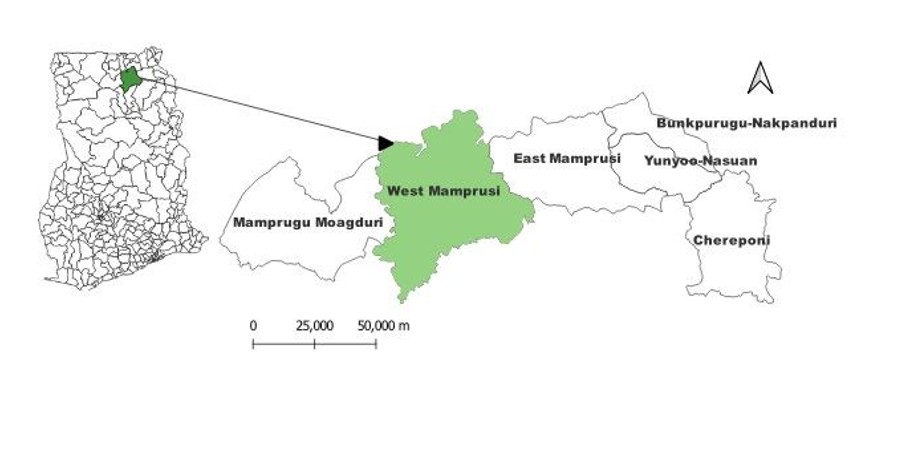
The evaluation was conducted in the West Mamprusi Municipality (WMM) in the North East Region of Ghana. The municipality is located within longitudes 0°35’W and 1°45’W and latitudes 9°55’N and 10°35’N. It has a total land area of 2610.44 km2. The district’s administrative capital (Walewale) is located along the Tamale-Bolgatanga road, 109 kilometres away from Tamale. The geographical location of the study area is shown in Figure 1. According to the 2010 Population and Housing Census, the municipality has a population of 121,117, of whom 49.2% are males. The majority of households in the municipality are into crop farming (96.9%) and livestock production (69.7%) [23]. The municipality has an estimated animal population of 260,295 with 13.3% cattle, 21.6% sheep and 19.1% goats (GSS, 2014). There are 19,266 livestock keepers, out of which 29.2% rear goats, 25.3% rear sheep and 10.0% rear cattle [23]. Most of the small ruminant farmers in the municipality provide partial housing structures for their small ruminants. There are sometimes no shelters for goats, which allows these animals free movement at any time. These small ruminants are extensively exposed to diseases or may spread diseases. The Veterinary Services Directorate in the municipality comprises 13 officers who have been assigned operational areas across the municipality.
Description of the system
Case definitions
Case definitions were adopted from the Veterinary Services Directorate surveillance guidelines and published literature on contagious pustular dermatitis [4].
A suspected case of contagious pustular dermatitis is established by the presence of papules or pustules with any crusts, scabs, painful lesions, or easy-bleeding lesions on the mouth, nostril, eyelids, ears, and feet of an animal. A probable case of contagious pustular dermatitis is defined as a suspect with an epidemiological link to a confirmed case or who has had contact with a confirmed case. A confirmed CPD case is defined as any animal with a positive laboratory result for the CPD virus from a scab, blood or skin tissue.
Information flow in the system
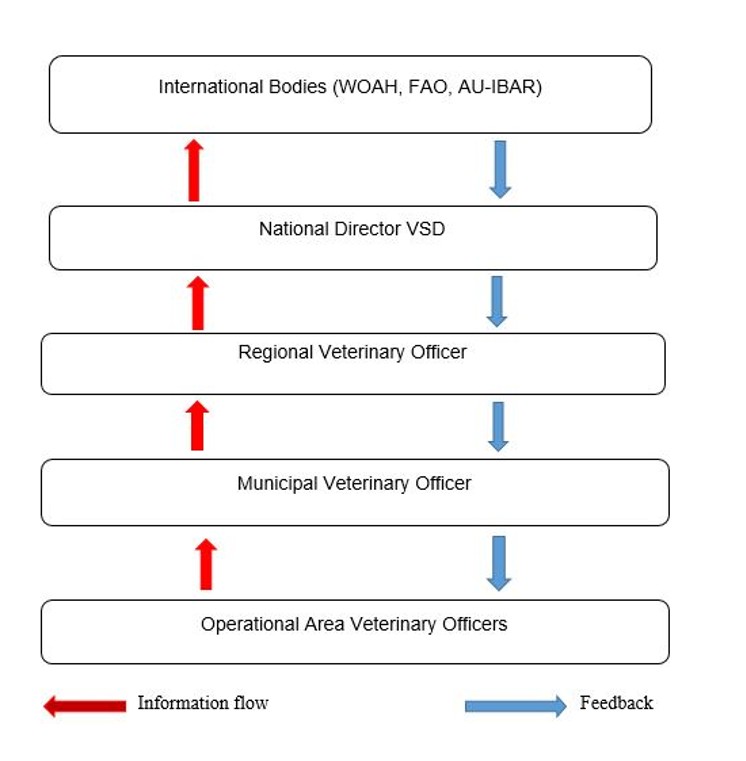
According to the Veterinary Services Directorate reporting framework, farmers report suspected CPD cases to veterinary technical officers. When verified, the veterinary staff immediately report cases in their operational areas to the Municipal Veterinary Officer using the scheduled disease outbreak reporting form (Veterinary Form 1). The report form must capture data such as the date case was reported to veterinary staff, the date veterinary staff visited the farm, the number of animals sick and died, and total number of animals in the flock, the name of the region, district, community, and GPS coordinates of the farm. Other variables include signs and postmortem lesions, specie, sex and age of affected animal, sample taken and date sample was sent to laboratory for confirmation, name and grade of reporting officer. No basic descriptive analysis is done at the municipality level. The Municipal Veterinary Officer compiles all operational area reports on cases and submit them to the Regional Veterinary Officer. The Regional Veterinary Officer collates reports from all six districts and forwards them to the national level where an epidemiologist analyses all the data. This is then shared with international bodies such as the World Organization of Animal Health (WOAH), African Union Inter-African Bureau for Animal Resources (AU- IBAR), Food and Agriculture Organization (FAO) according to the International Health Regulation (IHR) [24]. The information flow and reporting structure of the CPD surveillance system are illustrated in Figure 2.
Data sources and collection
Contagious Pustular Dermatitis (CPD) surveillance data in available monthly veterinary reports at the West Mamprusi Municipality Veterinary Office and the Regional Veterinary Office of the Veterinary Services Directorate from January 2019 to December 2023 were extracted and reviewed using a structured data extraction checklist. These data were used to assess system performance indicators, including numbers of cases detected, reporting patterns, timeliness, representativeness, and data quality. Qualitative data were obtained through key informant interviews (KIIs) with Regional Veterinary Officer (RVO), Animal Health Officers and small ruminant farmers via face-to-face using semi-structured interview guides. All the veterinary staff in the district were involved while a section of the small ruminant farmer available were selected through snowballing. Information obtained through KIIs was used to assess system usefulness, simplicity, flexibility, acceptability, stability, and operational challenges.
Assessing whether the CPD surveillance system meets its objectives
We assessed the surveillance system’s objectives through review of veterinary surveillance records and stakeholder interviews to determine if the system detected, isolated, reported and treated CPD cases.
Assessing the attributes of the system
The surveillance system attributes were assessed using the updated CDC Guidelines for Evaluating Public Health Surveillance Systems, which recommend evaluation of usefulness, simplicity, flexibility, data quality, acceptability, sensitivity, predictive value positive, representativeness, timeliness, and stability. We assessed the attributes of the system based on the operational definitions and indicators as shown in Table 1.
Data analysis
The collected data were entered into and stored electronically in a Microsoft Excel spreadsheet. The quantitative data was analyzed using descriptive statistical methods to generate frequencies and percentages. Proportions of ≥80% were considered good, 60–79% fair, and <60% poor. Qualitative attributes were assessed using triangulation of stakeholder responses, documentary evidence, and system performance records. Results from the analysis were presented in text, tables and graphs.
Ethical considerations
Ethical approval with reference number GHS-ERC: 023/05/24 was obtained from the Ghana Health Service Ethics Review Committee through the Ghana Field Epidemiology and Laboratory Training Programme. Permission was obtained from the Regional Veterinary Services Directorate to access official reports on CPD, and written consent of participants was obtained.
System performance
A total of 23 stakeholders were interviewed for this evaluation of which 56.5% (13) were veterinary staff from the sub-district to the regional level and 43.5% (10) small ruminant farmers selected at the district level. The majority of stakeholders, 91.3% (21/23) were males. About 92.3% (12/13) of the veterinary staff worked at the district level. The mean age of veterinary staff interviewed was 35.5±6.8 and the mean years of service was 5.2±4.2. The mean age of small ruminant farmers interviewed was 47.4±16.3 years.
Usefulness of the system
The system was able to detect and clinically diagnose 24 suspected animals with typical signs of contagious pustular dermatitis (CPD) over the evaluation period (Table 2). The 24 affected animals were isolated and successfully treated. Reports submitted on identified cases and exchange of information within the surveillance system from one level to the other were available for evaluation. From the interviews, veterinary staff indicated that they carried out public education to help control and prevent CPD spread.
Assessment of system attributes
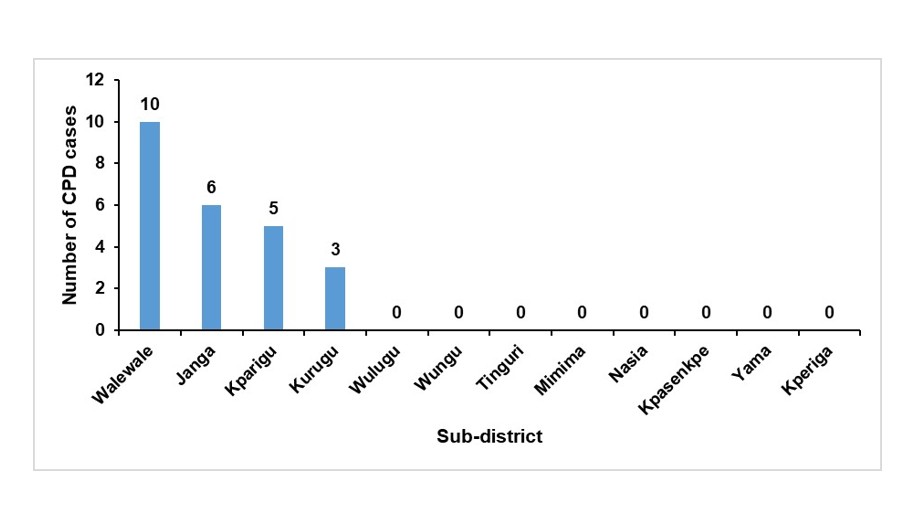
Sensitivity: The CPD surveillance system detected 24 suspected cases, from four sub-districts from January 2019 to December 2023. However, none of these cases was confirmed through laboratory testing. Denominator data for all animals under surveillance were not available in the reviewed records, hence incidence rates could not be calculated to quantify sensitivity of the system.
Simplicity: All the veterinary staff 12/12 (100%) who worked at the district level knew the CPD case definition and could easily identify and report suspected/probable cases. CPD cases were diagnosed clinically based on presenting signs and symptoms. All the municipal veterinary staff interviewed could complete and report CPD cases using clinical case report form (Veterinary Form 3). They, however, found it difficult to complete the schedule diseases outbreak report form (Veterinary Form 1), because of the high number of variables required.
Stability: Resources and funding allocated for CPD surveillance were inadequate. Motorbikes, stationaries and logistics needed to improve field surveillance were lacking due to absence of partner support to the CPD surveillance system. Apart from staff salaries, the region only receives GH₵3,000 for all administrative and surveillance activities every three months within a year. Due to inadequate funding, farmers are occasionally requested to fund the cost of testing samples taken in their farms. The districts lacked permanent office spaces equipped with computer systems. There was no data back-up system available.
Acceptability: Only 33.3% (4/12) of the veterinary staff of WMM reported suspected cases from sub-district operational areas. All suspected cases (24/24) were recorded on the clinical case report form (Veterinary Form 3) instead of the scheduled diseases outbreak report form (Veterinary Form 1). Out of the 12 veterinary staff interviewed, 75% (9/12) admitted detecting cases recently. All the small ruminant farmers (10) interviewed were willing to report cases when detected.
Flexibility: The CPD surveillance system has been integrated with other scheduled disease surveillance programs of the VSD.
Timeliness: Only 4/12 of the veterinary staff reported CPD cases from records reviewed at the district level, but the reporting to the next regional level was done on a monthly basis. Veterinary staff, 33.3% (4/12) who managed all the 24 suspected cases did so within 24 hours after farmers reported.
Representativeness: All twenty-four suspected cases were reported from only four out of twelve sub-district operational areas (Figure 3). Most, 33.3% (8/24), were recorded in 2022, while no case was recorded in 2021.
Data quality: At the regional level, 12 Veterinary Form 3 (VF3) reports submitted in 2019 could not be traced. Also, four VF3 reports submitted in 2022 could not be traced at the district level. No reliable data storage facilities, such as cupboards and lockers, were available.
This evaluation revealed that while the CPD surveillance system in WMM is useful and sensitive, major weaknesses exist in laboratory confirmation, data quality, and system stability. During the evaluation period, the Contagious Pustular Dermatitis (CPD) surveillance system demonstrated notable strengths in its utility for managing zoonotic disease threats in rural communities. CPD poses significant risks to both animal production and public health. Its control is therefore critical not only for livestock production but also for public safety [1]. The surveillance system proved particularly effective in facilitating early detection and timely reporting of suspected cases to higher administrative levels. This upward flow of information enabled regional and national authorities to allocate resources, coordinate responses, and monitor disease trends in alignment with the Integrated Disease Surveillance and Response (IDSR) framework [2]. These findings are similar to findings reported in Ghana and Zimbabwe in tuberculosis (TB) surveillance system evaluations [25,26].
Equally commendable was the system’s ability to initiate immediate responses. Veterinary officers were able to act swiftly on reported cases by implementing control measures such as isolation, treatment, and environmental sanitation. This helped contain outbreaks and minimized reliance on centralized services. Moreover, the system’s emphasis on community education empowered farmers to recognize CPD symptoms and report suspected cases, fostering a collaborative surveillance culture and enhancing grassroots participation [3].
Despite these strengths, the system fell short in achieving its broader objectives. While it exhibited sensitivity through clinical case detection, its positive predictive value (PPV) was undermined by limited laboratory confirmation. The financial burden placed on farmers for sample testing may have discouraged laboratory confirmation, increasing the likelihood of false positives and inflating case counts. This trade-off between sensitivity and specificity is a common challenge in resource-limited settings, but it highlights the need for subsidized diagnostics or improved field-level training [4]. This is inconsistent with findings from Sunyani West Municipality and Greater Accra Region where some other animal surveillance systems were able to confirm cases through laboratory [20,21].
More concerning were the systemic gaps that compromised the system’s overall performance. In 2021, no CPD cases were officially reported, raising questions about operational continuity. Although several field officers reported to have identified cases, none was formally documented, suggesting a breakdown in reporting compliance. The low level of reporting in 2021 may reflect reduced prioritization of CPD compared with other zoonotic diseases receiving greater public health attention. Misuse of reporting tools, specifically the substitution of Veterinary Form 3 for the designated Form 1, led to the omission of critical data such as GPS coordinates and detection dates, further eroding data quality [4]. This is inconsistent with the findings reported in Greater Accra Region where bovine tuberculosis surveillance system captured cases every year [21]. The importance placed on tuberculosis due to its zoonotic potential compared to CPD could be the cause of this difference.
Stakeholder engagement also appeared weak. The reluctance of field staff to report cases and the inconsistent use of forms pointed to low acceptability and limited ownership of the system. This disengagement, coupled with the system’s poor geographic representativeness, meant that surveillance outputs failed to reflect the true epidemiological landscape of CPD across the municipality. This is inconsistent with the findings of an evaluation of tuberculosis (TB) surveillance systems in Bulilima District in Zimbabwe, and Greater Accra region in Ghana, where all facilities were reporting [21,25]. The inconsistency could arise from the differences in the subjects under surveillance as the TB systems were related to humans.
Infrastructure limitations may have further strained the system’s stability. Inadequate office space, lack of computers, and poor data storage practices such as reliance on personal devices without backups may have resulted in data loss and compromised continuity. The veterinary staff strength in the region is inadequate and could lead to higher workload for fewer staff. This may contribute to the loss of valuable surveillance data. This is consistent with the findings from evaluation of rabies and tuberculosis surveillance systems [20,21,27]. These weaknesses not only affected data integrity but also hindered timely reporting as corroborated in the evaluation of tuberculosis surveillance systems in some part of Ghana and Zimbabwe, where they reported loss of surveillance data [25,26]. Funding challenges hindered the optimal functioning of the system and this is consistent with the findings documented during their evaluation of rabies and bovine tuberculosis surveillance system [20,21]. Inadequate funding and logistics may contribute to under-detection, underreporting, delayed response, and possible continued disease transmission within affected communities. Collectively, these factors posed a threat to the stability of the system.
Although field officers responded promptly to farmer alerts, formal reports to higher levels were often delayed beyond the required 24-hour window, reducing the system’s responsiveness. This is inconsistent with the observations made in surveillance systems evaluation in Ghana and Uganda [20,27].
It was noticed that surveillance data were just compiled and forwarded to next level by both municipal and regional veterinary officers without analysis. This posed the threat of missing possible emerging outbreaks in the municipality and the region CPD surveillance data were used at lower level compared to the higher levels. This is consistent with the findings reported in bovine tuberculosis surveillance system evaluation [21].
While the CPD surveillance system showed promise through its community engagement and field-level responsiveness, it struggled with underreporting, procedural lapses, infrastructural instability, and data quality issues. The absence of secure storage and backup systems were contributors to poor data quality.
This evaluation is the first documented assessment of a Contagious Pustular Dermatitis (CPD) surveillance system in Ghana and was conducted using CDC guidelines, ensuring a systematic appraisal of key surveillance attributes. The use of both record reviews and stakeholder interviews over a five-year period strengthened the credibility of the findings.
However, none of the suspected cases were laboratory-confirmed, limiting assessment of positive predictive value and diagnostic accuracy. Denominator data for all animals under surveillance were inconsistently reported. Therefore, incidence rates could not be calculated to quantify the sensitivity of the system. Missing records and incomplete documentation may have affected data quality assessment, and the small number of reported cases may limit generalizability. Additionally, reliance on self-reported information together with purposively selected small ruminant farmers may have introduced recall and social desirability biases.
The CPD surveillance system in WMM is useful, sensitive, and flexible; however, poor representativeness, weak data quality, poor acceptability and inadequate laboratory confirmation limit its effectiveness. The system was partially meeting its objectives, fairly simple but unstable. Strengthening diagnostic capacity, reporting compliance, and data management systems is essential. Greater governmental recognition of CPD as an important zoonotic disease requiring strengthened surveillance, laboratory support, and sustained control measures is recommended.
What is already known about the topic
What this study adds
Sincere appreciation goes to North East Regional veterinary officer, all the veterinary staff in West Mamprusi VSD and the Ghana Field Epidemiology and Laboratory Training Programme (GFELTP).
Availability of Data and Materials
All data generated or analyzed during this study are included in this published article. For other data, these may be requested through the corresponding author.
Table 1: Operational definitions and assessment of the contagious pustular dermatitis surveillance system attributes
| Attributes | Operational definitions | Indicators used |
|---|---|---|
| Stability | The reliability and availability of the CPD surveillance system to consistently collect, manage, store, and report surveillance data without interruption, including the availability of trained personnel, funding, logistics, office infrastructure, and data management systems. | Source of funding for the system and partners contribution to the operation of the system |
| Acceptability | The willingness of veterinary staff, farmers, and other stakeholders to participate in and comply with the CPD surveillance system through timely reporting, completion of surveillance forms, and cooperation with surveillance activities. | Proportion of facilities submitting reports and the completeness of reports |
| Representativeness | The extent to which the CPD surveillance system accurately describes the occurrence and distribution of suspected CPD cases by person, place, and time within the municipality. | Variability in the distribution of cases by sub-district and variability in monthly and yearly distribution of cases |
| Flexibility | The ability of the CPD surveillance system to adapt to changes in information needs, reporting requirements, case definitions, surveillance procedures, or integration with other animal disease surveillance activities without substantial additional resources, time, or personnel. | Integration with other systems, modification of case definition at any level over the period |
| Simplicity | The degree to which the structure and operation of the CPD surveillance system are easy to understand and implement, including ease of case identification, data collection, completion of reporting forms, data flow, and reporting procedures by veterinary staff. | Surveillance staff knowledge of the case definition and application of the case definition, and number of reporting sources |
| Sensitivity | The ability of the CPD surveillance system to detect and report suspected CPD cases and identify possible outbreaks occurring within the municipality during the evaluation period. | Number of outbreaks and/or cases detected |
| Data quality | The completeness, validity, accuracy, consistency, and reliability of data recorded in the CPD surveillance system, assessed through review of surveillance forms and records for missing, inconsistent, or incomplete information. | Variability in data at different levels, storage and back-up systems, completeness of the data |
| Timeliness | The speed between the occurrence of a suspected CPD case and subsequent steps in the surveillance process, including case detection, reporting, investigation, response, and submission of surveillance reports. | Mean time between case detection and treatment, timeliness of reporting to next level |
| Positive Predictive Value (PPV) | The proportion of reported suspected CPD cases that are confirmed as true CPD cases through laboratory diagnosis. Due to the absence of laboratory confirmation during the evaluation period, PPV could not be quantitatively assessed. | Proportion of suspected cases testing positive |
| Usefulness of system | The extent to which the CPD surveillance system contributes to the detection, reporting, prevention, control, treatment, and monitoring of contagious pustular dermatitis cases and supports public health decision-making and response activities in the municipality. | Proportion of cases treated and cured. Public health actions taken as a result of recommendation of the system |
Table 2: Annual distribution of contagious pustular dermatitis cases in West Mamprusi, 2019 – 2023
| Year | Number of CPD cases | Total | |
|---|---|---|---|
| Goat | Sheep | ||
| 2019 | 4 | 0 | 4 |
| 2020 | 6 | 0 | 6 |
| 2021 | 0 | 0 | 0 |
| 2022 | 5 | 3 | 8 |
| 2023 | 6 | 0 | 6 |
| Total | 21 | 3 | 24 |