Lessons from the field | Open Access | Volume 9 (3): Article 124 | Published: 24 Jul 2026

Views: 978
Menu, Tables and Figures
Table 1: Public funding allocation for the health sector and infection prevention and control in Nigeria, 2022–2024
| Year | Federal Government Budget (₦) | Health Sector Budget (₦, % of Federal Government Budget) | IPC Budget (₦) | ||
|---|---|---|---|---|---|
| NCDC | Other MDAs | Partners | |||
| 2022 | 17.32 trillion Naira | 714.59 billion (4.1%) | 45 million* | Not Available** | Not Available*** |
| 2023 | 21.02 trillion | 1.08 trillion (5.1%) | 50 million* | Not Available** | Not Available*** |
| 2024 | 28.77 trillion | 1.34 trillion (4.7%) | No allocated budget | Not Available** | Not Available*** |
Notes: IPC = infection prevention and control; NCDC = Nigeria Centre for Disease Control and Prevention; MDAs = Ministries, Departments, and Agencies. Budget figures are nominal values in Nigerian naira.
* Allocation for IPC-related research only | ** Estimates unavailable due to the absence of dedicated IPC budget lines | *** Estimates unavailable due to indirect and fragmented donor funding
Table 1: Public funding allocation for the health sector and infection prevention and control in Nigeria, 2022–2024
Aisha Sani Faruk1,&, Tochi Okwor2, Emmanuel Alhassan3, Aminu Garba Magashi4, Muzzammil Gadanya2, Aisha Abba5, Ibrahim Ozaki Suleiman1, Elizabeth Bunmi Adedire1, Chika Kemi Offor6, Oliver Iorkase1, Benson Omaiye1, Celestine Ameh1, Justine Landegger7, Stacey Mearns7, Jenom Danjuma8, Celestina Awele Obiekea8, Nanlop Ogbureke8, Patrick Mboya Nguku1, Moreen Kamateeka1
1African Field Epidemiology Network, Abuja, Nigeria, 2Department of Disease Prevention and Health Promotion, Nigeria Centre for Disease Control and Prevention, Abuja, Nigeria, 3Global Health Advocacy Incubator, Abuja, Nigeria, 4Africa Health Budget Network, Abuja, Nigeria, 5Department of Community Health Services, National Primary Health Care Development Agency, Abuja, Nigeria, 6Vaccine Network for Disease Control, Abuja, Nigeria, 7Resolve to Save Lives, Viginia, United States of America, 8Resolve to Save Lives, Abuja, Nigeria
&Corresponding author: Aisha Sani Faruk, 50 Haile Selassie, Asokoro, Abuja, Nigeria, Email: afaruk@afenetng.ng, ORCID: https://orcid.org/0000-0003-1021-0506
Received: 24 Feb 2026, Accepted: 23 Jul 2026, Published: 24 Jul 2026
Domain: Health Financing
Keywords: Infection Prevention and Control (IPC), budget, advocacy, health financing, Nigeria
©Aisha Sani Faruk et al. Journal of Interventional Epidemiology and Public Health (ISSN: 2664-2824). This is an Open Access article distributed under the terms of the Creative Commons Attribution International 4.0 License (https://creativecommons.org/licenses/by/4.0/), which permits unrestricted use, distribution, and reproduction in any medium, provided the original work is properly cited.
Cite this article: Aisha Sani Faruk et al. Catalyzing domestic financing for infection prevention and control through targeted budget advocacy: Implementation lessons from Nigeria. Journal of Interventional Epidemiology and Public Health. 2026; 9(3):124. https://doi.org/10.37432/jieph-d-26-00061
Introduction: Robust infection prevention and control (IPC) programs in healthcare settings are crucial for reducing the spread of infectious diseases and are key components of quality healthcare. According to the World Health Organization, a dedicated IPC budget is a minimum requirement for a functional IPC program. However, in Nigeria, significant gaps exist in domestic funding for IPC. We assessed the funding landscape and implemented a targeted advocacy campaign to improve domestic IPC financing.
Methods: A two-phase approach was adopted. In 2023, we conducted a budget landscape analysis at the national level using a validated toolkit developed by Global Health Advocacy Incubator (GHAI). The analysis assessed the country’s epidemiological context and the functional status of the national IPC program, existing IPC funding, political and stakeholder mapping, national budget process, and legal frameworks. In 2024, we implemented an advocacy campaign in collaboration with two civil society organizations (CSOs) that included- sustained multi-stakeholder engagement, media advocacy, and capacity building initiatives to influence policy and budgetary decisions at the national level.
Results: Landscape analysis revealed that although Nigeria had a national IPC program, no dedicated IPC budget line existed within the health sector budget. Advocacy efforts contributed to the establishment of a dedicated budget line for IPC with an allocation of two hundred million Naira (₦200,000,000) in the 2025 national health budget, approval of a revised national IPC policy, and development of a costed five-year IPC strategic plan.
Conclusion: Strategic and sustained budget advocacy serves as a powerful mechanism to catalyse institutionalised financing and governance reforms for IPC in low- and middle-income countries (LMICs). Nigeria’s experience demonstrates that linking evidence-based analysis with strategic engagement during national budget cycles is crucial for strengthening health system resilience and accelerating progress toward International Health Regulations (IHR-2005) goals.
Infection prevention and control (IPC) is an essential component of quality health care and a cornerstone of global health security. Effective IPC programmes play a vital role in reducing the burden of healthcare associated infections (HAIs), ensuring patient and healthcare worker safety as well as minimizing the occurrence of anti-microbial resistance (AMR) [1], [2]. Even in the absence of outbreaks, healthcare settings can serve as hubs for infection transmission. In low- and middle-income countries (LMICs), the burden of HAIs is particularly high, with up to 15% of patients in acute-care hospitals acquiring at least one HAI during their hospital stay [3], [4]. Structured IPC programmes, when effectively implemented, have been shown to significantly reduce these rates. Evidence shows that comprehensive IPC interventions can reduce HAI rates by 35–70%, irrespective of a country’s income level [5]. The COVID-19 pandemic further highlighted the importance of IPC in health emergencies, demonstrating that robust IPC programmes are essential for safeguarding health systems, particularly during public health emergencies. Lessons from the pandemic reinforced the integration of IPC as a core capacity for health security in line with the International Health Regulations (IHR 2005).
Despite growing global commitments and increased awareness about the importance of IPC, significant implementation gaps still exist particularly evident in LMICs like Nigeria, where health systems face challenges of chronic underfunding and are burdened by competing priorities in resource allocation. A World Health Organization (WHO) assessment in 2022 reported that only 54% of the member countries had a national IPC programme in place, many of which were only partially implemented or limited to selected health facilities [5]. One of the most critical barriers to effective IPC implementation is the lack of sustainable financing. WHO identifies a dedicated budget line as a minimum requirement for a functional IPC programme [6]. The absence of sustainable financing undermines countries’ ability to maintain basic IPC implementation across the healthcare systems and compromises patients and healthcare workers safety [5].
Nigeria continues to experience recurrent infectious disease outbreaks including the re-emergence of diphtheria after about two decades [7], [8]. It is one of only five members of the WHO African Region to report five or more public health events per annum [9]. These outbreaks have repeatedly weakened the country’s health system and resulted in varying degrees of morbidity and mortality as well as significant social and economic disruptions. At the same time, the country’s health system is challenged by low per capita health expenditures, marked over-reliance on donor funding, and competing health priorities that often sideline IPC investments. The decentralized nature of Nigeria’s health system and the fragmented allocation of funds across federal, state, and local governments further compounds these challenges. Although public financing remains the largest source of health sector funding, Nigeria’s domestic investment in health remains suboptimal, typically falling short of the 15% Abuja Declaration benchmark [10]. As a result, funding for IPC programmes remains inadequate and this has contributed to the spread of infectious diseases undermining the country’s ability to meet its obligations under the International Health Regulations (IHR-2005).
Strong leadership, strategic advocacy, evidence-based policymaking, and multisectoral collaboration are essential to reversing this trend and catalysing domestic investment in IPC. However, key national institutions such as the Nigeria Centre for Disease Control and Prevention (NCDC), which coordinates the national IPC programme, and the National Primary Health Care Development Agency (NPHCDA), which oversees IPC implementation at the primary health care (PHC) level, lack dedicated budget lines for IPC. In the 2023 fiscal year, NCDC included a small allocation for IPC-related research, representing less than 0.0001% of the approved health budget [11]. The IPC financing situation deteriorated further with the removal of this allocation in the 2024 health sector budget. This funding cut resulted in a decline in national IPC performance, with IPC programme core component score decreasing from 100% in 2023 to 80% in 2024 as assessed by the WHO Infection Prevention and Control Assessment Tool (IPCAT-2), which evaluates all seven core components of IPC [12].
We conducted a comprehensive assessment of the IPC financing landscape in Nigeria. In collaboration with key stakeholders, we developed and implemented a targeted budget advocacy to address the identified funding and policy gaps. This paper outlines the process and outcomes of the intervention, which aimed to catalyse sustainable domestic funding for IPC, prevent further deterioration in IPC performance and strengthen the health system.
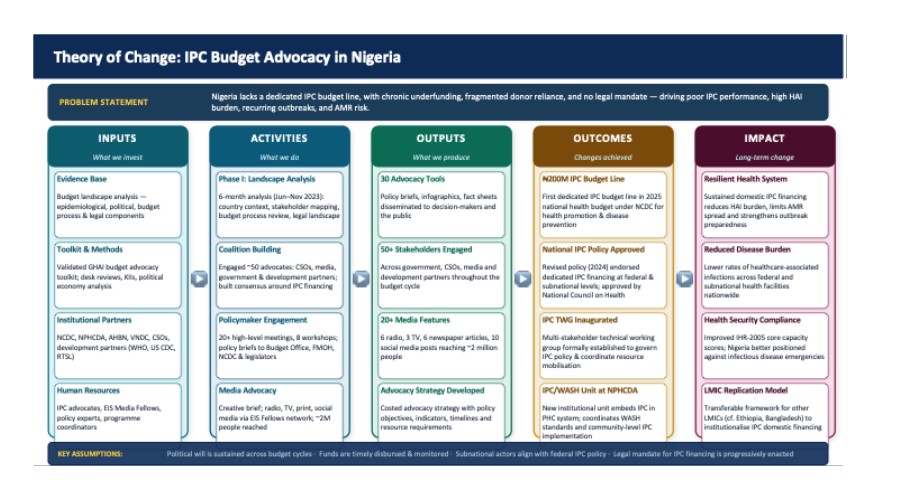
We employed a structured budget advocacy approach to secure domestic funding for IPC in Nigeria. The advocacy intervention comprised two main phases. The overall theory of change and process model for the IPC budget advocacy is presented in Figure 1.
Phase I: Budget landscape analysis
In 2023, we conducted a comprehensive analysis of the IPC financing landscape at the national level over a six-month period (June-November 2023). We adopted a validated advocacy toolkit that was developed by the Global Health Advocacy Incubator [13]. The analysis combined desk reviews, key informant interviews, and political and economic analysis to assess the policy, financing, governance, and institutional context for IPC in Nigeria. The desk review examined approximately 20 purposively selected national and international policy, technical, and budget documents, relevant to IPC, health security, and domestic health financing in Nigeria. Documents were selected based on their relevance to the national IPC program, health security planning, public budgeting processes, and evidence on IPC capacity and financing. The review included the Joint External Evaluation (JEE) reports [14], State Party Self-reporting (SPAR) reports, the National Action Plan for Health Security (NAPHS) [15], WHO country-level IPC data [5], [12], national IPC policy and strategic planning documents, and federal health budget and appropriation documents, and other relevant government and partner reports.
In addition, eight key informant interviews were conducted with purposively selected stakeholders from the NCDC, NPHCDA, the Budget Office of the Federation, members of the National Assembly, and civil society organizations. Interviews explored the IPC financing landscape, budget planning and approval processes, stakeholder priorities, existing financing gaps, and opportunities for policy engagement. Findings were used to validate evidence from the desk review, inform the political economy analysis, and guide the development of the advocacy strategy.
The review focused on four core components:
Baseline Situation
The budget landscape analysis identified critical gaps in IPC financing, governance, and implementation in Nigeria.
Country Context
Political and Stakeholder Mapping
Key governmental and non-governmental stakeholders were identified and categorised according to their roles in decision-making, budget planning, and implementation. These included the Federal Ministry of Finance, Budget and National Planning, Budget Office of the Federation, Federal Ministry of Health and Social Welfare, implementing MDAs such as NCDC and NPHCDA, members of the National Assembly, CSOs, media, and development partners. This mapping informed engagement strategies at each phase of the budget cycle.
Budget process
The federal budget process in Nigeria is structured into three distinct but interlinked phases. The pre-budget phase begins as early as February, when preparatory activities such as the issuance of budget call circulars and development of budget manuals to guide MDAs. This is followed by the budget phase, which covers the formulation, review, and approval of budget proposals. During this period, MDAs typically prepare and submit their proposals between July and August, after which the drafts are consolidated, analysed, and presented to the National Assembly for consideration. The legislative process culminates in the final approval of the national budget, usually between November and December. Once approved, the cycle moves into the post-budget phase, which focuses on the implementation of allocations as well as the monitoring and evaluation of expenditures and performance. This phase concludes with reporting on the execution of the budget, providing feedback that informs subsequent budget cycles.
Legal landscape
Despite the existence of multiple IPC-related policies and guidelines, including the National IPC Guidelines, the analysis identified no legal instrument mandating IPC financing or establishing statutory budget requirements. The absence of a formal legal framework leaves IPC financing vulnerable to shifting political priorities and fiscal constraints.
Based on these findings, policy objectives were developed to guide advocacy efforts for the 2025 fiscal year, including establishing a dedicated IPC budget line under NCDC by December 2024 and securing approval of the national IPC policy and strategic plan by the third quarter of 2024. To operationalize these objectives, a strategic plan for IPC budget advocacy was developed through a joint consultative workshop with government agencies, civil society organizations (CSOs), media, and development partners. The strategic plan defined the campaign’s policy objectives, indicators of success, advocacy strategies, key activities, target audiences, stakeholder engagement and media advocacy approaches, implementation timelines, roles and responsibilities, resource requirements, and potential barriers to achieving the policy objectives.
Phase II: Advocacy campaign
Based on the landscape analysis, we implemented a CSO-led targeted IPC budget advocacy campaign from January to December 2024. The campaign centred on three complementary strategies.
Building a coalition of advocates: we brought together a broad coalition of approximately 50 advocates, including CSOs, media, government decision-makers, and development partners, to align and build consensus around IPC financing.
Engaging policymakers: our advocacy campaign engaged policymakers through high-level meetings, technical workshops, and briefing sessions. We developed and disseminated policy briefs to influence key officials, including legislators during the budget formulation process.
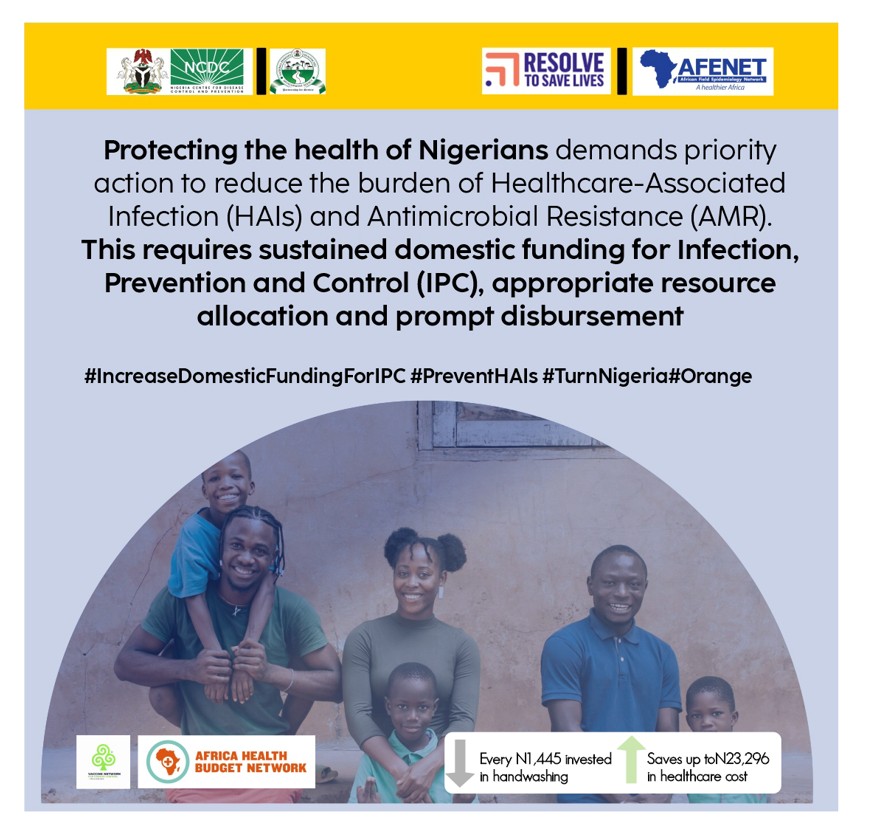
Media advocacy: We developed a creative brief and advocacy materials, including infographics (Figure 2), a press release, and radio jingles. We conducted a social media campaign and engaged Media Epidemiology, Infodemic Management, and Social and Behaviour Change (EIS) fellows [23], a network of trained media personnel, to amplify the campaign through television, radio, print, and social media. Media advocacy efforts were strategically targeted at both policymakers and the general public to increase awareness and build support for sustainable IPC financing.
Ethical approval
Ethical approval was not required for this study because it primarily involved analysis of publicly available documents, policy processes, and program implementation activities. The key informant interviews were conducted as part of the budget landscape analysis to inform program planning and advocacy strategy development rather than as human subjects’ research. Participation was voluntary, informed verbal consent was obtained from all participants before the interviews, and no personally identifiable information was collected or reported.
Advocacy Outcomes
Over the course of the advocacy campaign, more than 20 high-level meetings and eight technical workshops were conducted, engaging over 50 stakeholders from government institutions, CSOs, the media, and development partners. Communication and public awareness activities generated substantial visibility, including the development and dissemination of approximately 30 advocacy tools such as policy briefs and infographics. Additionally, between March and December 2024, the campaign generated over 20 media features, including six radio programs, three television appearances, six newspaper publications and online news features, and ten social media contents. Key messages focused on the burden of HAIs, the economic consequences of infectious disease outbreaks, and the need for sustainable domestic financing for IPC. Collectively, these media engagements reached an estimated two million people nationwide.
These activities contributed to significant outcomes, including:
A major achievement was the establishment of a dedicated IPC budget line in the 2025 national health budget. The Federal Government allocated ₦200 million (approximately USD129,000, based on the Central Bank exchange rate of 1 January 2025; USD 1 = ₦1,548.40) to the NCDC under a newly established budget line item titled “Health Promotion and Disease Prevention/IPC”.
Advocacy efforts also catalysed the revision and approval of Nigeria’s national IPC policy. Originally developed in 2013, the policy was updated in 2024 to address previously identified gaps. The revised policy emphasizes IPC integration across all levels of healthcare, clearly delineates roles and responsibilities of federal, state, and facility-level actors, and explicitly endorses the establishment of dedicated IPC budget lines at both national and subnational levels to support programme sustainability. The updated policy incorporates recent WHO guidance and lessons from the COVID-19 pandemic related to outbreak preparedness and health worker protection. It was approved by the National Council on Health in November 2024, signalling high-level political commitment and enabling subnational adaptation.
Another key milestone was the development of the National IPC Strategic Plan (2024–2028). The plan outlines a five-year roadmap for scaling up IPC, including training and deployment of IPC professionals, standardized implementation of IPC protocols, strengthening of HAI surveillance system, improvements to water, sanitation, and hygiene (WASH) infrastructure in healthcare settings, public awareness campaigns on hand hygiene and infection prevention, and integration of IPC into emergency and outbreak response mechanisms.
In 2024, the national IPC technical working group (IPC TWG) was formally inaugurated by the Minister of Health as a high-level, multi-stakeholder platform to strengthen IPC governance in Nigeria. It comprises representatives from government ministries, professional bodies, academia, and development partners, and plays a central role in advising on IPC policy, monitoring implementation of the strategic plan, and coordinating resource mobilization.
To strengthen IPC implementation at the PHC level, an IPC/WASH unit was established within the NPHCDA, under the Health Promotion Division of the Community Health Services Department. The unit is responsible for integrating IPC into routine PHC services, supervising WASH standards in PHC facilities, and coordinating community-level awareness campaigns on hygiene and infection control. This structural reform embeds IPC within Nigeria’s PHC system and creates a pathway for subnational alignment of IPC budgeting and service delivery.
This study demonstrates how structured and targeted budget advocacy can be an effective mechanism for advancing IPC financing and policy reforms, particularly in low-resource settings. In Nigeria, decades of underfunding of IPC programmes have weakened implementation, resulting in poor compliance with IPC standards and limited capacity to prepare and respond to infectious disease outbreaks. The fragmented allocation of funds, low per capita health expenditures, and heavy reliance on donor funding have historically compounded these challenges. Findings from the budget landscape analysis confirmed this baseline, revealing the absence of a dedicated IPC budget line within the national health sector budget, including at key coordinating agencies such as NCDC and NPHCDA. This lack of sustainable domestic financing undermines the country’s ability to reduce the high burden of HAIs and minimise AMR, both essential components of global health security.
Our advocacy initiative achieved notable outcomes that signal increased political commitment towards institutionalizing IPC financing in Nigeria. The establishment of a dedicated IPC budget line with an allocation of ₦200 million in the 2025 national health budget represents a foundational success. The allocation is intended to support priority national IPC program activities, including workforce capacity development, program coordination, supervision and monitoring, and implementation of the national IPC strategic plan across multiple levels of the health system. This achievement is as a result of sustained advocacy efforts implemented throughout the 2024 budget cycle. Key activities included high-level technical meetings with NCDC and NPHCDA leadership, engagement with officials of the Budget Office of the Federation and the Federal Ministry of Health and Social Welfare, policy dialogues with legislators, dissemination of evidence-based policy briefs, and strategic media engagement. By aligning these activities with critical budget planning and approval milestones, the campaign created multiple opportunities to influence decision-making and position IPC financing as a national health priority.
Importantly, this financial milestone was complemented by simultaneous policy and governance reforms, including approval of a revised national IPC policy which explicitly endorses dedicated financing, development of a costed five-year strategic plan (2024–2028), and establishment of an IPC/WASH unit within NPHCDA to strengthen implementation at the PHC level. These achievements are vital steps toward building resilient health systems in Nigeria.
Nigeria’s experience aligns strongly with global evidence showing that strategic advocacy can bridge critical financing gaps, especially where dedicated funding is a WHO minimum requirement for functional IPC programmes [6]. Comparable experiences from other LMICs further reinforce this finding. In Ethiopia, similar advocacy led to the inclusion of a dedicated IPC budget line and a costed plan [24], while in Bangladesh IPC was integrated into sector-wide health planning with dedicated funding [25]. Nigeria’s approach is distinguished by its integration of financial advocacy with policy, governance, and institutional reforms.
Several health financing advocacy efforts in LMICs have faced challenges in translating increased awareness and stakeholder engagement into concrete budgetary commitments. Evidence suggests that limited political buy-in, competing policy priorities, weak alignment with government planning and budgeting processes, and insufficient consideration of the political economy of decision-making can constrain the adoption and implementation of financing reforms [26], [27]. In contrast, the Nigerian initiative combined evidence generation through a comprehensive budget landscape analysis with clearly defined policy objectives, strategic engagement throughout the budget cycle, strong coalition-building, and coordinated media advocacy. The simultaneous pursuit of financing, policy, and institutional reforms further strengthened the credibility, visibility, and effectiveness of the campaign.
A key enabler of success in Nigeria was multisectoral collaboration. A broad coalition of advocates, including, CSOs, media, development partners, and government agencies including NCDC and NPHCDA worked together to amplify advocacy messages and sustain political will. This inclusive coalition-building approach fostered trust, strengthened accountability, and generated the momentum necessary for the National Assembly and the Ministry of Finance to introduce a dedicated IPC budget line in the 2025 national health budget. Furthermore, aligning the campaign with Nigeria’s fiscal calendar targeting strategic entry points during the pre-budget and budget formulation phases and capitalizing on the momentum of post-COVID reforms positioned IPC financing within broader national priorities, such as strengthening universal health coverage and the revised NAPHS.
Despite these gains, several challenges remain. The current IPC budget allocation, while a significant achievement, is insufficient to cover the full spectrum of needs identified in the national IPC strategic plan. Effective implementation will depend on timely release and disbursement of funds, stronger accountability mechanisms, and robust monitoring and evaluation systems. In addition, Nigeria’s decentralized governance system poses challenges, with wide disparities in capacity and prioritization at the subnational level. Strengthening capacity and ensuring alignment across states and local governments will be essential for effective and equitable implementation. Furthermore, the absence of a statutory mandate for IPC financing remains a major gap that leaves IPC investments susceptible to political and economic instability. Africa Centres for Disease Control has emphasized the importance of legal frameworks that define IPC responsibilities including governance structures, dedicated resource allocation, accountability mechanisms, and surveillance mandates across all levels of the health system [28]. Embedding IPC within national legislation would safeguard financing, enhance programme sustainability, and reinforce Nigeria’s preparedness against public health emergencies.
The sustainability of these achievements is strengthened by their integration into formal government structures and planning processes. The approval of the revised national IPC policy, establishment of the national IPC TWG, creation of the IPC/WASH unit within NPHCDA, and development of a costed five-year strategic plan provide institutional mechanisms for continued prioritization of IPC. In addition, the inclusion of IPC as a dedicated budget line within the federal budgeting process creates an opportunity for recurrent allocations in future fiscal years. Continued engagement with government institutions and subnational actors will be essential to sustain political commitment and progressively increase domestic financing for IPC.
Overall, our findings reinforce the growing consensus that budget advocacy is a results-oriented process that can reshape national policy priorities and build the foundation for lasting financial commitments. Nigeria’s experience illustrates how advocacy strategies that integrate evidence generation, coalition-building, policy engagement, and alignment with budget processes can yield transformational outcomes for IPC financing and governance. These lessons offer a practical model for other LMICs seeking to strengthen health system resilience through sustainable domestic investment in IPC.
Limitations
This study has several limitations. First, it documents the implementation and outcomes of a single national advocacy initiative in Nigeria, and the findings may not be fully generalizable to countries with different political, institutional, or financing contexts. Second, although the study describes the temporal association between the advocacy intervention and subsequent policy and financing reforms, the observational nature of the analysis does not allow attribution of these outcomes solely to the advocacy campaign, as broader political and health system factors may also have influenced decision-making. Third, the analysis focused primarily on policy and financing outcomes and did not assess the long-term implementation of the allocated budget or its impact on IPC program performance and health outcomes. Future research should evaluate the implementation, utilization, and effectiveness of domestic IPC financing in strengthening IPC and epidemic preparedness over time.
This study demonstrates that strategic and sustained budget advocacy can drive significant policy and financing reforms for IPC in low-resource settings. Nigeria has historically faced recurrent outbreaks, a high burden of HAIs and AMR, exacerbated by chronic underfunding and the absence of a dedicated IPC budget line within its decentralized, donor-dependent health system. A structured, CSO-led multisectoral advocacy campaign successfully catalysed substantial gains, including the establishment of a dedicated ₦200 million IPC budget line in the 2025 national health budget. These financial commitments were reinforced by complementary institutional reforms, including approval of a revised national IPC policy, development of a costed 2024–2028 strategic plan, and the establishment of key governance platforms such as the national IPC TWG and an IPC/WASH unit within NPHCDA. These achievements provide a strong foundation for institutionalizing IPC and improving the country’s capacity to prevent, detect, and respond to infectious disease threats.
Despite these advances, challenges remain. Current budget allocations are insufficient to meet the full scope of IPC needs, and sustaining these gains will require stronger accountability mechanisms, timely disbursement of funds, and ongoing political engagement. Legislative and policy reforms are critical to ensuring continuity and protecting IPC financing from future reversals. In addition, strengthening subnational capacity and increasing resource mobilization are essential to ensuring effective and equitable implementation across Nigeria’s decentralized health system. While the establishment of a dedicated IPC budget line is a significant achievement, future advocacy efforts should focus on increasing allocations and ensuring that resources are adequately distributed to support implementation of IPC activities across all levels of the health system.
Nigeria’s experience offers valuable lessons for other LMICs. Strategic, evidence-based advocacy when aligned with budget cycles, supported by multisectoral coalitions, and integrated into broader health system priorities can catalyse sustained investment in IPC. Embedding IPC financing into health structures is essential for building resilient health systems and achieving long-term health security.
What is already known about the topic
What this study adds
The authors of this work declare no competing interests. Elizabeth Bunmi Adedire is an Associate Editor at the Journal of Interventional Epidemiology and Public Health (JIEPH) and a co-author of this manuscript. In line with the journal’s conflict of interest policy, she was fully recused from the peer review process and had no involvement in editorial handling or decision-making for this submission. An independent editor oversaw the review and decision-making process.
The authors would like to thank the National Primary Health Care Development Agency (NPHCDA), the Nigeria Centre for Disease Control and Prevention (NCDC), the Africa Health Budget Network (AHBN), and the Vaccine Network for Disease Control (VNDC) for their support and collaboration throughout this work. We also gratefully acknowledge the contributions of Khadija Hamid Bobboyi, Chika Nwanko, Jane Abah, Jane Ene Ibanga, Joy Oshinowo, Muhammed Auwal Jibrin, Samuel Rabiu, and Shehu Ibrahim, whose inputs supported the successful implementation of this study.
MK and ASF led the study design and coordinated the drafting and revision of the manuscript. ASF, MK, and IOS conducted the data analysis and interpretation. EBA and JL provided critical review of the analysis and substantially edited multiple drafts of the manuscript. TO, EA, AGM, MG, AA, CKO, OI, BO, CA, SM, JD, CAO, NO, and PMN contributed to the overall revision of the manuscript and provided technical and policy-related inputs that strengthened the final paper.
Table 1: Public funding allocation for the health sector and infection prevention and control in Nigeria, 2022–2024
| Year | Federal Government Budget (₦) | Health Sector Budget (₦, % of Federal Government Budget) | IPC Budget (₦) | ||
|---|---|---|---|---|---|
| NCDC | Other MDAs | Partners | |||
| 2022 | 17.32 trillion Naira | 714.59 billion (4.1%) | 45 million* | Not Available** | Not Available*** |
| 2023 | 21.02 trillion | 1.08 trillion (5.1%) | 50 million* | Not Available** | Not Available*** |
| 2024 | 28.77 trillion | 1.34 trillion (4.7%) | No allocated budget | Not Available** | Not Available*** |
Notes: IPC = infection prevention and control; NCDC = Nigeria Centre for Disease Control and Prevention; MDAs = Ministries, Departments, and Agencies. Budget figures are nominal values in Nigerian naira.
* Allocation for IPC-related research only | ** Estimates unavailable due to the absence of dedicated IPC budget lines | *** Estimates unavailable due to indirect and fragmented donor funding