
Research | Open Access | Volume 9 (4): Article 165 | Published: 17 Oct 2026

Views: 585
Menu, Tables and Figures
| Variable | Frequency (n=818) | Percent (%) |
|---|---|---|
| Age (years) | ||
| 18 | 47 | 5.7 |
| 19 | 69 | 8.4 |
| 20 | 95 | 11.6 |
| 21 | 119 | 14.6 |
| 22 | 122 | 14.9 |
| 23 | 151 | 18.5 |
| 24 | 215 | 26.3 |
| Gender | ||
| Female | 409 | 50.0 |
| Male | 409 | 50.0 |
| Working while in school | ||
| Yes | 173 | 21.1 |
| No | 645 | 78.9 |
| Living independently (alone or with peers/partner) | ||
| Yes | 351 | 42.9 |
| No | 467 | 57.0 |
| Living with both parents | ||
| Yes | 309 | 37.8 |
| No | 509 | 62.2 |
| Living with a single parent | ||
| Yes | 158 | 19.3 |
| No | 660 | 80.6 |
Table 1: Characteristics of respondents to drug or substance use among young adults aged 18-24 years in institutions of higher learning in Liberia
| Awareness and source | Frequency (n=818) | Percent (%) |
|---|---|---|
| Substance aware of | ||
| Alcohol | 738 | 90.2 |
| Tobacco | 663 | 81.9 |
| Cannabis | 558 | 68.2 |
| Cocaine | 420 | 51.3 |
| Sedatives | 368 | 44.9 |
| Opioids | 215 | 26.2 |
| Inhalant glue, petrol, paint, thinner | 97 | 11.8 |
| Amphetamine | 73 | 8.92 |
| Hallucinogens | 28 | 3.4 |
| Source of substance awareness | ||
| Friends | 590 | 75.7 |
| Radio | 363 | 46.6 |
| Social media | 337 | 43.3 |
| Other family members | 160 | 20.5 |
| Parents | 160 | 20.5 |
| Television | 154 | 19.8 |
| Community | 16 | 2.1 |
| Source of substances used | ||
| At entertainment centres | 597 | 72.9 |
| Ghetto | 513 | 62.7 |
| Home seller | 271 | 33.1 |
| Friends | 222 | 27.1 |
| Pharmacy | 192 | 23.5 |
| Parents | 25 | 3.1 |
Table 2: Awareness and source of substances among young adults 18-24 in Liberia
| Substances | Ever used (n = 443) n (%) | Currently using (n = 220) n (%) |
|---|---|---|
| Alcohol | 423 (95.5) | 209 (95) |
| Tobacco | 60 (13.5) | 25 (11) |
| Cannabis | 47 (10.6) | 17 (7.7) |
| Sedative | 21 (2.6) | 2 (0.9) |
| Opioids | 9 (4.7) | 1 (0.5) |
| Cocaine | 6 (1.4) | 2 (0.9) |
| Inhalants | 5 (1.1) | 1 (0.5) |
| Amphetamine | 2 (0.5) | 1 (0.5) |
*multiple responses allowed
Table 3: Patterns of substances ever used and currently used by young adults (18 – 24 years) in tertiary institutions, Liberia
| Perceptions to substance | Frequency (n=818) | Percent (%) |
|---|---|---|
| Think substances are taken to belong to a group of friends | 546 | 66.7 |
| Substance used to be bold and speak in public | 400 | 48.9 |
| Substance to improve performance or enjoy sex | 318 | 38.8 |
| Youths take substance to feel calm | 201 | 24.5 |
| Take substance to stimulate appetite | 200 | 24.4 |
| Substances are taken to be strong while working | 182 | 22.2 |
| Substance is taken for exercise | 130 | 15.8 |
| Substances use not to be banned | 102 | 12.4 |
| Everyone should have access to substance use | 43 | 5.2 |
| Substance use is not harmful | 42 | 5.1 |
| Have you ever introduced someone else to drugs? | 42 | 5.1 |
*multiple responses allowed
Table 4: Respondents’ perceptions of substance use among students in tertiary schools, Liberia, 2021
Yolaine Kate Waka-Metzger1,&, Kemah Lymas-Tegli2, George Seneh2, Kalala Danny2, Rukiatu Bah2, Yilaa Se2, Pius Wlalee2, Richard Tuwah2, Sumor Flomo2, Fenda Smith2, Dorissa Bestman2, Neor Gizea Sr2, Neima Candy2, Wilfred Taikerweyah2, John Doe2, Aaron Blackie2, Lydia Seepoe2, Sampson Williams2, Peter Adewuyi3, Obafemi Joseph Babalola3, Himiede Wilson Sesay3, Godwin Akpan3, Faith Whesseh3, Lily Sanvee-Blebo3, Maame Amo-Addae3
1National Public Health Institute of Liberia, Monrovia, Liberia,2Liberia FETP, Monorovia, Liberia, 3Africa Field Epidemiology Network, Monrovia, Liberia
&Corresponding author: Yolaine Kate Waka-Metzger, National Public Health Institute of Liberia, Monrovia, Liberia, Email: yolainewaka@gmail.com ORCID: https://orcid.org/0000-0003-3995-1367
Received: 16 Mar 2026, Accepted: 01 Oct 2026, Published: 17 Oct 2026
Domain: Mental Health
Keywords: Substance use, young adults, tertiary institutions, peer influence, alcohol, Liberia
©Yolaine Kate Waka-Metzger et al. Journal of Interventional Epidemiology and Public Health (ISSN: 2664-2824). This is an Open Access article distributed under the terms of the Creative Commons Attribution International 4.0 License (https://creativecommons.org/licenses/by/4.0/), which permits unrestricted use, distribution, and reproduction in any medium, provided the original work is properly cited.
Cite this article: Yolaine Kate Waka-Metzger et al. Awareness, patterns and perceptions of substance use among in-school young adults in tertiary institutions in Liberia. Journal of Interventional Epidemiology and Public Health. 2026; 9(4):165. https://doi.org/10.37432/jieph-d-26-00088
Introduction: Substance use remains a growing global public health concern, particularly among adolescents and young adults. In Liberia, limited contemporary data exist to guide prevention and policy interventions. This study assessed awareness, patterns, and perceptions of substance use among in-school young adults in tertiary institutions in Liberia.
Method: We conducted a cross-sectional cluster survey among 818 students aged 18-24 years selected from 34 tertiary institutions using the WHO cluster sampling approach (34 × 24 design). Data were collected using a structured interviewer-administered questionnaire. We estimated the prevalence of “ever use” and “current use” (use within the last three months) of substances and described patterns and reasons for use. Data were analysed using Epi Info version 7.2.
Results: The mean age of respondents was 21.8±1.8 years, and 50% were female. Overall, 738 (90%) of the 818 participants were aware of at least one substance. The most commonly known substances were alcohol (90.2%), tobacco (81.9%), cannabis (68.2%) and cocaine (51.3%). Slightly over half (54.2%) reported ever using at least one substance, and among those, 49.7% were current users. Alcohol was the most commonly used substance. The median age at first use was 18 years (IQR: 17–19). The most cited reasons for use were peer influence (66.7%), desire for confidence in public speaking (48.9%), and perceived enhancement of sexual performance (38.8%).
Conclusion: Substance use is common among in-school young adults in tertiary institutions in Liberia, with alcohol being the predominant substance. Peer influence and social identity factors were strongly associated with initiation and continued use. Strengthening peer-led interventions, early prevention programs, enforcement of alcohol control measures, and access to student counselling services is recommended.
Substance abuse, defined as the harmful or hazardous use of psychoactive substances, including alcohol and illicit drugs, is a recognized public health problem. [1]. This includes illicit drugs like are cannabis, amphetamines, cocaine, opioids, and non-prescribed psychoactive prescription medication. There is growing burden of substance use globally in both developed and developing countries.
An estimated 275 million people engaged in opioid use, leading to the death of about 500,000 and a loss of 18 million life years in 2020 [2,3]. A systematic review reported an increase on substance use during the COVID-19 pandemic [4]. In Africa, the highest rate of use is reported in West and Central Africa with prevalence rates ranging from 5.2% to 13.5% [1]. In West Africa, cannabis is perceived to be the most abused substance though there is paucity of data [3]. Adolescence to young adulthood, is an important developmental transition period with vulnerabilities to use of drugs [5,6].
Experimenting with psychoactive substance is common and has increased in the past few years among this age group [2]. The adolescents and young adults who use these substances are more likely to engage in deviant behaviour, including crime, poor school performance, risky sexual behaviours, unwanted pregnancies, sexual transmitted infections (STIs) and dropping out of school. Liberia has one of the highest school drop-out rate in the world [7] and illicit drugs use could be a contributory factor. A study conducted in 2018 among young people aged 15 to 24 years in Liberia confirmed that substance use is prevalent, with peer pressure identified as the major influencing factor [8]. Awareness and perceptions of psychoactive substances are important determinants of substance use behaviour among young adults. Knowledge of substances perceived social acceptance, beliefs about confidence, stress relief, and sexual performance may influence initiation and continued use. Understanding these cognitive and social factors is essential for designing effective prevention and behaviour change interventions, particularly in tertiary institutions where peer interaction and social identity are prominent.
Current data on the burden of substance use are needed to guide effective prevention and intervention strategies in Liberia. The most recent estimate of substance use prevalence of 0.14% was obtained in 2004 [9]. Moreover, in their 2011 report, the International Narcotic Control Board stressed the need to systematically assess the nature, extent, and patterns of drug abuse in Liberia [10]. This study assessed the awareness, patterns, and perceptions of substance use among in-school young adults in tertiary institutions in Liberia.
Study setting
Liberia is a country located in West Africa and has an estimated population of 4.9 million people (The World Bank Data, 2019). The country is divided into 15 counties including 93 health districts (The World Bank Data, 2019), and these districts are subdivided into communities. According to the National Commission on Higher Education, there are 53 institutions of higher education in Liberia [11], of which 64.2% (34/53) are in Montserrado County. The “Revised Liberian Controlled Drug and Substance Act and Liberia Drug Enforcement Agency Act” of 2014 prohibits the sell used and places a strong emphasis on enforcement activities.
Study design and population
The study employed a descriptive cross-sectional design, with data collection conducted over a two-week period. The study population comprised in-school young adults aged 18–24 years enrolled in accredited tertiary institutions in Liberia. A sample of eligible students was selected through a multistage cluster sampling procedure; therefore, this was not a whole-population study.
Sample size
Using the formula,
$$n = \text{DEFF} \times \frac{z^2pq}{d^2}$$
at a 95% confidence interval (1.96), where n = sample size, DEFF = design effect of the cluster sampling = 1.5, p = estimated prevalence of substance use among adolescents = 50%, z = z-score corresponding to the 95% confidence limit = 1.96, q = (1- p) = 50%, and d = desired precision = 0.05, and obtaining a sample size of 577 participants. The 50% prevalence estimate was used as a conservative assumption in sample size calculation due to the absence of reliable national prevalence data among young adults in Liberia.
Sampling
Using a modified form of the WHO cluster sampling method of 30 by 7, a total of 34 clusters were identified, from which in-school young adults were selected. A cluster was an institution of higher education. To obtain 816 respondents from 34 clusters, 24 eligible respondents were selected in each cluster. Therefore, we used a 34 by 24 cluster survey. The institutions were selected randomly using a table of random numbers.
There are 53 institutions of higher education across the 15 counties of Liberia, including government-owned, private, and faith-based institutions, comprising colleges, technical schools, and universities. For the study, a total of 34 institutions of higher education were randomly selected and distributed throughout the counties by applying probability proportional to size (PPS). To select the institutions, a random number generator was used to select an institution from among the already assigned numbers from 1-53 from the list of institutions in the country. This was repeated until the total number of 34 institutions required for the study was obtained.
At each selected institution, one academic course between freshman and sophomore year was randomly selected by balloting. A list of students with student ID No. in that course was obtained and stratified by gender. The male/female distribution in the class was applied to determine how many males and females should make up the 24 students to be selected in that cluster. The males and females were randomly selected from the list using random numbers generated by Epi Info. If 24 respondents were not available in that cluster (school/institution), a random selection was made among the remaining schools in that county for an additional school/institution where additional respondents were selected by the same method. A minimum sample of 816 students was planned (34 clusters × 24 students). During field implementation, two additional eligible students were enrolled through the replacement procedure, resulting in a final sample of 818 participants. All selected eligible students agreed to participate, yielding a participation rate of 100%.
Data collection tool
Data were collected using a structured questionnaire developed by the investigators after reviewing relevant literature and previously published substance use surveys among adolescents and young adults. The questionnaire was pretested on a pilot sample of 30 students from two tertiary institutions that were not included in the final survey. Feedback from the pilot was used to improve clarity, wording, sequencing, and skip patterns. The instrument was reviewed for face and content validity by a psychiatrist and two public health researchers with experience in behavioural and epidemiological studies. Formal psychometric testing, including assessment of internal consistency and test–retest reliability, was not conducted and is acknowledged as a limitation.
Training of data collection personnel and pretest
The 19 Liberia Field Epidemiology Training Program (LFETP), Intermediate cohort 5 trainees were guided/trained by the FETP facilitators in the data collection techniques required to conduct this survey in an accurate and reliable manner. The sensitive nature of the study was stressed during the training, and the data collectors were trained to conduct the interviews in a confidential and respectful manner according to the study protocol. The pretest was conducted in two tertiary institutions that were not selected for the main survey.
Data collection strategy
Data were collected through face-to-face interviews, using an electronic version of the data collection tool installed on an Android device. The interviews took place in a pre-designated part of the institution with the agreement of authorities, ensuring privacy and confidentiality.
Data analysis
Data were entered and cleaned in Excel and analysed using Epi Info version 7.2, which is widely used for epidemiologic survey data management and analysis, and was available within the Liberia Field Epidemiology Training Program. Completed questionnaires were reviewed daily by field supervisors for completeness and consistency. The electronic data collection tool included skip-pattern checks and mandatory fields for key variables to minimize missing data. Data were checked for duplicate records, implausible values, and outliers before analysis. No repeat interviews were identified. Missing data were minimal, and analyses were conducted using available-case analysis. Descriptive statistics were used to summarise the characteristics of respondents; Categorical variables were presented as frequencies and percentages. Continuous variables, including age, were summarised using the mean and standard deviation, and the interquartile range where appropriate.
Ethical consideration
Ethical approval was obtained from the University of Liberia-Pacific Institute for Research and Evaluation Institutional Review Board (UL-PIRE IRB) with protocol approval number “22-03-308”. Permission was sought and obtained from the selected institutions. Written informed consent was obtained from each participant.
Sociodemographic characteristics of the respondents
A total of 818 students from tertiary institutions in Liberia participated in the study. The mean age of respondents was 21.8 ± 1.8 years. The largest proportion of respondents were 24 years old (26.3%, 215/818), followed by 23 years (18.5%, 151/818) and 22 years (14.9%, 122/818). The study population had an equal distribution of gender, with 50.0% (409/818) females and 50.0% (409/818) males. Regarding employment status, 21.1% (173/818) of respondents reported working while attending school, whereas 78.9% (645/818) were not employed. In terms of living arrangements, 42.9% (351/818) reported living independently (alone or with peers/partner), 37.8% (309/818) lived with both parents, and 19.3% (158/818) lived with a single parent (Table 1). These categories were mutually exclusive and collectively exhaustive.
Awareness and sources of substances
Overall, 90.2% (738/818) of respondents reported being aware of at least one substance of abuse. The most commonly known substances were alcohol (90.2%, 738/818), tobacco (81.9%, 663/818), cannabis (68.2%, 558/818), cocaine (51.3%, 420/818), and sedatives (44.9%, 368/818). Other substances such as opioids (26.2%), inhalants (11.8%), amphetamine (8.9%), and hallucinogens (3.4%) were less commonly reported (Table 2).
Regarding sources of awareness, friends were the most frequently reported source (75.7%, 590/818), followed by radio (46.6%, 363/818) and social media (43.3%, 337/818). Other reported sources included family members (20.5%), parents (20.5%), and television (19.8%), while only 2.1% (16/818) reported the community as their source of awareness.
Participants reported obtaining substances primarily from entertainment centers (72.9%, 597/818) and ghettos (62.7%, 513/818). Other sources included home sellers (33.1%, 271/818), friends (27.1%, 222/818), pharmacies (23.5%, 192/818), and parents (3.1%, 25/818) (Table 2).
Prevalence and patterns of substance use
Slightly more than half of respondents 54.2% (443/818) reported having ever used a substance in their lifetime. Among those who had ever used substances, 49.7% (220/443) reported currently using at least one substance at the time of the study. Alcohol use was analysed separately from illicit substances because alcohol consumption is legally permitted for adults aged 18 years and older in Liberia, whereas cannabis, cocaine, opioids, and other non-medical psychoactive substances are regulated under national drug laws.
Among lifetime users, alcohol was the most commonly reported substance (95.5%, 423/443), followed by tobacco (13.5%, 60/443) and cannabis (10.6%, 47/443). Other substances such as sedatives (2.6%), opioids (4.7%), cocaine (1.4%), inhalants (1.1%), and amphetamine (0.5%) were reported less frequently. Similarly, among current users, alcohol remained the most commonly used substance (95.0%, 209/220), followed by tobacco (11%, 25/220) and cannabis (7.7%, 17/220) (Table 3).
Perceptions toward substance use
Participants reported several perceived reasons for substance use among students. The most commonly cited reason was to feel accepted within a group of friends (66.7%, 546/818). Other frequently reported reasons included to gain confidence when speaking in public (48.9%, 400/818) and to improve sexual performance or enjoyment (38.8%, 318/818).
Additional perceptions included using substances to feel calm (24.5%, 201/818), to stimulate appetite (24.4%, 200/818), and to gain strength while working (22.2%, 182/818). A smaller proportion of respondents believed substances were used for exercise (15.8%). Notably, 12.4% (102/818) of respondents indicated that substance use should not be banned in Liberia, while 5.2% (43/818) believed that everyone should have access to substances. Additionally, 5.1% (42/818) reported that substance use is not harmful, and the same proportion indicated they had introduced someone else to drugs (Table 4).
Age at initiation of substance use
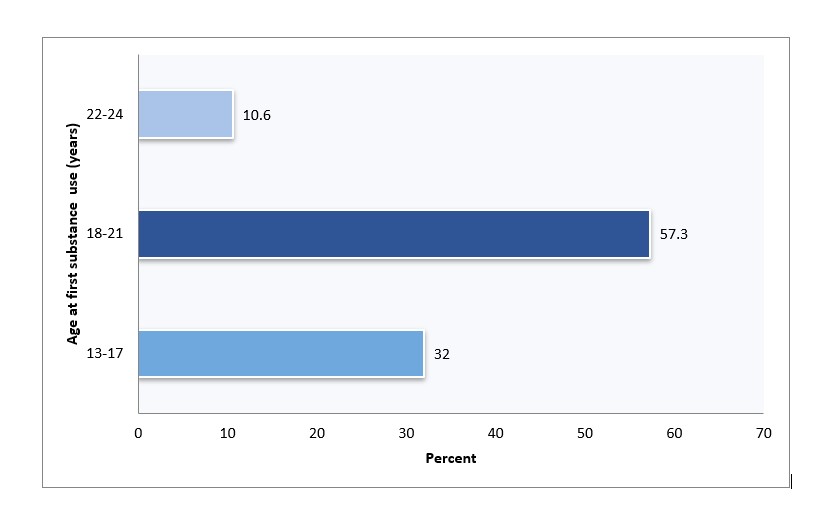
The median age of first substance use was 18 years (IQR: 17–19 years). More than half of participants (57.3%) reported first using substances between 18 and 21 years, while 32.0% reported initiating substance use between 13 and 17 years (Figure 1).
Reason for initiation of substance use
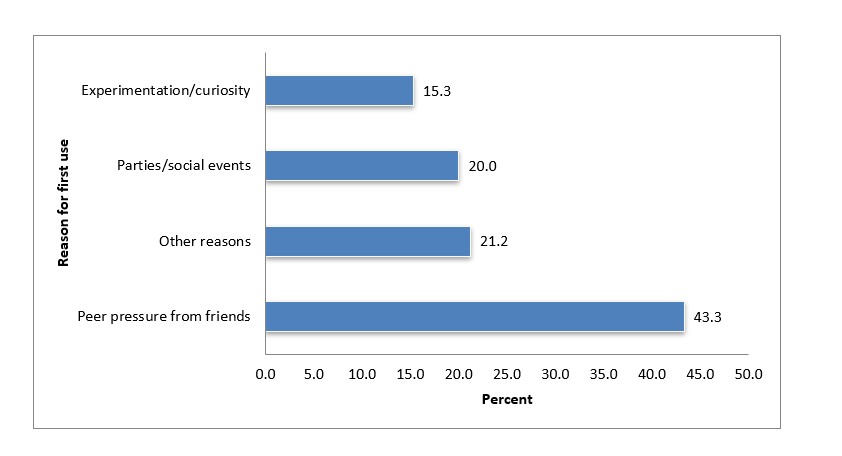
The most commonly reported reason for first substance use was peer pressure from friends (43.3%), followed by other reasons (21.2%), parties/social events (20.0%), and experimentation/curiosity (15.3%) (Figure 2).
The study demonstrates that substance use is common among young adults in tertiary institutions in Liberia. Over 90% of our study participants were aware of at least one of the substances of abuse. The commonest sources of information on substances of abuse were friends, radio, and social media. Similarly, a systematic review on adolescent substance use showed that public policy, media messaging, substance availability, and other variables were possible sources [12]. Also, a study conducted in Botswana indicated that the media is the major source of awareness of substance use [13].
Peer influence emerged as the strongest correlate of substance use in this population. From a social cognitive perspective, young adults often learn behaviours through observation, imitation, and perceived social rewards within peer networks. Tertiary institutions represent a developmental period characterized by increasing independence from parental supervision, greater exposure to social groups, and experimentation with adult identities. In this context, substance use may function as a marker of group belonging and social acceptance, which is consistent with the high proportion of respondents who reported using substances to feel accepted by friends and to gain confidence in social situations.
The substances were usually obtained from entertainment centres, ghetto, home sellers, and friends. Over half of the respondents took substances to belong to a particular group of friends, to be bold and be able to speak in public and to improve sexual performance. A study conducted in western Kenya showed that perceptions of substance use were for experimentation, enjoyment of the feeling they experience, influence from friends, influence from relatives and for treating stomach ailments [14]. Another study conducted in Nigeria showed that the commonest source of substances was friends, while the commonest reasons for substance use were to boost confidence [15]. On the contrary, another study conducted in Nigeria showed that most of the substance abusers used substances because they believed it could enhance their academic performance [16].
Also, some of the participants indicated that substances should not be banned in Liberia. Moreover, out of the total participants interviewed, more than half had used alcohol and almost half were currently using alcohol. Also, a few of them had used and were currently using tobacco and cannabis. The Liberian context may further contribute to these patterns. Years of civil conflict and subsequent social and economic disruption have affected community structures, youth opportunities, and institutional capacity. Although alcohol is legally available to adults aged 18 years and above, enforcement of age restrictions and regulation of sales and marketing may be inconsistent, particularly in urban and entertainment settings. Limited availability of youth-focused mental health and substance use services may also reduce opportunities for early identification and intervention.
Similarly, a study conducted in the University of Uyo, Nigeria showed that among the substance users in the study, alcohol, codeine, tramadol and cigarette were the most commonly used substances [15]. Additionally, a study conducted in the United States showed that From 2014 to 2016, simultaneous alcohol and marijuana use was reported by approximately 30% of alcohol users aged 19/20 and 21/22, and 20 to 25% of alcohol users aged 23/24 through 29/30 [17]. Also, another study conducted among young adults in Abidjan showed that, about 10% of participants had consumed illicit drugs at least once, cannabis being the most-commonly used [18]. Comparisons with studies from other countries should be interpreted cautiously because differences in age groups, study populations, cultural contexts, and definitions of substance use may influence prevalence estimates.
The prevalence of participants who “ever used” was 54.2% while the prevalence of “current use” was 26.9%. Another study conducted in sub-Saharan Africa showed the overall prevalence of ‘ever use any substance’ in sub-Saharan Africa was 41.6%, with the highest rate of ‘current use’ in Central Africa at 55.5%. These substances were alcohol, tobacco products, khat and cannabis. Other abused substances included depressants, amphetamines, heroin and cocaine [19]. In Liberia, the legal age for alcohol consumption is 18 years. However, weak enforcement mechanisms may contribute to underage access and early initiation of substance use. Furthermore, alcohol marketing and promotional activities may influence young adults’ perceptions and normalize substance use behaviours, particularly in urban settings.
Study limitation
The study had several limitations. First, the cross-sectional design limits the ability to establish causal relationships between associated factors and substance use. Second, the data were self-reported, which may be subject to recall bias and social desirability bias. In addition, the questionnaire was not subjected to formal psychometric testing for internal consistency or test–retest reliability, which may affect measurement precision. Third, the study was conducted among students in tertiary institutions and may not be generalizable to out-of-school youth in Liberia. Additionally, the questionnaire restricted inhalant options to selected substances, which may have underestimated the true prevalence of solvent abuse.
Substance use among young adults in tertiary institutions in Liberia is prevalent, with alcohol being the most commonly used substance. Peer influence and social identity are major determinants of use. Over half of the study population have used substances at least once in their life and of those who ever used; almost half of them were currently using substance. Most of the participants first used substance between ages 18 – 21 years, and peer influence was the most frequently reported reason for use. Our study also confirmed that substance use is prevalent among young people aged 18 to 24 years.
Based on the findings, we recommend strengthening peer-led prevention programs and substance use education within tertiary institutions, with particular emphasis on alcohol, tobacco, and cannabis. Early preventive interventions should also begin during late secondary school, before the median age of initiation observed in this study. In addition, stronger enforcement of the legal age for alcohol sales, regulation of alcohol marketing directed at young people, and improved access to counselling and treatment services for students with problematic substance use should be considered as part of a comprehensive national response.
What is already known about the topic
What this study adds
Conceived and designed the experiment: YKWM, MAA, PA, OJB, HWS. Perform the experiments: YKWM, KVLT, GBS, KMD, RB, YWS, PWW, RST, SLF, FCS, DJB, NBG, NNC, WOT, JKD, ANB, LKS, SSW. Analysed the data: YKWM, OJB, PAA. Interpretation of the result: OJB, YKWM. Wrote the initial draft: YKWM. Revised the manuscript for intellectual content: YKWM, FW, LSB, OJB, MAA.
All authors read and approved the final version for publication.
| Variable | Frequency (n=818) | Percent (%) |
|---|---|---|
| Age (years) | ||
| 18 | 47 | 5.7 |
| 19 | 69 | 8.4 |
| 20 | 95 | 11.6 |
| 21 | 119 | 14.6 |
| 22 | 122 | 14.9 |
| 23 | 151 | 18.5 |
| 24 | 215 | 26.3 |
| Gender | ||
| Female | 409 | 50.0 |
| Male | 409 | 50.0 |
| Working while in school | ||
| Yes | 173 | 21.1 |
| No | 645 | 78.9 |
| Living independently (alone or with peers/partner) | ||
| Yes | 351 | 42.9 |
| No | 467 | 57.0 |
| Living with both parents | ||
| Yes | 309 | 37.8 |
| No | 509 | 62.2 |
| Living with a single parent | ||
| Yes | 158 | 19.3 |
| No | 660 | 80.6 |
| Awareness and source | Frequency (n=818) | Percent (%) |
|---|---|---|
| Substance aware of | ||
| Alcohol | 738 | 90.2 |
| Tobacco | 663 | 81.9 |
| Cannabis | 558 | 68.2 |
| Cocaine | 420 | 51.3 |
| Sedatives | 368 | 44.9 |
| Opioids | 215 | 26.2 |
| Inhalant glue, petrol, paint, thinner | 97 | 11.8 |
| Amphetamine | 73 | 8.92 |
| Hallucinogens | 28 | 3.4 |
| Source of substance awareness | ||
| Friends | 590 | 75.7 |
| Radio | 363 | 46.6 |
| Social media | 337 | 43.3 |
| Other family members | 160 | 20.5 |
| Parents | 160 | 20.5 |
| Television | 154 | 19.8 |
| Community | 16 | 2.1 |
| Source of substances used | ||
| At entertainment centres | 597 | 72.9 |
| Ghetto | 513 | 62.7 |
| Home seller | 271 | 33.1 |
| Friends | 222 | 27.1 |
| Pharmacy | 192 | 23.5 |
| Parents | 25 | 3.1 |
| Substances | Ever used (n = 443) n (%) | Currently using (n = 220) n (%) |
|---|---|---|
| Alcohol | 423 (95.5) | 209 (95) |
| Tobacco | 60 (13.5) | 25 (11) |
| Cannabis | 47 (10.6) | 17 (7.7) |
| Sedative | 21 (2.6) | 2 (0.9) |
| Opioids | 9 (4.7) | 1 (0.5) |
| Cocaine | 6 (1.4) | 2 (0.9) |
| Inhalants | 5 (1.1) | 1 (0.5) |
| Amphetamine | 2 (0.5) | 1 (0.5) |
*multiple responses allowed
| Perceptions to substance | Frequency (n=818) | Percent (%) |
|---|---|---|
| Think substances are taken to belong to a group of friends | 546 | 66.7 |
| Substance used to be bold and speak in public | 400 | 48.9 |
| Substance to improve performance or enjoy sex | 318 | 38.8 |
| Youths take substance to feel calm | 201 | 24.5 |
| Take substance to stimulate appetite | 200 | 24.4 |
| Substances are taken to be strong while working | 182 | 22.2 |
| Substance is taken for exercise | 130 | 15.8 |
| Substances use not to be banned | 102 | 12.4 |
| Everyone should have access to substance use | 43 | 5.2 |
| Substance use is not harmful | 42 | 5.1 |
| Have you ever introduced someone else to drugs? | 42 | 5.1 |
*multiple responses allowed