
Research | Open Access | Volume 9 (3): Article 155 | Published: 28 Sep 2026

Views: 49
Menu, Tables and Figures
Table 1: Characteristics of the case-study health facilities
| Health Facility | Dwoli | Kamukira | Kasangati |
|---|---|---|---|
| Ownership | Public | Public | Public |
| Level of care | Health Centre III | Health Centre IV | Health Centre IV |
| Setting | Rural | Rural | Peri-urban |
| Standard catchment population | 20,000 people | 100,000 people | 100,000 people |
| Annual OPD volume | 8,120 | 25,466 | 159,673 |
| Annual IPD volume | 0 | 2,818 | 2,175 |
| Approved staff establishment | 55 | 130 | 130 |
| Services provided | Preventive, promotive, outpatient, curative, maternity, and laboratory services | Preventive, promotive, outpatient, curative, maternity, inpatient, laboratory services, and simple surgical operations. | Preventive, promotive, outpatient, curative, maternity, inpatient, laboratory services, and simple surgical operations. |
| District and distance from Kampala | Hoima; approximately 209 Km | Kabale; approximately 410 Km | Wakiso; approximately 11 Km |
HCIII: Health Centre III; HCIV: Health Centre IV; OPD: Outpatient Department. Facility levels are based on the Uganda health system structure. Peri-urban refers to areas with mixed urban and rural characteristics.
Table 2: Characteristics of study participants by district
| Characteristic | Overall (N = 22) | Kabale (n = 8) | Hoima (n = 5) | Wakiso (n = 9) |
|---|---|---|---|---|
| District representation, n (%) | 22 (100.0) | 8 (36.4) | 5 (22.7) | 9 (40.9) |
| Level of operation, n (%) | ||||
| District level | 4 (18.2) | 1 (12.5) | 1 (20.0) | 2 (22.2) |
| Facility level | 18 (81.8) | 7 (87.5) | 4 (80.0) | 7 (77.8) |
| Age, years | ||||
| Mean (SD) | 42.7 (7.9) | 45.9 (7.0) | 37.4 (8.5) | 42.8 (7.6) |
| Median (IQR) | 45.0 (35.5 – 48.8) | 47.0 (43.3 – 49.8) | 35.0 (32.0 – 37.0) | 45.0 (39.0 – 48.0) |
| Range | 28 – 55 | 34 – 55 | 31 – 52 | 28 – 50 |
| Gender, n (%) | ||||
| Female | 10 (45.5) | 3 (37.5) | 0 (0.0) | 7 (77.8) |
| Male | 12 (54.5) | 5 (62.5) | 5 (100.0) | 2 (22.2) |
| Highest education level, n (%) | ||||
| Diploma | 10 (45.5) | 5 (62.5) | 2 (40.0) | 3 (33.3) |
| Bachelor’s degree | 7 (31.8) | 1 (12.5) | 2 (40.0) | 4 (44.4) |
| Master’s degree | 5 (22.7) | 2 (25.0) | 1 (20.0) | 2 (22.2) |
| Professional background, n (%) | ||||
| Nurse or midwife | 6 (27.3) | 3 (37.5) | 0 (0.0) | 3 (33.3) |
| Medical doctor | 3 (13.6) | 2 (25.0) | 1 (20.0) | 0 (0.0) |
| Public health officer | 3 (13.6) | 0 (0.0) | 1 (20.0) | 2 (22.2) |
| Health information assistant, records or ICT officer | 3 (13.6) | 1 (12.5) | 1 (20.0) | 1 (11.1) |
| Stores, inventory or logistics manager | 3 (13.6) | 1 (12.5) | 1 (20.0) | 1 (11.1) |
| Laboratory technician | 2 (9.1) | 1 (12.5) | 0 (0.0) | 1 (11.1) |
| Clinical officer | 1 (4.5) | 0 (0.0) | 1 (20.0) | 0 (0.0) |
| Accounting | 1 (4.5) | 0 (0.0) | 0 (0.0) | 1 (11.1) |
| Period in current position, years | ||||
| Mean (SD) | 6.2 (5.0) | 6.5 (6.4) | 3.4 (1.7) | 7.6 (4.5) |
| Median (IQR) | 5.0 (2.0 – 7.8) | 3.5 (1.6 – 13.0) | 3.0 (2.0 – 4.0) | 7.0 (6.0 – 8.0) |
| Range | 0.25 – 16 | 0.25 – 16 | 2 – 6 | 2 – 15 |
Table 3: Integration of quantitative and qualitative findings on health-service integration
| Domain | Score range | Facilitators | Barriers |
|---|---|---|---|
| Policy and governance integration | 1.4 – 3.2 | National integration directive, MoH guidance, district leadership and staff training | Lack of facility-specific guidance and unpredictable implementing-partner support |
| Clinic-space reorganisation | 3.4 – 3.8 | Pre-existing chronic-care clinics and staff coordination facilitated workflow reorganisation | Inadequate space, staff fatigue and privacy constraints |
| Supply-chain integration | 3.6 – 3.8 | Centralised stores and continued availability of ARVs and some laboratory supplies | Stockouts of other medicines, inadequate equipment and patient out-of-pocket expenditure |
| Health Information Systems | 2.2 – 3.8 | Use of electronic medical records in some facilities | Separate or outdated registers and mismatches between paper and electronic indicators |
| Human resources integration | 1.8 – 4.0 | Skilled and adaptable clinicians provided multiple services during one consultation | Staff shortages, increased workload, limited training and resistance to changing roles |
| Laboratory systems | 3.4 – 4.0 | Shared laboratory services supported multiple service areas | Delays caused by reliance on a single laboratory and inadequate equipment |
| Community engagement integration | 1.8 – 2.8 | Combined outreach activities across programmes | Reduced outreach support and difficulty integrating services with specialised delivery requirements |
| Health financing integration | 1.6 – 3.2 | Consolidated budgeting and alternative resource-pooling arrangements | Limited resources and reported donor funding cuts that constrained supervision and follow-up |
Angella Nabakooza Kigongo1,&, Albert Tonny Okia1, Ibrahim Ssebukulu1, Irene Tumwebaze1, Stuart Mayira1, Amon Lucky Bwambale1, Mousa Matovu1, Agatha Tukamuhebwa1, Irene Elizabeth Nuwe1, Gilbert Mateeka2, Connie Nait1, Immaculate Nakasiita1, Suzanne Namusoke Kiwanuka1
1Department of Health Policy Planning and Management, Makerere University School of Public Health, Kampala, Uganda; 2District Health Office, Kabale District Local Government, Kabale, Uganda
&Corresponding author: Angella Nabakooza Kigongo, Department of Health Policy Planning and Management, Makerere University School of Public Health, Kampala, Uganda, Email: angellanabakooza@gmail.com, ORCID: https://orcid.org/0009-0007-2065-748X
Received: 30 Mar 2026, Accepted: 25 Sep 2026, Published: 28 Sep 2026
Domain: Health Systems Strengthening
Keywords: Integrated service delivery, donor funding cuts, health systems strengthening, Uganda
©Angella Nabakooza Kigongo et al. Journal of Interventional Epidemiology and Public Health (ISSN: 2664-2824). This is an Open Access article distributed under the terms of the Creative Commons Attribution International 4.0 License (https://creativecommons.org/licenses/by/4.0/), which permits unrestricted use, distribution, and reproduction in any medium, provided the original work is properly cited.
Cite this article: Angella Nabakooza Kigongo et al., Health service integration in lower-level facilities: Application of the Health Systems Integration Maturity Framework across Hoima, Kabale and Wakiso Districts, Uganda. Journal of Interventional Epidemiology and Public Health. 2026; 9(3):155. https://doi.org/10.37432/jieph-d-26-00100
Introduction: Service delivery in Uganda has historically been shaped by vertical, donor-funded programmes, resulting in fragmented systems. In February 2025, the Ministry of Health mandated integration of standalone services. This study assessed health service integration at lower-level public facilities.
Methods: A convergent mixed-methods case study was conducted at three facilities. Integration was assessed using a 40-item checklist adapted from the Uganda Ministry of Health integration standards and the World Health Organisation health-system building blocks, then mapped to the Health Systems Integration Maturity Framework. Key informant interviews explored facilitators, barriers, and perceived effects of donor funding cuts. Quantitative data were summarised using mean scores, while qualitative data were analysed thematically.
Results: Kasangati Health Centre IV had minimal integration, with a mean score of 2.6, while Dwoli Health Centre III and Kamukira Health Centre IV had moderate integration, with mean scores of 3.2 and 3.3, respectively. Integration was strongest in supply chain and laboratory services (3.7 each), followed by clinic-space reorganisation (3.5). Community engagement (2.3), financing (2.4), policy and governance (2.5), and health information systems (2.8) showed lower levels of integration. Facilitators included national policy direction, district-level oversight and support, and health worker adaptability. Barriers included staffing shortages, inconsistent availability of medicines and diagnostics, fragmented information systems, and reduced supervision and outreaches following donor funding cuts. Participants perceived that donor funding cuts constrained service delivery while accelerating organisational integration through resource pooling.
Conclusion: Following Uganda’s 2025 integration directive, facilities achieved minimal to moderate integration. Progression towards full integration requires adequate financing, facility-specific implementation guidance, integrated Health Management Information System tools, and context-appropriate integration of community services.
Health service integration is increasingly promoted as a strategy to improve efficiency, enhance continuity of care, and strengthen quality within resource-constrained settings [1]. Globally, an estimated 20-40% of health sector resources are wasted due to inefficiency [2]. This has prompted a shift away from fragmented, disease-specific models toward integrated, people-centred health systems [2,3]. Integration coordinates prevention, diagnosis, treatment, and long-term care across service levels to enhance efficiency and strengthen continuity and overall quality of care [4]. These benefits are particularly important in low- and middle-income countries which have previously been shaped by vertical donor-funded programmes that focus on specific diseases.
In Sub-Saharan Africa, HIV, tuberculosis, malaria, and maternal and child health programmes have predominantly been funded by external donor funding [5]. While these programmes have achieved substantial disease-specific gains, they have entrenched parallel structures in clinics, supply chains, reporting, and human resources, leading to fragmentation and inefficiencies at the health facility level. Despite this, integration remains weakly institutionalized in routine public sector service delivery, with performance varying widely across facilities and over time.
Uganda’s health system reflects this legacy of verticality. Guided by the Uganda National Minimum Health Care Package [6], HIV and TB services have historically relied heavily on external donor financing, especially from the United States Government. Recent reductions in U.S. funding have exposed structural vulnerabilities, leading to the withdrawal of externally supported staff, reduced supervision, disrupted outreaches, weakened health information systems, and gaps in essential commodities [7]. These disruptions threaten service continuity and highlight the operational unsustainability of parallel programme delivery, particularly in rural and lower-level public facilities.
In February 2025, Uganda’s MoH responded by mandating the integration of previously standalone HIV, TB, maternal and child health, and chronic disease services into routine outpatient and chronic care platforms [8]. The directive positions integration not only as a health systems strengthening strategy but also as a pragmatic adaptation to donor withdrawal, aimed at sustaining services and optimizing limited resources. Furthermore, the MoH proposed two service delivery approaches: a mixed outpatient department (OPD) model and a differentiated clinic model. The mixed OPD model was intended for lower-volume facilities, where patients with diverse conditions are managed through integrated service points within routine OPD settings. In contrast, the differentiated clinic model was intended for higher-volume facilities, where specific patient groups are managed through designated clinic days or service streams within the same facility. MoH also introduced a Health Systems Integration Maturity Framework (HSIMF) to guide and monitor the implementation of integrated service delivery at national, subnational and facility levels [9]. In the HSIMF, integration is assessed along a continuum of five maturity levels: Level 1, no integration; Level 2, minimal integration; Level 3, moderate integration; Level 4, high integration; and Level 5, full integration [9]. This continuum enables facilities to be classified from non-integrated systems to advanced, fully integrated service-delivery models. This approach moves beyond a binary conceptualisation of integration and instead provides a structured means of assessing progress, identifying gaps, and prioritising context-specific interventions. The framework assesses integration across key health system domains aligned with the WHO health system building blocks: governance and leadership, health financing, service delivery, health workforce, health information systems, medicines and supply chains, and community engagement [10]. By linking facility-level performance to broader system enablers, the framework supports a more nuanced understanding of what is required at both operational and policy levels to achieve and sustain integrated, people-centered care.
However, as documented in other African settings, policy adoption does not guarantee effective or sustained integration, and initial gains often erode without ongoing system-level support [11–13]. Despite this, evidence remains limited on how this directive is being implemented in practice, especially in resource-constrained rural settings. As per the directive, health facilities are expected to reorganize clinic space, harmonize workflows, and integrate laboratory, pharmacy, and human resources to deliver comprehensive care. Yet without systematic assessment, it remains difficult to determine whether integration has translated into meaningful, sustainable changes in service delivery, what factors enable or hinder implementation, and how recent funding cuts are shaping the process. Prior research indicates that integration success depends on a complex interplay of structural and non-structural health system factors, and that integration gains are often followed by decline without sustained support [14,15].
Therefore, this study assessed the extent of health service integration using a structured checklist mapped to the HSIMF, identified key facilitators and barriers, and examined the perceived effects of donor funding cuts on the integration of health services in selected public health facilities in Uganda.
Study design
A convergent mixed-methods case study design was used. The case study approach was appropriate for examining complex, context-dependent health system processes within real-world facility settings [16].
Study sites
Uganda’s public health system is organised as a tiered referral system. Health Centre IIIs generally operate at subcounty level and provide preventive, outpatient, maternity, basic inpatient, and laboratory services. Health Centre IVs serve larger health subdistrict catchment areas and provide a broader range of services, including inpatient care, emergency care, and simple surgical and obstetric procedures, in addition to supervising lower-level facilities [6].
The study was conducted at three public healthcare facilities: Dwoli HCIII in Hoima District, Kamukira HCIV in Kabale District and Kasangati HCIV in Wakiso District. The facilities were purposively selected to represent primary health care facilities (Health Centre III and IV) with documented integration efforts and previous involvement in donor-supported programmes. They varied in level of care, catchment population, patient volume, staffing, and range of services available before the February 2025 integration directive, providing contextual variation for the case-study analysis (Table 1).
Sampling and sampling procedure
A purposive sampling strategy was used to identify key informants with direct roles and experience in health service delivery, coordination, and management of integrated health services. At the facility level, participants included facility in-charges, departmental heads for outpatient, maternal and child health, laboratory, pharmacy, stores and records units. At the district level, respondents included the District Health Officers (DHO), Assistant District Health Officers (ADHO), and Health Sub-District accountants.
Data collection tools and procedures
Quantitative and qualitative data were collected concurrently in June and July 2025 and integrated during interpretation to provide a comprehensive assessment of health service integration.
Assessment of health service integration
The extent of health service integration was assessed using a structured 40-item checklist adapted from Uganda MoH integration standards and the WHO health system building blocks framework [10]he checklist assessed eight domains: (1) leadership and action planning, (2) clinic space reorganization, (3) medicine and diagnostics availability and management, (4) integrated health management information systems (HMIS) and patient records, (5) human resource optimization and team-based care, (6) laboratory systems integration, (7) community health services delivery, and (8) health financing. Each domain contained five assessment items, and each item was scored using a four-point implementation scale: 1 = not planned/not in place; 2 = planned but not started; 3 = partial implementation; 4 = full implementation.
For analysis and interpretation, the checklist was mapped to the Health Systems Integration Maturity Framework (HSIMF) [9], to guide interpretation of the findings. Each checklist domain was aligned with a corresponding HSIMF dimension. Leadership and action planning was mapped to policy and governance; medicines and diagnostics management to supply-chain integration; integrated HMIS and patient records to health information systems; human-resource optimisation to human resources for health; community health-service delivery to community engagement; and health financing to financing integration. The HSIMF service-delivery dimension was operationalised through two separate checklist domains; clinic-space reorganisation and laboratory systems integration, to capture distinct facility-level service-delivery processes.
Checklist scores of 1, 2, 3, and 4 were aligned with HSIMF Levels 1, 2, 3, and 5, representing no, minimal, moderate, and full integration, respectively. The checklist did not contain a separate category corresponding to HSIMF level 4, high integration. Consequently, practices that had progressed beyond moderate integration but had not attained full implementation remained classified as partially implemented.
The checklist was reviewed by the subject-matter experts for clarity, relevance, and alignment with the study objectives. Data were collected through direct observation of service-delivery processes, structured inquiries with relevant health workers, and review of facility documents. Direct observation was used to assess practices such as clinic-space reorganisation, patient flow, shared service points, and laboratory processes. Checklist sections were completed in consultation with personnel responsible for the corresponding service areas. Facility in-charges provided information on leadership, planning, service organisation, human resources, community services, and financing; heads of stores provided information on medicines and diagnostics; HMIS focal persons addressed information systems and patient records; and laboratory heads provided information on laboratory integration. These inquiries clarified observed practices and verified implementation processes. Facility documents, including action plans, workplans, HMIS registers, stock-management records, and reports, were reviewed to validate the reported and observed information. At each facility, three researchers jointly reviewed the evidence obtained for each checklist item and assigned a score by consensus. Where initial assessments differed, the researchers discussed the available observational, respondent, and documentary evidence until agreement was reached.
Key informant interviews
Twenty-two key informant interviews were conducted using semi-structured interview guides aligned with the WHO health system building blocks framework. The interviews explored facilitators and barriers to service integration and examined the perceived effects of donor funding cuts on integrated service delivery. Interviews were conducted face-to-face at the health facilities, in English, and audio-recorded with participants’ consent. Each interview lasted approximately 30 to 45 minutes.
Data management and analysis
Quantitative data from the integration checklist were entered and analysed using Microsoft Excel. Domain-specific scores were calculated as the arithmetic mean of the five equally weighted items within each domain, while the overall facility score was calculated as the mean of the eight domain scores. Although the individual item ratings were ordinal, mean scores were calculated to summarise multiple items assessed using the same ordered four-point scale and to facilitate descriptive comparisons across domains and facilities; no inferential statistical tests were performed. The use of composite mean scores for multiple ordinal items has been recognised in methodological literature and has been applied in a comparable assessment of health-service integration in Uganda [17,18]. The resulting mean scores were assigned to maturity levels using a conservative floor-based approach, whereby scores falling between two implementation levels were assigned to the lower level. This approach was selected to avoid assigning a domain or facility to a higher maturity level before it had attained the corresponding whole-number threshold and is consistent with scoring procedures used in health-system maturity assessments [19]. Accordingly, mean scores of 1.0 to 1.9 were classified as Level 1, indicating no integration; scores of 2.0 to 2.9 as Level 2, indicating minimal integration; scores of 3.0 to 3.9 as Level 3, indicating moderate integration; and a score of 4.00 as full integration. Results were presented using bar and spider charts to illustrate variation across domains and facilities.
Qualitative interview recordings were transcribed verbatim and imported into ATLAS.ti version 26 for analysis. A thematic analysis approach [20] was applied, involving data familiarisation, inductive code development, and organisation of codes into themes aligned with the WHO health system building blocks framework. Themes were refined through iterative review, and illustrative quotations were extracted to support key findings.
Quantitative and qualitative data were analysed separately and integrated during interpretation using a domain-based merging approach. Because the integration checklist and key informant interview guides addressed corresponding health-system domains, qualitative findings from the three facilities were organised under the relevant domains and compared with the domain-specific checklist scores. The qualitative findings were used to explain and contextualise the quantitative patterns, including factors contributing to relatively higher or lower scores across domains and facilities.
Ethical considerations
The study received ethical approval from the Makerere University School of Public Health Research and Ethics Committee (MakSPH REC), reference number; SPH-2024-591. Administrative permission was granted by the respective District Health Offices and management of the participating facilities. Written informed consent was obtained from all participants prior to data collection. Confidentiality was ensured through anonymisation of data, secure storage of electronic files in password-protected systems and reporting of findings in aggregate form without personal identifiers.
Participant characteristics
Twenty-two participants were interviewed, including eight from Kabale, five from Hoima and nine from Wakiso districts. Four participants (18.2%) held district-level positions, while 18 (81.8%) held facility-level positions. The mean age was 42.7 years (SD 7.9), with ages ranging from 28 to 55 years. Twelve participants (54.5%) were male, while 10 (45.5%) were female. Almost half had attained a diploma as their highest level of education (45.5%), while 31.8% had a bachelor’s degree and 22.7% had a master’s degree. Participants represented diverse professional backgrounds, with nursing and midwifery comprising the largest group (27.3%). The median period in the current position was 5.0 years (IQR 2.0 – 7.8), ranging from three months to 16 years (Table 2).
Extent of integration of health services
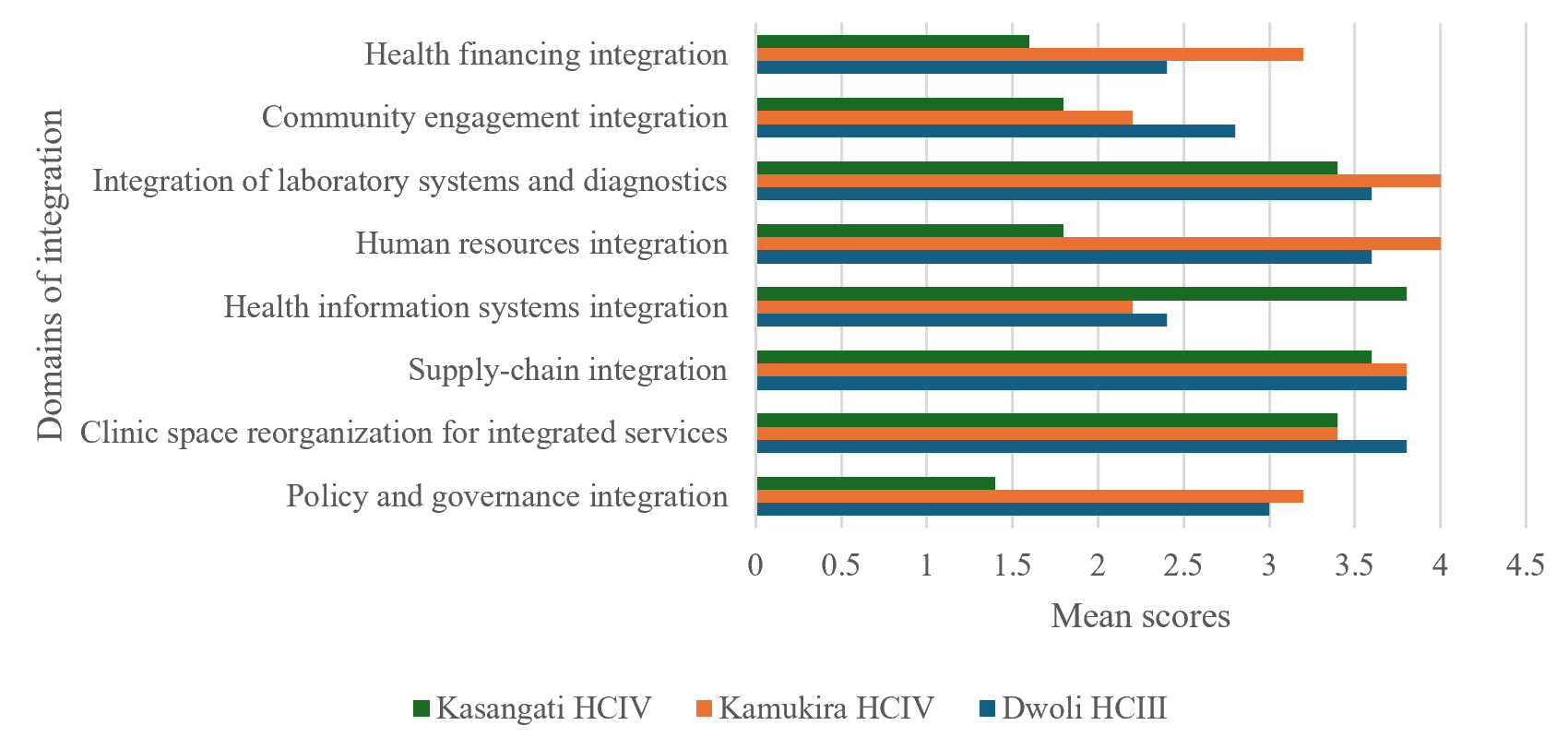
Domain-specific mean scores varied across facilities, ranging from 1.4 to 4.0 across facilities (Figure 1). Policy and governance ranged from 1.4 to 3.2, clinic space reorganization from 3.4 to 3.8, supply-chain integration from 3.6 to 3.8, integrated health information systems from 2.2 to 3.8, human resource from 1.8 to 4.0, laboratory systems integration from 3.4 to 4.0, community engagement from 1.8 to 2.8, and health financing from 1.6 to 3.2.
Across domains, supply-chain integration (3.7), integration of laboratory services (3.7) and clinical space reorganization (3.5) had the highest mean scores. In contrast, community engagement (2.3), health financing (2.4), policy and governance (2.5) and integrated health information systems (2.8) had the lowest mean scores and varied across facilities.
Kasangati HCIV had minimal integration, with an overall mean score of 2.6 corresponding to Level 2. Dwoli HCIII and Kamukira HCIV had moderate integration, with mean scores of 3.2 and 3.3, respectively, corresponding to Level 3. None of the facilities achieved full integration overall. Dwoli HCIII implemented a mixed outpatient department model, while Kamukira and Kasangati HCIVs operated differentiated clinic models.
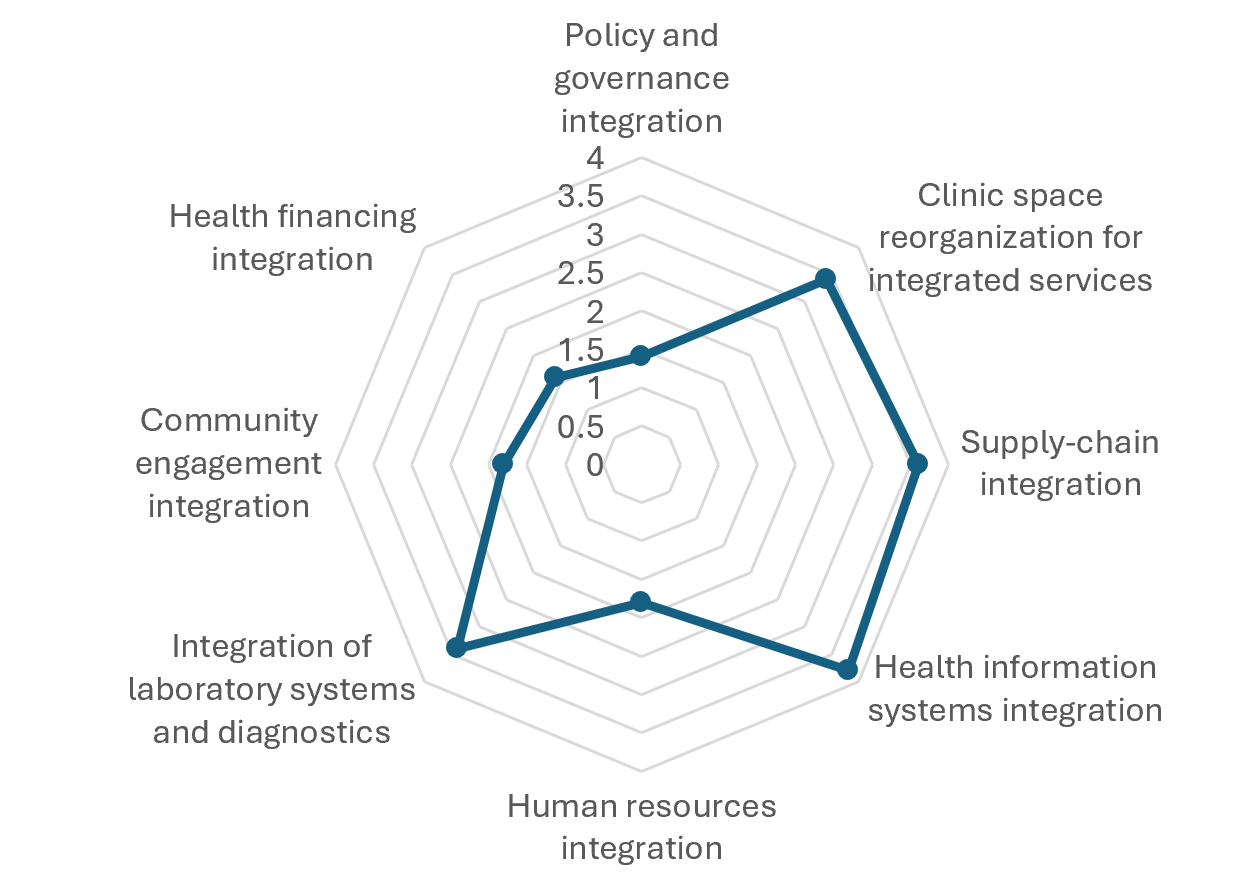
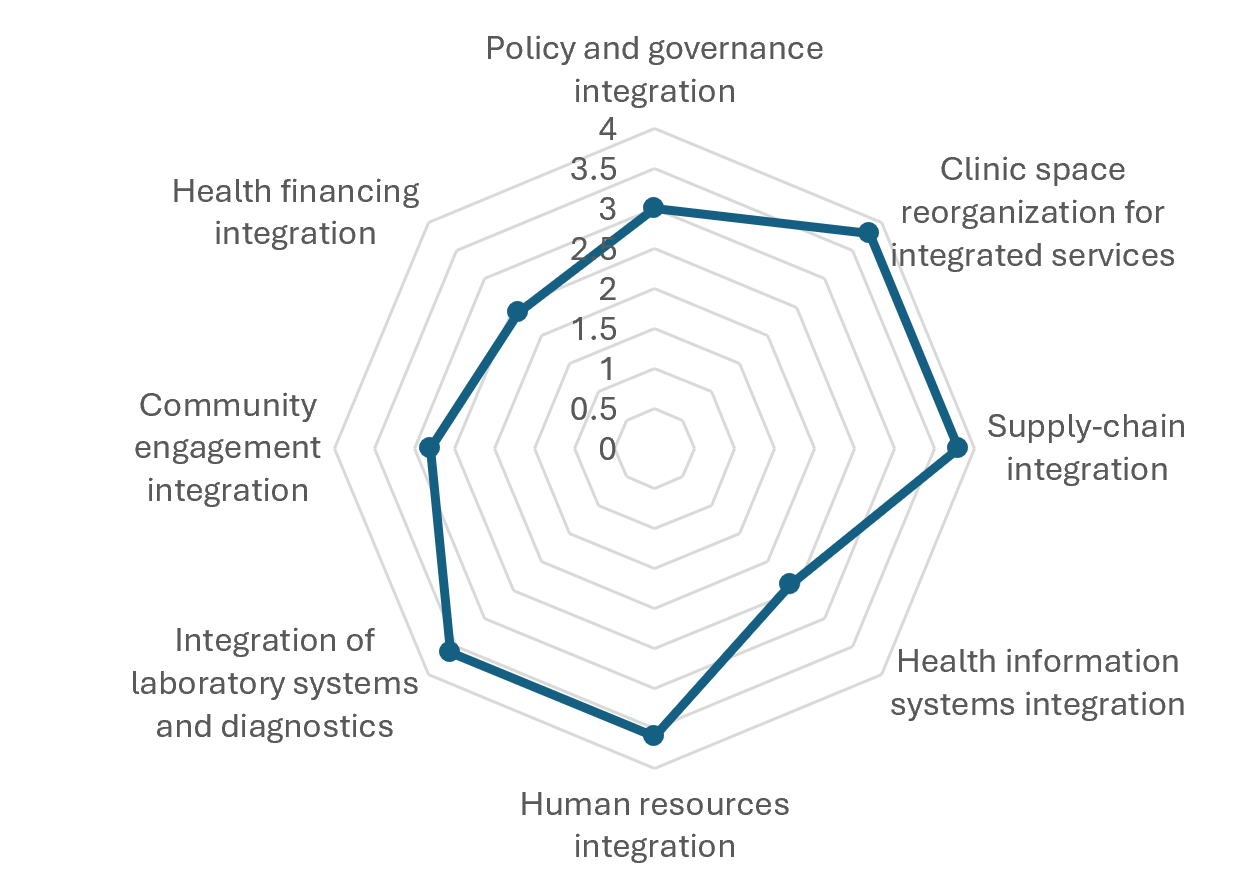
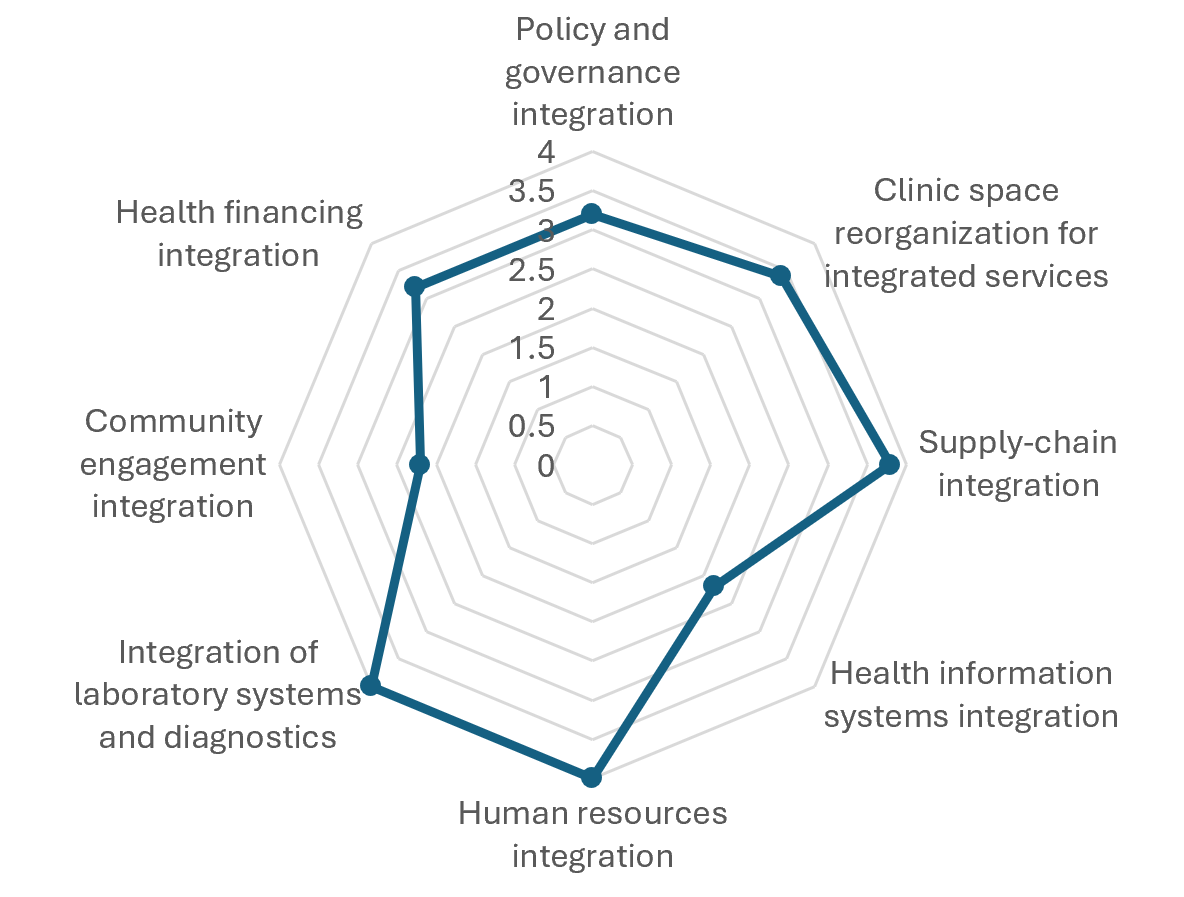
Domain scores varied across facilities (Figures 2 to 4). Policy and governance was at Level 1 (no integration) in Kasangati HCIV (1.4) and Level 3 (moderate integration) in Dwoli HCIII (3.0) and Kamukira HCIV (3.2). Human resource was also at Level 1 in Kasangati HCIV (1.8), compared with Level 3 in Dwoli HCIII (3.6) and full integration in Kamukira HCIV (4.0). Health financing was at Level 1 in Kasangati HCIV (1.6), Level 2 (minimal integration) in Dwoli HCIII (2.4), and Level 3 in Kamukira HCIV (3.2). In contrast, health information systems integration was at Level 3 in Kasangati HCIV (3.8) but Level 2 in Dwoli HCIII (2.4) and Kamukira HCIV (2.2).
Facilitators and barriers to integration of health services
Key informant interviews revealed facilitators and barriers that varied across the health-system integration domains, as described below.
Leadership and governance
Integration was driven by a formal national directive, communicated through a written circular mandating implementation of integrated services across districts, with defined timelines for compliance.
“A circular was written to all districts in Uganda directing us to do integration … it is a directive we are going to act; it is a must do.” (ADHO)
Additionally, the presence of guiding documents from the MoH provided a framework for implementation, complemented by district-level leadership, through staff deployment, engagement of local authorities, and resource prioritisation. Informants reported that training of facility in-charges and routine continuing medical education (CME), often supported by implementing partners, helped operationalise integration at facility level.
However, implementation was constrained by the absence of comprehensive facility-specific guidance, leaving staff without clear protocols for reorganising services. Dependence on implementing partners also disrupted planning and continuity because their support was intermittent and timelines were uncertain.
“You can’t be assured that they are there. They tell you today they have come back, today they tell you we are off. They tell you we are here, but we are not sure whether we are going beyond one month or two months.” (HMIS focal person)
Medical products and supplies
Centralised storage and distribution supported integration by enabling one stores unit to coordinate medical products and supplies across departments.
“I support each and every department in the facility because I am the one who normally takes custody of everything that enters the facility as in terms of logistics or items…then I’m the one who takes lead in issuing those items to user departments.” (Stores manager)
Despite centralised management, commodity availability was uneven. Antiretroviral drugs (ARVs) and laboratory supplies remained available, while recurrent stockouts affected other medicines and supplies, requiring patients to purchase drugs out-of-pocket.
“ARVs are still coming because the donor funding did not take away the ARVs. But what we don’t have, are drugs to treat other NCDs. Patients are buying themselves drugs. Sometimes, when the drugs provided by the government are out of stock, or when we prescribe drugs that the government does not provide, they have to go and buy.” (In-charge, OPD chronic-care clinic)
Shortages of essential equipment also constrained integrated triage and routine assessment, particularly because of inadequate blood-pressure machines and adult mid-upper arm circumference tapes.
“We don’t have enough BP machines. We also don’t have MUAC tapes for adults, we get disturbed getting that anthropometric equipment for helping us at triage.” (In-charge, OPD chronic-care clinic)
Health workforce
Availability of skilled and adaptable clinicians enabled management of multiple conditions within a single consultation.
“When someone comes with HIV and is hypertensive, one clinician will see that person and prescribe all the drugs at once… because all clinicians have some knowledge about counselling.” (In-charge, OPD chronic-care clinic)
However, persistent staff shortages constrained integrated service delivery. Participants noted that responsibilities expanded without proportional increases in staffing.
“Our staff juggle multiple roles, which strains service quality. Integration increases workload but staffing has not increased accordingly.” (In-charge, OPD chronic-care clinic)
Limited ongoing training further constrained staff confidence in managing conditions outside their previous programme-specific roles. Furthermore, initial resistance to integration was linked to perceived skill gaps and loss of incentives previously associated with vertical programmes.
“There was resistance like any change. They had their reservations regarding integration, …. usually the major thing was their apprehension, ‘now if I have been in ART clinic how do I go and manage hypertension?’ so it was more related to the competencies. And then those who were getting some allowance, now that is gone.” (DHO)
Health systems financing
Some facilities reported pre-existing patient-led resource-pooling that continued to support access to medicines and continuity of care. Additionally, at district and facility levels, consolidated budgeting also enabled resources to be used across programmes rather than being restricted to individual disease areas.
“Budgets are now broader encompassing all activities instead of isolated programmes. We don’t have specific funds for integration. It is a general fund… to do all the activities, which is integration.” (Health sub-district accountant)
However, limited financial resources, compounded by donor funding cuts, were reported to constrain supervision, mentorship, and follow-up, weakening the support required to sustain integration.
“This change [shift towards integrated service delivery] would require frequent support supervision… but we are limited on how often we meet the in-charges.” (DHO)
Health information systems
Health information systems remained fragmented because services provided during the same patient visit were recorded in separate registers. For example, at one facility, routine tests and chronic-disease investigations for chronic-care patients were recorded in different laboratory registers, resulting in duplicate documentation and limiting consolidated reporting of integrated care.
“We have a register for routine tests, then we have a register for those patients coming from chronic clinic, so we have different registers.” (Laboratory in-charge)
Dwoli HCIII and Kasangati HCIV had received integrated HIV tools that captured HIV-related information alongside screening indicators for non-communicable diseases and viral hepatitis. However, most services continued to be reported using separate, service-specific tools. Participants attributed the greater availability of integrated HIV tools to continued partner support for HIV services.
One facility was transitioning to electronic data that captured patient information from point of registration to the final service point. However, data capture was constrained by inadequate computers at points of care, limited staff competence in using electronic systems and incomplete recording of test fields when the required diagnostic supplies were unavailable. Participants further reported mismatches between indicators captured in paper-based tools and those available in the electronic medical records.
“Some new tools such as the manual HMIS tools do not match the electronic ones… The register and the electronic version [indicators] are not synced.” (Facility in-charge)
Service delivery
Service-delivery models varied across facilities; Dwoli HCIII used the mixed OPD model, whereas Kasangati HCIV used a differentiated clinic model. Kamukira HCIV initially adopted the mixed OPD model but later shifted to a differentiated clinic model after participants reported concerns about privacy for patients receiving HIV services, long patient waiting times, and extended working hours for health workers. Facilities with pre-existing chronic-care clinics for HIV, hypertension, and diabetes were able to integrate services mainly by reorganising established workflows rather than creating entirely new systems.
“The first strength we had was that we already had chronic-care clinics…they were already in place. So, it became very easy for us … to integrate what is already there.” (Facility in-charge)
Staff coordination further supported integration by streamlining patient flow and enabling patients to receive multiple services during one visit. However, reliance on a single shared laboratory contributed to delays, while inadequate waiting space caused congestion, with some patients waiting outside in the facility compound before consultation or while awaiting laboratory results. Increased workloads also left staff overstretched and fatigued, reducing efficiency and contributing to resistance to integrated service delivery.
“We face resistance sometimes because staff are overstretched, and physical space is inadequate for integrated service stations.” (OPD manager)
Participants additionally described difficulty integrating certain community-based services with distinct delivery requirements, particularly nocturnal outreach for key populations.
“There are these services which are more community-based… like prevention among commercial sex workers… those activities are difficult to integrate.” (MCH in-charge)
Perceived effects of donor funding cuts on integration of health services
Participants reported that funding previously earmarked for specific programmes was no longer available, resulting in fewer activities being implemented with limited pooled resources:
“Previously, a grant supported four activities… currently, only one activity can be carried out. This has affected service delivery.” (DHO)
Participants also reported the withdrawal of externally supported staff, particularly data clerks, counsellors, and peer supporters. They perceived that the loss of these staff increased the workload of remaining staff and weakened data-management capacity.
“The majority of these were handling our data. Now we are struggling with data because these people are not there.” (Facility in-charge)
Informants further perceived that reductions in donor support had affected the availability of some medicines and supplies. Implementing partners had previously supplemented stocks and mitigated stockouts, particularly for non-communicable disease medicines. Although antiretroviral medicines remained available during the study, participants expressed uncertainty about future sustainability because of continued reliance on donor-supported logistics. Reduced field supervision due to limited facilitation was also reported.
Conversely, some informants perceived the funding reductions as accelerating the transition from disease-specific programmes to integrated service-delivery models. Facilities reportedly adapted by pooling resources and combining outreach activities across programmes:
“Activities are now carried out jointly… if a team goes for immunization, there’s a team that might do nutritional assessment, HIV testing, TB screening.” (Health sub-district accountant)
Integration of quantitative and qualitative findings
Quantitative and qualitative findings were integrated at the domain level to explain variations in integration scores across facilities (Table 3). Domains with relatively higher scores, including medicines and diagnostics, laboratory systems, and clinic-space reorganisation, were supported by centralised supply management, shared laboratory services, pre-existing chronic-care clinics, and coordinated patient flow. Lower or more variable scores in leadership, financing, community services, human resources, and HMIS could be explained by inadequate facility-specific guidance, limited funding, staff shortages, reduced outreach support, and fragmented reporting systems.
Our findings indicate differing levels of integration across the three selected facilities. Kasangati HCIV in Wakiso had minimal integration (2.6), while Dwoli HCIII in Hoima and Kamukira HCIV in Kabale had moderate integration (3.2 and 3.3 respectively). These differences suggest that the extent and consistency of implementation varied according to facility context and capacity.
Across domains, higher scores in supply-chain, clinic-space reorganization, and laboratory systems integration reflect progress in reorganising service delivery at the facility-based points of care. In contrast, community-linked health services, financing, leadership, and health information systems lagged, raising concerns about long-term sustainability. Cross-district variation was observed in system-level domains, indicating uneven integration maturity. Policy and governance integration was lower in Wakiso compared to Hoima and Kabale, suggesting weaker coordination structures in the higher-volume peri-urban setting. Similarly, human resource integration was lowest in Wakiso indicating constraints in staff deployment in more complex, high-demand facilities. Health financing integration followed a similar pattern, with lowest scores in Wakiso, reflecting limited financial flexibility to support integrated service delivery.
In contrast, integrated use of health information systems was highest in Wakiso. This was attributed to the availability and use of newly introduced integrated HIV tools at Kasangati HCIV, supported by an implementing partner. Although Dwoli HCIII had also received the integrated HIV tools, the facility was still transitioning to their use, while Kamukira HCIV had not yet received them because of resource constraints at the national level. This variation highlights the role of differential resource allocation and partner support in shaping integration performance across facilities.
Altogether, these findings indicate that integration maturity is not only driven by national policy direction but is highly dependent on district- and facility-level capacity, including leadership, workforce organization, financing, and access to enabling tools. Facilities with stronger district-level implementation support, better team-based organization, and more flexible resource environments demonstrated more advanced integration, while a high-volume peri-urban facility with greater service demand faced constraints in achieving similar levels of integration. Advancing from partial to full integration will require targeted investments in governance, financing, and health information systems, alongside equitable distribution of integration-enabling resources and context-specific implementation strategies. Without strengthening these foundational domains, integration efforts risk remaining uneven and difficult to sustain, particularly in the context of ongoing donor funding transitions.
Leadership and governance facilitated integration through the national directive and district-level oversight and support. High-level policy commitment is widely recognised as an important foundation for advancing integrated, people-centred health services [1]. However, translation of policy into facility-level guidance remained limited. Similar challenges have been reported in studies from Uganda and comparable settings, where frontline providers describe limited context-specific guidance to support day-to-day implementation of integrated services [21,22]. These findings indicate a gap between policy intent and routine practice, with integration depending heavily on local leadership initiative rather than institutionalised processes.
Health worker adaptability supported integration across the three districts, with clinicians managing multiple conditions within a single consultation. Evidence from other studies in Uganda shows that integrated HIV and NCD service delivery is feasible and acceptable to providers when supported by training and mentorship [23,24]. However, this study also found that staffing shortages, limited continuous professional development, and increased workload constrained integration. These constraints mirror findings from a systematic review by Watt et al. [25], which identified workforce shortages, skill gaps, and workload pressure as recurrent barriers to integrated care in Sub-Saharan Africa. While task shifting is frequently proposed to address workforce gaps, evidence from Uganda indicates that it is only effective when supported by policy clarity, supervision, and training [26]. Without such support, integration risks overburdening staff and compromising quality of care.
Across the districts, inconsistent availability of medicines and basic diagnostic equipment, particularly for non-communicable diseases, weakened integrated service delivery. Integrated care models rely on reliable access to essential commodities across conditions. Evidence from Tanzania shows that stockouts of NCD medicines are a major barrier to integrating NCD care within HIV platforms, despite service co-location [27]. Similarly, studies from Uganda demonstrate that commodity availability strongly determines the functionality of integrated NCD and HIV services [23,24]. The findings suggest that integration remains fragile when supply chains continue to reflect disease-specific financing patterns.
Weak HMIS emerged as a major barrier, with reliance on paper-based tools, parallel registers, and limited digital capacity constraining monitoring of integrated care. Evidence from Tanzania also indicated that disintegrated data systems were a barrier to integrated health services delivery [28]. Earlier work on digital health systems in LMICs similarly shows that inadequate technological infrastructure, limited digital readiness, and lack of standardised reporting formats are significant barriers to effective HMIS functionality. In this study, low integration scores for HMIS and patient records suggest that even where services are delivered in an integrated manner, weak data systems limit visibility, accountability, and opportunities for quality improvement.
Community health service integration lagged behind facility-based integration across all districts. Evidence from Uganda and Kenya shows that community platforms including, outreach, follow-up, and referral are often under-resourced and poorly linked to facility services [29,30]. The findings indicate that facility-based reorganisation alone is insufficient to achieve continuity of care, particularly for chronic conditions requiring sustained follow-up beyond the health facility.
Donor funding cuts were reported to reduce supervision, outreach activities, and support cadres, weakening key enablers of integration. At the same time, funding constraints in this study appeared to accelerate integration by forcing pooling of staff and resources. Evidence from donor-transition settings shows that reductions in external funding often disrupt supervision, workforce support, and community services unless transition planning and domestic financing are strengthened [31]. The findings suggest that donor cuts may prompt organisational integration, but without reinvestment in system enablers, service quality and equity may be compromised.
These findings highlight several important policy considerations. National integration directives require accompanying facility-level operational guidance to support consistent and routinised implementation across service areas. Strengthening health management information systems, including harmonisation of reporting tools and investment in digital capacity, is essential to enable effective monitoring, accountability, and continuous quality improvement for integrated care. In addition, financing reforms are needed to align commodity supply chains with integrated service delivery models, particularly for non-communicable disease services. As donor support declines, transition planning should prioritise sustained investment in community platforms and supervisory functions to prevent erosion of integration gains and protect service quality and equity.
This study has limitations; the case-study design and purposive selection of facilities and key informants may have introduced selection bias and limited generalisability of findings beyond the participating facilities. Data were collected during an early phase of implementation and provided a cross-sectional assessment rather than evidence of changes over time. Qualitative findings relied on information reported by health workers, which may have been affected by recall and social desirability bias. Observer judgement may also have influenced checklist scoring, although consensus scoring by three researchers and triangulation of observations, staff accounts, and facility records helped reduce this risk. The study did not assess patient-level service or health outcomes and did not include patient perspectives; therefore, it cannot determine how integration affected service quality, access, equity, or patient experience. Nevertheless, the mixed-methods approach provided complementary evidence on implementation processes. Longitudinal studies incorporating objective service indicators and patient perspectives are needed to assess the sustainability and outcomes of integration.
Health service integration across the three lower-level public health facilities was minimal to moderate, with higher integration in facility-based services including clinic-space reorganisation, supply-chain, and laboratory integration. In contrast, community-linked services, financing, leadership, and health information systems remained less integrated and constrained progression towards full integration. These findings indicate that while national policy directives can drive initial changes, sustained integration requires strengthening system-level enablers, particularly in the context of declining donor support. Advancing integration therefore requires facility-specific implementation guidance, adequate financing for staffing, supervision and outreach, integrated electronic HMIS tools, and context-appropriate approaches for integrating community services.
What is already known about the topic
What this study adds
The authors acknowledge the Makerere University School of Public Health, College of Health Sciences, for academic and technical support to the development of this study and preparation of the manuscript. We also acknowledge the District Health Offices of Hoima, Kabale, and Wakiso districts, and the management and staff of Dwoli HCIII, Kamukira HCIV, and Kasangati HCIV for facilitating access and supporting data collection. We are grateful to all study participants for their time and contributions.
Conceptualization: Gilbert Mateeka, Connie Nait, Suzanne Namusoke Kiwanuka
Data curation: Angella Nabakooza Kigongo, Immaculate Nakasiita
Methodology: Angella Nabakooza Kigongo
Formal analysis: Angella Nabakooza Kigongo, Stuart Mayira, Immaculate Nakasiita
Investigation: Angella Nabakooza Kigongo, Albert Tonny Okia, Ibrahim Ssebukulu, Irene Tumwebaze, Stuart Mayira, Amon Lucky Bwambale, Mousa Matovu, Agatha Tukamuhebwa, Irene Elizabeth Nuwe, Immaculate Nakasiita
Project Administration: Connie Nait
Visualization: Angella Nabakooza Kigongo, Albert Tonny Okia
Methodology: Irene Tumwebaze, Immaculate Nakasiita
Supervision: Gilbert Mateeka, Connie Nait
Writing – original draft: Angella Nabakooza Kigongo, Albert Tonny Okia, Ibrahim Ssebukulu, Irene Tumwebaze, Stuart Mayira
Writing – review & editing: Angella Nabakooza Kigongo, Gilbert Mateeka, Connie Nait, Suzanne Namusoke Kiwanuka
Table 1: Characteristics of the case-study health facilities
| Health Facility | Dwoli | Kamukira | Kasangati |
|---|---|---|---|
| Ownership | Public | Public | Public |
| Level of care | Health Centre III | Health Centre IV | Health Centre IV |
| Setting | Rural | Rural | Peri-urban |
| Standard catchment population | 20,000 people | 100,000 people | 100,000 people |
| Annual OPD volume | 8,120 | 25,466 | 159,673 |
| Annual IPD volume | 0 | 2,818 | 2,175 |
| Approved staff establishment | 55 | 130 | 130 |
| Services provided | Preventive, promotive, outpatient, curative, maternity, and laboratory services | Preventive, promotive, outpatient, curative, maternity, inpatient, laboratory services, and simple surgical operations. | Preventive, promotive, outpatient, curative, maternity, inpatient, laboratory services, and simple surgical operations. |
| District and distance from Kampala | Hoima; approximately 209 Km | Kabale; approximately 410 Km | Wakiso; approximately 11 Km |
HCIII: Health Centre III; HCIV: Health Centre IV; OPD: Outpatient Department. Facility levels are based on the Uganda health system structure. Peri-urban refers to areas with mixed urban and rural characteristics.
Table 2: Characteristics of study participants by district
| Characteristic | Overall (N = 22) | Kabale (n = 8) | Hoima (n = 5) | Wakiso (n = 9) |
|---|---|---|---|---|
| District representation, n (%) | 22 (100.0) | 8 (36.4) | 5 (22.7) | 9 (40.9) |
| Level of operation, n (%) | ||||
| District level | 4 (18.2) | 1 (12.5) | 1 (20.0) | 2 (22.2) |
| Facility level | 18 (81.8) | 7 (87.5) | 4 (80.0) | 7 (77.8) |
| Age, years | ||||
| Mean (SD) | 42.7 (7.9) | 45.9 (7.0) | 37.4 (8.5) | 42.8 (7.6) |
| Median (IQR) | 45.0 (35.5 – 48.8) | 47.0 (43.3 – 49.8) | 35.0 (32.0 – 37.0) | 45.0 (39.0 – 48.0) |
| Range | 28 – 55 | 34 – 55 | 31 – 52 | 28 – 50 |
| Gender, n (%) | ||||
| Female | 10 (45.5) | 3 (37.5) | 0 (0.0) | 7 (77.8) |
| Male | 12 (54.5) | 5 (62.5) | 5 (100.0) | 2 (22.2) |
| Highest education level, n (%) | ||||
| Diploma | 10 (45.5) | 5 (62.5) | 2 (40.0) | 3 (33.3) |
| Bachelor’s degree | 7 (31.8) | 1 (12.5) | 2 (40.0) | 4 (44.4) |
| Master’s degree | 5 (22.7) | 2 (25.0) | 1 (20.0) | 2 (22.2) |
| Professional background, n (%) | ||||
| Nurse or midwife | 6 (27.3) | 3 (37.5) | 0 (0.0) | 3 (33.3) |
| Medical doctor | 3 (13.6) | 2 (25.0) | 1 (20.0) | 0 (0.0) |
| Public health officer | 3 (13.6) | 0 (0.0) | 1 (20.0) | 2 (22.2) |
| Health information assistant, records or ICT officer | 3 (13.6) | 1 (12.5) | 1 (20.0) | 1 (11.1) |
| Stores, inventory or logistics manager | 3 (13.6) | 1 (12.5) | 1 (20.0) | 1 (11.1) |
| Laboratory technician | 2 (9.1) | 1 (12.5) | 0 (0.0) | 1 (11.1) |
| Clinical officer | 1 (4.5) | 0 (0.0) | 1 (20.0) | 0 (0.0) |
| Accounting | 1 (4.5) | 0 (0.0) | 0 (0.0) | 1 (11.1) |
| Period in current position, years | ||||
| Mean (SD) | 6.2 (5.0) | 6.5 (6.4) | 3.4 (1.7) | 7.6 (4.5) |
| Median (IQR) | 5.0 (2.0 – 7.8) | 3.5 (1.6 – 13.0) | 3.0 (2.0 – 4.0) | 7.0 (6.0 – 8.0) |
| Range | 0.25 – 16 | 0.25 – 16 | 2 – 6 | 2 – 15 |
Table 3: Integration of quantitative and qualitative findings on health-service integration
| Domain | Score range | Facilitators | Barriers |
|---|---|---|---|
| Policy and governance integration | 1.4 – 3.2 | National integration directive, MoH guidance, district leadership and staff training | Lack of facility-specific guidance and unpredictable implementing-partner support |
| Clinic-space reorganisation | 3.4 – 3.8 | Pre-existing chronic-care clinics and staff coordination facilitated workflow reorganisation | Inadequate space, staff fatigue and privacy constraints |
| Supply-chain integration | 3.6 – 3.8 | Centralised stores and continued availability of ARVs and some laboratory supplies | Stockouts of other medicines, inadequate equipment and patient out-of-pocket expenditure |
| Health Information Systems | 2.2 – 3.8 | Use of electronic medical records in some facilities | Separate or outdated registers and mismatches between paper and electronic indicators |
| Human resources integration | 1.8 – 4.0 | Skilled and adaptable clinicians provided multiple services during one consultation | Staff shortages, increased workload, limited training and resistance to changing roles |
| Laboratory systems | 3.4 – 4.0 | Shared laboratory services supported multiple service areas | Delays caused by reliance on a single laboratory and inadequate equipment |
| Community engagement integration | 1.8 – 2.8 | Combined outreach activities across programmes | Reduced outreach support and difficulty integrating services with specialised delivery requirements |
| Health financing integration | 1.6 – 3.2 | Consolidated budgeting and alternative resource-pooling arrangements | Limited resources and reported donor funding cuts that constrained supervision and follow-up |