
Research | Open Access | Volume 9 (4): Article 191 | Published: 13 Nov 2026

Views: 198
Menu, Tables and Figures
Table 1: HBV DNA detection and viral load category by sex, Mauritania, 2019–2020 (N = 1,263)
| Patient classification | Viral load (IU/mL) | Total, n (%) | Women, n (%) | Men, n (%) | χ² | df | p-value |
|---|---|---|---|---|---|---|---|
| PCR-negative | HBV DNA not detected | 369 (29.2) | 208 (16.5) | 161 (12.8) | 1.7918 | 1 | 0.18 |
| PCR-positive | HBV DNA detected | 894 (70.8) | 467 (37.0) | 427 (33.8) | |||
| PCR-positive | High HBV DNA replication (>20,000) | 93 (7.4) | 36 (2.9) | 57 (4.5) | 11.0073 | 2 | 0.0041 |
| Intermediate HBV DNA replication (2,000–20,000) | 132 (10.5) | 64 (5.1) | 68 (5.4) | ||||
| Low HBV DNA replication (including undetectable) (<2,000) | 1,038 (82.2) | 575 (45.5) | 463 (36.7) |
Note: Percentages are calculated on the total of 1,263 patients. PCR-positive: HBV DNA detected (lower limit of quantification 20 IU/mL)
Table 2: Distribution of HBV viral load classes by age group, Mauritania, 2019–2020 (N = 1,263)
| Viral load (IU/mL) | ≤18 years | 19–36 years | 37–54 years | >54 years | Total | df | χ² | p-value |
|---|---|---|---|---|---|---|---|---|
| <50 | 13 (1.0) | 251 (19.9) | 183 (14.5) | 54 (4.3) | 501 (39.7) | 18 | 32.3342 | 0.0201 |
| 50–100 | 3 (0.2) | 48 (3.8) | 39 (3.1) | 13 (1.0) | 103 (8.2) | |||
| 101–500 | 3 (0.2) | 117 (9.3) | 94 (7.4) | 24 (1.9) | 238 (18.8) | |||
| 501–1,000 | 1 (0.1) | 58 (4.6) | 42 (3.3) | 8 (0.6) | 109 (8.6) | |||
| 1,001–2,000 | 1 (0.1) | 45 (3.6) | 34 (2.7) | 7 (0.6) | 87 (6.9) | |||
| 2,001–20,000 | 9 (0.7) | 68 (5.4) | 45 (3.6) | 10 (0.8) | 132 (10.5) | |||
| >20,000 | 8 (0.6) | 36 (2.9) | 33 (2.6) | 16 (1.3) | 93 (7.4) |
Note: Values are n (%) of the total of 1,263 patients; undetectable HBV DNA is included in the <50 IU/mL class
Hala El Hachimi1,2,3,&, Elmoustapha Cheikhna Ahmed Mahmoud2, Fatimetou Khidid1, Setty Sas2, Mohamed Vall Mohamed Abdellahi1
1Unit of Epidemiology and Diversity of Microorganisms, Faculty of Sciences and Techniques, University of Nouakchott, Nouakchott, Mauritania, 2Department of Virology, National Institute of Public Health Research (Institut National de Recherches en Santé Publique, INRSP), BP 695, Nouakchott, Mauritania, 3Burkina Field Epidemiology and Laboratory Training Programme (BFELTP), Université Joseph Ki-Zerbo, Ouagadougou, Burkina Faso
&Corresponding author: Hala El Hachimi, Department of Virology, National Institute of Public Health Research (INRSP), BP 695, Nouakchott, Mauritania, Email: halahw4559@live.fr, ORCID: https://orcid.org/0000-0001-8331-9591
Received: 02 Apr 2026, Accepted: 11 Nov 2026, Published: 13 Nov 2026
Domain: Infectious Disease Epidemiology
Keywords: Hepatitis B, HBV DNA, viral load, real-time PCR, Mauritania
©Hala El Hachimi et al. Journal of Interventional Epidemiology and Public Health (ISSN: 2664-2824). This is an Open Access article distributed under the terms of the Creative Commons Attribution International 4.0 License (https://creativecommons.org/licenses/by/4.0/), which permits unrestricted use, distribution, and reproduction in any medium, provided the original work is properly cited.
Cite this article: Hala El Hachimi et al., Epidemiological and virological characteristics of Hepatitis B infection in Mauritania, 2019–2020: Insights from viral load analysis. Journal of Interventional Epidemiology and Public Health. 2026; 9(4):191. https://doi.org/10.37432/jieph-d-26-00108
Introduction: Hepatitis B is a liver infection caused by the hepatitis B virus (HBV), which can lead to chronic infection and expose affected individuals to a high risk of complications, particularly cirrhosis and hepatocellular carcinoma. This study characterised the virological profile of HBsAg-positive patients in Mauritania: HBV DNA replication levels, the most affected sex and age groups, and the geographical distribution of patients.
Methods: This descriptive cross-sectional study included 1,263 HBsAg-positive patients whose plasma HBV DNA was quantified by real-time PCR at the National Institute of Public Health Research, Nouakchott, from January 2019 to December 2020. Viral load was categorised as low (<2,000 IU/mL), intermediate (2,000–20,000 IU/mL) or high (>20,000 IU/mL). Associations were tested with Pearson’s chi-square test.
Results: HBV DNA was detected in 894 patients (70.8%), with no difference by sex (p = 0.18). Overall, 93 patients (7.4%) had high, 132 (10.5%) intermediate and 1,038 (82.2%) low HBV DNA replication; intermediate and high replication were more frequent in men (p = 0.0041). The median viral load was 126 IU/mL (IQR 20–961), and its distribution differed between age groups (p = 0.0201). PCR-positive and high-replication patients were concentrated in Nouakchott, Trarza, Brakna and Hodh Ech Chargui.
Conclusion: Most HBsAg-positive patients had low HBV DNA replication, but about one in thirteen had high replication, more often in men. Systematic viral load monitoring should be integrated into the national hepatitis control programme to identify patients requiring treatment and to prevent severe complications.
Hepatitis B is a liver infection caused by the hepatitis B virus (HBV), which can lead to chronic infection and exposes affected individuals to a high risk of complications, particularly cirrhosis and hepatocellular carcinoma [1]. Chronic HBV infection is a major public health problem, as it is one of the leading causes of chronic liver failure and hepatocellular carcinoma (HCC) [2]. The quantification of HBV viral DNA in the blood indicates the replication activity of the virus. High viral load levels are associated with more severe liver inflammation, accelerated fibrosis progression, and an increased likelihood of developing HCC [3]. Viral load, beyond its importance for clinical research, also plays a crucial role in public health planning and epidemiological surveillance. A significant proportion of patients with high viral loads indicates active transmission of the virus, which increases the risk of epidemics and necessitates improvements in targeted prevention and management strategies [4].
Modelling research using data from 170 countries indicated that 257.5 million individuals globally were living with chronic HBV infection in 2022 [1]. The World Health Organization (WHO) has stated that approximately 1.2 million new HBV infections occur each year and that 1.1 million deaths are recorded annually due to chronic complications associated with HBV, including cirrhosis and HCC [2]. In the face of this significant global health challenge, the WHO has identified HBV as a serious threat to public health and aims to reduce new infections by 90% and HBV-related deaths by 65% by 2030 [5,6].
The global burden of hepatitis B is unevenly distributed, with the highest prevalence observed in the African and Western Pacific Regions [7]. In 2022, the WHO African Region accounted for 64.7 million people living with chronic HBV infection (5.8% of the population), 771,000 new infections (63% of new infections worldwide) and an estimated 272,000 HBV-related deaths, i.e. about one quarter of all hepatitis B deaths globally; yet only about 4% of infected people in the Region had been diagnosed, fewer than 1% were receiving antiviral treatment and only 18% of newborns received the hepatitis B birth-dose vaccine [8].
In the West African sub-region, to which Mauritania belongs, HBV is hyperendemic: HBsAg prevalence in the general population exceeds 8% in most countries, including Senegal, Mali and Burkina Faso [7,9]. Infection is mainly acquired perinatally or horizontally in early childhood, which favours progression to chronicity, and genotype E, which is almost exclusively found in this part of the world, accounts for the large majority of infections [9,10]. Hepatitis B vaccination was progressively introduced into infant immunization programmes during the 2000s, but birth-dose coverage remains low, and adults born before its introduction remain largely unprotected [8,9]. Data on HBV DNA levels among HBsAg carriers in the sub-region are scarce; the available population-based series indicate that most carriers have low viral loads and that only a minority meet treatment eligibility criteria [11].
Mauritania is considered a country with a high level of endemicity for the hepatitis B virus, with one of the highest HBsAg prevalences in West Africa; a recent systematic review and meta-analysis confirmed this high endemicity, with reported HBsAg rates ranging from 10% to 20% depending on the population studied [12–14]. The consequences of this endemicity are substantial. According to Global Burden of Disease 2021 estimates, Mauritania had the highest age-standardised incidence (19.1 per 100,000) and mortality (20.6 per 100,000) of HCC among the 22 countries of the Arab region, HBV being the leading cause (HBV-attributable HCC mortality 9.8 per 100,000) [15]. In a recent hospital-based series of 401 HBsAg-positive patients followed in Nouakchott, 27.4% already had cirrhosis and 4.2% HCC at inclusion, and hepatitis D virus co-infection (31.9%) was the main driver of severe liver disease [16]. In the absence of a national register of hepatitis B cases, complications and deaths, these figures rely on modelled estimates and hospital series.
In Mauritania, where hepatitis B remains endemic despite the introduction of infant hepatitis B vaccination in 2005 [17], the available data are limited and come mainly from older studies or from studies conducted on specific adult populations such as blood donors and hospitalized patients [12,14], and no data have been published on HBV DNA replication levels among Mauritanian HBsAg carriers. There is a significant lack of recent and representative information, particularly for the general population and for children. However, accurate knowledge of the virological profile, and in particular of HBV viral load, which is interpreted together with HBeAg status, transaminase levels and liver disease assessment to define the phase of chronic infection, is essential to optimize patient care and to effectively guide national health policies towards the goal of eliminating hepatitis B by 2030.
This study was therefore conducted to address this lack of reference virological data and to provide a solid basis for guiding national strategies to combat the disease. More specifically, it aims to characterize the virological profile of HBsAg-positive patients in Mauritania, to describe the distribution of HBV DNA replication levels, to determine which sex and age groups are most affected, and to assess the geographical distribution of patients.
Study setting
The study was conducted in the Islamic Republic of Mauritania, a West African country located in the south-west of the Maghreb, in the Sahelian transition zone, between 15° and 27° north latitude and 5° and 17° west longitude. Mauritania is bordered by Mali to the east and south-east, Algeria to the north-east, Western Sahara to the north-west and Senegal to the south-west and has a coastline of approximately 600 km on the Atlantic Ocean [18].
The country covers an area of about 1,030,700 km² and had an estimated population of 5,179,819 inhabitants in 2025[18]. Administratively, it is divided into 15 regions (wilayas), including the three wilayas of the capital Nouakchott, which were grouped as a single entity in this analysis, 53 departments (moughataas) and 218 municipalities [18].
The Mauritanian health system is organized as a three-level pyramid [19]. The central level comprises the Ministry of Health, its central directorates and national programmes, and the national reference hospitals and institutions located in Nouakchott, which provide tertiary care. The intermediate level is made up of the Regional Directorates for Health Action (Directions Régionales de l’Action Sanitaire, DRAS), one per wilaya, and the regional hospitals, which provide secondary care. The peripheral level corresponds to the moughataa health districts, in which health centres and health posts deliver primary health care.
The National Institute of Public Health Research (Institut National de Recherches en Santé Publique, INRSP), created by decree no. 18-2005 of 27 February 2005 from the former National Hygiene Centre, is a public scientific institution under the Ministry of Health, based in Nouakchott. It coordinates public health research, hosts the national reference laboratories (virology, medical bacteriology, mycobacteriology and parasitology), provides technical support for epidemiological surveillance, and ensures training, supervision and quality control for the laboratories of the regional hospitals [20]. During the study period, its virology laboratory was the only laboratory in the country performing HBV DNA quantification, and samples were referred to it from health facilities in all wilayas, which explains the national coverage of the database analysed here.
Type and period of study
This is a descriptive cross-sectional study conducted at the virology laboratory of the National Institute for Public Health Research (INRSP) in Nouakchott. The analysis focused on data recorded in the hepatitis B virus viral load quantification database, collected over a two-year period from 1 January 2019 to 31 December 2020.
Study population
The study included all 1,263 HBsAg-positive patients for whom HBV viral load quantification was requested during the study period, either as part of an initial assessment or as part of follow-up to evaluate changes in virological status. Duplicate records of the same patient were removed during data cleaning, so that each patient contributed one result.
Laboratory procedures
A venous blood sample was collected aseptically in EDTA tubes. After centrifugation at 2,000 g for 20 minutes, the plasma obtained was either analysed within 72 hours or stored at 20 °C in sterile aliquots. HBV DNA was extracted automatically using the COBAS AmpliPrep system (Roche Diagnostics, Mannheim, Germany) according to the manufacturer’s instructions.
Viral DNA amplification and quantification were performed by real-time PCR on the COBAS TaqMan 96 HBV Test, version 2.0, which targets a highly conserved sequence of the pre-core/core region of the HBV genome. Results were expressed in international units per millilitre (IU/mL). The lower limit of quantification of the assay is 20 IU/mL; samples in which HBV DNA was detected were classified as PCR-positive and samples in which HBV DNA was not detected as PCR-negative.
Data processing and analysis
Prior to any statistical analysis, the database was cleaned: spelling errors (notably in region names) were corrected, duplicate records were removed, internal consistency was checked and missing demographic information was completed from laboratory records where possible. Data were entered into Microsoft Excel and analysed with SPSS version 22.0 (IBM Corp., Armonk, NY, USA). Qualitative variables were summarised as frequencies and percentages. Age was summarised as mean ± standard deviation and median with interquartile range (IQR); viral load, given its skewed distribution, was summarised as median and IQR. Age and viral load were categorised for analysis. Pearson’s chi-square test was used to compare the distribution of categorical variables (HBV DNA detection and viral load category) between sexes and between age groups. A significance level of 5% (p < 0.05) was adopted. The study is reported in accordance with the Strengthening the Reporting of Observational Studies in Epidemiology (STROBE) recommendations for cross-sectional studies [21].
Viral load categories
Viral load results were classified into three categories of HBV DNA replication: low (<2,000 IU/mL, including samples with undetectable HBV DNA), intermediate (2,000–20,000 IU/mL) and high (>20,000 IU/mL). These thresholds are those used in the EASL [22], AASLD [23] and WHO [24] guidelines: HBV DNA <2,000 IU/mL is the level that, together with persistently normal transaminases, characterizes HBeAg-negative chronic infection (formerly the “inactive carrier” state); 2,000 IU/mL is the level above which antiviral treatment is considered in the presence of elevated transaminases or significant fibrosis; and 20,000 IU/mL is the level used to define HBeAg-positive immune-active chronic hepatitis and above which treatment is recommended, irrespective of the degree of fibrosis, when transaminases are more than twice the upper limit of normal. These categories describe the level of viral replication only. They cannot by themselves define the phase of chronic infection or distinguish active from inactive forms of chronic hepatitis B, which requires HBeAg status, transaminase levels, assessment of liver fibrosis and the clinical context; these variables were not available in the laboratory database (see Limitations). For the analysis by age, viral load was also described in finer classes (<50, 50–100, 101–500, 501–1,000, 1,001–2,000, 2,001–20,000 and >20,000 IU/mL).
Ethical considerations
Before the start of the study, official authorization for access to and use of the hepatitis B viral load database was obtained from the head of the Virology Department of the National Institute of Public Health Research (INRSP), and the study protocol was approved by the Ministry of Health (approval number PV26032015). The study is based exclusively on secondary, routinely recorded laboratory data, without direct contact with patients; individual informed consent was therefore not required. All personally identifiable or indirectly identifiable information was removed during data extraction. Only coded and non-identifying variables were retained for statistical analysis, thus ensuring the confidentiality and anonymity of participants. The study was conducted in accordance with the principles of the Declaration of Helsinki.
Of the 1,263 HBsAg-positive patients included, 675 (53.4%) were women, and 588 (46.6%) were men (male-to-female ratio 0.87). Age ranged from 2 to 83 years, with a mean of 37.3 ± 12.3 years and a median of 36 years (IQR 28–45); 38 patients (3.0%) were aged 18 years or younger, 623 (49.3%) were aged 19–36 years, 470 (37.2%) were aged 37–54 years and 132 (10.5%) were older than 54 years. HBV DNA was detected in 894 patients (70.8%) and was undetectable in 369 (29.2%) (Table 1).
Distribution by sex
The proportion of patients with detectable HBV DNA was similar in women (467/675, 69.2%) and in men (427/588, 72.6%) (p = 0.18) (Table 1). Overall, 93 patients (7.4%) had high HBV DNA replication (>20,000 IU/mL), 132 (10.5%) had intermediate replication (2,000–20,000 IU/mL) and 1,038 (82.2%) had low replication (<2,000 IU/mL, including undetectable HBV DNA). Among the 894 PCR-positive patients, these proportions were 10.4%, 14.8% and 74.8%, respectively. Intermediate and high replication levels were more frequent in men (125/588, 21.3%) than in women (100/675, 14.8%) (p = 0.0041) (Table 1).
Distribution of viral loads
Viral loads, with undetectable results coded at the lower limit of quantification (20 IU/mL), ranged from 20 to 1,231,978,300 IU/mL, with a median of 126 IU/mL (IQR 20–961); the mean value (3,454,041.5 ± 39,717,113.8 IU/mL) was driven by a small number of extremely high viral loads. When divided into classes, the largest group of patients (39.7%; n = 501) had a viral load <50 IU/mL, followed by the 101–500 IU/mL class (18.8%; n = 238). In total, 225 patients (17.8%) had a viral load above 2,000 IU/mL and 93 (7.4%) above 20,000 IU/mL (Table 2).
The distribution of viral load classes differed significantly between age groups (p = 0.0201) (Table 2). The proportion of patients with a viral load >20,000 IU/mL was highest among patients aged 18 years or younger (8/38, 21.1%) and among those older than 54 years (16/132, 12.1%), compared with 5.8% (36/623) in the 19–36 years group and 7.0% (33/470) in the 37–54 years group.
Geographical distribution
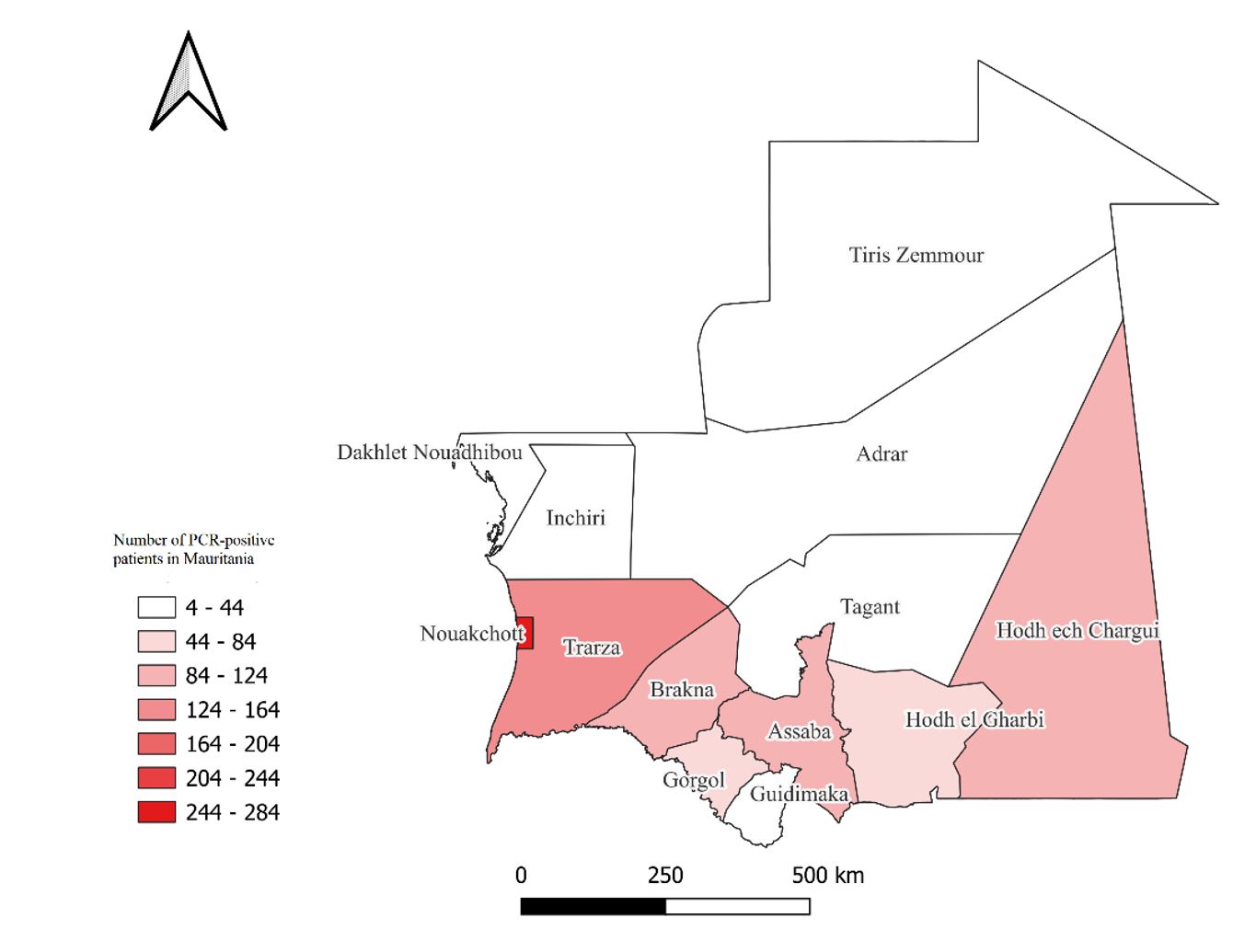
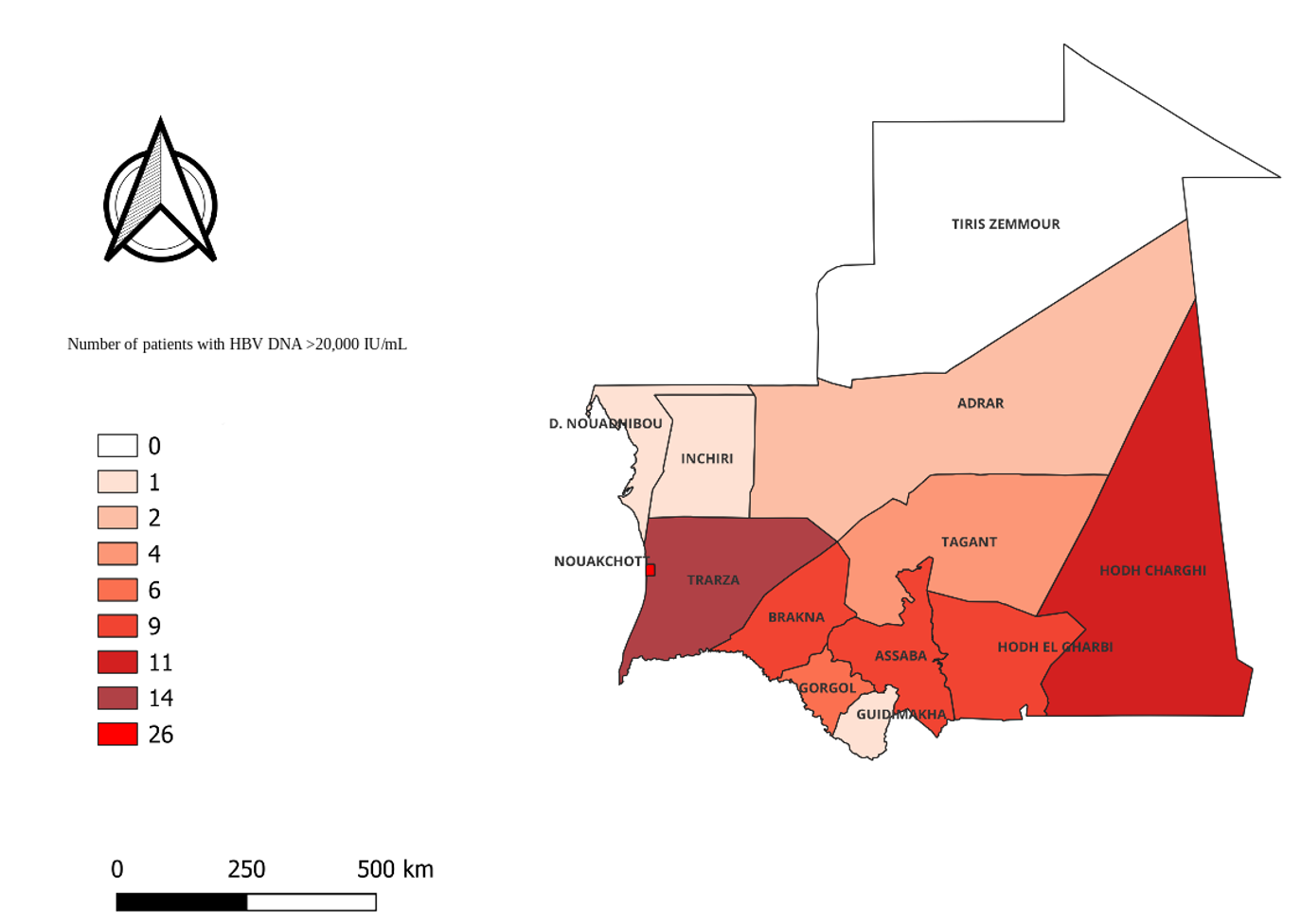
The distribution of PCR-positive patients by region is shown in Figure 1. The largest numbers of PCR-positive patients were recorded in Nouakchott, followed by Trarza and then by Brakna, Hodh Ech Chargui and Assaba, indicating a marked concentration of diagnosed cases in these areas. The distribution of patients with high HBV DNA replication by region is shown in Figure 2. Nouakchott (n = 26), Trarza (n = 14) and Hodh Ech Chargui (n = 11) were again the regions with the highest numbers, followed by Brakna, Assaba and Hodh El Gharbi, confirming a geographical pattern similar to that of PCR-positive patients.
This study provides the first national description of HBV DNA replication levels among HBsAg-positive patients in Mauritania. In a large sample of 1,263 patients from all regions of the country, HBV DNA was detectable in 70.8% of patients, the great majority of whom had low replication levels; 7.4% of patients had high replication (>20,000 IU/mL), which was more frequent in men, and the distribution of viral load varied with age.
Quantification of HBV DNA is central to the management of chronic hepatitis B: it distinguishes HBeAg-negative chronic infection (formerly the “inactive carrier” state), characterized by HBV DNA <2,000 IU/mL and normal transaminases, from chronic hepatitis with active replication, and it is one of the main criteria for treatment eligibility and for monitoring the response to antiviral therapy [22,25]. Viral load is also an independent predictor of progression to cirrhosis and hepatocellular carcinoma [3], and surveillance of replication levels at population level complements serological surveillance and vaccination programmes in monitoring epidemic trends [26,27].
In our series, 29.2% of patients had undetectable HBV DNA and the median viral load was low (126 IU/mL); many of these patients probably correspond to HBeAg-negative chronic infection with very low replication, a profile that is common in highly endemic settings and carries a favourable prognosis [28], although this cannot be confirmed in the absence of HBeAg and transaminase data. Conversely, 225 patients (17.8% of all patients and 25.2% of PCR-positive patients) had a viral load above 2,000 IU/mL, the threshold above which the 2024 WHO guidelines recommend considering antiviral treatment in the presence of elevated transaminases or significant fibrosis [24]. The very high mean viral load reflects a small number of patients with extremely high values rather than the profile of the typical patient. Because transaminase, HBeAg and fibrosis data were not available, the proportion of patients actually eligible for treatment could not be estimated; nevertheless, these figures suggest that a substantial minority of HBsAg carriers in Mauritania require specialist assessment.
HBV DNA was detectable in 70.8% of HBsAg-positive patients. Comparable proportions have been reported among HBsAg-positive individuals in Saudi Arabia (82.2%) [29], Iraq (60.5%) [30] and Egypt (71.4%)[31], although these studies involved different populations (blood donors or patients referred for genotyping) and different assays, whereas a lower proportion was reported in another Iraqi series [32]. Spontaneous HBsAg loss is also more frequent among HBeAg-negative patients with low viral loads, which further underlines the prognostic value of viral load quantification [33].
The proportion of patients with detectable HBV DNA did not differ by sex, but intermediate and high replication levels were significantly more frequent in men (p = 0.0041). This male predominance of high viral loads is consistent with findings from Senegal [34], Sudan [35] and Saudi Arabia [29], and with the well-documented sex disparity in the natural history of HBV infection, in which men show higher viral replication and a higher risk of hepatocellular carcinoma. Both direct mechanisms (androgen-mediated enhancement of HBV gene expression) and indirect mechanisms (sex-related differences in host immune responses) have been proposed to explain this difference [36].
Viral load distribution also differed significantly between age groups (p = 0.0201). The influence of age on HBV viral load has yielded contradictory results in the literature: several studies have found a significant association [37–40], but whereas some report that viral load increases with age, others find the highest viral loads in the youngest patients [34]. In our series, the proportion of patients with HBV DNA >20,000 IU/mL followed a U-shaped pattern, being highest among patients aged 18 years or younger (21%) and among those older than 54 years (12%). The high proportion of highly replicative infections in children and adolescents is consistent with HBeAg-positive chronic infection acquired perinatally or in early childhood and is of particular concern in a country where infant vaccination was introduced only in 2005[17]. Vaccination status was not recorded in the laboratory database; a dedicated study linking viral load to immunization records in this age group is warranted.
The largest numbers of PCR-positive patients and of patients with high HBV DNA replication were recorded in Nouakchott and in the regions of Trarza, Brakna, Hodh Ech Chargui and Assaba. This distribution reflects both population size and access to testing: Nouakchott hosts the largest share of the national population and, during the study period, the only laboratory performing HBV viral load quantification; Trarza and Brakna are the regions closest to the capital; and Hodh Ech Chargui, despite its remoteness and its border with Mali, is the second most populous region of the country [18]. Regional case counts should therefore be interpreted as a reflection of where patients were diagnosed and referred rather than as regional prevalence estimates; nevertheless, they identify the regions where decentralized viral load testing would have the greatest impact.
The 2019–2020 period analysed here precedes the reorientation of INRSP laboratory activities towards COVID-19 testing from late 2020 and therefore represents the last period of stable routine HBV viral load activity before patient flows were disrupted. Although these data are now several years old, they constitute, to our knowledge, the only national reference on HBV replication levels in Mauritania; a comparative analysis of more recent (2024–2025) data would be valuable to assess changes over time.
Limitations
This study has several limitations. First, it is based on a laboratory database, and no clinical or biological co-variables (treatment history, transaminases, HBeAg status, fibrosis assessment) or vaccination status were available, so that the phase of infection could not be determined, active and inactive forms of chronic hepatitis B could not be distinguished, and treatment eligibility could not be assessed; the viral load categories used therefore describe replication levels only. Second, some patients may have been tested as part of post-treatment follow-up, and their viral loads may therefore reflect the effect of antiviral therapy. Third, patients were recruited through requests for viral load testing at a single national laboratory, so that the geographical distribution is influenced by access to healthcare facilities and does not represent regional prevalence. Finally, the data relate to 2019–2020 and may not reflect the current situation.
Viral load quantification is, together with HBeAg status, transaminase levels and liver disease assessment, essential for distinguishing active from inactive HBV infection, assessing treatment eligibility and monitoring antiviral therapy. In this first national series of 1,263 HBsAg-positive patients in Mauritania, HBV DNA was detectable in 70.8% of patients; most had low replication levels, but 7.4% had high replication (>20,000 IU/mL) and 17.8% had a viral load above the 2,000 IU/mL threshold at which treatment should be considered.
High replication levels were more frequent in men and showed a U-shaped distribution with age, with the highest proportions in patients aged 18 years or younger and in those older than 54 years. Diagnosed cases were concentrated in Nouakchott, Trarza, Brakna and Hodh Ech Chargui.
These findings support the systematic integration of HBV DNA quantification into the national hepatitis control programme, the decentralization of viral load testing to the most affected regions, and targeted follow-up of men and of children with high replication levels. Further studies combining viral load with HBeAg, transaminase, fibrosis and vaccination data are needed to estimate treatment eligibility and to monitor progress towards the 2030 elimination targets.
What is already known about the topic
What this study adds
The authors express their deep gratitude to the National Institute for Public Health Research, particularly Prof. Ahme El Bara, Head of the Department of Virology at the INRSP.
Abbreviations
AASLD: American Association for the Study of Liver Diseases
DRAS: Directions Régionales de l’Action Sanitaire (Regional Directorates for Health Action)
EASL: European Association for the Study of the Liver
HBeAg: hepatitis B e antigen
HBsAg: hepatitis B surface antigen
HBV: hepatitis B virus
HCC: hepatocellular carcinoma
INRSP: Institut National de Recherches en Santé Publique (National Institute of Public Health Research)
IQR: interquartile range
IU: international units
PCR: polymerase chain reaction
STROBE: Strengthening the Reporting of Observational Studies in Epidemiology
WHO: World Health Organization
Conceptualization: Hala El Hachimi
Methodology: Hala El Hachimi
Data Curation: Hala El Hachimi
Formal Analysis: Hala El Hachimi
Validation: Hala El Hachimi, Fatimetou Khidid, Setty Sas, Mohamed Vall Mohamed Abdellahi
Visualization: Hala El Hachimi, Elmoustapha Cheikhna Ahmed Mahmoud, Fatimetou Khidid, Setty Sas
Writing – Original Draft: Hala El Hachimi
Writing – Review & Editing: Hala El Hachimi
| Patient classification | Viral load (IU/mL) | Total, n (%) | Women, n (%) | Men, n (%) | χ² | df | p-value |
|---|---|---|---|---|---|---|---|
| PCR-negative | HBV DNA not detected | 369 (29.2) | 208 (16.5) | 161 (12.8) | 1.7918 | 1 | 0.18 |
| PCR-positive | HBV DNA detected | 894 (70.8) | 467 (37.0) | 427 (33.8) | |||
| PCR-positive | High HBV DNA replication (>20,000) | 93 (7.4) | 36 (2.9) | 57 (4.5) | 11.0073 | 2 | 0.0041 |
| Intermediate HBV DNA replication (2,000–20,000) | 132 (10.5) | 64 (5.1) | 68 (5.4) | ||||
| Low HBV DNA replication (including undetectable) (<2,000) | 1,038 (82.2) | 575 (45.5) | 463 (36.7) |
Table 2: Distribution of HBV viral load classes by age group, Mauritania, 2019–2020 (N = 1,263)
| Viral load (IU/mL) | ≤18 years | 19–36 years | 37–54 years | >54 years | Total | df | χ² | p-value |
|---|---|---|---|---|---|---|---|---|
| <50 | 13 (1.0) | 251 (19.9) | 183 (14.5) | 54 (4.3) | 501 (39.7) | 18 | 32.3342 | 0.0201 |
| 50–100 | 3 (0.2) | 48 (3.8) | 39 (3.1) | 13 (1.0) | 103 (8.2) | |||
| 101–500 | 3 (0.2) | 117 (9.3) | 94 (7.4) | 24 (1.9) | 238 (18.8) | |||
| 501–1,000 | 1 (0.1) | 58 (4.6) | 42 (3.3) | 8 (0.6) | 109 (8.6) | |||
| 1,001–2,000 | 1 (0.1) | 45 (3.6) | 34 (2.7) | 7 (0.6) | 87 (6.9) | |||
| 2,001–20,000 | 9 (0.7) | 68 (5.4) | 45 (3.6) | 10 (0.8) | 132 (10.5) | |||
| >20,000 | 8 (0.6) | 36 (2.9) | 33 (2.6) | 16 (1.3) | 93 (7.4) |
Note: Values are n (%) of the total of 1,263 patients; undetectable HBV DNA is included in the <50 IU/mL class