Research | Open Access | Volume 9 (3): Article 125 | Published: 29 Jul 2026

Views: 1,816
Menu, Tables and Figures
| Rank No. | Institution | Journal | ||||||||
|---|---|---|---|---|---|---|---|---|---|---|
| Institution | TP | TC | TC/TP | H-index | Journal | TP | TC | TC/TP | H-index | |
| 1 | Médecins Sans Frontières | 35 | 1,821 | 52.0 | 18 | PLOS ONE | 52 | 998 | 19.2 | 19 |
| 2 | International Union Against Tuberculosis and Lung Disease | 31 | 1,307 | 42.2 | 15 | BMC Infectious Diseases | 39 | 611 | 15.7 | 15 |
| 3 | University of Cape Town | 27 | 1,653 | 61.2 | 17 | International Journal of Tuberculosis and Lung Disease | 35 | 623 | 17.8 | 12 |
| 4 | University of Gondar | 25 | 475 | 19.0 | 12 | Clinical Infectious Diseases | 21 | 638 | 30.4 | 14 |
| 5 | Harvard Medical School | 22 | 1,136 | 51.6 | 15 | Infection and Drug Resistance | 20 | 161 | 8.1 | 7 |
| 6 | Capital Medical University | 21 | 375 | 17.9 | 10 | International Journal of Infectious Diseases | 14 | 279 | 19.9 | 12 |
| 7 | London School of Hygiene and Tropical Medicine | 21 | 446 | 21.2 | 11 | Scientific Reports | 14 | 159 | 11.4 | 5 |
| 8 | Stellenbosch University | 20 | 746 | 37.3 | 11 | Indian Journal of Tuberculosis | 13 | 140 | 10.8 | 6 |
| 9 | Karolinska Institutet | 20 | 958 | 47.9 | 11 | European Respiratory Journal | 10 | 692 | 69.2 | 10 |
| 10 | Fudan University | 18 | 275 | 15.3 | 11 | Antimicrobial Agents and Chemotherapy | 10 | 214 | 21.4 | 8 |
Abbreviations: TP = Total publications; TC = Total citations; TC/TP = Average citations per publication; H-index = Local H-index within the analyzed dataset.
| Rank | Author (Year) | TP | TC | TC/TP | H-index |
|---|---|---|---|---|---|
| 1 | Ndjeka, N. | 9 | 1152 | 128.0 | 7 |
| 2 | Hughes, J. | 8 | 1104 | 138.0 | 7 |
| 3 | Guglielmetti, L. | 8 | 1046 | 130.8 | 7 |
| 4 | Véziris, N. | 6 | 1037 | 172.8 | 6 |
| 5 | Schnippel, K. | 6 | 992 | 165.3 | 6 |
| 6 | Caumes, E. | 5 | 983 | 196.6 | 5 |
| 7 | Dheda, K. | 10 | 977 | 97.7 | 8 |
| 8 | Robert, J. | 4 | 973 | 243.2 | 4 |
| 9 | Yim, J.-J. | 11 | 914 | 83.1 | 9 |
| 10 | Lange, C. | 13 | 913 | 70.2 | 9 |
Abbreviations: TP = Total publications; TC = Total citations; TC/TP = Average citations per publication; H-index = Local H-index within the analyzed dataset.
| Rank No. | Country | TP | TC | TC/TP |
|---|---|---|---|---|
| 1 | China | 80 | 942 | 11.8 |
| 2 | Ethiopia | 47 | 722 | 15.4 |
| 3 | South Africa | 45 | 1212 | 26.9 |
| 4 | India | 45 | 514 | 11.4 |
| 5 | United States | 45 | 1215 | 27.0 |
| 6 | Pakistan | 25 | 330 | 13.2 |
| 7 | South Korea | 20 | 432 | 21.6 |
| 8 | Brazil | 18 | 263 | 14.6 |
| 9 | United Kingdom | 16 | 378 | 23.6 |
| 10 | Australia | 14 | 215 | 15.4 |
Abbreviations: TP = Total publications; TC = Total citations; TC/TP = Average citations per publication.
Farida Murtiani1,2,&, Mondastri Korib Sudaryo3, Evi Martha4, Diah Handayani5,6, Helwiyah Umniyati7, Annisa Ayu Lestari3, Amelia Marisa3, Ba’da Febriani3, Fatimah Fatimah3
1Doctoral Program of Epidemiology, Faculty of Public Health, Universitas Indonesia, Indonesia; 2Department of Research, Sulianti Saroso Infectious Disease Hospital, Indonesia; 3Department of Epidemiology, Faculty of Public Health, Universitas Indonesia, Indonesia; 4Department of Health Education and Behavioral Sciences, Faculty of Public Health, Universitas Indonesia, Indonesia; 5Department Pulmonology and Respiratory Medecine, Faculty of Medicine, Universitas Indonesia, Indonesia; 6Universitas Indonesia Hospital, Indonesia; 7Department of Dental Public Health, Faculty of Dentistry, YARSI University, Indonesia
&Corresponding author: Farida Murtiani, Doctoral Program in Epidemiology, Faculty of Public Health, University of Indonesia, A Building, 1st Floor, Kampus Baru UI, Depok 16424, Indonesia, Email: idoel_fh@yahoo.com ORCID: https://orcid.org/0000-0003-4992-117X
Received: 24 May 2025, Accepted: 26 Jul 2026, Published: 29 Jul 2026
Domain: Infectious Disease Epidemiology
Keywords: Multidrug-resistant tuberculosis, treatment outcomes, bibliometric analysis, scientometrics, collaboration networks
©Farida Murtiani et al. Journal of Interventional Epidemiology and Public Health (ISSN: 2664-2824). This is an Open Access article distributed under the terms of the Creative Commons Attribution International 4.0 License (https://creativecommons.org/licenses/by/4.0/), which permits unrestricted use, distribution, and reproduction in any medium, provided the original work is properly cited.
Cite this article: Farida Murtiani et al., Global research trends in multidrug-resistant tuberculosis treatment outcomes: A Scopus bibliometric analysis. Journal of Interventional Epidemiology and Public Health. 2026; 9(3):125. https://doi.org/10.37432/jieph-d-26-00164
Introduction: Research on treatment outcomes in multidrug-resistant tuberculosis (MDR-TB) has expanded considerably over the last decade, driven by the development of shorter treatment regimens, novel anti-tuberculosis drugs, and predictive approaches. However, comprehensive bibliometric mapping of global research trends in this field remains limited. This study analyzed global scientific trends, collaboration patterns, intellectual structures, and thematic evolution in MDR-TB treatment outcome research.
Methods: A bibliometric study was conducted using the Scopus database. Publications from 2015–2025 were retrieved using predefined keywords related to drug-resistant tuberculosis and treatment outcomes. Only English-language articles and reviews were included. Following PRISMA 2020 screening, 545 publications met eligibility criteria. Data were analyzed using Bibliometrix (R) and VOSviewer to evaluate publication trends, citation patterns, collaboration networks, keyword co-occurrence, co-citation, bibliographic coupling, and thematic evolution.
Results: Scientific production increased steadily from approximately 30 publications in 2015 to over 65 publications annually by 2025. Médecins Sans Frontières was the most productive institution, whereas PLOS ONE was the leading publication source. Research collaboration showed fragmented author networks with 11 clusters and limited interdisciplinary integration. Co-citation analysis identified clinical outcomes, pharmacological innovation, and treatment optimization as dominant intellectual foundations. Bibliographic coupling revealed geographically clustered research communities. Thematic evolution demonstrated a shift from mortality and risk-factor studies toward shorter all-oral regimens, bedaquiline-based therapy, and emerging predictive modelling approaches.
Conclusion: MDR-TB treatment outcome research continues to grow globally, with increasing emphasis on treatment optimization and precision-oriented approaches. Nevertheless, fragmented collaboration patterns and limited thematic integration of predictive approaches in the mapped treatment-outcome literature, interpreted in light of the search scope, indicates opportunities for future interdisciplinary research.
Tuberculosis (TB) remains a public health challenge, affecting an estimated 10.8 million people in 2023 and continuing to be the leading cause of death from a single infectious agent [1]. In this context, the emergence of drug-resistant tuberculosis (DR-TB) has exacerbated the crisis. DR-TB refers broadly to tuberculosis caused by Mycobacterium tuberculosis strains resistant to one or more anti-TB drugs. Within this spectrum, rifampicin-resistant tuberculosis (RR-TB) is defined by resistance to rifampicin. In contrast, multidrug-resistant tuberculosis (MDR-TB) is defined by resistance to at least both isoniazid and rifampicin, the two most potent first-line agents. More severe forms include pre-extensively drug-resistant tuberculosis (pre-XDR-TB), in which MDR/RR-TB is additionally resistant to a fluoroquinolone or a second-line injectable agent, and extensively drug-resistant tuberculosis (XDR-TB), in which MDR/RR-TB is resistant to a fluoroquinolone plus at least one additional core second-line drug, and is associated with a significantly poorer prognosis [2].
The management of MDR-TB, pre-XDR-TB, and XDR-TB represents one of the most challenging aspects of global TB control. Second-line treatment is characterised by an exceptionally long duration (up to 18–24 months), toxic drug regimens, and substantial costs [3]. The high rate of treatment failure not only perpetuates the chain of transmission within communities but also increases patient mortality. Patients with MDR-TB are known to have a sharply elevated risk of death, approximately 7.5 times higher than that of drug-susceptible TB patients [4]. Global data indicate that unfavourable treatment outcomes in XDR-TB cases can reach as high as 43.7% [5].
The consequences of treatment failure extend to socioeconomic implications. For patients and their families, the costs associated with TB can be catastrophic, with income losses caused by the disease often accounting for up to 60% of the total incurred costs [6]. In countries with advanced healthcare systems, such as the United States, MDR-TB remains relatively rare (1.4% of cases in 2023). This is attributable to stringent treatment guidelines and diligent public health follow-up [7]. The stark contrast between high-income countries and high TB burden countries highlights that MDR-TB is not merely a bacteriological issue but also reflects healthcare system failures in ensuring adherence and integrated case management.
Early identification of patients at high risk of treatment failure is essential for modifying therapy and providing necessary support. Treatment outcomes of drug-resistant TB are influenced by a complex array of factors, including demographic characteristics (such as age over 44 years), history of previous TB treatment, and most importantly, the presence of comorbid conditions [4,8]. Chronic comorbidities, such as diabetes mellitus (DM) and hypertension, have been shown to significantly reduce treatment success rates among drug-resistant TB patients [8]. DM, in particular, impairs immune function and complicates drug regimen management, which directly correlates with poorer prognosis. Moreover, treatment non-adherence is a major driver contributing to unfavourable outcomes. This non-adherence is often triggered by non-clinical factors, including social stigma, severe drug side effects, and economic constraints [9].
The high complexity and variability of these risk factors have driven a shift in research focus from simple risk factor identification to quantitative predictive modelling [2]. The predictive capability of these models has become increasingly important with the introduction of shorter, all-oral regimens for drug-resistant TB, such as BPaL and BPaLM [10]. Predictive models enable clinicians to tailor therapy choices, prioritize high-risk patients for integrated diabetes management or intensive adherence support, thereby facilitating proactive interventions before treatment failure occurs.
Although bibliometric studies have examined TB–diabetes comorbidity [11], and BPaL/BPaLM regimens [10], limited studies have comprehensively mapped global research on treatment outcomes across MDR-TB, pre-XDR-TB, and XDR-TB during the post-2015 era of all-oral regimens. Prior analyses addressed narrower domains, comorbidity interfaces or pharmacological subfields rather than outcome evaluation, culture conversion, mortality, and programmatic cohort studies. This study fills that gap by bibliometrically mapping outcome-focused publications (2015–2025) using performance analysis and science mapping. Its novelty lies in integrating collaboration networks, intellectual structures, and milestone-based thematic evolution within a single outcome-specific corpus. For researchers, the findings identify underconnected thematic domains and collaboration gaps; for policymakers and TB control programs, they highlight where outcome evidence is generated versus where it achieves influence, supporting equitable research investment and programmatic decision-making in high-burden settings.
Study design and database selection
This study adopted an observational, descriptive, and quantitative design, specifically employing scientometric and bibliometric analyses [12]. The Scopus database was selected as the exclusive data source. The justification for choosing Scopus lies in its high data quality, extensive coverage of public health and multidisciplinary journals, and its capability to export rich, well-structured metadata required for advanced analyses using software such as VOSviewer and RStudio. The study period was defined to include publications from January 1st, 2015, to December 31st, 2025. This period was chosen to ensure sufficient data to analyze growth trends and thematic evolution, particularly those related to the emergence of new technologies and multidrug-resistant tuberculosis (MDR-TB) regimens after 2015. This study was registered in the Open Science Framework (OSF) under the registration number 10.17605/OSF.IO/MCFKT.
Search Strategy and Data Acquisition
The search strategy was developed using free-text keywords and Boolean operators (AND/OR) relevant to multidrug-resistant tuberculosis and treatment outcomes. Since Scopus does not use MeSH indexing as in PubMed, only title-, abstract-, and keyword-based terms were used. The final search was conducted on January, 2026 using: TITLE-ABS-KEY((“MDR-TB” OR “drug resistant tuberculosis” OR “multidrug resistant tuberculosis” OR “pre-XDR” OR “XDR-TB”) AND (“treatment outcome” OR “treatment success” OR “culture conversion” OR “unfavorable outcome” OR “outcome prediction”) ) AND PUBYEAR >2014 AND (LIMIT-TO(DOCTYPE, “ar”) OR LIMIT-TO(DOCTYPE, “re”))AND LIMIT-TO(LANGUAGE, “English”). The complete reproducible search syntax is provided in Supplementary File 1.
Study eligibility criteria
The retrieved raw data underwent a stringent screening process to ensure relevance and quality. The inclusion criteria were as follows: (1) documents indexed in Scopus and published between 2015 and 2025; (2) eligible document types, including original research articles and review articles (systematic or narrative); and (3) studies that explicitly addressed treatment outcomes in patients with MDR-TB, pre-XDR-TB, or XDR-TB.
Exclusion criteria: 1) Documents that were not original research or did not present data, such as Letters to the Editor, Editorials, Conference Papers, Notes, Erratum, Short Surveys, or Book Chapters, were excluded; 2) Documents focusing solely on the diagnosis of DR-TB, etiology, or disease burden without addressing treatment outcomes were excluded; 3) Documents with incomplete metadata (e.g., missing abstracts or citation information) that hindered bibliometric analysis were also excluded.
Study screening process
Study screening was independently performed by two reviewers (BF and AAL). Title and abstract screening was followed by full-text eligibility assessment. Any disagreements regarding study eligibility were resolved through discussion and consensus. If consensus could not be reached, a third reviewer (FM) acted as an adjudicator to make the final decision.
Data cleaning (data pre-processing)
The exported data underwent rigorous preprocessing, an essential phase in the science mapping workflow. The following steps were performed [13] :
Bibliometric mapping and visualization
The analytical approach employed two specialized software tools: VOSviewer™ (version 1.6.20) for Mac and the Bibliometrix package for R™ (version 4.4.3). The Bibliometrix software package offers advanced capabilities for quantitative science mapping, featuring specialized functions that produce a range of visualization formats to reveal complex relationships in scholarly literature. Thresholds in VOSviewer (minimum five documents per author, 15 citations for bibliographic coupling, and five keyword occurrences) were selected to balance network comprehensiveness and interpretability by reducing weakly connected nodes while preserving meaningful relationships.
Quantitative analysis
The main quantitative indicators used included Total Documents (TD), Total Citations (TC), Citations per Document (CPD), and H-index. This analysis also determined the Annual Growth Rate and ranked the top 10 entities (countries, institutions, authors, journals) based on productivity and impact metrics. Additional analyses were conducted to strengthen the exploration of intellectual and thematic structures in MDR-TB treatment outcome research. These included:
Thematic evolution time slices
To investigate the temporal evolution of research themes, thematic evolution analysis was performed using three predefined time slices: 2015–2018, 2019–2021, and 2022–2025. The selection of these intervals was milestone-based rather than arbitrary, reflecting major transitions in global multidrug-resistant tuberculosis (MDR-TB) management and corresponding shifts in research priorities. The first period (2015–2018) represents the phase preceding widespread implementation of all-oral regimens, during which research primarily focused on conventional longer treatment regimens, treatment outcomes, mortality, and risk factors. The second period (2019–2021) coincides with the World Health Organization (WHO) consolidated guidelines recommending all-oral MDR-TB regimens and increasing incorporation of novel drugs such as bedaquiline, linezolid, and delamanid, leading to intensified research on regimen optimization and safety [14]. The final period (2022–2025) captures the era of broader implementation of shorter all-oral regimens, including BPaL/BPaLM-based approaches, together with growing interest in predictive analytics, individualized treatment strategies, and precision medicine. This milestone-based temporal segmentation enables meaningful comparison of thematic shifts while aligning bibliometric analysis with major policy developments and clinical innovations in MDR-TB management.
Ethical consideration
Ethical approval was not required for this study because all data were obtained from publicly available Scopus-indexed publications and no human participants were involved.
Search strategy and data selection
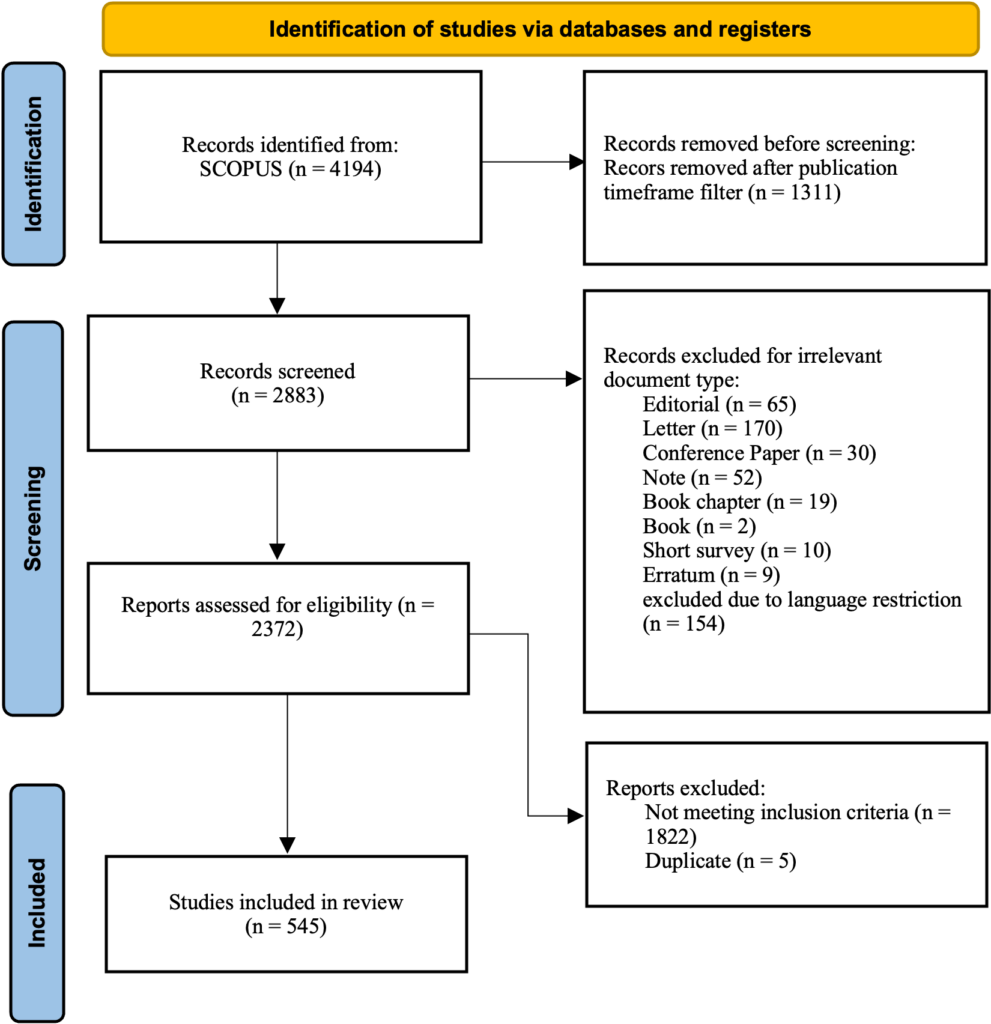
Following the search and screening procedures, 4,194 records were initially identified. After limiting the period to 2015-2025 and excluding non‑articles and non‑English publications, 2,883 remained for screening. Of these, 357 were excluded by document type, 154 for language, 1,822 for failing inclusion criteria, and 5 for duplication. Ultimately, 545 studies met all eligibility criteria and were included in the final bibliometric analysis (Figure 1).
Annual scientific production
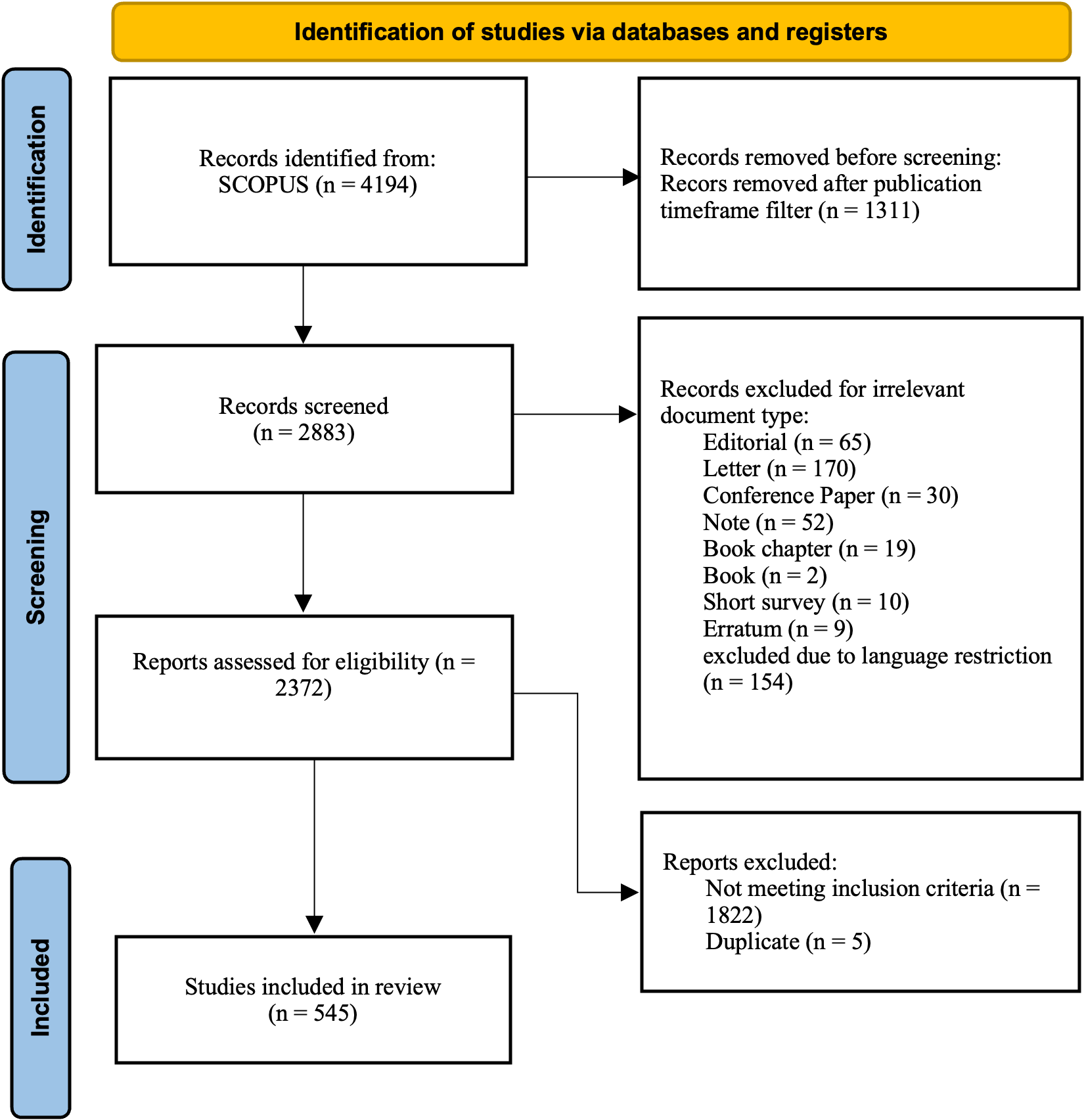
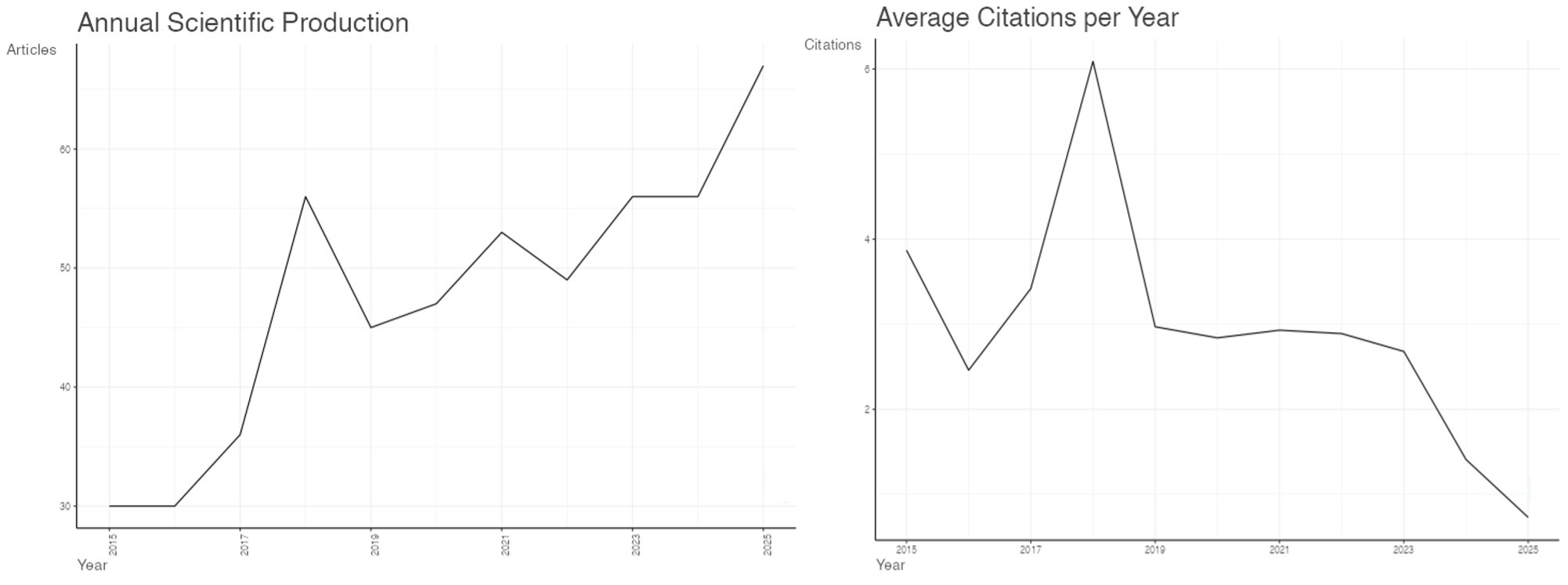
Between 2015 and 2025, the final corpus comprised 545 documents. Annual scientific output increased steadily, from about 30 articles in 2015–2016 to a peak of over 65 in 2025, with a transient decline in 2019. The temporary decline in publication output observed in 2019 may have reflected normal year-to-year publication variability, indexing delays in the Scopus database, or the timing of major clinical trial publications rather than a sustained reduction in research activity.
Citation analysis revealed that articles published in 2017 had the highest average citation rate (>6 citations per year), followed by a gradual decline and stabilization at approximately 3 citations per year during 2020–2022. The lower citation averages for 2024–2025 reflect recency effects, as recent publications have had limited time to accumulate citations. Overall, these findings indicate sustained growth in research activity and a disproportionate citation impact of earlier studies in the field. Overall, these trends indicate steady growth in research activity and highlight that early publications in the field contributed disproportionately to citation impact (Figure 2).
Productivity analysis showed that Médecins Sans Frontières was the most productive institution (TP = 35; local h-index = 18), followed by the International Union Against Tuberculosis and Lung Disease (TP = 31). Although the University of Cape Town ranked third by publication volume (TP = 27), it exhibited the highest average citation impact among the top 10 institutions (TC/TP = 61.2). Among journals, PLOS ONE was the dominant publication venue (TP = 52; local h-index = 19), whereas the European Respiratory Journal showed the greatest citation impact (TC/TP = 69.2) despite a lower publication volume (Table 1).
Table 2 demonstrates that scientific influence varied considerably among leading authors. Ndjeka received the highest total citations (1,152), whereas Robert achieved the greatest citation impact per publication (243.2 citations/document), despite contributing only four articles. In contrast, Yim and Lange attained the highest local H-index (9), reflecting sustained productivity and consistently cited publications across the study period. These findings suggest that author influence was determined not only by publication volume but also by the ability to produce highly cited and consistently impactful research, highlighting complementary dimensions of bibliometric performance.
MDR-TB treatment outcome research is geographically widespread yet concentrated in a limited set of countries. China was the most productive nation (TP = 80), followed by Ethiopia (TP = 47). The United States (TP = 46), South Africa (TP = 45), and India (TP = 45) also ranked among the leading contributors. However, the United States and South Africa showed markedly higher citation impact (TC/TP = 26.5 and 26.9, respectively) than China (TC/TP = 11.8) and India (TC/TP = 11.4), suggesting an asymmetry in productivity impact. Pakistan, South Korea, Brazil, the United Kingdom, and Australia completed the top 10, reflecting contributions from high-burden settings and established global health research hubs (Table 3).
Co-authorship network
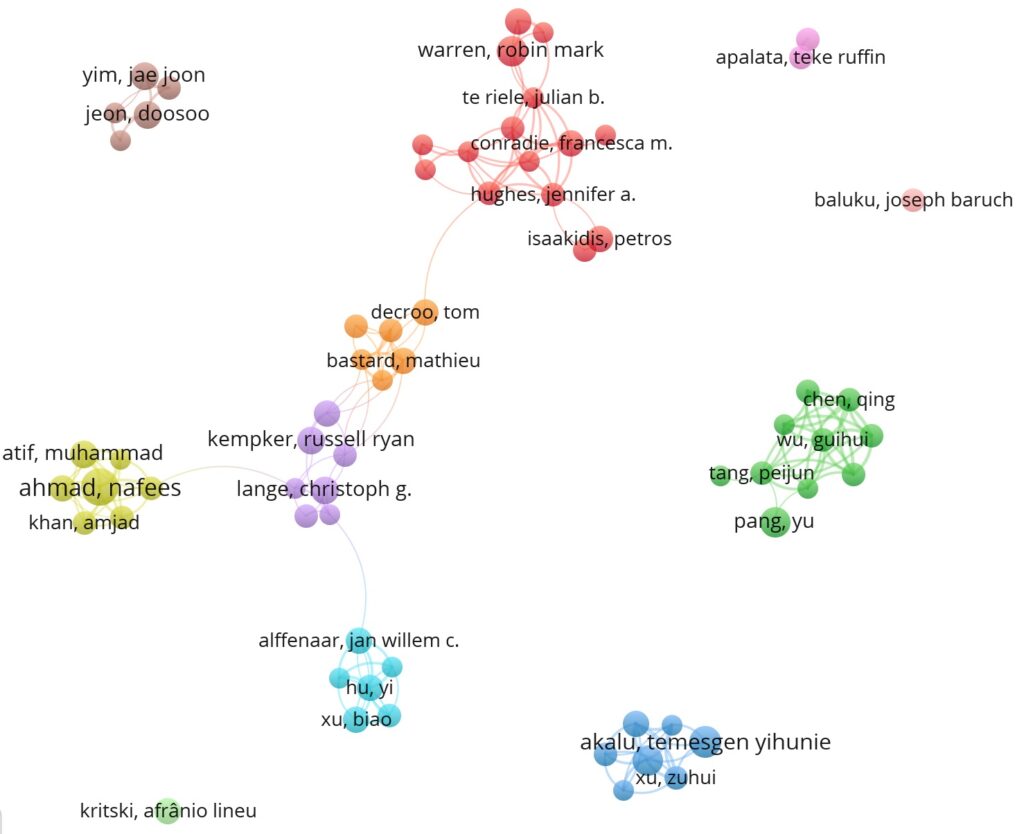
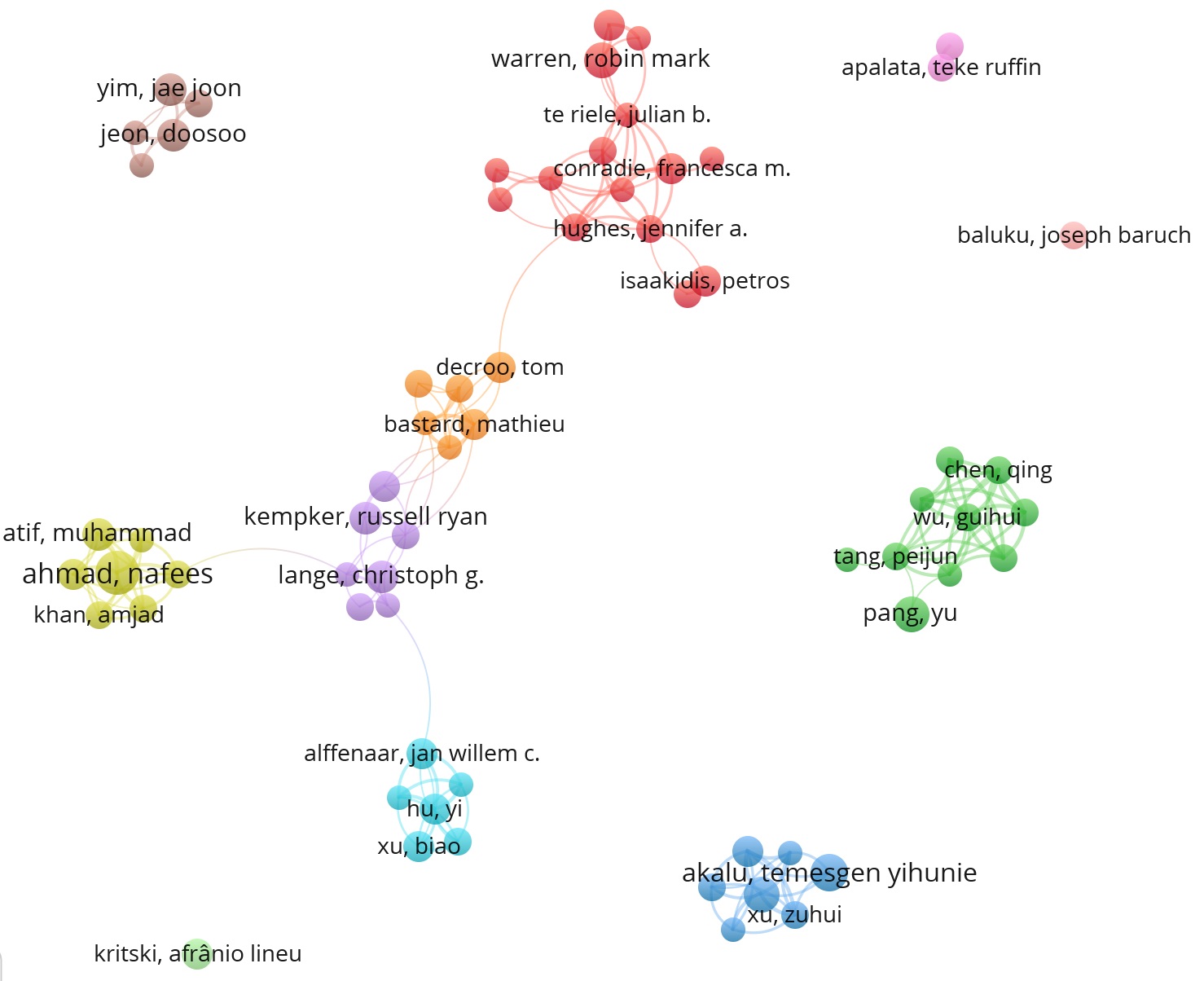
Sixty-seven authors grouped into 11 collaboration clusters, indicating that MDR‑TB outcome research is organized around several moderately connected groups rather than a single, fully integrated global network (Figure 3). The largest cluster, led by Francesca Conradie, Keertan Dheda, and Jennifer Hughes, acts as a central hub focused on clinical outcomes, treatment regimens, and adverse events., acts as a central hub focused on clinical outcomes, treatment regimens, and adverse events. Other prominent clusters, led by Tom Decroo, Matthieu Bastard, Russell Kempker, and Christoph Lange, contribute strongly to studies on regimen effectiveness and patient‑level outcomes. In contrast, clusters dominated by Chinese and Ethiopian scholars emphasize population‑specific analyses. Overall, despite active collaboration within clusters, limited cross‑cluster connections suggest a fragmented research landscape with minimal interdisciplinary integration.
Keyword co-occurrence / thematic cluster
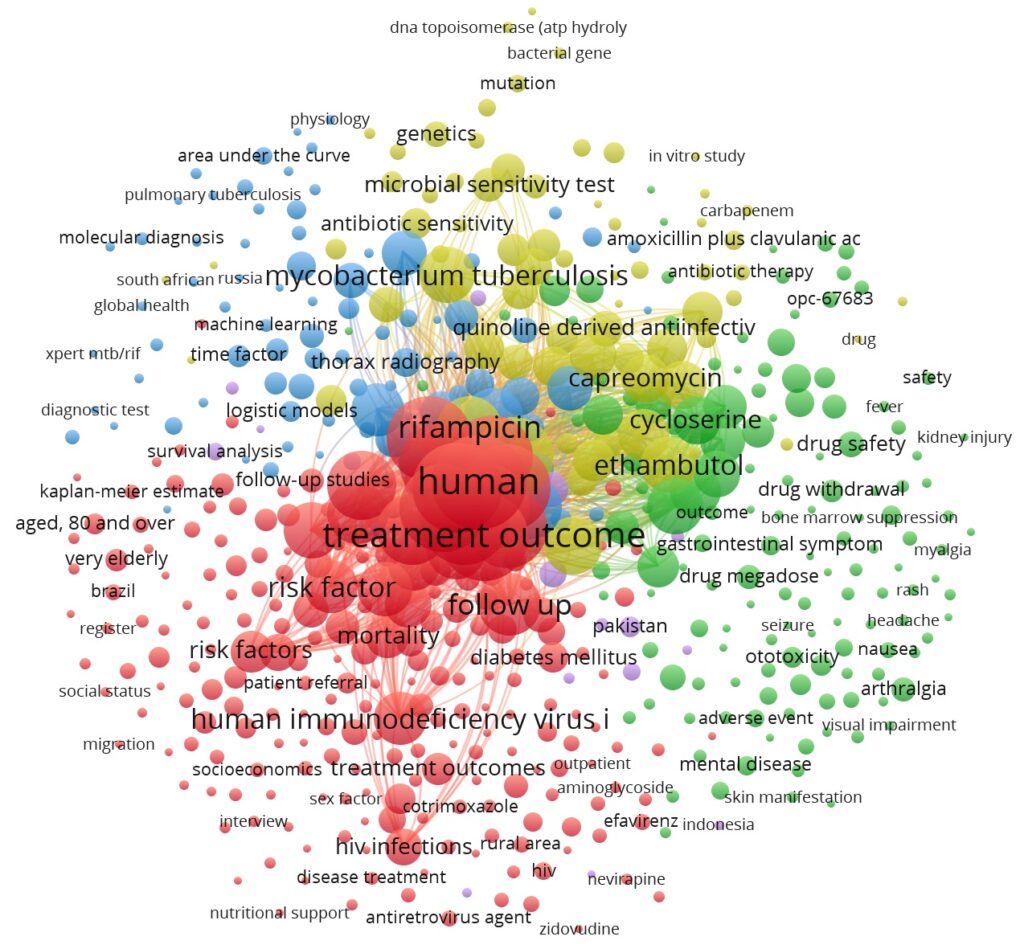
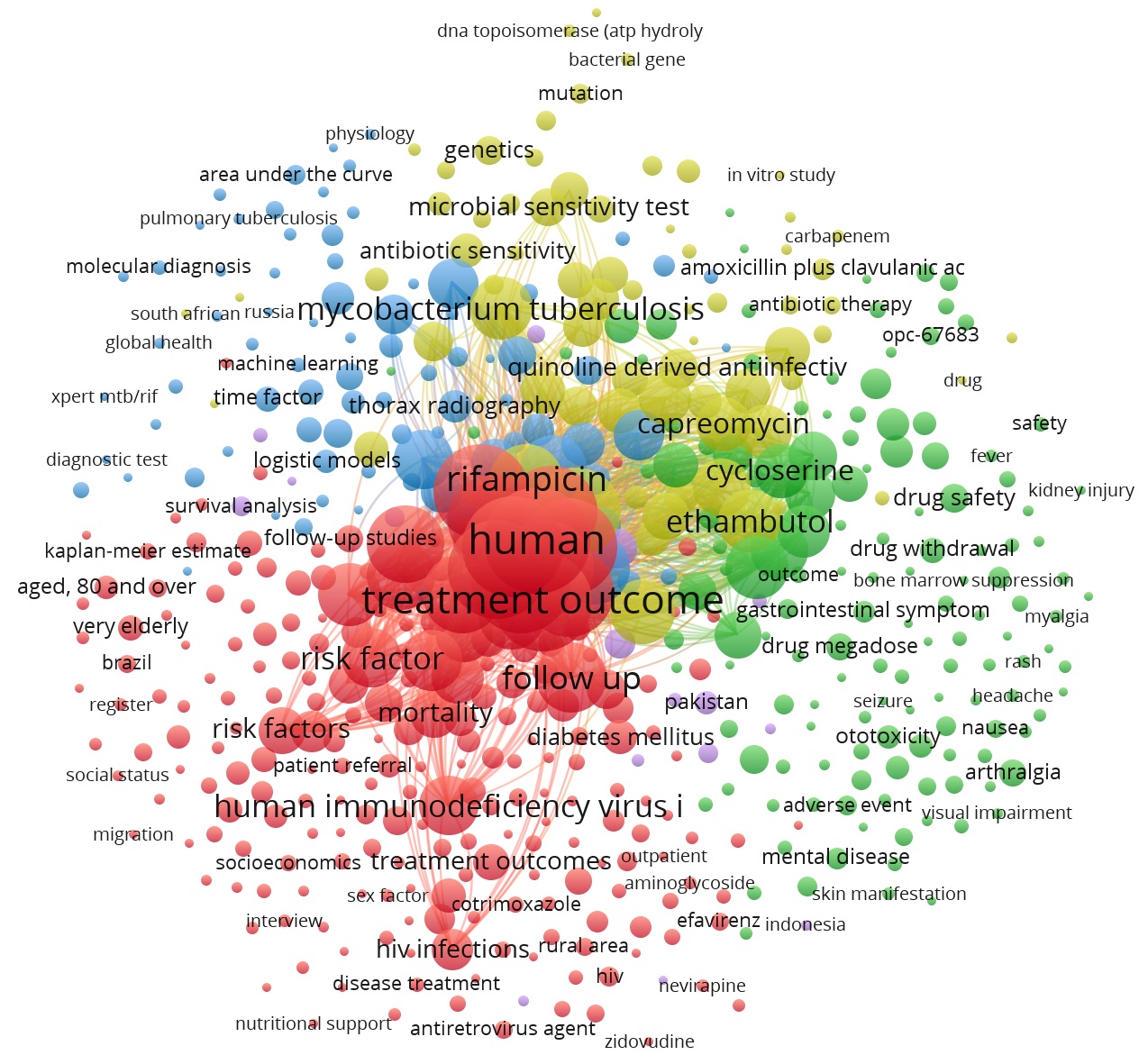
The analysis identified 536 keywords grouped into five major thematic clusters in MDR‑TB outcome research. The red cluster (Cluster 1; 224 items) formed the core of the network, encompassing clinical and patient‑level determinants such as treatment outcome, human, adolescent, follow‑up, HIV infection, comorbidity, risk factors, and mortality, reflecting the long‑standing focus on disease severity, host characteristics, and clinical course. The green cluster (Cluster 2) included terms related to antituberculosis drug regimens and pharmacological management, such as bedaquiline, linezolid, clofazimine, pyrazinamide, cycloserine, and drug safety, highlighting the prominence of research on new regimens and treatment optimization. The blue cluster (Cluster 3) represented microbiological, epidemiological, and methodological approaches, with keywords such as Mycobacterium tuberculosis, drug susceptibility, mutation, culture conversion, cohort studies, and survival analysis, alongside emerging analytical terms like predictive model, prediction, and area under the curve, which appeared as small nodes with limited linkages, indicating that predictive analytics occupies a peripheral position relative to dominant clinical and pharmacological themes within this corpus. The yellow cluster (Cluster 4) covered biological and clinical modifiers such as genetics, physiology, nutritional status, and body mass index, acting as a bridge between treatment outcomes and host–pathogen interactions. Finally, the purple cluster (Cluster 5) consisted of a small set of peripheral terms representing niche or emerging subtopics with limited integration into the broader research structure. However, newer analytical and predictive terms such as prediction, predictive model, area under the curve, and survival analysis appear within this cluster; their low frequency and weak connections suggest that predictive modelling remains thematically peripheral within the mapped MDR-TB treatment outcome literature; this pattern may partly reflect the selected search terms and should be interpreted with caution (Figure 4).
Co-citation analysis
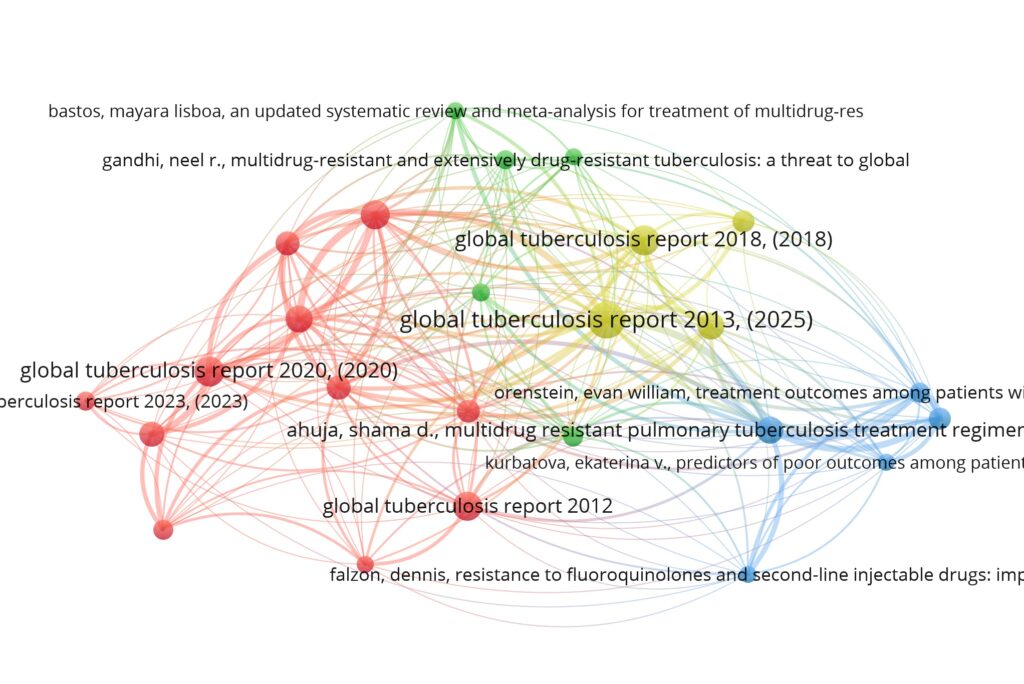
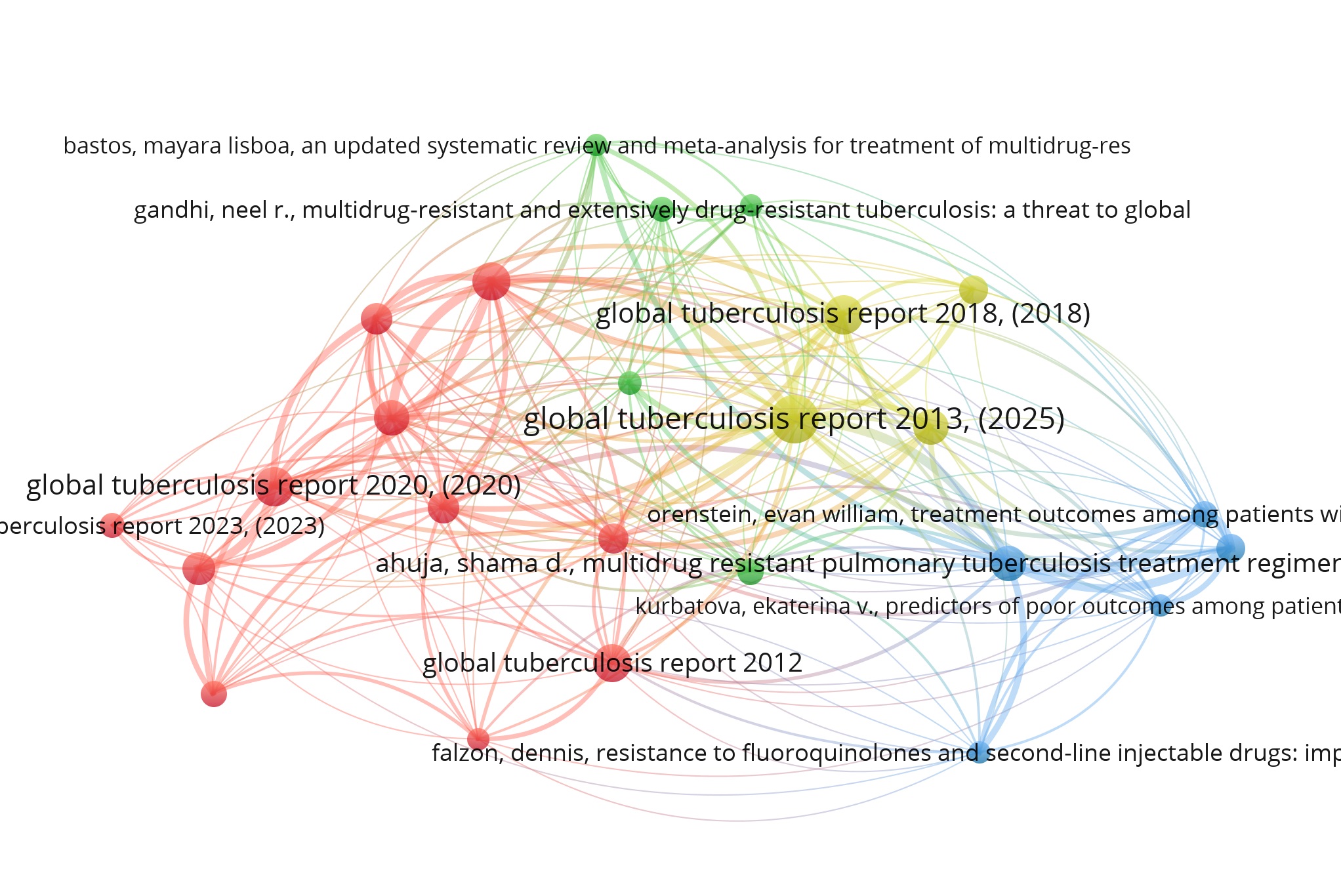
Co-citation analysis revealed that the intellectual structure of MDR-TB treatment outcome research is strongly centered around WHO tuberculosis reports, global treatment guidelines, and landmark clinical studies evaluating treatment outcomes and prognostic factors. The Global Tuberculosis Reports (2013 and 2020 editions) formed the most prominent co-citation hubs, indicating their substantial influence in shaping the conceptual and epidemiological foundation of MDR-TB management research. Several interconnected co-citation clusters were identified. One major cluster primarily represented WHO policy frameworks and global surveillance reports related to MDR-TB burden and treatment strategies. Another cluster consisted of studies focusing on treatment outcomes, prognostic indicators, sputum culture conversion, and mortality predictors. Additional clusters highlighted clinical investigations evaluating bedaquiline-containing regimens, shorter treatment approaches, and individualized MDR-TB management strategies (Figure 5).
Bibliographic coupling analysis
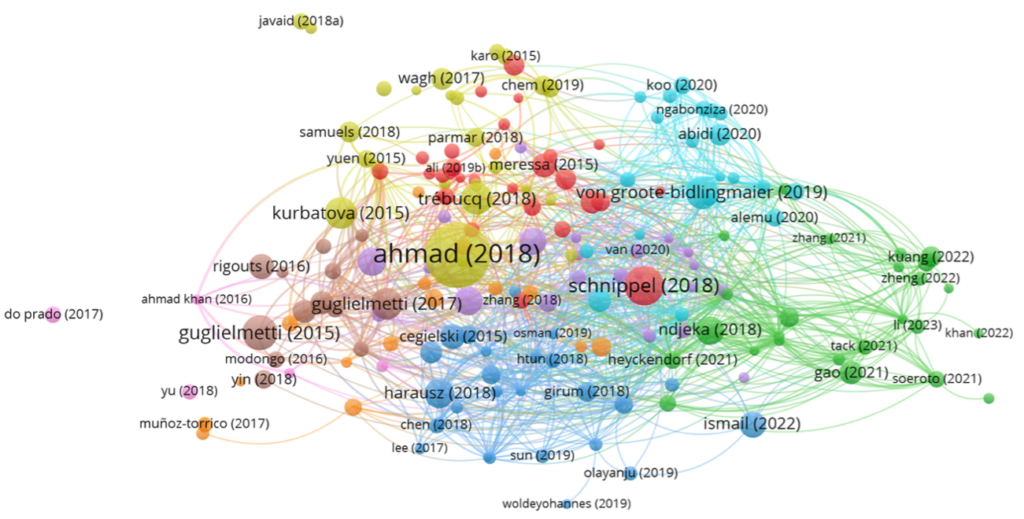
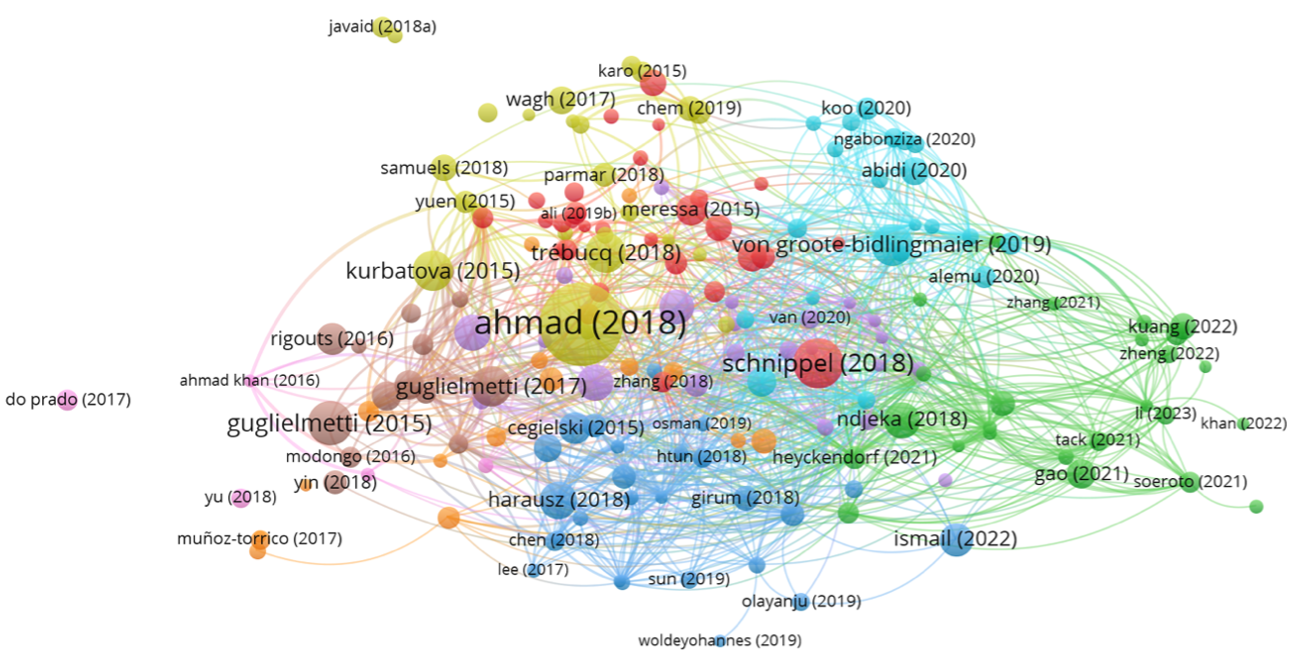
Bibliographic coupling analysis identified several interconnected research fronts in MDR-TB treatment outcome studies, comprising 185 publications grouped into nine major clusters. Central coupling hubs included influential studies by Ahmad et al., Schnippel et al., Guglielmetti et al., and von Groote-Bidlingmaier et al. [15–18], indicating their substantial role in shaping contemporary MDR-TB treatment research. The identified clusters reflected multiple evolving research directions, including treatment optimization, bedaquiline-containing regimens, individualized therapeutic strategies, treatment outcome predictors, and implementation-focused cohort studies. More recent studies, such as Ismail et al., Gao et al., and Kuang et al. [19–21], appeared as increasingly connected nodes, suggesting continued expansion of research toward modern all-oral regimens and precision-oriented MDR-TB management approaches. Overall, the bibliographic coupling network demonstrates that current MDR-TB outcome research is transitioning from conventional outcome evaluation toward integrated therapeutic optimization, implementation science, and personalized treatment strategies (Figure 6).
Thematic evolution analysis
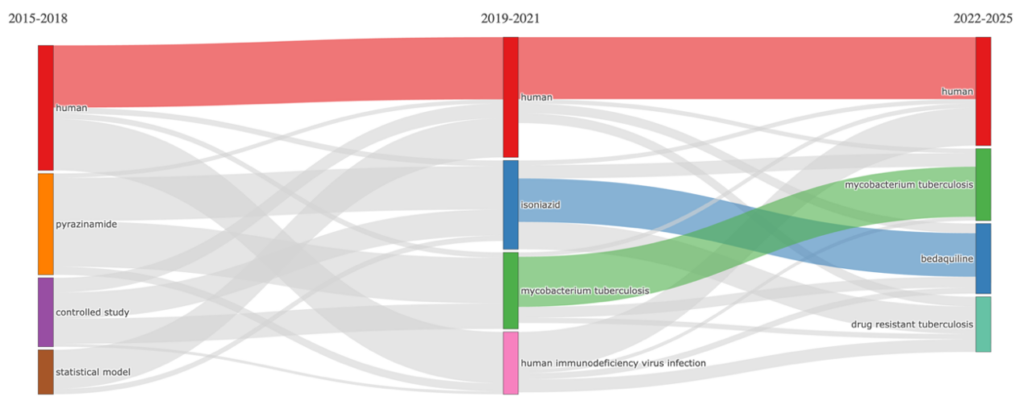
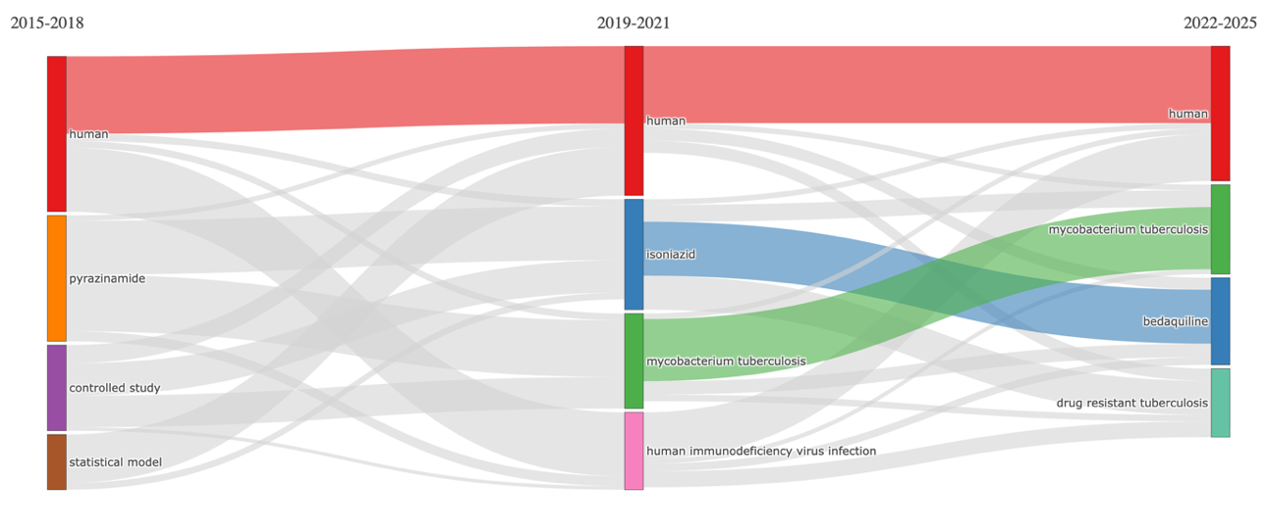
Thematic evolution analysis revealed a progressive shift in MDR-TB treatment-outcome research between 2015 and 2025. During the early period (2015–2018), research themes were primarily centred on conventional anti-tuberculosis drugs, controlled clinical studies, and statistical modelling, reflecting an initial focus on evaluating treatment effectiveness and prognostic factors. Between 2019 and 2021, research themes shifted toward studies of isoniazid resistance, Mycobacterium tuberculosis, and HIV co-infection, indicating growing attention to host-pathogen interactions, comorbidity-related outcomes, and the microbiological aspects of MDR-TB. In the most recent period (2022–2025), newer themes such as bedaquiline and drug-resistant tuberculosis became increasingly prominent, reflecting the expanding emphasis on novel all-oral regimens, treatment optimization, and modern MDR-TB management strategies. Overall, the thematic evolution map indicates a transition from conventional treatment evaluation toward more advanced pharmacological and individualized management approaches in MDR-TB outcome research.
The sustained expansion of MDR-TB treatment outcome research between 2015 and 2025 reflects more than incremental growth in the volume of publications. It signals a field reorganizing around new therapeutic paradigms after the WHO consolidated guidelines endorsed shorter, all-oral regimens and novel drugs such as bedaquiline and pretomanid [14]. Unlike descriptive productivity counts, this trajectory suggests that clinical uncertainty surrounding regimen effectiveness, safety, and programmatic feasibility has become a primary driver of scholarly activity. The disproportionate citation impact of earlier landmark syntheses, particularly the individual patient data meta-analysis by Ahmad et al. [16]. This further indicates that the field’s intellectual architecture remains anchored in foundational outcome studies rather than in the most recent publications. This pattern is consistent with citation dynamics in fast-evolving therapeutic areas, where policy-shaping evidence continues to accumulate citations long after newer trials enter the literature.
Positioning this study against the two most directly relevant prior bibliometric analyses clarifies how the present findings extend, confirm, and partly contradict earlier mappings of the TB literature. Sridharan and Sivaramakrishnan examined 120 publications on BPaL and BPaLM regimens. They reported rapid subfield growth (11.61% annually, with a sharp surge in 2024), concentrated among United States and United Kingdom trial-oriented centers such as Johns Hopkins University, alongside strong United States–South Africa collaboration and 53.33% international co-authorship [10]. By contrast, the broader MDR-TB treatment outcome corpus analyzed here (545 documents) shows steadier growth and intellectual leadership by Médecins Sans Frontières and programmatically embedded academic centers in high-burden settings rather than by trial-centric North American institutions, confirming that operational and implementation-oriented research constitutes a defining pillar of outcome scholarship while extending beyond the pharmacological focus of BPaL/BPaLM bibliometrics.
The prominence of Médecins Sans Frontières (MSF) as the most productive institution likely reflects its longstanding operational role in MDR-TB care rather than publication activity alone. Unlike many academic institutions, MSF has implemented large-scale treatment programs in high-burden settings while simultaneously leading multicentre operational research and clinical trials evaluating shorter all-oral regimens. This dual clinical and research mandate enables continuous generation of real-world evidence, facilitating both scientific productivity and translation of research findings into policy and practice. The findings therefore suggest that institutional leadership in MDR-TB outcome research is closely linked to sustained engagement in programmatic implementation, international collaboration, and access to dedicated global health research funding.
Collaboration patterns diverge similarly: although South African scholars remain visible in the present author network, the overall structure is fragmented into 11 loosely connected clusters, suggesting that transnational integration documented in regimen-specific research has not generalized across the wider outcome domain, where nationally driven cohort and programmatic studies predominate. Quispe-Vicuña et al. provide a complementary comparator by mapping 456 publications on tuberculosis and type 2 diabetes mellitus (2016–2023) and report a statistically significant declining trend (R² = 0.95) [11]. The present keyword analysis partially confirms the thematic centrality of comorbidity: HIV infection, diabetes-related modifiers, and host factors form a stable clinical core, but interprets comorbidity as an embedded outcome determinant rather than as an isolated research stream; the decline in dedicated TB diabetes interface studies may therefore coexist with sustained integration of comorbidity as a prognostic variable in outcome scholarship. Stellenbosch University ranked among the most citation-impactful institutions in both prior analyses and in the present study, reinforcing its role as a hub for comorbidity-aware TB research. Yet, the persistence of comorbidity keywords alongside pharmacological and microbiological clusters indicates that the mechanistic understanding of TB–diabetes interactions remains insufficiently connected to regimen optimization, a structural gap that neither prior bibliometric study fully resolves.
Thematic evolution in the present study extends the previously proposed three-domain framework of pathogen resistance, regimen efficacy, and clinical demographics by demonstrating a temporal shift within the broader literature on MDR-TB treatment outcomes [10]. Early research primarily focused on conventional treatment regimen evaluation, mortality, and risk factors, whereas the intermediate period incorporated HIV co-infection and microbiological predictors. In the most recent period, research has increasingly emphasized bedaquiline-based regimens, shorter all-oral treatment strategies, and individualized patient management. This progression is consistent with the milestone-based temporal segmentation adopted in the present study. It supports previous findings that treatment regimens and efficacy constitute the dominant thematic areas in BPaL/BPaLM research [10]. This analysis demonstrates that while the field’s intellectual foundation remains rooted in clinical epidemiology, pharmacological innovation has emerged as a central research focus. This dual structure explains why co-citation networks remain anchored by WHO guidelines and landmark clinical trials, whereas bibliographic coupling increasingly links recent studies on treatment implementation and optimization.
A further interpretive contribution lies in exposing a methodological asymmetry not foregrounded in either prior bibliometric study. Predictive modelling terms (e.g., prediction, predictive model, area under the curve) appear as peripheral nodes with weak co-occurrence linkages, despite growing clinical interest in machine learning for DR-TB prognosis [22,23]. This finding contradicts the assumption that quantitative risk stratification has already permeated mainstream outcome research. Instead, it suggests that data-science approaches remain siloed from the dominant clinical and pharmacological approaches and from the comorbidity-focused [10,11]. The fragmented author network reinforces this interpretation: limited connectivity between clinical trialists, operational researchers, and methodological specialists may impede the translational pathway from predictive analytics to regimen selection and patient support interventions.
Geographic patterns also warrant interpretive rather than descriptive consideration. Although China, Ethiopia, South Africa, India, and the United States dominated research productivity, citation impact was distributed unevenly, with South Africa and the United States achieving substantially higher citations per publication than China and India. This productivity–impact asymmetry is consistent with previous tuberculosis bibliometric evidence, suggesting that high publication output from high-burden countries does not necessarily translate into greater scholarly influence [24]. The limited representation of Southeast Asia and South America within international collaboration networks supports previous observations reported in BPaL/BPaLM bibliometric research [10]. Together, these findings highlight persistent structural inequities in the generation, dissemination, and translation of evidence on MDR-TB treatment outcomes into policy and practice.
The geographic distribution of publications highlights important disparities between disease burden and research capacity. While China, South Africa, India, Ethiopia, and the United States contributed substantially to the literature, citation impact and international collaboration were concentrated in a smaller number of well-established research institutions and global partnerships. India, despite carrying one of the world’s highest MDR-TB burdens, demonstrated considerable publication output but comparatively lower citation impact, suggesting opportunities to strengthen international visibility and collaborative research. Likewise, several high-burden countries in Southeast Asia and sub-Saharan Africa remained underrepresented, likely reflecting differences in research infrastructure, funding availability, and access to multinational research networks. Addressing these inequities through equitable funding, capacity strengthening, and broader international collaboration will be essential to generate context-specific evidence and accelerate progress toward the WHO End TB Strategy.
Implications and Limitations
These bibliometric findings have practical implications for researchers, funders, and national TB programs. Researchers should design integrative outcome studies combining all-oral/bedaquiline regimen optimization, comorbidity management (HIV, diabetes), and standardized predictive models, reflecting the persistent separation among pharmacological, clinical, and predictive keyword clusters. Cross-cluster collaboration among operational programs, academic centers in high-burden countries, and data science teams should be prioritized. Funders should support multicentre prospective cohorts with WHO-harmonized outcome reporting and collaborative grants targeting high-productivity, lower-impact settings. National programs should adopt standardized outcome reporting and strengthen South–South and South-North knowledge exchange to translate local evidence into policy.
This study has limitations inherent to bibliometric research. Exclusive reliance on Scopus may omit relevant studies indexed elsewhere. English-language restriction may underestimate evidence from non-English high-burden settings. Citation-based indicators are susceptible to recency and prestige bias. Manual name disambiguation may leave residual errors in collaboration analyses. An additional limitation concerns the scope of the search strategy. Although outcome-oriented terms, including “outcome prediction,” were included, explicit artificial intelligence and machine learning search terms were not required. Consequently, the corpus may not fully capture DR-TB predictive modelling studies that do not use outcome-specific vocabulary in their titles, abstracts, or keywords. Findings regarding the marginal thematic status of predictive analytics should therefore be interpreted as applying to the mapped MDR-TB treatment-outcome literature rather than to the entire DR-TB predictive-modelling field. Finally, bibliometric mapping describes structural patterns in the literature but does not assess study quality, risk of bias, or clinical validity. These constraints should be considered when interpreting comparisons with prior bibliometric studies, which employed related but not identical search scopes and analytical tools.
This bibliometric analysis of 545 publications (2015–2025) demonstrates sustained growth in MDR-TB treatment outcome research, with a thematic shift toward shorter all-oral regimens, bedaquiline-based therapy, and emerging predictive approaches. However, international collaboration remains fragmented, geographic citation impact is uneven, and predictive analytics is insufficiently integrated into mainstream clinical outcome research. To address these gaps, researchers and policymakers should establish multicentre prospective cohort platforms with harmonized outcome definitions; strengthen cross-cluster partnerships among operational TB programmes, academic institutions, and data-science teams; prioritize integrative studies linking regimen innovation, comorbidity management, and validated prediction; design funding mechanisms that promote equitable collaboration from high-burden countries with high productivity but lower citation impact; and support implementation research on programmatic adoption of all-oral regimens. These actionable recommendations provide evidence-based directions for advancing more collaborative, equitable, and data-driven MDR-TB outcome research.
What is already known about the topic
What this study adds
Conceptualization: Farida Murtiani, Mondastri Korib Sudaryo, Evi Martha, Diah Handayani.
Data curation: Annisa Ayu Lestari, Amelia Marisa, Fatimah Fatimah.
Formal analysis: Farida Murtiani, Annisa Ayu Lestari.
Funding acquisition: None.
Methodology: Farida Murtiani, Mondastri Korib Sudaryo, Annisa Ayu Lestari.
Visualization: Farida Murtiani, Annisa Ayu Lestari.
Writing – original draft: Farida Murtiani, Evi Martha, Helwiyah Umniyati, Ba’da Febriani, Fatimah Fatimah.
Writing – review & editing: Farida Murtiani, Mondastri Korib Sudaryo, Diah Handayani, Helwiyah Umniyati, Annisa Ayu Lestari, Amelia Marisa, Ba’da Febriani, Fatimah Fatimah.
Data availability
The datasets used and analyzed during the current study are available from the corresponding author upon reasonable request.
| Rank No. | Institution | Journal | ||||||||
|---|---|---|---|---|---|---|---|---|---|---|
| Institution | TP | TC | TC/TP | H-index | Journal | TP | TC | TC/TP | H-index | |
| 1 | Médecins Sans Frontières | 35 | 1,821 | 52.0 | 18 | PLOS ONE | 52 | 998 | 19.2 | 19 |
| 2 | International Union Against Tuberculosis and Lung Disease | 31 | 1,307 | 42.2 | 15 | BMC Infectious Diseases | 39 | 611 | 15.7 | 15 |
| 3 | University of Cape Town | 27 | 1,653 | 61.2 | 17 | International Journal of Tuberculosis and Lung Disease | 35 | 623 | 17.8 | 12 |
| 4 | University of Gondar | 25 | 475 | 19.0 | 12 | Clinical Infectious Diseases | 21 | 638 | 30.4 | 14 |
| 5 | Harvard Medical School | 22 | 1,136 | 51.6 | 15 | Infection and Drug Resistance | 20 | 161 | 8.1 | 7 |
| 6 | Capital Medical University | 21 | 375 | 17.9 | 10 | International Journal of Infectious Diseases | 14 | 279 | 19.9 | 12 |
| 7 | London School of Hygiene and Tropical Medicine | 21 | 446 | 21.2 | 11 | Scientific Reports | 14 | 159 | 11.4 | 5 |
| 8 | Stellenbosch University | 20 | 746 | 37.3 | 11 | Indian Journal of Tuberculosis | 13 | 140 | 10.8 | 6 |
| 9 | Karolinska Institutet | 20 | 958 | 47.9 | 11 | European Respiratory Journal | 10 | 692 | 69.2 | 10 |
| 10 | Fudan University | 18 | 275 | 15.3 | 11 | Antimicrobial Agents and Chemotherapy | 10 | 214 | 21.4 | 8 |
| Rank | Author (Year) | TP | TC | TC/TP | H-index |
|---|---|---|---|---|---|
| 1 | Ndjeka, N. | 9 | 1152 | 128.0 | 7 |
| 2 | Hughes, J. | 8 | 1104 | 138.0 | 7 |
| 3 | Guglielmetti, L. | 8 | 1046 | 130.8 | 7 |
| 4 | Véziris, N. | 6 | 1037 | 172.8 | 6 |
| 5 | Schnippel, K. | 6 | 992 | 165.3 | 6 |
| 6 | Caumes, E. | 5 | 983 | 196.6 | 5 |
| 7 | Dheda, K. | 10 | 977 | 97.7 | 8 |
| 8 | Robert, J. | 4 | 973 | 243.2 | 4 |
| 9 | Yim, J.-J. | 11 | 914 | 83.1 | 9 |
| 10 | Lange, C. | 13 | 913 | 70.2 | 9 |
| Rank No. | Country | TP | TC | TC/TP |
|---|---|---|---|---|
| 1 | China | 80 | 942 | 11.8 |
| 2 | Ethiopia | 47 | 722 | 15.4 |
| 3 | South Africa | 45 | 1212 | 26.9 |
| 4 | India | 45 | 514 | 11.4 |
| 5 | United States | 45 | 1215 | 27.0 |
| 6 | Pakistan | 25 | 330 | 13.2 |
| 7 | South Korea | 20 | 432 | 21.6 |
| 8 | Brazil | 18 | 263 | 14.6 |
| 9 | United Kingdom | 16 | 378 | 23.6 |
| 10 | Australia | 14 | 215 | 15.4 |