Research | Open Access | Volume 9 (4): Article 162 | Published: 07 Oct 2026

Views: 193
Menu, Tables and Figures
| Variable | Frequency (N=1672) | Percentage (%) |
|---|---|---|
| Age (Median, Inter quartile range) | 36(28-47) | |
| 18 to 29 | 520 | 31.1 |
| 30 to 39 | 497 | 29.7 |
| 40 to 49 | 286 | 17.1 |
| 50+ | 369 | 22.1 |
| Districts | ||
| Ada East | 418 | 25.0 |
| Akatsi South | 418 | 25.0 |
| Fanteakwa North | 417 | 24.9 |
| Tarkwa | 419 | 25.1 |
| Sex | ||
| Male | 828 | 49.5 |
| Female | 844 | 50.5 |
| Marital status | ||
| Never married | 557 | 33.3 |
| Married | 901 | 53.9 |
| Divorced | 111 | 6.6 |
| Widowed | 103 | 6.2 |
| Educational level | ||
| No formal education | 142 | 8.5 |
| Primary | 100 | 6.0 |
| Junior High School | 339 | 20.3 |
| Senior High School | 609 | 36.4 |
| Tertiary | 482 | 28.8 |
| Employment Status | ||
| Unemployment | 393 | 23.9 |
| Self employed | 721 | 43.9 |
| Employed | 529 | 32.2 |
| Monthly Income | ||
| <Gh₵1000 | 690 | 41.3 |
| Gh₵1000-2500 | 628 | 37.6 |
| > Gh₵2500 | 354 | 21.2 |
| Religion | ||
| Christianity | 1315 | 78.5 |
| Muslim | 288 | 17.2 |
| African Traditionalist | 69 | 4.1 |
| Ethnicity | ||
| Akan | 466 | 27.9 |
| Ewe | 535 | 32.0 |
| Ga/Dangme | 426 | 25.5 |
| Guan | 49 | 2.9 |
| Mole-Dagbani | 127 | 7.6 |
| Others | 69 | 4.1 |
Table 1: Socio-Demographic Characteristics of Respondents from selected Districts
| Overarching theme | Sub-theme | Codes |
|---|---|---|
| Challenges faced in the lab | Resource shortages | Shortage of reagents, cartridges, staff |
| Sample-related issues | Poor quality/inadequate samples | |
| Documentation errors | Incomplete lab request forms | |
| Delays in treatment | Long turnaround times | |
| Infrastructure challenges | Power outages, machine breakdowns | |
| Cost barriers | Hidden lab-related costs despite free tests | |
| Accessibility issues | Long travel distances to labs | |
| Strategies to overcome challenges | Resource management | Prioritizing severe cases when resources are low |
| Digital solutions | Digital tracking of lab results | |
| Staff optimization | Organizing shifts to reduce delays | |
| Roles of participants | Conducting TB tests | GeneXpert, PCR, Microscopy |
| Sample collection and analysis | Collecting, testing, and interpreting results | |
| TB diagnosis oversight | Ensuring availability of lab resources | |
| Coordination of lab staff shortage | Managing supply shortages, supervising processes |
Table 2: Challenges faced by health professionals in the clinical and laboratory confirmation of TB cases
Anthony Zunuo Dongdem1, Sandra Asomaning2, Victoria Arthur3, Michael Agyei4, Vincentia Danku5, Rejoice Ocloo1, Eyram Kuma Hanu&,1
1Department of Epidemiology and Biostatistics, Fred N. Binka School of Public Health, University of Health and Allied Sciences, Ho, Ghana, 2Ada East Health Directorate, Ghana Health Service, Ada, Ghana, 3Tarkwa Nsuaem Health Directorate, Ghana Health Service, Tarkwa, Ghana, 4Fanteakwa North Health Directorate, Ghana Health Service, Fanteakwa, Ghana, 5Akatsi South Health Directorate, Ghana Health Service, Akatsi, Ghana
&Corresponding author: Eyram Kuma Hanu, Department of Epidemiology and Biostatistics, Fred N. Binka School of Public Health, University of Health and Allied Sciences, Ghana, Email: medeyram@gmail.com ORCID: https://orcid.org/0009-0001-8708-5400
Received: 08 Jul 2025, Accepted: 06 Oct 2026, Published: 07 Oct 2026
Domain: Infectious Disease Epidemiology
Keywords: Tuberculosis; case notification; community knowledge; health system barriers; mixed-methods study; Ghana.
©Eyram Kuma Hanu et al. Journal of Interventional Epidemiology and Public Health (ISSN: 2664-2824). This is an Open Access article distributed under the terms of the Creative Commons Attribution International 4.0 License (https://creativecommons.org/licenses/by/4.0/), which permits unrestricted use, distribution, and reproduction in any medium, provided the original work is properly cited.
Cite this article: Eyram Kuma Hanu et al., Tuberculosis notification, community knowledge, and health system barriers to diagnosis in four districts of Ghana: A concurrent mixed-methods study. Journal of Interventional Epidemiology and Public Health. 2026; 9(4):162. https://doi.org/10.37432/jieph-d-26-00228
Introduction: Tuberculosis (TB) remains a major public health challenge globally, with a substantial proportion of cases remaining undiagnosed or unreported, particularly in low- and middle-income countries. In Ghana, geographical variations in TB case notification continue to impede progress towards national and global TB control targets. This study assessed tuberculosis case notification, community knowledge of TB, and health system barriers influencing TB diagnosis across four districts in Ghana.
Methods: A concurrent mixed-methods study was conducted in four districts of Ghana: Fanteakwa North, Akatsi South, Tarkwa Nsuaem, and Ada East. The quantitative component comprised a community-based cross-sectional survey involving 1,672 adults selected through multistage cluster sampling to assess knowledge of tuberculosis. Secondary data on tuberculosis notifications from 2021 to 2024 were extracted from the District Health Information Management System (DHIMS2) to assess trends in case notification. In-depth interviews were conducted with purposively selected healthcare professionals involved in tuberculosis diagnosis and management to explore health system barriers and coping strategies. Quantitative data were analysed using descriptive statistics, while qualitative data were analysed using thematic analysis.
Results: Overall, 60.8% of respondents demonstrated good knowledge of tuberculosis, although knowledge varied across districts. Akatsi South recorded the highest proportion of respondents with good knowledge (79.0%), whereas Fanteakwa North recorded the highest proportion with poor knowledge (45.3%). Tuberculosis case notification rates differed substantially across the study districts, with Tarkwa Nsuaem recording the highest rates, increasing from 10.89 per 10,000 population in 2021 to 16.97 per 10,000 population in 2024. In contrast, Ada East consistently recorded the lowest case notification rates throughout the study period. Healthcare professionals identified shortages of laboratory reagents and trained personnel, delays in diagnostic processes, poor-quality sputum specimens, equipment breakdowns, and limited access to diagnostic services as major barriers to TB diagnosis. Strategies adopted to address these challenges included digital tracking of laboratory results, staff reorganisation, and prioritisation of patients with severe symptoms during periods of resource constraints.
Conclusion: Tuberculosis case notification varied considerably across the selected districts in Ghana and may reflect differences in community knowledge, access to diagnostic services, and health-system capacity. These findings are descriptive and do not establish causal relationships. Strengthening diagnostic infrastructure, ensuring availability of laboratory supplies, improving access to TB diagnostic services, and implementing targeted community education may support improved TB notification.
Tuberculosis (TB) remains one of the leading causes of morbidity and mortality from infectious diseases worldwide despite being a preventable and curable disease. Caused by Mycobacterium tuberculosis, TB is transmitted primarily through airborne droplets and disproportionately affects low- and middle-income countries where poverty, overcrowding, malnutrition, and limited healthcare resources sustain disease transmission [1,2]. In recent years, millions of people have continued to develop TB annually, with over one million deaths reported globally, underscoring the persistent burden of the disease despite considerable advances in prevention, diagnosis, and treatment [1,2,3]
Early diagnosis and prompt initiation of treatment are fundamental to effective tuberculosis control because they improve patient outcomes, interrupt community transmission, and reduce TB-related mortality [1,4,5]. The introduction of rapid molecular diagnostic technologies, particularly GeneXpert MTB/RIF, has significantly enhanced the accuracy and speed of TB diagnosis by enabling simultaneous detection of Mycobacterium tuberculosis and rifampicin resistance within approximately two hours [6]. However, access to these technologies remains unequal, especially in resource-limited settings where inadequate laboratory infrastructure, shortages of trained personnel, interruptions in the supply of diagnostic commodities, and weak specimen transportation systems continue to delay diagnosis [4,7]. Consequently, a substantial proportion of individuals with active TB remain undiagnosed or are diagnosed late, contributing to ongoing transmission within communities and widening the gap between estimated and notified TB cases [4,5].
Sub-Saharan Africa continues to bear a disproportionate share of the global tuberculosis burden owing to the combined effects of poverty, HIV co-infection, rapid urbanization, and health system constraints [7-9]. Although many countries in the region have expanded access to TB diagnostic and treatment services through national tuberculosis control programmes, identification and notification of people with TB remain below global targets in several settings [7,9]. In Ghana, the National Tuberculosis Control Programme has strengthened TB services through the implementation of Directly Observed Treatment Short-course (DOTS), expansion of GeneXpert testing, active case-finding initiatives, and integration of TB services into the primary healthcare system [10]. Nevertheless, considerable geographical disparities in tuberculosis case notification persist across districts, with differences in diagnostic capacity, surveillance performance, and access to quality TB services reported in Ghana [9,11]
Previous studies conducted in Ghana and other low- and middle-income countries have examined community knowledge of tuberculosis, trends in tuberculosis notifications, and operational challenges affecting TB diagnosis [9,12–14]. Recent evidence from Ghana has also highlighted geographical accessibility as an important consideration in tuberculosis diagnosis and has suggested that decentralizing molecular testing could improve access to diagnostic services [9]. However, these studies have largely examined community knowledge, tuberculosis notification, or health-system barriers separately. Consequently, there remains limited evidence that simultaneously examines community knowledge, district-level tuberculosis notification patterns, and health-system barriers to diagnosis using a mixed-methods approach in Ghana. Understanding these factors within the same study may help identify context-specific opportunities to strengthen tuberculosis case notification and control.
This study therefore assessed tuberculosis case notification patterns, community knowledge of tuberculosis, and health system barriers influencing TB diagnosis across four districts in Ghana using a concurrent mixed-methods design. By integrating findings from a community-based survey, routine tuberculosis surveillance data, and qualitative interviews with healthcare professionals, this study provides a comprehensive understanding of the community- and health system-level factors influencing tuberculosis notification and identifies opportunities for strengthening tuberculosis control efforts in Ghana.
Study design
We conducted a concurrent mixed-methods study comprising a quantitative and qualitative component. The quantitative component employed a community-based cross-sectional design to assess knowledge of tuberculosis (TB) among community members in selected districts of Ghana. The qualitative component adopted an exploratory descriptive design involving in-depth interviews with healthcare professionals engaged in TB diagnosis and management. In addition, secondary data on TB notifications were extracted from the District Health Information Management System (DHIMS2) to assess TB notification patterns from 2021 to 2024. Quantitative and qualitative findings were integrated during interpretation to provide a comprehensive understanding of factors influencing TB notification.
Study Setting
The study was conducted in four districts in Ghana: Fanteakwa North District in the Eastern Region, Akatsi South Municipality in the Volta Region, Tarkwa Nsuaem Municipality in the Western Region, and Ada East District in the Greater Accra Region. The districts were purposively selected based on the availability of tuberculosis (TB) diagnostic and treatment services and the occurrence of eligible TB cases during the study period. The selected districts provided variation in geographical and demographic contexts and had established TB screening and diagnostic services, with activities implemented under the National Tuberculosis Control Programme. The selection was pragmatic and purposive and was not intended to provide a statistically representative sample of all districts in Ghana.
Study population
The study population comprised two groups. The first consisted of community members aged 18 years and above who had resided in the selected districts for at least six months. The second consisted of healthcare professionals directly involved in TB diagnosis and management within health facilities in the selected districts. Secondary data included all reported TB cases recorded in DHIMS2 from 2021 to 2024 for the selected districts.
Inclusion and exclusion criteria
Community members were eligible to participate if they were aged 18 years or older, had resided in the selected district for at least six months, and provided informed consent. Individuals who were unable to respond to the questionnaire because of illness or other limitations at the time of data collection were excluded.
Healthcare professionals were eligible if they were directly involved in TB diagnosis, laboratory confirmation, or management within participating health facilities. Healthcare workers who were unavailable during the data collection period were excluded from the qualitative interviews. For the secondary data review, all TB cases recorded in DHIMS2 for the selected districts between 2021 and 2024 were included in the analysis.
Sample size determination and sampling procedure
The sample size for the quantitative component was determined using the Yamane formula with a 5% margin of error. Based on the population sizes of the selected districts, the calculated sample sizes were 417 participants for Fanteakwa North, 418 for Akatsi South, 419 for Tarkwa Nsuaem, and 418 for Ada East, yielding a total sample of 1,672 respondents.
A multistage cluster sampling technique was employed to select participants. In the first stage, communities within each district were identified as clusters, and three communities were randomly selected from each district. In the second stage, households within selected communities were sampled using systematic sampling based on a predetermined sampling interval. In the final stage, one eligible participant aged 18 years or older was selected from each household using simple random sampling. Where more than one eligible individual was present, one participant was selected by balloting.
For the qualitative component, healthcare professionals involved in TB diagnosis and management were purposively selected based on their roles and experience in TB-related activities within participating health facilities.
Data collection
Data were collected by trained research assistants using a pretested structured questionnaire administered through face-to-face interviews. The questionnaire captured information on socio-demographic characteristics and knowledge of tuberculosis among community members. Data were collected electronically using Kobo Collect software.
Secondary data on tuberculosis notifications from 2021 to 2024 were extracted from the District Health Information Management System (DHIMS2). Extracted variables included annual TB case notifications and other relevant programmatic indicators used to assess district-level TB notification patterns.
For the qualitative component, 37 healthcare professionals involved in tuberculosis diagnosis, laboratory confirmation, and programme activities were purposively selected from the four districts. Participants comprised 10 laboratory personnel, 23 focal/health staff, and 4 tuberculosis coordinators. The number of participants was 10 in Fanteakwa North, 8 in Akatsi South, 13 in Tarkwa Nsuaem, and 6 in Ada East. Participants were selected based on their involvement in tuberculosis-related activities and experience with TB-related services. In-depth interviews were conducted using a semi-structured interview guide and lasted approximately 30–35 minutes. Interviews were audio-recorded with participants’ consent and transcribed verbatim for thematic analysis. Interviews continued until thematic saturation was reached.
Data Analysis
Quantitative data were exported from Kobo Collect and analysed using Stata version 17 (StataCorp, College Station, TX, USA). Descriptive statistics, including frequencies, percentages, medians, and interquartile ranges, were used to summarise participant characteristics and knowledge of tuberculosis. Knowledge of tuberculosis was assessed using knowledge questions included in the structured questionnaire. The knowledge assessment covered participants’ awareness of tuberculosis, perceived severity, symptoms and signs, mode of transmission, prevention, curability, tuberculosis-specific treatment, and whether tuberculosis treatment is provided free of charge. Responses were scored according to the study’s predefined scoring scheme, with a possible total knowledge score ranging from 0 to 12. The median knowledge score in the study was 6, which was used as the cut-off point; respondents scoring ≥6 were classified as having good knowledge, while those scoring <6 were classified as having poor knowledge. The questionnaire was pretested before data collection. The questionnaire items and scoring scheme are provided in the supplementary material.
Secondary data extracted from DHIMS2 were analysed using descriptive methods to assess trends in tuberculosis notifications and case notification rates across districts from 2021 to 2024. The tuberculosis case notification rate was calculated as the number of TB cases notified and recorded in DHIMS2 in a district during a given year divided by the corresponding annual district population projection, multiplied by 10,000:
TB case notification rate = (Number of TB cases notified in a district during the year / Annual projected district population for the same year) × 10,000.
The annual population denominators were based on population projections derived from the 2021 Population and Housing Census of the Ghana Statistical Service. The indicator represents a programmatic TB notification-based rate and should not be interpreted as an estimate of the true incidence of tuberculosis in the population. Results were presented using tables and graphical displays. Qualitative interviews were transcribed verbatim and analysed using thematic analysis in ATLAS.ti version 7.5.7. Transcripts were independently reviewed, coded, and organised into categories and themes reflecting barriers and facilitators to tuberculosis diagnosis and management. Quantitative and qualitative findings were integrated during interpretation to provide a comprehensive understanding of factors influencing tuberculosis notification.
Ethical considerations
Ethical approval for this study was obtained from the Research Ethics Committee of the University of Health and Allied Sciences (UHAS-REC B.10 [154]24-25). Permission was also obtained from the respective district health directorates. Written informed consent was obtained from all participants before enrolment into the study. Participation was voluntary, and participants were informed of their right to decline participation or withdraw from the study at any time without consequence. Confidentiality and anonymity were maintained throughout the study by excluding personal identifiers from study records and restricting access to study data to authorised members of the research team. All study procedures were conducted in accordance with the principles of the Declaration of Helsinki.
Socio-demographic characteristics of respondents
A total of 1,672 participants were included in the study, with approximately equal representation from the four districts. The median age was 36 years (IQR: 28–47), with the largest proportion (31.1%) aged 18–29 years. Females constituted 50.5% of respondents, and more than half were married (53.9%).
Regarding education, 36.4% had attained senior high school, while 28.3% had tertiary education. A majority of respondents were self-employed (43.9%), and 41.3% reported a monthly income of less than Ghana cedis (Gh₵)1000. Most participants identified as Christians (78.5%), and the predominant ethnic group was Ewe (32.0%) (Table 1).
Knowledge of respondents about tuberculosis
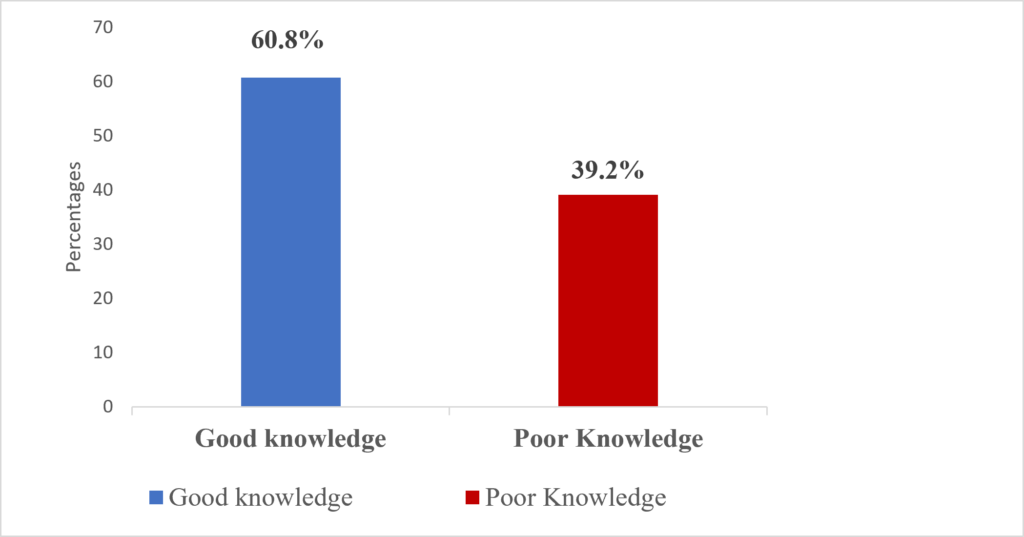
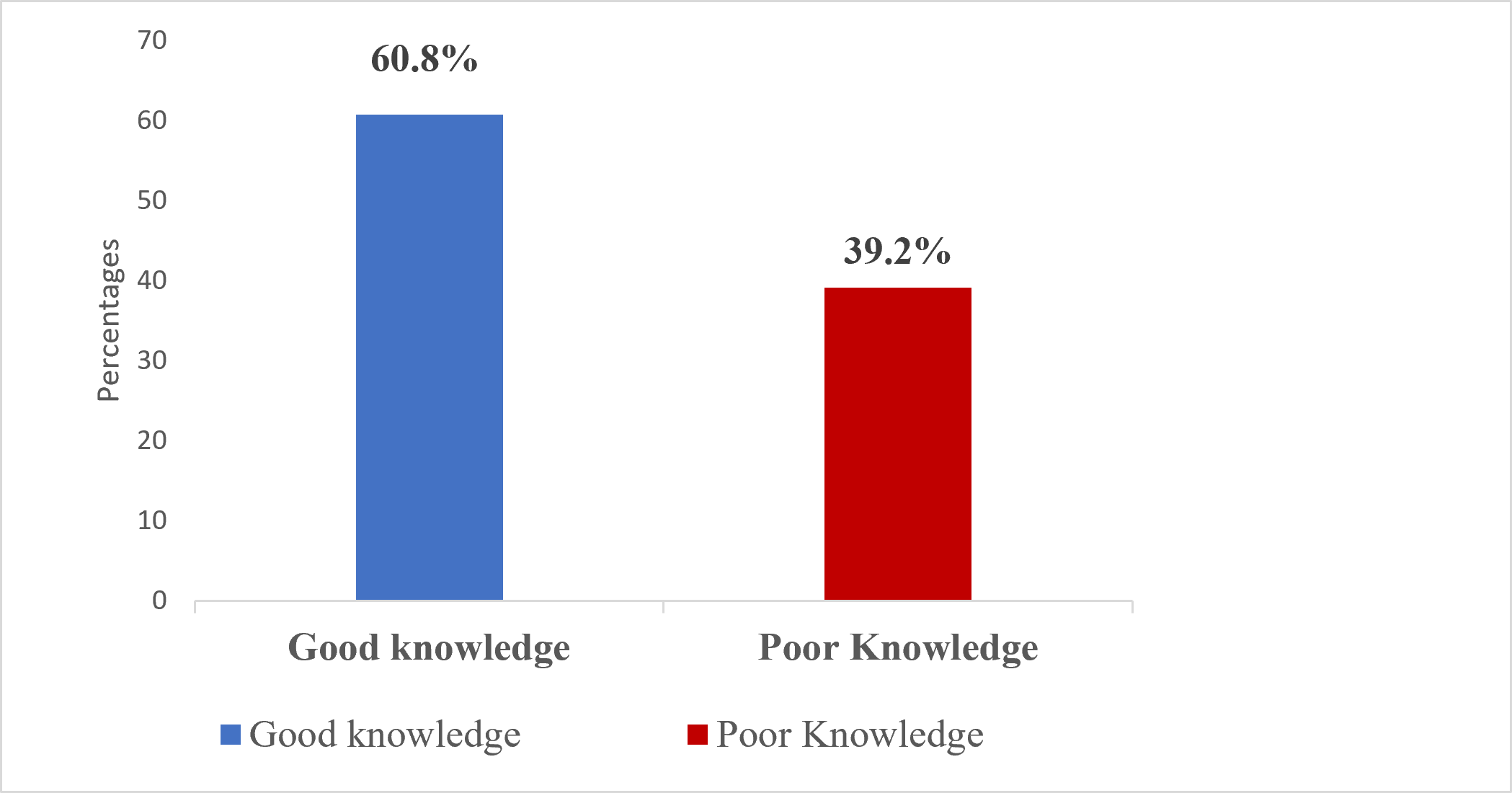
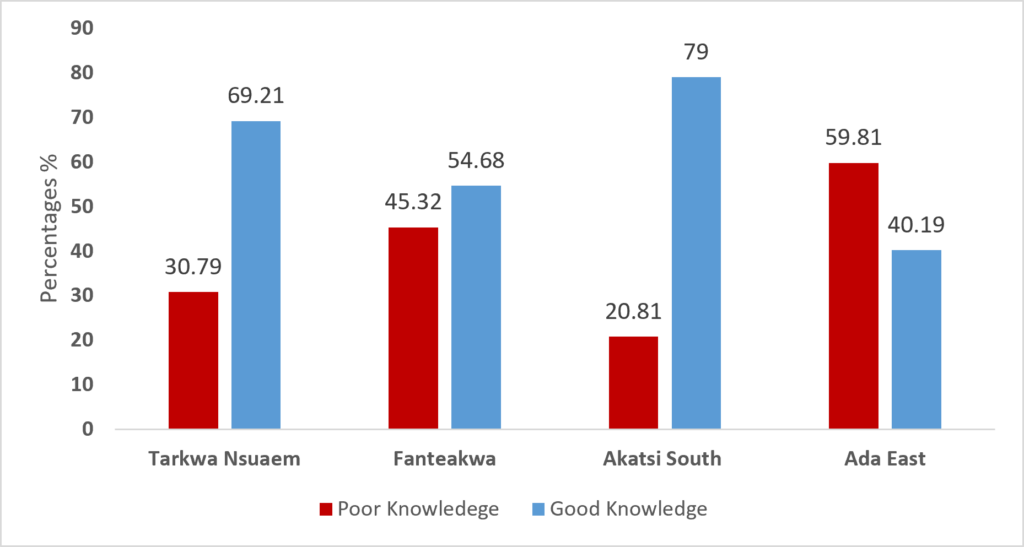
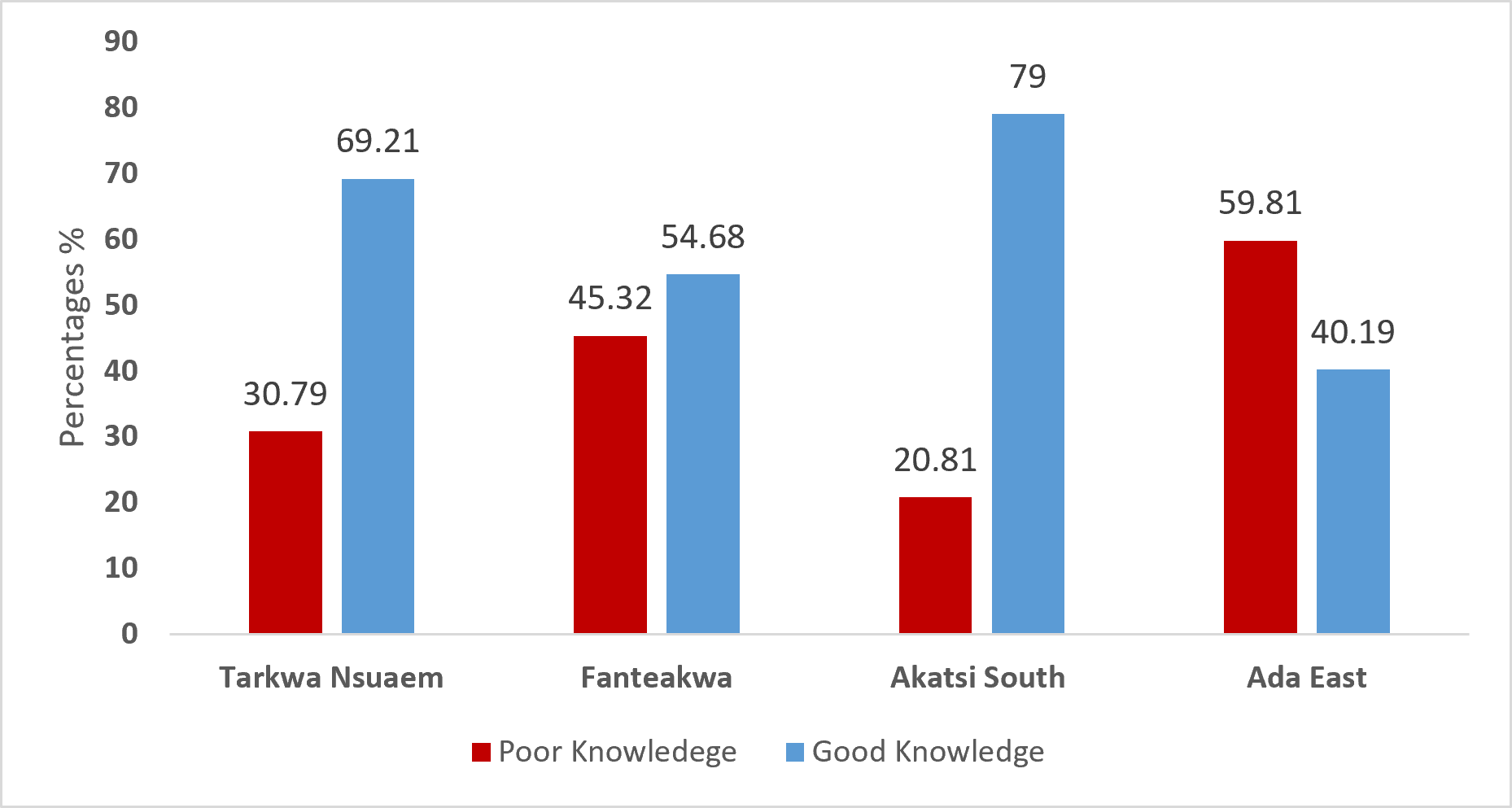
Overall, 60.8% of respondents demonstrated good knowledge of tuberculosis, while 39.2% had poor knowledge. Knowledge levels varied across districts. Akatsi South recorded the highest proportion of respondents with good knowledge (79.0%), followed by Tarkwa Nsuaem (69.2%). In contrast, Fanteakwa North recorded the highest proportion of respondents with poor knowledge (45.3%) (Figures 1 and 2).
Tuberculosis case notification trends (2021–2024)
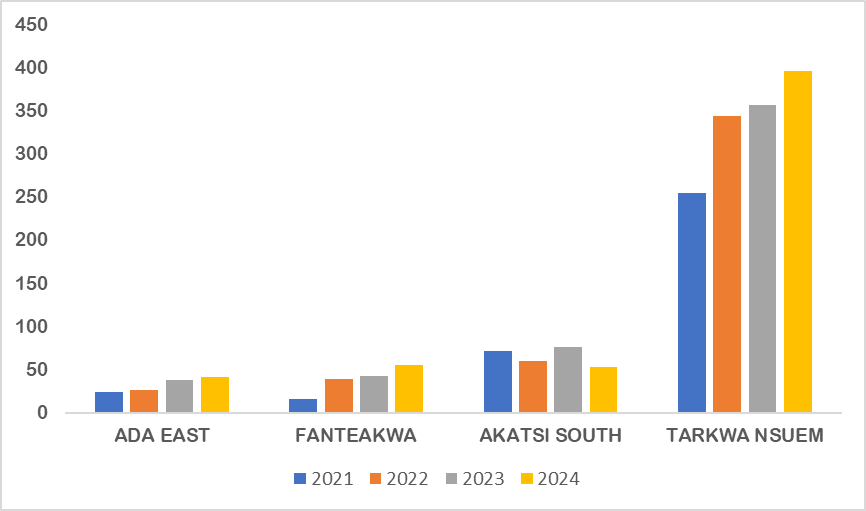
The number of tuberculosis cases reported varied across districts over the four-year period. Tarkwa Nsuaem consistently recorded the highest number of notified TB cases, increasing from 254 cases in 2021 to 396 cases in 2024. Fanteakwa North demonstrated a steady increase from 16 cases in 2021 to 55 cases in 2024. Akatsi South showed fluctuating trends, peaking at 76 cases in 2023 before declining to 53 cases in 2024. Ada East recorded the lowest number of notified TB cases throughout the study period, increasing from 24 cases in 2021 to 41 cases in 2024 (Figure 3).
Tuberculosis case notification rates
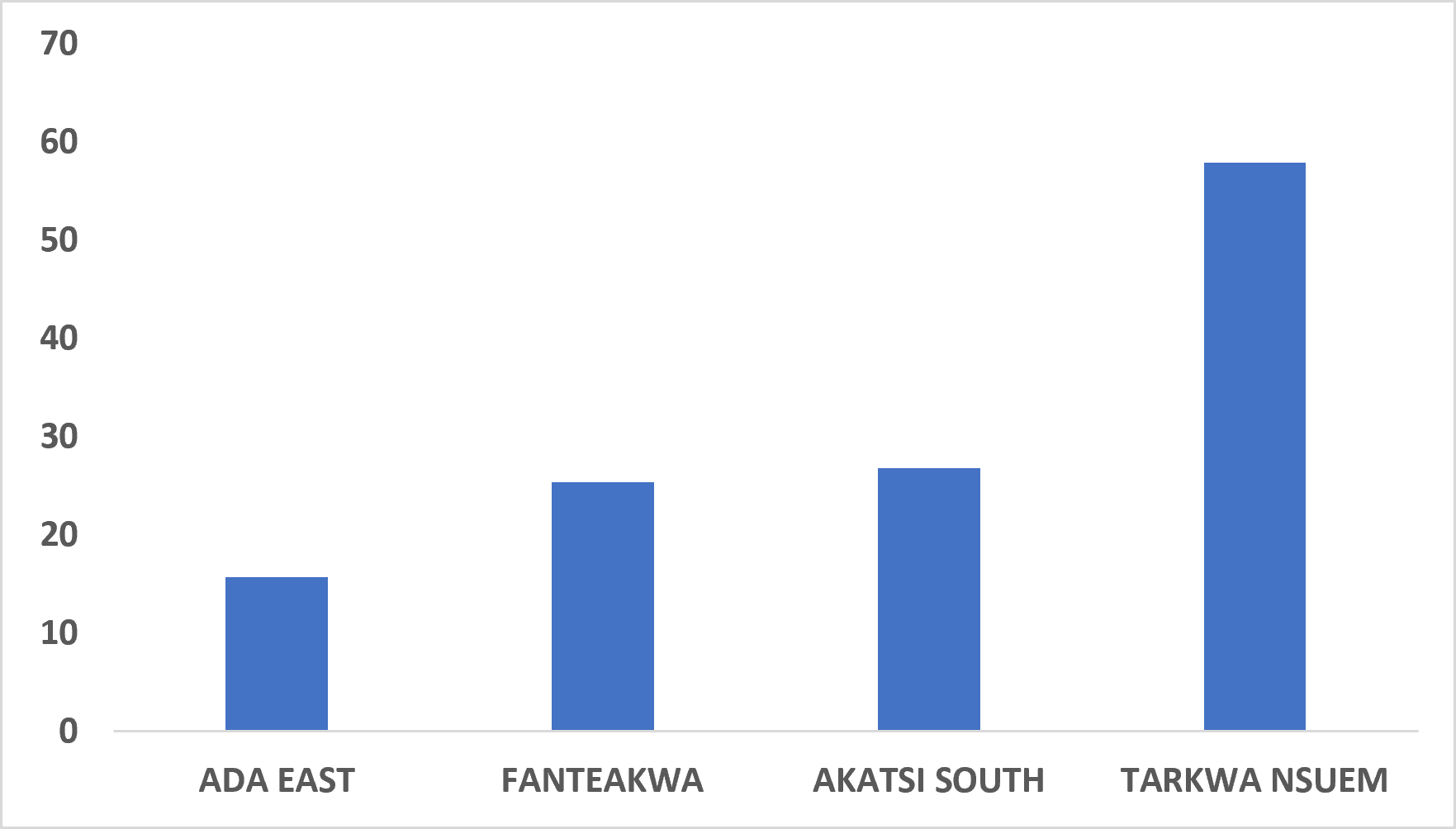
Tuberculosis notification rates differed substantially across districts and over time. Tarkwa Nsuaem recorded the highest notification rates, increasing from 10.89 per 10,000 population in 2021 to 16.97 per 10,000 population in 2024. Fanteakwa North also demonstrated notable improvement, with notification rates increasing from 2.67 per 10,000 population in 2021 to 9.16 per 10,000 population in 2024. Akatsi South exhibited fluctuating rates, peaking at 7.82 per 10,000 population in 2023 before declining to 5.45 per 10,000 population in 2024. Ada East consistently recorded the lowest notification rates, increasing modestly from 2.91 per 10,000 population in 2021 to 4.98 per 10,000 population in 2024 (Figure 4).
Qualitative findings
Thematic analysis identified three major themes: challenges faced in TB diagnosis and laboratory confirmation, strategies employed to overcome diagnostic challenges, and the roles of healthcare professionals in TB diagnosis and management. The detailed themes, sub-themes, and codes generated from the interviews are presented in Table 2.
Challenges in TB diagnosis and laboratory confirmation
Healthcare professionals reported multiple barriers affecting TB diagnosis. Key challenges included shortages of reagents, cartridges, and trained personnel. Sample-related issues, such as poor-quality specimens and incomplete laboratory request forms, were also frequently reported.
Operational challenges included long turnaround times, machine breakdowns, and intermittent power supply. Although TB testing is officially free, indirect costs and long travel distances to diagnostic centers limited access for some patients.
“Incomplete lab request forms, often missing crucial details like patient addresses.”
(Medical laboratory scientist, Akatsi South)
“Patients have to travel long distances before they can access the lab for this type of testing.”
(Laboratory technician, Ada East)
Roles of health professionals in TB diagnosis
Participants described their roles as central to TB detection and management. These included sample collections, laboratory testing using GeneXpert, PCR, and microscopy, interpretation of results, and ensuring appropriate patient management.
They also highlighted responsibilities related to resource management, including monitoring availability of laboratory supplies and coordinating staff to maintain service delivery.
“The main responsibility is to test sputum samples using GeneXpert to detect TB bacilli.”
(Medical laboratory technician, Tarkwa Nsuaem)
Strategies to address challenges
Several adaptive strategies were reported to mitigate diagnostic challenges. These included prioritizing patients with severe symptoms during periods of resource constraints, implementing digital systems for tracking laboratory results, and reorganizing staff shifts to reduce delays.
Capacity-building initiatives, including regular training on diagnostic equipment such as GeneXpert and PCR, were also identified as important for improving diagnostic efficiency.
“We have introduced a digital system for tracking lab results and notifying patients.”
(Laboratory technician, Fanteakwa North)
“One of our staff members takes up afternoon or night shifts to process pending samples.”
(Medical laboratory technician, Tarkwa Nsuaem)
This study assessed tuberculosis (TB) case notification, community knowledge of tuberculosis, and health system barriers influencing TB diagnosis across four districts in Ghana using a concurrent mixed-methods approach. The findings revealed considerable geographical variation in tuberculosis case notification, with Tarkwa Nsuaem consistently recording the highest notification rates and Ada East the lowest. Although most respondents demonstrated good knowledge of tuberculosis, knowledge levels differed across districts. The qualitative findings further highlighted persistent health system constraints, including shortages of laboratory supplies, inadequate human resources, diagnostic delays, equipment breakdowns, and geographical barriers to accessing diagnostic services. Similar health system constraints have been reported in Ghana and other low- and middle-income countries, where deficiencies in diagnostic capacity, workforce shortages, weak referral systems, and inequitable access to TB diagnostic services continue to undermine timely case detection [12,13]. These findings are also consistent with evidence showing that strengthening community engagement alongside health system capacity is critical for improving TB case detection and control [14]
Approximately 61% of respondents demonstrated good knowledge of tuberculosis, although substantial differences were observed between districts. Higher levels of knowledge in Akatsi South and Tarkwa Nsuaem may reflect more effective health education activities, greater exposure to tuberculosis awareness campaigns, or improved interaction with healthcare providers. Similar studies conducted in Ghana and other low- and middle-income countries have reported moderate to high levels of tuberculosis knowledge, with educational attainment, previous exposure to health information, and community-based interventions identified as important determinants of awareness [14,15,16]. Community engagement and sustained health education have also been shown to improve tuberculosis knowledge, promote early healthcare-seeking behaviour, and enhance tuberculosis case detection in endemic settings [14,16]. However, adequate knowledge alone does not necessarily translate into appropriate health-seeking behaviour or timely utilization of tuberculosis diagnostic services. Structural barriers such as poverty, transportation challenges, stigma, and limited availability of diagnostic services may continue to delay healthcare seeking even among individuals who are knowledgeable about tuberculosis [16,17,18]. These barriers operate at both the individual and health system levels and remain important contributors to delayed diagnosis, ongoing community transmission, and missed opportunities for early tuberculosis detection in many low- and middle-income countries.
Marked differences in tuberculosis case notification rates were observed across the four districts. Tarkwa Nsuaem consistently recorded the highest notification rates, whereas Ada East recorded the lowest throughout the study period. The observed differences may reflect variations in access to tuberculosis diagnostic services, laboratory capacity, availability of trained personnel, surveillance activities, and case-finding practices across the districts. The qualitative findings identified shortages of laboratory reagents and trained personnel, equipment breakdowns, diagnostic delays, poor-quality specimens, and difficulties accessing diagnostic services as important contextual barriers to TB diagnosis. Similar geographical variations in tuberculosis case notification have been reported in Ghana and other sub-Saharan African settings, where differences in access to diagnostic services and health-system capacity have been documented [11, 19,20]. However, these findings are descriptive and do not establish that any specific health-system or community factor caused the observed differences in notification rates.
The relatively low case notification rates observed in Ada East should be interpreted cautiously. Lower notification may reflect differences in access to diagnostic services, case-finding activities, surveillance practices, or other contextual factors; however, the available data do not allow us to determine whether the lower rates represent underdiagnosis, differences in disease burden, or differences in case ascertainment. Previous studies have identified geographical, socioeconomic, and health-system barriers as important challenges to timely tuberculosis diagnosis in resource-constrained settings [17,21,22]. These findings highlight the importance of strengthening equitable access to tuberculosis diagnostic services and improving specimen referral and surveillance systems, particularly in underserved settings.
The qualitative findings provided important insights into operational challenges affecting tuberculosis diagnosis. Healthcare professionals consistently reported shortages of laboratory reagents and cartridges, inadequate numbers of trained personnel, equipment breakdowns, prolonged turnaround times, and poor-quality sputum specimens as significant barriers to effective diagnosis. These challenges have been widely documented in tuberculosis programmes across low- and middle-income countries and continue to undermine timely diagnosis and treatment initiation [17,23]. Inadequate laboratory capacity not only delays diagnosis but also increases the likelihood of ongoing community transmission and poor patient outcomes [23].
Participants also described indirect costs, long travel distances, and limited availability of tuberculosis diagnostic centres as important barriers affecting patient access to diagnostic services. Although tuberculosis diagnosis and treatment are provided free of charge in Ghana, non-medical costs such as transportation, lost income, and time away from work may discourage individuals from seeking care promptly [24,25]. Previous studies have similarly demonstrated that financial and geographical barriers remain important determinants of delayed tuberculosis diagnosis, particularly among vulnerable and rural populations [21,22]. These findings highlight the importance of reducing patient-incurred costs and improving geographical access to tuberculosis diagnostic services to promote equitable and timely case notification.
Despite these challenges, healthcare professionals described several adaptive strategies that helped maintain tuberculosis diagnostic services. These included prioritising patients with severe symptoms during periods of resource constraints, reorganising staff schedules, strengthening teamwork, implementing digital systems for tracking laboratory results, and providing continuous training on diagnostic technologies. Similar adaptive strategies have been reported in tuberculosis programmes across low- and middle-income countries, where health facilities have adopted task-sharing, digital reporting systems, workforce capacity building, and service reorganisation to sustain diagnostic services during periods of constrained resources [26,27]. Although these strategies demonstrate the resilience of frontline healthcare workers, they represent short-term solutions that cannot substitute for sustained investment in laboratory infrastructure, uninterrupted supply chains, workforce development, and decentralisation of tuberculosis diagnostic services [27].
The findings of this study have implications for tuberculosis control efforts in Ghana. The observed variation in reported TB notification rates and the health-system barriers identified by healthcare professionals highlight areas that may require attention within district and national TB control activities. These include strengthening laboratory infrastructure and diagnostic capacity, ensuring consistent availability of diagnostic commodities, improving the availability of trained personnel, strengthening specimen referral systems, and reducing delays in diagnostic processes. Community education and targeted case-finding activities may also be considered to improve awareness and access to TB diagnostic services. These findings can support district-level implementation of the National Tuberculosis Control Programme by highlighting contextual barriers that may need to be considered when planning and strengthening TB diagnostic and case-finding activities.
Strengths
A major strength of this study is its concurrent mixed-methods design, which enabled triangulation of findings from community surveys, routine surveillance data, and qualitative interviews with healthcare professionals. The inclusion of four districts representing diverse geographical settings broadened the range of local context examined, while the relatively large sample size increased the reliability of the quantitative findings. Integrating quantitative and qualitative evidence provided a more comprehensive understanding of the community- and health system-level factors influencing tuberculosis case notification patterns and health-system barriers than would have been possible using either approach alone.
Limitations
This study has several limitations. First, the cross-sectional design of the quantitative component precludes causal inference between community knowledge and tuberculosis case notification. Second, the four districts were purposively selected based on the availability of TB diagnostic and treatment services and the occurrence of eligible TB cases during the study period. Therefore, the findings should not be considered statistically generalisable to all districts in Ghana. However, the inclusion of districts from different geographical and demographic settings provides evidence from varied local context and may offer useful insights for similar settings. Third, the analysis of routine surveillance data depended on the completeness and accuracy of records contained in DHIMS2, which may be subject to reporting errors or incomplete documentation. Finally, knowledge of tuberculosis was assessed using self-reported responses, which may have been influenced by recall or social desirability bias. These limitations should be considered when interpreting the findings.
This study identified substantial variation in tuberculosis case notification rates across the selected districts in Ghana and highlighted health-system challenges related to TB diagnosis. Although community knowledge of TB was generally adequate, variations in knowledge and reported barriers, including limited diagnostic capacity, resource constraints, and access challenges, were observed across districts. These findings are descriptive and do not establish causal relationships between these factors and TB case notification. Strengthening diagnostic services, improving access to healthcare, and implementing targeted health education may support improved TB notification and TB control efforts in Ghana.
What is already known about the topic
What this study adds
The authors sincerely thank the District Health Directorates of Fanteakwa North, Akatsi South, Tarkwa Nsuaem, and Ada East for granting permission to conduct the study. We are grateful to all community members and healthcare professionals who participated in the study and generously shared their time and experiences. We also acknowledge the dedication of the research assistants who supported data collection and the district tuberculosis programme staff for their cooperation during the study.
Conceptualization: Anthony Zunuo Dongdem, Sandra Asomaning, Victoria Arthur, Michael Agyei, Vincentia Danku, Eyram Kuma Hanu
Data curation: Sandra Asomaning, Victoria Arthur
Formal analysis: Victoria Arthur, Michael Agyei, Vincentia Danku, Eyram Kuma Hanu
Investigation: Sandra Asomaning, Victoria Arthur, Michael Agyei, Vincentia Danku
Methodology: Rejoice Ocloo, Eyram Kuma Hanu
Project administration: Anthony Zunuo Dongdem
Supervision: Anthony Zunuo Dongdem
Validation: Anthony Zunuo Dongdem
Visualization: Anthony Zunuo Dongdem, Rejoice Ocloo
Writing – original draft: Sandra Asomaning, Michael Agyei, Vincentia Danku
Writing – review & editing: Anthony Zunuo Dongdem, Rejoice Ocloo, Eyram Kuma Hanu
| Variable | Frequency (N=1672) | Percentage (%) |
|---|---|---|
| Age (Median, Inter quartile range) | 36(28-47) | |
| 18 to 29 | 520 | 31.1 |
| 30 to 39 | 497 | 29.7 |
| 40 to 49 | 286 | 17.1 |
| 50+ | 369 | 22.1 |
| Districts | ||
| Ada East | 418 | 25.0 |
| Akatsi South | 418 | 25.0 |
| Fanteakwa North | 417 | 24.9 |
| Tarkwa | 419 | 25.1 |
| Sex | ||
| Male | 828 | 49.5 |
| Female | 844 | 50.5 |
| Marital status | ||
| Never married | 557 | 33.3 |
| Married | 901 | 53.9 |
| Divorced | 111 | 6.6 |
| Widowed | 103 | 6.2 |
| Educational level | ||
| No formal education | 142 | 8.5 |
| Primary | 100 | 6.0 |
| Junior High School | 339 | 20.3 |
| Senior High School | 609 | 36.4 |
| Tertiary | 482 | 28.8 |
| Employment Status | ||
| Unemployment | 393 | 23.9 |
| Self employed | 721 | 43.9 |
| Employed | 529 | 32.2 |
| Monthly Income | ||
| <Gh₵1000 | 690 | 41.3 |
| Gh₵1000-2500 | 628 | 37.6 |
| > Gh₵2500 | 354 | 21.2 |
| Religion | ||
| Christianity | 1315 | 78.5 |
| Muslim | 288 | 17.2 |
| African Traditionalist | 69 | 4.1 |
| Ethnicity | ||
| Akan | 466 | 27.9 |
| Ewe | 535 | 32.0 |
| Ga/Dangme | 426 | 25.5 |
| Guan | 49 | 2.9 |
| Mole-Dagbani | 127 | 7.6 |
| Others | 69 | 4.1 |
| Overarching theme | Sub-theme | Codes |
|---|---|---|
| Challenges faced in the lab | Resource shortages | Shortage of reagents, cartridges, staff |
| Sample-related issues | Poor quality/inadequate samples | |
| Documentation errors | Incomplete lab request forms | |
| Delays in treatment | Long turnaround times | |
| Infrastructure challenges | Power outages, machine breakdowns | |
| Cost barriers | Hidden lab-related costs despite free tests | |
| Accessibility issues | Long travel distances to labs | |
| Strategies to overcome challenges | Resource management | Prioritizing severe cases when resources are low |
| Digital solutions | Digital tracking of lab results | |
| Staff optimization | Organizing shifts to reduce delays | |
| Roles of participants | Conducting TB tests | GeneXpert, PCR, Microscopy |
| Sample collection and analysis | Collecting, testing, and interpreting results | |
| TB diagnosis oversight | Ensuring availability of lab resources | |
| Coordination of lab staff shortage | Managing supply shortages, supervising processes |