

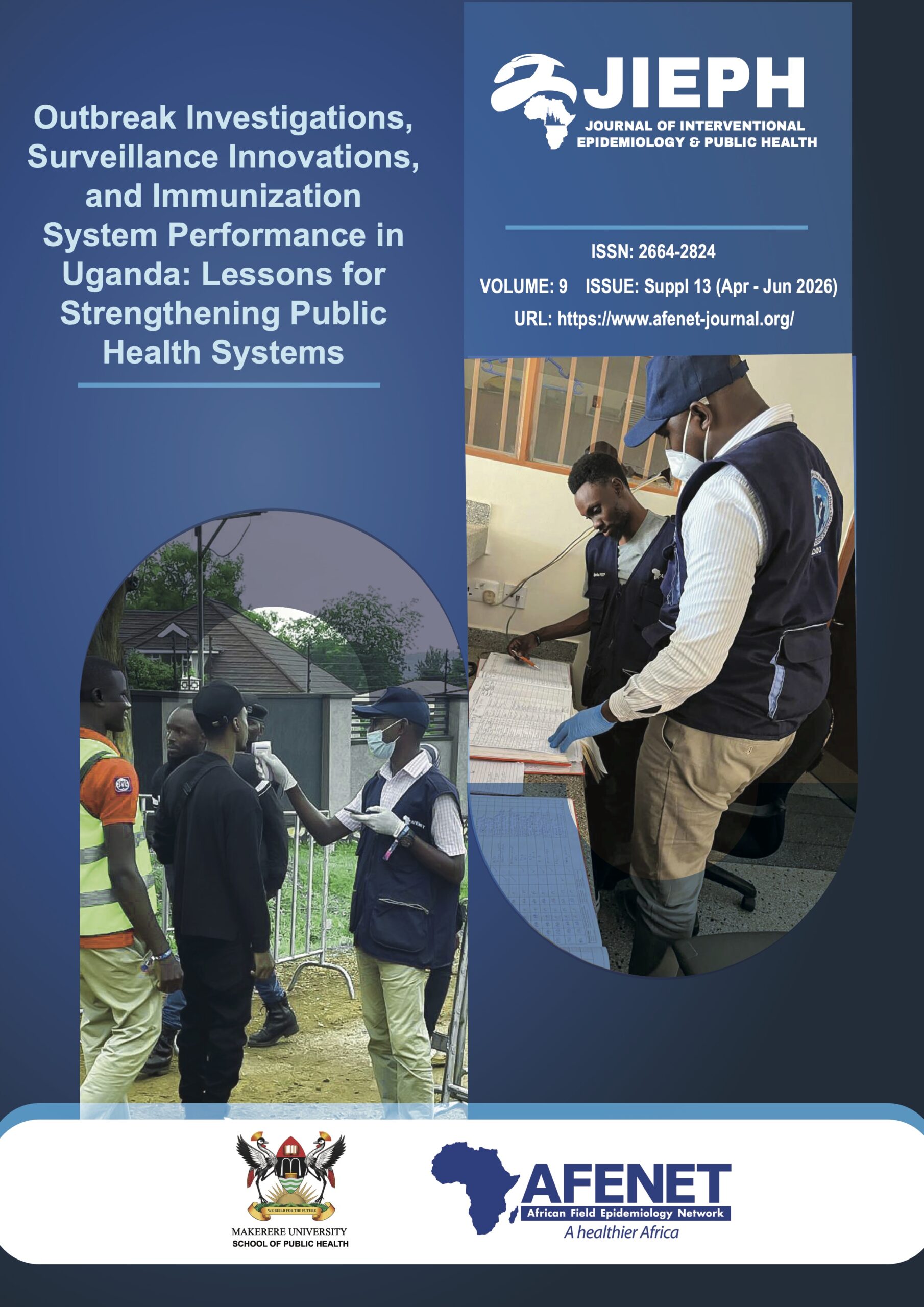
ECOWAS Coverpage Lassa Supplement Uganda continues to operate within a complex public health landscape shaped by recurrent infectious disease outbreaks, environmental changes, and large-scale population gatherings. In such contexts, health system resilience depends not only on timely outbreak response, but increasingly on the ability to anticipate risk, detect threats early, and take the necessary public health actions. This supplement brings together twelve manuscripts that examine these dimensions using evidence from outbreak investigations, surveillance activities, mass gatherings and vaccine acceptance studies across Uganda.

The manuscripts in this supplement reflect the pillars of field epidemiology: early detection, rapid response, multisectoral collaboration, community engagement, and learning through practice. The evidence presented in these manuscripts is from Field studies that were conducted by Residents of the Field Epidemiology Training Program between 2024 and 2025 with support from AFENET.

A number of manuscripts in this supplement focus on outbreak detection and investigation, emphasising the continued importance of functional surveillance. Investigations of Mpox in Kasese District, measles in Moroto District, and yellow fever in Eastern Uganda illustrate how outbreaks arise at the intersection of border proximity, population movement, ecological interfaces, and compromised immunity in nomadic populations. The recurrent occurrence of these outbreaks highlights the need to strengthen integrated disease surveillance and response (IDSR) systems, expand diagnostic capacity, and reinforce vigilance in high-risk and border districts. This supplement also explores contexts of transmission and detection, particularly through evidence from mass gatherings that need to be of interest to stakeholders involved in disease surveillance.

Across all the manuscripts, it is evident that zoonotic spillover, vector ecology, food safety risks during mass gatherings, and environmental exposure collectively reaffirm that the one health approach is critical in managing recurrent outbreaks and enhancing surveillance systems in Uganda.

Guest editors:

  • Dr Steven N Kabwama, MPH, PhD, Epidemiologist,
    Makerere University School of Public Health, Kampala, Uganda
  • Dr Raymond Tweheyo, MPH, PhD, Health Systems Research
    Makerere University School of Public Health, Kampala, Uganda
  • Ms Doreen Tuhebwe,
    PhD-Public Health, Global Health Track Student, San Diego State University, Research Fellow, Makerere University School of Public Health, Kampala, Uganda

Contact: Send Email
Assoc. Prof. Suzanne Kiwanuka,
Director Uganda FETP, Makerere University School of Public Health, Kampala, Uganda

Supplement booklet (PDF) not available