
Research | Open Access | Volume 9 (3): Article 129 | Published: 06 Aug 2026

Views: 495
Menu, Tables and Figures
| Demographics | Urban (N=317) n (%) | Rural (N=317) n (%) | p value |
|---|---|---|---|
| Age (years) | <0.001* | ||
| 20-29 | 96 (30.3) | 65 (20.5) | |
| 30-39 | 95 (30.3) | 100 (31.5) | |
| 40-49 | 81 (25.6) | 53 (16.7) | |
| 50-59 | 29 (9.1) | 45 (14.2) | |
| 60-69 | 16 (5.0) | 54 (17.0) | |
| Sex | 0.007* | ||
| Male | 132 (41.6) | 166 (52.4) | |
| Female | 185 (58.4) | 151 (47.5) | |
| Level of education | 0.440 | ||
| Secondary education or less | 214 (67.5) | 223 (70.3) | |
| Tertiary education | 103 (32.5) | 94 (29.7) | |
| Marital status | <0.001* | ||
| Single | 80 (25.2) | 48 (15.1) | |
| Currently Married | 225 (71.0) | 221 (69.7) | |
| Ever married | 12 (3.8) | 48 (15.1) | |
| Occupation | <0.001* | ||
| Artisan | 151 (47.6) | 84 (26.5) | |
| Petty trader | 67 (21.1) | 83 (26.2) | |
| Civil servant | 35 (10.7) | 27 (8.5) | |
| Businessman | 34 (10.7) | 35 (11.0) | |
| Not employed | 16 (5.0) | 27 (8.5) | |
| Professional | 12 (3.8) | 10 (2.5) | |
| Farmer | 2 (0.6) | 51 (16.1) | |
| Average monthly income (Naira) | <0.001* | ||
| <20,000 | 90 (28.8) | 159 (51.5) | |
| 20,000-39,999 | 128 (41.0) | 86 (27.8) | |
| 40,000-79,999 | 64 (20.5) | 37 (12.0) | |
| 80,000-99,000 | 13 (4.2) | 16 (5.2) | |
| >100,000 | 17 (5.4) | 11 (3.6) | |
Table 1: Sociodemographic characteristics of the participants
| Characteristics | Urban(N=317) n (%) | Rural(N=317) n (%) | p value |
|---|---|---|---|
| Ever checked blood glucose level | 0.001* | ||
| Yes | 56 (17.7) | 91 (28.7) | |
| No | 261 (82.3) | 226 (71.3) | |
| Made effort to prevent diabetes | 0.087 | ||
| Yes | 109 (34.4) | 89 (28.1) | |
| No | 208 (65.6) | 228 (71.9) | |
| Reasons for preventing diabetes | (N=109) | (N=89) | 0.708 |
| I don’t want to have diabetes | 84 (77.1) | 64 (71.9) | |
| So as to live healthy | 21 (19.3) | 21 (23.6) | |
| Family history | 4 (3.7) | 4 (4.5) | |
| Measures taken to prevent diabetes | (N=109) | (N=89) | 0.047* |
| Avoid sugary food | 51 (46.8) | 39 (43.8) | |
| Eat healthy | 35 (32.1) | 19 (21.3) | |
| Regular exercise | 10 (9.2) | 7 (7.9) | |
| Taking herbs | 8 (7.3) | 13 (14.6) | |
| Medical check up | 3 (2.8) | 11 (12.4) | |
| Eat fruits | 1 (0.9) | 0 (0.0) | |
| Pray against it | 1 (0.9) | 0 (0.0) | |
| Reasons for not preventing diabetes | (N=208) | (N=228) | <0.0001* |
| I don’t have diabetes | 71 (34.1) | 52 (22.9) | |
| I am healthy | 49 (23.6) | 29 (12.8) | |
| I don’t know how to prevent it | 29 (13.9) | 40 (17.6) | |
| I can never have it | 28 (13.5) | 13 (5.7) | |
| No reason | 22 (10.6) | 79 (34.8) | |
| It is God that protect | 3 (1.4) | 5 (2.2) | |
| I did not know it is necessary | 3 (1.4) | 5 (2.2) | |
| I don’t have the time | 1 (0.5) | 3 (1.3) | |
| I am hearing it for the first time | 1 (0.5) | 1 (0.4) | |
| I once had low blood glucose | 1 (0.5) | 0 (0.0) | |
Table 2: Distribution of the participants by their diabetes prevention practices
| Table 3: Socio-demographic characteristics, Prevention practices and its relationship with level of knowledge among urban and rural participants | ||||||
|---|---|---|---|---|---|---|
| Characteristics | Urban | Rural | ||||
| Good knowledge | Poor knowledge | p-value | Good knowledge | Poor knowledge | p-value | |
| Age (years) | 0.434 | 0.017* | ||||
| 20-29 | 11 (23.4) | 84 (31.7) | 17 (30.4) | 47 (19.0) | ||
| 30-39 | 12 (25.5) | 82 (30.9) | 11 (19.6) | 85 (34.3) | ||
| 40-49 | 16 (34.0) | 65 (24.5) | 6 (10.7) | 45 (18.1) | ||
| 50-59 | 6 (12.8) | 21 (7.9) | 7 (12.5) | 36 (14.5) | ||
| 60-69 | 2 (4.3) | 13 (4.9) | 15 (26.8) | 35 (14.1) | ||
| Sex | 0.817 | 0.296 | ||||
| Male | 20 (42.6) | 108 (40.8) | 33 (58.9) | 127 (51.2) | ||
| Female | 27 (57.4) | 157 (59.2) | 23 (41.1) | 121 (48.8) | ||
| Level of education | <0.0001* | <0.0001* | ||||
| Secondary education or less | 15 (31.9) | 195 (73.6) | 24 (42.9) | 188 (75.8) | ||
| Tertiary education | 32 (68.1) | 70 (26.4) | 32 (57.1) | 60 (24.2) | ||
| Marital status | 0.522 | 0.676 | ||||
| Single | 10 (21.3) | 69 (26.0) | 9 (16.1) | 38 (15.3) | ||
| Currently Married | 34 (72.3) | 187 (70.6) | 41 (73.2) | 172 (69.4) | ||
| Ever married | 3 (6.4) | 9 (3.4) | 6 (10.7) | 38 (15.3) | ||
| Occupation | <0.0001* | 0.131 | ||||
| Artisan | 7 (14.9) | 143 (54.0) | 12 (21.4) | 70 (28.2) | ||
| Petty trader | 8 (17.0) | 57 (21.5) | 10 (17.9) | 68 (27.4) | ||
| Businessman | 9 (19.1) | 25 (9.4) | 7 (12.5) | 27 (10.9) | ||
| Civil servant | 12 (25.5) | 23 (8.7) | 10 (17.9) | 16 (6.5) | ||
| Not employed | 3 (6.4) | 12 (4.5) | 6 (10.7) | 20 (8.1) | ||
| Professional | 7 (14.9) | 4 (1.5) | 2 (3.6) | 8 (3.2) | ||
| Farmer | 1 (2.1) | 1 (0.4) | 9 (16.1) | 39 (15.7) | ||
| Average monthly income (Naira) | <0.0001* | 0.322 | ||||
| <20,000 | 10 (21.3) | 78 (30.0) | 25 (44.6) | 125 (51.9) | ||
| 20,000-39,999 | 8 (17.0) | 118 (45.4) | 18 (32.1) | 66 (27.4) | ||
| 40,000-79,999 | 17 (36.2) | 47 (18.1) | 8 (14.3) | 29 (12.0) | ||
| 80,000-99,999 | 5 (10.6) | 7 (2.7) | 1 (1.8) | 14 (5.8) | ||
| >100,000 | 7 (14.9) | 7 (2.7) | 4 (7.1) | 7 (2.9) | ||
| Diabetes check-up | <0.0001* | <0.0001 | ||||
| Yes | 20 (42.6) | 36 (13.6) | 19 (33.9) | 70 (28.2) | ||
| No | 27 (57.4) | 229 (86.4) | 37 (66.1) | 178 (71.8) | ||
| Effort to prevent diabetes | <0.0001* | 0.027* | ||||
| Yes | 29 (61.7) | 80 (30.2) | 23 (41.1) | 65 (26.2) | ||
| No | 18 (38.3) | 185 (69.8) | 33 (58.9) | 183 (73.8) | ||
| Measures taken to prevent diabetes | 0.126 | 0.077 | ||||
| Avoid sugary food | 11 (37.9) | 40 (50.0) | 5 (21.7) | 34 (52.3) | ||
| Eat healthy | 11 (37.9) | 24 (30.0) | 8 (34.8) | 11 (16.9) | ||
| Taking herbs | 0 (0.0) | 8 (10.0) | 3 (13.0) | 10 (15.4) | ||
| Regular exercise | 5 (17.2) | 5 (6.2) | 2 (8.7) | 4 (6.2) | ||
| Regular check up | 1 (3.4) | 2 (2.5) | 5 (21.7) | 6 (9.2) | ||
Table 3: Socio-demographic characteristics, Prevention practices and its relationship with level of knowledge among urban and rural participants
| Table 4: Logistic Regression level of knowledge and socio-demographics and prevention practices | ||||||
|---|---|---|---|---|---|---|
| Characteristics | Urban | Rural | ||||
| aOR | 95% CI | p-value | aOR | 95% CI | p-value | |
| Age (years) | ||||||
| 20-29 | 4.49 | 0.64-31.41 | 0.130 | 0.56 | 0.21-1.47 | 0.240 |
| 30-39 | 3.25 | 0.48-21.84 | 0.225 | 0.16 | 0.06-0.46 | 0.001* |
| 40-49 | 3.69 | 0.58-23.44 | 0.166 | 0.16 | 0.05-0.56 | 0.004* |
| 50-59 | 4.15 | 0.53-32.42 | 0.174 | 0.27 | 0.08-0.90 | 0.033* |
| 60-69 | 1 | 1 | ||||
| Education | ||||||
| Secondary education or less | 0.39 | 0.17-0.91 | 0.030* | 0.20 | 0.09-0.42 | <0.0001* |
| Tertiary education | 1 | 1 | ||||
| Occupation | ||||||
| Artisan | 0.150 | 0.03-0.83 | 0.030* | 2.60 | 0.63-10.74 | 0.188 |
| Petty trader | 0.42 | 0.08-2.83 | 0.416 | 1.29 | 0.33-5.01 | 0.719 |
| Businessman | 0.54 | 0.09-3.49 | 0.563 | 3.31 | 0.65-16.84 | 0.149 |
| Civil servant | 0.69 | 0.11-4.19 | 0.687 | 9.71 | 1.84-51.19 | 0.007* |
| Professional | 1.92 | 0.25-14.89 | 0.534 | 0.82 | 0.09-7.41 | 0.857 |
| Farmer | 3.73 | 0.07-210.22 | 0.522 | 2.21 | 0.50-9.83 | 0.249 |
| Not employed | 1 | 1 | ||||
| Average monthly income (Naira) | ||||||
| <20,000 | 0.43 | 0.09-1.98 | 0.278 | 1.59 | 0.30-8.45 | 0.589 |
| 20,000-39,999 | 0.21 | 0.05-0.90 | 0.036* | 1.78 | 0.34-9.29 | 0.491 |
| 40,000-79,999 | 1.03 | 0.27-3.97 | 0.966 | 1.36 | 0.22-8.15 | 0.743 |
| 80,000-99,000 | 1.36 | 0.25-7.57 | 0.725 | 0.10 | 0.01-1.30 | 0.079 |
| >100,000 | 1 | 1 | ||||
| Effort to prevent diabetes | ||||||
| Yes | 3.23 | 1.50-7.07 | 0.003* | 1.95 | 0.96-3.95 | 0.063 |
| No | 1 | 1 | ||||
Table 4: Logistic Regression level of knowledge and socio-demographics and prevention practices
Morenikeji Folasade Olawuwo1,&, IkeOluwapo Oyeneye Ajayi1
1Department of Epidemiology and Medical Statistics, Faculty of Public Health, College of Medicine, University of Ibadan, Nigeria
&Corresponding author: Morenikeji Folasade Olawuwo, Department of Epidemiology and Medical Statistics, Faculty of Public Health, College of Medicine, University of Ibadan, Nigeria. Email: kejibabalola08@gmail.com ORCID: https://orcid.org/0009-0004-0841-909X
Received: 02 Jun 2025, Accepted: 02 Aug 2026, Published: 06 Aug 2026
Domain: Non-Communicable Disease Epidemiology
Keywords: Diabetes, Knowledge, Prevention practices, Rural, Urban, Nigeria
©Morenikeji Folasade Olawuwo et al. Journal of Interventional Epidemiology and Public Health (ISSN: 2664-2824). This is an Open Access article distributed under the terms of the Creative Commons Attribution International 4.0 License (https://creativecommons.org/licenses/by/4.0/), which permits unrestricted use, distribution, and reproduction in any medium, provided the original work is properly cited.
Cite this article: Morenikeji Folasade Olawuwo et al., Knowledge of diabetes and prevention practices among adults in two selected local government areas in Oyo State, Nigeria. Journal of Interventional Epidemiology and Public Health. 2026; 9(2):129. https://doi.org/10.37432/jieph-d-25-00135
Introduction: Diabetes is a known risk factor for cardiovascular disease. The incidence of diabetes is on the increase in Nigeria, and the populace has a great role to play in its prevention, which is dependent on their knowledge of the disease. However, knowledge and prevention practices regarding diabetes vary greatly with socioeconomic conditions, habits and cultural beliefs. Therefore, this study assessed the knowledge and prevention practices of diabetes among rural and urban adult residents in Ibadan North and Afijio local government areas of Oyo State.
Methods: A comparative cross-sectional study was conducted among 634 adults randomly selected from Afijio (n=317) and Ibadan North (n=317) local government areas in Oyo State. A semi-structured interviewer-administered questionnaire was used to obtain information on their socio-demographic characteristics, knowledge of diabetes and prevention practices. Data were analysed using descriptive statistics; Chi-square and logistic regression were used to test the association between knowledge of diabetes and preventive practices, as well as other explanatory variables at a 5% level of significance.
Results: The respondents were aged between 20 and 69 years, with a mean age of 36.9±11.3 years in urban and 41.5±13.8 years in rural areas (p<0.001); 298 (47.0%) were males, and 336 (53.0%) were females. The level of awareness among the participants in both urban (312, 98.4%) and rural (304, 95.9%) settings was high; however, only 47 (15.1%) and 56 (18.4%, p=0.264) had good knowledge of diabetes in urban and rural areas, respectively. Of the urban participants, 34.4% made a deliberate effort to prevent diabetes, compared to 28.1% (p=0.087) in the rural area. Avoiding sugary food (46.8% in urban, 43.8% in rural) was the most common prevention measure reported. Fifty-six (17.7%) respondents in the urban area had ever checked their blood glucose level compared with 91 (28.7%) in the rural area (p=0.001). Having secondary education or less was significantly associated with knowledge of diabetes in both study locations (aOR=0.39, p=0.030 in the urban and aOR=0.20, p<0.0001 in the rural area).
Conclusion: In this study, the knowledge of diabetes and the prevention practices were poor in the rural and urban areas despite the high awareness. This underscores the need for urgent intervention irrespective of location.
Diabetes mellitus, more simply called diabetes, is a chronic condition that occurs when the level of glucose in the blood is high because the body cannot produce any or enough of the insulin hormone or use insulin effectively for its metabolism [1]. The prevalence and incidence vary across the continents. About 589 million people between the ages of 20 and 79 years are living with diabetes in the world today and are projected to increase to 853 million by 2050. Of this, 24.6 million live in Africa and about 3 million live in Nigeria [2]. The absolute number of people with diabetes in Nigeria who remains undiagnosed or untreated is quite worrisome. The prevalence of diabetes in Nigeria varies with respect to location ranging from 3.5% in rural areas to 5.3% in the urban areas of Nigeria [3].
Lifestyle factors reported to be associated with the risk of developing diabetes in Nigeria were smoking, alcohol consumption, unhealthy diet, physical inactivity and obesity [4]. Diabetes, when not properly managed, can lead to lifelong complications such as cardiovascular diseases, retinopathy and nephropathy [5], [6]. If diabetes is to be controlled, it depends majorly on its early diagnosis, prevention and management, which is influenced by the knowledge of the condition, its risk factors and complications [7].
Lifestyle behaviours such as healthy diets, physical activity and moderate body weight can help to prevent the development of diabetes [8, 9, 10]. The Diabetes Prevention Program (DPP), a randomised controlled trial, demonstrated that intensive lifestyle intervention could reduce the risk of incident diabetes by 58% over 3 years. The lifestyle intervention used in the study included at least 7% weight loss and at least 150 minutes of physical activity per weekb[9]. For individuals to protect themselves from developing diabetes, there is a need to incorporate these lifestyle behaviours into their day-to-day life as preventive measures against diabetes. Some studies showed that only a few individuals practice these lifestyle behaviours. A study conducted in Ibadan by Ige et al [11] reported that people who practice a healthy diet were 4%, while those who practice physical activity were 22.2% in another study carried out by Agaba et al [12]. There is a need to investigate what might be the reasons for not taking preventive measures against diabetes. These could be the lack of the right knowledge, wrong beliefs, and religious and cultural beliefs. This knowledge would aid in tailoring intervention measures
Knowledge about diabetes could encourage people to adopt preventive measures [13]. Numerous studies on knowledge and practices about diabetes have been conducted in Nigeria. However, most of these studies were hospital-based studies conducted among diabetic patients. Very few studies on knowledge and prevention practices of diabetes, especially among community members, have been reported in Nigeria. Therefore, there is a need to investigate the knowledge and prevention practices of diabetes in the community to aid in the development of programs for effective health education. Hence, this study assessed the knowledge and prevention practices of diabetes among rural and urban adult residents in Ibadan North and Afijio local government areas of Oyo State and compared the relationship between knowledge and prevention practices of diabetes among rural and urban residents in Oyo State.
Study design and setting
A cross-sectional study comparing the knowledge and prevention practices for diabetes among rural and urban dwellers was carried out. This was a community-based comparative cross-sectional study conducted among adults aged 20-69 years residing in Ibadan North and Afijio local government areas of Oyo State from October 2018 to January 2019. Ibadan North Local Government is the most populated urban LGA in Oyo State, with an estimated population of approximately 432,900 and comprising 12 wards. The residents are predominantly civil servants and traders. The area features several secondary and tertiary hospitals, a secretariat, and numerous banks. Trading and other commercial activities are the main economic pursuits, with minimal farming taking place. Health care services are provided by both public and private sectors and are considered fairly affordable [14]. Afijio Local Government is one of the rural LGAs in Oyo State. It consists of 10 wards and has a population of about 185,700, covering an area of approximately 800 square kilometres. The majority of the inhabitants are farmers, producing crops such as maize, yam, cassava, fruits, and oil palm. Some residents are also artisans and traders. Health services are primarily delivered through primary health care centres and maternity centres [15].
Study population and sample size
Six hundred and thirty-four adults aged between 20 and 69 years living in Ibadan North and Afijio Local Government Areas, Oyo State, were included in this study. Those already diagnosed with diabetes and those with severe mental illness that could jeopardise their ability to respond to the interview were excluded. The minimum sample size was estimated to be 317 for each local government using the formula:
$$ n = \frac{(Z_{\alpha} + Z_{\beta})^2 [P_1(1 – P_1) + P_2(1 – P_2)]}{(P_1 – P_2)^2} $$
for comparing two proportions based on a prevalence of good knowledge of 6.8% as reported among rural adults in the Red River Delta region, Vietnam [16], and 15% among urban adults in Bangladesh [17], at 95% confidence limit and a 10% adjustment for non-response. These countries have socio-demographic characteristics and prevalence of diabetes similar to Nigeria.
Participants’ selection and sampling procedure
A 5-stage sampling technique was used. The LGAs in Oyo State were stratified into rural and urban LGAs. Afijio and Ibadan North LGAs were selected by simple random sampling (balloting) from among the rural and urban LGAs, respectively. Five wards were selected by balloting from each of the two LGAs, and five enumeration areas were selected in each of the selected wards. The sample size was allocated to the enumeration areas equally. A direction (north, south, west or east) of the starting point was randomly selected from the centre of each enumeration area, and data collection took place in the selected direction until the last house on that street was reached. It then continued on adjacent streets until the sample size allocated was covered. One household was selected from each house visited. In compounds containing more than one household, a household was randomly selected through balloting. One eligible participant was selected from each household. Where there was more than one eligible person, simple random sampling through balloting was used to select the respondent.
Data collection
A semi-structured interviewer-administered questionnaire adapted from the Diabetes Knowledge Questionnaire (DKQ)[18] was used to assess knowledge of diabetes. It comprised sections on socio-demographic characteristics, knowledge of diabetes and prevention practices for diabetes. The research assistants were trained on the content and method of administration of the questionnaire. They were supervised regularly in the field to ensure quality and complete data collection. The data collection instrument was translated into the Yoruba language, which is the local language of the study areas. Content and face validity were conducted by the authors. The instrument was pre-tested on a sample of 32 adults in Egbeda Local Government Area, Ibadan, Oyo State. A Cronbach’s alpha coefficient of 0.86 was obtained.
Data analysis
Data entry and statistical analysis were done using SPSS statistical software version 20. Descriptive analysis was used to summarise socio-demographic characteristics and prevention practices, reporting the mean and SD for quantitative variables, frequency and proportion for qualitative variables. Chi-square was used to explore proportional differences and test relationships between categorical variables at a 5% level of significance. Logistic regression was used to identify factors associated with knowledge of diabetes at 95% confidence interval. Variables that were significantly associated with knowledge of diabetes at the bivariate level were included in the multivariable logistic regression model. Knowledge was measured with yes and no questions. A correct response was scored one point, while an incorrect response and ‘don’t know’ were scored zero points. The aggregate score was computed, and the maximum score obtainable was 13. A score of less than 7 was categorised as poor knowledge and 7 or higher as good knowledge. Prevention practices were assessed with questions on whether respondents had ever checked their blood glucose levels and whether they had made deliberate efforts to prevent diabetes. Specific preventive measures were further provided by those who made deliberate efforts to prevent diabetes. Responses were analysed as individual variables and presented as frequencies and proportions.
Ethical considerations
Ethical approval for the study was obtained from the Oyo State Research Ethics Committee, Ministry of Health, Oyo State (Ref no: AD 13/479/913). Written informed consent was obtained from those willing to participate in the study. Participation was voluntary; respondents had the right to withdraw from the study at any point during data collection. The study posed no risk to the respondents. Names and addresses of respondents were not requested in the questionnaire. The computer used to input and analyse data collected was password-protected, and the completed questionnaires were stored in a locked safe and private place.
Socio-demographic characteristics
Out of the 634 adults who participated in this study, there were 132 (41.6%) and 166 (52.4%) males in the urban and rural areas, respectively (P=0.007), with females being 185 (58.4%) in urban and 151 (47.5%) in rural areas. The respondents were aged between 20 and 69, with a mean age of 36.9 ± 11.3 years and 41.5 ± 13.8 years in urban and rural, respectively (P <0.0001). In terms of level of education, 46 (7.3%) had no formal education, 111 (17.5%), 280 (44.2%), and 197 (31.1%) had primary, secondary and tertiary education, respectively. The most reported occupation among the rural and urban dwellers was artisans, 84 (26.5%) and 151 (47.6%), respectively. Among the urban participants, about 128 (41.0%) earned between 20,000 and 40,000 Naira per month, while in rural areas, about half of them earned less than 20,000 per month (P <0.001, Table 1).
Knowledge of diabetes
The level of awareness among the participants in both urban 312 (98.4%) and rural settings 304 (95.9%) was high. However, when examined for knowledge of the causes, risk factors, complications, prevention, and treatment of diabetes, higher proportion of those in the rural settings (18.4%) had good knowledge compared to those in the urban areas (15.1%), although this difference in proportion was not statistically significant (p=0.264).
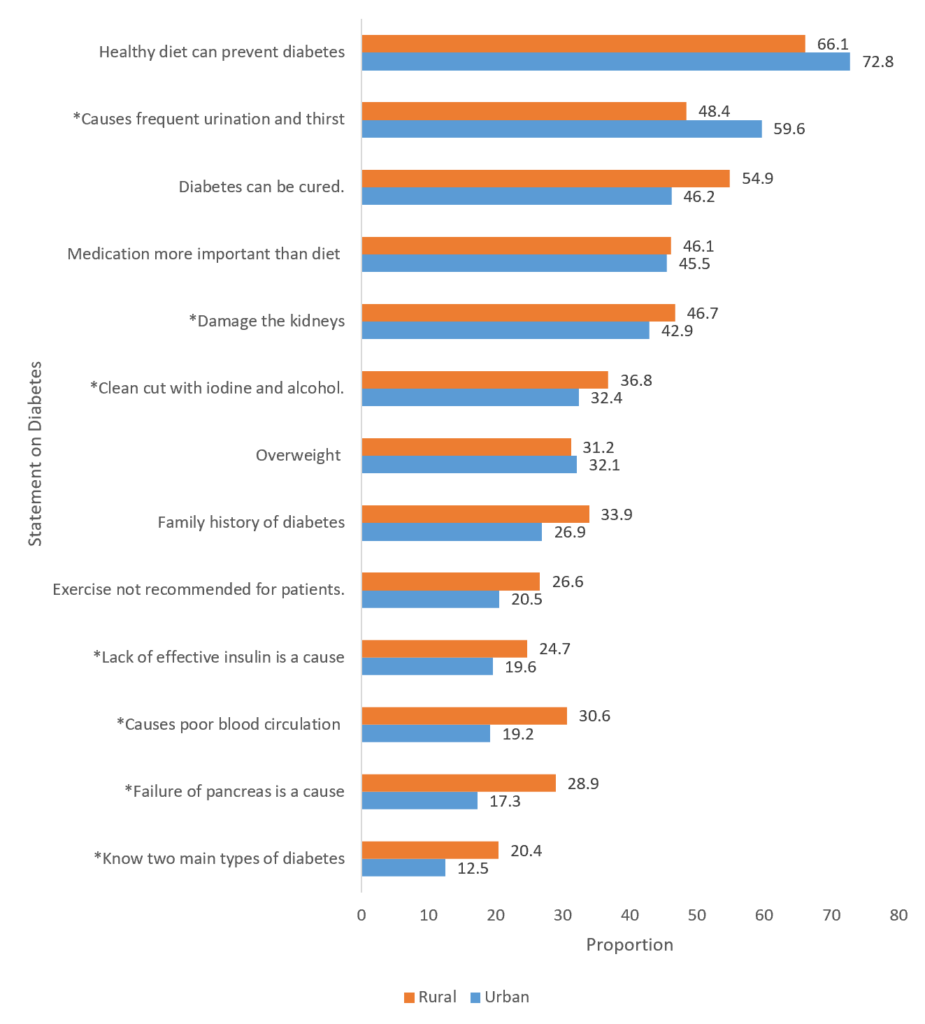
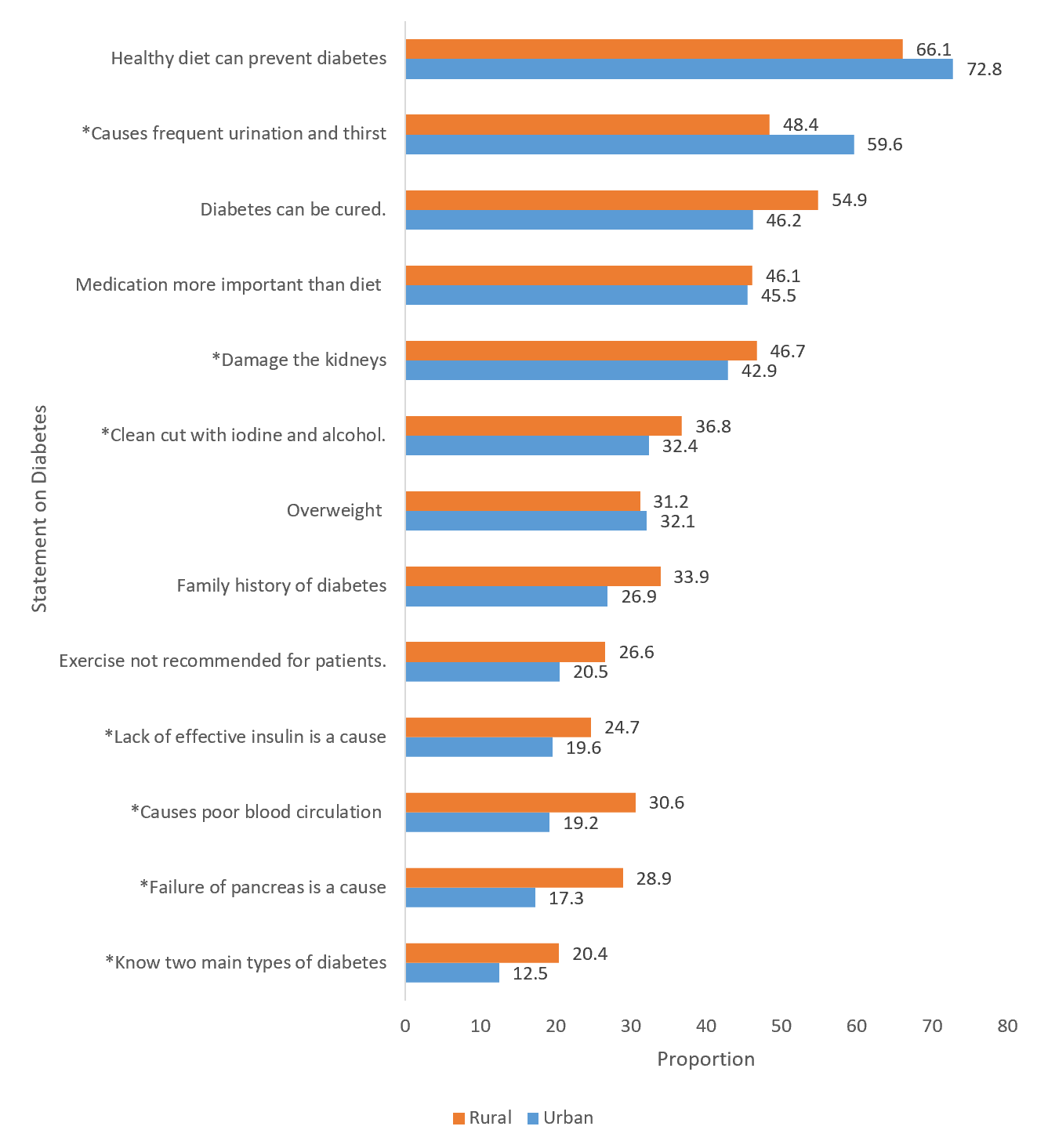
About half of the respondents, 114 (46.2%) in urban and 167 (54.9%) in rural locations believed that diabetes can be cured (p=0.09). About 186 (59.6%) of the urban participants believed that frequent urination and thirst are signs of high blood glucose which was significantly different from the response from rural participants where 147 (48.4%) believed the same (p<0.0001). More than two-thirds 249 (79.8%) of urban respondents believed the best way to know if someone has diabetes is to check for ants where he/she urinates (misconception of glycosuria), while 207 (68.1%) of the rural respondents believed the same thing; this difference was statistically significant (p=0.003). Of the rural dwellers, 53.0% did not know that a person with diabetes should clean a cut with iodine and alcohol (Figure 1).
Prevention of diabetes among respondents
261 (82.3%) of the urban participants had never had their blood glucose measured by a doctor or health worker, which was significantly different (p<0.0001) from rural participants; 226 (71.3%). Of the urban participants, 109 (34.4%) mentioned that they made deliberate efforts to prevent diabetes while 89 (28.1%) did the same in the rural area (p=0.087). The majority of those who made deliberate efforts to prevent diabetes did so because they did not want to have diabetes 84 (77.1%) and 64 (71.9%) in urban and rural area respectively. The prevention measures were significantly different between the locations (p=0.047) and they include avoiding sugary food (46.8% in urban, 43.8% in rural), eating healthy food (32.1% in urban, 21.3% in rural), and taking herbs (7.3% in urban, 14.6% in rural). Of the 208 (65.6%) who did not make deliberate effort to prevent diabetes in the urban area, 71 (34.1%) felt they do not need to do so because they do not have diabetes, 29 (13.9%) said they do not know how to prevent it while 49 (23.6%) said they are healthy. These reasons were significantly different from those given by the rural participants (p<0.0001); 79 (34.6%) gave no reason, 52 (22.8%) said they do not have diabetes, 29 (12.7%) said they were healthy (Table 2).
Relationship between sociodemographic characteristics and prevention practices with knowledge of diabetes
The majority of the urban participants, 229 (86.4%), who did not check their random blood glucose had poor knowledge of diabetes; this relationship was statistically significant (p<0.0001). In the rural area also, about two-thirds of the respondents who did not check their random blood glucose level had poor knowledge of diabetes, but this was not a statistically significant relationship (p=0.100). About two-thirds, 29 (61.7%), of urban respondents had good knowledge of diabetes and made deliberate efforts to prevent the disease, which is statistically significant (p<0.0001, Table 3). Measures taken to prevent diabetes did not have a significant association with knowledge of diabetes in both locations, (p=0.126 and p=0.077 in urban and rural area respectively).
The age of the participants was not significantly related to knowledge of diabetes among the urban participants (p=0.434), however among those who had good knowledge of diabetes in the rural area, respondents aged 20-29 years had the highest proportion 17 (30.4%) (p=0.017). The relationship between level of education and knowledge of diabetes was statistically significant in both locations (p=<0.0001 in both). Higher proportion of those with good knowledge were found among those with tertiary education in urban 32 (68.1%) and rural 32 (57.1%) areas. There was a statistically significant relationship between occupation (p=<0.0001), average monthly income (p=<0.0001) and knowledge of diabetes among urban participants.
After the odds ratios were adjusted, only four variables were significantly associated with good knowledge of diabetes in the urban area (Table 4). These were artisan occupation (aOR=0.15, 95% CI: 0.03-0.83, p=0.030), secondary education or less (aOR=0.39, 95% CI: 0.17-0.91, p=0.030), income of 20,000-39,999 (aOR=0.21, 95% CI: 0.05-0.90, p=0.036) and deliberate effort to prevent diabetes (aOR=3.23, 95% CI: 1.50-7.07, p=0.003). In the rural area, age, level of education, and civil servant occupation were significantly associated with good knowledge of diabetes. Age 30-39 (aOR=0.16, 95% CI: 0.06-0.46, p=0.001), 40-49 (aOR=0.16, 95% CI: 0.05-0.56, p=0.004), 50-59 (aOR=0.27, 95% CI: 0.08-0.90, p=0.033), less or equal secondary education (aOR=0.20, 95% CI: 0.09-0.42, p<0.0001).
The main aim of this study was to assess the knowledge and prevention practices of diabetes among rural and urban adult residents in Ibadan North and Afijio local government areas of Oyo State; and also to compare the relationship between knowledge and prevention practices of diabetes among rural and urban residents in the study sites.
In this studied population, a large percentage of the respondents had heard about diabetes, which corroborate other documented reports [19], [20]. This shows a high level of awareness of diabetes among the people. Similar to most studies from developing countries [21], [22], [23], this study shows poor knowledge of diabetes among the general public in spite of the high level of awareness. Their poor knowledge was reflected in their responses to some diabetes- related questions among which half of the research participants in both areas believed that diabetes can be cured. This was found to be higher than that reported among adults in rural area of Vietnam [16]. This belief could affect how well they make the effort to prevent the disease because they might feel medications would cure it in case they come down with the disease. In this study only 19.6% of the urban participants identified lack of effective insulin in the body as the usual cause of diabetes which is much lower than the report from a similar study carried out among adults in Gondar city, Ethiopia where about 45% of the respondents identified diabetes as a condition of insufficient insulin production [20] .
However, a high proportion of the respondents could recognise some causes and few symptoms of diabetes. A little above half of respondents in the urban areas identified excessive passage of urine as a symptom of diabetes which is higher than that reported in Pakistan where only 35% of the respondents identified excessive passage of urine as a symptom of diabetes[23]. About 43% of the urban respondents agreed that kidney can be damaged by diabetes. This is less than the report from a similar study conducted in Igbo-Ora , Nigeria where 63% identified same [24] and higher than the 26% documented in the Red River Delta region, Vietnam [16]. Only about 20% of the urban participants recognised family history as a risk factor for diabetes which is lower than a report from a study conducted among adults in Imo and Kaduna States, Nigeria [19]. These wrong beliefs regarding diabetes could explain why prevention practices were generally low amongst the participants.
Prevention practices of diabetes among rural and urban residents
Majority of the participants in both study areas have never checked their blood glucose level. This might reduce the possibility of early diagnosis and treatment of diabetes among them. Although the proportion of individuals who made deliberate efforts to prevent diabetes was low in both areas, those who did take action were mostly motivated by a desire to avoid developing the condition. Avoidance of sugary food and healthy eating were the major measures taken to prevent diabetes by respondents in both locations. About 12% of the rural respondents who make deliberate efforts to prevent diabetes check their blood glucose level regularly as a way of preventing them from having diabetes, which is similar to the findings reported among adults in rural Bangladesh, where 14% of the respondents do the same [25]. Few of the rural participants who made a conscious effort to prevent diabetes did so by taking herbs; this may be attributed to the common belief in herbal medicine among rural dwellers. This suggests the presence of wrong beliefs about the prevention of diabetes among the participants. There is a need for education on the right ways of preventing the development of the disease. About one third of those who did not make deliberate efforts to prevent diabetes in the urban area saw no reason to do so because they believed they did not have diabetes, while the same proportion in the rural area had no reason whatsoever to prevent diabetes. Few of the respondents acknowledged that they did not know how to prevent diabetes. This further underscores the need for community-based diabetes education to highlight measures for preventing or delaying the onset of the disease.
Relationship between sociodemographic characteristics and prevention practices with knowledge of diabetes
Sex had no significant association with knowledge of diabetes in both areas of this study, which is similar to a study conducted in Senegal on factors associated with diabetes knowledge. This is a sign that everyone has almost the same amount of knowledge on diabetes mellitus regardless of their gender. In the rural area, a higher proportion of those aged 20-29 and 60-69 years had better knowledge of diabetes that other age groups. This could be because those older might have personal experience with the condition or through frequent interaction with healthcare service for the management of other health conditions. The higher knowledge observed among the younger age group could be as a result of greater access to health information through digital media and online health resources. In both locations, the proportion of those with good knowledge of diabetes increased with higher level of education. These results correlate with a study done in central Nepal which observed better diabetes knowledge with higher level of education[26].
It was observed in this study that those who checked their random blood glucose regularly and made deliberate efforts to prevent diabetes had good knowledge of diabetes. This is in agreement with a cross- sectional survey on Diabetes knowledge and care practices among adults in rural Bangladesh [25] who reported a significant relationship between knowledge of diabetes and checking blood glucose level. Their knowledge of diabetes might have informed them to check their blood glucose level on a regular basis. There was no significant relationship between knowledge of diabetes and measures taken to prevent diabetes by the respondents in both locations. This is an indication that inadequate prevention measures were taken by the respondents, which might be because of the generally low knowledge of diabetes.
Factors associated with knowledge of diabetes among respondents
The findings in this study revealed that in the rural area, younger respondents were significantly less likely to have good knowledge of diabetes when compared to the older age group. This could be attributed to increased exposure to health information over time and higher likelihood of personal or family experience with diabetes. Jasper et al in a study which explored diabetes determinants among diabetics reported that knowledge increased as levels of education increased, with those who had never attended school scoring lowest and those with tertiary education scoring highest [27], Maina et al. also reported the same in Kenya [28] which is quite similar to the result obtained in the rural area in this study where those with secondary education or less have lower odds of good knowledge of diabetes than those with tertiary education. This study also revealed that participants in the urban area who made deliberate efforts to prevent diabetes had over three times higher odds of having good knowledge of diabetes than those who did not. This may be because individuals who intentionally seek ways to prevent diabetes may also actively search for health information concerning diabetes, thereby improving their knowledge of the disease.
Limitations
This study is a cross-sectional study; therefore, a temporal relationship between knowledge of diabetes and prevention practices could not be established. Furthermore, the findings cannot be generalised because it was conducted in only two LGAs in the State. Information on prevention practices was self-reported and might be subject to both recall bias and social desirability bias. The exclusion of individuals previously diagnosed with diabetes may limit the understanding of diabetes knowledge within the community. Finally, the adaptation of the questionnaire and the use of specific scoring cut-off points for categorizing knowledge may affect the comparability of the findings with those of other studies that used different instruments or classification criteria.
For future studies, this study can be extended beyond the LGAs to more States in the country to obtain information about prevention practices of diabetes that will be nationally representative. A qualitative study can also be conducted to further explore diabetes knowledge and related factors for clearer understanding.
This cross-sectional study among adults in urban and rural areas of Oyo state assessed knowledge of diabetes and the associated factors, the prevention practices of diabetes and relationship between knowledge and prevention practices. The findings from this study showed low level of diabetes knowledge among urban and rural participants despite being aware of the disease. This may be the reflection of low level of health information on diabetes, its risk factors and prevention in general in the country more so in the rural areas where there are limited number of health and educational facilities. Only a few of the respondents made deliberate efforts to prevent them from having diabetes. One major implication of the findings of the study is that the incidence of diabetes may rise unless a concerted effort is made to provide tailored intervention to improve knowledge of diabetes and the prevention practices among the residents of these LGAs. It therefore calls for intervention such as public health campaigns involving community stakeholders to disseminate information about the prevention of diabetes.
Recommendations
Based on the findings in this study, the following are hereby recommended: a well-structured health educational program to increase the level of public knowledge on diabetes mellitus. Intervention strategies should not only target urban populations but also focus on education and health promotion among rural populations in a bid to forestall the rising prevalence of diabetes. Training should emphasize periodic health examinations, including screening, and should not simply be case findings carried out when one is sick/ill and in a health facility for check-up.
What is already known about the topic
What this study adds
| Demographics | Urban (N=317) n (%) | Rural (N=317) n (%) | p value |
|---|---|---|---|
| Age (years) | <0.001* | ||
| 20-29 | 96 (30.3) | 65 (20.5) | |
| 30-39 | 95 (30.3) | 100 (31.5) | |
| 40-49 | 81 (25.6) | 53 (16.7) | |
| 50-59 | 29 (9.1) | 45 (14.2) | |
| 60-69 | 16 (5.0) | 54 (17.0) | |
| Sex | 0.007* | ||
| Male | 132 (41.6) | 166 (52.4) | |
| Female | 185 (58.4) | 151 (47.5) | |
| Level of education | 0.440 | ||
| Secondary education or less | 214 (67.5) | 223 (70.3) | |
| Tertiary education | 103 (32.5) | 94 (29.7) | |
| Marital status | <0.001* | ||
| Single | 80 (25.2) | 48 (15.1) | |
| Currently Married | 225 (71.0) | 221 (69.7) | |
| Ever married | 12 (3.8) | 48 (15.1) | |
| Occupation | <0.001* | ||
| Artisan | 151 (47.6) | 84 (26.5) | |
| Petty trader | 67 (21.1) | 83 (26.2) | |
| Civil servant | 35 (10.7) | 27 (8.5) | |
| Businessman | 34 (10.7) | 35 (11.0) | |
| Not employed | 16 (5.0) | 27 (8.5) | |
| Professional | 12 (3.8) | 10 (2.5) | |
| Farmer | 2 (0.6) | 51 (16.1) | |
| Average monthly income (Naira) | <0.001* | ||
| <20,000 | 90 (28.8) | 159 (51.5) | |
| 20,000-39,999 | 128 (41.0) | 86 (27.8) | |
| 40,000-79,999 | 64 (20.5) | 37 (12.0) | |
| 80,000-99,000 | 13 (4.2) | 16 (5.2) | |
| >100,000 | 17 (5.4) | 11 (3.6) | |
| Characteristics | Urban(N=317) n (%) | Rural(N=317) n (%) | p value |
|---|---|---|---|
| Ever checked blood glucose level | 0.001* | ||
| Yes | 56 (17.7) | 91 (28.7) | |
| No | 261 (82.3) | 226 (71.3) | |
| Made effort to prevent diabetes | 0.087 | ||
| Yes | 109 (34.4) | 89 (28.1) | |
| No | 208 (65.6) | 228 (71.9) | |
| Reasons for preventing diabetes | (N=109) | (N=89) | 0.708 |
| I don’t want to have diabetes | 84 (77.1) | 64 (71.9) | |
| So as to live healthy | 21 (19.3) | 21 (23.6) | |
| Family history | 4 (3.7) | 4 (4.5) | |
| Measures taken to prevent diabetes | (N=109) | (N=89) | 0.047* |
| Avoid sugary food | 51 (46.8) | 39 (43.8) | |
| Eat healthy | 35 (32.1) | 19 (21.3) | |
| Regular exercise | 10 (9.2) | 7 (7.9) | |
| Taking herbs | 8 (7.3) | 13 (14.6) | |
| Medical check up | 3 (2.8) | 11 (12.4) | |
| Eat fruits | 1 (0.9) | 0 (0.0) | |
| Pray against it | 1 (0.9) | 0 (0.0) | |
| Reasons for not preventing diabetes | (N=208) | (N=228) | <0.0001* |
| I don’t have diabetes | 71 (34.1) | 52 (22.9) | |
| I am healthy | 49 (23.6) | 29 (12.8) | |
| I don’t know how to prevent it | 29 (13.9) | 40 (17.6) | |
| I can never have it | 28 (13.5) | 13 (5.7) | |
| No reason | 22 (10.6) | 79 (34.8) | |
| It is God that protect | 3 (1.4) | 5 (2.2) | |
| I did not know it is necessary | 3 (1.4) | 5 (2.2) | |
| I don’t have the time | 1 (0.5) | 3 (1.3) | |
| I am hearing it for the first time | 1 (0.5) | 1 (0.4) | |
| I once had low blood glucose | 1 (0.5) | 0 (0.0) | |
| Table 3: Socio-demographic characteristics, Prevention practices and its relationship with level of knowledge among urban and rural participants | ||||||
|---|---|---|---|---|---|---|
| Characteristics | Urban | Rural | ||||
| Good knowledge | Poor knowledge | p-value | Good knowledge | Poor knowledge | p-value | |
| Age (years) | 0.434 | 0.017* | ||||
| 20-29 | 11 (23.4) | 84 (31.7) | 17 (30.4) | 47 (19.0) | ||
| 30-39 | 12 (25.5) | 82 (30.9) | 11 (19.6) | 85 (34.3) | ||
| 40-49 | 16 (34.0) | 65 (24.5) | 6 (10.7) | 45 (18.1) | ||
| 50-59 | 6 (12.8) | 21 (7.9) | 7 (12.5) | 36 (14.5) | ||
| 60-69 | 2 (4.3) | 13 (4.9) | 15 (26.8) | 35 (14.1) | ||
| Sex | 0.817 | 0.296 | ||||
| Male | 20 (42.6) | 108 (40.8) | 33 (58.9) | 127 (51.2) | ||
| Female | 27 (57.4) | 157 (59.2) | 23 (41.1) | 121 (48.8) | ||
| Level of education | <0.0001* | <0.0001* | ||||
| Secondary education or less | 15 (31.9) | 195 (73.6) | 24 (42.9) | 188 (75.8) | ||
| Tertiary education | 32 (68.1) | 70 (26.4) | 32 (57.1) | 60 (24.2) | ||
| Marital status | 0.522 | 0.676 | ||||
| Single | 10 (21.3) | 69 (26.0) | 9 (16.1) | 38 (15.3) | ||
| Currently Married | 34 (72.3) | 187 (70.6) | 41 (73.2) | 172 (69.4) | ||
| Ever married | 3 (6.4) | 9 (3.4) | 6 (10.7) | 38 (15.3) | ||
| Occupation | <0.0001* | 0.131 | ||||
| Artisan | 7 (14.9) | 143 (54.0) | 12 (21.4) | 70 (28.2) | ||
| Petty trader | 8 (17.0) | 57 (21.5) | 10 (17.9) | 68 (27.4) | ||
| Businessman | 9 (19.1) | 25 (9.4) | 7 (12.5) | 27 (10.9) | ||
| Civil servant | 12 (25.5) | 23 (8.7) | 10 (17.9) | 16 (6.5) | ||
| Not employed | 3 (6.4) | 12 (4.5) | 6 (10.7) | 20 (8.1) | ||
| Professional | 7 (14.9) | 4 (1.5) | 2 (3.6) | 8 (3.2) | ||
| Farmer | 1 (2.1) | 1 (0.4) | 9 (16.1) | 39 (15.7) | ||
| Average monthly income (Naira) | <0.0001* | 0.322 | ||||
| <20,000 | 10 (21.3) | 78 (30.0) | 25 (44.6) | 125 (51.9) | ||
| 20,000-39,999 | 8 (17.0) | 118 (45.4) | 18 (32.1) | 66 (27.4) | ||
| 40,000-79,999 | 17 (36.2) | 47 (18.1) | 8 (14.3) | 29 (12.0) | ||
| 80,000-99,999 | 5 (10.6) | 7 (2.7) | 1 (1.8) | 14 (5.8) | ||
| >100,000 | 7 (14.9) | 7 (2.7) | 4 (7.1) | 7 (2.9) | ||
| Diabetes check-up | <0.0001* | <0.0001 | ||||
| Yes | 20 (42.6) | 36 (13.6) | 19 (33.9) | 70 (28.2) | ||
| No | 27 (57.4) | 229 (86.4) | 37 (66.1) | 178 (71.8) | ||
| Effort to prevent diabetes | <0.0001* | 0.027* | ||||
| Yes | 29 (61.7) | 80 (30.2) | 23 (41.1) | 65 (26.2) | ||
| No | 18 (38.3) | 185 (69.8) | 33 (58.9) | 183 (73.8) | ||
| Measures taken to prevent diabetes | 0.126 | 0.077 | ||||
| Avoid sugary food | 11 (37.9) | 40 (50.0) | 5 (21.7) | 34 (52.3) | ||
| Eat healthy | 11 (37.9) | 24 (30.0) | 8 (34.8) | 11 (16.9) | ||
| Taking herbs | 0 (0.0) | 8 (10.0) | 3 (13.0) | 10 (15.4) | ||
| Regular exercise | 5 (17.2) | 5 (6.2) | 2 (8.7) | 4 (6.2) | ||
| Regular check up | 1 (3.4) | 2 (2.5) | 5 (21.7) | 6 (9.2) | ||
| Table 4: Logistic Regression level of knowledge and socio-demographics and prevention practices | ||||||
|---|---|---|---|---|---|---|
| Characteristics | Urban | Rural | ||||
| aOR | 95% CI | p-value | aOR | 95% CI | p-value | |
| Age (years) | ||||||
| 20-29 | 4.49 | 0.64-31.41 | 0.130 | 0.56 | 0.21-1.47 | 0.240 |
| 30-39 | 3.25 | 0.48-21.84 | 0.225 | 0.16 | 0.06-0.46 | 0.001* |
| 40-49 | 3.69 | 0.58-23.44 | 0.166 | 0.16 | 0.05-0.56 | 0.004* |
| 50-59 | 4.15 | 0.53-32.42 | 0.174 | 0.27 | 0.08-0.90 | 0.033* |
| 60-69 | 1 | 1 | ||||
| Education | ||||||
| Secondary education or less | 0.39 | 0.17-0.91 | 0.030* | 0.20 | 0.09-0.42 | <0.0001* |
| Tertiary education | 1 | 1 | ||||
| Occupation | ||||||
| Artisan | 0.150 | 0.03-0.83 | 0.030* | 2.60 | 0.63-10.74 | 0.188 |
| Petty trader | 0.42 | 0.08-2.83 | 0.416 | 1.29 | 0.33-5.01 | 0.719 |
| Businessman | 0.54 | 0.09-3.49 | 0.563 | 3.31 | 0.65-16.84 | 0.149 |
| Civil servant | 0.69 | 0.11-4.19 | 0.687 | 9.71 | 1.84-51.19 | 0.007* |
| Professional | 1.92 | 0.25-14.89 | 0.534 | 0.82 | 0.09-7.41 | 0.857 |
| Farmer | 3.73 | 0.07-210.22 | 0.522 | 2.21 | 0.50-9.83 | 0.249 |
| Not employed | 1 | 1 | ||||
| Average monthly income (Naira) | ||||||
| <20,000 | 0.43 | 0.09-1.98 | 0.278 | 1.59 | 0.30-8.45 | 0.589 |
| 20,000-39,999 | 0.21 | 0.05-0.90 | 0.036* | 1.78 | 0.34-9.29 | 0.491 |
| 40,000-79,999 | 1.03 | 0.27-3.97 | 0.966 | 1.36 | 0.22-8.15 | 0.743 |
| 80,000-99,000 | 1.36 | 0.25-7.57 | 0.725 | 0.10 | 0.01-1.30 | 0.079 |
| >100,000 | 1 | 1 | ||||
| Effort to prevent diabetes | ||||||
| Yes | 3.23 | 1.50-7.07 | 0.003* | 1.95 | 0.96-3.95 | 0.063 |
| No | 1 | 1 | ||||