
Lessons from the field | Open Access | Volume 9 (Suppl 12): Article 11 | Published: 17 Aug 2026

Views: 1,625
Menu, Tables and Figures
| State | Suspected Cases | Confirmed Cases | Deaths (Confirmed) | Additional Deaths (Suspected) | CFR among Confirmed Cases (%) | HCW Cases | Contacts Listed | Contacts Confirmed Positive | Symptomatic Contacts | Contacts Lost to Follow-up |
|---|---|---|---|---|---|---|---|---|---|---|
| Kaduna | 54 | 8 | 5 | 0 | 62.5 (5/8) | 2 | 110 | 2 | 4 | 0 |
| Kano | 7 | 2 | 1 | 1 | 50.0 (1/2) | 0 | 55 | 1 | 0 | 0 |
Note: An additional death occurred among a suspected case in Kano State; therefore, the CFR among suspected cases was 28.6% (2/7).
Table 1: Summary of suspected and confirmed Lassa fever cases, deaths, healthcare worker infections, and contact tracing outcomes in Kaduna and Kano States, Nigeria, 2025
| Variable | Frequency (n) | Percentage (%) |
|---|---|---|
| Age group (years) | ||
| 0–9 | 6 | 9.8 |
| 10–19 | 4 | 6.6 |
| 20–29 | 20 | 32.8 |
| 30–39 | 14 | 23.0 |
| 40–49 | 16 | 26.2 |
| 50–59 | 1 | 1.6 |
| ≥60 | 2 | 3.3 |
| Sex | ||
| Male | 36 | 59.0 |
| Female | 25 | 41.0 |
| State | ||
| Kaduna | 54 | 88.5 |
| Kano | 7 | 11.5 |
| Affected LGA | ||
| Makarfi | 34 | 55.7 |
| Chikun | 6 | 9.8 |
| Kaduna South | 2 | 3.3 |
| Kubau | 2 | 3.3 |
| Sabon Gari | 2 | 3.3 |
| Zaria | 2 | 3.3 |
| Giwa | 1 | 1.6 |
| Igabi | 1 | 1.6 |
| Jema’a | 1 | 1.6 |
| Kaduna North | 1 | 1.6 |
| Zangon Kataf | 1 | 1.6 |
| Dala | 1 | 1.6 |
| Dambatta | 1 | 1.6 |
| Garum Mallam | 2 | 3.3 |
| Tarauni | 1 | 1.6 |
| Makoda | 1 | 1.6 |
| Gaya | 1 | 1.6 |
Table 2: Demographic characteristics of suspected Lassa fever cases in Kaduna and Kano States, Nigeria, 2025 (N = 61)
Amina Jummai Shehu1,&, Mayana Abubakar Sanusi1, Mohammed Abede1, Umar Ibrahim2, Isiaq Hadji Shehu3, Jeremiah Daikwo4, Abdullahi Musa Garba5, Yetunde Abioye6, Sulaiman Iliyasu Hamisu7, Abdulwahab Kabir Sulaiman7, Muhammad Adamu Abbas7
1World Health Organization, Kano State Field Office, Kano State, Nigeria, 2Environmental Change & Public Health, Federal University Dutse, Jigawa State, Nigeria, 3Nigeria Centre for Disease Control and Prevention (NCDC), Kaduna State, Nigeria, 4Ministry of Health, Kaduna State, Nigeria, 5State Primary Health Care Board, Kaduna State, Nigeria, 6Nigeria Centre for Disease Control and Prevention (NCDC), Abuja, Nigeria, 7Kano Centre for Disease Control and Prevention (KNCDC), Kano State, Nigeria
&Corresponding author: Amina Jummai Shehu, World Health Organization, Kano State Field Office, Kano, Nigeria, Email: amijummy@gmail.com, shehua@who.int & jummai_amina@uniport.edu.ng ORCID: https://orcid.org/0000-0002-6783-6254
Received: 11 Dec 2025, Accepted: 04 Aug 2026, Published: 17 Aug 2026
Domain: Infectious Disease Epidemiology
Keywords: Lassa fever, outbreak response, health worker safety, infection prevention and control, Nigeria, Kaduna State, Kano State
©Amina Jummai Shehu et al. Journal of Interventional Epidemiology and Public Health (ISSN: 2664-2824). This is an Open Access article distributed under the terms of the Creative Commons Attribution International 4.0 License (https://creativecommons.org/licenses/by/4.0/), which permits unrestricted use, distribution, and reproduction in any medium, provided the original work is properly cited.
Cite this article: Amina Jummai Shehu et al., Concurrent Lassa fever outbreaks in Kaduna and Kano States, Nigeria: Lessons in Health Worker Safety and Emergency Response. Journal of Interventional Epidemiology and Public Health. 2026; 9(Suppl 12):11. https://doi.org/10.37432/jieph-d-25-00240
Introduction: Lassa fever remains a major public health threat in Nigeria, with recurrent seasonal outbreaks causing significant morbidity and mortality. In 2025, concurrent outbreaks occurred in Kaduna and Kano States, prompting coordinated surveillance and emergency response efforts. This study documents the epidemiology of these outbreaks and highlights lessons in outbreak detection, healthcare worker safety, and response coordination.
Methods: A retrospective descriptive study was conducted using surveillance, laboratory, and case management data from the NCDC-supported surveillance system in Kaduna State and the Kano State Centre for Disease Control (KNCDC), with technical support from the World Health Organization (WHO) in Kano State. Laboratory confirmation was performed using real-time reverse transcriptase polymerase chain reaction (RT-qPCR). Kaduna’s outbreak occurred from epidemiological weeks 1–28 (January–July 2025), while Kano’s outbreak occurred in epidemiological week 15 (April 2025). All suspected cases meeting the national case definition were included. Data sources included SORMAS, situation reports, laboratory records, and health facility data. Descriptive and comparative analyses were performed using Microsoft Excel 365.
Results: Kaduna reported 54 suspected cases, 8 confirmed cases, and 5 deaths among confirmed cases (CFR 62.5%), including 2 healthcare worker infections. Kano reported 7 suspected cases, 2 confirmed cases, and 2 deaths. One death occurred among confirmed cases (CFR: 50.0%, 1/2), while the second occurred among a suspected case (CFR: 28.6%, 2/7). Using confirmed cases as the denominator, Kaduna had a higher CFR than Kano (62.5%, 5/8 vs. 50.0%, 1/2). Kaduna’s outbreak was prolonged, while Kano’s outbreak was rapidly contained. Both states achieved complete contact tracing.
Conclusion: Differences in outbreak outcomes highlight the importance of timely detection, strong infection prevention and control (IPC), healthcare worker protection, coordinated response and effective surveillance systems for preventing wider transmission.
Lassa fever is an acute viral haemorrhagic illness caused by Lassa virus, a member of the Arenaviridae family. The disease is endemic in several West African countries, including Nigeria, Sierra Leone, Liberia, and Guinea, and remains a significant cause of morbidity and mortality in the region [1–3]. Lassa fever is estimated to cause between 100,000 and 300,000 infections and approximately 5,000 deaths annually in West Africa, although these figures are likely underestimated because of underreporting and weak surveillance systems [4].
Nigeria bears the highest documented burden of Lassa fever globally, consistently reporting more confirmed cases than other endemic countries such as Sierra Leone and Liberia [2,3]. In 2023, over 1,200 confirmed cases and more than 200 deaths were reported across 25 states or more, demonstrating the widespread and persistent nature of transmission. Outbreaks occur annually, with seasonal peaks typically observed during the dry season, indicating a stable but recurrent transmission pattern rather than a declining trend [2,5].
During the 2025 outbreak season, national surveillance data continued to show substantial transmission across multiple states. By epidemiological week 29 of 2025, a total of 822 confirmed cases and 155 deaths had been reported across 21 states, with a case fatality rate (CFR) of 18.9%, providing important epidemiological context for the outbreaks described in this study [6,7].
Lassa fever is primarily zoonotic, transmitted to humans through contact with urine or faeces of infected Mastomys rodents. Human-to-human transmission also occurs, particularly in healthcare settings where infection prevention and control (IPC) measures are inadequate [3,8]. Healthcare workers are at increased risk of infection during outbreaks due to occupational exposure and delayed recognition of suspected cases. Inconsistent use of personal protective equipment further increases this risk. Previous reports from Nigeria have documented healthcare worker infections during outbreaks, often associated with weak triage systems and inadequate IPC practices [3,9].
Despite its endemicity, the distribution of Lassa fever cases varies across states. Most confirmed cases are typically concentrated in high-burden states such as Ondo, Bauchi, Edo, and Taraba, while other states report fewer cases [6]. Northern states such as Kaduna and Kano have historically reported lower case burdens, making concurrent outbreaks in these settings epidemiologically significant. Kaduna has experienced intermittent outbreaks in previous years, whereas Kano has reported relatively fewer cases, suggesting variation in exposure risk, surveillance sensitivity, or health system preparedness.
Concurrent outbreaks offer a valuable opportunity to examine variations in epidemiology, response strategies, and healthcare worker safety across different settings. In 2025, Kaduna and Kano States in northern Nigeria experienced overlapping outbreaks, with Kaduna reporting cases between January and July and Kano in April. The differences in timing, duration, and outcomes of these outbreaks provide important insights into how state-level preparedness, IPC implementation, and community engagement influence outbreak control.
Previous studies have shown that prompt contact tracing, effective risk communication, and strict adherence to IPC protocols are associated with reduced transmission and improved outcomes during Lassa fever outbreaks [9–11]. In addition, cross-sectoral interventions, including rodent control and environmental sanitation under a One Health framework, are increasingly recognized as critical components of Lassa fever prevention strategies [12,13].
However, limited comparative analyses exist examining concurrent outbreaks across different Nigerian states, particularly with a focus on healthcare worker infections and emergency response. Understanding these differences is essential for strengthening outbreak preparedness, protecting frontline health workers, and improving response strategies at both national and sub-national levels [2,9].
This study describes the epidemiology, response activities, and lessons learned from concurrent Lassa fever outbreaks in Kaduna and Kano States. It aims to inform future preparedness efforts, improve healthcare worker safety, and strengthen outbreak response systems in Nigeria.
Study setting
This study was conducted in Kaduna and Kano States, located in northern Nigeria. Kaduna State covers approximately 46,053 km² and comprises 23 Local Government Areas (LGAs), while Kano State occupies about 20,131 km² and consists of 44 LGAs. Both states operate disease surveillance systems under the national Integrated Disease Surveillance and Response (IDSR) framework, supported by the Nigeria Centre for Disease Control and Prevention (NCDC), the Kano State Centre for Disease Control (KNCDC), and the World Health Organization (WHO) [2].
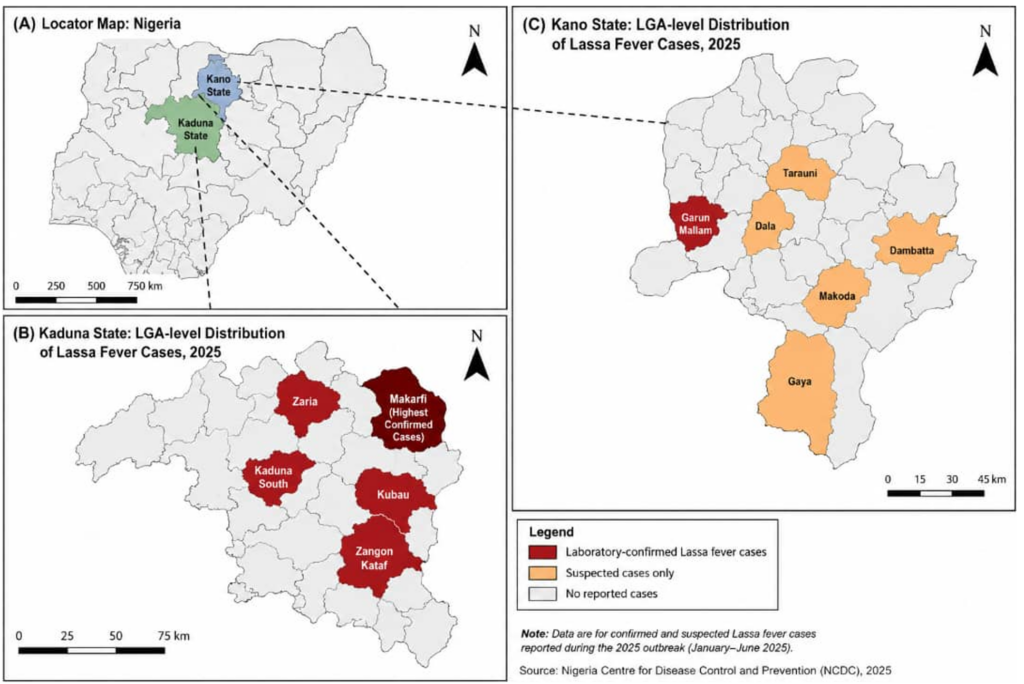
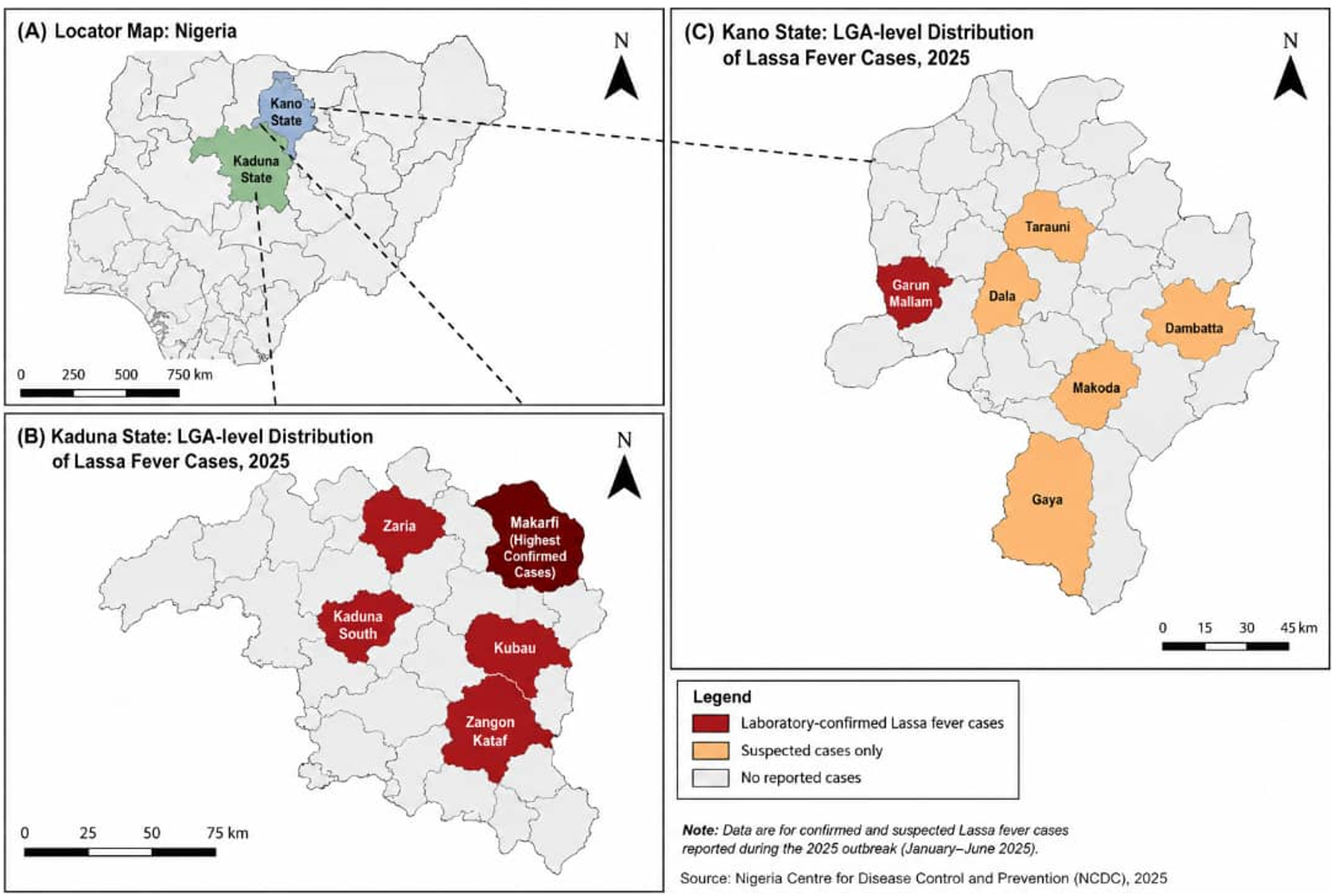
The 2025 Lassa fever outbreak in Kaduna State occurred between Epidemiological Weeks 1 and 28 (January–July 2025), affecting five LGAs (Zaria, Kubau, Zangon Kataf, Makarfi, and Kaduna South). In Kano State, the outbreak was recorded in Epidemiological Week 15 (April 2025) and involved six LGAs (Dala, Dambatta, Garum Mallam, Tarauni, Makoda, and Gaya). Both states have designated isolation and treatment centres and maintain rapid response teams that investigate and respond to suspected outbreaks in coordination with NCDC [12].
Study design and population
A retrospective descriptive study design was used to analyse surveillance and outbreak response data for all reported suspected and confirmed Lassa fever cases during the outbreak periods in Kaduna and Kano States.
The study population included:
Case definitions
The national standard case definitions were applied as follows:
Data sources and collection
Data were obtained from multiple verified sources to ensure completeness and accuracy:
Kaduna State outbreak data were obtained from official state Lassa fever situation reports (Epidemiological Weeks 1–28, 2025), in addition to SORMAS, laboratory, and facility records. Kano State data were obtained through the Kano State Centre for Disease Control (KNCDC) surveillance system, with technical support from WHO.
Data extracted included suspected and confirmed cases, demographic characteristics, healthcare worker infections, number of contacts identified, contact follow-up outcomes, and outbreak timelines.
Data quality and management
Data were cleaned and validated using Microsoft Excel. Duplicate entries were removed, and inconsistencies were resolved through cross-validation with laboratory records, situation reports, and health facility registers where available. Missing or incomplete data were assessed during data cleaning. Where possible, missing values were verified using alternative data sources, including SORMAS records, laboratory records, and state situation reports. Cases with incomplete key variables were excluded from specific comparative analyses but retained in descriptive summaries. Detailed age and sex disaggregation was more complete for suspected cases; therefore, the demographic analysis was conducted using suspected-case data.
Data analysis
Descriptive statistical analysis was conducted using Microsoft Excel 365. Frequencies, proportions, and case fatality rates were calculated.
Comparative analysis between Kaduna and Kano States included comparisons of:
Epidemic curves were used to describe outbreak progression and weekly distribution of suspected and confirmed cases.
Ethical considerations
Ethical approval for this study was obtained from the Kaduna State Ministry of Health Research Ethics Committee (Approval Date: 09 October 2025; NHREC Registration No. NHREC/17/03/2018) and the Kano State Ministry of Health Research Ethics Committee (Approval Date: 02 October 2025; NHREC Registration No. NHREC/17/03/2018).
The study involved retrospective analysis of de-identified surveillance, laboratory, and outbreak response data collected during routine public health activities. Permission to access surveillance records, laboratory results, line lists, and contact tracing data was obtained from the respective state public health authorities. No direct participant contact occurred, and informed consent was waived because only routinely collected, anonymized surveillance data were analysed. Confidentiality was maintained by removing all personal identifiers before data analysis.
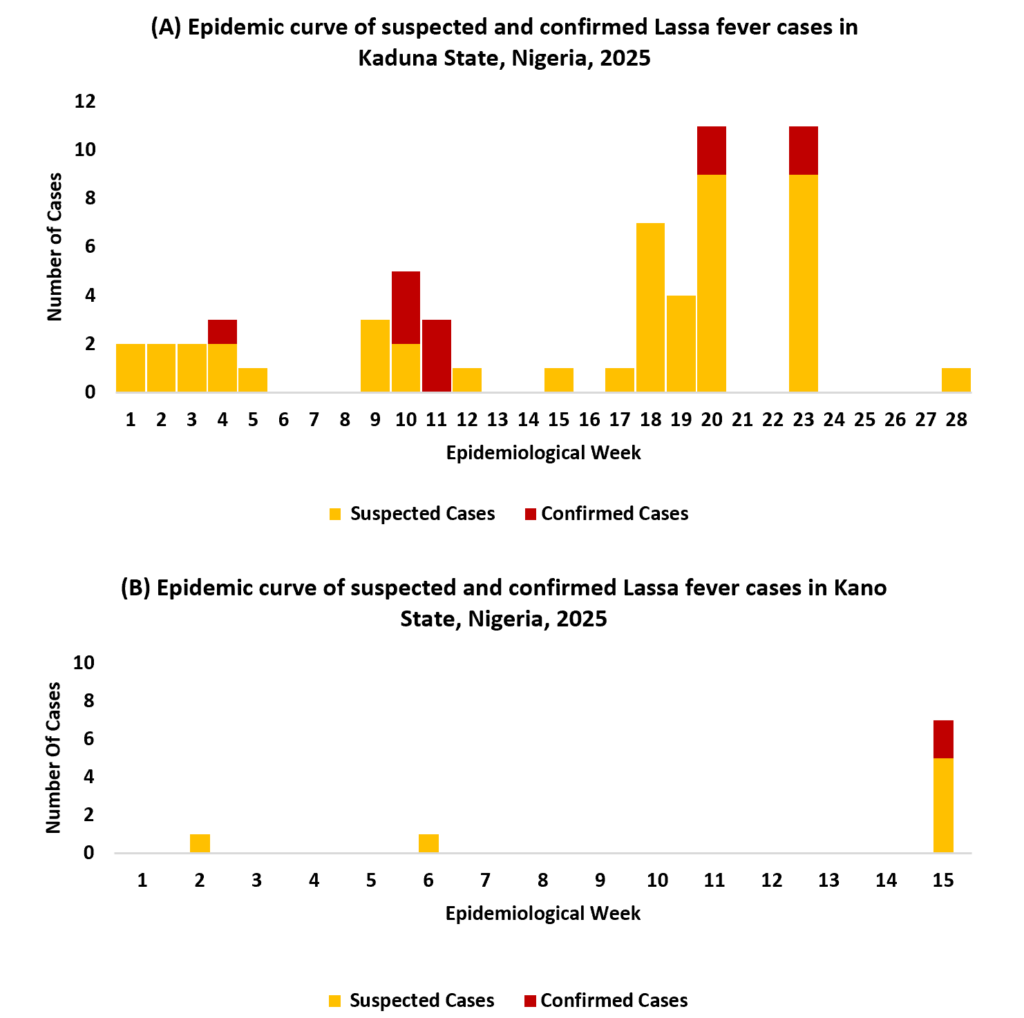
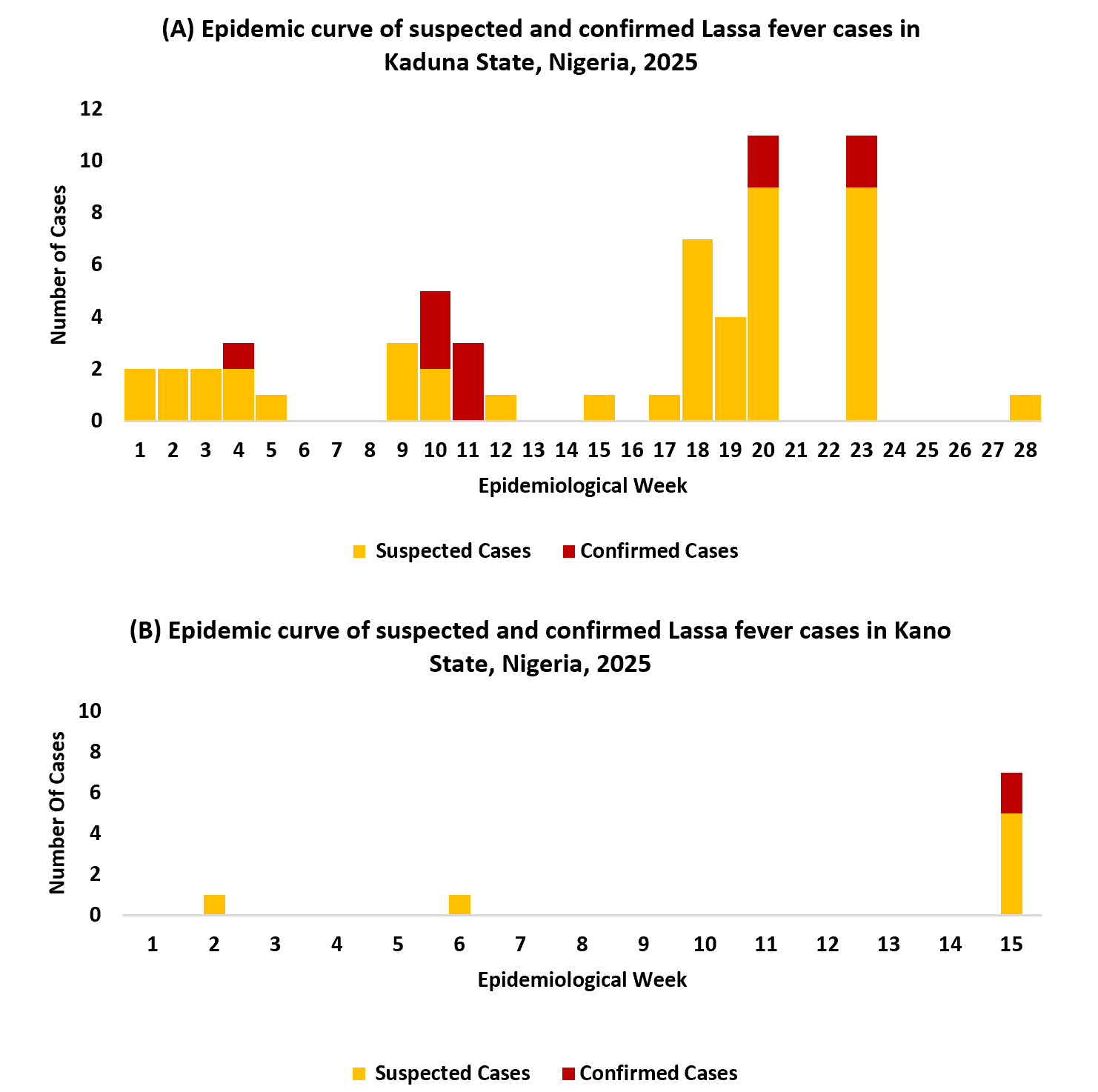
During the 2025 outbreak period, Kaduna State reported a total of 54 suspected Lassa fever cases, of which 8 (14.8%) were laboratory confirmed. Among the confirmed cases, five deaths were recorded, yielding a case fatality rate (CFR) of 62.5% (5/8). In contrast, Kano State recorded seven suspected cases, of which two (28.6%) were laboratory confirmed. One death occurred among the laboratory-confirmed cases, yielding a CFR of 50.0% (1/2), while the second death occurred among a suspected case. Using laboratory-confirmed cases as the denominator, Kaduna had a higher CFR (62.5%, 5/8) than Kano (50.0%, 1/2), although the small number of confirmed cases in Kano limits direct comparison. Kaduna’s outbreak was prolonged, spanning epidemiological weeks 1–28, whereas the Kano outbreak was brief and contained within epidemiological week 15 (Figure 1).
Healthcare worker infections
Two healthcare worker (HCW) infections were documented in Kaduna State, while none were reported in Kano State (Table 1). Following identification of the HCW infections in Kaduna, infection prevention and control (IPC) measures were reinforced through healthcare worker training, provision of personal protective equipment (PPE), and supportive supervision of treatment facilities. No healthcare worker infections were reported in Kano State during the outbreak period.
Geographical distribution
Figure 3 illustrates the geographic distribution of reported suspected and laboratory-confirmed Lassa fever cases across affected LGAs in Kaduna and Kano States. In Kaduna State, laboratory-confirmed cases were reported from four LGAs: Makarfi (n = 5), Kubau (n = 1), Zaria (n = 1), and Zangon Kataf (n = 1), with Makarfi accounting for the majority of confirmed cases. In Kano State, suspected cases were reported from six LGAs (Dala, Dambatta, Garum Mallam, Tarauni, Makoda, and Gaya), while both laboratory-confirmed cases were identified in Garum Mallam LGA (n = 2). Overall, confirmed cases were geographically clustered within a limited number of LGAs rather than being widely distributed across either state (Figure 3).
Contact tracing and follow-up outcomes
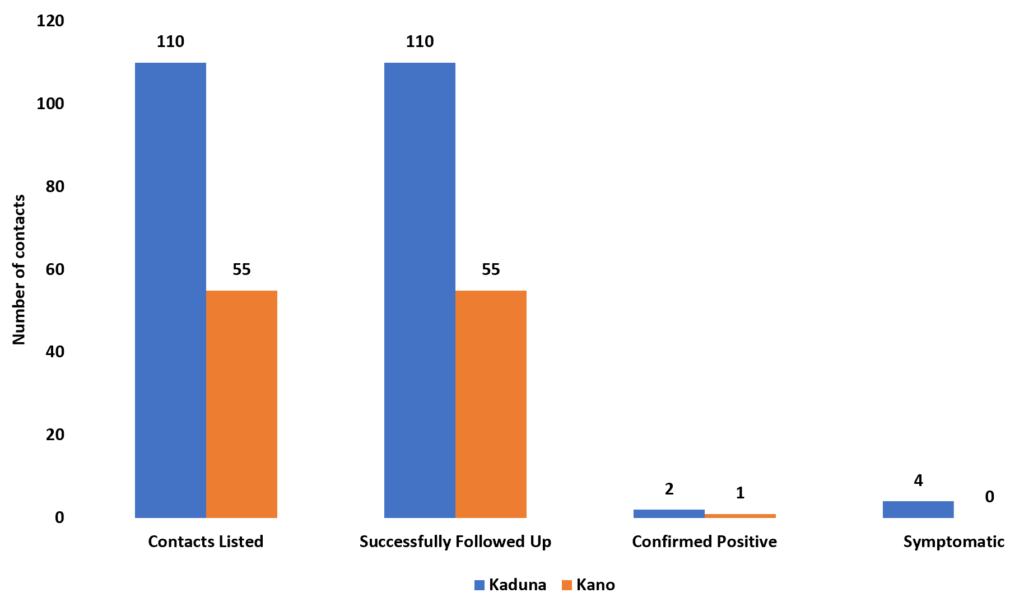
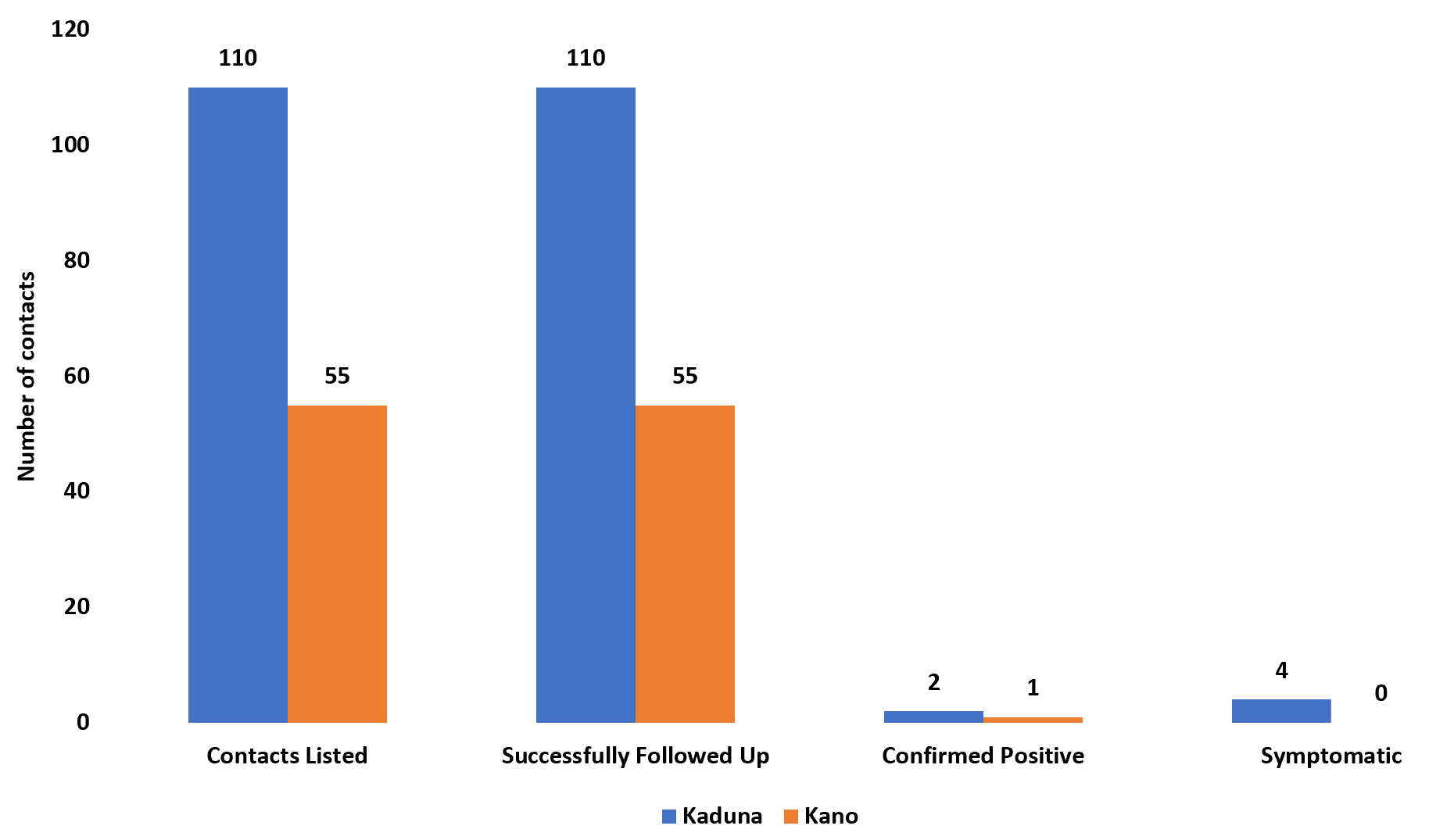
In Kaduna State, 110 contacts were line-listed from the eight laboratory-confirmed cases, representing an average of 13.8 contacts per confirmed case. All identified contacts were successfully traced and monitored, with no contacts lost to follow-up. Four contacts developed symptoms during follow-up, of whom two were laboratory confirmed for Lassa fever.
In Kano State, 55 contacts were line-listed from the two laboratory-confirmed cases, representing an average of 27.5 contacts per confirmed case. No contacts were lost to follow-up, and one contact was laboratory confirmed during follow-up. Contact tracing and follow-up activities were ongoing during the reporting period. Overall, both states achieved complete contact follow-up with no contacts lost to follow-up (Table 1; Figure 2).
Outbreak progression
The epidemic curve for Kaduna showed a gradual increase in suspected and confirmed cases from January, peaking between epidemiological weeks 10–18, followed by a decline through July. In contrast, Kano’s epidemic curve showed an abrupt onset in epidemiological week 15 with no subsequent cases, indicating rapid detection and effective containment (Figure 1).
Programmatic interventions and response actions
Both Kaduna and Kano States implemented coordinated outbreak response activities led by their respective state authorities. In Kaduna State, response activities were led by the Kaduna State Ministry of Health, in collaboration with the Nigeria Centre for Disease Control and Prevention (NCDC) and with technical support from the World Health Organization (WHO). In Kano State, outbreak response was coordinated by the Kano State Centre for Disease Control (KNCDC), with support from WHO. These activities included active case finding, contact tracing, strengthening of infection prevention and control (IPC) measures, community sensitization, and healthcare worker training.
In Kaduna State, response activities were intensified following the identification of healthcare worker infections, including IPC training, provision of personal protective equipment (PPE), and supervision of treatment facilities. In Kano State, outbreak response was coordinated by the Kano State Centre for Disease Control (KNCDC), with technical support from the World Health Organization (WHO). Response activities included case investigation, isolation of confirmed cases, contact tracing and follow-up, infection prevention and control (IPC) measures, risk communication, and supportive supervision of affected health facilities
The concurrent Lassa fever outbreaks in Kaduna and Kano States in 2025 revealed important differences in outbreak dynamics, health system response, and healthcare worker safety. These findings highlight the critical role of early detection, infection prevention and control (IPC), and clinical response capacity in determining outbreak outcomes. The higher case fatality rate observed in Kaduna State suggests delayed case detection and late presentation of patients, which are known to worsen outcomes in Lassa fever.
The occurrence of healthcare worker infections in Kaduna further underscores the importance of infection prevention and control (IPC) during Lassa fever outbreaks. Healthcare-associated transmission has previously been linked to delayed isolation of suspected cases, weak triage systems, and inconsistent use of personal protective equipment (PPE) [3,9]. In the present study, two healthcare worker infections were reported in Kaduna, whereas none were reported in Kano. However, this study did not directly assess IPC performance; therefore, differences in IPC implementation between the two states cannot be conclusively determined.
Both states demonstrated strong performance in contact tracing, achieving complete follow-up with no loss to follow-up. This likely contributed to limiting secondary transmission. Effective contact tracing has been consistently associated with reduced transmission in Lassa fever outbreaks [10].
The temporal patterns observed in the epidemic curves further illustrate differences in outbreak dynamics. Kaduna experienced prolonged transmission over several months, suggesting delayed containment, whereas Kano exhibited a short, sharply defined outbreak pattern consistent with rapid detection and response (Figure 1). These findings emphasize the importance of surveillance sensitivity and response timeliness in outbreak control.
The absence of reported transmission to neighboring states may be attributable to rapid case identification and isolation, effective contact tracing, strengthened infection prevention and control measures, and timely activation of emergency response structures. Previous studies have demonstrated the importance of these measures in limiting Lassa fever transmission and improving outbreak containment [9,10].
Figure 3 shows the LGA-level geographical distribution of reported suspected and laboratory-confirmed Lassa fever cases in Kaduna and Kano States. Cases were confined to a limited number of LGAs in both states, indicating localized rather than widespread transmission. The localized distribution of reported suspected and laboratory-confirmed cases highlights the importance of strengthening surveillance, early case detection, and rapid outbreak response in affected LGAs.
Given that Kaduna and Kano States share a common geographical boundary, the potential for cross-border transmission was considered during outbreak investigations. However, review of case investigation records, contact tracing data, and line lists did not identify epidemiological links between cases reported in the two states. Cases occurred in distinct geographical locations and transmission chains, suggesting that the outbreaks were likely independent events rather than a result of inter-state transmission.
Community sensitization formed part of the outbreak response in both states. Although the effectiveness of these activities was not evaluated in this study, previous studies have shown that culturally appropriate risk communication can improve care-seeking behaviour and facilitate early reporting during Lassa fever outbreaks [6,9]. Importantly, these findings reinforce the relevance of a One Health approach in Lassa fever prevention and control. The disease is closely linked to environmental and zoonotic factors, particularly the presence of Mastomys rodents in human settlements. Poor housing conditions, inadequate food storage, and weak environmental sanitation increase the risk of human exposure. Addressing these drivers through rodent control, improved sanitation, and environmental hygiene is essential to reducing transmission. Integrating human, animal, and environmental health systems can enhance early detection and response. Strengthening these One Health interventions is critical for preventing recurrent outbreaks and reducing disease burden, particularly in endemic settings.
This study has some limitations. Differences in surveillance sensitivity between Kaduna and Kano, potential reporting delays, and incomplete documentation of IPC intervention timing may have influenced comparability. In addition, the relatively small number of confirmed cases, particularly in Kano, may limit the precision of CFR estimates. However, the use of multiple data sources and complete contact tracing records strengthens the reliability of the findings.
In conclusion, the concurrent outbreaks demonstrate that timely detection, strong IPC practices, effective contact tracing, and coordinated multi-agency response are critical for controlling Lassa fever outbreaks. Strengthening surveillance systems, improving healthcare worker protection, and expanding One Health interventions are essential for enhancing preparedness and reducing future transmission in endemic settings [6,12,13].
Bias and limitations of surveillance data
Differences in surveillance sensitivity, case detection capacity, and reporting practices between Kaduna and Kano States may have influenced the number of suspected and confirmed cases identified. Variations in healthcare-seeking behaviour, access to diagnostic services, and timeliness of reporting could also contribute to differences observed between the two outbreaks. These potential sources of bias were considered when interpreting differences in outbreak magnitude and outcomes.
The concurrent outbreaks demonstrate that timely detection, strong IPC practices, effective contact tracing, and coordinated multi-agency response are critical for controlling Lassa fever outbreaks. Strengthening surveillance systems, improving healthcare worker protection, and expanding One Health interventions are essential to enhance preparedness and reduce future transmission in endemic settings.
What is already known about the topic
What this study adds
Amina Jummai Shehu: Conceptualization, data collection, manuscript drafting, and critical review.
Mayana Abubakar Sanusi: Technical oversight and guidance.
Mohammed Abede: Field investigation, supervision, and data validation.
Umar Ibrahim: Manuscript review and approval of the final version.
Isiaq Hadji Shehu: Investigation, supervision, and data management.
Abdullahi Musa Garba: Field investigation, supervision, and data validation.
Sulaiman Iliyasu Hamisu: Field investigation and supervision.
Muhammad Adamu Abbas: Technical oversight and guidance.
Jeremiah Daikwo: Manuscript review and final approval.
Yetunde Abioye: Field investigation, supervision, and data validation
| State | Suspected Cases | Confirmed Cases | Deaths (Confirmed) | Additional Deaths (Suspected) | CFR among Confirmed Cases (%) | HCW Cases | Contacts Listed | Contacts Confirmed Positive | Symptomatic Contacts | Contacts Lost to Follow-up |
|---|---|---|---|---|---|---|---|---|---|---|
| Kaduna | 54 | 8 | 5 | 0 | 62.5 (5/8) | 2 | 110 | 2 | 4 | 0 |
| Kano | 7 | 2 | 1 | 1 | 50.0 (1/2) | 0 | 55 | 1 | 0 | 0 |
Note: An additional death occurred among a suspected case in Kano State; therefore, the CFR among suspected cases was 28.6% (2/7).
| Variable | Frequency (n) | Percentage (%) |
|---|---|---|
| Age group (years) | ||
| 0–9 | 6 | 9.8 |
| 10–19 | 4 | 6.6 |
| 20–29 | 20 | 32.8 |
| 30–39 | 14 | 23.0 |
| 40–49 | 16 | 26.2 |
| 50–59 | 1 | 1.6 |
| ≥60 | 2 | 3.3 |
| Sex | ||
| Male | 36 | 59.0 |
| Female | 25 | 41.0 |
| State | ||
| Kaduna | 54 | 88.5 |
| Kano | 7 | 11.5 |
| Affected LGA | ||
| Makarfi | 34 | 55.7 |
| Chikun | 6 | 9.8 |
| Kaduna South | 2 | 3.3 |
| Kubau | 2 | 3.3 |
| Sabon Gari | 2 | 3.3 |
| Zaria | 2 | 3.3 |
| Giwa | 1 | 1.6 |
| Igabi | 1 | 1.6 |
| Jema’a | 1 | 1.6 |
| Kaduna North | 1 | 1.6 |
| Zangon Kataf | 1 | 1.6 |
| Dala | 1 | 1.6 |
| Dambatta | 1 | 1.6 |
| Garum Mallam | 2 | 3.3 |
| Tarauni | 1 | 1.6 |
| Makoda | 1 | 1.6 |
| Gaya | 1 | 1.6 |