
Research | Open Access | Volume 9 (3): Article 133 | Published: 11 Aug 2026

Views: 1,788
Menu, Tables and Figures
| Variables | Frequency (Per cent (%)) |
|---|---|
| Age Groups (Years) | |
| 15–24 | 149 (29.3) |
| 25–34 | 185 (36.4) |
| 35–44 | 126 (24.8) |
| 45+ | 48 (9.5) |
| Educational Status | |
| Basic | 138 (27.2) |
| Secondary | 210 (41.3) |
| Tertiary | 160 (31.5) |
| Residence | |
| Rural | 281 (55.3) |
| Urban | 227 (44.7) |
| Religion | |
| Christianity | 320 (63.0) |
| Islamic | 154 (30.3) |
| Other | 20 (3.9) |
| Traditionalist | 14 (2.8) |
| Ethnicity | |
| Akan | 199 (39.2) |
| Ewe | 86 (16.9) |
| Ga-Adangbe | 65 (12.8) |
| Guan | 44 (8.7) |
| Mole-Dagbani | 113 (22.2) |
| Marital Status | |
| Co-habiting | 152 (29.9) |
| Divorced | 53 (10.4) |
| Married | 129 (25.4) |
| Single | 134 (26.4) |
| Widow | 40 (7.9) |
| Employment Status | |
| Government employed | 131 (25.79) |
| Self-employed | 176 (34.65) |
| Student | 80 (15.75) |
| Unemployed | 121 (23.82) |
| Income Status | |
| 700–2,500 | 104 (20.47) |
| 2,500–5,000 | 102 (20.07) |
| 5,000–12,000 | 81 (15.94) |
| Above 12,000 | 19 (3.74) |
| None | 202 (39.76) |
Table 1: Sociodemographic characteristics of reproductive age women in the Western North Region, Ghana
| Variables | Not used FP (%) (286) | Used FP (%) (222) | P-value |
|---|---|---|---|
| Age Group | |||
| 15–24 | 86 (30.1) | 63 (28.4) | 0.074 |
| 25–34 | 92 (32.2) | 93 (41.9) | |
| 35–44 | 75 (26.2) | 51 (23.0) | |
| 45+ | 33 (11.5) | 15 (6.8) | |
| Marital Status | |||
| Co-habiting | 77 (26.9) | 75 (33.8) | 0.002 |
| Divorced/Separated | 28 (9.8) | 25 (11.3) | |
| Married | 79 (27.6) | 50 (22.5) | |
| Single | 78 (27.3) | 56 (25.2) | |
| Widow | 24 (8.4) | 16 (7.2) | |
| Education Level | |||
| Basic | 81 (28.3) | 57 (25.7) | 0.325 |
| Secondary | 110 (38.5) | 100 (45.1) | |
| Tertiary | 95 (33.3) | 65 (28.3) | |
| Religion | |||
| Christianity | 178 (62.2) | 142 (64.0) | 0.911 |
| Islamic | 87 (30.4) | 67 (30.2) | |
| Traditionalist | 9 (3.2) | 5 (2.3) | |
| Others | 12 (4.2) | 8 (3.6) | |
| Employment Status | |||
| Government employed | 79 (27.6) | 52 (23.4) | 0.045 |
| Self-employed | 100 (35.0) | 76 (34.2) | |
| Student | 45 (15.7) | 35 (15.8) | |
| Unemployed | 62 (21.7) | 59 (26.6) | |
| Residence | |||
| Rural | 154 (53.9) | 127 (57.2) | 0.450 |
| Urban | 132 (46.2) | 95 (42.8) | |
| Societal/family pressure to have more children | |||
| Yes | 40 (14.0) | 16 (7.2) | 0.016 |
| No | 246 (86.0) | 206 (92.8) | |
| Discussing FP with partner/family | |||
| Yes | 103 (36.0) | 107 (48.4) | 0.005 |
| No | 183 (64.0) | 114 (51.6) | |
| Decision Making | |||
| Partner | 37 (12.9) | 25 (11.23) | 0.025 |
| Self | 115 (40.2) | 113 (50.9) | |
| Joint decision | 82 (28.7) | 62 (27.9) | |
| Other family members | 52 (18.2) | 22 (9.9) | |
| Partner/family support for FP | |||
| Yes | 72 (25.12) | 75 (33.8) | 0.034 |
| No | 214 (74.8) | 147 (66.2) | |
| Knowledge of where to get FP | |||
| Yes | 257 (89.9) | 215 (96.9) | 0.002 |
| No | 29 (10.1) | 7 (3.2) | |
Table 2: Bivariate analysis of factors associated with family planning use among reproductive age women in the Western North Region, Ghana
| Variables | Adjusted Odds Ratio (aOR) (95% CI) | P-value |
|---|---|---|
| Age (Years) | ||
| 15–24 | Ref. | |
| 25–34 | 4.05 (1.52–10.81) | 0.005 |
| 35–44 | 2.62 (0.79–8.65) | 0.114 |
| 45+ | 2.68 (0.31–22.75) | 0.367 |
| Education Level | ||
| Basic | Ref. | |
| Secondary | 1.53 (0.61–3.85) | 0.365 |
| Tertiary | 0.51 (0.19–1.36) | 0.179 |
| Marital Status | ||
| Divorced | Ref. | |
| Co-habiting | 8.26 (1.51–45.18) | 0.015 |
| Married | 2.12 (0.44–10.07) | 0.347 |
| Single | 8.71 (1.45–52.32) | 0.018 |
| Employment Status | ||
| Unemployed | Ref. | |
| Government employed | 1.37 (0.42–4.44) | 0.604 |
| Self-employed | 1.32 (0.54–3.21) | 0.941 |
| Student | 2.63 (0.54–6.89) | 0.314 |
| Religion | ||
| Islamic | Ref. | |
| Christianity | 1.12 (0.54–2.33) | 0.768 |
| Other | 1.76 (0.14–21.75) | 0.659 |
| Societal/family pressure to have more children | ||
| No | Ref. | |
| Yes | 0.48 (0.25–0.92) | 0.028 |
| Heard about FP | ||
| No | Ref. | |
| Yes | 3.23 (1.22–8.55) | 0.018 |
| Decision Making | ||
| Partner | Ref. | |
| Other family members | 0.13 (0.02–0.87) | 0.035 |
| Self | 3.11 (1.34–7.20) | 0.008 |
| Support from husband/family members | ||
| No | Ref. | |
| Yes | 2.25 (1.21–4.19) | 0.011 |
| Knowledge of where to get FP commodities | ||
| No | Ref. | |
| Yes | 3.53 (1.35–9.20) | 0.010 |
| Discussing FP with partner/family | ||
| No | Ref. | |
| Yes | 3.59 (1.61–7.96) | 0.002 |
Table 3: Factors associated with family planning utilization among reproductive age women in the Western North Region, Ghana
Joshua Billy1,&, David Kwamifoli2
1Ghana Health Service, Headquarters, Accra, Ghana, 2Catholic University of Ghana, Sunyani, Fiapre, Ghana
&Corresponding author: Joshua Billy, Ghana Health Service, Headquarters, Accra, Ghana, Email: josebilly35@gmail.com ORCID: https://orcid.org/0009-0002-9250-8161
Received: 24 Dec 2025, Accepted: 09 Aug 2026, Published: 11 Aug 2026
Domain: Sexual and Reproductive Health
Keywords: Family planning, utilisation, contraceptive uptake, Western North Region.
©Joshua Billy et al. Journal of Interventional Epidemiology and Public Health (ISSN: 2664-2824). This is an Open Access article distributed under the terms of the Creative Commons Attribution International 4.0 License (https://creativecommons.org/licenses/by/4.0/), which permits unrestricted use, distribution, and reproduction in any medium, provided the original work is properly cited.
Cite this article: Joshua Billy et al., Family planning utilisation and related factors among reproductive-age women in the Western North Region, Ghana. Journal of Interventional Epidemiology and Public Health. 2026; 9(3):133. https://doi.org/10.37432/jieph-d-25-00337
Introduction: Family planning (FP) utilisation remains suboptimal globally, with 164 million women having unmet needs. Ghana’s modern contraceptive prevalence rate (mCPR) stands at 35.8%, below the FP2030 target of 44.4%. The Western North Region is particularly concerning, with acceptor rates consistently below 27%, necessitating an urgent investigation into factors influencing FP use among reproductive-age women (15-49) in the region.
Methods: A cross-sectional survey was conducted among 508 reproductive-age women selected through multistage sampling across nine districts. Structured questionnaires were developed for data collection. Descriptive statistics, chi-square tests, and multivariate logistic regression were done using Stata version 17.
Results: The contraceptive prevalence rate was 43.7%, with emergency contraceptives (29.7%) being the most used method. The predictors of modern contraceptive use include being aged 25–34 years (aOR = 4.05, CI: 1.52–10.81), cohabiting (aOR = 8.26, CI: 1.51–45.18), autonomous decision-making (aOR = 3.11, CI: 1.34–7.20), knowledge of where to get contraceptives (aOR=3.53, CI; 1.35-9.20) and prior family planning discussions (aOR = 3.59, CI: 1.61–7.96). Fear of side effects (48.6%) and health concerns (19.9%) were major barriers. Awareness of family planning was high (89%), with friends/family (52.1%) and health facilities (49.3%) as the primary sources of information.
Conclusion: This study identifies age, marital status, societal pressure, and support systems as significant predictors of family planning utilisation. Despite high awareness, driven mainly by friends/family and health facilities, fear of side effects and health concerns remained major barriers, while knowledge, partner support, and open discussion promoted uptake. Targeted interventions addressing side-effect misconceptions, strengthening partner engagement, and countering child-bearing pressures are needed to improve utilisation.
Family Planning (FP) plays a vital role in public health by enabling individuals and couples to make decisions about the number of children they want to have and at what time [1,2]. Family planning utilisation, according to the World Health Organisation [3,4] is “the proportion of married or in-union women who are using any method of contraception, whether traditional or modern, to determine the number and spacing of their children” [2,5,1]. The types of modern contraceptive methods are the short-acting hormonal contraceptives (oral pills, vaginal rings, injectables, etc), long-acting reversible contraceptives (LARC) (intrauterine devices (IUDs), implants), barriers (male and female condoms) [6], permanent methods (tubal ligation, vasectomy (male sterilisation)), and emergency contraceptives (Pills, copper IUD) (WHO, 2025).
Among the 1.9 billion women of reproductive age (15-49 years) in the World [1,7,8], about 874 million (46%) of them use modern contraceptive methods [9], while 92 million (4.8%) depend on traditional methods. There are about 164 million women of reproductive age who want to postpone or prevent pregnancy, but still do not use any method [10] of modern contraception since 1990 [9,11,12]. WHO reports that approximately 257 million reproductive-aged women lack access to contraceptive services despite needing them [1]. A collective analysis of the Demographic and Health Survey (DHS) conducted across 36 sub-Saharan African countries [13] revealed a modern contraceptive prevalence of 18.36%, with key determinants including maternal and partner education, making autonomous decisions, such as ANC attendance and where births occurred [13].
Ghana has made advances in integrating FP into the primary healthcare (PHC) system, expanding the National Health Insurance Scheme (NHIS) on a free maternal Health Policy. [14] to cover free long-term contraceptives and increase domestic funding for contraceptive commodities [15,16]. The United Nations Population Fund (UNFPA) contributed $2.3 million worth of contraceptives in 2018 to enhance access, potentially averting 234,000 unintended pregnancies, preventing 97,000 unsafe abortions, and saving 500 maternal and 2,700 child lives [17]. Despite these efforts, family planning utilisation in Ghana remains below target, with a modern Contraceptive Prevalence Rate (mCPR) of 35.8%, falling short of the FP2030 goal of 44.4% [18].
The situation in the Western North Region is particularly concerning. The District Health Information Management System (DHIMS) database reveals a fluctuating trend in family planning acceptor rates, with 23.1% in 2020, 27.8% in 2021, 26.1% in 2022, and 26.5% in 2023. Given that these numbers are below the 44.4% national target (FP2030), immediate action is required [15,18]. Unplanned pregnancies, unsafe abortions, and pregnancy-related problems are among the detrimental reproductive health consequences that are a result of the Region’s persistently low acceptor rate of FP services. This study, therefore, aims to assess the contraceptive prevalence rate (CPR) and the related Sociodemographic and sociocultural factors influencing the utilisation of FP services.
Study area
The study was conducted in the Western North Region of Ghana. The Western North Region was established in 2019 as one of Ghana’s six newly created regions [19,20]. The region shares borders with Côte d’Ivoire to the West, the Central Region to the Southeast, and the Ashanti, Ahafo, and Bono regions to the North. It has a land area of 8875 sq. km [21]. These neighbouring areas contribute to periodic migration, especially for cocoa farming activities.
According to Ghana’s Population and Housing Census (PHC) (2021), the Western North Region has a population of about 880,921 [22]. Of this, 220,963 are WIFA (15–49 years) [23]. The Western North Region (WNR) has nine (9) administrative districts, namely, Bibiani-Anhwiaso-Bekwai, Aowin, Sefwi Akontombra, Suaman, Bodi, Juaboso, Bia West, and Bia East. The healthcare system in the region includes 16 hospitals, 26 health centres, 31 clinics, 238 operational Community-based Health Planning Services (CHPS) compounds, and 24 maternity homes [20].
Study design
This research employed a cross-sectional survey with a quantitative approach among a representative sample of women of reproductive age (15-49). This research sought to assess the sociodemographic and sociocultural factors affecting FP use in the Region. This approach is particularly suitable for determining the prevalence of various health characteristics and identifying potential associations among variables. A structured questionnaire was designed to assess family planning service utilisation [23].
Study population
The target participants in this research were selected from the Women in Fertility Age (WIFA) population (aged 15-49 years) residing in the WNR of Ghana and able to read and/or understand local languages (Twi, Sefwi, Fante, etc.) or English. We included women aged 15-49 years, aligning with the World Health Organisation’s definition of reproductive age; women of reproductive age who have resided in the Western North Region for over 6 months; women who desire to space their births; and those willing to give informed consent. Women using permanent contraceptives and those who had severe medical or psychiatric conditions were excluded [23].
Determination of sample size
The minimum sample size was estimated using Cochran’s (1965) formula for population proportion estimation [24]. It was used for a single-population proportion sample estimation. The national average utilisation rate of family planning services among women of reproductive age (15-49 years) was estimated at 23.3% [25]. A 0.05 level of significance (α) and a 4% margin of error were used [26].
$$
\begin{align*}
n &= \frac{k^2p(1 – p)}{d^2} \\
n &= \frac{(1.96)^2 \times (0.233)(1 – 0.233)}{(0.04)^2} \\
\mathbf{n} &= \mathbf{429.085} \\
n &= 430
\end{align*}
$$
Calculating a 10% non-response rate, as was used by Amoah et al. (2023). The sample size calculated was 430. This resulted in a minimum necessary sample size of 473 participants for the study.
Sampling technique and sample size
This study employed a multi-stage cluster sampling approach across all nine districts of the Western North region. From each district, two sub-districts were randomly selected, followed by the random selection of two communities within each sub-district, resulting in 18 sub-districts for data collection.
Within each selected community, participants were chosen via systematic sampling. Starting from a central location (the chief’s palace or assemblyman’s house), data collectors administered a questionnaire to an eligible participant. After each interview, they turned right, skipped the next two houses, and approached the third house to repeat the process. This systematic procedure continued until 25 respondents were interviewed per sub-district.
Only one eligible participant was interviewed per household. In cases with multiple eligible individuals, a simple random selection was conducted using a lottery method. If a selected house had no eligible respondent, the team proceeded to the next house on the right, resuming the systematic pattern after a successful interview. If the target was not met in the main community, data collection extended to the nearest adjacent community.
This standardised methodology resulted in a total sample size of 508 participants across the 18 sub-districts. Sample sizes per sub-district varied (range: 19–58) based on the number of eligible households encountered during systematic sampling, with a target minimum of 25 respondents per sub-district to ensure geographic representation.
Data collection techniques/tools
This cross-sectional study utilised a descriptive survey to assess factors influencing family planning uptake comprehensively. Data on socio-demographics, sociocultural factors, contraceptive knowledge, and current utilisation were collected via face-to-face interviews using the Kobo Collect application. Interviewers were thoroughly trained in survey administration, the use of the digital tool, and ethical protocols to ensure data quality and confidentiality. This method enabled the systematic capture of a wide range of variables critical to understanding family planning behaviours.
Variables
Two major variables were considered in this study: the dependent and independent variables. The dependent variable for the study was family planning utilisation. Respondents were asked whether they had used any modern contraceptive in the last 12 months (one year) to prevent pregnancy. A dichotomous response of “Yes” or “No” was recorded. The independent variables are group into demographic factors: age of the woman, marital status, residence, knowledge about where to get family planning /accessibility, education level, employment status of the woman, income of a woman and sociocultural factors: religion, ethnicity, decision making, discussion with husband/family members, opposition/support by husband/family members, and societal pressure of having children.
Data management and analysis
Data were cleaned in Microsoft Excel and imported into Stata 17 for analysis. Variables were labelled for clarity. We used descriptive statistics to summarise family planning (FP) utilisation, measured by the contraceptive prevalence rate. Associations between FP use and sociodemographic/sociocultural factors were first assessed using bivariate tests (Chi-square and t-tests). Significant variables (p<0.05) were then included in a multivariate logistic regression model to identify the strongest predictors of current FP use, following established analytical methods.
Of 573 eligible individuals approached, 35 (6.1%) declined to participate in the study. The remaining 538 (93.8%) provided consent and were interviewed, exceeding the target sample size by 12.1%. Following data collection, a cleaning for completeness and consistency led to the exclusion of an additional 30 participants (5.6% of those who consented) due to incomplete responses. Thus, a total of 65 participants (35 refusals + 30 incomplete) were excluded from the initially recruited group of 573. The final analytic sample comprised 508 participants (88.7% of those approached) whose data met all inclusion and quality standards.
Ethical considerations
The study obtained ethical approval from the Catholic University of Ghana Ethical Review Board (CUC-ERC). The reference number for the approval is “CUCG-ERB 178/25/4-UG”. To maintain the privacy and confidentiality of the participants, all responses were collected anonymously. No identifiable information (such as names, phone numbers, or addresses) was linked to the dataset. Participants were assigned unique codes to maintain anonymity and ensure secure data handling.
Demographic characteristics
During data collection, 508 women were interviewed for this study. Most of these respondents were aged 25–34 years (36.4%), followed by those aged 15–24 (29.3%). A little over two-fifths (41.3%) have a secondary-level education, with nearly one-third (31.5%) attaining a tertiary education level (Table 1).
Rural residents made up the largest proportion (55.3%). Christianity was the predominant religion (63.0%), followed by Islam (30.3%). More than one-third (39.2%) of the respondents were Akan, with Mole-Dagbani accounting for 22.2%.
Out of the total population (508) surveyed, 129/508 (25.4%) of respondents were married, and about one-third (29.9%) were living with a partner (cohabiting) but were not officially married. In comparison, 26.4% were completely single (Table 1).
Employment data showed that 176/508 (34.7%) of respondents were self-employed, while 25.8% worked in government jobs. Regarding income, 39.8% reported having no income. Among those who earned an income, the majority fell within the GHS 700–2,500 (20.5%) and GHS 2,500–5,000 (20.1%) income brackets (Table 1).
Level of family planning utilisation among reproductive age women
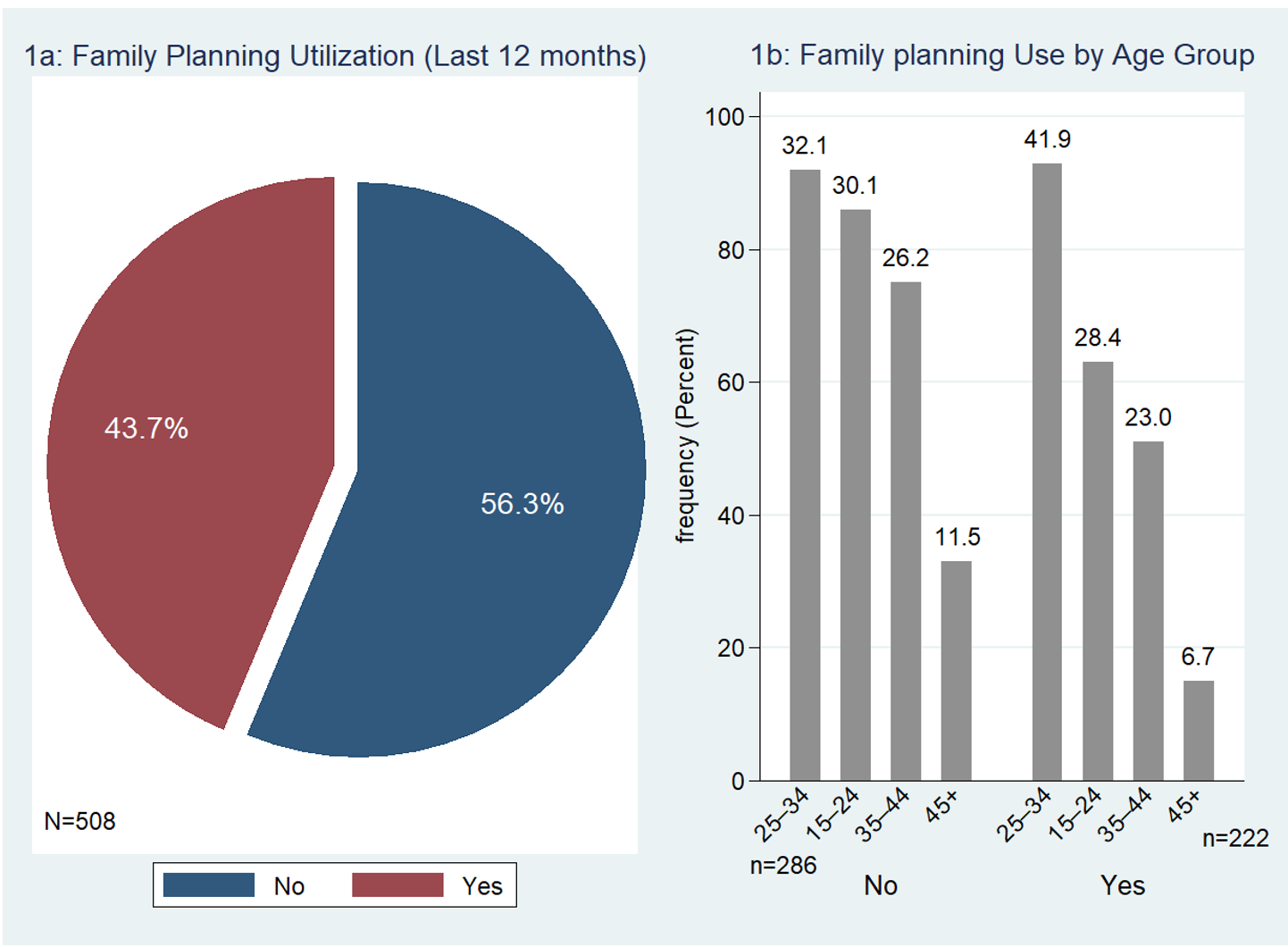
Figure 1 highlights the prevalence of FP and its age disaggregation in the Western North region. The data show that 56.3% (286/508) of participants have not used family planning in the past 12 months, while 43.7% (222/508) have (Figure 1a).
Among individuals who have not used any form of modern FP in the past year, about one-third (32.17%) are aged 25 to 34 years. Similarly, 41.9% of the respondents who have used FP for the last 12 months are aged 25- 34 years. In the 15–24 age group, 30.1% reported non-use, and 26.2% reported use. In the 45+ category, 11.5% were non-users and 6.7% were users (Figure 1b).
Types of FP method used and where they were obtained
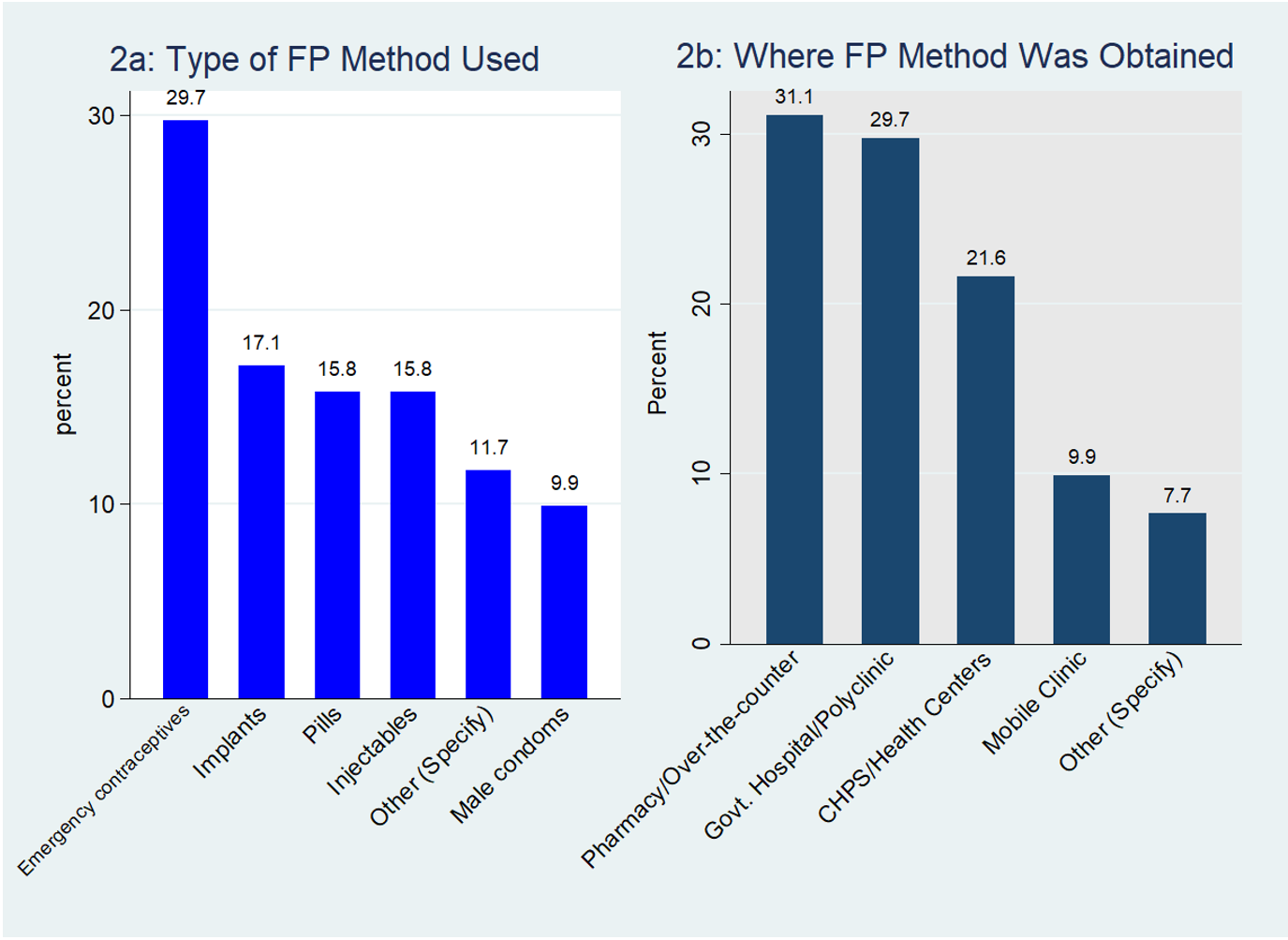
Among the types of FP methods used, emergency contraceptives were the most reported, accounting for 29.7% of use. Implants followed with 17.1%, while pills and injectables were used by 15.8% each. Other methods, such as IUDs, female condoms, and similar options, accounted for 11.7%, and male condoms were the least reported at 9.9% (Figure 2a).
Regarding where FP methods were obtained, the highest proportion (31.08%) sourced them from pharmacies or over-the-counter points. Government hospitals or polyclinics were the next most common sources at 29.7%. CHPS compounds or health centres accounted for 21.6% (Figure 2b).
Reasons for non-utilisation and discontinuation
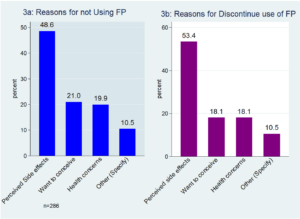
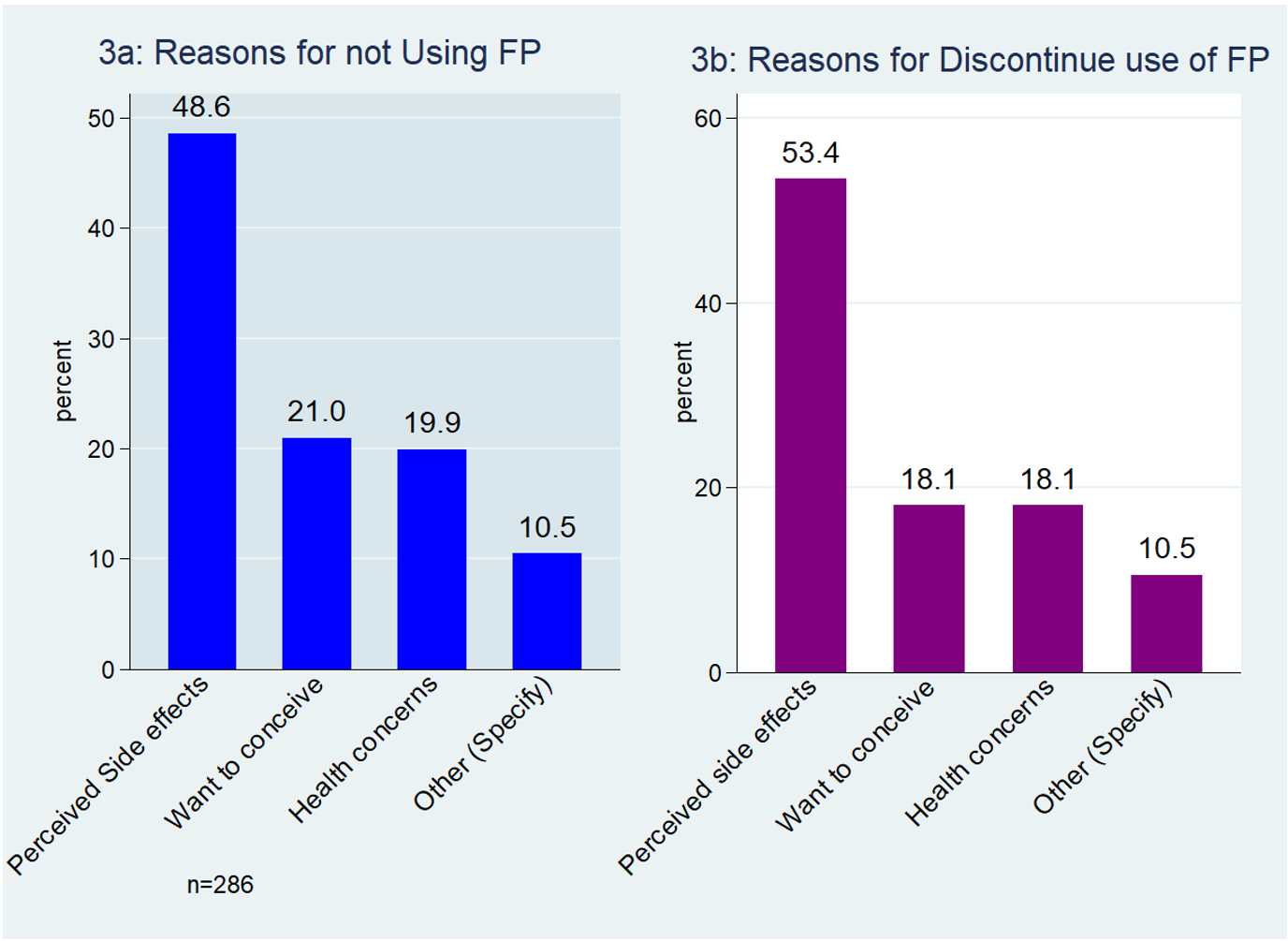
Figure 3 presents the key reasons for both non-use and non-continuation of FP methods. Among women who had not used any modern contraceptive in the past 12 months, nearly half (48.6%) cited perceived side effects as their primary reason, making it the most significant barrier to adoption. Approximately one-fifth (21.0%) reported not using contraception because they wanted to conceive, while health concerns accounted for 19.9% of responses. A smaller proportion (10.50%) specified other reasons, such as pursuing their career, unavailability of their partners, and abstinence (Figure 3a)
The pattern was similar for women who discontinued family planning methods. Perceived side effects again emerged as the most prominent factor, accounting for 53.4% of discontinuations. Health concerns and the desire to conceive were both cited by 18.1% of respondents, while other reasons, such as partner unavailability and career advancement, were mentioned by 10.5% of women (Figure 3b).
Sociodemographic and sociocultural factors associated with family planning utilisation
The bivariate analysis highlights a few statistically significant associations. Marital status showed a significant relationship with family planning use (p = 0.002), with a higher proportion of cohabiting individuals (33.8%) using FP compared to non-users (26.9%) (Table 2)
Employment status was also significantly associated with FP use (p = 0.045). Notably, a slightly higher proportion of the unemployed used FP (26.58%) compared to those who did not (21.7%). Among FP users, a higher proportion (33.8%) reported receiving support than among non-users (25.2%). Age (p = 0.074), educational background (p = 0.325), religion (p = 0.911), and Residence (p = 0.450) of the population are not significantly associated with FP use in the Region (Table 2).
There is a statistically significant association between receiving support from husbands or family members and the use of family planning (p = 0.034). Similarly, women who knew where to access family planning services (i.e., the specific facilities or locations offering FP commodities) were significantly more likely to use contraception compared to those who did not know where to obtain services (96.9% vs 89.9%, p = 0.002) (Table 2).
Decision-making authority regarding FP was significantly associated with family planning (p = 0.025). Women who made autonomous decisions about family planning constituted the largest group among FP users (50.9%, n=113) compared to non-users (40.2%, n=115).
Multivariate logistic regression on the use of family planning
After controlling for confounders, age, marital status, employment decision-making powers, partner/family member support and having information about FP methods were significantly associated with modern FP utilisation. Women aged 25-34 were over four times more likely to use FP than those aged 15-24 (aOR = 4.05, 95% CI: 1.52–10.81, p = 0.005). Cohabiting individuals had over eight times greater odds of using FP compared to women who are divorced (aOR = 8.26, 95% CI: 1.51–45.18, p = 0.015), while single respondents had similarly increased odds (aOR = 8.71, 95% CI: 1.45–52.32, p = 0.018).
Exposure to FP information significantly increased the likelihood of use, with those who had heard about FP having more than three times greater odds of utilisation (aOR = 3.23, 95% CI: 1.22–8.55, p = 0.018). Respondents who made FP decisions on their own also had 3.11 times higher odds of using FP than those who decided with their partners (aOR = 3.11, 95% CI: 1.34–7.20, p = 0.008). On the other hand, FP decision-making by other family members was 87% less likely to use family Planning (aOR = 0.13, 95% CI: 0.02–0.87, p = 0.035). Additionally, those who discussed FP with someone were more than three times more likely to use FP (aOR = 3.59, 95% CI: 1.61–7.96, p = 0.002). Similarly, women who reported support from their husband/family were 2.25 times more likely to use family planning methods than those without such support (aOR = 2.25, 95% CI: 1.21- 4.19, p = 0.011).
This study aimed to investigate the use of FP and identify associated factors among women of reproductive age (15-49 years) in the Western North Region. The study found a modern contraceptive prevalence rate (CPR) of 43.7%, higher than Ghana’s national average of 26.36% reported in Ghana’s 2022 Demographic and Health Survey [27]. Comparatively, other regions in Ghana exhibit varying Contraceptive Prevalence Rates (CPRs). For instance, the Yendi municipality (Northern Region) reported a lower uptake (23.1%) [28], while urban communities like Accra show higher utilisation rates. The Western North’s relatively higher CPR could be attributed to improved FP campaigns, better health infrastructure, or stronger community engagement compared with more deprived regions such as the Northern and Savannah regions, where persistent inequalities hinder access [29]. These differences outline the importance of targeting family planning programs to local contexts rather than implementing a broad national approach [30].
However, the reliance on emergency contraceptives by reproductive-age women raises concerns about the consistency and long-term effectiveness of FP use, as emergency methods are not sustainable for regular birth spacing. Contrary to our finding, several studies have outlined that emergency contraceptives have not been shown to reduce unintended pregnancy or abortion rates, and repeated use can cause menstrual disorders, resulting in their low utilisation. [31,32].
The study identified key sociodemographic predictors of FP use, including age (25–34 years), cohabitation status, autonomous decision-making, and prior discussions about FP. Women aged 25 to 34 are more likely to use FP than younger or older age groups. This aligns with findings from Lohole (2024), in which women aged 24-35 had a high proportion of modern FP use [33]. This also aligns with a study by Gashaw (2025), which found that the age group of women who mostly accept FP is a youthful population since they are the most sexually active and have completed fertility intentions in the population. Another study by Ahissou et al. (2022) also highlighted that women aged 15-24 had a higher unmet need and very low demand for family planning [34] compared to those aged 25 years and above [35]. This suggests that women in their peak reproductive years are more proactive about fertility control, possibly due to greater awareness or life-stage needs.
Women who are cohabiting had an 8-fold higher likelihood of Family planning uptake than married or single women. This finding aligns with the work of Osborn et al., who found that married women were 39% less likely to accept FP than cohabiting women [29,36]. The higher rate of contraceptive use among cohabiting women may stem from the unique nature of these relationships. Women in cohabiting unions may be more motivated to prevent pregnancy until the relationship becomes more stable or formalised. They may also experience greater independence in making health decisions compared to married women, who often face stronger social and partner pressure to have children. This finding highlights that marital status is a key factor influencing family planning use. It indicates a need for public health programs to create specific strategies for married couples, focusing on improving communication between spouses and reducing husband-level objections to contraceptive use. Contrary to our findings, research conducted by Obeng et al. (2025) in Ghana highlighted that women who are cohabiting are about 33% less satisfied with modern FP use compared to those who are single [29].
The study found that women who made autonomous decisions about family planning were significantly more likely to use contraception, reinforcing findings from Egypt. This finding reiterates the critical role of female agency in reproductive health outcomes. When women have the power to make independent choices about their bodies, they are better able to act on their fertility intentions and access necessary services. Furthermore, the data suggest that this autonomy likely facilitates more open communication about family planning within partnerships. The ability to discuss contraceptive use freely with a partner is a key enabler of consistent and correct method use. These results highlight that, beyond simply providing access to contraception, empowering women to make their own reproductive decisions and fostering an environment conducive to spousal communication are essential components of effective family planning programmes.
Sociocultural barriers, such as fear of perceived effects and negative health issues, were significant barriers to family planning use, which aligns with the studies by Aggrey-Korsah et al and Sulemana et al [28,37]. Myths about infertility and menstrual disruptions from contraceptives, particularly in rural areas, are high in cultural beliefs, highlighting the need for targeted educational campaigns. This result aligns with studies conducted by Gashaw & Alemu (2025), which explain that, despite high awareness and many sensitisations, the perceived fear of adverse reactions was still there [38]. These findings have important implications for family planning programs [39]. The persistent concern about adverse effects and potential risks even after education campaigns shows we need better ways to address these challenges. Health workers should spend more time explaining real risks and benefits, using simple language and real-life examples that people trust.
The fact that urban living and education didn’t increase family planning use (unlike in other studies) suggests that, in this area, other factors like cultural beliefs may be stronger than education or location. Programs should focus more on changing community attitudes rather than just providing information. Since myths about contraceptives are so strong, especially in rural areas, we need trusted community members like religious leaders or local health workers to help share accurate information. Programs that work in cities or other regions might not work in deprived areas like the Western North Region, so we need approaches designed specifically for this community’s needs and beliefs.
From a programmatic perspective, the study points to several promising intervention strategies. Task-shifting counselling responsibilities to trained community health workers could help address concerns about side effects at the grassroots level. Peer education programs might effectively leverage the existing informal networks that women already use for information. Provider training programs should emphasise communication skills and respectful care approaches. Mobile clinics could help bridge geographic access gaps for rural populations. These interventions would need to be carefully adapted to the local context while maintaining core standards of quality care [40].
Recommendations
This research investigated the utilisation of FP services and their related demographic and cultural factors among WIFA in the Western North region of Ghana. Based on the comprehensive findings of this study, the modern contraceptive prevalence rate in the Western North Region (43.7%) exceeds the national average (26.3%). Still, it remains below the national target of 44.4%, indicating persistent gaps in family planning utilisation. The research identified several key factors significantly associated with contraceptive use, including being in the 25-34 age group, cohabiting marital status, autonomous decision-making capability, spousal or family support, prior discussions about family planning, and knowledge of service locations. The high usage of emergency contraceptives raises concerns about the sustainability and effectiveness of current family planning practices for long-term birth spacing.
The persistent sociocultural barriers, particularly fear of side effects and health concerns, continue to hinder optimal contraceptive adoption despite high general awareness. These findings underscore the need for targeted, client-centred interventions that address misconceptions, foster improved communication between providers and clients, and promote women’s empowerment in reproductive decision-making. Future programs should prioritise context-specific strategies that combine educational campaigns addressing specific fears with structural improvements in service accessibility and quality, particularly through community-based approaches that engage both women and their support networks to foster an enabling environment for sustained family planning utilisation in the region. Despite national efforts, family planning utilisation in the Western North Region of Ghana remains critically low, leading to high rates of unplanned pregnancies and maternal health risks.
What is already known about the topic
What this study adds
| Variables | Frequency (Per cent (%)) |
|---|---|
| Age Groups (Years) | |
| 15–24 | 149 (29.3) |
| 25–34 | 185 (36.4) |
| 35–44 | 126 (24.8) |
| 45+ | 48 (9.5) |
| Educational Status | |
| Basic | 138 (27.2) |
| Secondary | 210 (41.3) |
| Tertiary | 160 (31.5) |
| Residence | |
| Rural | 281 (55.3) |
| Urban | 227 (44.7) |
| Religion | |
| Christianity | 320 (63.0) |
| Islamic | 154 (30.3) |
| Other | 20 (3.9) |
| Traditionalist | 14 (2.8) |
| Ethnicity | |
| Akan | 199 (39.2) |
| Ewe | 86 (16.9) |
| Ga-Adangbe | 65 (12.8) |
| Guan | 44 (8.7) |
| Mole-Dagbani | 113 (22.2) |
| Marital Status | |
| Co-habiting | 152 (29.9) |
| Divorced | 53 (10.4) |
| Married | 129 (25.4) |
| Single | 134 (26.4) |
| Widow | 40 (7.9) |
| Employment Status | |
| Government employed | 131 (25.79) |
| Self-employed | 176 (34.65) |
| Student | 80 (15.75) |
| Unemployed | 121 (23.82) |
| Income Status | |
| 700–2,500 | 104 (20.47) |
| 2,500–5,000 | 102 (20.07) |
| 5,000–12,000 | 81 (15.94) |
| Above 12,000 | 19 (3.74) |
| None | 202 (39.76) |
| Variables | Not used FP (%) (286) | Used FP (%) (222) | P-value |
|---|---|---|---|
| Age Group | |||
| 15–24 | 86 (30.1) | 63 (28.4) | 0.074 |
| 25–34 | 92 (32.2) | 93 (41.9) | |
| 35–44 | 75 (26.2) | 51 (23.0) | |
| 45+ | 33 (11.5) | 15 (6.8) | |
| Marital Status | |||
| Co-habiting | 77 (26.9) | 75 (33.8) | 0.002 |
| Divorced/Separated | 28 (9.8) | 25 (11.3) | |
| Married | 79 (27.6) | 50 (22.5) | |
| Single | 78 (27.3) | 56 (25.2) | |
| Widow | 24 (8.4) | 16 (7.2) | |
| Education Level | |||
| Basic | 81 (28.3) | 57 (25.7) | 0.325 |
| Secondary | 110 (38.5) | 100 (45.1) | |
| Tertiary | 95 (33.3) | 65 (28.3) | |
| Religion | |||
| Christianity | 178 (62.2) | 142 (64.0) | 0.911 |
| Islamic | 87 (30.4) | 67 (30.2) | |
| Traditionalist | 9 (3.2) | 5 (2.3) | |
| Others | 12 (4.2) | 8 (3.6) | |
| Employment Status | |||
| Government employed | 79 (27.6) | 52 (23.4) | 0.045 |
| Self-employed | 100 (35.0) | 76 (34.2) | |
| Student | 45 (15.7) | 35 (15.8) | |
| Unemployed | 62 (21.7) | 59 (26.6) | |
| Residence | |||
| Rural | 154 (53.9) | 127 (57.2) | 0.450 |
| Urban | 132 (46.2) | 95 (42.8) | |
| Societal/family pressure to have more children | |||
| Yes | 40 (14.0) | 16 (7.2) | 0.016 |
| No | 246 (86.0) | 206 (92.8) | |
| Discussing FP with partner/family | |||
| Yes | 103 (36.0) | 107 (48.4) | 0.005 |
| No | 183 (64.0) | 114 (51.6) | |
| Decision Making | |||
| Partner | 37 (12.9) | 25 (11.23) | 0.025 |
| Self | 115 (40.2) | 113 (50.9) | |
| Joint decision | 82 (28.7) | 62 (27.9) | |
| Other family members | 52 (18.2) | 22 (9.9) | |
| Partner/family support for FP | |||
| Yes | 72 (25.12) | 75 (33.8) | 0.034 |
| No | 214 (74.8) | 147 (66.2) | |
| Knowledge of where to get FP | |||
| Yes | 257 (89.9) | 215 (96.9) | 0.002 |
| No | 29 (10.1) | 7 (3.2) | |
| Variables | Adjusted Odds Ratio (aOR) (95% CI) | P-value |
|---|---|---|
| Age (Years) | ||
| 15–24 | Ref. | |
| 25–34 | 4.05 (1.52–10.81) | 0.005 |
| 35–44 | 2.62 (0.79–8.65) | 0.114 |
| 45+ | 2.68 (0.31–22.75) | 0.367 |
| Education Level | ||
| Basic | Ref. | |
| Secondary | 1.53 (0.61–3.85) | 0.365 |
| Tertiary | 0.51 (0.19–1.36) | 0.179 |
| Marital Status | ||
| Divorced | Ref. | |
| Co-habiting | 8.26 (1.51–45.18) | 0.015 |
| Married | 2.12 (0.44–10.07) | 0.347 |
| Single | 8.71 (1.45–52.32) | 0.018 |
| Employment Status | ||
| Unemployed | Ref. | |
| Government employed | 1.37 (0.42–4.44) | 0.604 |
| Self-employed | 1.32 (0.54–3.21) | 0.941 |
| Student | 2.63 (0.54–6.89) | 0.314 |
| Religion | ||
| Islamic | Ref. | |
| Christianity | 1.12 (0.54–2.33) | 0.768 |
| Other | 1.76 (0.14–21.75) | 0.659 |
| Societal/family pressure to have more children | ||
| No | Ref. | |
| Yes | 0.48 (0.25–0.92) | 0.028 |
| Heard about FP | ||
| No | Ref. | |
| Yes | 3.23 (1.22–8.55) | 0.018 |
| Decision Making | ||
| Partner | Ref. | |
| Other family members | 0.13 (0.02–0.87) | 0.035 |
| Self | 3.11 (1.34–7.20) | 0.008 |
| Support from husband/family members | ||
| No | Ref. | |
| Yes | 2.25 (1.21–4.19) | 0.011 |
| Knowledge of where to get FP commodities | ||
| No | Ref. | |
| Yes | 3.53 (1.35–9.20) | 0.010 |
| Discussing FP with partner/family | ||
| No | Ref. | |
| Yes | 3.59 (1.61–7.96) | 0.002 |