
Research | Open Access | Volume 9 (3): Article 134 | Published: 11 Aug 2026

Views: 710
Menu, Tables and Figures
| Characteristics | Frequency (n) | Percent (%) |
|---|---|---|
| Average age (standard deviation) in years 25.9 (± 6.3) | ||
| Age (year) | ||
| > 15–19 | 85 | 16.0 |
| > 20–24 | 149 | 28.0 |
| > 25–29 | 148 | 27.8 |
| > 30–34 | 78 | 14.7 |
| > 35–39 | 57 | 10.7 |
| > 40–49 | 15 | 2.8 |
| Place of residence | ||
| Rural | 383 | 72.0 |
| Urban | 149 | 28.0 |
| Marital status | ||
| Married | 519 | 97.6 |
| Single | 11 | 2.1 |
| Divorced | 1 | 0.2 |
| Widowed | 1 | 0.2 |
| Level of education | ||
| None | 329 | 61.8 |
| Primary | 105 | 19.7 |
| Secondary | 91 | 17.1 |
| Higher | 7 | 1.3 |
| Occupation | ||
| Housewife | 321 | 60.3 |
| Student | 32 | 6.0 |
| Shopkeeper | 59 | 11.1 |
| Other | 120 | 22.6 |
Table 1: Sociodemographic and obstetric characteristics of women in households, Kissidougou, 2024.
| Variables | Frequency (n=532) | Percent (%) |
|---|---|---|
| Parity | ||
| Primiparous | 201 | 37.8 |
| Pauciparous | 195 | 36.6 |
| Multiparous | 136 | 25.6 |
| Number of ANCs completed | ||
| < 3 ANC | 103 | 19.4 |
| ≥ 3 ANC | 429 | 80.6 |
| Dangers of malaria during pregnancy | ||
| Poor knowledge | 249 | 46.8 |
| Good knowledge | 283 | 53.2 |
| Malaria prevention measures during pregnancy | ||
| Poor knowledge | 475 | 89.3 |
| Good knowledge | 57 | 10.7 |
| Benefits of IPTp-SP | ||
| Poor knowledge | 406 | 76.3 |
| Good knowledge | 126 | 23.7 |
| Period of SP’s start | ||
| Poor knowledge | 378 | 71.1 |
| Good knowledge | 154 | 28.9 |
| Time interval between two doses of SP | ||
| Poor knowledge | 255 | 47.9 |
| Good knowledge | 277 | 52.1 |
| Supervised use of SP/DOT | ||
| No | 13 | 2.4 |
| Yes | 519 | 97.6 |
| Side effects | ||
| No | 476 | 89.5 |
| Yes | 56 | 10.5 |
| Free ANC | ||
| No | 106 | 19.9 |
| Yes | 426 | 80.1 |
| Free SP | ||
| No | 7 | 1.3 |
| Yes | 525 | 98.7 |
Table 2: Obstetric history, women’s knowledge of malaria and SP, DOT, and free ANC and free SP in Kissidougou
| Variables | IPTp-SP3- n (%) | IPTp-SP3+ n (%) | Univariate analysis OR [95%CI] | P-value | Multivariate analysis aOR [95%CI] | P-value |
|---|---|---|---|---|---|---|
| Age group (years) | ||||||
| > 15 – 24 | 129 (44.2) | 105 (43.8) | 1.23 [0.72-2.09] | 0.446 | ||
| > 25 – 34 | 127 (43.5) | 99 (41.3) | 1.28 [0.75-2.18] | 0.358 | ||
| > ≥ 35 | 36 (12.3) | 36 (15.0) | Ref | – | ||
| Residence | ||||||
| > Rural | 214 (73.3) | 169 (70.4) | 0.87 [0.59-1.27] | 0.463 | ||
| > Urban | 78 (26.7) | 71 (29.6) | Ref | – | ||
| Marital status | ||||||
| > Married | 287 (98.3) | 232 (96.7) | 0.51 [0.16-1.57] | 0.237 | ||
| > Unmarried | 5 (1.7) | 8 (3.3) | Ref | – | ||
| Women’s education | ||||||
| > None | 194 (66.4) | 135 (56.3) | 1.99 [1.26-3.16] | 0.003 | ||
| > Primary | 57 (19.5) | 48 (20.0) | 1.65 [0.95-2.88] | 0.077 | ||
| > Secondary and higher | 41 (14.0) | 57 (23.8) | Ref | – | ||
| Woman’s occupation | ||||||
| > Other occupations | 93 (31.8) | 86 (35.8) | 1.23 [0.58-2.60] | 0.597 | ||
| > Housewife | 184 (63.0) | 137 (57.1) | 1.52 [0.73-3.15] | 0.258 | ||
| > Student | 15 (5.1) | 17 (7.1) | Ref | – | ||
| Parity | ||||||
| > Primiparous | 109 (37.3) | 92 (38.3) | 1.15 [0.74-1.78] | 0.529 | ||
| > Pauciparous | 114 (39.0) | 81 (33.8) | 1.37 [0.88-2.12] | 0.165 | ||
| > Multiparous | 69 (23.6) | 67 (27.9) | Ref | – | ||
| Age at first antenatal care visit | ||||||
| > > 4 months | 181 (62.0) | 123 (51.2) | 1.55 [1.09-2.19] | 0.013 | ||
| > ≤ 4 months | 111 (38.0) | 117 (48.8) | Ref | – | ||
| Number of antenatal care visits | ||||||
| > Less than 3 | 97 (33.2) | 6 (2.5) | 19.40 [8.32-45.22] | <0.000 | 13.05 [4.86-35.03] | < 0.001 |
| > 3 or more | 195 (66.8) | 234 (97.5) | Ref | – | – | |
| Awareness of the dangers of malaria during pregnancy | ||||||
| > Poor knowledge | 124 (42.5) | 125 (52.1) | 0.68 [0.48-0.96] | 0.027 | 0.36 [0.19-0.65] | 0.001 |
| > Good knowledge | 168 (57.5) | 115 (47.9) | Ref | – | – | |
| Malaria prevention measures during pregnancy | ||||||
| > Poor knowledge | 274 (93.8) | 201 (83.8) | 2.95 [1.64-5.31] | <0.001 | ||
| > Good knowledge | 18 (6.2) | 39 (16.3) | Ref | – | ||
| Knowledge of IPTp-SP Benefits | ||||||
| > Poor knowledge | 226 (77.4) | 180 (75.0) | 1.14 [0.77-1.70] | 0.518 | ||
| > Good knowledge | 66 (22.6) | 60 (25.0) | Ref | – | ||
| Knowledge of the onset period of SP (months) | ||||||
| > Poor knowledge | 241 (82.5) | 137 (57.1) | 3.55 [2.39-5.28] | <0.001 | ||
| > Good knowledge | 51 (17.5) | 103 (42.9) | Ref | – | ||
| Knowledge of the interval between SP doses | ||||||
| > Poor knowledge | 229 (78.4) | 26 (10.8) | 25.17 [14.87-42.60] | <0.001 | 45.24 [23.99-85.34] | <0.001 |
| > Good knowledge | 63 (21.6) | 214 (89.2) | Ref | – | – | |
| Supervised use of SP/DOT | ||||||
| > No | 11 (3.8) | 2 (0.8) | Ref | – | ||
| > Yes | 281 (96.2) | 238 (99.2) | 0.22 [0.05-0.98] | 0.047 | ||
Table 3: Factors associated with suboptimal IPTp-SP uptake among women in Kissidougou, 2024
Mamoudou Touré1,2, Mory Kourouma3,4, Mahamoud Sama Chérif1,3, Facely Camara3,5, Moctar Tounkara2, Sidikiba Sidibé3,4,6, Sory Diawara2, Kassoum Kayentao2
1Regional Health Inspection of Faranah, Guinea, Ministry of Health and Public Hygiene, Faranah, Guinea, 2Department of Teaching and Research in Public Health and Specialities, Faculty of Medicine and Odontology, University of Sciences, Techniques and Technologies of Bamako, Bamako, Mali, 3Faculty of Health Sciences and Technology, Gamal Abdel Nasser University of Conakry, Conakry, Guinea, 4Guinea Infectious Disease Research and Training Centre, Gamal Abdel Nasser University of Conakry, Conakry, Guinea, 5National Directorate of Family Health and Nutrition, Ministry of Health and Public Hygiene, Conakry, Guinea, 6African Centre of Excellence for the Prevention and Control of Communicable Diseases, Conakry, Guinea
&Corresponding author: Mamoudou Touré, Regional Health Inspection of Faranah, Ministry of Health and Public Hygiene, Faranah, Guinea, Department of Teaching and Research in Public Health and Specialities, Faculty of Medicine and Odontology, University of Sciences, Techniques and Technologies of Bamako, Bamako, Mali, Email: mamoudout2006@gmail.com ORCID: 0009-0002-2641-4415
Received: 24 Jul 2025, Accepted: 09 Aug 2026, Published: 11 Aug 2026
Domain: Infectious Disease Epidemiology
Keywords: Sulfadoxine-pyrimethamine, Malaria, Pregnancy, Kissidougou, Guinea
©Mamoudou Touré et al. Journal of Interventional Epidemiology and Public Health (ISSN: 2664-2824). This is an Open Access article distributed under the terms of the Creative Commons Attribution International 4.0 License (https://creativecommons.org/licenses/by/4.0/), which permits unrestricted use, distribution, and reproduction in any medium, provided the original work is properly cited.
Cite this article: Mamoudou Touré et al. Determinants of suboptimal IPTp-SP uptake for malaria prevention during pregnancy in Kissidougou, Guinea. Journal of Interventional Epidemiology and Public Health. 2026; 9(3):134. https://doi.org/10.37432/jieph-d-25-00164
Introduction: Malaria in pregnant women is a major public health issue. Despite the adoption of sulfadoxine-pyrimethamine (SP) as chemoprevention for malaria during pregnancy in Guinea, its use remains insufficient. The objective of this study was to evaluate the factors associated with suboptimal IPTp-SP uptake in Kissidougou.
Methods: A cross-sectional analytical study was conducted in the Kissidougou health district from November 2024 to March 2025 among 532 women who had given birth in the previous 12 months. The analysis was performed using SPSS version 25 software. In order to identify factors associated with inadequate intermittent preventive treatment of sulfadoxine pyrimethamine (IPTp-SP) dosage, binary logistic regression was performed with a significance threshold set at 5% and a confidence interval of 95%.
Results: Among the 532 participants surveyed in our study, the average age was 25.9 (± 6.3) years, and most of them (72.0%) lived in rural areas. Almost all of our participants (97.6%) were married, and 61.8% had no formal education. Overall, 54.9% of women had inadequate uptake of the recommended minimum of three IPTp-SP doses during pregnancy. Factors associated with suboptimal IPTp-SP uptake included fewer than three antenatal care visits (aOR=13.05, 95% CI: 4.86-35.03), poor knowledge of the interval between SP doses (aOR = 45.24, 95% CI: 23.99-85.34), poor knowledge of the dangers of malaria during pregnancy (aOR = 0.36, 95% CI: 0.19 – 0.65), and means of transportation (aOR = 0.26, 95% CI: 0.15-0.47).
Conclusion: Achieving optimal coverage of IPTp-SP in Kissidougou requires going beyond an approach focused solely on drug availability. An effective strategy must systematically address the economic (cost of consultations) and geographical (transport) determinants that limit access to antenatal care, while filling critical knowledge gaps.
Malaria in pregnant women is a major public health issue [1]. It is responsible for several complications in women, newborns, and children [2]. In 2022, the World Health Organization (WHO) found that 36% of pregnant women were exposed to malaria infection in 33 African countries where malaria is moderate to high, with higher prevalence in Central Africa (40.1%) and West Africa (39.3%) than in East and Southern Africa (27.0%) [3].
According to the WHO, every year there are ten thousand (10,000) maternal deaths and two hundred thousand (200,000) infant deaths in sub-Saharan Africa [4]. The WHO has recommended strategies such as the use of long-lasting insecticide-treated mosquito nets (LLINs) and intermittent preventive treatment with sulfadoxine-pyrimethamine (IPTp-SP) to prevent malaria during pregnancy [5] and recommends that all pregnant women receive this medication at each prenatal care visit starting in the second trimester of pregnancy [5,6].
Despite the adoption of this directive, its use remains low in many African countries, as illustrated by the WHO with coverage rates of 64%, 54% and 42% for IPTp-SP1+, IPTp-SP2+ and IPTp-SP3+, respectively [3]. Studies conducted in several African countries have identified factors associated with low coverage of IPTp-SP, such as the age of the pregnant woman, poverty, religion, place of residence, parity, level of education, number and timing of prenatal visits, unsupervised use of IPTp-SP (DOT), SP stockouts, pregnant women’s attitudes toward IPTp-SP, pregnant women’s knowledge of the drug’s usefulness and recommended doses, health care providers’ poor knowledge of the IPTp-SP protocol, insufficient qualified personnel, and low remuneration for health care professionals [7–15].
Furthermore, in Guinea, IPTp-SP was adopted as malaria chemoprevention for pregnant women through the National Malaria Control Program (NMCP) in 2005 [16], and since the adoption of this directive, very few studies have focused on the use of IPTp-SP. Camara et al., reported that coverage of at least two doses of IPTp-SP among pregnant women was 22.54% [17]. In addition, the Demographic and Health Surveys (DHSG-V 2018) and the Malaria and Anaemia Indicators Survey (MAISG 2021) reported national IPTp-SP3+ coverage rates of 36% and 50%, respectively [18,19]. At the regional level, the same surveys, reported a coverage of 26.2% and 59.5%, respectively [18,19].
Despite the gap observed between the various coverage rates, there is a critical lack of information on the factors influencing the use of the optimal dose of IPTp -SP in Guinea since the adoption of three or more doses by the WHO in general, and more specifically in Kissidougou, which has no published SP coverage data and is the most endemic prefectural area in the Faranah region in terms of malaria transmission, with its hydro-agricultural developments, peri-domiciliary crops, and high rainfall [16], hence the importance of this study, which assessed the factors associated with suboptimal IPTp-SP uptake in Kissidougou.
Study setting and design
The Kissidougou health district served as the setting for this study, located approximately 601 kilometres from the capital, Conakry [20]. In terms of healthcare, it comprises a prefectural hospital, seventeen (17) health centres, ninety-three (93) health posts, four (04) private pharmacies, a private healthcare facility, and a military infirmary [21]. Epidemiologically, malaria is the leading cause of morbidity and mortality [21]. This was a cross-sectional study with an analytical focus covering a five-month period from November 1, 2024, to March 30, 2025.
Study population and sample size
The study population consisted of all women who had given birth during the twelve months preceding the survey, regardless of the outcome of the pregnancy. Our sample size was calculated using Statcalc software on Epi Info 7.2.5.0. The parameters used for the size estimate were as follows: 95% bilateral confidence level, 80% study power, and an unexposed/exposed ratio of 1.
The sample size was therefore determined on the basis of a study conducted in Mali, where the proportion of the unexposed group with insufficient intake of the optimal dose of sulfadoxine-pyrimethamine (SP) was estimated at 44.8% [13]. This proportion corresponded to women who had attended four or more antenatal consultations without receiving at least three doses of SP. The initial minimum sample size was increased in the field at each study site in order to improve the accuracy of estimates and the power of statistical analyses.
Additional recruitment amounted to 23 participants in Yendè Millimou, 34 in Madina, 18 in Sangardo and 21 in Fermessadou. In total, the study included 532 participants.
Sampling
We conducted a two-stage cluster sampling proportional to sample size. The first step was to select four health zones from the 17 in the Kissidougou health district, using simple random sampling via Excel’s RANDBETWEEN function, due to budget and time constraints.
This gave us one urban health area and three rural health areas, namely Madina, Sangardo, Fermessadou and Yendè Millimou, respectively.
Subsequently, using the administrative and health divisions in the Kissidougou health district, we randomly selected five neighbourhoods in Madina, 12 villages in Sangardo, 13 villages in Fermessadou and 14 villages in Yendè Millimou, for a total of 44 selected clusters (neighborhoods/villages).
At the second level, we randomly selected households to be included in the survey in each of the selected clusters using the itinerary method [22]. Then, once we had completed the survey in the first household, we went outside and turned right to choose the second household, skipping two households, and so on until we reached the required size. Finally, an eligible woman was selected from each household for the interview through random sampling.
Study variables
Dependent: The dependent variable was suboptimal IPTp-SP uptake, defined as receipt of fewer than three doses of IPTp-SP during pregnancy. This variable was dichotomised as 1 = suboptimal uptake (<3 doses) and 0 = optimal uptake (≥3 doses). The threshold of “at least three doses” was selected based on the WHO recommendation that SP should be administered at each antenatal care visit starting in the second trimester [5].
This definition was adopted based on the results of a meta-analysis conducted under the direction of the WHO, which showed that administration of at least three doses of IPTp-SP was associated with higher average birth weight and a reduction in the number of low birth weight newborns compared to administration of only two doses [23]. This definition is consistent with national guidelines on the use of IPTp-SP in Guinea.
Explanatory variables: The explanatory variables include the following: sociodemographic characteristics (age, place of residence, marital status, level of education and occupation of women), obstetric characteristics (parity, age of pregnancy at first prenatal visit, timing of first prenatal visit, and number of prenatal visits before delivery), variables related to knowledge about malaria and SP (dangers of malaria during pregnancy, means of preventing malaria during pregnancy, benefits of IPTp-SP, knowledge of when to start taking SP, interval between SP doses) and finally characteristics related to the health system (free prenatal care, free SP molecules, supervised intake of SP molecules or DOT strategy).
For variables relating to women’s knowledge, we used the following categorization: Concerning knowledge of the dangers of malaria, women who were able to name at least one danger were classified as having good knowledge (score = 1), while those who were unable to name any were classified as having poor knowledge (score = 0). Regarding knowledge of the benefits of IPT, women who were able to mention the word prevention or prevent malaria during pregnancy were classified as having good knowledge (score = 1), while those who were unable to mention it were classified as having poor knowledge (score = 0). As for knowledge of when to start taking SP, all participants who indicated that SP is administered from the fourth month of pregnancy were classified as having good knowledge (score = 1), while those unable to mention this were classified as having poor knowledge (score = 0). Finally, regarding knowledge of the interval between doses of SP, women who mentioned a one-month interval between doses were classified as having good knowledge (score = 1), and those who were unable to mention this were classified as having poor knowledge (score = 0).
Data management and analysis
Data collection was carried out in the field using the Kobo collect mobile application. The data was then exported, cleaned and structured in Microsoft Excel 2016, then analysed using SPSS version 25 software. The statistical analysis consisted first of describing the characteristics of the sample; estimating the proportion of inadequate doses of intermittent prophylaxis with sulfadoxine-pyrimethamine (TPI-SP); and identifying factors likely to be associated with the occurrence of inadequate dosing.
Qualitative variables were presented as numbers and percentages, and quantitative variables as means with standard deviations. Comparisons of proportions were performed using Pearson’s χ² test or Fisher’s exact test when the conditions for applying χ² were not met. The absence of multicollinearity between the explanatory variables was verified by calculating the variance inflation factors (VIF), whereby a VIF > 10 indicated problematic multicollinearity. To identify factors that may be independently associated with inadequate dosing, binary logistic regression was used.
Variables with a p-value ≤ 0.20 in univariate analysis, as well as those deemed relevant, were included in the initial multivariate model. This prevented the premature exclusion of covariates that were potentially important in the univariate analysis but likely to become significant in a logistic regression model. Finally, in the final model, an association was considered statistically significant when the adjusted odds ratio (aOR) differed from 1 with a 95% confidence interval (95% CI) and the p-value was less than 0.05. The final model was validated using the Hosmer-Lemeshow test.
Ethical considerations
The protocol was submitted to Guinea’s National Health Research Ethics Committee for approval under No. 179/CNERS/24. In order to preserve the anonymity of the participants, all data collection tools were coded. Authorisation to collect data was obtained from the health authorities in Kissidougou. Free and informed consent was obtained from each participant before the start of the survey, and the data were stored on Dropbox and protected by a password.
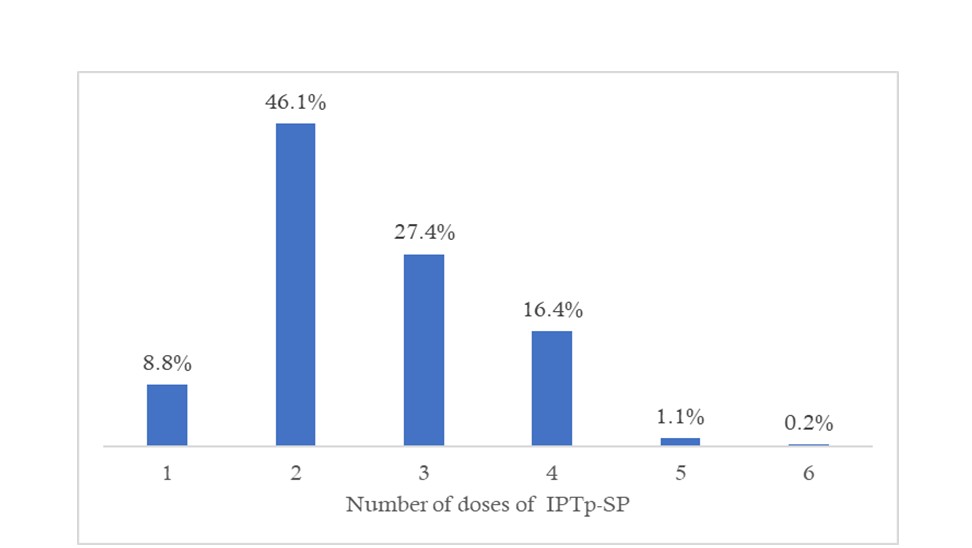
Among the 532 participants surveyed in our study, the average age was 25.9 (± 6.3), and most of them (72.0%) lived in rural areas. Almost all of our participants (97.6%) were married, and 61.8% had no formal education. Housewives accounted for 321 (60.3%), and 304 (57.1%) of the women were more than four months pregnant during their first antenatal visit (Table 1). Overall, 54.9% of women had suboptimal IPTp-SP uptake, defined as receiving fewer than three doses during pregnancy (Figure 1).
Table 2 shows that 201 (37.8%) of the women were primiparas. Women who had attended antenatal care appointments at 4 months or more were more frequent, at 452 (85.0%). Just over half of the women attended three or more antenatal care visits, 276 (51.9%), while 256 (48.1%) attended fewer than three visits. Just over half of the women had a good understanding of the dangers of malaria 283 (53.2%). Most women in this study had poor knowledge of malaria prevention measures during pregnancy 475 (89.3%).
With regard to knowledge about sulfadoxine-pyrimethamine, the study reported that the majority of women had poor knowledge 406 (76.3%) of its benefits. As for the start period, 378 (71.1%) of these women also had poor knowledge. On the other hand, slightly more than half of the women had good knowledge 277 (52.1%) of the interval between two doses of sulfadoxine-pyrimethamine. Almost all of our participants, 519 (97.6%), reported taking SP under DOT. Four hundred seventy-six (89.5%) of our participants had not experienced any side effects. SP was free for 525 (98.7%) women (Table 2).
In the multivariable analysis, women who attended fewer than three antenatal care visits had significantly higher odds of inadequate IPTp-SP uptake than those who attended three or more visits (aOR = 13.05; 95% CI: 4.86–35.03). Women with poor knowledge of the dangers of malaria during pregnancy had lower odds of suboptimal IPTp-SP uptake than women with good knowledge (aOR = 0.36; 95% CI: 0.19–0.65). Women with poor knowledge of the recommended interval between IPTp-SP doses had substantially higher odds of suboptimal IPTp-SP uptake than those with good knowledge (aOR = 45.24; 95% CI: 23.99–85.34) (Table 3). Women who walked to the health facility had lower odds of suboptimal IPTp-SP uptake than those who used motorised transport, such as a motorcycle or car (aOR = 0.26; 95% CI: 0.15–0.47).
This study assessed factors associated with suboptimal IPTp-SP uptake among women in Kissidougou health district. Overall, our study reveals a high prevalence (approximately 55%) of inadequate use of intermittent preventive treatment with sulfadoxine-pyrimethamine during pregnancy in Kissidougou.
Compared to data in the literature, the appropriate use of this treatment among pregnant women (44%) was higher than that observed by Camara et al. in Guinea in 2017[17] and lower than that of the study by the National Malaria Control Programme (NMCP) in Guinea in 2021 [19]. This difference compared to the study by Camara et al. could be explained by the impact of several efforts made by the Ministry of Health through its partners to improve maternal health indicators, and compared to National Malaria Control Programme 2021, it could be explained by a methodological difference, namely the fact that our study was conducted in a single health district, unlike the National Malaria Control Programme study, which covered all regions of the country. Several other studies conducted in many countries have found low coverage of SP [10,11,24–26].
In our study, several factors explain the inadequacy of the optimal dose of intermittent preventive treatment with sulfadoxine-pyrimethamine during pregnancy in Kissidougou. These factors include:
The low number of antenatal consultations (<3 ANC) was associated with a 13-fold higher risk of inadequate dosage, confirming that access to health facilities is a fundamental barrier for pregnant women in this health district. Several studies have reported that attending fewer than three or four prenatal care visits was associated with low coverage of the optimal dose of IPTp [13,14,27–30].
In this analysis, walking to the health facility was associated with lower odds of suboptimal IPTp-SP uptake. This finding should be interpreted cautiously, as it may reflect differences in proximity to health facilities, residence patterns, or other unmeasured factors rather than a direct protective effect of walking. Unexpectedly, poor knowledge of the dangers of malaria during pregnancy was associated with lower odds of suboptimal IPTp-SP uptake. This counterintuitive finding should be interpreted cautiously and may reflect residual confounding, misclassification of knowledge, or differences in health-seeking behaviour.
Lack of awareness of the interval between doses of sulfadoxine-pyrimethamine: increases the risk by 45-fold, highlighting a critical lack of information among women. This situation could also be explained by a lack of knowledge among midwives, particularly trainees, regarding the new WHO recommendations on the use of SP in prenatal care. In clinical practice, there are a large number of trainees who are often inexperienced and eager to learn while working in prenatal care clinics in Guinea.
Consequently, a notable gap is observed in communication with pregnant women when midwives are tasked with conveying the WHO’s recommendations on malaria prevention. Information is frequently conveyed poorly by trainees, both in substance and form, and is sometimes skewed by a superficial understanding of the DOT’s strategy, which the providers themselves do not fully grasp.
These findings are consistent with international data, which highlight that a lack of awareness among pregnant women and trainee midwives’ insufficient mastery of WHO guidelines are major factors contributing to the persistence of high malaria risk during pregnancy [31].
Furthermore, univariate analysis reveals that the cost of prenatal consultations, despite being theoretically free under national policies, and the associated transport costs, particularly for women living far from health centers, constitute significant economic barriers associated with inadequate coverage.
A thorough review of our analyses reveals that economic and logistical barriers are central to the underutilization of IPTp-SP. Although SP is generally free of charge, 83.9% of women with inadequate doses report paying for prenatal consultation, compared to 75.4% in the IPTp-SP3- group (p=0.015). This direct expense discourages early and regular attendance at services, delaying the initiation of treatment.
Although physical access remains an important programmatic concern, the observed association between walking and lower odds of suboptimal uptake suggests that this variable may be acting as a proxy for proximity to health facilities or other contextual factors. To achieve optimal IPTp-SP coverage, it is therefore essential to implement an integrated approach that must simultaneously target: Eliminating financial barriers, i.e., extending free access to all prenatal consultations, not just medication, in order to encourage early enrollment (<4 months) and regularity (≥3 ANC visits) among pregnant women.
Facilitating physical access to healthcare facilities by establishing community transport systems (ambulances/motorcycles) for pregnant women; decentralising IPTp-SP administration through mobile clinics or community distribution points; and strengthening peripheral health services in rural areas. Improving health education by developing programs specifically targeting the precise interval between SP doses, the serious risks of malaria during pregnancy, and the importance of supervised drug administration (DOT). And finally, strengthening the monitoring system by adapting monitoring tools to identify early on women at risk of inadequate doses, particularly those who live far from health centres or have limited resources.
Limitations
Our study has certain limitations, despite being one of the few studies in Guinea to document the literature on factors influencing inadequate optimal doses of intermittent preventive treatment with sulfadoxine-pyrimethamine during pregnancy. Among these limitations, the main one is the cross-sectional design of the study, which does not establish a causal link between the dependent variable and the covariates.
There is also a methodological limitation in terms of the number of health zones covered (4 out of 17) and the length of time women were asked to recall (the 12 months prior to the survey) regarding care related to their pregnancy. This limitation risks introducing a memory bias that could lead to inaccuracies in the responses. Similarly, the subjectivity of the responses provided by some women could also introduce information bias due to the absence of prenatal care records. Future longitudinal or mixed multicenter studies that allow women to be followed over time could build on the current results to better elucidate the complex, multilevel determinants of optimal sulfadoxine-pyrimethamine use.
This study reveals a high prevalence of inadequate use of intermittent preventive treatment with sulfadoxine-pyrimethamine (IPTp-SP) during pregnancy in Kissidougou, Guinea. It identifies several independent factors significantly associated with this suboptimal use: an insufficient number of antenatal consultations (fewer than three), a lack of knowledge about the required interval between doses of SP, difficulties in accessing health facilities due to transport issues, and a low level of awareness of the dangers of malaria in pregnant women.
Achieving optimal coverage of IPTp-SP in Kissidougou requires going beyond an approach focused solely on drug availability. An effective strategy must systematically address the economic (cost of consultations) and geographical (transport) determinants that limit access to antenatal care, while filling critical knowledge gaps. The integration of subsidised transport solutions and the total elimination of user fees for antenatal care appear to be essential complementary interventions to transform formal access into real access to preventive treatment.
What is already known about the topic
What this study adds
We would like to express our sincere gratitude to the World Health Organisation/United Nations Research Program on Poverty-Related Diseases (WHO/TDR) for funding this study. We would also like to thank the participants and investigators in this study for agreeing to take part, and we sincerely thank the health authorities in Kissidougou for their cooperation.
Study design: Mamoudou I Touré, Moctar Tounkara, Mahamoud Sama, Mory 1 Kourouma
Data collection form design: Mamoudou 1 Touré, Mory 1 Kourouma
Data collection : Mamoudou 1 Touré
Data analysis : Mamoudou 1 Touré, Mahamoud Sama Chérif, Mory 1 Kourouma
Original draft and review: Mamoudou 1 Touré, Mory 1 Kourouma, Moctar Tounkara, Mahamoud Sama Chérif, Facely Camara, Sidikiba Sidibé, Seydou Doumbia, Sory I Diawara, Kassoum Kayentao.
| Characteristics | Frequency (n) | Percent (%) |
|---|---|---|
| Average age (standard deviation) in years 25.9 (± 6.3) | ||
| Age (year) | ||
| > 15–19 | 85 | 16.0 |
| > 20–24 | 149 | 28.0 |
| > 25–29 | 148 | 27.8 |
| > 30–34 | 78 | 14.7 |
| > 35–39 | 57 | 10.7 |
| > 40–49 | 15 | 2.8 |
| Place of residence | ||
| Rural | 383 | 72.0 |
| Urban | 149 | 28.0 |
| Marital status | ||
| Married | 519 | 97.6 |
| Single | 11 | 2.1 |
| Divorced | 1 | 0.2 |
| Widowed | 1 | 0.2 |
| Level of education | ||
| None | 329 | 61.8 |
| Primary | 105 | 19.7 |
| Secondary | 91 | 17.1 |
| Higher | 7 | 1.3 |
| Occupation | ||
| Housewife | 321 | 60.3 |
| Student | 32 | 6.0 |
| Shopkeeper | 59 | 11.1 |
| Other | 120 | 22.6 |
| Variables | Frequency (n=532) | Percent (%) |
|---|---|---|
| Parity | ||
| Primiparous | 201 | 37.8 |
| Pauciparous | 195 | 36.6 |
| Multiparous | 136 | 25.6 |
| Number of ANCs completed | ||
| < 3 ANC | 103 | 19.4 |
| ≥ 3 ANC | 429 | 80.6 |
| Dangers of malaria during pregnancy | ||
| Poor knowledge | 249 | 46.8 |
| Good knowledge | 283 | 53.2 |
| Malaria prevention measures during pregnancy | ||
| Poor knowledge | 475 | 89.3 |
| Good knowledge | 57 | 10.7 |
| Benefits of IPTp-SP | ||
| Poor knowledge | 406 | 76.3 |
| Good knowledge | 126 | 23.7 |
| Period of SP’s start | ||
| Poor knowledge | 378 | 71.1 |
| Good knowledge | 154 | 28.9 |
| Time interval between two doses of SP | ||
| Poor knowledge | 255 | 47.9 |
| Good knowledge | 277 | 52.1 |
| Supervised use of SP/DOT | ||
| No | 13 | 2.4 |
| Yes | 519 | 97.6 |
| Side effects | ||
| No | 476 | 89.5 |
| Yes | 56 | 10.5 |
| Free ANC | ||
| No | 106 | 19.9 |
| Yes | 426 | 80.1 |
| Free SP | ||
| No | 7 | 1.3 |
| Yes | 525 | 98.7 |
| Variables | IPTp-SP3- n (%) | IPTp-SP3+ n (%) | Univariate analysis OR [95%CI] | P-value | Multivariate analysis aOR [95%CI] | P-value |
|---|---|---|---|---|---|---|
| Age group (years) | ||||||
| > 15 – 24 | 129 (44.2) | 105 (43.8) | 1.23 [0.72-2.09] | 0.446 | ||
| > 25 – 34 | 127 (43.5) | 99 (41.3) | 1.28 [0.75-2.18] | 0.358 | ||
| > ≥ 35 | 36 (12.3) | 36 (15.0) | Ref | – | ||
| Residence | ||||||
| > Rural | 214 (73.3) | 169 (70.4) | 0.87 [0.59-1.27] | 0.463 | ||
| > Urban | 78 (26.7) | 71 (29.6) | Ref | – | ||
| Marital status | ||||||
| > Married | 287 (98.3) | 232 (96.7) | 0.51 [0.16-1.57] | 0.237 | ||
| > Unmarried | 5 (1.7) | 8 (3.3) | Ref | – | ||
| Women’s education | ||||||
| > None | 194 (66.4) | 135 (56.3) | 1.99 [1.26-3.16] | 0.003 | ||
| > Primary | 57 (19.5) | 48 (20.0) | 1.65 [0.95-2.88] | 0.077 | ||
| > Secondary and higher | 41 (14.0) | 57 (23.8) | Ref | – | ||
| Woman’s occupation | ||||||
| > Other occupations | 93 (31.8) | 86 (35.8) | 1.23 [0.58-2.60] | 0.597 | ||
| > Housewife | 184 (63.0) | 137 (57.1) | 1.52 [0.73-3.15] | 0.258 | ||
| > Student | 15 (5.1) | 17 (7.1) | Ref | – | ||
| Parity | ||||||
| > Primiparous | 109 (37.3) | 92 (38.3) | 1.15 [0.74-1.78] | 0.529 | ||
| > Pauciparous | 114 (39.0) | 81 (33.8) | 1.37 [0.88-2.12] | 0.165 | ||
| > Multiparous | 69 (23.6) | 67 (27.9) | Ref | – | ||
| Age at first antenatal care visit | ||||||
| > > 4 months | 181 (62.0) | 123 (51.2) | 1.55 [1.09-2.19] | 0.013 | ||
| > ≤ 4 months | 111 (38.0) | 117 (48.8) | Ref | – | ||
| Number of antenatal care visits | ||||||
| > Less than 3 | 97 (33.2) | 6 (2.5) | 19.40 [8.32-45.22] | <0.000 | 13.05 [4.86-35.03] | < 0.001 |
| > 3 or more | 195 (66.8) | 234 (97.5) | Ref | – | – | |
| Awareness of the dangers of malaria during pregnancy | ||||||
| > Poor knowledge | 124 (42.5) | 125 (52.1) | 0.68 [0.48-0.96] | 0.027 | 0.36 [0.19-0.65] | 0.001 |
| > Good knowledge | 168 (57.5) | 115 (47.9) | Ref | – | – | |
| Malaria prevention measures during pregnancy | ||||||
| > Poor knowledge | 274 (93.8) | 201 (83.8) | 2.95 [1.64-5.31] | <0.001 | ||
| > Good knowledge | 18 (6.2) | 39 (16.3) | Ref | – | ||
| Knowledge of IPTp-SP Benefits | ||||||
| > Poor knowledge | 226 (77.4) | 180 (75.0) | 1.14 [0.77-1.70] | 0.518 | ||
| > Good knowledge | 66 (22.6) | 60 (25.0) | Ref | – | ||
| Knowledge of the onset period of SP (months) | ||||||
| > Poor knowledge | 241 (82.5) | 137 (57.1) | 3.55 [2.39-5.28] | <0.001 | ||
| > Good knowledge | 51 (17.5) | 103 (42.9) | Ref | – | ||
| Knowledge of the interval between SP doses | ||||||
| > Poor knowledge | 229 (78.4) | 26 (10.8) | 25.17 [14.87-42.60] | <0.001 | 45.24 [23.99-85.34] | <0.001 |
| > Good knowledge | 63 (21.6) | 214 (89.2) | Ref | – | – | |
| Supervised use of SP/DOT | ||||||
| > No | 11 (3.8) | 2 (0.8) | Ref | – | ||
| > Yes | 281 (96.2) | 238 (99.2) | 0.22 [0.05-0.98] | 0.047 | ||