Research | Open Access | Volume 9 (3): Article 144 | Published: 09 Sep 2026

Views: 100
Menu, Tables and Figures
| Variable | Suspected N=269,351 | No. Tested 228,343 | No. Positive N=173,692 | Proportion Tested (%) | Positivity Rate (%) |
|---|---|---|---|---|---|
| Year | |||||
| 2018 | 46,115 | 41,753 | 32,095 | 90.5 | 76.9 |
| 2019 | 59,442 | 47,746 | 36,086 | 80.3 | 75.6 |
| 2020 | 49,357 | 39,861 | 30,635 | 80.8 | 76.9 |
| 2021 | 55,855 | 46,659 | 35,822 | 83.5 | 76.8 |
| 2022 | 58,582 | 52,324 | 39,054 | 89.3 | 74.6 |
| Sex Distribution | |||||
| Female | 161,512 | 136,449 | 102,026 | 84.5 | 74.8 |
| Male | 107,839 | 91,894 | 71,666 | 85.2 | 78.0 |
| Age Categories | |||||
| <5 Years | 105,097 | 88,922 | 70,603 | 84.6 | 79.4 |
| 5–14 Years | 53,473 | 45,017 | 36,959 | 84.2 | 82.1 |
| 15+ Years | 110,781 | 94,404 | 66,130 | 85.2 | 70.0 |
“`
Annungma Christopher Bagonluri1,&, Magdalene Akos Odikro2, George Akowuah2, Razak Gyesi Issahaku2,3, Fuseina Sulemana1, Delia Akosua Bandoh2, Ernest Kenu2, Chrysantus Kubio2,4
1Bole District Health Directorate, Ghana Health Service, Bole, Ghana; 2Ghana Field Epidemiology and Laboratory Training Program, School of Public Health, University of Ghana, Accra, Ghana; 3Laboratory Department, Tamale Teaching Hospital, Tamale, Ghana; 4Savannah Regional Health Directorate, Ghana Health Service, Damongo, Ghana
&Corresponding author: Annungma Christopher Bagonluri, Bole District Health Directorate, Ghana Health Service, Bole, Ghana, Email: Chris.bagons@gmail.com, ORCID: https://orcid.org/0009-0002-3768-7857
Received: 10 Mar 2025, Accepted: 04 Sep 2026, Published: 09 Sep 2026
Domain: Infectious Disease Epidemiology
Keywords: Malaria, surveillance, positivity rate, Sub-district, Bole
©Annungma Christopher Bagonluri et al. Journal of Interventional Epidemiology and Public Health (ISSN: 2664-2824). This is an Open Access article distributed under the terms of the Creative Commons Attribution International 4.0 License (https://creativecommons.org/licenses/by/4.0/), which permits unrestricted use, distribution, and reproduction in any medium, provided the original work is properly cited.
Cite this article: Annungma Christopher Bagonluri et al., Subnational malaria surveillance for elimination planning: Analysis of routine district data from Bole District, Ghana, 2018–2022. Journal of Interventional Epidemiology and Public Health. 2026; 9(3):144. https://doi.org/10.37432/jieph-d-25-00062
Introduction: Malaria remains a major public health concern, as the Savannah Region of Ghana reported institutional malaria incidence of 3,485 per 100,000 people in 2021. Limited analysis of routine data is conducted at the district level in Ghana. We conducted a descriptive trend analysis of malaria surveillance data in the Bole District to illustrate the trend of malaria positivity rate over five years.
Methods: The study was a descriptive analysis of secondary data on OPD malaria morbidity from 2018 to 2022, retrieved from the District Health Information System 2 (DHIMS2) database. Variables collected included suspected, tested, and positive malaria cases. The data were exported into MS Excel Professional 2016, cleaned, and analyzed by person, place, and time. We estimated outbreaks by calculating the cumulative sum (CUSUM 2) average. The results were presented in tables, charts, and maps, along with frequencies and percentages.
Results: A total of 269,351 malaria cases were suspected, of which 228,343 were tested, and 173,692 were positive during the study period, resulting in an overall positivity rate of 76.1%. Males accounted for 41.3% of the positive cases, with a positivity rate of 78.0% (71,666/91,894). Approximately 43.1% of all positive cases involved children under five years, with a positivity rate of 79.4% (70,603/88,922). Among children aged 5-14 years, the positivity rate was 82.1% (36,959/45,017). We observed a longer period of case positivity rates in 2022, from March to September, even though the peaks in other years occurred between July and September. Mandari sub-district recorded the highest positivity rate at 84.0% (8,375/9,975). The positivity rate declined consistently from 76.9% in 2018 to 74.1% in 2022. There were four outbreaks, with a prolonged period of case plateau in 2022.
Conclusion: The malaria positivity rate in the Bole District declined over the five years. The positivity rate was higher among males, school-age children (5-14 years), and in the Mandari sub-district. There were four observed outbreaks, with a prolonged plateau of cases observed in 2022. There is a need for the Bole District Health Directorate to intensify malaria control measures among males, school-going children and children under five years.
Malaria is a parasitic disease caused by infection with Plasmodium protozoa, transmitted by an infective female Anopheles mosquito [1]. Plasmodium falciparum poses the greatest threat, accounting for the majority of all positive malaria test results [2]. As the world burden of malaria decreases, Routine Health Information Systems (RHIS) have become vital for monitoring progress towards elimination [3,4].
Globally, there were an estimated 241 million malaria cases in 2020, with 627,000 deaths in 85 malaria-endemic countries. The WHO African Region had an estimated 228 million cases and 602 thousand deaths in 2020, with Ghana contributing 2.1 % and 1.9% of the cases and deaths, respectively [5]. In the Savannah Region of Ghana, institutional malaria incidence per 100,000 people was 3,485 in 2021.
Malaria Indicator Surveys conducted in Ghana over time depict that parasite prevalence has reduced, while the malaria test positivity rate has increased [6]. Ghana is therefore pursuing the High Burden to High Impact approach, which was introduced in 2018 [6]. Malaria occurs throughout the year with geographical variations. However, the positivity rate peaks in the major rainy season (July-October) each year [7,8]. Malaria test positivity has been reported in both genders, and all ages are at risk of being infected with malaria if exposed to the bite of an infected female Anopheles mosquito [9–13]. Children under 5 years of age, however, are the most vulnerable group affected by malaria [14,15]. It is the third-deadliest infectious disease for children under five years, as reported by UNICEF [16]. However, some studies found that the risk of malaria positivity was highest among individuals aged between 6 and 15 years [17,18]. Understanding how malaria positivity varies in different geographical areas of the district in Ghana due to seasonal or year-to-year changes is pertinent for planning malaria elimination interventions within the district [19,20].
The objectives of reducing the disease burden and eliminating malaria are central to Sustainable Development Goal 3 [21]. Routine data analysis also offers an opportunity to forecast future malaria incidence [22,23]. Although malaria morbidity data are routinely collected into DHIMS 2, limited analysis is done on them to describe the trend of malaria case positivity rate in the Bole District. The district reported the highest number of positive malaria cases (over 30,000 each year) in the region over the study period [24], which informed the choice of this study. This study, therefore, analyzed routinely collected Outpatient Department (OPD) malaria data to determine the magnitude and distribution of positivity rate by person, place, and time in the Bole district, from 2018 to 2022.
Study design and setting
This was a retrospective study using secondary data from the DHIMS2 OPD malaria morbidity dataset from 2018 to 2022. The Bole District is one of the seven administrative districts in the Savannah Region. It is located in the western corridor of the Savannah Region, and shares borders with La Côte d’Ivoire in the west, Tain, Kintampo North and Kintampo South districts in the south, West Gonja and Central Gonja districts in the east, and Sawla-Tuna-Kalba district in the north. The Back Volta is the landmark that separates the district from Côte d’Ivoire, with many smaller tributaries. Seven dams hold water all year round in the district. The district has a single rainy season each year. During the rainy season, several lowlands and valleys hold water, and the entire environment becomes green with refreshed savannah vegetation. The district currently has 31 health facilities: a hospital, two polyclinics, eight health centres, and 21 CHPS compounds where malaria services are provided. It has 186 communities with an estimated projected population of approximately 120,715, based on the 2021 population and housing census. For health service administration, the district is further divided into six sub-districts: Bamboi, Bole, Jama, Mandari, Mankuma, and Tinga [25].
Data collection
We extracted aggregated OPD malaria morbidity data from the monthly morbidity returns in DHIMS2, including: malaria cases suspected, malaria cases tested, and malaria positive cases by year, sex, age, and sub-district. DHIMS2 is an electronic data repository of the Ghana Health Service where all malaria reports generated are entered. The variables were selected from the pivot table of the data visualiser in DHIMS2, downloaded as a CSV file, and converted to an Excel 97–2003 workbook. The data was cleaned by deleting variable identification and code columns from the CSV file to prevent duplication. We also deleted the organisation unit description column from the file. The age-sex combined variable in DHIMS2 was split into separate variables: age and sex, using the text-to-columns function in Excel. The data were checked for internal consistency and missing data elements.
Data analysis
Microsoft Excel Professional Plus version 2016 was used for the descriptive analysis of the data. We conducted yearly frequency and proportion analyses for age, sex, and sub-district distribution of suspected, tested, and positive malaria cases. A choropleth map was created using ArcGIS 10.4 to illustrate sub-district malaria case density and positivity rates. We employed graduated mapping techniques to categorise cases and rates into classes by year and sub-district. Using the print layout, we added map elements and exported the map as an image for this work.
We also conducted an annual trend analysis of the malaria positivity rate presented on a line graph. Additionally, a C2 Cumulative Sum (CUSUM2) was utilised to identify any outbreaks that may have occurred during the period. The C2, which represented the baseline number of cases, was calculated using the formula: C2 = mean + 3* standard deviations of the seven previous surveillance points before a two-month interval. The number of malaria-positive cases recorded each month was then compared to the baseline cases indicated by the C2 curve. When data points showed positive cases rising above the baseline threshold, it indicated a potential malaria outbreak.
Ethics consideration
The Public Health Act (Act 851), 2012 of Ghana, approves routine surveillance data analysis for decision-making. In addition, aggregate data were generated from the DHIMS2 for this study; hence, personal identity variables were not part of the data extraction. Therefore, no formal ethical clearance or informed consent was required. However, permission was obtained from the Savannah Regional Directorate for the extraction of the data from DHIMS2 for the study.
Characteristics of malaria cases and positivity
Between 2018 and 2022, 228,343 cases were tested, with 173,692 confirmed positive. In 2022, 89.3% (52,324/58,582) of suspected cases were tested, compared to 83.5% (46,659/55,855) of tests conducted in 2021. Additionally, in 2022, the case positivity rate was 74.6% (39,054/52,324), the lowest for the years studied. The year 2018 recorded the highest proportion, 90.5% (41,753/46,115), of cases tested. The district’s overall positivity rate for the entire study period was 76.1% (173,692/228,343). Bole sub-district recorded between 6,000 and 20,000 cases, while Mandari sub-district had a positivity rate exceeding 80% over the years.
Malaria cases and positivity rate
The positivity rate was 78% (71,666/91,894) among males and 74.8% (102,026/136,449) among females, indicating a lower rate among females (Table 1). Children under five years constituted 39% (105,097/269,351) of the total suspected cases, and among older children (5-14 years) it was 19.9% (53,473/269,351). Among children under five tested for malaria, 79.4% were confirmed positive (70,603/88,922), indicating a high burden in this age group. The positivity rate was 82.1% (36,959/45,017) of suspected cases tested in older children, as reported.
Geographical distribution of malaria cases
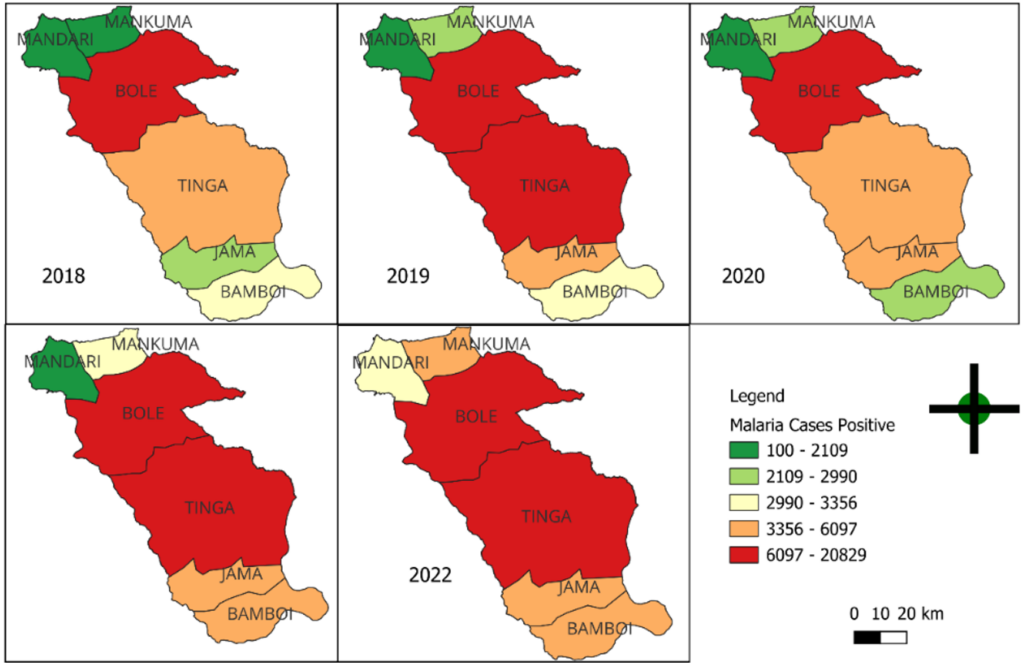
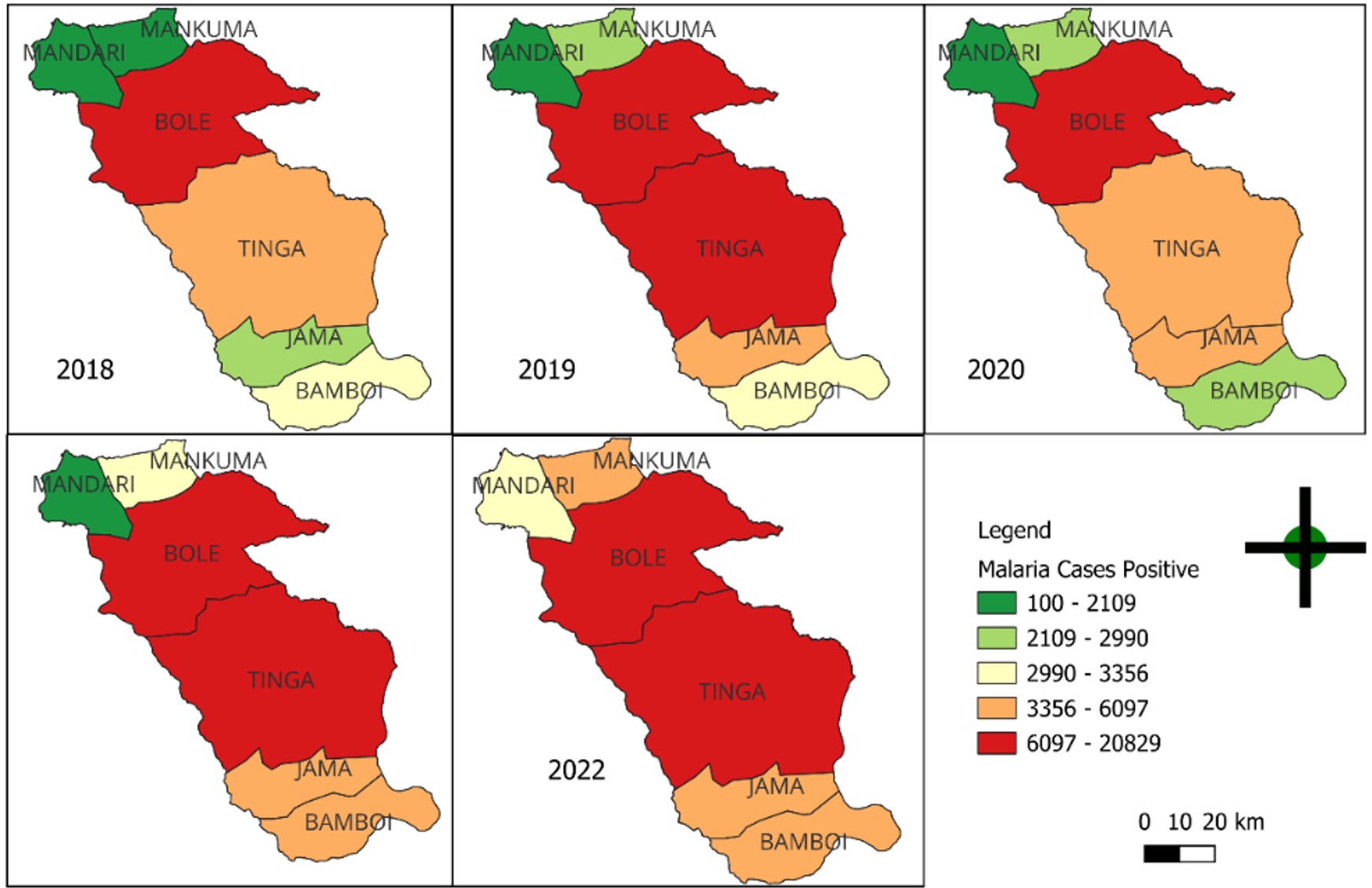
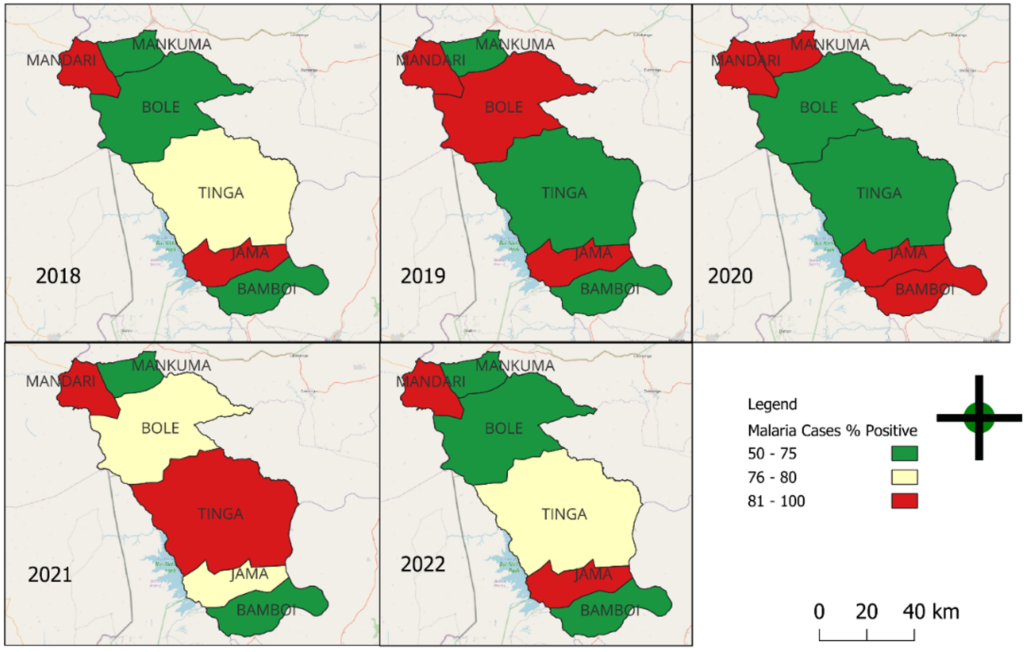
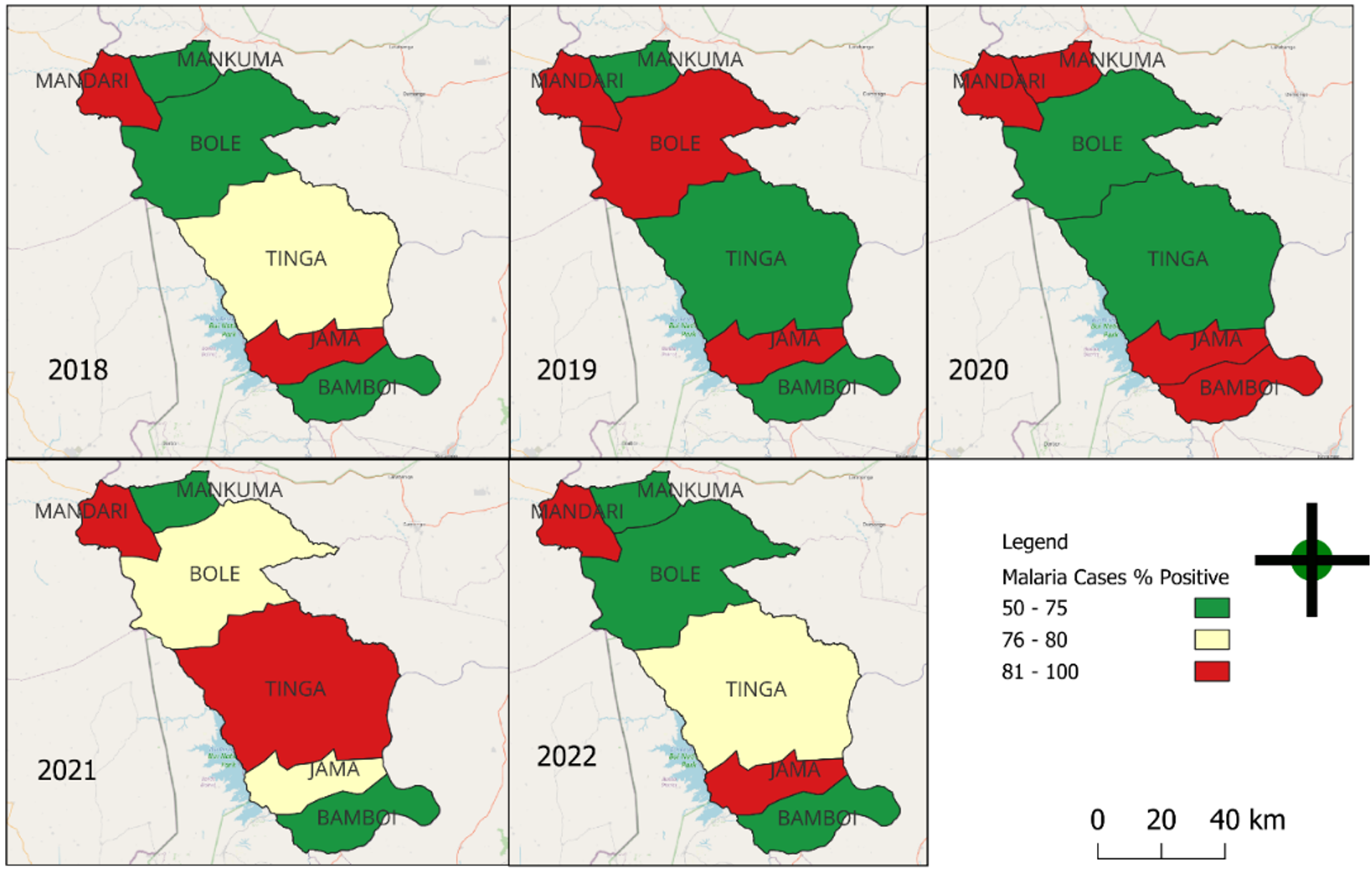
Bole sub-district consistently recorded the highest number of positive malaria cases annually, ranging from 6097 to 20,829 (Figure 1). There was a declining trend in the malaria positivity rate in the district, dropping from 76.9% in 2018 to 75.6% in 2019 (Table 1). The curve increased to 76.9% in 2020 compared to 2019 and declined in 2021 (76.8%) and further down to 74.6% in 2022. Mandari and Jama sub-districts recorded positivity rates of over 80% throughout the study period, although the Jama sub-district had a rate that declined between 76% and 80% in 2021. Bamboi sub-district had a rate between 50% and 75%, except in 2020 when it recorded over 80% (Figure 2).
Seasonality of malaria occurrence
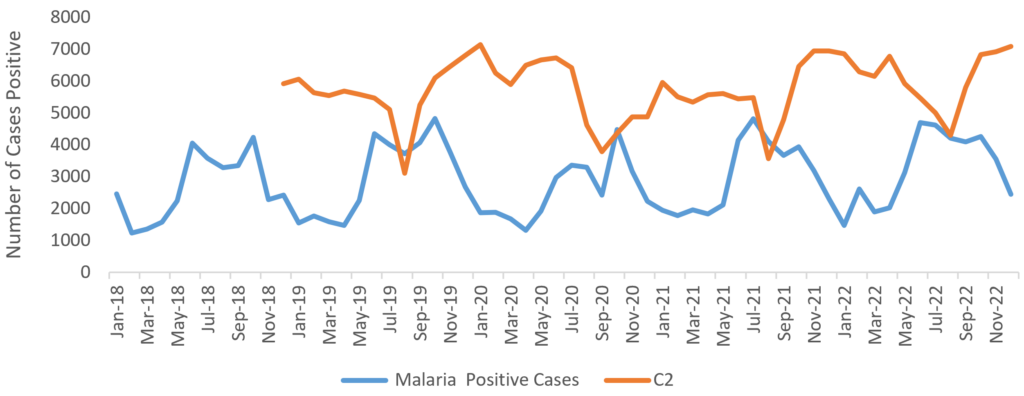
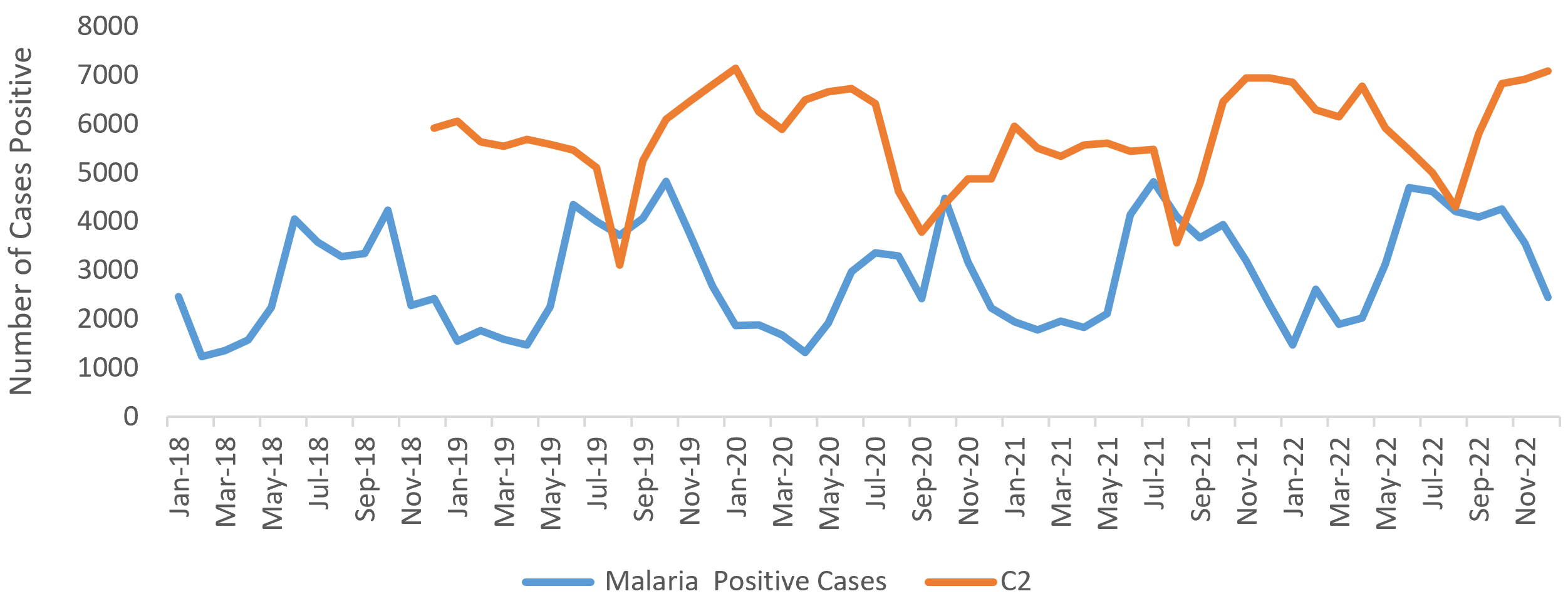
There were seasonal peaks of malaria cases (ranging from 4,000 to 5,000 per month), usually occurring between June and October each year (Figure 3). In 2022, positivity rates began increasing from March and started declining in September of the same year. The district’s malaria cases reached epidemic thresholds in July 2019 and 2021, October 2020, and August 2022, according to the C2 analysis.
Our trend analysis of malaria data showed an unstable pattern of the disease in the district, similar to what other studies found [18,26–28]. The rate declined between 2018 and 2019 but rose in 2020 and followed a downward trend in the successive years. This finding corroborates the findings of some studies in sub-Saharan Africa, where the annual positivity rate increased initially but later declined [29,30]. The reduction witnessed in the district could be ascribed to the many malaria control program interventions, such as larviciding and point mass distribution of long-lasting insecticide-treated nets. Larviciding, introduced in 2021, seeks to prevent the breeding of the female anopheles mosquitoes that transmit the disease, whilst distribution of nets, which began in 2010, offers households protection from mosquito bites when sleeping at night.
Besides these interventions, there was also an erratic supply of Malaria Rapid Diagnostic Test (mRDT) kits at some periods in the district. Most of the facilities in the district relied on mRDTs for testing suspected malaria cases, and since there were shortages, staff could not test cases, leading to a decline in rates or otherwise. Other studies conducted in Tanzania and the Democratic Republic of Congo posit that the availability of mRDTs in health facilities has a positive influence on the malaria positivity rate [18,31].
Also, the study showed that positive malaria cases increased between 2020 and 2022, which is consistent with the study in Sefwi-Wiawso in Ghana, where malaria prevalence rose from 2014 to 2016 [32]. Despite the many malaria interventions that should have reduced malaria cases, we identified a surge in cases. This could be due to non-adherence to the preventive methods and increasing resistance to drugs by P. falciparum, as indicated by Tesfay et al [13]. Also, Tadesse et al reported an increase in the number of malaria cases in their study at the Kaffa zone in Ethiopia with year-to-year variations [7]. The increase in positive malaria cases was equally supported by the World Health Organization’s 2020 annual malaria report [6], which observed that malaria positivity had increased.
Regarding gender, malaria positivity was higher in males than in females. Our results agree with other study findings. For instance, in Maksegnit Health Center in Ethiopia, a 12% positivity rate was recorded among males compared to 4.5% in females [11]. A higher incidence (4.12 males to 3.61 females) was seen by Sani Kalil et al [9]. A large proportion of male malaria positivity rate was noted in another study of five-year trend analysis of malaria prevalence in Guba District, Ethiopia, and surveillance data analysis in Netrokona District of Bangladesh [10,12]. This trend of high positivity in males than females in the district may result from one of the risky behaviors of men not wearing protective clothes and not sleeping under insecticide-treated bed nets. Owing to the “galamsay” (illegal mining) activities in the Bole district, largely driven by men who work outside into the night, this could expose men to the infection. Galamsay is a small-scale mining undertaken in the forest with temporary accommodation structures where miners rest after work.
On the contrary, a study on the trends of malaria prevalence in selected districts of Kaffa Zone, Southwest Ethiopia, found that females had a higher burden of the malaria infection, contributing to more than half (58.5%) of total cases screened [7]. The reasons attributed to this higher prevalence in females included higher health-seeking behaviour of females at health facilities, whilst males mostly resort to chemist shops and self-medication.
Moreover, the study revealed an 82.1% positivity rate among children aged 5-14 years compared to children less than five years and 15+ years categories, even though this category had the least proportion of testing. This is in sharp contrast to 17.1% positivity for this age group recorded in a study in the Raya Azebo District of Ethiopia [13] and other similar studies [9,11]. This age group, 5-14 years, is the active school-going population in the district, and more preventive measures need to be targeted at this age group. At this age, parents tend to leave them alone in their bedrooms, where they might not sleep under mosquito nets, therefore getting exposed to mosquito bites. They also spend a longer time outside and sometimes without protective clothing, exposing themselves to mosquito bites. These may account for the high positivity among this age group. The school-based long-lasting insecticide-treated-net distribution should be improved to ensure that many school pupils receive the nets. Monitoring and supervision should be enhanced to ensure the nets get to the targeted group. Education on the use of these nets and other preventive measures should equally be intensified at the schools so that pupils not only use the nets but also serve as promoters of the preventive measures at home. The low positivity rate among children under five years may be influenced by the seasonal malaria chemoprevention program implemented in the district since 2019. This is a four-cycle preventive medicine comprising sulfadoxine-pyrimethamine and amodiaquine administered to children 3-59 months during the peak rainy seasons (July to October) in twenty-eight-day intervals.
Most of the cases were reported in the Bole sub-district, whilst Mandari, a bordering sub-district to the Bole sub-district, recorded the lowest. This vast variation could be linked to the population size of the Bole sub-district and its facility density compared to the Mandari sub-district [25]. Conversely, the results unveiled a rather higher malaria positivity rate in Mandari and Jama sub-districts. A records review is recommended for these sub-districts to determine the veracity of the rate and possibly reorient the staff on the testing technique using mRDTs, since this is the only procedure in the health centres and CHPS Compounds there. Besides, the incidence rate for the various sub-districts should be measured for a better understanding of the disease burden in the population.
In our analysis, the trend of the disease started increasing from May of every year from 2018 to 2021, reached a peak, and began to decline from September. Malaria morbidity patterns have been influenced by many factors, including rainfall. This pattern is consistent with other studies in Ghana [19,20,32] where the inception of rainfall increases the number of cases registered because the disease vector population increases during the rainy season.
However, there was a change in the trend of the disease in 2022, where the cases started rising from March, almost plateaued from June to September with about 4,000 cases per month, before declining. Over the years, however, the northern part of Ghana has been noted to record high rates of malaria cases from July to November, whilst cases peak in the south from October to November, with fewer cases recorded from May to June [33]. In addition, other surveys in Africa demonstrated September – November to be the peak of malaria transmission [7,8,26,28]. This suggests changes in the environmental conditions and biological factors affecting the survival of the disease vector in transmitting the disease for a longer period.
In addition, some studies recorded two peaks of malaria cases within a year. A trend analysis of Plasmodium falciparum prevalence in two communities of Muheza district, North-eastern Tanzania, revealed a peak of malaria cases in June-July and September-November of every year [9]. Another exploratory study of possible associations between malaria test positivity rates and their predictors, including malaria control measures and meteorological factors in Lower Moshi, reported peaks in March-May and October-December [18]. The later peak of cases was attributed to irrigation activities in the dry season characteristic of the study setting.
Furthermore, we also observed that the malaria epidemic threshold was exceeded four times in the district. It showed that malaria cases reached the district’s epidemic proportions and could prompt public health action. The foremost is to confirm the validity of the data by checking for errors in data collection, entry, and analysis. Another is to re-examine the surveillance system and data sources to identify any potential weaknesses. Moreover, the district team should ensure adequate implementation and monitoring of malaria elimination programs. We used the CUSUM technique, which not only identifies epidemic thresholds but is also adapted for monitoring clinical-care processes [34,35].
Limitations and strengths
In this study, secondary surveillance data were used to analyze the trends in malaria morbidity and positivity rates. Since data were extracted from the repository of facilities reporting in DHMS2, the actual burden of malaria in the community might be underestimated in this district. In addition, we did not compare the cases reported as tested and confirmed with microscopy and malaria Rapid Diagnostic Test (mRDT) results for validity. However, data captured into DHIMS2 is validated before and after entry, granting it high quality. Therefore, the present study findings in the study area provide useful information to strengthen the interventions for malaria elimination.
The overall malaria positivity rate for the Bole District was 76.1%. However, there was a decline in positivity, particularly among children under five years. There was high positivity in the Jama and Mandari sub-districts, compared to their adjoining sub-districts. We detected a prolonged peak of the malaria positivity trend in 2022. We recommend further studies to determine the malaria prevention interventions that will further reduce the malaria positivity rate in the district.
What is already known about the topic
What this study adds
Delia Akosua Bandoh is an Associate Editor at the Journal of Interventional Epidemiology and Public Health (JIEPH) and a co-author of this manuscript. In line with the journal’s conflict of interest policy, she was fully recused from the peer review process and had no involvement in editorial handling or decision-making for this submission. An independent editor oversaw the review and decision-making process. The other authors declare that they have no competing interests.
Conceptualization: Annungma Christopher Bagonluri, Razak Gyesi Issahaku, Chrysantus Kubio
Data curation: Annungma Christopher Bagonluri, Magdalene Akos Odikro, George Akowuah, Fuseina Sulemana
Formal analysis: Annungma Christopher Bagonluri, George Akowuah, Razak Gyesi Issahaku
Methodology: Annungma Christopher Bagonluri, Magdalene Akos Odikro, George Akowuah, Razak Gyesi Issahaku
Validation: Annungma Christopher Bagonluri, Chrysantus Kubio
Visualization: Annungma Christopher Bagonluri
Supervision: Delia Akosua Bandoh, Ernest Kenu, Chrysantus Kubio
Writing – original draft: Annungma Christopher Bagonluri
Writing – review & editing: Magdalene Akos Odikro, George Akowuah, Razak Gyesi Issahaku, Fuseina Sulemana, Delia Akosua Bandoh, Ernest Kenu, Chrysantus Kubio
| Variable | Suspected N=269,351 | No. Tested 228,343 | No. Positive N=173,692 | Proportion Tested (%) | Positivity Rate (%) |
|---|---|---|---|---|---|
| Year | |||||
| 2018 | 46,115 | 41,753 | 32,095 | 90.5 | 76.9 |
| 2019 | 59,442 | 47,746 | 36,086 | 80.3 | 75.6 |
| 2020 | 49,357 | 39,861 | 30,635 | 80.8 | 76.9 |
| 2021 | 55,855 | 46,659 | 35,822 | 83.5 | 76.8 |
| 2022 | 58,582 | 52,324 | 39,054 | 89.3 | 74.6 |
| Sex Distribution | |||||
| Female | 161,512 | 136,449 | 102,026 | 84.5 | 74.8 |
| Male | 107,839 | 91,894 | 71,666 | 85.2 | 78.0 |
| Age Categories | |||||
| <5 Years | 105,097 | 88,922 | 70,603 | 84.6 | 79.4 |
| 5–14 Years | 53,473 | 45,017 | 36,959 | 84.2 | 82.1 |
| 15+ Years | 110,781 | 94,404 | 66,130 | 85.2 | 70.0 |
“`