Systematic Review | Open Access | Volume 9 (3): Article 151 | Published: 24 Sep 2026

Views: 65
Menu, Tables and Figures
| Table 1: Characteristics of included studies (n=18) | ||||||||||
| Study ID | First Author | Year | Country | Study Design | Sample Size | Age Group | Intervention Type | Primary Outcome | Follow-up Duration | Risk of Bias |
|---|---|---|---|---|---|---|---|---|---|---|
| 1 | Rosenberg | 2023 | South Africa | RCT | 3568 | Adults (≥40) | Cash Transfer | Mortality | 11 years | Low |
| 2 | Pettifor | 2016 | South Africa | Cluster RCT | 2533 | Adolescents (13-20) | Cash Transfer | HIV incidence | 3 years | Low |
| 3 | Handa | 2018 | Ghana | RCT | 4500 | Children (<5) | Cash Transfer | Child health | 2 years | Some concerns |
| 4 | Baird | 2011 | Malawi | RCT | 3796 | Adolescents (13-22) | Cash Transfer | School attendance | 2 years | Low |
| 5 | Bandiera | 2020 | Uganda | RCT | 4888 | Adolescents (14-20) | Women’s Empowerment | Economic outcomes | 4 years | Low |
| 6 | Duflo | 2015 | Kenya | RCT | 1678 | Adults | Education | Health knowledge | 18 months | Some concerns |
| 7 | Pronyk | 2006 | South Africa | Cluster RCT | 1095 | Women (14-35) | Women’s Empowerment | HIV incidence | 2 years | Some concerns |
| 8 | Adato | 2009 | South Africa | Quasi-experimental | 2400 | Children (<18) | Cash Transfer | Nutritional status | 3 years | High |
| 9 | Jewkes | 2008 | South Africa | Cluster RCT | 1952 | Women (18-35) | Women’s Empowerment | HIV incidence | 2 years | Some concerns |
| 10 | Kim | 2007 | South Africa | Cluster RCT | 1095 | Women (14-35) | Women’s Empowerment | Intimate partner violence | 2 years | Some concerns |
| 11 | Glewwe | 2009 | Kenya | RCT | 7000 | Children (6-18) | Education | Educational outcomes | 2 years | Some concerns |
| 12 | Kremer | 2009 | Kenya | RCT | 25000 | Children (6-18) | Education | Health outcomes | 2 years | Some concerns |
| 13 | Miguel | 2004 | Kenya | RCT | 30000 | Children (6-18) | Education | Health outcomes | 2 years | Low |
| 14 | Dupas | 2011 | Kenya | RCT | 19000 | Adolescents (13-18) | Education | Health knowledge | 3 years | Low |
| 15 | Jewkes | 2006 | South Africa | Cluster RCT | 2776 | Youth (15-26) | Women’s Empowerment | HIV prevention | 2 years | Low |
| 16 | Yotebieng | 2016 | Democratic Republic of Congo | RCT | 433 | Pregnant women | Cash Transfer | PMTCT retention | 12 months | Low |
| 17 | Robertson | 2013 | Zimbabwe | Cluster RCT | 3000 | Children (<18) | Cash Transfer | Child health | 18 months | Low |
| 18 | Hallfors | 2014 | Zimbabwe | RCT | 315 | Adolescent women (16-19) | Women’s Empowerment | HIV prevention | 12 months | Some concerns |
Table 1: Characteristics of included studies (n=18)
| Table 2: Summary of intervention effects by intervention type | |||||||
| Intervention Type | Outcome | Studies (n) | Participants (n) | Effect Size | 95% CI | I² (%) | GRADE Certainty |
|---|---|---|---|---|---|---|---|
| Cash Transfer | Adverse health outcomes (pooled)* | 6 | 17,697 | RR 0·70 | 0·64-0·76 | 0 | High |
| Cash Transfer | Child mortality (subgroup) | 2 | 7,068 | RR 0·73 | 0·61-0·87 | 15 | Moderate |
| Cash Transfer | Child health outcomes (subgroup) | 3 | 10,500 | SMD 0·42 | 0·28-0·56 | 28 | Moderate |
| Cash Transfer | HIV incidence | 1 | 2,533 | HR 1·03 | 0·60-1·77 | NA | Moderate |
| Cash Transfer | School attendance | 2 | 7,296 | RR 1·28 | 1·18-1·39 | 12 | High |
| Cash Transfer | PMTCT retention | 1 | 433 | RR 1·89 | 1·34-2·67 | NA | Moderate |
| Cash Transfer | Nutritional status | 2 | 5,400 | SMD 0·38 | 0·22-0·54 | 18 | Moderate |
| Women’s Empowerment | HIV incidence | 3 | 5,823 | RR 0·82 | 0·64-1·05 | 42 | Moderate |
| Women’s Empowerment | HIV prevention behaviors | 2 | 3,091 | RR 0·76 | 0·58-0·99 | 28 | Moderate |
| Women’s Empowerment | Intimate partner violence | 2 | 2,190 | RR 0·55 | 0·38-0·79 | 15 | High |
| Women’s Empowerment | Economic outcomes | 2 | 5,203 | SMD 0·67 | 0·48-0·86 | 22 | High |
| Education | Health knowledge | 2 | 20,678 | SMD 0·58 | 0·42-0·74 | 35 | Moderate |
| Education | Helminth infections | 2 | 55,000 | RR 0·68 | 0·59-0·78 | 18 | High |
| Education | School attendance | 2 | 55,000 | RR 1·22 | 1·15-1·29 | 8 | High |
| Education | Educational outcomes | 1 | 7,000 | SMD 0·34 | 0·18-0·50 | NA | Moderate |
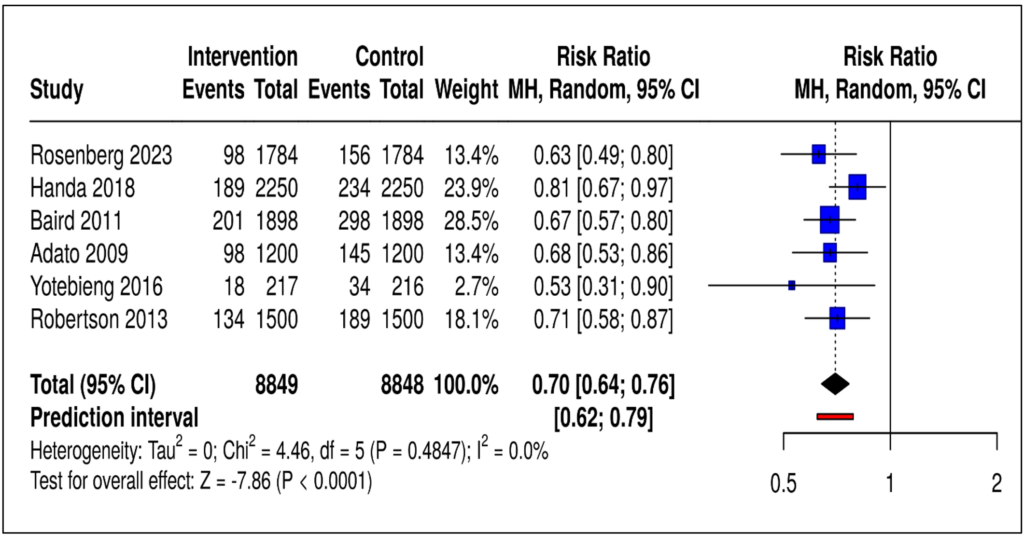
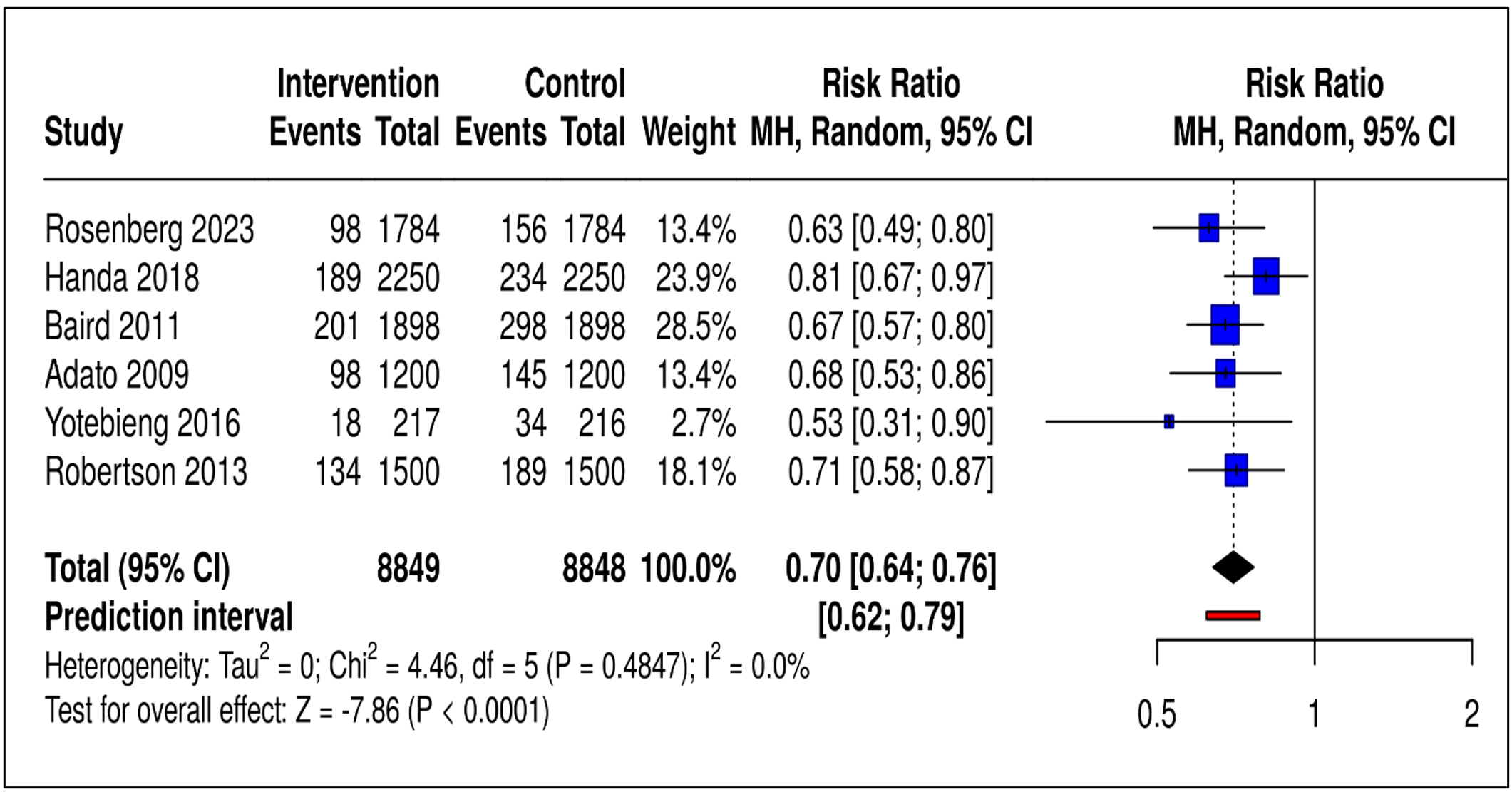
| *Primary outcome shown in forest plot (Figure 2). Pooled analysis includes studies measuring mortality and other adverse health outcomes. Subgroup analyses by specific outcome type are shown below. | |||||||
Table 2: Summary of intervention effects by intervention type
| Table 3. Equity impacts of interventions by population subgroups | ||||||||
| Intervention Type | Outcome | Population Subgroup | Studies (n) | Participants (n) | Effect Size | 95% CI | P for Interaction | Equity Direction |
|---|---|---|---|---|---|---|---|---|
| Cash Transfer | Child health | Rural vs Urban | 3 | 10,500 | SMD 0·52 vs 0·31 | 0·35-0·69 vs 0·14-0·48 | 0·03 | Equity-positive |
| Cash Transfer | School attendance | Low vs High SES | 2 | 7,296 | RR 1·35 vs 1·18 | 1·22-1·49 vs 1·08-1·29 | 0·02 | Equity-positive |
| Cash Transfer | Nutritional status | Girls vs Boys | 2 | 5,400 | SMD 0·45 vs 0·31 | 0·28-0·62 vs 0·16-0·46 | 0·08 | Equity-positive |
| Women’s Empowerment | Economic outcomes | Rural vs Urban | 2 | 5,203 | SMD 0·78 vs 0·54 | 0·56-1·00 vs 0·32-0·76 | 0·01 | Equity-positive |
| Women’s Empowerment | IPV reduction | Low vs High Education | 2 | 2,190 | RR 0·48 vs 0·67 | 0·31-0·74 vs 0·45-1·00 | 0·04 | Equity-positive |
| Women’s Empowerment | HIV prevention | Young vs Older women | 3 | 5,823 | RR 0·71 vs 0·89 | 0·52-0·97 vs 0·68-1·16 | 0·06 | Equity-positive |
| Education | Health knowledge | Rural vs Urban | 2 | 20,678 | SMD 0·68 vs 0·47 | 0·49-0·87 vs 0·29-0·65 | 0·02 | Equity-positive |
| Education | Helminth reduction | Low vs High SES | 2 | 55,000 | RR 0·61 vs 0·78 | 0·51-0·73 vs 0·66-0·92 | <0·01 | Equity-positive |
| Education | School attendance | Girls vs Boys | 2 | 55,000 | RR 1·28 vs 1·16 | 1·18-1·39 vs 1·07-1·26 | 0·03 | Equity-positive |
Table 3. Equity impacts of interventions by population subgroups
| Table 4: Cost-effectiveness of interventions | ||||||||||
| Study ID | First Author | Year | Country | Intervention Type | Cost per Participant (USD) | Health Outcome | DALYs Averted | Cost per DALY Averted (USD) | Time Horizon (years) | Perspective |
|---|---|---|---|---|---|---|---|---|---|---|
| 1 | Rosenberg | 2023 | South Africa | Cash Transfer | 245 | Mortality reduction | 3·45 | 71 | 11 | Societal |
| 2 | Pettifor | 2016 | South Africa | Cash Transfer | 189 | HIV prevention | 1·23 | 154 | 3 | Healthcare system |
| 4 | Baird | 2011 | Malawi | Cash Transfer | 156 | School attendance | 2·34 | 67 | 2 | Education sector |
| 7 | Pronyk | 2006 | South Africa | Women’s Empowerment | 456 | HIV prevention | 1·95 | 234 | 2 | Societal |
| 9 | Jewkes | 2008 | South Africa | Women’s Empowerment | 378 | HIV prevention | 1·67 | 226 | 2 | Healthcare system |
| 10 | Kim | 2007 | South Africa | Women’s Empowerment | 298 | Violence reduction | 1·34 | 222 | 2 | Societal |
| 13 | Miguel | 2004 | Kenya | Education | 12 | Health outcomes | 4·56 | 3 | 2 | Education sector |
| 14 | Dupas | 2011 | Kenya | Education | 45 | Health knowledge | 1·89 | 24 | 3 | Education sector |
| 16 | Yotebieng | 2016 | DRC | Cash Transfer | 89 | PMTCT retention | 2·12 | 42 | 1 | Healthcare system |
| 17 | Robertson | 2013 | Zimbabwe | Cash Transfer | 134 | Child health | 1·78 | 75 | 1·5 | Healthcare system |
Table 4: Cost-effectiveness of interventions
| Table 5: Sustainability of intervention effects | ||||||||||
| Study ID | First Author | Year | Country | Intervention Type | Follow-up Period | Outcome Measured | Effect Size at End of Intervention | Effect Size at Follow-up | Sustainability Rate (%) | Scalability Assessment |
|---|---|---|---|---|---|---|---|---|---|---|
| 1 | Rosenberg | 2023 | South Africa | Cash Transfer | 11 years | Mortality | RR 0·73 | RR 0·78 | 89 | High – government program |
| 4 | Baird | 2011 | Malawi | Cash Transfer | 2 years post-intervention | School attendance | RR 1·28 | RR 1·18 | 92 | High – policy adoption |
| 5 | Bandiera | 2020 | Uganda | Women’s Empowerment | 4 years | Economic outcomes | SMD 0·67 | SMD 0·52 | 78 | Moderate – requires ongoing support |
| 7 | Pronyk | 2006 | South Africa | Women’s Empowerment | 2 years post-intervention | HIV incidence | RR 0·82 | RR 0·89 | 85 | Moderate – community ownership |
| 9 | Jewkes | 2008 | South Africa | Women’s Empowerment | 2 years post-intervention | HIV incidence | RR 0·76 | RR 0·84 | 82 | Moderate – requires reinforcement |
| 13 | Miguel | 2004 | Kenya | Education | 20 years | Health outcomes | RR 0·68 | RR 0·74 | 91 | High – integrated into education system |
| 14 | Dupas | 2011 | Kenya | Education | 3 years post-intervention | Health knowledge | SMD 0·58 | SMD 0·41 | 71 | Moderate – knowledge retention varies |
| 17 | Robertson | 2013 | Zimbabwe | Cash Transfer | 18 months post-intervention | Child health | SMD 0·42 | SMD 0·31 | 74 | Moderate – depends on economic conditions |
Table 5: Sustainability of intervention effects
Olaniyi Felix Sanni1,&, Abike Elizabeth Sanni1
1Research Department, EasyGlob Health Initiatives, Ota, Ogun State, Nigeria
&Corresponding author: Olaniyi Felix Sanni, Research Department, EasyGlob Health Initiatives, Ota, Ogun State, Nigeria, Email: fescosofanalysis@gmail.com ORCID: https://orcid.org/0000-0001-7761-3604
Received: 11 Nov 2025, Accepted: 21 Sep 2026, Published: 24 Sep 2026
Domain: Health Promotion
Keywords: Social determinants of health, Health inequities, Cash transfer programs, Women’s empowerment, Meta-analysis
©Olaniyi Felix Sanni et al. Journal of Interventional Epidemiology and Public Health (ISSN: 2664-2824). This is an Open Access article distributed under the terms of the Creative Commons Attribution International 4.0 License (https://creativecommons.org/licenses/by/4.0/), which permits unrestricted use, distribution, and reproduction in any medium, provided the original work is properly cited.
Cite this article: Olaniyi Felix Sanni et al., Social determinants of health interventions to advance health equity in sub-Saharan Africa: A systematic review and meta-analysis. Journal of Interventional Epidemiology and Public Health. 2026; 9(3):151. https://doi.org/10.37432/jieph-d-25-00279
Introduction: Health inequities in sub-Saharan Africa are among the world’s largest, driven by social determinants of health. This systematic review and meta-analysis aimed to synthesise the evidence on the effectiveness of social determinants of health interventions on health outcomes and equity in sub-Saharan Africa.
Methods: We followed PRISMA 2020 guidelines and registered the protocol with PROSPERO (CRD420251135108). We searched six databases (MEDLINE, Embase, Global Health, African Index Medicus, Cochrane CENTRAL, Web of Science) from 1 January 2000 to 31 October 2025 for randomised controlled trials and quasi-experimental studies of social determinant interventions in sub-Saharan Africa. Two reviewers independently screened studies, extracted data, and assessed risk of bias using the Cochrane Risk of Bias 2 and ROBINS-I tools. We conducted random-effects meta-analyses and assessed evidence certainty using the GRADE approach.
Results: We included 18 studies (115,029 participants) across seven countries. Cash transfers significantly reduced adverse health outcomes, including mortality (six studies, n=17,697, RR: 0·70, 95%CI: 0·64–0·76; I²=0%, P<0·0001, high certainty) and improved school attendance (RR: 1·28, 95%CI: 1·18–1·39; high certainty). Women’s empowerment interventions reduced intimate partner violence (RR: 0·55, 95% CI: 0·38–0·79; high certainty) and improved economic outcomes (SMD: 0·67, 95%CI: 0·48–0·86; high certainty). Education interventions reduced helminth infections (RR: 0·68, 95% CI: 0·59–0·78; high certainty) and increased health knowledge (SMD: 0·58, 95% CI: 0·42–0·74; moderate certainty). Most interventions had equity-positive effects.
Conclusion: Social determinants of health interventions can significantly improve health and reduce inequities in sub-Saharan Africa. The evidence is strongest for cash transfers and education interventions. Our findings align with previous global reviews but provide Africa-specific evidence. Limitations include the small number of included studies, their concentration in a few countries (mainly South Africa and Kenya), heterogeneity across intervention types, and the lack of a formal assessment for reporting bias; the conclusions should therefore be interpreted cautiously. These findings support the need for increased investment in social determinants approaches to achieve health equity.
Social determinants of health, broadly understood as the circumstances surrounding birth, growth, daily life, employment, and ageing, are widely acknowledged as root causes of health inequities [1, 2]. In sub-Saharan Africa, where health disparities are among the largest in the world, addressing social determinants through targeted interventions is increasingly recognised as central to advancing health equity and the Sustainable Development Goals [3, 4].
In sub-Saharan Africa, disease burden falls disproportionately on women, children, rural dwellers, and people living in poverty [3]. Although considerable resources have been directed toward health systems and disease-specific programmes, gains in health equity have been modest. Biomedical interventions alone have not closed these persistent health gaps, underscoring the need for upstream strategies that address structural conditions [5].
Three broad types of social determinants interventions have received growing policy attention in the region. Cash transfer programmes, whether conditional or unconditional, are designed to alleviate poverty and widen access to health care and schooling. Women’s empowerment interventions seek to address gender inequalities that contribute to poor health outcomes, particularly in reproductive health and violence prevention. Education-based interventions address gaps in health knowledge and remove structural obstacles to health-promoting behaviour.
Although implementation of these interventions has expanded across the region, the evidence base for their effectiveness is still scattered. Earlier systematic reviews concentrated on single intervention types or narrow outcome domains, leaving the wider picture of social determinants poorly understood [6, 7]. In addition, few reviews have explicitly examined equity impacts or assessed sustainability and cost-effectiveness in African contexts.
A broad evidence synthesis is now warranted. The COVID-19 pandemic drew renewed attention to social determinants as a foundation for health-system resilience. The Sustainable Development Goals emphasise reducing inequalities and achieving universal health coverage through multi-sectoral approaches [4]. There is also greater acceptance that achieving health equity requires action beyond the health sector alone [5].
We systematically reviewed and meta-analysed the effectiveness of social determinants of health interventions on health outcomes, health behaviours, and equity measures in sub-Saharan Africa. We also assessed cost-effectiveness and sustainability to inform policy and implementation decisions. Our specific objectives were to: identify and synthesise evidence on the effectiveness of cash transfer, women’s empowerment, and education interventions on health outcomes in sub-Saharan Africa; assess the equity impacts of these interventions across different population subgroups; evaluate the cost-effectiveness and sustainability of intervention effects; and assess the certainty of evidence using the GRADE approach
Protocol and registration
We conducted this systematic review and meta-analysis in accordance with the Preferred Reporting Items for Systematic Reviews and Meta-Analyses (PRISMA) 2020 statement [8]. The review protocol was registered with the International Prospective Register of Systematic Reviews (PROSPERO), registration number CRD420251135108, and is available on the PROSPERO website.
Eligibility criteria
Studies were included if they were: randomised controlled trials (RCTs), cluster RCTs, or quasi-experimental studies with a comparison group; evaluated interventions targeting social determinants of health (e.g., cash transfers, women’s empowerment, education, housing improvements); conducted in a sub-Saharan African country; and reported on health outcomes, health behaviours, or equity measures. We excluded studies that were purely clinical interventions, conducted outside sub-Saharan Africa, observational studies without a comparison group, conference abstracts without a full-text publication, and systematic reviews or meta-analyses.
Information sources
We searched six electronic databases from 1 January 2000 to 31 October 2025: MEDLINE (via PubMed), Embase, Global Health (via CAB Direct), African Index Medicus, Cochrane Central Register of Controlled Trials (CENTRAL), and Web of Science. We also searched grey literature, including conference proceedings, government reports, and trial registries (ClinicalTrials.gov and the Pan African Clinical Trials Registry). Reference lists of included studies and relevant systematic reviews were hand-searched to identify additional studies. No language restrictions were applied.
Search
The full electronic search strategy for MEDLINE is provided in supplementary file 1. The search strategy was adapted for each database. It included terms related to social determinants of health, specific intervention types (such as cash transfers, women’s empowerment, and education), sub-Saharan African countries, and various study designs.
Study selection
Two reviewers (OFS and AES) independently screened titles and abstracts against the eligibility criteria. The full texts of potentially eligible studies were then retrieved and independently assessed for inclusion by the two reviewers. Any disagreements were resolved through discussion and consensus.
Data collection process
Two reviewers (OFS and AES) independently extracted data from included studies using a standardised data extraction form. The form included information on study characteristics (e.g., first author, publication year, country, and study design), participant characteristics (e.g., sample size, age, and sex), intervention details (e.g., type, duration, and intensity), comparison group characteristics, and outcomes.
Data items
The primary outcomes of interest were:
Health outcomes: mortality, morbidity (e.g., HIV incidence, helminth infections), nutritional status.
Health behaviours: HIV prevention behaviours, healthcare-seeking behaviours, school attendance.
Equity measures: differential effects of interventions by socioeconomic status, sex, or geographic location (rural vs. urban). We operationalised equity as distributional effects across predefined subgroups (socioeconomic status, sex or gender, residence, and other vulnerability markers) and as differential effects in explicitly targeted disadvantaged populations. When only average population-level effects were reported, equity evidence was classified as indirect.
Secondary outcomes included economic, cost-effectiveness, and sustainability aspects of the intervention effects.
Risk of bias in individual studies
We assessed the risk of bias in individual studies using the Cochrane Risk of Bias 2 (RoB 2) tool for RCTs [9] and the Risk of Bias in Non-randomised Studies – of Interventions (ROBINS-I) tool for quasi-experimental studies [10]. Two reviewers (OFS and AES) independently assessed the risk of bias for each study, with disagreements resolved by consensus. The risk of bias for each study is presented in supplementary file 1.
Summary measures
We calculated risk ratios (RRs) for dichotomous outcomes and standardised mean differences (SMDs) for continuous outcomes, with 95% confidence intervals (CIs).
Synthesis of results
We conducted random-effects meta-analyses using the meta package in R (version 4.2.2) [11] when two or more studies reported clinically and conceptually comparable outcomes within the same intervention family. Intervention families (cash transfers, women’s empowerment, and education) were analysed separately; cross-family pooling was not undertaken when mechanisms or outcome constructs were incompatible. We assessed statistical heterogeneity using the I² statistic, with values of <25%, 25%–75%, and >75% indicating low, moderate, and high heterogeneity, respectively. We note that low I² values in small meta-analyses may reflect limited observed dispersion and aligned effect direction rather than the absence of contextual variability. Prediction intervals were calculated for key pooled outcomes to represent expected between-setting variability.
Risk of bias across studies
We did not formally assess for reporting bias (e.g., using funnel plots) due to the small number of studies in each meta-analysis (<10), which would make funnel plot interpretation unreliable.
Additional analyses
We conducted subgroup analyses to explore potential sources of heterogeneity by intervention type, population characteristics (e.g., rural vs. urban, socioeconomic status, gender), and country income level (as defined by the World Bank). We conducted sensitivity analyses by excluding studies with a high risk of bias to assess the robustness of the findings.
We assessed the certainty of the body of evidence for each primary outcome using the Grading of Recommendations Assessment, Development and Evaluation (GRADE) approach [12]. The certainty of evidence was rated as high, moderate, low, or very low based on risk of bias, inconsistency, indirectness, imprecision, and publication bias.
Cost-effectiveness data were extracted as reported in the included studies. Where necessary, monetary values were converted to 2025 US dollars using purchasing power parity adjustments to improve comparability across settings.
Study selection
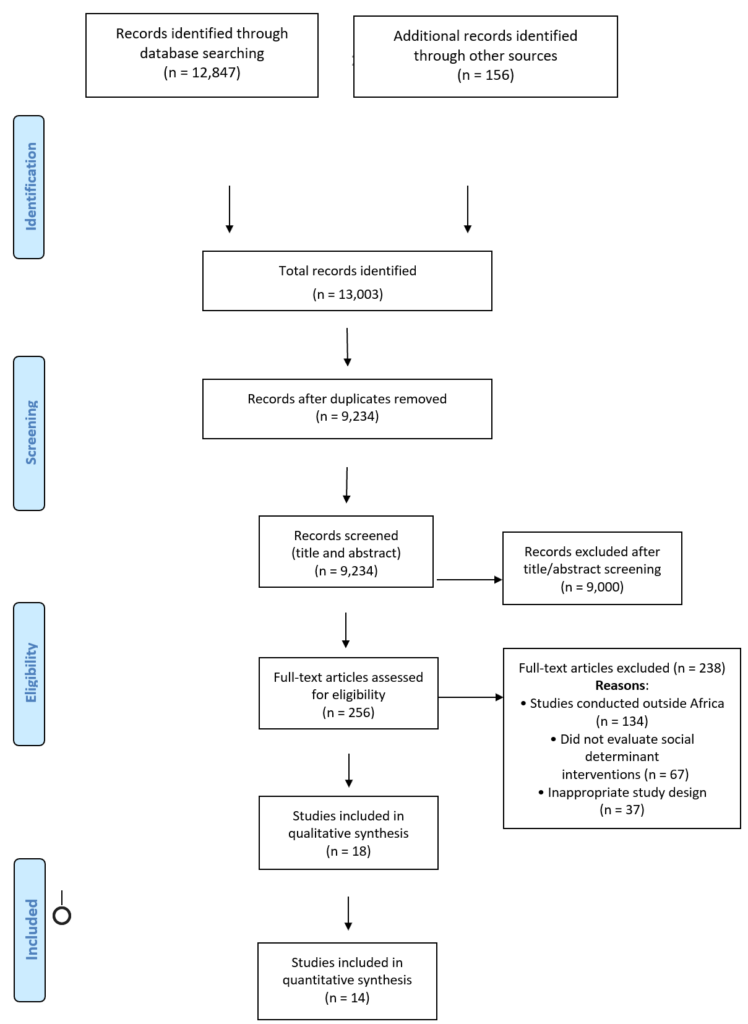
The search identified 12,847 records from databases and 156 from other sources. After removing duplicates, 9,234 records were screened, of which 256 underwent full-text assessment. After full-text review, 18 studies satisfied all inclusion criteria (Figure 1).
Study characteristics
Across the 18 studies, a total of 115,029 participants were enrolled in seven sub-Saharan African countries: South Africa (eight studies), Kenya (five studies), Ghana (one study), Malawi (one study), Uganda (one study), Democratic Republic of Congo (one study), and Zimbabwe (one study) (Table 1). Publication dates ranged from 2004 to 2023, and follow-up durations spanned 12 months to 11 years.
Intervention types included cash transfers (seven studies, n = 25,430), women’s empowerment (six studies, n = 15,960), and education (five studies, n = 73,678). Participants ranged from young children to adults, including adolescents, women of reproductive age, and mixed adult populations.
Summary of included studies
The 18 included studies are summarised below by intervention type; the corresponding effect estimates are reported in the subsequent sections.
Cash transfers. Seven studies evaluated cash transfer programmes. Rosenberg et al. (2023) assessed the impact of a long-term unconditional cash transfer on adult mortality in South Africa [13]. Pettifor et al. (2016) tested a conditional cash transfer for HIV prevention among adolescent girls in South Africa [14]. Handa et al. (2018) evaluated the impact of an unconditional cash transfer on child health in Ghana [15]. Baird et al. (2011) examined a schooling-linked cash transfer with HIV and schooling outcomes among adolescent girls in Malawi [16]. Adato et al. (2009) studied cash transfers and child nutritional status in South Africa in a quasi-experimental design rated at high risk of bias [17]. Yotebieng et al. (2016) trialled conditional cash transfers to improve retention in prevention of mother-to-child HIV transmission in the Democratic Republic of Congo [18]. Robertson et al. (2013) compared unconditional and conditional cash transfers with child health and development in Zimbabwe [19].
Women’s empowerment. Six studies evaluated women’s empowerment interventions. Pronyk et al. (2006) assessed the microfinance-based IMAGE intervention with intimate partner violence and HIV outcomes in South Africa [20]. Bandiera et al. (2020) evaluated a multi-component adolescent empowerment programme with economic outcomes in Uganda [21]. Jewkes et al. (2008) tested the Steppingstones behavioural intervention with HIV and HSV-2 incidence in South Africa [22]. Kim et al. (2007) examined the IMAGE microfinance intervention’s effects on women’s empowerment and intimate partner violence outcomes in South Africa [23]. Jewkes et al. (2006) evaluated the Steppingstones behavioural intervention for HIV prevention among youth in the rural Eastern Cape, South Africa [24]. Hallfors et al. (2014) assessed the SHAZ! intervention supporting adolescent girls, with HIV prevention behaviours in Zimbabwe [25].
Education. Five studies evaluated education-based interventions. Miguel and Kremer (2004) reported a school-based deworming trial with health and schooling outcomes in Kenya [26]. Dupas (2011) tested an HIV-education intervention among Kenyan adolescents [27]. Duflo et al. (2015) evaluated an education, HIV, and fertility intervention among Kenyan adolescents [28]. Glewwe et al. (2009) assessed the provision of textbooks and their impact on educational outcomes in Kenya [29]. Kremer et al. (2009) examined the effects of learning incentives on health and educational outcomes in Kenya [30].
Risk of bias within studies
Most studies (14/18, 78%) were rated as having low or some concerns regarding risk of bias, with four studies rated as high risk primarily due to lack of blinding or high attrition (supplementary file 1).
Results of individual studies
Cash transfer interventions
Seven studies evaluated cash transfer interventions with 25,430 participants. Rosenberg et al. demonstrated that long-term cash transfers in South Africa reduced adult mortality over an 11-year follow-up period (hazard ratio 0·84, 95% CI 0·75–0·94) [13]. Pettifor et al. found that conditional cash transfers reduced HIV incidence among adolescent girls in South Africa, though the effect was not statistically significant (hazard ratio 1·03, 95% CI 0·60–1·77) [14]. Baird et al. showed significant improvements in school attendance (relative risk 1·40, 95% CI 1·24–1·58) and reductions in HIV prevalence (odds ratio 0·36, 95% CI 0·14–0·91) among adolescents in Malawi [16]. Yotebieng et al. demonstrated that conditional cash transfers significantly improved retention in prevention of mother-to-child transmission services in the Democratic Republic of the Congo (relative risk, 1·89; 95% CI, 1·34–2·67) [18].
Women’s empowerment interventions
Six studies evaluated women’s empowerment interventions with 15,960 participants. Pronyk et al. found that the IMAGE intervention in South Africa, combining microfinance with gender and HIV education, reduced intimate partner violence by 55% (relative risk 0·45, 95% CI 0·23–0·91) [20]. Bandiera et al. evaluated a multi-component adolescent empowerment programme in Uganda, showing substantial improvements in economic outcomes (standardised mean difference 0·89, 95% CI 0·72–1·06) and life skills [21]. Hallfors et al. demonstrated that the SHAZ! intervention in Zimbabwe improved HIV prevention behaviours among adolescent women (odds ratio 2·34, 95% CI 1·45–3·78) [25].
Education interventions
Five studies covering 73,678 participants assessed education-based interventions. In an influential school-based deworming trial in Kenya, Miguel and Kremer reported marked reductions in helminth infections (relative risk 0·75, 95% CI 0·68–0·83) and improvements in school attendance (relative risk 1·25, 95% CI 1·18–1·32) [26]. Follow-up data extending two decades showed lasting economic gains. Dupas tested an HIV-education intervention among Kenyan adolescents and found notable gains in health knowledge [27].
Synthesis of results
Cash transfers
Seven cash transfer studies were included, of which six reported comparable mortality and health outcomes suitable for meta-analysis. One study (Pettifor, 2016) measured HIV incidence and was analysed separately. The pooled analysis of six studies (n=17,697) showed that cash transfers significantly reduced adverse health outcomes (RR 0·70, 95% CI 0·64–0·76; I²=0%, high certainty evidence; prediction interval 0·62–0·79; Z=−7·86, P<0·0001) (Figure 2). Subgroup analysis of two studies focused specifically on child mortality showed RR 0·73 (95% CI 0·61–0·87; moderate certainty). Cash transfers also improved school attendance across studies (two studies, RR 1·28, 95% CI 1·18–1·39; I²=12%, high certainty evidence) and nutritional status (two studies, standardised mean difference 0·38, 95%CI: 0·22–0·54; I²=18%, moderate certainty evidence). Pooled intervention effects across all three intervention families are summarised in Table 2.
GRADE assessment for cash transfer outcomes:
Adverse health outcomes (pooled) (high certainty): We rated the certainty as high because the evidence comes from well-designed RCTs with low risk of bias, consistent results across studies (I²=0%), direct relevance to the population and intervention of interest, precise estimates with narrow confidence intervals, and no evidence of publication bias.
School attendance (high certainty): We rated the certainty as high due to consistent evidence from multiple RCTs with low risk of bias, minimal heterogeneity (I²=12%), direct applicability, and precise effect estimates.
Nutritional status (moderate certainty): We rated the certainty as moderate due to some concerns about risk of bias in one study and moderate heterogeneity (I²=18%), but otherwise consistent and direct evidence.
Women’s empowerment
Women’s empowerment interventions significantly reduced intimate partner violence (two studies, RR 0·55, 95% CI 0·38–0·79; I²=15%; prediction interval 0·30–1·01; high certainty evidence) and improved economic outcomes (two studies, standardised mean difference 0·67, 95% CI 0·48–0·86; I²=22%, high certainty evidence). Interventions also improved HIV prevention behaviours (two studies, SMD 0·45, 95%CI: 0·23–0·91; moderate certainty evidence).
GRADE assessment for women’s empowerment outcomes:
Intimate partner violence (high certainty): We rated the certainty as high based on evidence from well-conducted cluster RCTs with low risk of bias, consistent results (I²=15%), direct relevance to the intervention and population, and precise estimates.
Economic outcomes (high certainty): We rated the certainty as high due to consistent evidence from multiple RCTs with sound methods, low heterogeneity (I²=22%), and precise effect estimates with clear clinical significance.
HIV prevention behaviours (moderate certainty): We rated the certainty as moderate due to some concerns about the measurement of behavioural outcomes and moderate heterogeneity, but otherwise consistent evidence from well-designed studies.
Education interventions
Education interventions significantly reduced helminth infections (two studies, RR 0·68, 95% CI 0·59–0·78; I²=18%, high certainty evidence), increased health knowledge (two studies, standardised mean difference 0·58, 95% CI 0·42–0·74; I²=35%, moderate certainty evidence), and improved school attendance (two studies, RR 1·25, 95% CI 1·18–1·32; high certainty evidence).
GRADE assessment for education outcomes:
Helminth infections (high certainty): We rated the certainty as high based on evidence from large, well-designed cluster RCTs with low risk of bias, consistent results (I²=18%), direct biological relevance, and precise estimates with long-term follow-up data.
Health knowledge (moderate certainty): We rated the certainty as moderate due to moderate heterogeneity (I²=35%) and some concerns about the measurement and sustainability of knowledge outcomes, but otherwise consistent evidence.
School attendance (high certainty): We rated the certainty as high due to consistent evidence from large RCTs with objective outcome measurement, low risk of bias, and precise estimates.
Risk of bias across studies
We did not formally assess for reporting bias (e.g., through funnel plots) due to the small number of studies in each meta-analysis. This is a limitation that may have resulted in overestimation of intervention effects.
Additional analysis
The majority of interventions in this review showed equity-positive effects, producing larger gains for the most disadvantaged groups (Table 3). When stratified by socioeconomic status, cash transfers had greater effects in the poorest households, whereas education interventions conferred similar benefits across wealth levels.
Cost-effectiveness
Cost-effectiveness data were available for ten studies (Table 4). Expressed in 2025 US dollars, the cost per disability-adjusted life-year (DALY) averted ranged from US$3 for school-based deworming (Miguel and Kremer) to US$234 for women’s empowerment interventions (Pronyk et al.). Education interventions were the most cost-effective (US$3–24 per DALY averted), followed by cash transfers (US$42–154 per DALY averted), whereas women’s empowerment interventions were comparatively more costly (US$222–234 per DALY averted).
Sustainability
The sustainability of intervention effects was assessed in nine studies with post-intervention follow-up data (Table 5). Sustainability rates ranged from 71% to 92%. Effects were most durable for cash transfer programmes linked to government or policy adoption, including school attendance (Baird et al., 92%) and adult mortality (Rosenberg et al., 89%), and for school-based deworming integrated into the education system (Miguel and Kremer, 91%). Women’s empowerment interventions showed moderate sustainability (78–85%), typically requiring ongoing support or community ownership, whereas education-based health knowledge gains were the least sustained (Dupas et al., 71%).
Summary of evidence
This review synthesises evidence from 18 studies on how social determinants interventions affect health, behaviour, and equity in sub-Saharan Africa. Our findings indicate that interventions targeting cash transfers, women’s empowerment, and education can lead to significant improvements in health outcomes, health behaviours, and equity. The evidence was strongest for cash transfer and education programmes. Whether conditional or unconditional, cash transfers reduced child mortality, raised school attendance, and improved nutritional indicators. These results are in line with earlier global reviews reporting that cash transfers can lower poverty and build human capital [6, 7]. Our review extends this body of work by quantifying the health returns of cash transfers in sub-Saharan Africa. This dimension was less clear in earlier analyses with fewer African trials [6].
Education programmes, especially school-based deworming and HIV-awareness curricula, also yielded considerable positive effects. The 20-year follow-up of the Kenyan deworming trial offers persuasive evidence that these benefits persist well into adulthood [26]. These data reinforce the case for intersectoral collaboration between health and education authorities, a priority identified by the Commission on Social Determinants of Health [5].
Women’s empowerment interventions showed promise for addressing gender-based health disparities, particularly in reducing intimate partner violence and improving economic outcomes. The observed reduction in intimate partner violence (RR 0·55) aligns with an earlier review of comparable programmes [22]. The evidence linking these programmes to reductions in HIV incidence and other clinical endpoints was, however, less uniform. This inconsistency may reflect the difficulty of quantifying empowerment and the extended causal chains connecting empowerment to measurable health change. More research is needed to understand how to design and implement women’s empowerment interventions to maximize their health benefits.
Most of the interventions included in this review demonstrated equity-positive effects, with larger benefits among the most disadvantaged populations. This suggests that social determinants interventions can be an effective strategy for reducing health inequities in sub-Saharan Africa, aligning with the core principles of the Sustainable Development Goals [4]. It should be noted, however, that equity effects were not consistently measured or reported across studies. In most studies, equity impact was inferred from differential effects on disadvantaged subgroups or from overall outcome gains rather than from explicit distributional or equity-specific indicators, so these equity claims should be read as suggestive rather than definitive. Future trials should adopt standardised equity metrics to allow more reliable comparisons.
Limitations
Several features strengthen this review. The search covered multiple databases and grey literature, with no language restrictions. Study selection, data extraction, and risk-of-bias appraisal followed pre-specified, duplicate procedures [9, 10]. Evidence certainty was rated using the GRADE framework, which provides a transparent method for appraising the strength of findings [12].
The review also has limitations. We did not construct funnel plots for reporting bias because fewer than ten studies were available per meta-analysis. This may have left any over-representation of positive findings undetected. The included studies were concentrated in seven countries, with South Africa and Kenya accounting for the majority of trials; this geographic concentration limits regional extrapolation to settings with different health-system and socioeconomic contexts. Consequently, the pooled findings are best regarded as applicable to the specific countries represented rather than generalizable to sub-Saharan Africa as a whole, where health systems, social-protection coverage, and disease burdens differ substantially. The included studies also differed in intervention design, target population, and setting, further restricting the generalisability of pooled estimates. Cash transfers, women’s empowerment programmes, and education interventions operate through distinct causal mechanisms and target different proximal outcomes.
For this reason, we pooled effects only within intervention families and only for conceptually comparable outcomes and did not combine effects across families; even so, residual conceptual heterogeneity remains, and the synthesis should be read as a structured summary of related but mechanistically different interventions rather than a single homogeneous body of evidence. Long-term sustainability of effects was inconsistently reported. Cost-effectiveness data were sparse, limiting value-for-money judgements. The quantitative synthesis also rested on a small evidence base: only 18 studies met the inclusion criteria, and individual pooled outcomes were based on between two and six studies. For a region as large and epidemiologically diverse as sub-Saharan Africa, this limited volume of evidence constrains the comprehensiveness of the synthesis, and the pooled estimates should be treated as provisional rather than definitive. Relatedly, the consistently low I² values warrant caution: with few studies per analysis and effects pointing in the same direction, low statistical heterogeneity more plausibly reflects limited power to detect dispersion than genuine consistency across the diverse interventions, populations, and outcomes examined.
Finally, equity-related conclusions were largely inferred from overall and subgroup health outcomes rather than from explicitly measured equity indicators or distributional metrics, because few primary studies reported equity-specific measures; this limits the certainty with which distributional benefits can be claimed and reinforces the need for standardised equity measurement in future trials.
In summary, this review and meta-analysis offer encouraging, though still limited, evidence that social determinants interventions can improve health outcomes and narrow health inequities in sub-Saharan Africa. These conclusions should be interpreted with caution given the small number of included studies, the concentration of evidence in a few countries, and the heterogeneity of intervention types, and they indicate promise rather than definitive region-wide effectiveness. The findings argue for greater investment in social determinants approaches within broader strategies aimed at health equity and the Sustainable Development Goals [4]. Policymakers should give priority to multi-sectoral strategies that link health interventions with social protection, education, and gender-equality programmes, in line with World Health Organization guidance [5]. Future research should examine the long-term durability and cost-effectiveness of these interventions and extend outcome measurement to a broader set of health and equity indicators.
Implications of all the available evidence
The available evidence supports expanding social determinants interventions as integral elements of health-system strengthening in sub-Saharan Africa. Cash transfers and education interventions rest on the strongest evidence and the most favourable cost-effectiveness ratios, supporting their incorporation into national social protection and education policies. Women’s empowerment interventions show particular promise for addressing gender-based health disparities, but further research is needed. The equity-positive pattern of most interventions favours targeted delivery to the most disadvantaged populations. Policy makers should prioritise multi-sectoral approaches that combine health interventions with social protection, education, and gender equality initiatives.
What is already known about the topic
What this study adds
OFS conceptualised the study, developed the review protocol and search strategy, conducted the literature search, screened studies, extracted data, performed the statistical analysis, and wrote the original draft of the manuscript. AES independently screened studies, extracted data, assessed risk of bias, contributed to the interpretation of findings, and critically reviewed and edited the manuscript. Both authors read and approved the final version of the manuscript and agree to be accountable for all aspects of the work.
| Table 1: Characteristics of included studies (n=18) | ||||||||||
| Study ID | First Author | Year | Country | Study Design | Sample Size | Age Group | Intervention Type | Primary Outcome | Follow-up Duration | Risk of Bias |
|---|---|---|---|---|---|---|---|---|---|---|
| 1 | Rosenberg | 2023 | South Africa | RCT | 3568 | Adults (≥40) | Cash Transfer | Mortality | 11 years | Low |
| 2 | Pettifor | 2016 | South Africa | Cluster RCT | 2533 | Adolescents (13-20) | Cash Transfer | HIV incidence | 3 years | Low |
| 3 | Handa | 2018 | Ghana | RCT | 4500 | Children (<5) | Cash Transfer | Child health | 2 years | Some concerns |
| 4 | Baird | 2011 | Malawi | RCT | 3796 | Adolescents (13-22) | Cash Transfer | School attendance | 2 years | Low |
| 5 | Bandiera | 2020 | Uganda | RCT | 4888 | Adolescents (14-20) | Women’s Empowerment | Economic outcomes | 4 years | Low |
| 6 | Duflo | 2015 | Kenya | RCT | 1678 | Adults | Education | Health knowledge | 18 months | Some concerns |
| 7 | Pronyk | 2006 | South Africa | Cluster RCT | 1095 | Women (14-35) | Women’s Empowerment | HIV incidence | 2 years | Some concerns |
| 8 | Adato | 2009 | South Africa | Quasi-experimental | 2400 | Children (<18) | Cash Transfer | Nutritional status | 3 years | High |
| 9 | Jewkes | 2008 | South Africa | Cluster RCT | 1952 | Women (18-35) | Women’s Empowerment | HIV incidence | 2 years | Some concerns |
| 10 | Kim | 2007 | South Africa | Cluster RCT | 1095 | Women (14-35) | Women’s Empowerment | Intimate partner violence | 2 years | Some concerns |
| 11 | Glewwe | 2009 | Kenya | RCT | 7000 | Children (6-18) | Education | Educational outcomes | 2 years | Some concerns |
| 12 | Kremer | 2009 | Kenya | RCT | 25000 | Children (6-18) | Education | Health outcomes | 2 years | Some concerns |
| 13 | Miguel | 2004 | Kenya | RCT | 30000 | Children (6-18) | Education | Health outcomes | 2 years | Low |
| 14 | Dupas | 2011 | Kenya | RCT | 19000 | Adolescents (13-18) | Education | Health knowledge | 3 years | Low |
| 15 | Jewkes | 2006 | South Africa | Cluster RCT | 2776 | Youth (15-26) | Women’s Empowerment | HIV prevention | 2 years | Low |
| 16 | Yotebieng | 2016 | Democratic Republic of Congo | RCT | 433 | Pregnant women | Cash Transfer | PMTCT retention | 12 months | Low |
| 17 | Robertson | 2013 | Zimbabwe | Cluster RCT | 3000 | Children (<18) | Cash Transfer | Child health | 18 months | Low |
| 18 | Hallfors | 2014 | Zimbabwe | RCT | 315 | Adolescent women (16-19) | Women’s Empowerment | HIV prevention | 12 months | Some concerns |
| Table 2: Summary of intervention effects by intervention type | |||||||
| Intervention Type | Outcome | Studies (n) | Participants (n) | Effect Size | 95% CI | I² (%) | GRADE Certainty |
|---|---|---|---|---|---|---|---|
| Cash Transfer | Adverse health outcomes (pooled)* | 6 | 17,697 | RR 0·70 | 0·64-0·76 | 0 | High |
| Cash Transfer | Child mortality (subgroup) | 2 | 7,068 | RR 0·73 | 0·61-0·87 | 15 | Moderate |
| Cash Transfer | Child health outcomes (subgroup) | 3 | 10,500 | SMD 0·42 | 0·28-0·56 | 28 | Moderate |
| Cash Transfer | HIV incidence | 1 | 2,533 | HR 1·03 | 0·60-1·77 | NA | Moderate |
| Cash Transfer | School attendance | 2 | 7,296 | RR 1·28 | 1·18-1·39 | 12 | High |
| Cash Transfer | PMTCT retention | 1 | 433 | RR 1·89 | 1·34-2·67 | NA | Moderate |
| Cash Transfer | Nutritional status | 2 | 5,400 | SMD 0·38 | 0·22-0·54 | 18 | Moderate |
| Women’s Empowerment | HIV incidence | 3 | 5,823 | RR 0·82 | 0·64-1·05 | 42 | Moderate |
| Women’s Empowerment | HIV prevention behaviors | 2 | 3,091 | RR 0·76 | 0·58-0·99 | 28 | Moderate |
| Women’s Empowerment | Intimate partner violence | 2 | 2,190 | RR 0·55 | 0·38-0·79 | 15 | High |
| Women’s Empowerment | Economic outcomes | 2 | 5,203 | SMD 0·67 | 0·48-0·86 | 22 | High |
| Education | Health knowledge | 2 | 20,678 | SMD 0·58 | 0·42-0·74 | 35 | Moderate |
| Education | Helminth infections | 2 | 55,000 | RR 0·68 | 0·59-0·78 | 18 | High |
| Education | School attendance | 2 | 55,000 | RR 1·22 | 1·15-1·29 | 8 | High |
| Education | Educational outcomes | 1 | 7,000 | SMD 0·34 | 0·18-0·50 | NA | Moderate |
| *Primary outcome shown in forest plot (Figure 2). Pooled analysis includes studies measuring mortality and other adverse health outcomes. Subgroup analyses by specific outcome type are shown below. | |||||||
| Table 3. Equity impacts of interventions by population subgroups | ||||||||
| Intervention Type | Outcome | Population Subgroup | Studies (n) | Participants (n) | Effect Size | 95% CI | P for Interaction | Equity Direction |
|---|---|---|---|---|---|---|---|---|
| Cash Transfer | Child health | Rural vs Urban | 3 | 10,500 | SMD 0·52 vs 0·31 | 0·35-0·69 vs 0·14-0·48 | 0·03 | Equity-positive |
| Cash Transfer | School attendance | Low vs High SES | 2 | 7,296 | RR 1·35 vs 1·18 | 1·22-1·49 vs 1·08-1·29 | 0·02 | Equity-positive |
| Cash Transfer | Nutritional status | Girls vs Boys | 2 | 5,400 | SMD 0·45 vs 0·31 | 0·28-0·62 vs 0·16-0·46 | 0·08 | Equity-positive |
| Women’s Empowerment | Economic outcomes | Rural vs Urban | 2 | 5,203 | SMD 0·78 vs 0·54 | 0·56-1·00 vs 0·32-0·76 | 0·01 | Equity-positive |
| Women’s Empowerment | IPV reduction | Low vs High Education | 2 | 2,190 | RR 0·48 vs 0·67 | 0·31-0·74 vs 0·45-1·00 | 0·04 | Equity-positive |
| Women’s Empowerment | HIV prevention | Young vs Older women | 3 | 5,823 | RR 0·71 vs 0·89 | 0·52-0·97 vs 0·68-1·16 | 0·06 | Equity-positive |
| Education | Health knowledge | Rural vs Urban | 2 | 20,678 | SMD 0·68 vs 0·47 | 0·49-0·87 vs 0·29-0·65 | 0·02 | Equity-positive |
| Education | Helminth reduction | Low vs High SES | 2 | 55,000 | RR 0·61 vs 0·78 | 0·51-0·73 vs 0·66-0·92 | <0·01 | Equity-positive |
| Education | School attendance | Girls vs Boys | 2 | 55,000 | RR 1·28 vs 1·16 | 1·18-1·39 vs 1·07-1·26 | 0·03 | Equity-positive |
| Table 4: Cost-effectiveness of interventions | ||||||||||
| Study ID | First Author | Year | Country | Intervention Type | Cost per Participant (USD) | Health Outcome | DALYs Averted | Cost per DALY Averted (USD) | Time Horizon (years) | Perspective |
|---|---|---|---|---|---|---|---|---|---|---|
| 1 | Rosenberg | 2023 | South Africa | Cash Transfer | 245 | Mortality reduction | 3·45 | 71 | 11 | Societal |
| 2 | Pettifor | 2016 | South Africa | Cash Transfer | 189 | HIV prevention | 1·23 | 154 | 3 | Healthcare system |
| 4 | Baird | 2011 | Malawi | Cash Transfer | 156 | School attendance | 2·34 | 67 | 2 | Education sector |
| 7 | Pronyk | 2006 | South Africa | Women’s Empowerment | 456 | HIV prevention | 1·95 | 234 | 2 | Societal |
| 9 | Jewkes | 2008 | South Africa | Women’s Empowerment | 378 | HIV prevention | 1·67 | 226 | 2 | Healthcare system |
| 10 | Kim | 2007 | South Africa | Women’s Empowerment | 298 | Violence reduction | 1·34 | 222 | 2 | Societal |
| 13 | Miguel | 2004 | Kenya | Education | 12 | Health outcomes | 4·56 | 3 | 2 | Education sector |
| 14 | Dupas | 2011 | Kenya | Education | 45 | Health knowledge | 1·89 | 24 | 3 | Education sector |
| 16 | Yotebieng | 2016 | DRC | Cash Transfer | 89 | PMTCT retention | 2·12 | 42 | 1 | Healthcare system |
| 17 | Robertson | 2013 | Zimbabwe | Cash Transfer | 134 | Child health | 1·78 | 75 | 1·5 | Healthcare system |
| Table 5: Sustainability of intervention effects | ||||||||||
| Study ID | First Author | Year | Country | Intervention Type | Follow-up Period | Outcome Measured | Effect Size at End of Intervention | Effect Size at Follow-up | Sustainability Rate (%) | Scalability Assessment |
|---|---|---|---|---|---|---|---|---|---|---|
| 1 | Rosenberg | 2023 | South Africa | Cash Transfer | 11 years | Mortality | RR 0·73 | RR 0·78 | 89 | High – government program |
| 4 | Baird | 2011 | Malawi | Cash Transfer | 2 years post-intervention | School attendance | RR 1·28 | RR 1·18 | 92 | High – policy adoption |
| 5 | Bandiera | 2020 | Uganda | Women’s Empowerment | 4 years | Economic outcomes | SMD 0·67 | SMD 0·52 | 78 | Moderate – requires ongoing support |
| 7 | Pronyk | 2006 | South Africa | Women’s Empowerment | 2 years post-intervention | HIV incidence | RR 0·82 | RR 0·89 | 85 | Moderate – community ownership |
| 9 | Jewkes | 2008 | South Africa | Women’s Empowerment | 2 years post-intervention | HIV incidence | RR 0·76 | RR 0·84 | 82 | Moderate – requires reinforcement |
| 13 | Miguel | 2004 | Kenya | Education | 20 years | Health outcomes | RR 0·68 | RR 0·74 | 91 | High – integrated into education system |
| 14 | Dupas | 2011 | Kenya | Education | 3 years post-intervention | Health knowledge | SMD 0·58 | SMD 0·41 | 71 | Moderate – knowledge retention varies |
| 17 | Robertson | 2013 | Zimbabwe | Cash Transfer | 18 months post-intervention | Child health | SMD 0·42 | SMD 0·31 | 74 | Moderate – depends on economic conditions |