
Research | Open Access | Volume 9 (3): Article 152 | Published: 24 Sep 2026

Views: 131
Menu, Tables and Figures
| Table 1: Socio-demographic characteristics and symptom status of participants (n=400) | ||||
| Variable | Frequency (n=400) | Percentage (%) | ||
|---|---|---|---|---|
| Gender | ||||
| Female | 265 | 66.3 | ||
| Male | 135 | 33.8 | ||
| Age (years) | ||||
| ≤20 | 10 | 2.5 | ||
| 21–30 | 60 | 15.0 | ||
| 31–40 | 105 | 26.3 | ||
| 41–50 | 121 | 30.3 | ||
| 51–60 | 64 | 16.0 | ||
| >60 | 40 | 10.0 | ||
| Mean age (mean ± SD) | 42.78 ± 12.59 | — | ||
| Marital Status | ||||
| Single | 84 | 21.0 | ||
| Married | 204 | 51.0 | ||
| Divorced/Separated | 68 | 17.0 | ||
| Widowed | 44 | 11.0 | ||
| Occupation | ||||
| Business | 139 | 34.8 | ||
| Craft and related workers | 83 | 20.8 | ||
| Elementary occupations | 25 | 6.3 | ||
| Associate professionals | 25 | 6.3 | ||
| Associate professionals | 25 | 6.3 | ||
| Professionals | 23 | 5.8 | ||
| Drivers | 22 | 5.6 | ||
| No job / unemployed | 14 | 3.5 | ||
| Full-time students | 14 | 3.5 | ||
| Managers and administrators | 12 | 3.0 | ||
| Retired | 12 | 3.0 | ||
| Plant and machine operators | 11 | 2.8 | ||
| Home Builder | 3 | 0.8 | ||
| Farmer | 3 | 0.8 | ||
| Symptoms Prior to Diagnosis | ||||
| Symptomatic (Yes) | 263 | 65.8 | ||
| Asymptomatic (No) | 137 | 34.3 | ||
| Monthly Income | ||||
| None | 29 | 7.2 | ||
| Less than ₦30,000 | 49 | 12.3 | ||
| ₦35,000–₦80,000 | 165 | 41.3 | ||
| ₦85,000–₦150,000 | 116 | 29.0 | ||
| ₦200,000 and above | 41 | 10.3 | ||
| Note: Symptom status (Yes/No prior to ART) is included within this table. | ||||
Table 1: Socio-demographic characteristics and symptom status of participants (n=400)
| Table 2: Symptom-specific healthcare facility utilisation among 263 symptomatic participants (HS2) frequencies and percentages | ||||||
| Symptom | ATR n (%) | Church n (%) | Mosque n (%) | CP n (%) | Govt. Hosp. n (%) | Priv. Hosp. n (%) |
|---|---|---|---|---|---|---|
| Fever | 6 (2.3) | 1 (0.4) | 0 (0.0) | 31 (11.8) | 101 (38.4) | 47 (17.9) |
| Chills | 2 (0.8) | 1 (0.4) | 0 (0.0) | 19 (7.2) | 40 (15.2) | 21 (8.0) |
| Tiredness | 3 (1.1) | 0 (0.0) | 0 (0.0) | 21 (8.0) | 81 (30.8) | 49 (18.6) |
| Joints & muscle pain | 3 (1.1) | 0 (0.0) | 0 (0.0) | 8 (3.0) | 35 (13.3) | 23 (8.7) |
| Sore throat | 3 (1.1) | 0 (0.0) | 0 (0.0) | 5 (1.9) | 11 (4.2) | 5 (1.9) |
| Swollen lymph nodes | 2 (0.8) | 0 (0.0) | 1 (0.4) | 1 (0.4) | 17 (6.5) | 5 (1.9) |
| Diarrhoea | 5 (1.9) | 1 (0.4) | 0 (0.0) | 23 (8.7) | 72 (27.4) | 42 (16.0) |
| Rash | 6 (2.3) | 0 (0.0) | 0 (0.0) | 11 (4.2) | 60 (22.8) | 38 (14.4) |
| Oral thrush | 4 (1.5) | 0 (0.0) | 0 (0.0) | 7 (2.7) | 15 (5.7) | 6 (2.3) |
| Vaginal yeast infection | 0 (0.0) | 0 (0.0) | 0 (0.0) | 7 (2.7) | 14 (5.3) | 8 (3.0) |
| Herpes simplex virus | 5 (1.9) | 2 (0.8) | 0 (0.0) | 2 (0.8) | 4 (1.5) | 5 (1.9) |
| Seborrhoeic dermatitis | 12 (4.6) | 0 (0.0) | 0 (0.0) | 6 (2.3) | 26 (9.9) | 10 (3.8) |
| Weight loss | 5 (1.9) | 2 (0.8) | 1 (0.4) | 18 (6.8) | 139 (52.9) | 77 (29.3) |
| Note: Percentages are of the 263 symptomatic participants (SS1=Yes). Both rows and columns are non-exclusive: participants who reported multiple symptoms appear in more than one symptom row, and participants who consulted multiple facility types appear in more than one facility column. Percentages therefore do not sum to 100% within rows or columns. ATR = African Traditional Religion; CHU = Church; CP = Community Pharmacy; Govt. Hosp. = Government Hospital; Priv. Hosp. = Private Hospital. | ||||||
Table 2: Symptom-specific healthcare facility utilisation among 263 symptomatic participants (HS2) frequencies and percentages
| Table 3: Cross-tabulation of facility of consultation versus facility of HIV diagnosis for 193 single-facility users | ||||
| Facility of Consultation | Diagnosed at Same Facility | Total n | Total % | |
|---|---|---|---|---|
| Yes n (%) | No n (%) | |||
| Government Hospital | 123 (96.9%) | 4 (3.1%) | 127 | 100 |
| Private Hospital | 58 (96.7%) | 2 (3.3%) | 60 | 100 |
| Community Pharmacy | 3 (50.0%) | 3 (50.0%) | 6 | 100 |
| Total | 184 (95.3%) | 9 (4.7%) | 193 | 100 |
| Note: Percentage values represent row percentages. Fisher’s exact test: χ²(2, N = 193) = 28.63, p<0.001; Cramer’s V = 0.39. | ||||
Table 3: Cross-tabulation of facility of consultation versus facility of HIV diagnosis for 193 single-facility users
| Table 4: HIV diagnosis modalities in Oshodi-Isolo LGA (2022 and 2024) | ||
| Modality (Oshodi-Isolo LGA) | 2022 Result | 2024 Result |
|---|---|---|
| Index Testing | 80 | 76 |
| Mobile Modality | 129 | 35 |
| TB Clinic | 61 | 23 |
| PMTCT ANC | 36 | 29 |
| Other PITC | 218 | 257 |
| Total | 524 | 420 |
| % Index Contribution | 15.2% | 18.1% |
| Weighted Average Contribution of Index Testing | 59 (156/944) × 100% = 16.5% 60 | |
Table 4: HIV diagnosis modalities in Oshodi-Isolo LGA (2022 and 2024)
Akpofure Oyakhilomen Blessing1,&
1Independent Researcher, Lagos, Nigeria
&Corresponding author: Akpofure Oyakhilomen Blessing, Independent Researcher, Lagos, Nigeria, Email: akpofureblessing5@gmail.com ORCID: https://orcid.org/0009-0004-6918-1505
Received: 29 Sep 2025, Accepted: 15 Sep 2026, Published: 24 Sep 2026
Domain: Infectious Disease Epidemiology
Keywords: Antiretroviral Therapy (ART), HIV Case Finding, Health-Seeking Behaviour, Index Testing; Late Diagnosis, Symptom-Driven Diagnosis
©Akpofure Oyakhilomen Blessing et al. Journal of Interventional Epidemiology and Public Health (ISSN: 2664-2824). This is an Open Access article distributed under the terms of the Creative Commons Attribution International 4.0 License (https://creativecommons.org/licenses/by/4.0/), which permits unrestricted use, distribution, and reproduction in any medium, provided the original work is properly cited.
Cite this article: Akpofure Oyakhilomen Blessing et al., Health-seeking behaviours and their impact on HIV diagnostic outcomes: Implications for targeted HIV case-finding in Isolo, Lagos, Nigeria. Journal of Interventional Epidemiology and Public Health. 2026; 9(3):152. https://doi.org/10.37432/jieph-d-25-00212
Introduction: Nigeria bears a significant HIV burden, ranking second globally in new infections. Late diagnosis remains a critical challenge, with many individuals identified only after disease progression, suggesting reliance on symptom-driven testing rather than proactive screening.
Methods: This was a cross-sectional study conducted among 400 antiretroviral therapy (ART) patients at Isolo General Hospital, Lagos, between May and July 2025. A validated semi-structured questionnaire (Content Validity Index = 0.92) was used to collect data on pre-diagnosis symptoms, healthcare consultations, and HIV diagnosis pathways. Descriptive statistics and chi-square (Fisher’s exact) tests were used to examine the association between facility of consultation and facility of HIV diagnosis.
Results: Among the 400 participants, 66.3% were female, with a mean age of 42.8 years. Before diagnosis, 65.8% reported symptoms, primarily weight loss (78.7%), fever (63.8%), and fatigue (51.7%), while 34.3% were asymptomatic. Government hospitals (62.8%) and private hospitals (34.3%) were the main consultation and diagnosis sites. Among single-facility users (n=193), a statistically significant association was found between facility of consultation and facility of HIV diagnosis (Fisher’s exact test; χ²=28.63, p<0.001), with concordance rates exceeding 96% for government and private hospitals. Community pharmacies showed a low concordance rate of 50%. Cramer’s V indicated a medium to large effect size (V=0.39). No participants relied solely on traditional healers.
Conclusion: The findings highlight a symptom-driven diagnosis pattern in urban Lagos, with formal healthcare facilities as key entry points for HIV diagnosis. Proactive strategies such as index testing appear effective for identifying asymptomatic individuals, supporting the UNAIDS 95-95-95 goals.
The global fight against HIV and AIDS has made remarkable progress since the virus was first documented in 1959 [1]. By 2020, while more than 37.7 million people were living with HIV globally, the number of annual deaths and new infections had decreased significantly [2]. Despite these gains, Nigeria continues to face a disproportionate burden, ranking second worldwide in new infections [3]. The 2018 Nigeria HIV/AIDS Indicator and Impact Survey (NAIIS) estimated that 1.8 million Nigerians were living with HIV, and the National HIV/AIDS Strategic Plan (2023–2027) reported 77,200 new infections in 2022 alone [4]. The epidemic is diverse, with prevalence rates varying significantly across states from below 1% in some southwestern states to above 5% in parts of north-central Nigeria. This geographic heterogeneity, shaped by differences in cultural practices, economic conditions, and healthcare infrastructure, underscores the need for tailored, context-specific interventions [4].
To meet the UNAIDS 2030 goal of ending HIV as a public health threat, a core strategy is treatment as prevention, the principle that diagnosing and treating all people living with HIV reduces viral load to undetectable levels, thereby halting further transmission [1]. However, achieving this requires substantial progress along the HIV care cascade. In Nigeria, national data indicate that approximately 77% of people living with HIV know their status, roughly 67% of those who know their status are on treatment, and only about 55% of those on treatment have achieved viral suppression [4]. These figures fall well short of the UNAIDS 95-95-95 targets, and late diagnosis remains a primary bottleneck. Studies and national data, including information from the Nigeria National Data Repository (NDR), show that many patients are diagnosed only after disease has progressed to an advanced stage, as indicated by severely low CD4 counts [5,6]. This pattern suggests that diagnosis is largely symptom-driven rather than the result of proactive screening, and it not only increases individual mortality and healthcare costs but also perpetuates community transmission [7,8].
This challenge points to the critical role of health-seeking behaviour which refers to the actions individuals take when they believe they have an illness [9]. In resource-constrained environments such as Nigeria, this behaviour is typically triggered by visible symptoms rather than a desire for preventive testing [10]. People may seek care from a variety of entry points, including general outpatient departments of government hospitals, private clinics, community pharmacies, patent medicine vendors, and traditional or religious healers. Each of these settings presents a different opportunity for HIV testing. Understanding where individuals first seek care when they are symptomatic, and whether those settings are equipped to offer an HIV test, is essential for identifying missed opportunities for early diagnosis [11,12]. Facility type, geographic accessibility, and perceived quality of care all influence these decisions and have direct implications for timely HIV case-finding.
Despite the recognised importance of health-seeking behaviour in HIV case-finding, there is a notable gap in the evidence base for urban Nigeria. While studies have documented the problem of late diagnosis and identified broad determinants of HIV testing uptake in sub-Saharan Africa, few have examined the specific pathways through which symptomatic individuals move from first healthcare contact to HIV diagnosis and none, to the authors’ knowledge, have mapped the concordance between consultation facility type and HIV diagnosis facility among people receiving ART in urban Lagos. Similarly, the symptom-specific patterns of facility utilization, that is, which symptoms are driving people to which facility types, have not been reported for this population. This gap matters because understanding it is a prerequisite for designing targeted, facility-specific HIV testing interventions that intercept people at the point of care where they are most likely to present.
This study aimed to investigate the health-seeking behaviours of people living with HIV receiving ART at Isolo General Hospital in Lagos, Nigeria, prior to their HIV diagnosis. Specifically, the study sought to describe pre-diagnosis symptom profiles and care-seeking patterns, map the types of facilities utilised for each symptom, and test the association between the facility of initial consultation and the facility where HIV diagnosis ultimately occurred. By pinpointing where and how individuals sought care before diagnosis, the study aims to inform more effective, targeted HIV testing strategies that bridge the gap between symptom-driven care and proactive screening.
Study design, setting, and period
This was a cross-sectional study conducted at Isolo General Hospital, a secondary referral hospital in the Oshodi-Isolo Local Government Area (LGA) of Lagos, Nigeria. Data were collected between 19 May 2025 and 15 July 2025. The hospital’s antiretroviral therapy (ART) clinic operates on weekdays. Oshodi-Isolo LGA has a population of approximately 931,300, with a high population density of 17,233/km² and an HIV prevalence of 1.7% among individuals aged 15–64, higher than the overall Lagos State prevalence of 1.4%.
Study population
The study population consisted of male and female patients aged 18 years and above who were actively receiving ART at Isolo General Hospital at the time of the study and who provided informed consent. All male and female patients aged 18 years and above currently on ART at Isolo General Hospital were included.
Sample size determination
The sample size was calculated using the Yamane Taro (1967) formula for a finite population at a 95% confidence level [13]. With a total ART population of 3,334 patients at Isolo General Hospital and an allowable error of 5%, the minimum required sample size was 357. This was rounded up to 400 to allow for potential non-responses and to ensure adequate representation.
Sampling technique
A systematic random sampling method was used to select participants. A sampling interval of approximately 8 was derived by dividing the total ART population (N=3,334) by the required sample size (n=400). A random starting point was selected from the first eight patients at the ART clinic’s Outpatient Department (OPD), and thereafter every eighth patient attending the ART clinic was approached for participation. This process continued across consecutive clinic days until the required sample of 400 was reached.
Data collection tool and technique
Data were collected using a pre-tested, semi-structured, interviewer-administered questionnaire developed by adapting questions from previous studies relevant to HIV health-seeking behaviour. The questionnaire captured information on: socio-demographic characteristics; pre-diagnosis symptoms (with participants asked to identify any symptoms experienced prior to their HIV test); the types of healthcare facilities visited for those symptoms; and the facility at which the HIV diagnosis was ultimately made.
Pre-testing of instruments
To ensure validity, a Content Validity Ratio (CVR) was calculated. Ten subject-matter experts evaluated each item, scoring its importance from 0 (not important) to 3 (very important). CVR values ranged from 0.8 to 1.0, and the overall Content Validity Index (CVI) was 0.92, exceeding the minimum CVR of 0.62 required for 10 experts per Lawshe’s critical value table.
Study variables
The central research question of this study is: does the type of facility where a symptomatic individual first seeks care predict whether they will receive an HIV diagnosis at that same facility? This question is rooted in public health logic that concordance between consultation facility and diagnosis facility is a marker of a facility’s effectiveness as an HIV case-finding entry point, while discordance signals a missed diagnostic opportunity.
Accordingly, the independent variable was the facility of initial consultation, defined as the healthcare setting where the participant first sought care in response to symptoms experienced before their HIV diagnosis. This variable reflects the participant’s health-seeking behaviour and represents the entry point into the care-seeking journey. The dependent variable was the facility where the HIV diagnosis was ultimately made, which captures the outcome of that care-seeking episode specifically, whether the facility where the person first presented was also the facility that identified their HIV status.
It is essential to distinguish these two variables clearly. The facility of consultation is temporally and causally prior: a person experiences symptoms, chooses a facility to seek care, and that choice shaped by factors such as proximity, cost, perceived quality, and trust influences the likelihood of receiving an HIV diagnosis at that same point of contact. The facility of diagnosis is the outcome. A high concordance rate between the two indicates that a facility type is successfully converting symptomatic visits into HIV diagnoses. A low concordance rate, indicates that symptomatic individuals are seeking care at those settings but are not being diagnosed there, representing a missed opportunity for case detection. Additional variables examined included self-reported symptoms prior to diagnosis, used to characterise the symptom burden of the study population.
Data analysis
Data were analysed using Excel 2010 and IBM SPSS 25. Descriptive statistics including frequencies and percentages were used to summarise socio-demographic characteristics, symptom profiles, and patterns of healthcare utilisation. Question SS1 served as a skip logic gate: only the 263 participants who reported experiencing illness prior to diagnosis (SS1=Yes) proceeded to answer SS2, HS1, and HS2. The 137 asymptomatic participants (SS1=No) did not answer these questions. Accordingly, all percentages for symptom variables (SS2) and healthcare utilisation variables (HS1, HS2) are expressed as proportions of the 263 symptomatic participants, not the total sample of 400. Both SS2 and HS2 were multiple-response questions; participants could report more than one symptom and consult more than one facility type so percentages for these variables do not sum to 100%.
To test the association between the facility of initial consultation (independent variable) and the facility of HIV diagnosis (dependent variable), a cross-tabulation was conducted. This analysis was restricted to the 193 participants who used a single facility for both consultation and diagnosis, as including participants who visited multiple facilities would introduce ambiguity in attributing consultation and diagnosis to a specific facility type.
The Pearson chi-square test was considered but its validity assumption was violated: 33.3% of cells had an expected frequency below 5 (minimum expected count = 0.28), exceeding the conventional 20% threshold. When expected cell counts are this low, the chi-square approximation to the sampling distribution becomes unreliable, artificially inflating the test statistic and depressing the p-value, thereby increasing the risk of a Type I error that is, falsely concluding a statistically significant association exists when it does not. Fisher’s exact test was therefore employed, as it calculates the exact probability of observing a result as extreme as the one obtained, without relying on large-sample approximations, making it the appropriate test when cell frequencies are sparse. The strength of association was measured using Cramer’s V. A p-value of less than 0.05 was considered statistically significant.
Ethical considerations
Ethical approval was obtained from the Lagos State Health Research Ethics Committee (LSHREC), assigned number LSHREC/2025/0017. All participants provided informed consent prior to the interview. Confidentiality was maintained through anonymisation and secure storage of all collected data.
A deliberate ethical decision was made not to include index testing as a direct questionnaire item. Index testing encompasses four referral modalities: client referral, provider referral, contact referral, and dual referral. Provider referral is the predominant modality in Nigeria, whereby HTS providers contact named sexual partners without those partners’ active knowledge that their contact details were disclosed by the index patient. Many individuals identified through this route may therefore be entirely unaware that they were named. Asking study participants to confirm whether they were identified through index testing would risk re-exposing this confidential clinical information within a research context, information that was originally shared under a strict expectation of clinical confidentiality. This risk was compounded by the potential for intimate partner violence (IPV) and adverse social reactions. The use of LGA-level programmatic data (Table 4) to contextualise the proportion of asymptomatic diagnoses attributable to index testing therefore represents a deliberate and ethically grounded methodological decision.
Participant demographics
A total of 400 individuals participated in the study. The majority were female (66.3%, n=265), with a mean age of 42.78 years (±12.59). The largest age group was 41–50 years (30.3%, n=121). Over half of the respondents were married (51.0%, n=204). The most common occupations were business (34.8%, n=139) and craft-related work (20.8%, n=83). Most participants (92.8%) reported a monthly income, with the largest group earning between ₦35,000 and ₦80,000 (41.3%, n=165). Full socio-demographic data, including symptom status, are presented in Table 1.
Symptoms prior to diagnosis (SS1 and SS2)
Question SS1 asked all 400 participants whether they had experienced any discomfort or illness before being placed on ART. A total of 65.8% (n=263) answered yes, while 34.3% (n=137) reported no symptoms. Participants who answered yes proceeded to SS2, HS1, and HS2; the 137 asymptomatic participants did not answer these questions.
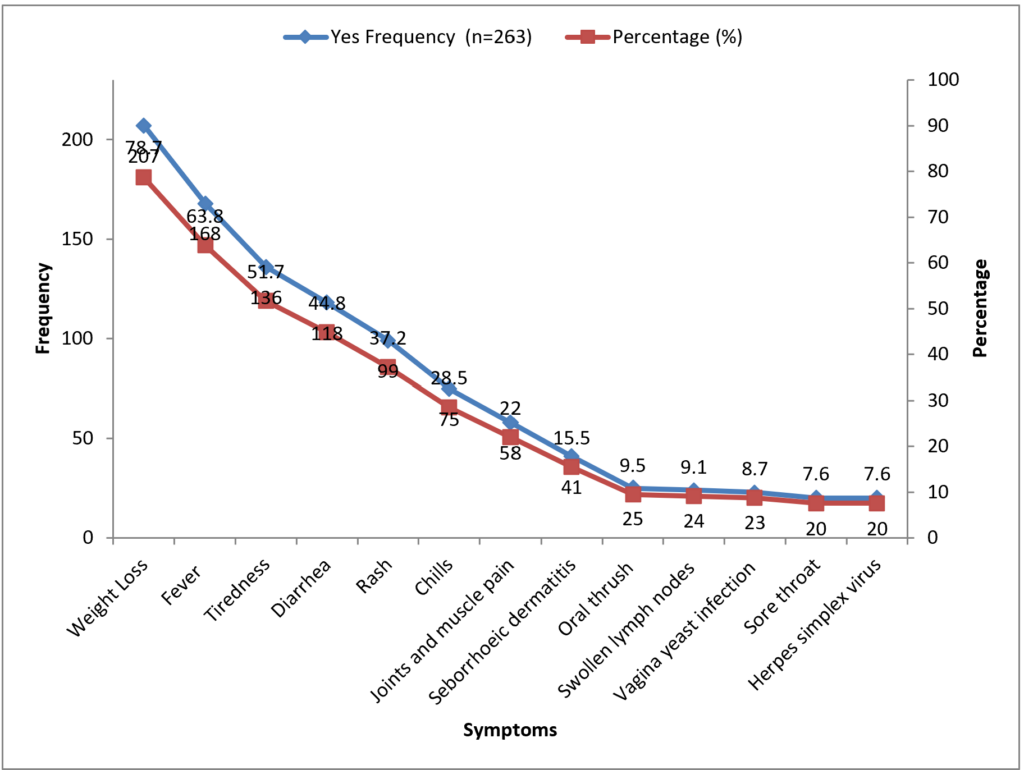
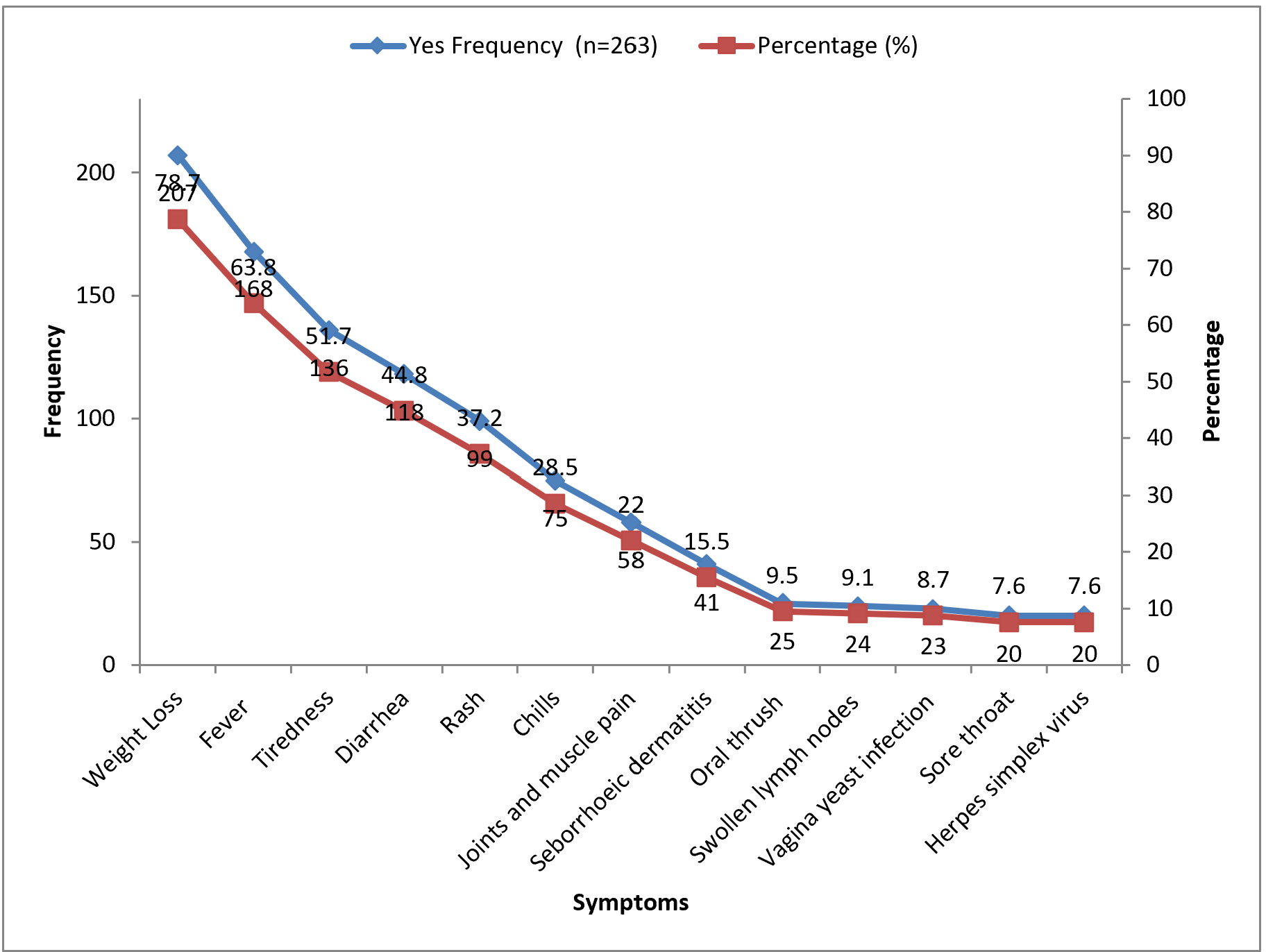
Among the 263 symptomatic participants, the most frequently reported symptoms were weight loss (79.1%, n=208), fever (63.9%, n=168), and tiredness (51.7%, n=136). Other commonly reported symptoms included diarrhoea (44.9%, n=118), rash (37.3%, n=98), chills (28.5%, n=75), and joint and muscle pain (22.1%, n=58). Less common but clinically significant symptoms included seborrhoeic dermatitis (15.6%, n=41), oral thrush (9.5%, n=25), swollen lymph nodes (9.1%, n=24), vaginal yeast infection (9.1%, n=24), sore throat (7.6%, n=20), and herpes simplex virus lesions (7.6%, n=20). The predominance of weight loss, fever, and tiredness, all characteristic of advanced HIV disease, indicates that most symptomatic participants were experiencing significant illness by the time they sought care (Figure 1). Note that SS2 was a multiple-response question; participants could report more than one symptom, so percentages do not sum to 100%.
Healthcare utilisation by symptom type (HS2)
Question HS2 captured, for each symptom, which facility type the participant visited as a result of that symptom. This was administered to all 263 symptomatic participants. Because participants could report multiple symptoms and consult multiple facility types, both rows and columns in Table 2 are non-exclusive a participant may appear in more than one symptom row and more than one facility column. All percentages are expressed as a proportion of the 263 symptomatic participants.
Government hospitals were the most frequently consulted facility across all symptom categories. Weight loss drove the highest absolute volume of government hospital visits (n=139, 52.9% of symptomatic participants), followed by fever (n=101, 38.4%), tiredness (n=81, 30.8%), and diarrhoea (n=72, 27.4%). Private hospitals were the second most utilised facility, with weight loss (n=77, 29.3%), tiredness (n=49, 18.6%), and fever (n=47, 17.9%) generating the highest consultation volumes.
Community pharmacies received a meaningful volume of symptom-driven consultations. Fever was the most common reason for visiting a community pharmacy (n=31, 11.8%), followed by diarrhoea (n=23, 8.7%), tiredness (n=21, 8.0%), chills (n=19, 7.2%), and weight loss (n=18, 6.8%). These are all recognised HIV-indicator symptoms, meaning community pharmacies were being consulted for presentations that should prompt HIV testing. Despite this, the concordance analysis (Table 3) shows that only 50% of those who consulted a community pharmacy exclusively received their HIV diagnosis there, indicating that these symptomatic visits were not being converted into diagnoses at the same rate as formal hospital settings.
ATR practitioners received consultations primarily for dermatological presentations. Seborrhoeic dermatitis generated the highest ATR consultation volume of any symptom (n=12, 4.6%), which was notably higher than for systemic symptoms such as fever (n=6, 2.3%), diarrhoea (n=5, 1.9%), or weight loss (n=5, 1.9%). This suggests that in this urban setting, ATR is sought predominantly for visible skin conditions rather than for the systemic illness most associated with HIV progression. Full symptom-by-facility data are presented in Table 2.
Healthcare utilisation by facility type (HS1)
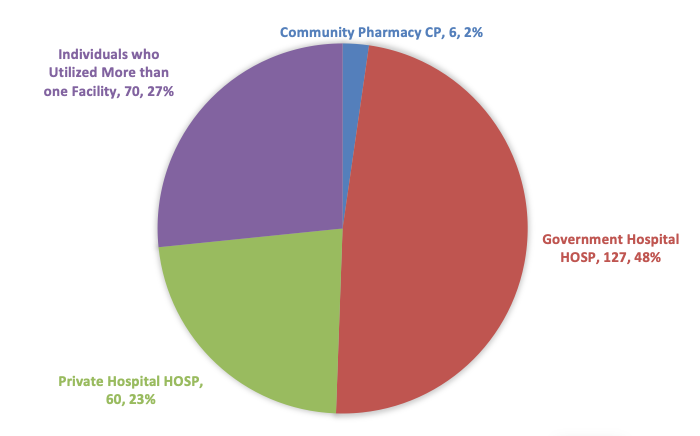
Among the 263 symptomatic participants, healthcare utilisation patterns were as follows: 48% (n=127) sought care exclusively at government hospitals; 23% (n=60) visited only private hospitals; 27% (n=70) utilised more than one facility type; and 2% (n=6) used community pharmacies exclusively. No participants sought care exclusively from ATR practitioners, church pastors, or mosque imams (Figure 2).
Diagnosis pathway
Overall, 400 participants, the majority received their HIV diagnosis at a government hospital (62.75%, n=251) or a private hospital (34.25%, n=137). A small number were diagnosed at community pharmacies (2.25%, n=9) or through ATR practitioners (0.75%, n=3). No diagnoses were recorded at church or mosque settings.
To test the association between facility of consultation (independent variable) and facility of HIV diagnosis (dependent variable), analysis was restricted to the 193 participants who used a single facility for both consultation and eventual diagnosis. This subgroup represented 73.3% of the 263 symptomatic participants. Restricting to single-facility users eliminates data ambiguity that would arise from cross-tabulating consultation and diagnosis facilities for those who visited multiple settings.
Among these 193 participants, the Pearson chi-square test assumption regarding expected cell frequencies was violated (33.3% of cells had an expected count <5; minimum expected count = 0.28); therefore, Fisher’s exact test was employed. Results showed a statistically significant association between facility of consultation and facility of HIV diagnosis (χ² (2, N=193) =28.63, p<0.001). Concordance rates, the proportion of participants diagnosed at the same facility type where they sought consultation, were high for government hospitals (96.9%) and private hospitals (96.7%), but low for community pharmacies (50.0%). Cramer’s V indicated a medium to large effect size (V=0.39). Full cross-tabulation results are presented in Table 3.
The findings of this study provide critical insights into the health-seeking behaviours of people living with HIV in an urban Nigerian setting. The results strongly suggest that the pathway to HIV diagnosis in this study sample is largely symptom-driven, with the majority of participants (65.8%) having experienced illness prior to their diagnosis. This pattern is consistent with global literature on delayed HIV diagnosis in resource-constrained settings, where individuals often seek care only after the onset of advanced disease symptoms. A study in Abia State, Nigeria, for example, found that many people present for testing with advanced HIV disease, driven by opportunistic infections [14]. Similarly, a multi-country review in sub-Saharan Africa highlighted that poor health status and perceived symptoms were the primary motivators for seeking HIV testing [15]. Critically, the HS2 data in this study go beyond simply documenting that participants were symptomatic they show precisely which symptoms drove people to which facility types. Among the 263 symptomatic participants, weight loss (79.1%) generated 139 government hospital visits and 77 private hospital visits; fever (63.9%) generated 101 and 47 respectively; and tiredness (51.7%) generated 81 and 49 respectively. These are HIV-indicator symptoms driving people into the exact facilities best positioned to diagnose them, yet the fact that these presentations are characteristic of advanced disease reinforces the concern that diagnosis is occurring too late in the disease course.
The demographic profile of the participants reflects national and regional patterns. The high proportion of females (66.3%) mirrors trends of higher HIV prevalence among women in sub-Saharan Africa. The 2018 NAIIS survey reported a prevalence of 1.9% among females compared to 1.1% among males, a disparity linked to biological vulnerability, socio-economic inequities, and gender-based power imbalances that limit women’s ability to negotiate for safer sex practices [4]. The finding that the majority of participants were economically active and married challenges oversimplified assumptions about HIV being primarily a condition of marginalised groups. This highlights the epidemic’s broad reach into the general population particularly among individuals in established relationships a finding echoed by other studies in the region [16]. It is important to note, however, that without specific questions about sexual behaviour, sex work, substance use, or gender identity, it is not possible to determine whether participants belong to persons who are at high risk of contracting HIV or to draw conclusions about persons who are at high risk of contracting HIV representation in this sample.
The study’s most significant finding is the strong association between the type of facility consulted and the facility where HIV diagnosis ultimately occurred. The high concordance rates (>96%) at government and private hospitals underscore their central role as entry points for HIV diagnosis. This is likely attributable to the presence of Provider-Initiated Testing and Counselling (PITC) protocols at these facilities a strategy proven to integrate HIV testing effectively into routine clinical care [17]. A meta-analysis in sub-Saharan Africa confirmed that PITC consistently increased HIV case detection in clinical settings [18]. The HS2 data strengthen this interpretation considerably: government hospitals received the highest consultation volumes for nearly every HIV-indicator symptom 139 visits for weight loss (52.9% of symptomatic participants), 101 for fever (38.4%), 81 for tiredness (30.8%), and 72 for diarrhoea (27.4%) and their concordance rate of 96.9% shows they are successfully converting these symptomatic presentations into diagnoses. Private hospitals demonstrate similarly strong performance, with 96.7% concordance alongside substantial consultation volumes for weight loss (n=77, 29.3%), tiredness (n=49, 18.6%), and fever (n=47, 17.9%).
The community pharmacy data present the most striking missed opportunity identified in this study. The HS2 table shows that community pharmacies received a meaningful volume of consultations for HIV-indicator symptoms among the 263 symptomatic participants: fever (n=31, 11.8%), diarrhoea (n=23, 8.7%), tiredness (n=21, 8.0%), chills (n=19, 7.2%), and weight loss (n=18, 6.8%). These are not trivial figures people are arriving at pharmacies with the very symptoms that should prompt HIV testing. Yet the concordance analysis shows that only 50% of those who consulted a community pharmacy exclusively were diagnosed with HIV there. Taken together, the HS2 consultation volumes and the concordance data tell a coherent and concerning story: community pharmacies are receiving symptomatic individuals at a meaningful rate but are not converting those visits into diagnoses. This observation is consistent with evidence from other contexts showing that pharmacists infrequently initiate HIV testing due to limited training and lack of standardised protocols [19]. Given the small exclusive pharmacy user subsample in the concordance analysis (n=6), the concordance finding itself should be interpreted with appropriate caution, and a dedicated, adequately powered study of pharmacy-based HIV testing in Lagos is warranted. Nevertheless, the HS2 consultation volumes across all 263 symptomatic participants provide a broader and more robust basis for the observation that community pharmacies represent an underutilised diagnostic opportunity.
A substantial proportion of participants (34.3%) were asymptomatic at the time of diagnosis, suggesting they were identified through proactive case-finding strategies rather than symptom-driven care-seeking. The most plausible explanation is index testing a strategy encompassing four referral modalities: client referral, provider referral, contact referral, and dual referral. It was not ethically possible to include index testing as a direct questionnaire item in this study. Under provider referral, which is the predominant modality in Nigeria, HTS providers contact named sexual partners without those partners’ active knowledge that they were named by the index client. Many individuals identified through this route may be entirely unaware that their contact was disclosed. Asking study participants to confirm whether they were identified through index testing would risk re-exposing this confidential clinical information in a research context, and could heighten the risk of intimate partner violence and adverse social reactions a concern of particular relevance given that 66.3% of this study’s participants were female. The reliance on LGA-level programmatic data (Table 4) to contextualise the asymptomatic subgroup therefore represents a deliberate and ethically grounded analytical decision, consistent with the principle that research procedures must not compromise the confidentiality protections that clinical services provide. The LGA data show that index testing contributed an average of approximately 17% of new diagnoses in Oshodi-Isolo over two consecutive years a figure that aligns with the 34.3% asymptomatic proportion when considered alongside other proactive case-finding modalities such as mobile testing and PMTCT. This is consistent with global evidence that well-implemented index testing is among the most effective strategies for reaching previously undiagnosed individuals, and the WHO and UNAIDS strongly endorse it as a key approach for closing the first 95 gap in the care cascade [20].
The HS2 data also shed new light on the role of African Traditional Religion (ATR) practitioners. In contrast to broader African literature where ATR is often cited as a common first point of contact for systemic illness [21], the symptom-level data in this study show that ATR consultations were concentrated primarily among dermatological presentations: seborrhoeic dermatitis generated the highest ATR consultation volume of any symptom (n=12, 4.6% of symptomatic participants), while consultations for systemic HIV-indicator symptoms such as weight loss (n=5, 1.9%), fever (n=6, 2.3%), and diarrhoea (n=5, 1.9%) were comparatively low. This suggests that in this urban setting, ATR practitioners occupy a niche role in managing visible skin conditions rather than serving as primary handlers of systemic illness, a meaningful distinction that has implications for designing community-based HIV testing outreach, as it indicates that engaging ATR practitioners for HIV case-finding may be less impactful in urban Lagos than in rural or semi-urban settings where their role is broader [22,23].
Limitations
This study relied on participant self-report of pre-diagnosis health-seeking behaviour, introducing the potential for recall bias, as participants may not accurately remember facility visits or symptom onset that occurred prior to their diagnosis and ART initiation. Additionally, the single-site, urban study setting limits generalisability to rural or peri-urban populations, where health-seeking patterns and facility availability may differ substantially. The concordance analysis for community pharmacies was based on a small subsample of exclusive single-facility users (n=6); while the HS2 consultation volumes across all 263 symptomatic participants provide broader supporting context, the concordance finding should be confirmed through adequately powered future research dedicated to pharmacy-based HIV testing in Lagos.
In this urban Lagos study sample, the pathway to HIV diagnosis was predominantly symptom-driven, with the majority of participants experiencing illness prior to receiving a positive result. Formal healthcare facilities both government and private hospitals demonstrated high concordance between the facility of first consultation and the facility of diagnosis, underscoring their role as critical touch-points in the HIV care pathway. A substantial minority of asymptomatic participants was likely reached through index testing, and local data suggest this strategy accounts for approximately 17% of new diagnoses in the study area, indicating its value as a complementary case-finding approach. Community pharmacies showed a lower concordance rate, though the small number of pharmacy-consulting participants in this sample limits firm conclusions. These findings suggest that to maximise early HIV case detection, programmatic efforts should prioritise strengthening PITC in government and private hospitals, scaling up ethical index testing, and exploring ways to integrate HIV testing into community pharmacy encounters while carefully evaluating these strategies through adequately powered research. Achieving the UNAIDS 95-95-95 targets in Nigeria will require directing resources toward the specific facility types and care pathways where people in this setting are most likely to be reached.
Recommendations
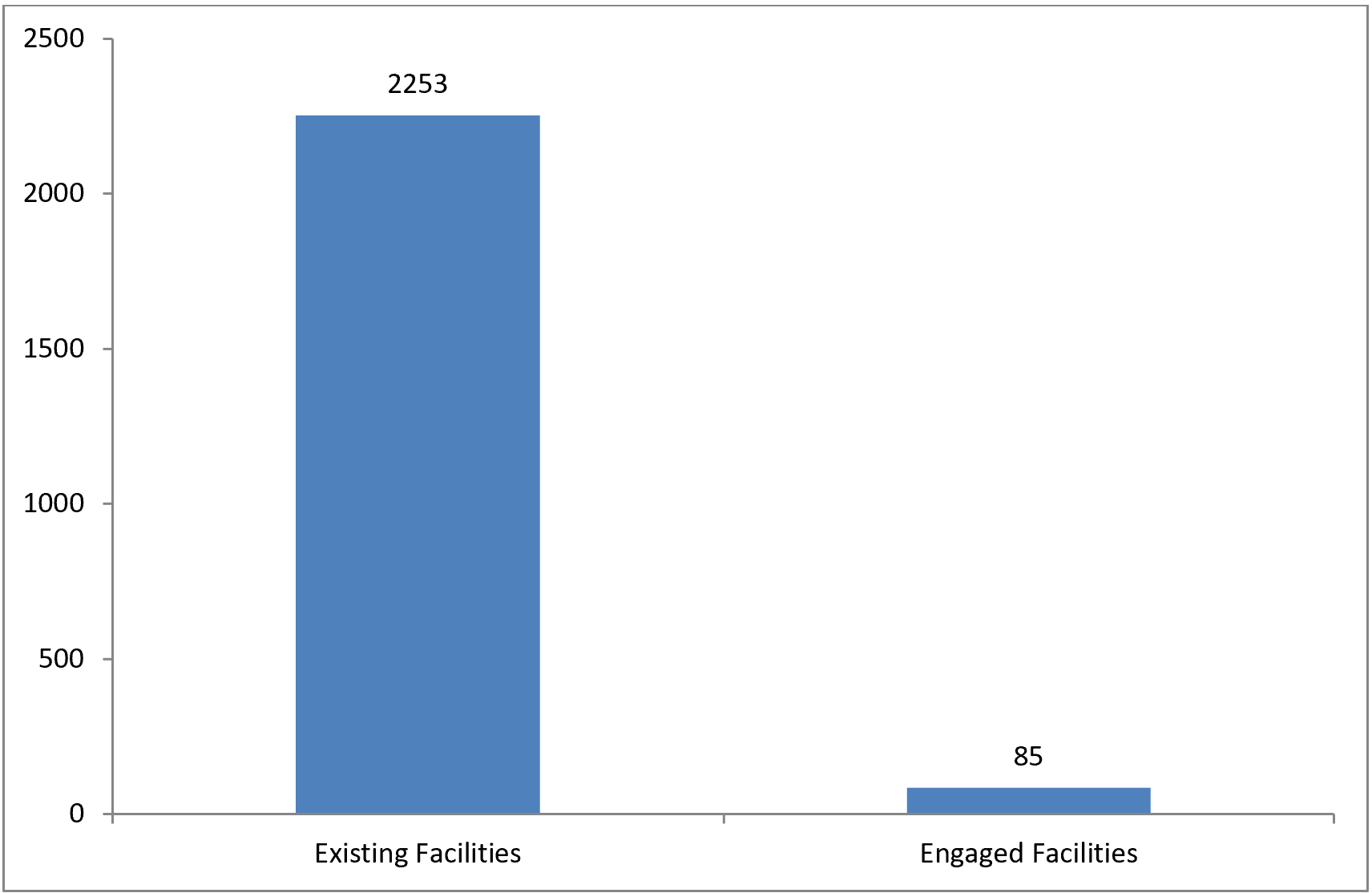
Based on the study findings, the following targeted recommendations are proposed: First, stakeholders including the Lagos State AIDS Control Agency (LSACA) should strengthen PITC protocols across both public and private hospitals, ensuring all patients presenting with HIV-compatible symptoms are offered a diagnostic test. Second, index testing should be scaled up systematically, with every newly diagnosed individual offered ethical partner notification and testing services. Third, community pharmacies should be engaged as potential HIV testing sites through structured training in HIV testing protocols, recognising that they represent an underutilised but frequently accessed point of care considering there are over 1741 community pharmacies in Lagos state, this gives a vivid picturesque of the proportion of missed opportunities for HIV diagnosis. Fourth, healthcare coverage for HIV testing services should be expanded, particularly given that only 85 of 2,253 health facilities in Lagos were engaged by implementing partners and LSACA for testing at the time of data collection, leaving a substantial gap in the testing network.
What is already known about the topic
What this study adds
The author thanks the Lagos State Health Research Ethics Committee (LSHREC) of the Lagos State Ministry of Health, led by Prof. O.O. Odusanya, for their feedback and approval. The contributions of data collector Oluwatosin A. Olajide, manuscript editor Mr. Nnwanya Emmanuel, and Dr. Bola Oyeledun of the Centre for Integrated Health Program (CIHP) are gratefully acknowledged.
Akpofure Oyakhilomen Blessing, conceived and designed the study, developed the data collection instrument, obtained ethical approval, supervised data collection, conducted all statistical analyses, interpreted the findings, and drafted the manuscript. The author also reviewed and approved the final version submitted for publication.
| Table 1: Socio-demographic characteristics and symptom status of participants (n=400) | ||||
| Variable | Frequency (n=400) | Percentage (%) | ||
|---|---|---|---|---|
| Gender | ||||
| Female | 265 | 66.3 | ||
| Male | 135 | 33.8 | ||
| Age (years) | ||||
| ≤20 | 10 | 2.5 | ||
| 21–30 | 60 | 15.0 | ||
| 31–40 | 105 | 26.3 | ||
| 41–50 | 121 | 30.3 | ||
| 51–60 | 64 | 16.0 | ||
| >60 | 40 | 10.0 | ||
| Mean age (mean ± SD) | 42.78 ± 12.59 | — | ||
| Marital Status | ||||
| Single | 84 | 21.0 | ||
| Married | 204 | 51.0 | ||
| Divorced/Separated | 68 | 17.0 | ||
| Widowed | 44 | 11.0 | ||
| Occupation | ||||
| Business | 139 | 34.8 | ||
| Craft and related workers | 83 | 20.8 | ||
| Elementary occupations | 25 | 6.3 | ||
| Associate professionals | 25 | 6.3 | ||
| Associate professionals | 25 | 6.3 | ||
| Professionals | 23 | 5.8 | ||
| Drivers | 22 | 5.6 | ||
| No job / unemployed | 14 | 3.5 | ||
| Full-time students | 14 | 3.5 | ||
| Managers and administrators | 12 | 3.0 | ||
| Retired | 12 | 3.0 | ||
| Plant and machine operators | 11 | 2.8 | ||
| Home Builder | 3 | 0.8 | ||
| Farmer | 3 | 0.8 | ||
| Symptoms Prior to Diagnosis | ||||
| Symptomatic (Yes) | 263 | 65.8 | ||
| Asymptomatic (No) | 137 | 34.3 | ||
| Monthly Income | ||||
| None | 29 | 7.2 | ||
| Less than ₦30,000 | 49 | 12.3 | ||
| ₦35,000–₦80,000 | 165 | 41.3 | ||
| ₦85,000–₦150,000 | 116 | 29.0 | ||
| ₦200,000 and above | 41 | 10.3 | ||
| Note: Symptom status (Yes/No prior to ART) is included within this table. | ||||
| Table 2: Symptom-specific healthcare facility utilisation among 263 symptomatic participants (HS2) frequencies and percentages | ||||||
| Symptom | ATR n (%) | Church n (%) | Mosque n (%) | CP n (%) | Govt. Hosp. n (%) | Priv. Hosp. n (%) |
|---|---|---|---|---|---|---|
| Fever | 6 (2.3) | 1 (0.4) | 0 (0.0) | 31 (11.8) | 101 (38.4) | 47 (17.9) |
| Chills | 2 (0.8) | 1 (0.4) | 0 (0.0) | 19 (7.2) | 40 (15.2) | 21 (8.0) |
| Tiredness | 3 (1.1) | 0 (0.0) | 0 (0.0) | 21 (8.0) | 81 (30.8) | 49 (18.6) |
| Joints & muscle pain | 3 (1.1) | 0 (0.0) | 0 (0.0) | 8 (3.0) | 35 (13.3) | 23 (8.7) |
| Sore throat | 3 (1.1) | 0 (0.0) | 0 (0.0) | 5 (1.9) | 11 (4.2) | 5 (1.9) |
| Swollen lymph nodes | 2 (0.8) | 0 (0.0) | 1 (0.4) | 1 (0.4) | 17 (6.5) | 5 (1.9) |
| Diarrhoea | 5 (1.9) | 1 (0.4) | 0 (0.0) | 23 (8.7) | 72 (27.4) | 42 (16.0) |
| Rash | 6 (2.3) | 0 (0.0) | 0 (0.0) | 11 (4.2) | 60 (22.8) | 38 (14.4) |
| Oral thrush | 4 (1.5) | 0 (0.0) | 0 (0.0) | 7 (2.7) | 15 (5.7) | 6 (2.3) |
| Vaginal yeast infection | 0 (0.0) | 0 (0.0) | 0 (0.0) | 7 (2.7) | 14 (5.3) | 8 (3.0) |
| Herpes simplex virus | 5 (1.9) | 2 (0.8) | 0 (0.0) | 2 (0.8) | 4 (1.5) | 5 (1.9) |
| Seborrhoeic dermatitis | 12 (4.6) | 0 (0.0) | 0 (0.0) | 6 (2.3) | 26 (9.9) | 10 (3.8) |
| Weight loss | 5 (1.9) | 2 (0.8) | 1 (0.4) | 18 (6.8) | 139 (52.9) | 77 (29.3) |
| Note: Percentages are of the 263 symptomatic participants (SS1=Yes). Both rows and columns are non-exclusive: participants who reported multiple symptoms appear in more than one symptom row, and participants who consulted multiple facility types appear in more than one facility column. Percentages therefore do not sum to 100% within rows or columns. ATR = African Traditional Religion; CHU = Church; CP = Community Pharmacy; Govt. Hosp. = Government Hospital; Priv. Hosp. = Private Hospital. | ||||||
| Table 3: Cross-tabulation of facility of consultation versus facility of HIV diagnosis for 193 single-facility users | ||||
| Facility of Consultation | Diagnosed at Same Facility | Total n | Total % | |
|---|---|---|---|---|
| Yes n (%) | No n (%) | |||
| Government Hospital | 123 (96.9%) | 4 (3.1%) | 127 | 100 |
| Private Hospital | 58 (96.7%) | 2 (3.3%) | 60 | 100 |
| Community Pharmacy | 3 (50.0%) | 3 (50.0%) | 6 | 100 |
| Total | 184 (95.3%) | 9 (4.7%) | 193 | 100 |
| Note: Percentage values represent row percentages. Fisher’s exact test: χ²(2, N = 193) = 28.63, p<0.001; Cramer’s V = 0.39. | ||||
| Table 4: HIV diagnosis modalities in Oshodi-Isolo LGA (2022 and 2024) | ||
| Modality (Oshodi-Isolo LGA) | 2022 Result | 2024 Result |
|---|---|---|
| Index Testing | 80 | 76 |
| Mobile Modality | 129 | 35 |
| TB Clinic | 61 | 23 |
| PMTCT ANC | 36 | 29 |
| Other PITC | 218 | 257 |
| Total | 524 | 420 |
| % Index Contribution | 15.2% | 18.1% |
| Weighted Average Contribution of Index Testing | 59 (156/944) × 100% = 16.5% 60 | |