
Research | Open Access | Volume 9 (4): Article 170 | Published: 21 Oct 2026

Views: 64
Menu, Tables and Figures
| Table 1: Socio-demographic characteristics of laboratory-confirmed Lassa fever cases in Edo State, Nigeria (January to April of 2017–2023) | |
| Socio-demographic Characteristics | n (%) |
| Age (years), median (IQR): 28 years (22 years) | |
| ≤10 | 184 (14) |
| 11-20 | 262 (19) |
| 21-30 | 331 (24) |
| 31-40 | 258 (19) |
| 41-50 | 149 (11) |
| 51-60 | 91 (7) |
| ≥61 | 86 (6) |
| Sex | |
| Male | 770 (57) |
| Female | 591 (43) |
Table 1: Socio-demographic characteristics of laboratory-confirmed Lassa fever cases in Edo State, Nigeria (January to April of 2017–2023)
| Table 2: Distribution of occupations among laboratory-confirmed Lassa fever cases in Edo State, Nigeria, January-April, 2018-2023 (n=883) | |
| Occupation | n (%) |
| Student | 383 (43.4) |
| Business Owner/Trader | 151 (17.1) |
| Farmer | 60 (6.8) |
| Artisan | 56 (6.3) |
| Civil Servant | 48 (5.4) |
| Unemployed | 47 (5.3) |
| Healthcare Worker | 26 (2.9) |
| Driver | 21 (2.4) |
| Teacher/Lecturer | 19 (2.2) |
| Retiree | 15 (1.7) |
| Clergy | 13 (1.5) |
| Others | 44 (5.0) |
| Total | 883 (100) |
Table 2: Distribution of occupations among laboratory-confirmed Lassa fever cases in Edo State, Nigeria, January-April, 2018-2023 (n=883)
Uwaifiokun Julius Okhuarobo1,&, Stephenson Babatunde Ojeifo2, Mercy Onize Okuo2, Armstrong Hamisu Waziri-Atebor2, Denyinye Minna Hitlar2, Osahogie Isaac Edeawe3, James Adebayo Igenoza4, Grace Folusho Ireotoi5, Nora Emmanuel Eyo5, Ekaete Alice Tobin3
1Nigeria Field Epidemiology and Laboratory Training Programme (NFELTP), Abuja, Nigeria, 2Ministry of Health, Benin City, Edo State, Nigeria, 3Irrua Specialist Teaching Hospital, Irrua, Edo State, Nigeria, 4Veterinary Epidemiology and Vector Control Unit, Ministry of Agriculture and Food Security, Benin City, Edo State, 5World Health Organization, Benin City, Edo State, Nigeria
&Corresponding author: Uwaifiokun Julius Okhuarobo, Nigeria Field Epidemiology and Laboratory Training Programme (NFELTP). Abuja. Nigeria, Email: uwathegreat@yahoo.com ORCID: https://orcid.org/0000-0003-3545-3563
Received: 23 Mar 2025, Accepted: 17 Oct 2026, Published: 21 Oct 2026
Domain: Infectious Disease Epidemiology
Keywords: Lassa Fever, Public Health, Incidence, Retrospective Studies, Disease Outbreaks, Local Government
©Uwaifiokun Julius Okhuarobo et al. Journal of Interventional Epidemiology and Public Health (ISSN: 2664-2824). This is an Open Access article distributed under the terms of the Creative Commons Attribution International 4.0 License (https://creativecommons.org/licenses/by/4.0/), which permits unrestricted use, distribution, and reproduction in any medium, provided the original work is properly cited.
Cite this article: Uwaifiokun Julius Okhuarobo et al., Epidemiology of Lassa fever outbreaks in Edo State, Nigeria, 2017-2023: A retrospective analysis. Journal of Interventional Epidemiology and Public Health. 2026; 9(4):170. https://doi.org/10.37432/jieph-d-26-00095
Introduction: Lassa fever (LF) is an epidemic-prone disease with outbreaks following a seasonal pattern across the endemic countries in West Africa. We carried out a retrospective analysis of Lassa fever outbreaks in Edo State, Nigeria, to describe their epidemiological patterns.
Methods: A retrospective descriptive study was conducted using secondary surveillance data from LF outbreaks reported to the Edo State Ministry of Health from January to April of each year, 2017 through 2023. Data collection was done through data extraction from the database of the Edo State Public Health Emergency Operation Centre using a data extraction form. Analyses were based on laboratory-confirmed LF cases. Cumulative incidence and case fatality rate (CFR) were calculated. Categorical variables were summarized in frequencies and proportions, while continuous variables were summarized using appropriate measures of central tendency and dispersion.
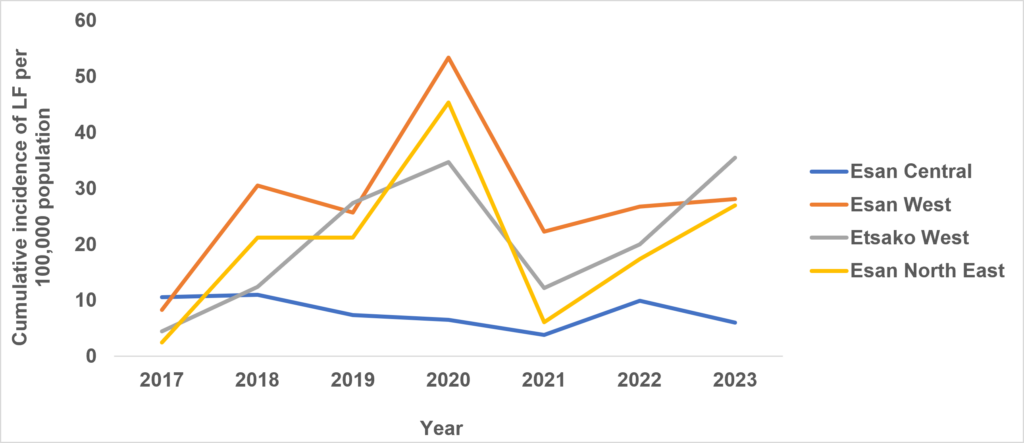
Results: A total of 9,003 suspected LF cases were reported, of which 1,361 (15.1%) were laboratory-confirmed. The median age of confirmed cases was 28 (interquartile range: 18-40) years; 770 (56.6%) were male, and 331 (24.3%) were aged 21–30 years. Among the 883 confirmed cases with occupation data available from 2018 through 2023, 383 (43.4%) were students. The highest reported case counts generally occurred between epidemiological weeks 1 and 11. Etsako West, Esan West and Esan North-East accounted for 431 (31.7%), 361 (26.5%), and 248 (18.2%) confirmed cases, respectively. Overall CFR was 12.6% (171/1,361). During the January-April 2020 outbreak period, cumulative incidence was highest in Esan West (53.4 per 100,000 population), followed by Esan North-East (45.4 per 100,000) and Etsako West (35.0 per 100,000).
Conclusion: Esan West, Etsako West, and Esan North-East accounted for a substantial proportion of the reported LF burden during the study period. The findings highlight the importance of geographically targeted and timely public health preparedness and response efforts ahead of LF outbreak periods. Preparedness efforts should prioritize strengthened surveillance activities in areas with recurrently high reported LF burden to reduce morbidity and mortality.
Lassa fever (LF) is one of the epidemic-prone diseases in Nigeria [1]. It is caused by the Lassa virus found in rodents, including Mastomys natalensis and other rat species [2,3]. This disease is endemic in some West African countries, including Nigeria, Sierra Leone, Guinea, Liberia, Benin and Togo [4–6], with sporadic exportation to other regions around the globe [7–9].
Transmission of the virus is mainly from rodent to human [10,11], while the majority of cases are asymptomatic [12,13]. The burden of LF is greatest in Nigeria compared with other countries in the region [14–16]. Outbreaks of LF follow a seasonal pattern across the endemic countries of West Africa, usually occurring during the dry season [17,18]. High transmission season typically occurs in the first quarter of the year and wanes in the second quarter [19]. The most devastating outbreak in the history of LF occurred in Nigeria in 2018 [17,20], affecting more than half of the country’s 36 states and the Federal Capital Territory [21,22]. Edo State had the highest burden of the disease in that year’s outbreak, which spanned from January 1 to May 6, 2018. During this period, a case fatality rate (CFR) of 15% and an incidence of 4.2 per 100,000 population were reported for Edo State [20].
The epidemiology of LF in Edo State has been described in previous studies, including the spatial clustering of cases, individual outbreak investigations, and more recent patterns of disease and clinical management [23–25]. However, comparable analyses of temporal and geographical variations in reported LF burden across consecutive seasonal outbreak periods remain limited. By applying a standardized January–April analytical window across seven years, this study provides subnational evidence on recurrent temporal patterns and geographical concentration of reported cases to inform preparedness and response planning in Edo State. This study, therefore, sought to better describe the epidemiological patterns of LF outbreaks in Edo State from 2017 through 2023.
Study design
A retrospective descriptive study was conducted using secondary surveillance data from LF outbreaks. The data were reported by the Institute of Viral and Emergent Pathogens Control and Research (IVEPCR), Irrua Specialist Teaching Hospital (ISTH), to the Edo State Ministry of Health from January to April of each year from 2017 through 2023.
Data type and source
Secondary data on LF cases domiciled in the Public Health Emergency Operation Centre (PHEOC), Ministry of Health, Edo State, Nigeria, was used for analysis.
Study site and population under surveillance
Edo State is in Nigeria’s South-South geo-political zone [26]. It has an estimated projected population, as of 2022, of 4,777,000 and occupies an area of about 19,559 Km2 [27]. It has 18 Local Government Areas (LGAs) and 3 senatorial districts (Edo North, Edo Central and Edo South). Edo North is made up of 6 LGAs (Akoko Edo, Etsako Central, Etsako East, Etsako West, Owan East, and Owan West); Edo Central has 5 LGAs (Esan Central, Esan North East, Esan South East, Esan West, and Igueben); while Edo South has seven LGAs (Egor, Ikpoba Okha, Oredo, Orhiomwon, Ovia North East, Ovia South West, and Uhunmwode) [28,29]. The State had four government-owned tertiary hospitals and over 30 secondary hospitals as of 2023 [30]. ISTH is one of the tertiary hospitals in the State and was designated as one of the Centres of Excellence in the diagnosis and management of LF in Nigeria [31].
The study population included all Reverse Transcriptase Polymerase Chain Reaction (RT-PCR) confirmed LF cases reported to the Ministry of Health, Edo State, Nigeria, by the Institute of Viral and Emergent Pathogens Control and Research (IVEPCR), ISTH, Irrua, Edo State, from January to April of each year from 2017 through 2023.
Case definitions
Suspected case: “Any individual presenting with one or more of the following: malaise, fever, headache, sore throat, cough, nausea, vomiting, diarrhoea, myalgia, chest pain, hearing loss and either a. History of contact with excreta or urine of rodents b. History of contact with a probable or confirmed Lassa fever case within a period of 21 days of onset of symptoms OR Any person with inexplicable bleeding/hemorrhage”[1].
Confirmed case: “Any suspected case with laboratory confirmation (positive IgM antibody, PCR or virus isolation).”[1]. For this study, laboratory confirmation was based on a positive RT-PCR result.
Lassa fever surveillance system in Edo State
LF is an immediately case-based notifiable disease in Nigeria, and the surveillance in Edo State is in accordance with the National Guideline on Integrated Disease Surveillance and Response (IDSR) system [1]. It involves both passive and active surveillance components [32]. All cases of LF are expected to be reported immediately to the LGA Disease Surveillance and Notification Officer (DSNO) of the respective LGAs by health workers and/or surveillance focal persons in health facilities across the state. The LGA DSNO is then expected to ensure all data for the cases are captured and immediately reported to the State Epidemiologist/State DSNO using electronic IDSR tools (Surveillance Outbreak Response and Management System – SORMAS). [1] All blood samples collected from suspected cases are sent to ISTH, Irrua, Edo State, for confirmation by RT-PCR test. Results are line-listed in Excel format and sent to the Edo State Public Health Emergency Operation Centre (PHEOC), Ministry of Health (sent daily during outbreaks). However, details of any positive LF case are usually sent immediately to the respective LGA DSNO for immediate public health response before the daily line-list report. Confirmed cases are managed in the LF isolation ward of ISTH. Anyone who has contact with confirmed LF cases is line-listed and followed up for 21 days by a team of World Health Organization-trained and experienced contact tracers with supervision from the LGA DSNO of respective LGAs. Blood samples are collected from contacts who develop symptoms [20] and sent for RT-PCR testing at ISTH.
Data collection
Secondary data collection was done through data extraction using a data extraction form adapted from the IDSR technical guidelines. The LF database is domiciled in the Edo State PHEOC, Ministry of Health. Data on socio-demographic characteristics, symptoms, and outcomes of laboratory results were extracted [33]. The data was extracted for the period from January 1 to April 30 of each year from 2017 through 2023. This period was selected as a standardized analytical window encompassing the period of higher seasonal Lassa fever activity in Nigeria, while allowing consistent comparison across the seven study years [16,34].
Data management
The datasets for the seven study years were reviewed for completeness, duplicate records, inconsistent coding, implausible values, and internal inconsistencies. Variable names and category labels were standardized across years before the datasets were combined for analysis. Personally identifying information was removed, and access to the analytical dataset was restricted to authorized study personnel.
Initial data clean-up
Before analysis, the dataset underwent initial data clean-up procedures to address any inconsistencies, errors, or missing values. This process involved verification of data entry accuracy, removal of duplicate records, and validation of variable coding using Microsoft Excel 365 and Epi Info 7 software.
Approximately 2% of laboratory-confirmed cases had missing age values. Median Imputation was used to address the missing age values. This involved replacing missing values with the median of the observed data calculated using Microsoft Excel 365 and Epi Info 7. Median imputation was used because of the negligible proportion of missing age values and the robustness of the median to extreme values [35]. Missing sex values (<0.5%) were verified against the source records and completed during data cleaning. Therefore, there were no missing sex values in the final analytical dataset. Factors like marital status and educational attainment were excluded from the analysis because the data for most of the study years were unavailable.
Occupation data were available from 2018 through 2023. A standardized coding scheme was used to harmonize the occupation categories before the analysis, because the categories were coded inconsistently across the available years. Consequently, analyses were restricted to records with available occupation data from 2018 through 2023.
Data processing and analysis
All categorical variables were expressed in frequencies and proportions, while continuous variables were expressed using the appropriate measure of central tendency and dispersion. The cumulative incidence of laboratory-confirmed LF cases in the outbreak season was calculated by dividing the number of laboratory-confirmed cases (from January 1 to April 30) by the corresponding projected population for each year and multiplying by 100,000 [36]. The LGA population projections were based on the 2006 census population for each LGA and the Edo State-specific annual population growth rate of 2.7%, using the exponential population growth formula P(t) = P(0) x EXP(rt) [37], where P(t) is the projected population, P(0) is the 2006 Nigerian census population [38], r is the annual population growth rate (0.027) [38], and t is the number of years elapsed since 2006. The 2006 LGA population figures were obtained from the 2006 population census published in the Federal Republic of Nigeria Official Gazette [39], while the Edo State population growth rates were obtained from the National Bureau of Statistics [38]. The LGAs with the highest cumulative incidence over the study period were selected for graphical presentation to illustrate temporal variations in cumulative incidence across the study years.
The CFR was calculated as the proportion of LF deaths among laboratory-confirmed LF cases [36]. Analysis was carried out using Microsoft Excel 365 and QGIS software version 3.34. The study was reported with guidance from “Strengthening the reporting of observational studies in epidemiology” (STROBE) [40].
Ethical consideration
Approval to access, analyse, and use the data was obtained from the Human Research Ethics Committee of the Edo State Ministry of Health (Approval No. HA/737/24/04004212). Patient confidentiality was protected by removing all personal identifiers from the database before analysis.
Of the 9,003 suspected LF cases reported during the study periods, 1,361 (15.1%) were laboratory-confirmed. The median age of records with positive results was 28 (interquartile range, IQR: 18-40) years. Males accounted for 770 (57%) of laboratory-confirmed cases, while the 21- 30 age group accounted for 331 (24%) of confirmed cases. (Table 1). Available data extracted from the database on occupation among positive cases (January to April 2018–2023) show that students accounted for 383 (43.4%) of 883 records (Table 2).
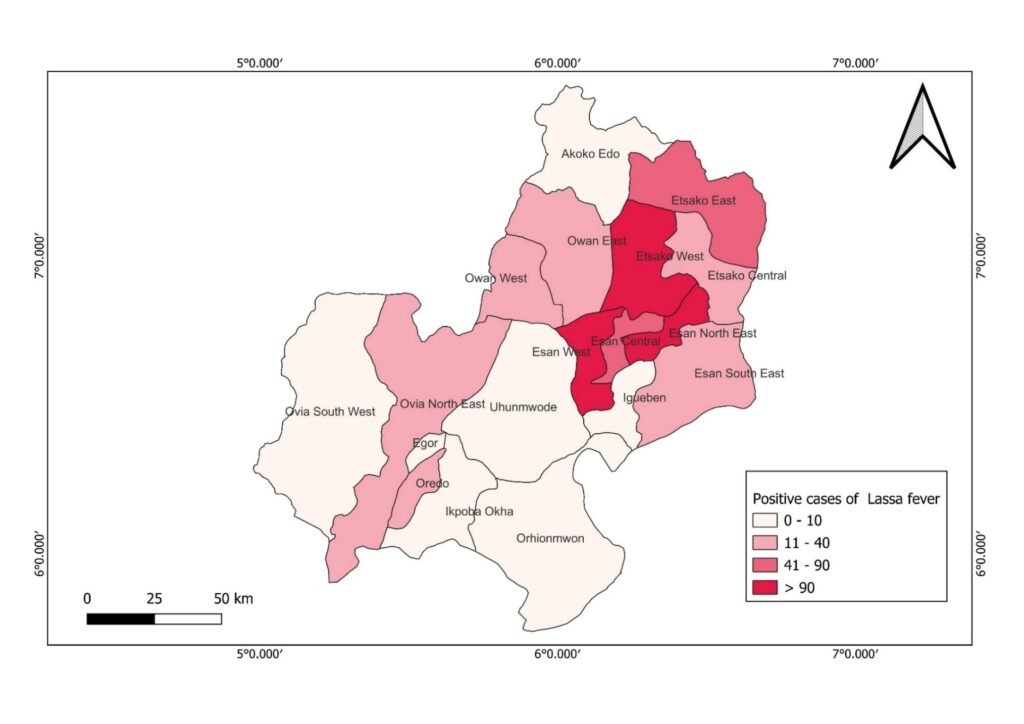
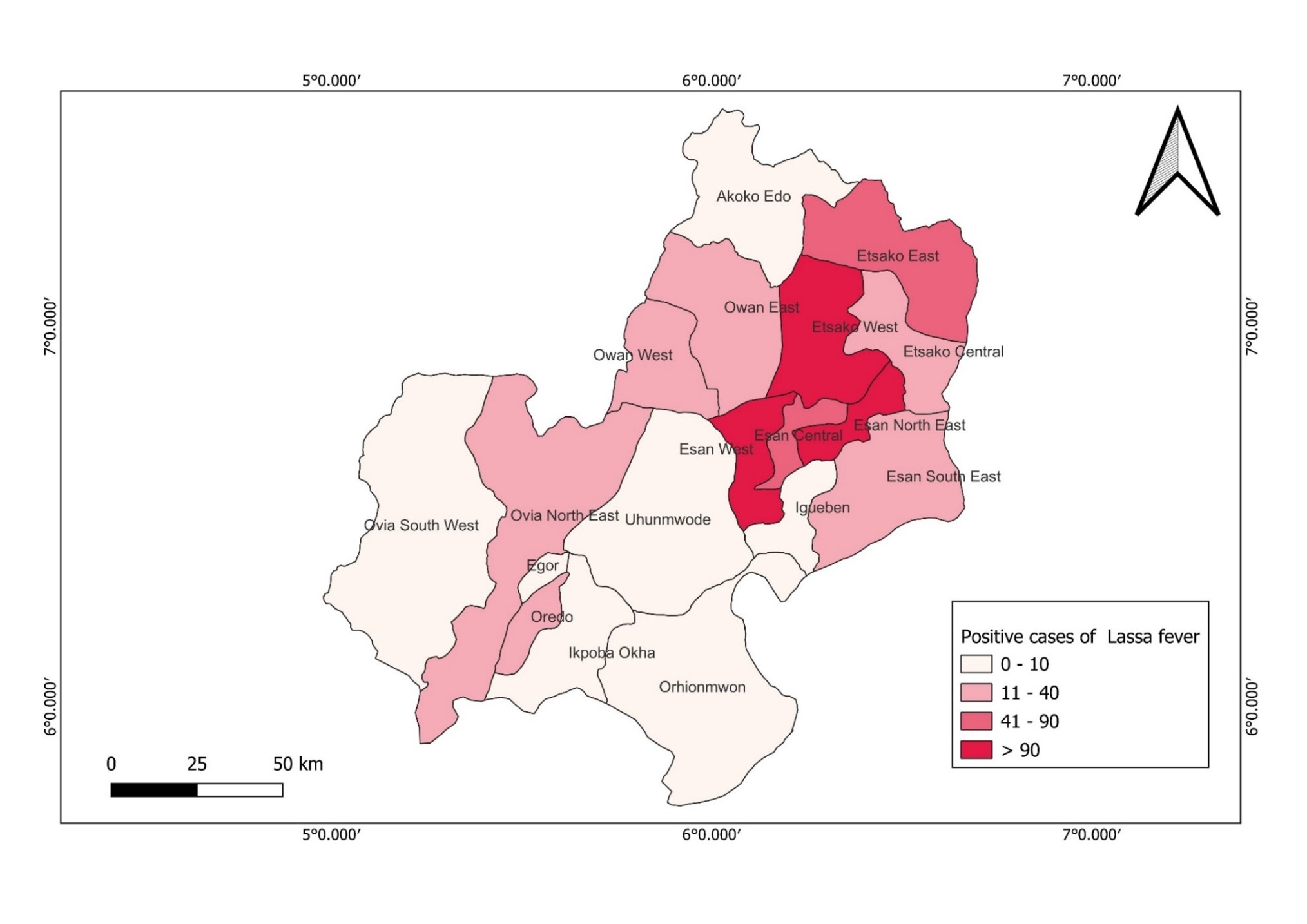
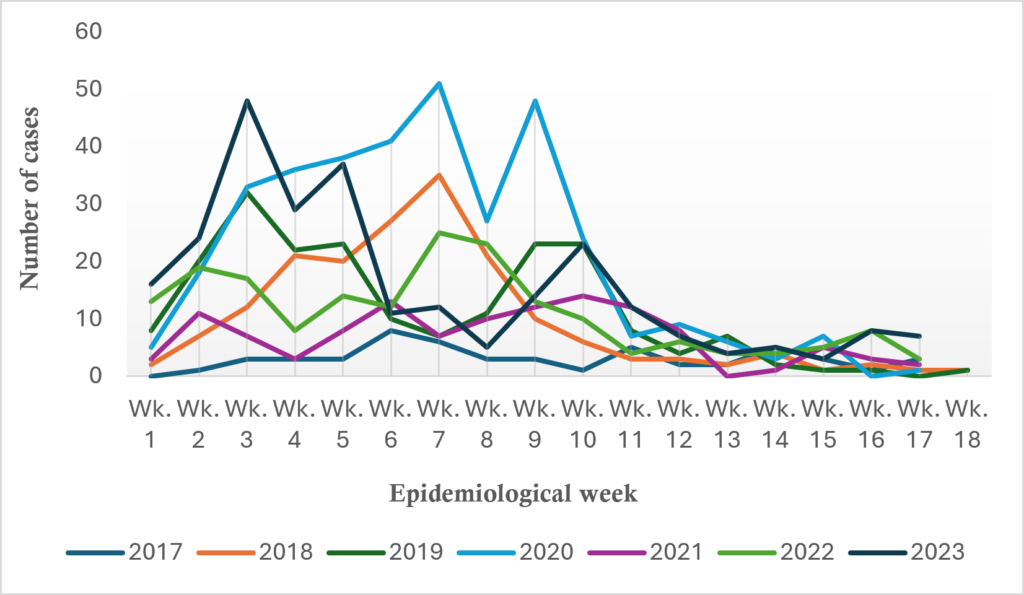
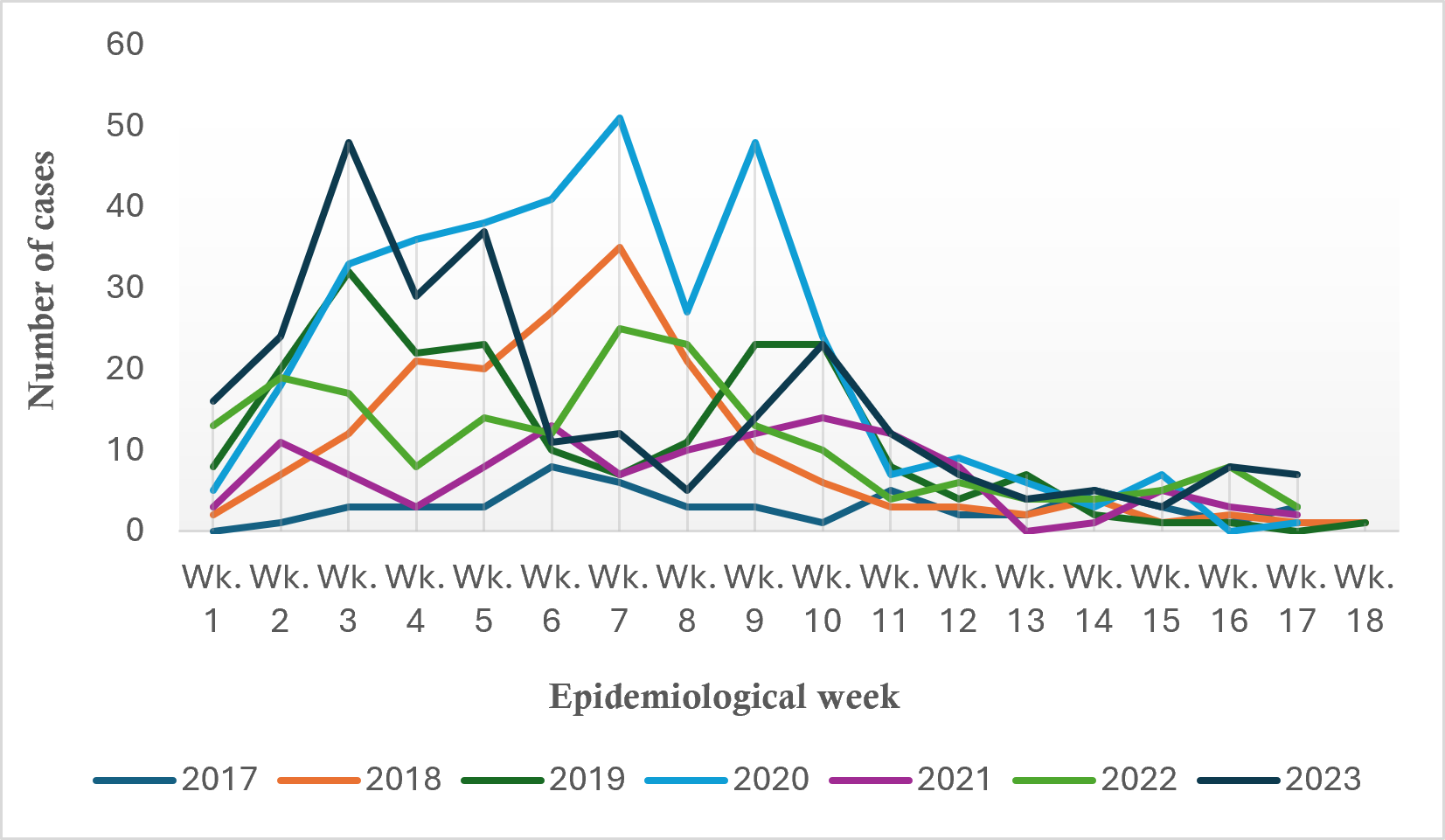
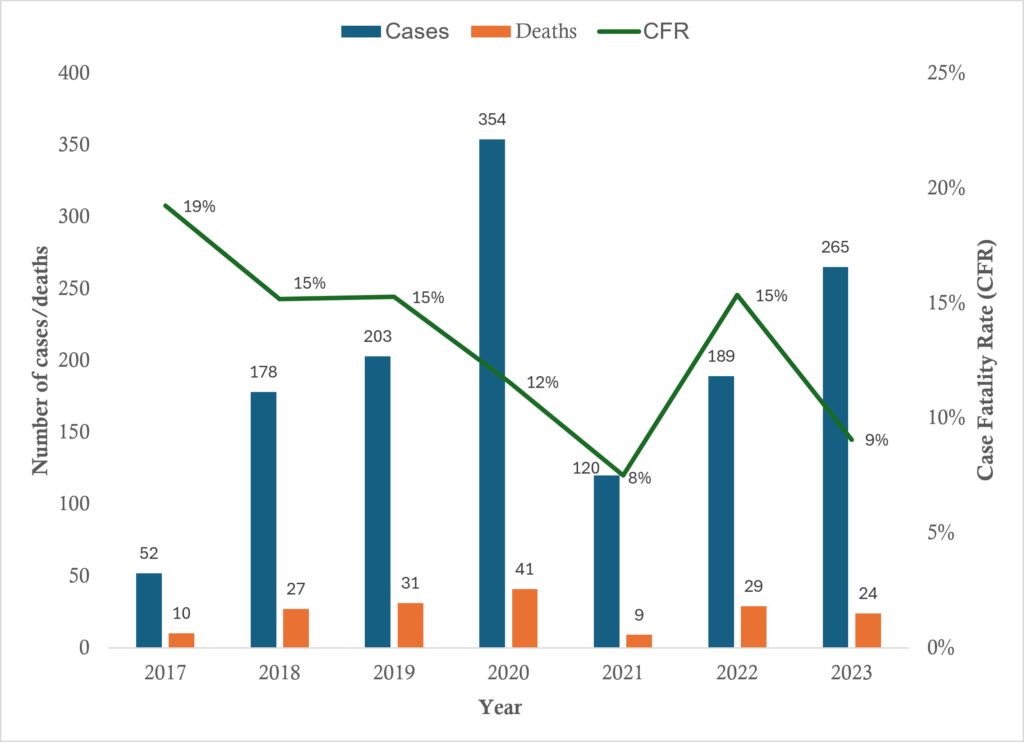
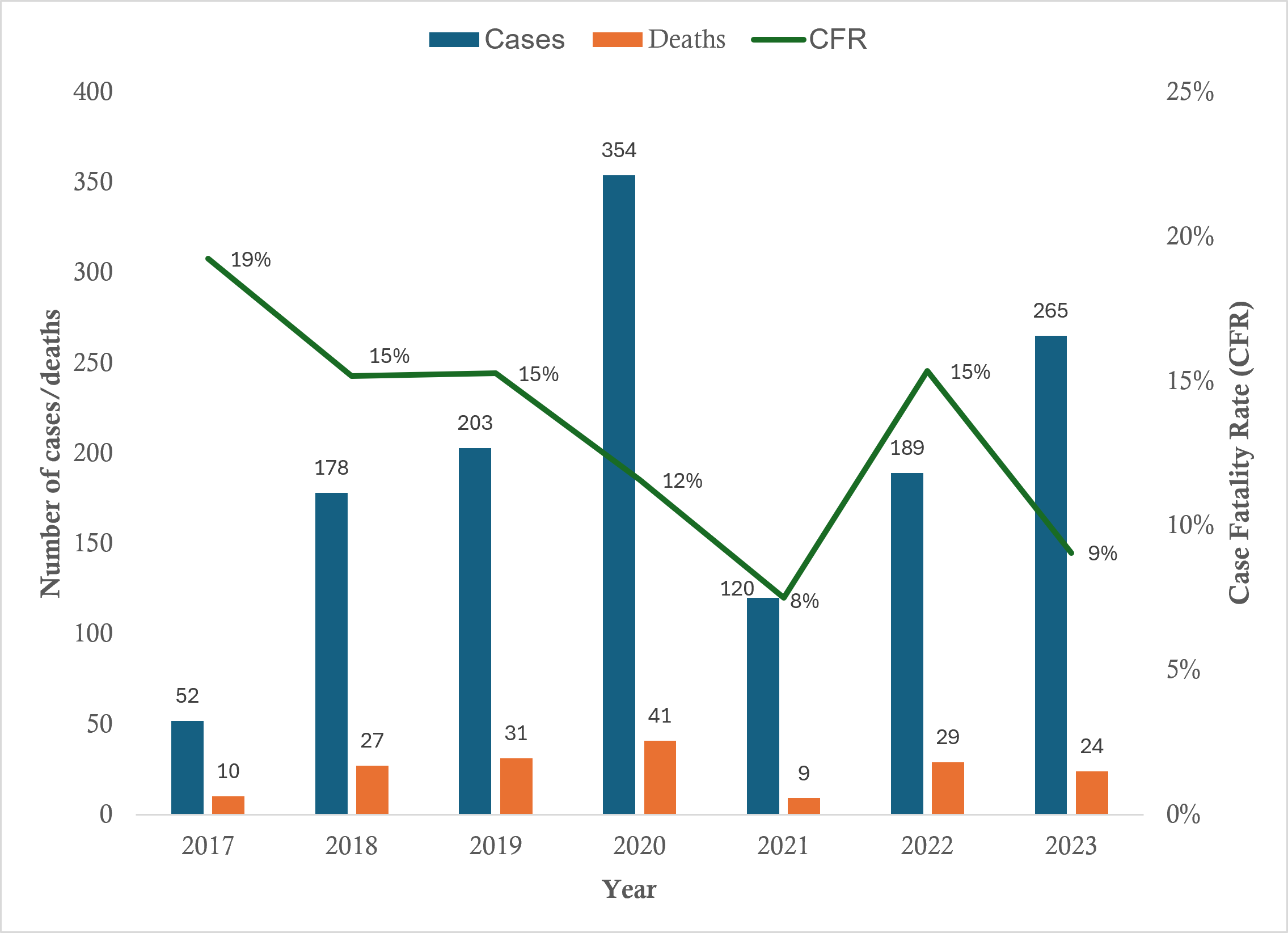
Etsako West, Esan West, and Esan North-East accounted for 431 (31.7%), 361 (26.5%), and 248 (18.2%) of the 1,361 laboratory-confirmed cases, respectively (Figure 1). The same LGAs accounted for 59 (34.5%), 29 (17.0%), and 25 (14.6%) of the 171 deaths, respectively. The overall CFR during the study period was 12.6% (171/1,361). The outcome of the trend analysis is shown in the epidemic curve of the outbreaks (Figure 2) and the distribution of the number of cases and deaths per year in relation to the CFR (Figure 3).
Outbreak indicators
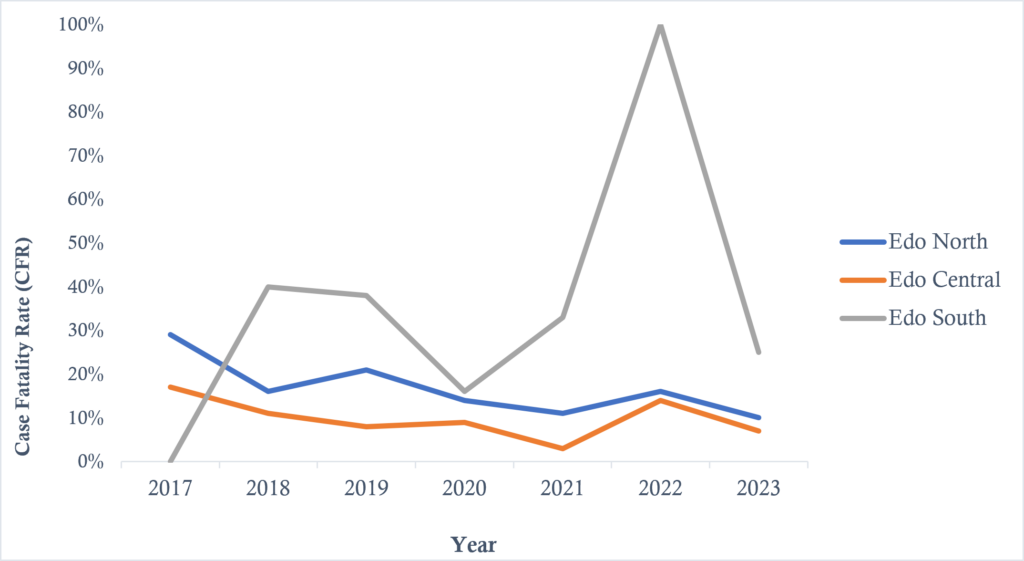
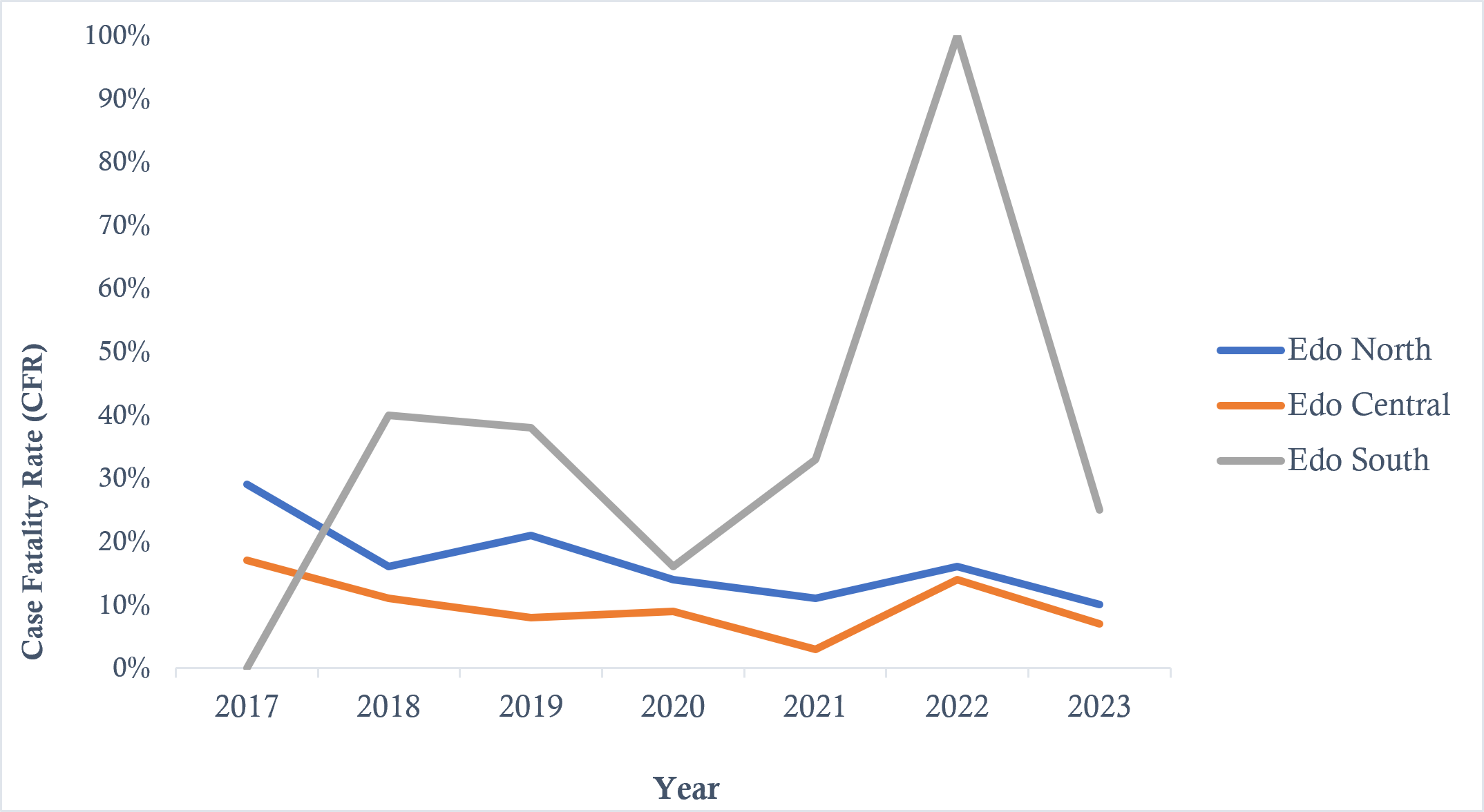
The outbreak indicators for the January-April periods from 2017 through 2023 include the CFR and the cumulative incidence, and are shown in Figures 4 and 5, respectively.
This study identified Etsako West, Esan West, and Esan North-East as the LGAs accounting for the largest proportion of reported laboratory-confirmed cases and deaths during the study period. It highlights the need for a proactive public health preparedness approach long before the outbreak season commences.
A wide range of age groups from the analysis were affected by LF, as seen by the median age of 28 years and the rather wide interquartile range of 18 – 40 years. This aligns with a national study carried out to understand the epidemiological trend of LF in Nigeria from 2015 to 2024 [41], showing a wide range of age groups affected by the disease and further buttressing the fact that any age group can be affected. In addition, individuals aged 21-30 accounted for a larger proportion of laboratory-confirmed cases. This aligns with another national study to review the epidemiological data of LF from 2015 to 2021 in Nigeria, which similarly reported a higher proportion of cases in this age group [17]. Though the present study does not establish differences in age-specific risk of infection, it may be helpful to provide targeted prevention programmes for youthful population, especially in endemic communities.
Males accounted for a larger proportion of laboratory-confirmed cases with an approximate male-to-female ratio of 1.3:1. This finding is slightly at variance with the national study that reviewed the epidemiological data of LF from 2015 to 2021 in Nigeria, which reported a ratio of 1:0.8 [17]. However, the observed distribution by sex does not establish differences in susceptibility or exposure risk.
The available occupational data from 2018 through 2023 showed that students accounted for a significant proportion of the laboratory-confirmed cases. Several studies have described the knowledge, risk factors, or perceptions of students toward LF [42,43], but there is a paucity of studies on the epidemiology of the disease among student populations in endemic areas. Hence, this study provides insight for researchers to carry out further studies relating to this gap in knowledge.
Etsako West, Esan West, and Esan North-East LGAs accounted for the largest proportions of reported laboratory-confirmed cases and deaths during the study period. This aligns with national situation reports of several years and studies carried out in Edo State [23,25,44]. Potential localized factors that may contribute to LF transmission within these areas may include environmental factors, food storage factors, socioeconomic situations, and occupational concerns [23–25,45]. However, these factors were not assessed in the present study.
A recurrent seasonal trend of laboratory-confirmed LF cases was evident from epidemiological weeks 1 through 11 across the study years. This is consistent with the national study that studied the epidemiological trend of LF from 2016 to 2021, which reported the highest case burden from week 1 to 13 [17]. This finding highlights the significance of temporal attentiveness and readiness ahead of and during periods of increased LF transmission.
Cases, deaths, and CFR varied across the study years (Figure 3). Cases and deaths increased during the earlier years, while CFR declined over the same period, consistent with a national study of Lassa fever patterns in Nigeria from 2017 to 2020 [16]. All three indicators declined in 2021 and subsequently increased from 2022. Although disruptions to surveillance and health services for other priority diseases were reported during the COVID-19 pandemic [46], the present study did not assess the factors responsible for these temporal changes. CFR was highest in Edo South Senatorial District during each January–April outbreak period from 2018 through 2023 (Figure 4). However, the relatively small number of laboratory-confirmed cases recorded in Edo South in some years may have produced unstable CFR estimates and warrants cautious interpretation. Previous studies have associated higher CFR with a low index of suspicion, delayed detection, and poor outcomes [47,48], but these factors were not assessed in the present study.
The highest cumulative incidence during the January-April outbreak period was observed in Esan West LGA, followed by Esan North-East and Etsako West LGAs. This finding aligns with a previous study carried out in Edo State to retrospectively investigate and identify primary clusters of LF cases in relation to household exposures. The study identified Esan West LGA as a hotspot for LF in the State [23]. Associated factors in that study included proximity of households to dump sites, rice farms, and rice storage facilities, which were identified as drivers of the disease [23]. Although these factors were not assessed in the present study, the recurrent burden observed in these LGAs highlights the importance of geographically focused preparedness and prevention efforts.
Study limitations
As a retrospective analysis of routine outbreak surveillance data, the findings were dependent on the completeness and accuracy of the available records and may have been affected by changes in case detection, testing, reporting, and surveillance practices across years. Some variables had incomplete data, and occupation data were available only from 2018 through 2023, limiting interpretation of occupational patterns across the full study period. Median imputation of missing age values may have reduced the observed variability in age. The analysis was restricted to January–April of each year and therefore does not represent the full annual epidemiology of Lassa fever. In addition, case counts and cumulative incidence reflect reported laboratory-confirmed cases and may not represent the underlying risk of infection because testing and healthcare access may differ across LGAs and over time. Finally, the descriptive design does not permit causal inference regarding factors associated with the observed temporal and geographical patterns.
The retrospective analysis of LF outbreaks in Edo State, from 2017 through 2023, provides insights into the temporal and geographical distribution of reported LF cases and deaths during the January-April outbreak periods. Esan West, Etsako West, and Esan North-East LGAs accounted for a substantial proportion of the reported disease burden. This highlights the importance of targeted preparedness and response efforts in these areas. Evidence-driven prevention and control measures may contribute to reducing LF morbidity and mortality.
What is already known about the topic
What this study adds
We appreciate the tremendous support given to this work by the Nigeria Field Epidemiology and Laboratory Training Programme, Abuja, Nigeria; Edo State Ministry of Health, Edo State, Nigeria; Irrua Specialist Teaching Hospital, Irrua, Edo State, Nigeria; and the World Health Organization, Edo State, Nigeria.
Conceptualization: Uwaifiokun Julius Okhuarobo
Data curation: Uwaifiokun Julius Okhuarobo, Stephenson Babatunde Ojeifo, Mercy Onize Okuo
Formal analysis: Uwaifiokun Julius Okhuarobo, Armstrong Hamisu Waziri-Atebor
Methodology: Uwaifiokun Julius Okhuarobo, Armstrong Hamisu Waziri-Atebor
Visualization: Uwaifiokun Julius Okhuarobo
Investigation: Mercy Onize Okuo, Armstrong Hamisu Waziri-Atebor, Denyinye Minna Hitlar, James Adebayo Igenoza
Validation: Osahogie Isaac Edeawe, James Adebayo Igenoza
Supervision: Stephenson Babatunde Ojeifo, Armstrong Hamisu Waziri-Atebor, Osahogie Isaac Edeawe, Grace Folusho Ireotoi, Ekaete Alice Tobin
Writing – original draft: Denyinye Minna Hitlar, Grace Folusho Ireotoi
Writing – review & editing: Stephenson Babatunde Ojeifo, Nora Emmanuel Eyo, Ekaete Alice Tobin
| Table 1: Socio-demographic characteristics of laboratory-confirmed Lassa fever cases in Edo State, Nigeria (January to April of 2017–2023) | |
| Socio-demographic Characteristics | n (%) |
| Age (years), median (IQR): 28 years (22 years) | |
| ≤10 | 184 (14) |
| 11-20 | 262 (19) |
| 21-30 | 331 (24) |
| 31-40 | 258 (19) |
| 41-50 | 149 (11) |
| 51-60 | 91 (7) |
| ≥61 | 86 (6) |
| Sex | |
| Male | 770 (57) |
| Female | 591 (43) |
| Table 2: Distribution of occupations among laboratory-confirmed Lassa fever cases in Edo State, Nigeria, January-April, 2018-2023 (n=883) | |
| Occupation | n (%) |
| Student | 383 (43.4) |
| Business Owner/Trader | 151 (17.1) |
| Farmer | 60 (6.8) |
| Artisan | 56 (6.3) |
| Civil Servant | 48 (5.4) |
| Unemployed | 47 (5.3) |
| Healthcare Worker | 26 (2.9) |
| Driver | 21 (2.4) |
| Teacher/Lecturer | 19 (2.2) |
| Retiree | 15 (1.7) |
| Clergy | 13 (1.5) |
| Others | 44 (5.0) |
| Total | 883 (100) |