
Systematic Review | Open Access | Volume 9 (3): Article 141 | Published: 27 Aug 2026

Views: 1,935
Menu, Tables and Figures
Table 1: Characteristics of the 29 studies included in the systematic review
| Author, Year | State(s) / Zone | Disease(s) Evaluated | Surveillance Platform | Design | Quality Rating | Ref |
|---|---|---|---|---|---|---|
| Amede et al., 2022 | Benue – North-Central | Malaria | DHIS2 + HMIS | Cross-sectional | High | [26] |
| Visa et al., 2020 | Kano – North-West | Malaria | DHIS2 / NHMIS | Observational | High | [27] |
| Bala et al., 2025 | Kebbi – North-West | Acute Flaccid Paralysis | IDSR + WHO AFP system | Descriptive cross-sectional | High | [10] |
| Ameh et al., 2016 | Kaduna – North-West | Measles | IDSR + case-based system | Cross-sectional | High | [20] |
| Raji et al., 2021 | Sokoto – North-West | Acute Flaccid Paralysis | WHO AFP system + IDSR | Retrospective | High | [9] |
| Okhuarobo et al., 2025 | Kaduna – North-West | Diphtheria | IDSR + SORMAS | Mixed-methods | High | [13] |
| Kwaghe et al., 2020 | National (6 zones) | TB; Leprosy; Buruli Ulcer | NTBLCP + E-TB Manager + GxAlert + IDSR | Descriptive evaluation | High | [16] |
| Okon et al., 2020 | Nasarawa – North-Central | Tuberculosis | NTBLCP + IDSR | Descriptive evaluation | High | [15] |
| Dambazau et al., 2025 | Kwara – North-Central | Mpox | SORMAS + IDSR (paper) | Cross-sectional | High | [18] |
| Okeafor & Okeafor, 2017 | Rivers – South-South | HIV | HMIS | Cross-sectional | High | [33] |
| Beebeejaun et al., 2021 | National | 41 notifiable diseases | SORMAS + EBS | Mixed-methods | High | [12] |
| Umeozuru et al., 2022 | FCT – North-Central | COVID-19 | SORMAS + IDSR (paper) | Mixed-methods | High | [17] |
| Bassey et al., 2011 | Akwa Ibom – South-South | Poliomyelitis (AFP) | IDSR (paper) | Retrospective cross-sectional | High | [8] |
| Walter et al., 2025 | Bayelsa – South-South | Mpox | SORMAS + IDSR (paper) | Mixed-methods | High | [19] |
| Salam et al., 2022 | Kaduna – North-West | NTDs (Oncho, LF, Schisto, STH) | IDSR (paper) + NTD database | Mixed-methods | High | [14] |
| Mitchell et al., 2021 | Lagos – South-West | Tuberculosis | IDSR + STBLCP (paper) | Mixed-methods | High | [34] |
| Silenou et al., 2020 | Multi-zone (S-S, S-W, FCT) | Monkeypox | SORMAS + paper IDSR | Mixed-methods | High | [32] |
| Wiesen et al., 2022 | Borno – North-East | Polio (AFP) | AFP network + modified CIIA | Qualitative case study | Low | [31] |
| Ibrahim et al., 2021 | Adamawa, Yobe – North-East | Lassa fever, measles, CSM, YF, etc. | eIDSR + paper IDSR | Cross-sectional (mixed-methods) | High | [23] |
| Ibrahim et al., 2020 | Adamawa, Borno, Yobe – North-East | Multiple IDSR priority diseases | IDSR (paper) | Cross-sectional rapid assessment | High | [25] |
| Ohiri et al., 2016 | Akwa-Ibom, Cross River, Niger – S-S / N-C | Malaria | DHIS + NHMIS + household surveys | Mixed-methods | High | [22] |
| Nnebue et al., 2013 | Anambra – South-East | IDSR priority diseases | IDSR (paper) + HMIS | Cross-sectional (mixed-methods) | Moderate | [21] |
| Dairo et al., 2018 | Oyo – South-West | Cholera, CSM, measles, YF, VHFs | IDSR (paper) | Cross-sectional | High | [29] |
| Odega et al., 2010 | Aniocha South LGA (Delta) – South-South | Measles (suspected) | IDSR (paper) | Retrospective (capture-recapture) | High | [30] |
| Tagurum et al., 2022 | Jos North LGA (Plateau) – North-Central | IDSR priority diseases | IDSR (paper) | Comparative cross-sectional | High | [25] |
| Nyangara et al., 2018 | Abia, Niger – S-E / N-C | Malaria, Pneumonia, Diarrhoea | iCCM program (paper) | Cross-sectional (mixed-methods) | High | [28] |
| Jinadu et al., 2018 | Oyo – South-West | Cholera, measles, VHFs, influenza, YF | IDSR (paper) | Cross-sectional (mixed-methods) | High | [35] |
| Joseph et al., 2017 | Ebonyi – South-East | Malaria | HMIS (paper) + NHMIS | Mixed-methods | High | [11] |
| Shorunke et al., 2019 | Osun – South-West | Measles | IDSR (paper) | Retrospective | High | [47] |
Abbreviations: S-S = South-South; S-W = South-West; S-E = South-East; N-C = North-Central; FCT = Federal Capital Territory; CSM = cerebrospinal meningitis; YF = yellow fever; VHF = viral haemorrhagic fever; NTD = neglected tropical disease.
Table 2: Summary characteristics of included studies (N = 29)
| Characteristic | Category | n (%) |
|---|---|---|
| Publication period | 2010 – 2025 | 29 (100.0) |
| Geographic scope | State-level | 24 (82.8) |
| National | 2 (6.9) | |
| LGA-level | 2 (6.9) | |
| Multi-level | 1 (3.4) | |
| Study design | Mixed-methods | 13 (44.8) |
| Cross-sectional / descriptive evaluation | 11 (37.9) | |
| Retrospective / secondary data analysis | 4 (13.8) | |
| Qualitative case study | 1 (3.4) | |
| Surveillance platform | Paper-based IDSR (alone or with HMIS / disease-program systems) | 15 (51.7) |
| SORMAS-integrated (with IDSR / event-based surveillance) | 6 (20.7) | |
| Disease-specific or other program system | 4 (13.8) | |
| DHIS2 / NHMIS-integrated | 3 (10.3) | |
| Electronic IDSR (eIDSR) | 1 (3.4) | |
| Disease category | Multi-disease (≥2 IDSR-notifiable disease groups) | 11 (37.9) |
| Vaccine-preventable disease (VPD) | 9 (31.0) | |
| Single epidemic-prone disease | 7 (24.1) | |
| Neglected tropical disease (NTD) | 1 (3.4) | |
| Zoonotic / epidemic-prone combined | 1 (3.4) |
Table 2: Summary characteristics of included studies (N = 29)
Table 3: Summary of methodological quality appraisal of included studies (N = 29)
| Quality Domain | Assessment Tool | Summary of Findings | Quality Rating Distribution |
|---|---|---|---|
| Cross-sectional / Quantitative Components | JBI Critical Appraisal Checklist for Analytical Cross-Sectional Studies (JBI-CS) | All 29 studies (100%) satisfied 6 of the 7 appraisal criteria. None of the studies identified or addressed potential confounding factors (all scored ‘No’ on JBI-CS5), reflecting the descriptive, non-comparative nature of most surveillance evaluations. | All 29 studies: High (6/7) |
| Qualitative Components | JBI Critical Appraisal Checklist for Qualitative Research (JBI-Q) | All qualitative studies assessed met at least 3 of the 5 criteria, indicating generally acceptable methodological quality. The most common limitation was insufficient consideration of researchers’ influence on the research process. | All assessed studies: High (≥4/5) or Moderate (3/5) |
| Mixed-Methods Studies | Mixed Methods Appraisal Tool (MMAT) Version 2018 | The mean MMAT score was 4.2 out of 5 (range: 3-5, n=13). The most common limitation (42.9% of studies) was the lack of explicit acknowledgement of integration boundaries between quantitative and qualitative components. | 13 studies: High (4-5/5) 1 study: Moderate (3/5) |
| Surveillance-Specific Criteria | Surveillance System (SS) Quality Checklist | All 29 studies (100%) fulfilled criteria related to case definitions, data sources, population denominators, and linking recommendations to findings. However, 11 studies (37.9%) did not explicitly report an evaluation framework in their text, though most applied the framework structurally. | 18 studies: High (≥7/8) 10 studies: Moderate (5-6/8) 1 study: Low (<5/8) |
| Overall Quality Rating | Combined Assessment (All Tools) | Based on domain-specific assessments across all applicable tools: | 27 studies: High (93.1%) 1 study: Moderate (3.4%) 1 study: Low (3.4%) |
Table 3: Summary of methodological quality appraisal of included studies (N = 29)
Table 4: Reporting of quantitative CDC 2001 surveillance evaluation attributes across included studies (N = 29)
| CDC 2001 Attribute | Studies Reporting, n (%) |
|---|---|
| Representativeness | 29 (100.0) |
| Completeness / data quality | 29 (100.0) |
| Timeliness | 25 (86.2) |
| Sensitivity | 12 (41.4) |
| Positive predictive value (PPV) | 6 (20.7) |
Table 5: Thematic synthesis of author recommendations
| Recommendation Theme | Specific Recommendations | Frequency (n) | % |
|---|---|---|---|
| Strengthening Private and Tertiary Sector Engagement | Integrate private health facilities into surveillance systems; engage tertiary facilities; strengthen public-private partnerships; provide incentives for private sector reporting | 22 | 75.9% |
| Sustainable Government Funding | Increase government funding for surveillance; ensure timely release of funds; reduce donor dependency; create dedicated budget lines; provide logistics, transport, and stipends | 19 | 65.5% |
| Improving Data Quality | Conduct regular data quality audits; provide training on data management; use electronic systems with logical checks; reduce missing data; improve data completeness and accuracy | 18 | 62.1% |
| Electronic Surveillance Expansion | Scale up SORMAS and eIDSR to all states/LGAs; improve internet connectivity; use mobile technology; integrate multiple platforms; implement electronic reporting systems | 15 | 51.7% |
| Strengthening Laboratory Capacity | Decentralize testing to sub-national laboratories; improve sample transport; reduce laboratory turnaround times; strengthen diagnostic capacity; ensure availability of reagents and consumables | 14 | 48.3% |
| Training and Supervision | Provide regular/refresher training; conduct supportive supervision; strengthen human resource capacity; designate surveillance focal persons; improve skills in data analysis and interpretation | 13 | 44.8% |
| Feedback and Communication | Establish regular feedback mechanisms; improve communication between levels; ensure data use for decision-making; provide timely feedback to reporters | 11 | 37.9% |
| Public-Private Partnerships | Engage private sector in disease control activities; develop community partnerships; involve NGOs/CBOs; strengthen cross-border collaboration | 10 | 34.5% |
| Improving Timeliness | Simplify reporting procedures; use SMS/mobile reporting; ensure timely sample transport; reduce delays in investigation and reporting | 9 | 31.0% |
| Enhancing Sustainability | Develop sustainability plans; transition from donor-led to government-led systems; ensure continuity of surveillance activities; strengthen ownership at state/LGA levels | 9 | 31.0% |
| Security and Accessibility | Address insecurity challenges; improve access to conflict-affected areas; protect surveillance personnel; use community-based strategies in insecure areas | 7 | 24.1% |
| Policy and Leadership | Strengthen political commitment; develop and implement policies; ensure NCDC oversight; strengthen coordination between health institutions | 6 | 20.7% |
Vivian Nwechi1,2, Augustine Usman Adaka1,2, Maryam Abubakar Umar1,2, Ibukunoluwa Foluso Akinola2,3, Ammar Auwal Abdullahi2, Polycarp Dauda Madaki2,4,&, Zainab Bello Dambazau1,2
1Nigeria Centre for Disease Control and Prevention (NCDC), Abuja, Nigeria, 2Nigeria Field Epidemiology and Laboratory Training Program (NFELTP), 3Federal Ministry of Livestock Development, Abuja, Nigeria, 4Department of Veterinary Tropical Diseases, University of Pretoria, Pretoria, South Africa
&Corresponding author: Polycarp Dauda Madaki, Department of Veterinary Tropical Diseases, University of Pretoria, Pretoria, South Africa, Email: polycarp.madaki@tuks.co.za, ORCID: https://orcid.org/0009-0001-8216-9779
Received: 03 Jul 2026, Accepted: 24 Aug 2026, Published: 27 Aug 2026
Domain: Health Informatics
Keywords: Disease surveillance, Integrated Disease Surveillance and Response (IDSR); SORMAS, Nigeria, CDC evaluation framework
©Vivian Nwechi et al. Journal of Interventional Epidemiology and Public Health (ISSN: 2664-2824). This is an Open Access article distributed under the terms of the Creative Commons Attribution International 4.0 License (https://creativecommons.org/licenses/by/4.0/), which permits unrestricted use, distribution, and reproduction in any medium, provided the original work is properly cited.
Cite this article: Vivian Nwechi et al., Strengthening disease surveillance in Nigeria: A systematic review of performance evidence across IDSR, SORMAS, and DHIS2 platforms. Journal of Interventional Epidemiology and Public Health. 2026; 9(3):141. https://doi.org/10.37432/jieph-d-26-00214
Introduction: Nigeria experiences recurrent outbreaks of infectious diseases, yet the performance of its disease surveillance systems across different platforms and disease programmes has not been systematically synthesized. This systematic review identified, appraised, and synthesised published evidence on the performance of disease surveillance systems in Nigeria using the CDC 2001 surveillance evaluation framework.
Methods: Five electronic databases and grey literature sources were searched for studies published between 2001 and 2025 that evaluated disease surveillance systems in Nigeria. Two reviewers independently screened records, extracted data, and appraised methodological quality using JBI checklists and the Mixed Methods Appraisal Tool. A narrative synthesis was conducted, and findings were organised by CDC 2001 attributes, disease category, surveillance platform, and geopolitical zone.
Results: Twenty-nine studies met the inclusion criteria, with 93.1% (27/29) rated as high quality. AFP/poliomyelitis surveillance demonstrated consistently high performance on timeliness (98-100%), sensitivity (non-polio AFP rates: 4.5-55.2 per 100,000), and completeness (97-100%), while tuberculosis and NTD surveillance showed substantially lower sensitivity (17.6-25.0%) and PPV (12.7-20.3%). Electronic platforms (eIDSR and SORMAS) were associated with improved timeliness (73% vs. 43%) and completeness (≥85% vs. ≤65%) compared to paper-based systems. Persistent barriers included private sector exclusion (reporting rates as low as 3.9%), donor dependency, resource constraints, and insecurity. Representativeness was the most frequently reported attribute (100%), while sensitivity (40%) and PPV (20%) were least reported.
Conclusion: Nigerian surveillance systems show heterogeneous performance, with vertical programmes outperforming broader IDSR systems. Sustainable government funding, private-sector integration, and digital platform scale-up are urgently needed to strengthen national surveillance.
Nigeria bears a substantial infectious disease burden, with recurrent outbreaks of cholera, cerebrospinal meningitis, Lassa fever, measles, yellow fever, mpox, diphtheria, and COVID-19 (which emerged as a global pandemic in 2020 and remains a significant public health concern in Nigeria) [1]. Disease surveillance in the country is coordinated through the Integrated Disease Surveillance and Response (IDSR) strategy, which was introduced following the WHO Regional Office for Africa framework to strengthen disease detection, reporting, analysis, laboratory confirmation, and outbreak response [2]. Over the past decade, digital platforms such as the District Health Information System 2 (DHIS2) and the Surveillance Outbreak Response Management and Analysis System (SORMAS) have increasingly been integrated into Nigeria’s surveillance architecture to improve data management and public health response [2].
DHIS2 serves as Nigeria’s national health management information system and supports routine reporting across multiple disease programmes, while SORMAS was developed following the West African Ebola outbreak to strengthen real-time surveillance and outbreak management [3, 4]. Evaluations of these platforms have reported important strengths, including better data accessibility, usability, and decision-making, as well as high levels of user acceptability [3, 5]. Nevertheless, challenges related to data quality, completeness, reporting, and system performance continue to be documented across settings and disease programmes [5].
Despite considerable investments in surveillance infrastructure, evidence suggests that surveillance performance in Nigeria remains inconsistent across diseases, geographic regions, and reporting platforms. Underreporting, limited testing and contact-tracing capacity, inadequate laboratory support, weak feedback mechanisms, and other implementation challenges continue to affect surveillance effectiveness [1, 2]. Several studies have evaluated surveillance systems using the CDC 2001 Updated Guidelines for Evaluating Public Health Surveillance Systems, assessing attributes such as sensitivity, timeliness, data quality, representativeness, and acceptability [6]. However, these evaluations are largely disease-specific and geographically fragmented.
However, the existing body of evidence on surveillance system performance in Nigeria remains fragmented across diseases, geographic settings, and surveillance platforms. Although several studies have evaluated different aspects of surveillance performance, findings are often reported in isolation, making it difficult to obtain an overall picture of the strengths and weaknesses of disease surveillance systems in the country. Synthesizing this evidence is important for identifying recurring challenges, highlighting evidence gaps, and informing policy and programmatic decisions aimed at strengthening surveillance systems in Nigeria.
Therefore, this systematic review aims to identify, appraise, and synthesise published evidence on the performance of disease surveillance systems in Nigeria across disease programmes and reporting platforms. Using the CDC 2001 surveillance evaluation framework as the primary analytical structure, the review will assess key surveillance attributes, compare findings across IDSR, SORMAS, and DHIS2 platforms where possible, identify gaps in the evidence base, and generate recommendations for strengthening disease surveillance in Nigeria.
Protocol and registration
This systematic review was conducted and is reported in accordance with the Preferred Reporting Items for Systematic Reviews and Meta-Analyses (PRISMA) 2020 statement [7]. The review protocol was prospectively registered with the International Prospective Register of Systematic Reviews (PROSPERO; registration number: CRD420261438744).
Eligibility criteria
Eligibility was defined a priori using the Population, Intervention/Exposure, Comparator, Outcome, and Study design (PICOS) framework. Eligible studies evaluated the performance of disease surveillance systems operating within Nigeria, including paper-based Integrated Disease Surveillance and Response (IDSR), the Surveillance Outbreak Response Management and Analysis System (SORMAS), the District Health Information System 2 (DHIS2), electronic IDSR (eIDSR), and other disease-specific or platform-based reporting systems (such as NTBLCP, HMIS, AFP/polio surveillance networks). The review was disease-agnostic and considered evaluations of any epidemic-prone disease, vaccine-preventable disease, neglected tropical disease, or other condition under the Nigerian IDSR priority disease list. No comparator was needed. Eligible outcomes included quantitative and qualitative results that aligned with CDC 2001 Updated Guidelines for Evaluating Public Health Surveillance Systems [6] or similar guidance (e.g., WHO AFRO IDSR evaluation guidance) on sensitivity, positive predictive value, timeliness, completeness/data quality, representativeness, simplicity, flexibility, acceptability, and stability.
Study designs were eligible if they were either cross-sectional evaluations of the surveillance systems or observational and/or retrospective/secondary data analyses or mixed methods or qualitative case studies, with at least primary evaluation data reported for surveillance system performance. Eligible sources were peer-reviewed journal articles, theses/dissertations and grey literature reports (including NCDC technical reports and bulletins, AFENET/NFELTP field epidemiology training program papers) published in English during the 2001-2025 period. The search was designed to capture publications from 2001 through 2025, reflecting the CDC guidelines established in 2001 through the current period. The included studies identified, however, span the period 2010-2025, reflecting the availability of eligible evaluations meeting the inclusion criteria.) Studies were excluded if they were conducted outside Nigeria or lacked a Nigeria-specific focus; were editorials, commentaries, conference abstracts, narrative reviews, or study protocols without primary evaluation data; reported an outcome other than surveillance system performance (e.g., disease burden or clinical outcome studies that did not evaluate the surveillance system itself); were duplicate publications or reported data overlapping with another included study; or had no retrievable full text.
Information sources
Five electronic databases were searched from inception to the search date (January 2026): PubMed/MEDLINE, CAB Abstracts (Global Health, via CABI), Web of Science Core Collection, Scopus, and Google Scholar. Grey literature was also identified using NCDC technical reports and bulletins, AFENET/NFELTP repositories of theses and competency papers, ProQuest Dissertations and Theses and WHO/AFRO regional publications. The reference lists from all studies included and relevant reviews were hand-searched to identify any other eligible studies.
Search strategy
Search strategies were developed for each database combining controlled vocabulary (e.g., MeSH terms) and free-text/title-abstract-keyword terms across three concept blocks: (i) Nigeria-specific terms; (ii) disease surveillance system and platform terms (e.g., IDSR, SORMAS, DHIS2, eIDSR, “disease surveillance”, “public health surveillance”, “health information system”, “sentinel surveillance”, “event-based surveillance”, “community-based surveillance”); and (iii) surveillance evaluation/performance-attribute terms (e.g., “surveillance evaluation”, “system evaluation”, “performance assessment”, sensitivity, timeliness, completeness, “data quality”, representativeness, acceptability, positive predictive value), combined using the Boolean operators AND/OR. Database-specific syntax was adapted for PubMed/MEDLINE (MeSH and title/abstract fields), CAB Abstracts, Web of Science (topic search), Scopus (title and title-abstract-keyword fields), and Google Scholar (title search, first 200 results sorted by relevance). The full, word-for-word search strings employed in each database are given in full in Supplementary File S1.
Selection process
All records identified through database searching and grey literature sources were exported into Rayyan QCRI for automated and manual de-duplication. Following de-duplication, titles and abstracts of all unique records were screened independently and in duplicate by two reviewers (VN and PDM) against the eligibility criteria, blinded to each other’s decisions within Rayyan. Differences were clarified through negotiation between the two reviewers or by resolution by a third reviewer (AUA) when consensus was not reached. Inter-rater agreement at the title and abstract screening stage was quantified using Cohen’s kappa coefficient, with a target of κ ≥ 0.80 (substantial to almost perfect agreement) specified a priori. Full texts of all records passing title and abstract screening were retrieved and independently assessed for eligibility by the same two reviewers, with disagreements again resolved by the third reviewer; agreement at the full-text screening stage was likewise quantified using Cohen’s kappa. For each excluded study, reasons for exclusion were documented. The entire process of study identification, screening, eligibility and inclusion is reported according to the PRISMA 2020 flow diagram.
Data collection process
A standardized, pilot-tested data extraction form was developed in Microsoft Excel (Supplementary File S2) and piloted on a sample of included studies prior to full extraction, with minor refinements made to field definitions for clarity. Two reviewers independently extracted data, and discrepancies were resolved by consensus or referral to the third reviewer by cross-checking data. If data were missing, ambiguous, or needed further clarification, the appropriate section of the source publication was re-reviewed by both reviewers prior to the final decision.
Data items
For each included study, the following data were extracted: (i) study identification and publication details (first author, year, journal/source, publication type, funding source); (ii) study design and geography (study design, study period, geographic scope, state(s)/LGA(s), geopolitical zone, surveillance level); (iii) surveillance system characteristics (disease(s) evaluated, disease category, surveillance platform/system, surveillance type); (iv) quantitative CDC 2001 attribute data, where reported (sensitivity, positive predictive value, timeliness, completeness/data quality, representativeness, reporting lag, and other quantitative metrics, together with the benchmark or target used by study authors); (v) qualitative CDC 2001 attribute data (simplicity, flexibility, acceptability, and stability, rated as high/moderate/low where reported, with supporting narrative); (vi) barriers and facilitators to surveillance performance; (vii) key findings and author recommendations; and (viii) methodological details, including the evaluation framework used, data sources, sample size, and limitations acknowledged by study authors. The full data extraction matrix for all included studies is provided in Supplementary File S2.
Study quality and risk of bias assessment
Methodological quality was independently appraised in duplicate by two reviewers using tools appropriate to study design. Cross-sectional and observational quantitative components were assessed using the Joanna Briggs Institute (JBI) Critical Appraisal Checklist for Analytical Cross-Sectional Studies (7 items). Qualitative components were assessed using the JBI Critical Appraisal Checklist for Qualitative Research (5 items). Mixed-methods studies were additionally assessed using the Mixed Methods Appraisal Tool (MMAT), version 2018 (5 items). A supplementary surveillance-specific checklist, developed for this review, assessed eight additional methodological domains pertinent to surveillance evaluation studies: explicit statement of an evaluation framework, use of CDC 2001/equivalent attributes, clarity of case definitions, description of data source(s), description of sampling/denominators, reporting of quantitative data with numerators, acknowledgement of limitations, and linkage of recommendations to findings. This checklist was developed because existing tools (JBI, MMAT) do not capture surveillance-specific methodological domains, and no validated tool for surveillance system evaluation quality assessment exists. The checklist supplements, rather than replaces, the existing tools to ensure comprehensive assessment of both general study quality and surveillance-specific methodological rigour, clarity of case definitions, description of data source(s), description of sampling/denominators, reporting of quantitative data with numerators, acknowledgement of limitations, and linkage of recommendations to findings. Each applicable item was scored as meeting (Y) or not meeting (N) the criterion. Quality ratings are reported separately by tool domain rather than as a combined score, consistent with guidance discouraging the generation of overall numerical quality scores from multiple appraisal tools. Studies were categorised as high quality (≥75% of the applicable maximum score), moderate quality (55-74%), or low quality (<55%). Studies were not excluded on the basis of quality score alone; quality ratings were instead used descriptively and to contextualize the certainty of the synthesized evidence. Disagreements in quality scoring were resolved by discussion or third reviewer (AUA) adjudication. The full item-level quality appraisal for all included studies is provided in Supplementary File S3.
Data synthesis
A narrative synthesis was the primary approach to data synthesis, chosen a priori due to the anticipated heterogeneity in disease types, surveillance platforms, evaluation timeframes, study designs, and geographic contexts. Where percentages are reported, they represent the range of values across included studies rather than pooled estimates. Confidence intervals are not calculable for narrative synthesis due to the heterogeneity of metrics and the absence of individual patient-level data. Where individual studies reported confidence intervals (e.g., capture-recapture estimates), these have been retained in our reporting and are indicated in the text and tables. Findings were organized by (i) CDC 2001 surveillance attribute, (ii) disease category, (iii) surveillance platform, and (iv) geopolitical zone, and were summarized descriptively using frequencies, percentages, and ranges, supported by summary tables. Author-reported barriers, facilitators, and recommendations were extracted verbatim or near-verbatim and grouped into thematic categories through inductive thematic synthesis, with the frequency of each theme reported across included studies. Quantitative synthesis via meta-analysis was not undertaken due to the heterogeneity in study designs and outcome reporting across the included studies. Consequently, the Grading of Recommendations Assessment, Development and Evaluation (GRADE) approach was not applied.
Study selection
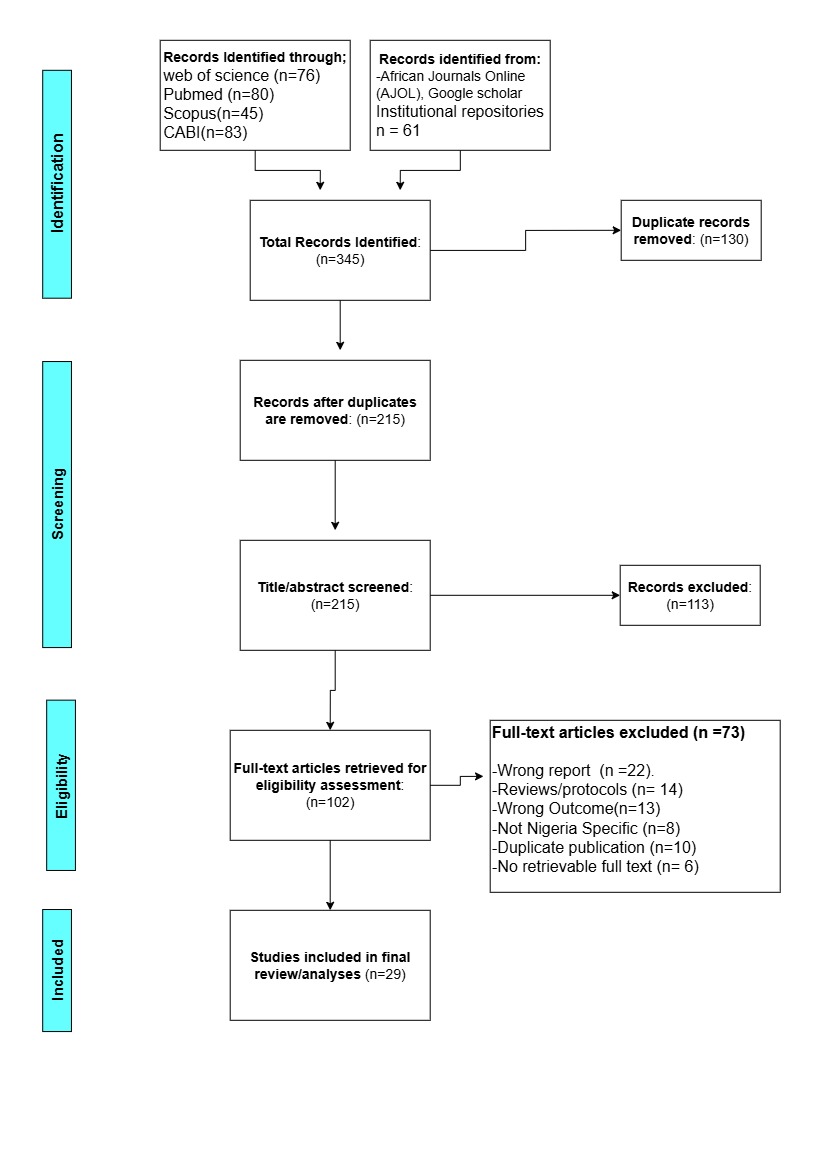
The electronic database and grey literature search yielded a total of 345 records: PubMed/MEDLINE (n = 80), CAB Abstracts/Global Health (n = 83), Web of Science Core Collection (n = 76), Scopus (n = 45), Google Scholar (n = 41), and grey literature sources, including NCDC technical reports, AFENET/NFELTP thesis repositories and ProQuest Dissertations and Theses (n = 20). After importing all records into Rayyan QCRI, 130 duplicate records were identified and removed, leaving 215 unique records for title and abstract screening.
Title and abstract screening was performed by two reviewers independently (VN and PDM), and disagreements were settled by discussion or on the basis of a third reviewer’s adjudication (AUA). At this stage, inter-rater agreement was significant and almost perfect (Cohen’s kappa, κ = 0.84; 95% CI 0.78–0.90), which was above the a priori threshold of κ ≥ 0.80 that was established in the review protocol. After screening of titles and abstracts, 113 records were excluded for not meeting the eligibility criteria (including studies not set in Nigeria, no surveillance evaluation component, ineligible publication type), leaving 102 records for which full text was sought and which were successfully retrieved.
The 102 full-text reports were independently assessed for eligibility by the same two reviewers (VN and PDM), again with a third reviewer (AUA) resolving discordant decisions. Near-perfect agreement (κ = 0.91; 95% CI 0.85 – 0.97) was obtained at the full-text screening stage, which is consistent with the threshold specified in the protocol (κ ≥ 0.80). Of these, 73 reports were excluded, most commonly because they did not report quantitative or qualitative findings against the CDC 2001 (or an equivalent) surveillance evaluation framework (n = 22), were editorials, commentaries, conference abstracts, or study protocols without primary evaluation data (n = 14), assessed an outcome other than surveillance system performance (n = 13), were duplicate publications or reported overlapping datasets (n = 10), were conducted outside Nigeria or lacked a Nigeria-specific focus (n = 8), or had no retrievable full text (n = 6). Twenty-nine studies met all the inclusion criteria and were entered into the systematic review and data extraction (Table 1). The flow diagram of the entire study selection process is summarised in the PRISMA 2020 flow diagram (Figure 1).
Characteristics of included studies
Twenty-four studies (82.8%) were conducted at the state level, two studies (6.9%) at the national level, two (6.9%) at the LGA level, and one (3.4%) across multiple sub-national administrative tiers.
With regard to methods used in data analysis, 13 studies (44.8%) used mixed methods, which involved quantitative record review or secondary data analysis, and key informant interviews (KIIs) or surveys. Additionally, 11 studies (37.9%) were cross-sectional or descriptive evaluations, four (13.8%) utilised retrospective or secondary data analysis designs, and one (3.4%) was a qualitative case study (Table 2).
Geographic distribution of included studies
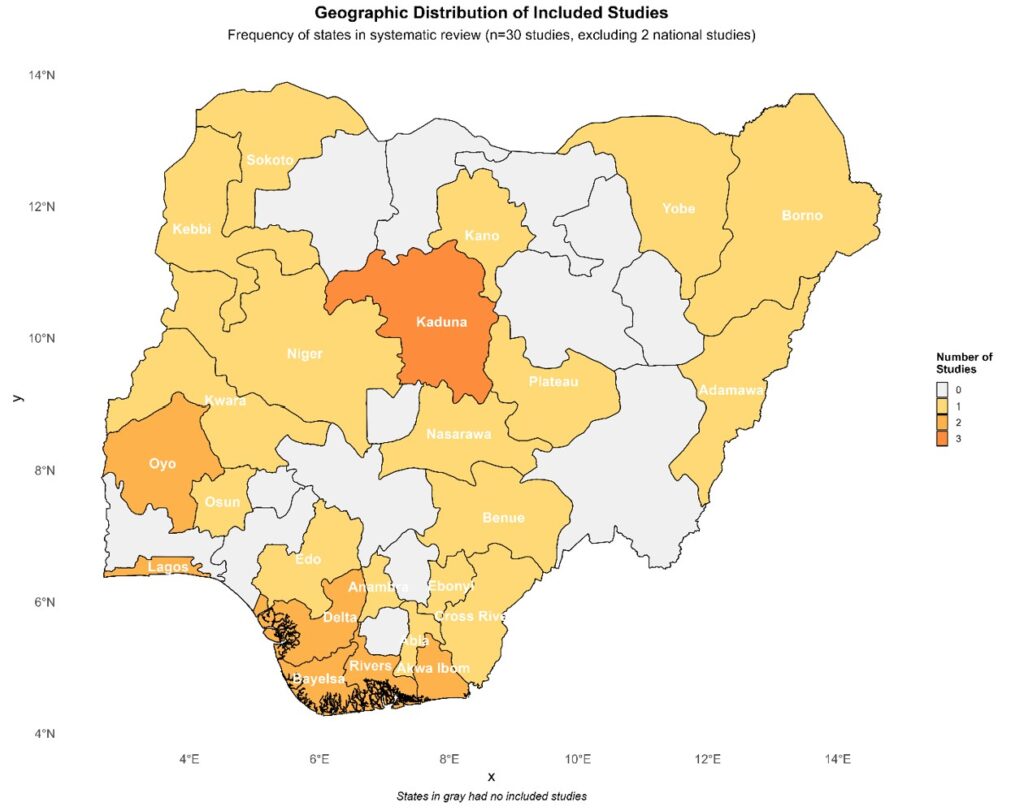
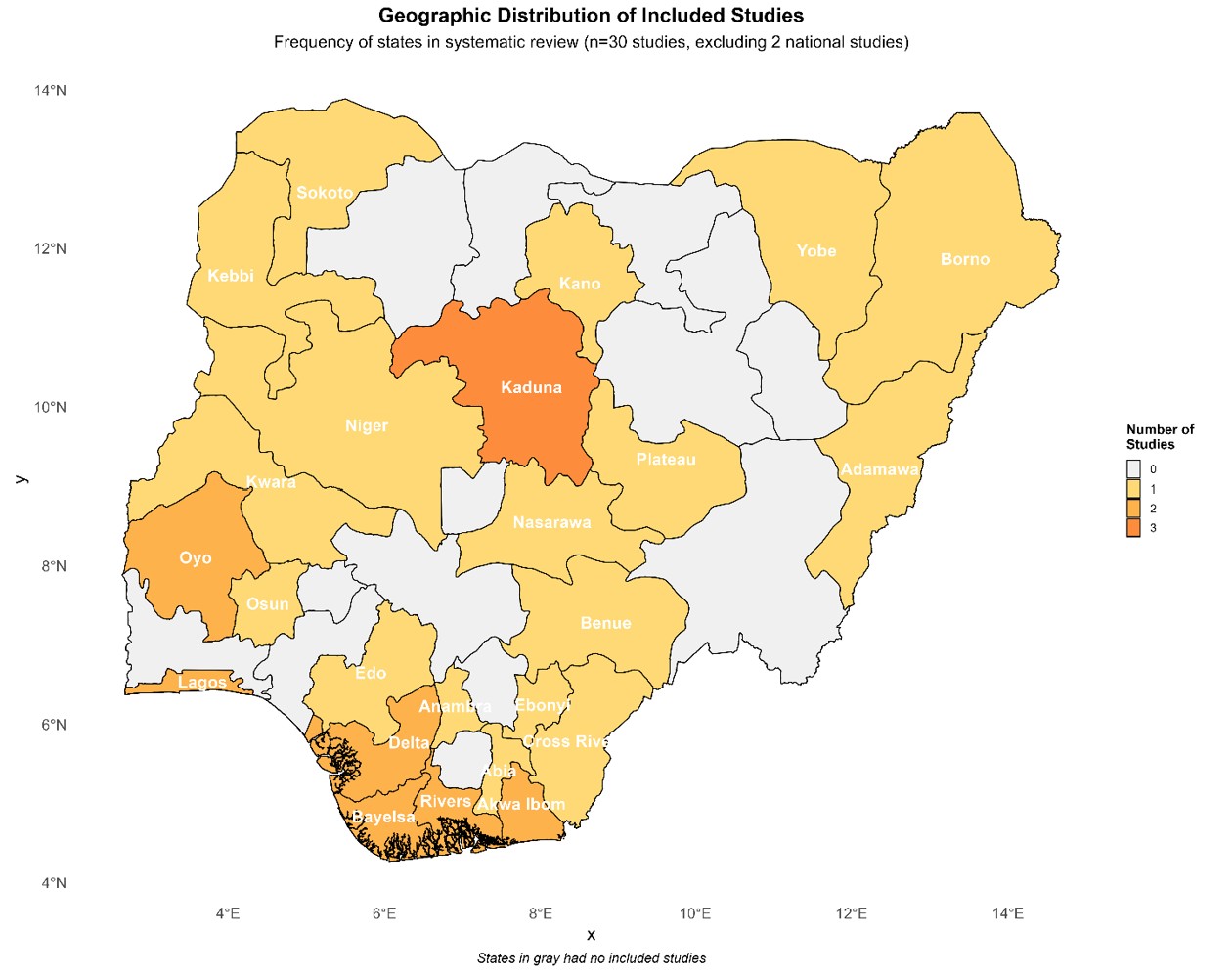
The included studies encompassed all six geopolitical zones of Nigeria and the Federal Capital Territory (FCT), but the coverage was not uniform (Figure 2). The North-Central and North-West zones were each represented by seven and six study-zone observations, respectively, followed by the South-South (six), South-West (five), North-East (three), and South-East (three) zones. Two studies were conducted at the national level covering all zones, and one multi-level study specifically crossed boundaries within the South-South, South-West, and FCT. Because several multi-state or multi-zone entries evaluated surveillance operations concurrently across boundaries, the cumulative observations exceed the total sample size (N=29).
Methodological quality of included studies
Methodological quality was appraised using design-appropriate JBI critical appraisal checklists (for cross-sectional and qualitative components), the Mixed Methods Appraisal Tool (MMAT 2018) for mixed-methods studies, and a surveillance-specific supplementary checklist assessing the explicit use of an evaluation framework, case definitions, data sources, denominators, and reporting of limitations and recommendations. The surveillance-specific checklist was developed because existing tools (JBI, MMAT) do not capture surveillance-specific methodological domains, and no validated tool for surveillance system evaluation quality assessment exists. This checklist supplements, rather than replaces, the existing tools to ensure comprehensive assessment of both general study quality and surveillance-specific methodological rigour.
Quality appraisal was conducted using three complementary tools, with results reported separately by tool domain rather than as a combined score, consistent with guidance discouraging the generation of overall numerical quality scores from multiple appraisal tools.
Cross-sectional and observational quantitative components (assessed using JBI-CS criteria): All 29 studies satisfied 6 of the 7 appraisal criteria, including clear inclusion definitions, detailed system description, valid and reliable outcome measurements, objective standard criteria application, outcomes measured for all subjects, and appropriate statistical analysis. The most common methodological limitation was the failure to identify or account for confounders (all 29 studies scored ‘No’ on JBI-CS5), reflecting the descriptive, non-comparative nature of most surveillance evaluations.
Qualitative components (assessed using JBI-Q criteria): All qualitative studies assessed met at least 3 out of 5 criteria, indicating generally acceptable methodological quality. The most common limitation was insufficient consideration of the researchers’ cultural or theoretical influence on the research process.
Mixed-methods studies (assessed using MMAT 2018, n=13): The mean MMAT score was 4.2 out of 5 (range: 3-5), with the most common limitation being the lack of explicit acknowledgement of integration boundaries between quantitative and qualitative components, noted in 6 studies (42.9%). Thirteen studies scored 4/5 or 5/5, while one study (Nnebue et al., 2013) scored 3/5 due to limited integration between quantitative and qualitative components.
Surveillance-specific criteria (assessed using the SS Quality Checklist): All 29 studies (100%) clearly stated their case definitions, described data infrastructure sources, reported sampling denominators, provided quantitative data with clear numerators, and structurally linked their final recommendations directly to study insights. However, 11 studies (37.9%) did not explicitly state an authoritative evaluation framework (e.g., CDC 2001 guidelines or equivalent) in their text, though most applied the framework structurally in their methodology.
Overall quality ratings were determined based on performance across all applicable tools. Studies achieving HIGH on all applicable tools (JBI-CS ≥5/7, JBI-Q ≥4/5, MMAT ≥4/5, SS ≥7/8) were rated as HIGH quality. Studies with any applicable tool scoring MODERATE (JBI-CS 3-4/7, JBI-Q 3/5, MMAT 3/5, SS 5-6/8) were rated as MODERATE quality. Studies with any applicable tool scoring LOW (JBI-CS <3/7, JBI-Q <3/5, MMAT <3/5, SS <5/8) were rated as LOW quality. For studies where some tools were not applicable (NA), ratings were based on applicable tools only.
Based on these domain-specific assessments, 27 studies (93.1%) were rated as high quality (all applicable tools scoring in the high range), one study (3.4%) as moderate quality (MMAT score of 3/5 due to limited integration between quantitative and qualitative components), and one study (3.4%) as low quality (a qualitative case study with no quantitative denominators and no systematically applied evaluation framework). A summary of the quality appraisal findings is presented in Table 3. The full item-level scoring for each study is available in Supplementary File S2.
Reporting of CDC 2001 surveillance evaluation attributes
Representativeness was addressed in all 29 included studies (100%), and completeness/data quality was reported in all 29 studies (100%). Timeliness was reported in 25 studies (86.2%), sensitivity in 12 studies (41.4%), and positive predictive value (PPV) in 6 studies (20.7%); the latter two were frequently not assessable because rapid diagnostic tests or microscopy, rather than confirmatory screening tests, were used as the surveillance case‑confirmation standard. Qualitative system attributes, namely simplicity, flexibility, acceptability, and stability, were each reported, at least narratively, in the large majority of studies, most commonly rated as high or moderate. The pattern of attribute reporting across the included studies is summarised in Table 4.
Quantitative findings by surveillance attribute
Sensitivity
Sensitivity, defined as the ability of the surveillance system to correctly identify cases, was reported or qualitatively assessed in 12 studies. There was considerable variability among the reported results for each disease and platform. For acute flaccid paralysis (AFP)/poliomyelitis surveillance, non-polio AFP detection rates ranged from 4.5 to 55.2 per 100,000 population across studies (Bassey et al., 2011; Raji et al., 2021;) [8 -10], consistently meeting or exceeding the referenced targets (≥1 or ≥3 per 100,000). Stool adequacy rates were high, ranging from 95.0% to 99.7% [8]. For malaria, system positivity metrics varied by diagnostic type, with RDT positive rates at 78.3%, microscopy positive rates at 1.1%, and clinical malaria at 9.9% [11].
For national event-based surveillance, the system was qualitatively assessed as appearing sensitive based on signal surges during outbreaks [12]. For diphtheria, 100% of respondents reported that the system could correctly identify cases [13] , and 60% to 65% of respondents reported that the neglected tropical diseases (NTDs) surveillance system successfully detected cases [14]. In contrast, tuberculosis surveillance demonstrated substantially lower sensitivity, with detection rates of 17.6% [15] and 25.0% [16] of estimated or projected cases. COVID-19 surveillance demonstrated a high sensitivity of 90.6% [17].
Positive predictive value (PPV)
PPV, representing the proportion of reported cases that were true cases, was reported in 6 studies. Malaria systems did not report explicit PPV metrics across the evaluated papers. For Mpox, the PPV was reported as 42.0% in Kwara State [18], while a sub-national analysis reported a confirmed case positivity rate of 32.8% [19]. For tuberculosis, the PPV was 12.7% for positive GeneXpert tests [13] and 20.3% for AFB smear-positive slides [15]. Measles PPV demonstrated a clear annual decline in Kaduna State, dropping from 53.9% in 2010 to 36.6% in 2011, before slightly recovering to 40.2% in 2012 [20]. Lastly, COVID-19 case-based surveillance in the FCT yielded a PPV of 18.0% [17].
Timeliness
Timeliness was a frequently reported attribute across the reviewed literature, with performance measures widely variable across different diseases and platforms. For acute flaccid paralysis (AFP) surveillance, case investigation initiated within 24 to 48 hours consistently exceeded 98% across multiple regional evaluations, while stool sample arrival at laboratories within the 72-hour window ranged from 99% to 100% [8, 9]. IDSR reporting timeliness ranged from 72% to 100% for monthly reports, though some systems experienced significant delays; for example, 10% of IDSR001 forms were submitted 5 days late in one evaluation [21]. Event-based surveillance achieved a median timeline of 1 day from signal detection to escalation (range 0-5 days)[12]. COVID-19 surveillance demonstrated suboptimal timeliness, with only 45.5% of cases reported timely and only 29% meeting the 24-48 hour laboratory turnaround target[17]. Diphtheria surveillance achieved 82% case investigation within 48 hours and 100% LGA reporting timeliness [13].
Data quality and completeness
Data quality and completeness varied extensively across disease-specific programmes and monitoring platforms. AFP surveillance consistently demonstrated high metrics, with monthly report completeness ranging from 97% to 100%, data field completion of 97%, and stool adequacy indicators of 92.5-100% [8, 9]. In contrast, other systems identified serious data management gaps. COVID-19 surveillance had a data quality score of 56.2% and completeness of 70% [17]. Diphtheria surveillance documentation revealed 67% of records lacking date of birth and 73% containing no laboratory results [13]. Malaria Data Quality Audit (DQA) scores across selected states ranged from 54% to 64%, below the national target of 80% [22]. Electronic platforms demonstrated superior data capture: eIDSR achieved facility completeness rates of ≥85% compared to ≤65% for paper-based facilities [23]. SORMAS integration contributed to qualitative improvements in overall case completeness compared to traditional approaches, though significant gaps remained, such as 28.5% of digital registers lacking socio-demographic variables [19].
Representativeness
Representativeness, defined as the extent to which the surveillance system captures cases across geographic areas, demographic groups, and health system levels, was assessed across the reviewed literature. Several studies indicated that there was strong geographic coverage, but significant gaps in terms of the systemic exclusion of or low participation in private health facilities were noted. For example, private facility reporting rates dropped as low as 3.9% (5/127 facilities) in evaluations of the North-East region[24]. Diphtheria surveillance revealed that 90% of public facilities reported data and 57% of private facilities in Kaduna State [13]. Likewise, the actively reporting public facilities (90%) for malaria surveillance were more than the private sector facilities (57%) [11]. Public health facilities reported IDSR routinely in Jos North LGA (76.4%), while private facilities reported IDSR routinely in Jos North LGA (40.7%) [25].
The exclusion of tertiary-level facilities and underrepresentation of these facilities in sub-national surveillance networks was also common. In Benue State, the 2 tertiary hospitals present did not participate in malaria surveillance assessments [26], and in Kano State, there was no participation from any of the two tertiary hospitals or 106 private hospitals in the malaria surveillance assessments [27]. Community-based surveillance infrastructure, on the other hand, exhibited localised representativeness in areas that were not adequately covered by the CBVS, with 140 community-oriented resource persons (CORPs) successfully collecting the data in both Abia and Niger states [28].
National systems had a good level of geographic representativeness overall and often provided data for all 774 LGAs [16]. Regional differences were, on the other hand, very pronounced: out of a total of 2598 health facilities, only 23% of the facilities in conflict-affected areas in the North-East reported IDSR data [25].
Simplicity
Simplicity, which measures the operational ease of a disease surveillance system, was assessed across a wide array of sub-national and national evaluations. Overall, performance trends revealed a sharp contrast between highly specialized vertical programs and traditional paper-based frameworks, with vertical and digital systems being rated as simple to moderately simple. The percent of frontline operators who found standard case definitions easy to execute was 97.6% while 97.0% reported that the Case Investigation Forms (CIF) were also easy to complete for acute flaccid paralysis (AFP) surveillance [8, 10]. Case protocols were well-understood and documentation tools were easy to complete with high simplicity scores (80.0%-100.0%) reported by respondents in the malaria surveillance frameworks (Joseph et al., 2017) [11, 26, 27]. Likewise, 100% of respondents in diphtheria tracking units indicated that forms were easy to complete, with a median time of 15 minutes to complete, albeit with some localized concerns that there were too many tracking variables to complete [13].
By contrast, there were multiple disease platforms that identified clear administrative complexities. Tuberculosis (TB) monitoring networks were also consistently rated as being moderately simple, with the templates used to collect data standardized but the underlying diagnostic algorithms being very dependent on the particular laboratory resources and requiring multi-phase laboratory validation before, during, and after clinical treatment regimes [15,16]. Traditional paper-based IDSR systems have been consistently described as low in simplicity because of the labor-intensive manual data extraction processes, the need for having multiple parallel registers and the various slow data reporting pathways at both local and State levels [27, 29-32] [21, 24, 25, 29, 30]. Event-based surveillance frameworks also faced moderate complexity hurdles; while users noted that digital interfaces like Tatafo were accessible, up to one-third of active operators found the triage and signal prioritization workflows unclear due to a lack of formal Standard Operating Procedures [13].
Flexibility
Flexibility, defined as a surveillance system’s capacity to seamlessly adapt to shifting epidemiologic priorities, revised diagnostic criteria, or unexpected structural disruptions, was detailed across multiple evaluation profiles. High flexibility was seen in most vertical networks and modern electronic configurations. Tracking frameworks for polio and AFP were very flexible and easily integrated into existing programmatic frameworks in response to new variables for polio and new IDSR requirements for AFP [8, 9, 31]. In malaria programs, 87.0% of the malaria operators surveyed reported that large-scale implementation of new national diagnosis and treatment guidelines were implemented with little effort [8, 9]. Digital tools were also found to be very flexible: SORMAS infrastructure was adapted and implemented in less than 14 days to address the new Mpox outbreaks, and it already had the capacity to support 12 different priority diseases [32]. In addition, vertical HIV structures seamlessly incorporated co-endemic TB tracking parameters into routine tools without causing any extra personal or financial burden [33].
By contrast, legacy paper-based reporting systems offered poor flexibility. The IDSR framework was found to be very inflexible in conflict-affected humanitarian areas, as it failed to adapt when facing a humanitarian crisis and was strictly limited to existing AFP focal sites [24]. Cross-system integration remains highly limited because neglected tropical diseases (NTDs) are frequently monitored through distinct, parallel surveillance structures [14]. A high level of rigidity was observed in sub-national Mpox tracking systems, with 51.0% of the staff members surveyed reporting that the system would be difficult to adapt to sudden changes in the field, resulting in a low flexibility score of 46.0% [18].
Acceptability
Acceptability, reflecting the willingness of healthcare personnel and related institutional stakeholders to participate in surveillance duties, was highly rated within mature public healthcare structures but faltered in private sectors. High acceptability scores were common across vertical public surveillance structures: willingness to continue daily data collection reached 100% across multiple AFP, malaria, diphtheria, and HIV monitoring frameworks [8, 13, 16, 26, 27]. The formal operational suggestions in these systems were reported to be well received by stakeholders, ranging from 67.0% to 74.0% of the ideas being put into practice [8, 13, 26]. Electronic frameworks, such as eIDSR, also had good acceptance rates of 85.7% [23].
However, severe acceptability deficits were noted in under-resourced or uncompensated contexts. Acceptability of the sub-national Mpox tracking process in Kwara State was also extremely low, with only 17.0% of sub-national operators saying they were accepted or appreciated by the wider health system [18]. Similarly, there was resistance to the digital platform transitions, specifically SORMAS, from Disease Surveillance and Notification Officers (DSNOs) because of the lack of routine transportation allowances [24][33]. In traditional paper-based systems, staff often perceived the reporting process as an unpaid administrative task, forcing DSNOs to physically go to facilities and request reports, which caused them to spend a lot of time on the job [21, 24, 30]. In the private sector, structural engagement was still very low, and private facility operators were much less integrated than public counterparts, with only 16.7% having received formal IDSR training, and only 40.7% actively sharing epidemiological data [25].
Stability
Stability, referring to the reliability of the system and the availability of the infrastructure, was a very variable attribute in the literature reviewed and was significantly affected by structural deficiencies. The greatest danger to stability was an excessive reliance on outside funding, such as that from partners like the World Health Organization (WHO), the Centers for Disease Control and Prevention (CDC), and USAID, who provided funding, transport logistics, laboratory reagents, and field incentives. Measles surveillance in Kaduna State was found to be completely donor-dependent, with the WHO supplying the reagents, logistics, and also providing vital monthly allowances [20]. Likewise, Kebbi State’s case of acute flaccid paralysis (AFP) surveillance was reported as fragile because it requires external support from international partners, and the authors specifically warned of a potential collapse of the system if the international partner support was removed [8]. Diphtheria surveillance encountered parallel vulnerabilities; 90% of respondents reported inadequate operating resources, 56% received no routine stipends, and 67% of all active stipends were supplied directly by external partners [13].
Multiple regions experienced system instability related to logistical and infrastructural constraints. The frequent strike actions of healthcare workers caused a direct disruption of routine reporting [22, 33]. In other parts of the country, 58.8% of surveillance offices reported being without computers, 79.4% of printing equipment, and 33.2% of operational vehicles were found to be dysfunctional [29]. COVID-19 surveillance had the lowest overall stability score of 40%, with 67% of surveillance activities having been disrupted due to funding gaps, and 52% due to insufficient staffing [17]. In addition, conflict and insecurity had a significant impact on reporting stability in the North-East, with bans on motorbikes (essential for sample transport) and destruction of local health infrastructure, including 45% of the geographic area that was completely inaccessible to tracking teams [24, 31]. On the other hand, good stability was obtained in certain vertical structures like AFP surveillance in Sokoto State, where there was dedicated personnel, co-financing from Federal, State and LGA and technical support from WHO, CDC and AFENET [9].
Other quantitative metrics
Several disease-specific epidemiological and system performance benchmarks were documented across the reviewed literature. The core performance index scores for AFP surveillance ranged from 8.7 to 23.5, with all the scores being above the national target baseline of ≥1.6 [12][9]. The proportion of non-polio enterovirus (NPENT) and non-polio AFP (AFP) isolates ranged from 7.9% to 14.9% in various evaluation regions, and some States managed to pass the international quality threshold of ≥10% [8, 10].
Amede et al [26] noted that in malaria surveillance, there has been a progressive increase in diagnostic coverage in Benue State, moving from 87.2% in 2015 to 94.8% in 2019, while the overall laboratory positivity rate (LPR) has declined over the years from 67.8% to 64.1% in 2019. In the Federal Capital Territory (FCT), the case-based tracking approach during COVID-19 has estimated an attack rate of 35.3 cases per 10,000 population, a case fatality rate (CFR) of 1.0% and a high prevalence of infection (25.3%) among frontline healthcare workers [17]. Case fatality rates were also similar, with epidemiological assessment of the sub-national level of Mpox outbreaks, yielding 2 deaths among 83 laboratory-confirmed cases (2.4%) [19]. Lastly, the percentage of treatment continuity for TB management was found to be significantly below the state reported target benchmark at 75.99%, ranging from 37.9% to 72.0% [34].
Barriers and facilitators to surveillance system performance
Common barriers
Analysis of the included studies revealed several recurring structural, financial, and environmental barriers to optimal public health surveillance system performance across Nigeria.
Donor dependency and inadequate government funding: Heavy dependence on international partners was a major constraint in 18 (62.1%) of the studies. Global partners such as the World Health Organization (WHO), Centers for Disease Control and Prevention (CDC), USAID, GLRA/ILEP, and the Global Fund provided regular support to the front lines in the form of training, field logistics, laboratory reagents, transport and personnel incentives. While domestic budget lines were established at sub-national levels, funds were often withheld or delayed, leading to skipped supervisory runs and fragmented field operations [16, 35].
Inadequate resources and infrastructure: Resource constraints had a significant impact on performance in 22 studies (75.9%). The key logistical constraints were inadequate equipment in regional surveys, with a lack of computers (58.8%) and printers (79.4%), as well as inadequate field vehicles (33.2%) [29]. Chronic power outages, sometimes unreliable internet and local motorbike restrictions also limited data pipelines [24, 26]. Laboratory frameworks were also limited with inadequate facilities and a lack of equipment, which resulted in diagnostic backlogs and inconclusive diagnostics [16].
Private health facility exclusion: Systemic under-reporting and poor integration of the private medical sector were flagged across 15 studies (51.7%). Private clinicians demonstrated lower awareness of Integrated Disease Surveillance and Response (IDSR) guidelines, lower training coverage, and chronic shortages of standardised reporting forms [25, 30]. This significantly reduced the overall representativeness, with active private sector reporting rates dropping to as low as 3.9% to 38.9% in the surveyed areas [11, 24].
Data quality gaps: The rate of missing fields was very high for date of birth (up to 67%) and laboratory confirmations (up to 73%) [13] as well as missing clinical tracking indicators like onset fever profiles (38.3%) and symptom progression histories (59%) [9].
Insecurity and geographic inaccessibility: Insurgency and armed conflict heavily restricted access in the North-East zone, leading to destroyed communication networks and ruined health infrastructure [24, 31]. Up to 45% of Borno State’s geographic space was entirely inaccessible to traditional teams, with only 6 of 27 local government areas (LGAs) fully operational, necessitating heavily modified field strategies [24, 31].
Human resource constraints: High workforce turnover, understaffing, and overburdened health personnel managing multiple parallel reporting systems severely restricted data collection [22, 25]. Frontline analytical capacity was found to be very low, with only 2.6% of health facility personnel able to undertake data analysis at the local level, and awareness of staff limited to simple timeliness and completeness checklists [24, 29].
Common facilitators
Conversely, several key operational drivers and systemic enablers successfully enhanced performance indicators across the reviewed networks.
Strong stakeholder commitment and acceptability: Surveillance personnel demonstrated remarkable intrinsic commitment, with multiple investigations recording a 100% willingness to participate and high professional acceptability scores despite pervasive resource challenges [17]. Staff motivation increased significantly when structured feedback loops were established [15].
Dedicated and trained personnel: The presence of specialised surveillance officers such as Disease Surveillance and Notification Officers (DSNOs) and trained community-oriented resource persons (CORPs) remained a foundational driver of success [8, 28]. Routine targeted training directly correlated with superior case identification and sharper data generation [35].
Electronic systems and digital platforms: The transition to electronic surveillance architectures (specifically eIDSR and SORMAS) yielded substantial performance improvements over legacy paper formats [18, 23]. Digital rollouts expanded active reporting points by 121% (from 103 to 228 facilities), elevated operational reporting timeliness (73% vs. 43%), and secured higher compliance scores ( vs. ) [23]. SORMAS tracking facilitated real-time case transmission and automated chain-of-transmission mappings [32].
Community engagement: Community-driven surveillance channels, utilising Community Informants (CIIAs) for polio and CORPs for integrated community case management (iCCM), proved highly effective at mapping hard-to-reach or underserved catchments [28, 31]. In high-conflict zones, local informants successfully sustained reporting mechanisms by leveraging localised trust and utilising satellite/GIS tools to safely track migrations [31].
Regular review and feedback mechanisms: Sub-national networks that implemented centralised data control rooms, weekly integrated supervisions, and mandatory monthly validation clinics consistently achieved higher performance marks [9, 35] [11, 27]. Active feedback mechanisms strongly reinforced reporting punctuality and sustained staff performance [10, 13].
Partnership and technical support: Sustained technical and programmatic backing from international bodies (WHO, CDC, AFENET, and Sightsavers) provided essential infrastructure for continuous capacity building, quality assurance, and logistical survival within severely underfunded health corridors [9, 14].
Recommendations from included studies
Authors of the included studies provided numerous recommendations to improve surveillance system performance in Nigeria (Table 5).
Principal findings and summary
This is a systematic review of 29 studies assessing the effectiveness of disease surveillance systems in all six geopolitical zones of Nigeria from 2010 to 2025. Though largely high quality (93.1% of studies had an overall high appraisal rating), significant variation in the disease types, platforms observed, and geographic context of studies limited the ability to conduct formal meta-analysis and to achieve high levels of certainty in pooled quantitative estimates. Taken together, the findings suggest that Nigerian surveillance systems may exhibit a pattern of differential performance that appears to track with disease prioritisation and funding intensity: the AFP/poliomyelitis and vaccine-preventable disease (VPD) systems, which have benefited from sustained vertical support and dedicated human resources, appear to perform relatively well on timeliness, sensitivity, and simplicity metrics; whereas surveillance for tuberculosis, neglected tropical diseases, and newly emerging pathogens such as Mpox was associated with more variable performance, particularly on sensitivity, positive predictive value (PPV), and stability. These patterns may reflect, at least in part, to the distribution of technical and financial investment on a disease programme basis, and not to the inherent characteristics of the IDSR infrastructure itself, which has important policy implications.
The substantially better performance of AFP/polio surveillance relative to other systems is likely attributable to several interconnected factors. First, the polio eradication initiative has benefited from sustained vertical investment over several decades, with dedicated funding streams from the Global Polio Eradication Initiative (GPEI), WHO, CDC, and other partners. This has enabled the deployment of surveillance focal persons at every LGA, cluster consultants providing regular supervision, and a well-established system of monthly review meetings. Second, the polio programme has established a robust performance management framework with clear indicators (NP-AFPR, stool adequacy, timeliness) and regular feedback loops. Third, the programme has successfully leveraged community informants (CIIAs) and innovative strategies to maintain surveillance even in conflict-affected areas. In contrast, broader IDSR systems were introduced more recently, lack similar dedicated funding streams, and must compete with multiple other priorities for limited resources. This pattern of differential investment has important implications for how surveillance systems are prioritized and resourced in Nigeria.
Surveillance system performance across CDC 2001 attributes
Sensitivity and positive predictive value
The marked variation in sensitivity across disease categories observed in the present review may suggest that Nigerian surveillance capacity is differentially calibrated to the intensity of external programme support rather than to disease burden per se. AFP surveillance, supported by continuous technical assistance from WHO, CDC and AFENET, had non-polio AFP rates ranging from 4.5 to 55.2 per 100,000 population in the included studies, all of which were above the standard performance benchmarks, and stool adequacy rates of 95.0% to 99.7% [8]. These findings appear broadly consistent with those reported by Wolfe et al.[36] in their continental systematic review of IDSR implementation, which similarly found that AFP surveillance among African member states most reliably met WHO performance benchmarks relative to other priority disease systems [36].
In contrast, tuberculosis surveillance was associated with substantially lower detection rates of 17.6% and 25.0% of projected cases in the studies by Okon et al.[15] and Kwaghe et al. [16] respectively, a pattern that may reflect the well-documented gap between TB incidence estimates and notification in Nigeria: Nigeria is listed among the top eight countries accounting for approximately two-thirds of global TB cases, with notifications of approximately 458,534 cases in 2025 against an estimated incidence of around 510,000 annually [37]. Approximately 29% of TB cases in Nigeria are treated in the private sector, underscoring that the exclusion of private facilities from routine IDSR reporting is likely a particularly important contributor to TB detection gaps [38]. A recent review of Nigeria’s infectious disease surveillance system highlighted persistent structural weaknesses in case ascertainment, including diagnostic and reporting gaps [1]. These concerns are consistent with evidence from Lagos State showing that 15.5% of bacteriologically confirmed TB cases were not captured in official TB registers [39].
Low PPVs, ranging from 12.7% for tuberculosis GeneXpert confirmations [16] to 53.9% for historical measles surveillance [20], may be partly attributable to the diagnostic limitations associated with sensitive surveillance case definitions, and not necessarily to system failure. If the definition of a suspected case is intentionally made too broad to prevent the loss of actual cases, then a comparatively low PPV is anticipated, especially for diseases with variable or low background population prevalence. The COVID-19 PPV reported by Umeozuru et al. [17] in FCT, however, might also be attributed to limitations in testing capacity and broad suspected cases reporting, which may be due to diagnostic test overlap in clinical syndromes during the period of pandemic response. This interpretation is consistent with evidence from a systematic review of communicable disease surveillance across LMICs by Malebana et al. [40], which noted that PPV tends to be lowest during outbreak escalation phases, when healthcare system stress may lead to both over-testing and diagnostic backlog [40].
Timeliness
Timeliness emerged as a highly consistent performance metric across the included studies, showing strong alignment with or outperformance of WHO-recommended targets within established vertical frameworks like AFP and vaccine-preventable disease (VPD) networks. AFP had a very high case investigation rate of more than 98% in several States during the critical 48 hours period, while investigation of diphtheria cases was more than 80% of the notified ones [13]. The trends in timeliness and completeness are broadly comparable to those observed in a South Sudan IDSR/EWARN evaluation which identified improving timeliness and completeness trends during the first 16 weeks of the evaluation period 2021[40], indicating that systems with a dedicated surveillance architecture may be able to achieve timeliness targets even in resource-limited settings.
In contrast, COVID-19 surveillance within the FCT faced extensive structural friction, with only 29% of cases meeting the 24-48 hour turnaround targets [12]. This is probably due to stress factors from a surge of an unexpected pathogen that overwhelm current laboratory and notification systems. A parallel review of IDSR performance in Uganda for 2020-2021 found similarly that none of the health regions achieved timeliness targets of ≥80%, with private health facilities demonstrating the poorest reporting rates [42], a trend reinforcing the administrative delays documented across Nigerian sub-national networks.
Data quality and completeness
The review indicates a clear correlation between the adoption of modern surveillance platforms and better data completeness outcomes; digital platforms (eIDSR and SORMAS) were associated with better data completeness than paper-based platforms. Ibrahim et al. [23] showed that reporting completeness reached ≥85% under eIDSR relative to ≤65% via traditional paper systems in the North-East, while SORMAS implementations provided superior case capture despite holding localized missing data gaps [19]. The observations are consistent with a broader finding from a performance evaluation of SORMAS in Kwango Province, Democratic Republic of Congo, that non-mandatory epidemiological data completeness was greater than 80% for both facility-level SORMAS implementation and health zone-level SORMAS implementation and that timely reporting was significantly higher in the former than in the latter [43].
Despite this, critical system gaps persisted across all systems, as evidenced by the laboratory findings being missing for 73% of diphtheria cases and birth dates for 67% of cases [13]. The results demonstrate that converting to a digital platform is not enough to address data quality issues without investments in front-line training, supervision, and regular data quality checks. The variability in malaria DQA scores (54% to 64%) compared with the national average of 80% [22] also highlights the multiple data sources and multiple reporting cycles where data is collected and reported locally on paper facility registers and then uploaded to DHIS2/NHMIS. This aligns with the findings of a systematic review of IDSR performance in Africa [44], which identified that problems with data quality in routine surveillance systems were frequently associated with discrepancies between register and summary-form data and poor feedback mechanisms.
Representativeness and the private sector gap
One of the most structurally entrenched constraints of IDSR in Nigeria is the systemic exclusion or low level of participation of private health facilities in IDSR reporting as evidenced in the literature analyzed. The low rates of private sector reporting as low as 3.9% [24], and 40.7% [25], and the fact that private facilities are lagging behind public facilities in routine reporting [11, 13], suggest that a substantial proportion of clinical events are lost to national surveillance. This finding is not unique to Nigeria: a review by Malebana et al.[40] similarly identified private sector non-participation as a cross-cutting surveillance gap in South Africa and other sub-Saharan African LMICs, noting that structural exclusion of private providers was associated with underestimation of disease burden and delays in outbreak recognition [40]. Broad public-private engagement strategies are frequently recommended by study authors, but scalable models for incentivising private sector IDSR participation in Nigeria remain underexplored in the published literature.
Additionally, the near-complete exclusion of tertiary hospitals in several state-level studies including zero of two tertiary facilities in Benue State [26] and all tertiary facilities in Kano State [27] suggests that the Nigerian surveillance architecture prioritises facility coverage at primary and secondary levels while potentially missing a category of facilities likely to see disproportionate numbers of complicated and confirmed cases. Integrating tertiary facility data, including specialist ward returns and laboratory networks, may be an important complementary strategy alongside private sector engagement.
Stability and donor dependency
Stability appears to be among the weakest qualitative attributes found in the reviewed frameworks, and many surveillance networks face low or unstable conditions because of structural resource deficits. The national architecture is highly vulnerable to external dependencies for programmatic inputs such as training, personnel stipends, logistics and laboratory reagents from WHO, CDC, USAID, GLRA/ILEP, and the Global Fund. Since global trends in development assistance for health are likely to affect the sustainability of vertical programs in LMICs, this structural dependency is particularly relevant for policy considerations. The critical “collapse risk” highlighted by Bala et al. [8] for the Kebbi State AFP surveillance is not unique to Kebbi State but applies to many priority disease systems in Nigeria.
The growing global health financing trend of focusing on vertical, donor-funded pathways can reinforce fragmentation, introduce resource imbalances, and undermine national health systems’ autonomy and long-term sovereignty. In order to transition from donor funding to government financing of surveillance, a two-pronged strategy may be needed: (1) to set aside more resources in the government budget at both the state and federal levels, and (2) to put in place systems of institutional accountability to guarantee that any money released is managed properly in the field, on the ground and for the equipment. If these institutional changes are not put in place, sub-national surveillance networks will continue to be very susceptible to external funding shocks, threatening Nigeria’s basic epidemic preparedness and response systems.
The heavy dependence on external funding documented in 18 (62.1%) of the included studies raises serious concerns about the sustainability of surveillance systems in Nigeria. The COVID-19 pandemic response demonstrated that systems built on short-term donor funding are vulnerable to collapse when funding priorities shift. With global health financing increasingly focused on pandemic preparedness and response, there is a significant risk that routine surveillance funding may decrease. This concern is particularly acute given the global trend in development assistance for health, which has shown decreasing funding for non-pandemic infectious diseases.
We propose a three-pronged approach to address this challenge: progressive increase in government budget allocation for surveillance at both federal and state levels, with dedicated budget lines rather than reliance on unallocated funds; establishment of institutional accountability mechanisms to ensure that released funds are managed effectively at the field level; and gradual transition from donor-led to government-led systems, with donors playing a catalytic rather than sustaining role. Failure to implement these changes may lead to a ‘funding cliff’ where gains in surveillance performance are reversed, threatening Nigeria’s epidemic preparedness and response capacity.
Simplicity, flexibility, and acceptability
The consistently strong simplicity and acceptability marks documented across long-standing vertical programs suggest that IDSR-aligned disease systems are viewed as functionally workable by public frontline surveillance teams. High acceptability scores, often accompanied by a 100% “willingness to continue” by public sector operators, suggest that staff motivation can be an important cushion against systemic fragility and resource limits. However, this finding must be interpreted with caution. Existing measures of acceptability and simplicity in the literature largely focus on the experiences of active public sector employees and do not include those of non-participants. This is especially the case for private sector and community-level networks, which remain largely under-represented in the country and are the main reason for the lack of representativeness at the national level [25].
The sharp drops in acceptability seen in specialized contexts such as the 17.0% acceptability rate for Mpox tracking in Kwara State [18] and minimal private sector participation across multiple states prove that stakeholder willingness depends heavily on local conditions. Feedback channels, professional recognition, and core material supplies are essential for acceptability to not erode quickly. This aligns well with the cross-cutting barriers identified from a systematic review of IDSR implementation in Africa by Sasie et al.[44], which showed that weak data feedback and lack of supervisory oversight hampers the motivation of healthcare workers systematically in sub-Saharan Africa.
The findings of this review have important implications for One Health approaches to surveillance. Notably, the evidence base on zoonotic disease surveillance in Nigeria remains limited, with only Mpox and Lassa fever represented among the included studies. The weak integration between human, animal, and environmental surveillance systems documented in the review suggests that Nigeria is not yet positioned to implement a comprehensive One Health surveillance strategy. However, evidence from SORMAS implementation, which has been deployed for Mpox (a zoonotic disease) and has demonstrated capacity to support outbreak response, suggests potential for One Health integration. The flexibility of SORMAS to accommodate new diseases and its ability to generate chain-of-transmission visualizations could be leveraged for zoonotic disease surveillance. Nevertheless, the absence of routine surveillance systems for animal health in the Nigerian context represents a significant gap that must be addressed to achieve effective One Health surveillance.
The role of electronic surveillance platforms
The findings of this review may suggest a possible gradient of performance benefit associated with electronic surveillance platforms, with eIDSR and SORMAS appearing to be linked to better timeliness and completeness relative to paper-based IDSR in comparable contexts. The North-East region stands out as an example with a 121% increase in number of reporting facilities and an improvement in timeliness (43% to 73%) and completeness (≤65% to ≥85%) following the introduction of eIDSR [23]; while the pre-post observational design of these evaluations precludes causal inference, the magnitude of the changes appears noteworthy . The rapid deployment of SORMAS within 14 days for responding to Mpox outbreaks [32]and within 1 day for conducting event-based surveillance [17] may suggest that purpose-built outbreak response management systems may provide a timely benefit alongside routine notification systems. These observations are broadly consistent with the maturity assessment of SORMAS by Tom-Aba et al. [45], which found the platform to have achieved a global goods maturity model score of 100% across utility, community support, and software maturity dimensions, and with user evaluation data suggesting high usefulness and acceptability after field deployment in Nigeria [3, 46].
However, the digital divide is an important and structural barrier. Persistent gaps in internet connectivity, power supply, and device availability with up to 58.8% of facilities lacking computers in Oyo State[29] may limit the effective reach of electronic platforms to better-resourced states and facilities. A rollout of digital health tools without investment in the infrastructure to use the tools may, counter-intuitively, exacerbate representativeness gaps, as electronic reporting facilities tend to be concentrated in urban and more well-resourced facilities, while rural and private facilities persist on paper. The facility level implementation of model SORMAS was associated with higher levels of case capture than the health zone level centralised entry of model SORMAS, which suggests that the model of implementation may be just as important as the platform [43].
The findings of this review align with and inform the Africa CDC surveillance agenda. The African Union’s New Public Health Order emphasizes surveillance as a public health good, with goals of strengthening national and regional surveillance systems. Nigeria’s experience with SORMAS and eIDSR implementation offers lessons for other African countries considering digital surveillance platforms. The observed improvement in timeliness and completeness associated with electronic platforms, while not definitive, suggests that digital transformation could be a key strategy for strengthening surveillance across the continent. However, the infrastructure challenges documented in Nigeria (power outages, internet connectivity, lack of devices) are likely shared by many other African countries and must be addressed to ensure equitable digital surveillance coverage. The Africa CDC’s goal of harmonizing surveillance data across countries is supported by the finding that fragmented, disease-specific systems (TB, NTD, HIV) operate in parallel, limiting the potential for integrated, interoperable surveillance.
Surveillance in conflict and humanitarian settings
The specific challenges to surveillance performance documented in the North-East region including up to 45% geographic inaccessibility in Borno State [24, 31], destroyed health infrastructure, banned motorbike transport due to insurgency, and highly restricted staffing suggest that standard IDSR protocols may be insufficient or unimplementable in humanitarian and conflict-affected settings without dedicated adaptation. The community informant (CIIA) approach described by Wiesen et al. [31], which leveraged local negotiators and GIS tracking to maintain AFP surveillance in areas inaccessible to conventional health workers, may represent a promising model for maintaining minimum surveillance functions in areas where facility-based systems have been compromised. While the evidence base for community-based surveillance in conflict settings remains limited in the Nigerian context, early warning and response network (EWARN) adaptations have been used in South Sudan with some documented effectiveness [41], and the conceptual parallels to the Nigerian North-East are potentially relevant.
Comparison with surveillance systems in Ghana, Kenya, Uganda, and Rwanda
The patterns identified in this review are consistent with findings from other sub-Saharan African countries. In Ghana, similar challenges with private sector inclusion and data quality have been documented, with private facility reporting rates as low as 7% in some assessments. Kenya has achieved more mature DHIS2 implementation, yet studies continue to document timeliness and completeness challenges, particularly at lower administrative levels. Uganda’s IDSR performance evaluation (2020-2021) found that none of the health regions achieved timeliness targets of ≥80%, with private health facilities demonstrating the poorest reporting rates – a trend consistent with the Nigerian experience. Rwanda, which has implemented more digitized surveillance systems, still faces similar data quality issues, with completeness rates varying by disease and reporting level. These cross-country comparisons suggest that the challenges identified in Nigeria are not unique, and that African countries share common barriers to effective surveillance, including inadequate funding, private sector exclusion, data quality gaps, and human resource constraints.
Comparison with regional and global evidence
The patterns identified in this review appear broadly consistent with findings from systematic evaluations of IDSR performance across Africa. The continental systematic review by Wolfe et al. [36] documented significant variability in IDSR performance, with timeliness and completeness frequently below targets in countries with weaker health infrastructure, and identified similar barriers including inadequate funding, low private sector participation, limited laboratory capacity, and poor feedback mechanisms. A more recent systematic review of IDSR barriers and facilitators by Sasie et al. (2024) similarly found that surveillance system performance was most consistently associated with the presence of dedicated surveillance focal persons, functional feedback mechanisms, and electronic reporting platforms, all of which are supported by the Nigerian evidence synthesised in this review. The cross-cutting challenge of health system surveillance capacity in Africa is further underscored by evidence from the communicable disease surveillance systematic review for South Africa and broader LMICs [40], which found that fragmented data systems, private sector exclusion, and donor dependency were near-universal challenges across sub-Saharan Africa, regardless of income level or IDSR implementation maturity.
At the same time, the diversity of Nigerian findings including high-performing AFP and eIDSR systems alongside severely under-performing COVID-19 and NTD systems may suggest that system-level generalisation is limiting and that disease-specific and platform-specific analyses are likely to yield more actionable insights for programme managers.
Limitations
It is important to note that this review has some limitations, which need to be taken into account in interpreting the results.
First, the considerable heterogeneity in study designs, disease categories, evaluation frameworks, platforms, and study periods across the 29 included studies precluded formal meta-analysis for most surveillance attributes, limiting the conclusions to narrative synthesis. Where quantitative data are presented, they represent ranges and descriptive summaries rather than pooled estimates with formal uncertainty quantification.
Second, the outputs from the field epidemiology training programme (FETP/NFELTP) and NCDC operational reports are included in the grey literature search, but these reports may not be fully indexed and are likely to be under-represented.
Third, most studies (24 out of 29) were at state or sub-state level and few at national level. The extrapolation of the state-level findings to the national surveillance architecture should therefore be done with caution because there are significant differences between states in Nigeria in terms of the capacity of health systems, population density, level of disease burden, and security environment.
Fourth, consistency of reporting CDC 2001 surveillance attributes was variable across included studies in terms of operationalisation and measurement. For instance, ‘sensitivity’ was reported as a respondent perception score, calculated detection rate or case-finding rate and ‘timeliness’ was measured against various reference dates (symptom onset, case reporting, notification receipt, etc.) and various target thresholds. This measurement heterogeneity makes quantitative values from studies difficult to compare and may have led to an apparent variation that was not truly related to differences in the performance of surveillance systems.
Fifth, the possibility of publication bias cannot be excluded. This may bias the synthesis towards higher surveillance performance in studies that are published in peer-reviewed journals because evaluations demonstrating successful surveillance performance may be more likely to be published than those showing poor performance. This could result in an overestimate of system performance in the synthesis. Similarly, states with strong evaluation capacity and dedicated surveillance focal persons may be overrepresented compared to states with limited evaluation capacity, potentially masking the true performance of surveillance systems in less-resourced settings. The inclusion of grey literature from NCDC technical reports and FETP/NFELTP repositories partially mitigates this concern by capturing evaluations that may not have been published in peer-reviewed journals. However, the possibility of selective reporting of findings within individual studies cannot be ruled out, as most included studies did not publish protocols or pre-register their analyses. Furthermore, the tendency for positive findings to be published more frequently than null or negative findings (the ‘file drawer’ problem) may have resulted in an incomplete picture of surveillance system performance, particularly for systems that performed poorly or had no significant findings to report. This could result in an overestimate of system performance in the synthesis because studies that found high surveillance performance are more likely to be published in peer-reviewed journals. Likewise, states with a strong capacity for evaluations with specific surveillance focal persons may be overrepresented compared to states with limited evaluation capacity.
Sixth, the period of study (2010-2025) includes significant structural shifts in Nigerian surveillance systems such as the implementation of SORMAS (from 2015), the roll-out of eIDSR in selected states and the Mpox multi-country outbreak, in addition to the COVID-19 pandemic response. The temporal context of individual studies should be borne in mind when interpreting findings, as the surveillance landscape may have evolved considerably over the 15 years covered.
Lastly, although this review combined evidence about the process and performance characteristics of surveillance systems, evidence on downstream outcomes, such as the timeliness of outbreak detection and response, effectiveness of interventions, and the evolution of the disease burden, would benefit from a different evidence synthesis framework.
This systematic review was conducted to consolidate data from 29 studies that assessed the performance of disease surveillance systems in Nigeria from 2010 to 2025 and to analyse the data through the lens of the CDC 2001 surveillance evaluation framework. Existing evidence suggests that Nigerian surveillance systems appear to be highly heterogeneous, with some disease-specific systems, such as AFP/polio and malaria, appearing to have relatively high timeliness, sensitivity, and acceptability, which is likely related to continued investment in surveillance programmes and the use of specific infrastructure. Other systems, such as tuberculosis, NTD, and some surveillance systems for epidemic-prone diseases, seem to have more substantial performance problems, mainly in terms of sensitivity, data quality, and stability.
At the system level, multiple structural issues seem to transcend disease categories and geopolitical areas: the lack of inclusion of private and tertiary health facilities that can substantially affect representativeness; donor dependency that poses an immediate and increasing threat to stability in the face of global health financing contraction; and insecurity issues in the North-East that can lead to the inadequacy of conventional surveillance approaches in the absence of alternatives based on community involvement.
The evidence also indicates that adoption of digital platforms (eIDSR and SORMAS) might be linked to improvements in timeliness and completeness, but the sustainability and equity of these improvements within the framework of infrastructure constraints and differential access are not certain.
Overall, these results could indicate the need for a coordinated, government-led national surveillance strengthening strategy that takes into account the need to integrate into the private sector, establish domestic financing plans, scale up electronic platforms, strengthen laboratory networks, and implement feedback systems, as interdependent priorities. The present moment, with health financing disruption at the global level and increasing burden of disease in Nigeria, could be a threat and an opportunity to speed up the shift towards sustainable government-owned and integrated public health surveillance in Nigeria.
Recommendations
What is already known about the topic
What this study adds
The authors thank the Nigeria Centre for Disease Control and Prevention for institutional support and acknowledge the African Field Epidemiology Network and Nigeria Field Epidemiology Training Programme for generating many of the included evaluations. We also appreciate the University of Pretoria for providing institutional support and access to academic databases.
List of Abbreviations
AFB: Acid-Fast Bacillus
AFENET: African Field Epidemiology Network
AFP: Acute Flaccid Paralysis
CDC: Centers for Disease Control and Prevention
CFR: Case Fatality Rate
CIF: Case Investigation Form
CIIA: Community Informant Initiative Approach
CORPs: Community-Oriented Resource Persons
COVID-19: Coronavirus Disease 2019
CSM: Cerebrospinal Meningitis
DHIS2: District Health Information System 2
DQA: Data Quality Audit
DSNO: Disease Surveillance and Notification Officer
EBS: Event-Based Surveillance
eIDSR: Electronic Integrated Disease Surveillance and Response
EWARN: Early Warning and Response Network
FCT: Federal Capital Territory
FETP: Field Epidemiology Training Program
FMoH&SW: Federal Ministry of Health and Social Welfare
GIS: Geographic Information System
GLRA/ILEP: German Leprosy and Tuberculosis Relief Association / International Federation of Anti-Leprosy Associations
GRADE: Grading of Recommendations Assessment, Development and Evaluation
HIV: Human Immunodeficiency Virus
HMIS: Health Management Information System
iCCM: Integrated Community Case Management
IDSR: Integrated Disease Surveillance and Response
JBI: Joanna Briggs Institute
KII: Key Informant Interview
LGA: Local Government Area
LMIC: Low- and Middle-Income Country
LPR: Laboratory Positivity Rate
MDCN: Medical and Dental Council of Nigeria
MMAT: Mixed Methods Appraisal Tool
NASCP: National AIDS and STIs Control Programme
NCDC: Nigeria Centre for Disease Control and Prevention
NFELTP: Nigeria Field Epidemiology and Laboratory Training Program
NGO: Non-Governmental Organization
NHMIS: National Health Management Information System
NPHCDA: National Primary Health Care Development Agency
NPENT: Non-Polio Enterovirus
NTBLCP: National Tuberculosis, Leprosy and Buruli Ulcer Control Programme
NTD: Neglected Tropical Disease
PPV: Positive Predictive Value
PRISMA: Preferred Reporting Items for Systematic Reviews and Meta-Analyses
PROSPERO: International Prospective Register of Systematic Reviews
QCRI: Qatar Computing Research Institute
RDT: Rapid Diagnostic Test
SORMAS: Surveillance Outbreak Response Management and Analysis System
STBLCP: State Tuberculosis, Leprosy and Buruli Ulcer Control Programme
STH: Soil-Transmitted Helminth
TB: Tuberculosis
USAID: United States Agency for International Development
VHF: Viral Haemorrhagic Fever
VPD: Vaccine-Preventable Disease
WHO: World Health Organization
YF: Yellow Fever
Conceptualization: Vivian Nwechi, Polycarp Dauda Madaki
Methodology: Vivian Nwechi, Augustine Usman Adaka
Data curation: Ibukunoluwa Foluso Akinola
Formal analysis: Vivian Nwechi, Polycarp Dauda Madaki
Visualization: Polycarp Dauda Madaki
Supervision: Zainab Bello Dambazau
Validation: Zainab Bello Dambazau
Writing-original draft: Vivian Nwechi, Augustine Usman Adaka, Maryam Abubakar Umar, Ibukunoluwa Foluso Akinola, Ammar Auwal Abdullahi, Polycarp Dauda Madaki, Zainab Bello Dambazau
Writing-review & editing: Vivian Nwechi, Augustine Usman Adaka, Maryam Abubakar Umar, Ibukunoluwa Foluso Akinola, Ammar Auwal Abdullahi, Polycarp Dauda Madaki, Zainab Bello Dambazau
Supplementary Files
Supplementary File S1: Database Search Strings (106 downloads)
Supplementary File S2: Data extraction form of all included studies (107 downloads)
Supplementary File S3: Quality Appraisal for all included studies (115 downloads)
Table 1: Characteristics of the 29 studies included in the systematic review
| Author, Year | State(s) / Zone | Disease(s) Evaluated | Surveillance Platform | Design | Quality Rating | Ref |
|---|---|---|---|---|---|---|
| Amede et al., 2022 | Benue – North-Central | Malaria | DHIS2 + HMIS | Cross-sectional | High | [26] |
| Visa et al., 2020 | Kano – North-West | Malaria | DHIS2 / NHMIS | Observational | High | [27] |
| Bala et al., 2025 | Kebbi – North-West | Acute Flaccid Paralysis | IDSR + WHO AFP system | Descriptive cross-sectional | High | [10] |
| Ameh et al., 2016 | Kaduna – North-West | Measles | IDSR + case-based system | Cross-sectional | High | [20] |
| Raji et al., 2021 | Sokoto – North-West | Acute Flaccid Paralysis | WHO AFP system + IDSR | Retrospective | High | [9] |
| Okhuarobo et al., 2025 | Kaduna – North-West | Diphtheria | IDSR + SORMAS | Mixed-methods | High | [13] |
| Kwaghe et al., 2020 | National (6 zones) | TB; Leprosy; Buruli Ulcer | NTBLCP + E-TB Manager + GxAlert + IDSR | Descriptive evaluation | High | [16] |
| Okon et al., 2020 | Nasarawa – North-Central | Tuberculosis | NTBLCP + IDSR | Descriptive evaluation | High | [15] |
| Dambazau et al., 2025 | Kwara – North-Central | Mpox | SORMAS + IDSR (paper) | Cross-sectional | High | [18] |
| Okeafor & Okeafor, 2017 | Rivers – South-South | HIV | HMIS | Cross-sectional | High | [33] |
| Beebeejaun et al., 2021 | National | 41 notifiable diseases | SORMAS + EBS | Mixed-methods | High | [12] |
| Umeozuru et al., 2022 | FCT – North-Central | COVID-19 | SORMAS + IDSR (paper) | Mixed-methods | High | [17] |
| Bassey et al., 2011 | Akwa Ibom – South-South | Poliomyelitis (AFP) | IDSR (paper) | Retrospective cross-sectional | High | [8] |
| Walter et al., 2025 | Bayelsa – South-South | Mpox | SORMAS + IDSR (paper) | Mixed-methods | High | [19] |
| Salam et al., 2022 | Kaduna – North-West | NTDs (Oncho, LF, Schisto, STH) | IDSR (paper) + NTD database | Mixed-methods | High | [14] |
| Mitchell et al., 2021 | Lagos – South-West | Tuberculosis | IDSR + STBLCP (paper) | Mixed-methods | High | [34] |
| Silenou et al., 2020 | Multi-zone (S-S, S-W, FCT) | Monkeypox | SORMAS + paper IDSR | Mixed-methods | High | [32] |
| Wiesen et al., 2022 | Borno – North-East | Polio (AFP) | AFP network + modified CIIA | Qualitative case study | Low | [31] |
| Ibrahim et al., 2021 | Adamawa, Yobe – North-East | Lassa fever, measles, CSM, YF, etc. | eIDSR + paper IDSR | Cross-sectional (mixed-methods) | High | [23] |
| Ibrahim et al., 2020 | Adamawa, Borno, Yobe – North-East | Multiple IDSR priority diseases | IDSR (paper) | Cross-sectional rapid assessment | High | [25] |
| Ohiri et al., 2016 | Akwa-Ibom, Cross River, Niger – S-S / N-C | Malaria | DHIS + NHMIS + household surveys | Mixed-methods | High | [22] |
| Nnebue et al., 2013 | Anambra – South-East | IDSR priority diseases | IDSR (paper) + HMIS | Cross-sectional (mixed-methods) | Moderate | [21] |
| Dairo et al., 2018 | Oyo – South-West | Cholera, CSM, measles, YF, VHFs | IDSR (paper) | Cross-sectional | High | [29] |
| Odega et al., 2010 | Aniocha South LGA (Delta) – South-South | Measles (suspected) | IDSR (paper) | Retrospective (capture-recapture) | High | [30] |
| Tagurum et al., 2022 | Jos North LGA (Plateau) – North-Central | IDSR priority diseases | IDSR (paper) | Comparative cross-sectional | High | [25] |
| Nyangara et al., 2018 | Abia, Niger – S-E / N-C | Malaria, Pneumonia, Diarrhoea | iCCM program (paper) | Cross-sectional (mixed-methods) | High | [28] |
| Jinadu et al., 2018 | Oyo – South-West | Cholera, measles, VHFs, influenza, YF | IDSR (paper) | Cross-sectional (mixed-methods) | High | [35] |
| Joseph et al., 2017 | Ebonyi – South-East | Malaria | HMIS (paper) + NHMIS | Mixed-methods | High | [11] |
| Shorunke et al., 2019 | Osun – South-West | Measles | IDSR (paper) | Retrospective | High | [47] |
Abbreviations: S-S = South-South; S-W = South-West; S-E = South-East; N-C = North-Central; FCT = Federal Capital Territory; CSM = cerebrospinal meningitis; YF = yellow fever; VHF = viral haemorrhagic fever; NTD = neglected tropical disease.
Table 2: Summary characteristics of included studies (N = 29)
| Characteristic | Category | n (%) |
|---|---|---|
| Publication period | 2010 – 2025 | 29 (100.0) |
| Geographic scope | State-level | 24 (82.8) |
| National | 2 (6.9) | |
| LGA-level | 2 (6.9) | |
| Multi-level | 1 (3.4) | |
| Study design | Mixed-methods | 13 (44.8) |
| Cross-sectional / descriptive evaluation | 11 (37.9) | |
| Retrospective / secondary data analysis | 4 (13.8) | |
| Qualitative case study | 1 (3.4) | |
| Surveillance platform | Paper-based IDSR (alone or with HMIS / disease-program systems) | 15 (51.7) |
| SORMAS-integrated (with IDSR / event-based surveillance) | 6 (20.7) | |
| Disease-specific or other program system | 4 (13.8) | |
| DHIS2 / NHMIS-integrated | 3 (10.3) | |
| Electronic IDSR (eIDSR) | 1 (3.4) | |
| Disease category | Multi-disease (≥2 IDSR-notifiable disease groups) | 11 (37.9) |
| Vaccine-preventable disease (VPD) | 9 (31.0) | |
| Single epidemic-prone disease | 7 (24.1) | |
| Neglected tropical disease (NTD) | 1 (3.4) | |
| Zoonotic / epidemic-prone combined | 1 (3.4) |
Table 3: Summary of methodological quality appraisal of included studies (N = 29)
| Quality Domain | Assessment Tool | Summary of Findings | Quality Rating Distribution |
|---|---|---|---|
| Cross-sectional / Quantitative Components | JBI Critical Appraisal Checklist for Analytical Cross-Sectional Studies (JBI-CS) | All 29 studies (100%) satisfied 6 of the 7 appraisal criteria. None of the studies identified or addressed potential confounding factors (all scored ‘No’ on JBI-CS5), reflecting the descriptive, non-comparative nature of most surveillance evaluations. | All 29 studies: High (6/7) |
| Qualitative Components | JBI Critical Appraisal Checklist for Qualitative Research (JBI-Q) | All qualitative studies assessed met at least 3 of the 5 criteria, indicating generally acceptable methodological quality. The most common limitation was insufficient consideration of researchers’ influence on the research process. | All assessed studies: High (≥4/5) or Moderate (3/5) |
| Mixed-Methods Studies | Mixed Methods Appraisal Tool (MMAT) Version 2018 | The mean MMAT score was 4.2 out of 5 (range: 3-5, n=13). The most common limitation (42.9% of studies) was the lack of explicit acknowledgement of integration boundaries between quantitative and qualitative components. | 13 studies: High (4-5/5) 1 study: Moderate (3/5) |
| Surveillance-Specific Criteria | Surveillance System (SS) Quality Checklist | All 29 studies (100%) fulfilled criteria related to case definitions, data sources, population denominators, and linking recommendations to findings. However, 11 studies (37.9%) did not explicitly report an evaluation framework in their text, though most applied the framework structurally. | 18 studies: High (≥7/8) 10 studies: Moderate (5-6/8) 1 study: Low (<5/8) |
| Overall Quality Rating | Combined Assessment (All Tools) | Based on domain-specific assessments across all applicable tools: | 27 studies: High (93.1%) 1 study: Moderate (3.4%) 1 study: Low (3.4%) |
Table 4: Reporting of quantitative CDC 2001 surveillance evaluation attributes across included studies (N = 29)
| CDC 2001 Attribute | Studies Reporting, n (%) |
|---|---|
| Representativeness | 29 (100.0) |
| Completeness / data quality | 29 (100.0) |
| Timeliness | 25 (86.2) |
| Sensitivity | 12 (41.4) |
| Positive predictive value (PPV) | 6 (20.7) |
Table 5: Thematic synthesis of author recommendations
| Recommendation Theme | Specific Recommendations | Frequency (n) | % |
|---|---|---|---|
| Strengthening Private and Tertiary Sector Engagement | Integrate private health facilities into surveillance systems; engage tertiary facilities; strengthen public-private partnerships; provide incentives for private sector reporting | 22 | 75.9% |
| Sustainable Government Funding | Increase government funding for surveillance; ensure timely release of funds; reduce donor dependency; create dedicated budget lines; provide logistics, transport, and stipends | 19 | 65.5% |
| Improving Data Quality | Conduct regular data quality audits; provide training on data management; use electronic systems with logical checks; reduce missing data; improve data completeness and accuracy | 18 | 62.1% |
| Electronic Surveillance Expansion | Scale up SORMAS and eIDSR to all states/LGAs; improve internet connectivity; use mobile technology; integrate multiple platforms; implement electronic reporting systems | 15 | 51.7% |
| Strengthening Laboratory Capacity | Decentralize testing to sub-national laboratories; improve sample transport; reduce laboratory turnaround times; strengthen diagnostic capacity; ensure availability of reagents and consumables | 14 | 48.3% |
| Training and Supervision | Provide regular/refresher training; conduct supportive supervision; strengthen human resource capacity; designate surveillance focal persons; improve skills in data analysis and interpretation | 13 | 44.8% |
| Feedback and Communication | Establish regular feedback mechanisms; improve communication between levels; ensure data use for decision-making; provide timely feedback to reporters | 11 | 37.9% |
| Public-Private Partnerships | Engage private sector in disease control activities; develop community partnerships; involve NGOs/CBOs; strengthen cross-border collaboration | 10 | 34.5% |
| Improving Timeliness | Simplify reporting procedures; use SMS/mobile reporting; ensure timely sample transport; reduce delays in investigation and reporting | 9 | 31.0% |
| Enhancing Sustainability | Develop sustainability plans; transition from donor-led to government-led systems; ensure continuity of surveillance activities; strengthen ownership at state/LGA levels | 9 | 31.0% |
| Security and Accessibility | Address insecurity challenges; improve access to conflict-affected areas; protect surveillance personnel; use community-based strategies in insecure areas | 7 | 24.1% |
| Policy and Leadership | Strengthen political commitment; develop and implement policies; ensure NCDC oversight; strengthen coordination between health institutions | 6 | 20.7% |