
Protocol | Open Access | Volume 9 (4): Article 142 | Published: 08 Sep 2026

Views: 891
Menu, Tables and Figures
| Component | Specification | Accountability | Timing |
|---|---|---|---|
| Programme duration and field intensity | Twenty-four months; no less than 21 months and 68 weeks of qualifying supervised field practice; target approximately 75% field service. | Programme director; field-site supervisors | Month 0-24 |
| Competency-based instruction | Seventeen modules, 102 terminal outcomes, 70 facilitated three-hour sessions, 36 practical exercises and low-bandwidth alternatives. | Core and specialist faculty | Month 1-22 |
| Mentorship and workplace supervision | Named technical mentor and workplace supervisor; usual mentor caseload no more than four residents; monthly technical contact, quarterly review and contingency cover. | Mentors; workplace supervisors; programme faculty | Month 0-24 |
| Authentic portfolio assessment | Eight field-product categories, common four-point rubrics, direct observation, resident-ownership evidence, oral defence and non-compensatory critical criteria. | Calibrated assessors; assessment committee | Month 1-24 |
| Outbreak investigation deliverable | Two authentic outbreak or urgent field-investigation opportunities; resident leads at least one analytic response; corrective regional or event placement when opportunity is insufficient. | Resident; outbreak lead; mentor; assessor | Opportunity-dependent, Month 3-23 |
| Research and thesis/dissertation | Concept and supervision in Year 1; approved protocol and governance route by Month 12; implementation, analysis, writing, examination and defence occupy most of Year 2. | Resident; research supervisor; thesis committee | Month 5-24 |
| Publication and dissemination | Two accepted or published internal or national-channel articles; one certified and submitted lead-author peer-reviewed manuscript; one policy brief; one scientific presentation. | Resident; publication mentor; editorial focal point | Month 8-24; follow-up to Month 30 |
| Progression, remediation and graduation | Formal reviews at Months 6, 12, 18 and 24; workload and opportunity review; documented recovery plans; final panel decision based on complete evidence, integrity and resident ownership. | Progression and graduation committee | Months 6, 12, 18 and 24 |
Evidence sources and the full implementation-strategy specification appear in Supplementary File 1.
| Outcome and role | Timing | Operational measure | Green threshold | Basis for threshold |
|---|---|---|---|---|
| Overall implementation fidelity – primary | Quarterly; Month 24 | Due and applicable components independently verified as met divided by due and applicable components; all component and critical-component results reported | At least 80% and every critical component met | Prospective pilot decision rule informed by fidelity literature and structured expert consensus; every critical function must pass. It is not a universal cut-point. |
| Field-practice attainment – key secondary | Monthly; Month 24 | Residents completing at least 68 qualifying weeks | At least 80% | The 68-week minimum follows Advanced FETP accreditation; the 80% rule requires attainment by most of the complete first cohort and remains a prospective pilot rule. |
| Retention – key secondary | Months 12 and 24 | Residents active among residents enrolled | At least 80% at Month 24 | The rule requires retention of most of the complete first cohort and flags loss of one fifth or more for correction or non-progression. |
| Acceptability, appropriateness and perceived feasibility – key secondary | Months 6, 12, 18 and 24 | AIM, IAM and FIM means by stakeholder group plus qualitative findings | Each mean at least 4/5 and no major unresolved concern | A mean of 4 on the five-point measures represents affirmative agreement; unresolved qualitative concerns prevent a green classification. |
| Primary-data completeness – key secondary | Quarterly | Required fields available divided by fields expected | At least 90% | Repeated progression decisions require dependable source records; 90% permits limited recoverable missingness while keeping the evidence base interpretable. |
| Safety, safeguarding and integrity – non-negotiable condition | Continuous | Serious events, response, resolution and corrective action | No unresolved serious event | Ethical, privacy and scientific-integrity failures cannot be compensated by performance in another domain. |
Amber and red criteria, secondary outcomes and exact denominator rules appear in Supplementary Files 2 and 3.
Eric Nzirakaindi Ikoona1,&, Lucy Namulemo2, Godfrey Lumbuye Kayita3, Rebecca Sakwa4, Mohamed Alex Vandi1, Foday Sahr1
1National Public Health Agency, Freetown, Sierra Leone; 2Foothills Community-Based Interventions, Monticello, Kentucky, United States; 3African Field Epidemiology Network, Kampala, Uganda; 4Makerere University-Johns Hopkins University Research Collaboration, Kampala, Uganda
&Corresponding author: Eric Nzirakaindi Ikoona, National Public Health Agency, 42A Motor Road, Wilberforce, Freetown, Sierra Leone, Email: ikoonae@yahoo.com, ORCID: https://orcid.org/0000-0003-3402-1961
Received: 21 Jun 2026, Accepted: 06 Sep 2026, Published: 08 Sep 2026
Domain: Field Epidemiology
Keywords: Field epidemiology, Implementation research, Pilot study, Competency-based education, Sierra Leone
©Eric Nzirakaindi Ikoona et al. Journal of Interventional Epidemiology and Public Health (ISSN: 2664-2824). This is an Open Access article distributed under the terms of the Creative Commons Attribution International 4.0 License (https://creativecommons.org/licenses/by/4.0/), which permits unrestricted use, distribution, and reproduction in any medium, provided the original work is properly cited.
Cite this article: Eric Nzirakaindi Ikoona et al., Implementing a competency-based Advanced Field Epidemiology Training Programme in Sierra Leone: Protocol for a mixed-methods pilot evaluation. Journal of Interventional Epidemiology and Public Health. 2026; 9(3):142. https://doi.org/10.37432/jieph-d-26-00266
Introduction: Advanced Field Epidemiology Training Programmes depend on prolonged, mentored public health service. Sierra Leone operates Frontline and Intermediate training, while its 2023 Joint External Evaluation recommended expansion to advanced training. A prospective pilot is needed to determine whether a complete national Advanced programme can operate with sufficient fidelity, field exposure, research support, equitable opportunity, safety and cost control.
Methods: We will conduct a prospective, single-cohort, longitudinal mixed-methods implementation pilot with a three-month pre-implementation period, a 24-month programme and six-month follow-up. The complete first cohort comprises 15 residents at eight accredited national or subnational field sites. The intervention includes 17 modules, 102 terminal outcomes, 70 facilitated sessions, 36 exercises, at least 68 supervised field-practice weeks, named mentorship and eight assessed field-product categories. Each resident receives two authentic outbreak or urgent field-investigation opportunities and leads at least one analytic response. Research planning ends by Month 12; implementation, analysis, thesis or dissertation writing, examination and correction occupy most of Year 2. Graduation evidence includes two accepted or published internal or national-channel articles from distinct field products, one independently certified lead-author manuscript submitted to a legitimate peer-reviewed journal, one policy brief and one scientific presentation. An Independent Research and Evaluation Team, separate from programme delivery and assessment, controls consent, source-evidence inventory, fidelity scoring, data locking, analysis and scientific reporting. Overall implementation fidelity at Month 24 is the primary outcome. The team scores 20 unweighted components from verified source records; critical components are non-compensatory, and the component census receives no sampling confidence interval. Key secondary outcomes are field-practice attainment, retention, acceptability, appropriateness, perceived feasibility and primary-data completeness. The Framework Method, mixed-methods joint displays and time-driven activity-based costing support qualitative, integrated and economic analysis.
Results: The pilot will estimate implementation fidelity, feasibility, stakeholder experience, educational and service outcomes, recommendation uptake, equity, cost and sustainability readiness. Prespecified green, amber and red decision rules will support an auditable scale-up decision.
Conclusion: This protocol tests whether Sierra Leone can deliver a complete competency-based Advanced FETP safely and consistently before wider implementation. It does not estimate causal effectiveness.
Advanced Field Epidemiology Training Programmes prepare epidemiologists through prolonged, supervised service in surveillance, outbreak response, applied research, programme improvement, communication and leadership. International guidance connects competencies to authentic activities and products, and accreditation standards require at least 21 months of training, at least 68 weeks of qualifying field practice, explicit mentorship, assessment and documented graduation decisions [1-7]. Learning depends on responsibility for real public health work, timely feedback, professional relationships, reflection and increasing independence [8,9].
Curriculum evaluation asks whether content, sequencing and assessment align with intended competencies. Implementation evaluation asks whether institutions, sites, supervisors and residents can deliver and receive the curriculum under routine conditions with adequate fidelity, opportunity, acceptability, safety and resources. Reviews of Field Epidemiology Training Programme evaluations identify retrospective designs, heterogeneous indicators, limited cost and equity analysis, and weak connection between educational evidence and health-system use [10-13]. Programme reports show contributions to outbreak response, publications and institutional resilience, but also dependence on protected time, field opportunities, mentorship, government ownership, data access and sustained financing [14-17]. A sound curriculum can therefore fail during implementation.
Sierra Leone provides a defined national need and implementation opportunity. The 2023 Joint External Evaluation recommended scaling field epidemiology training to intermediate and advanced levels, including veterinary participation [18]. The Sierra Leone Field Epidemiology Training Programme began in 2016 and, by July 2024, reported 317 Frontline and 103 Intermediate graduates across human, animal, environmental, laboratory and programme functions [19]. No national advanced tier operated. Regional experience identifies governance, mentorship, field opportunities and sustained resources as conditions for advanced-tier delivery [20]. The National Public Health Agency (NPHA) mandate, national research and health-information policies, and public health intelligence frameworks call for governed data use, locally relevant research, evidence translation, reproducible analysis and multidisciplinary leadership [21-25]. The pilot therefore tests a nationally owned advanced tier within the system it is intended to serve.
The intervention combines 17 competency domains, explicit outbreak requirements, eight field-product categories, a two-year research and thesis or dissertation pathway, and publication and policy-translation requirements. Its educational, service, governance and support components form a complex intervention. A prospective pilot should examine context, fidelity, adaptation, feasibility, mechanisms, burden, service contribution, cost, equity and unintended effects before expansion [26-37].
Objectives
Design and reporting
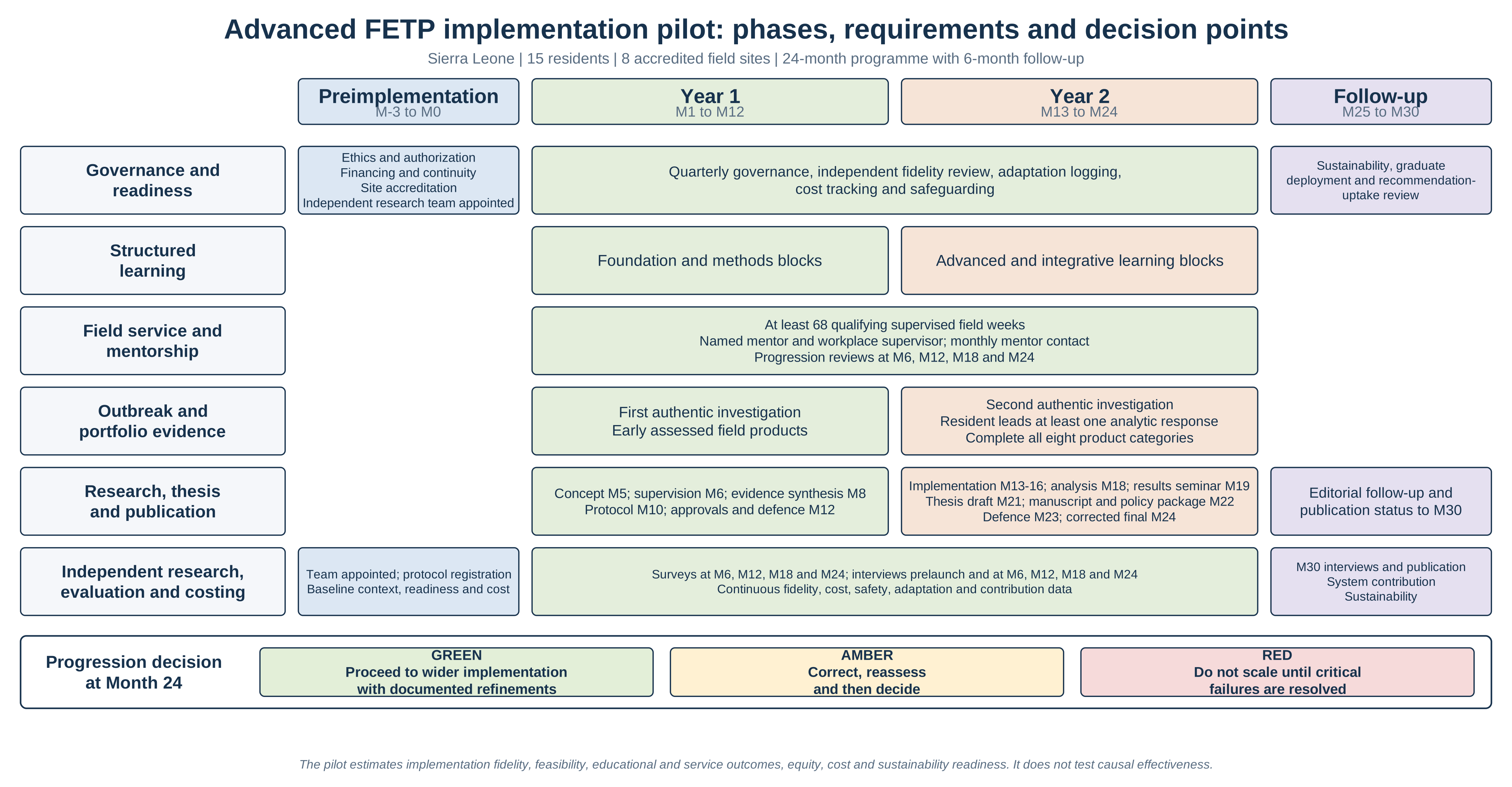
We will use a prospective, single-cohort, longitudinal mixed-methods implementation-pilot design. The study includes preimplementation assessment during Months -3 to 0, programme delivery during Months 1 to 24 and follow-up through Month 30. Process, educational, economic and equity evaluations operate within one protocol. Intervention description follows the Template for Intervention Description and Replication; implementation reporting follows the Standards for Reporting Implementation Studies; mixed-methods and qualitative reporting follow established guidance [30,31,38-41]; Supplementary File 5 holds the checklists. Research starts only after written ethics determination, institutional authorization and prospective public registration. Figure 1 presents the study timeline.
Setting and governance
The NPHA owns the programme and, together with the University of Sierra Leone, the African Field Epidemiology Network, the United States Centers for Disease Control and Prevention and other partners, delivers it across eight national or subnational sites with surveillance, response, laboratory, programme, data, One Health or emergency functions. Each site must pass all critical readiness criteria and score at least 80% of points. A conflict-screened Independent Research and Evaluation Team (IRET) operates outside programme management, teaching, mentorship, supervision, assessment and progression. It includes research, fidelity, quantitative, qualitative, data-management and economic functions and controls consent, research collection, source verification, fidelity scoring, data locks, analysis and reporting. Programme staff supply records and may correct facts, but cannot score fidelity, alter locked results or suppress findings. Separate steering, programme, assessment, research/thesis and safeguarding structures retain programme and safety decisions.
Logic model and conceptual frameworks
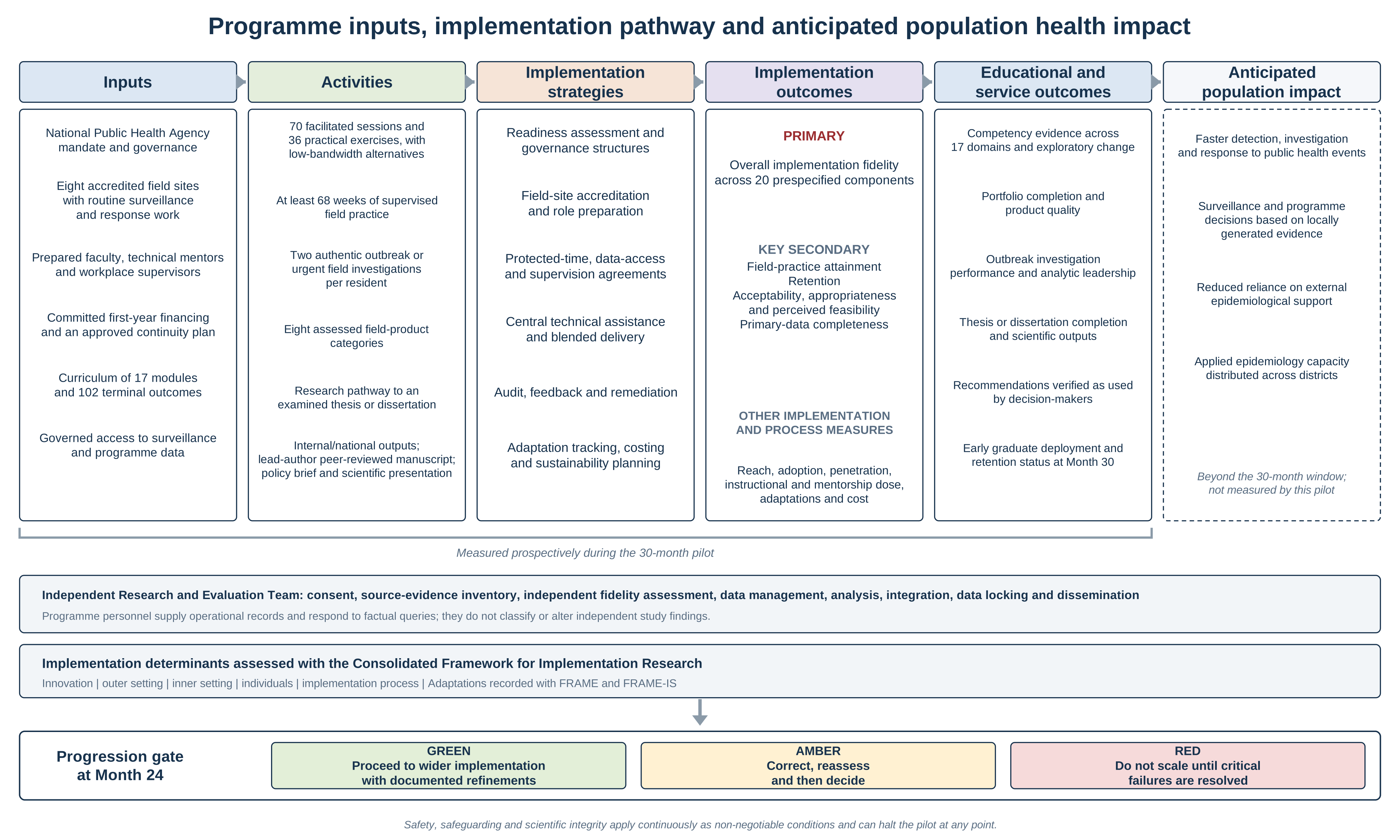
Figure 2 links national need and readiness to activities, implementation strategies, implementation outcomes, educational and service outcomes, anticipated population health impact and the Month-24 progression gate. The pilot measures the pathway through educational and service outcomes; population health impact lies beyond the 30-month evaluation window. Protected time, authentic responsibility, feedback, progressive independence and institutional access support competency evidence.
Intervention, workload and continuity
The intervention is a 24-month Advanced FETP (Table 1), with no less than the 21-month and 68-field-week accreditation minima. It contains 17 modules, 102 terminal outcomes, 70 three-hour facilitated sessions, 36 practical exercises, blended and low-bandwidth alternatives, named technical mentorship, workplace supervision, four formal progression reviews and an authentic competency portfolio. Approximately three quarters of programme time remains field based. Structured sessions support field work rather than compete with it. Supplementary File 1 gives the complete intervention and implementation manual.
Eight field-product (FP) categories define graduation evidence. FP2 requires two distinct authentic outbreak or urgent field-investigation opportunities, with the resident leading at least one analytic response through methods, recommendations, communication and after-action learning. Simulations prepare residents but do not replace authentic evidence. When national outbreak incidence is insufficient, the programme arranges a documented regional deployment, urgent cluster investigation, vaccine-safety event, environmental or occupational event, humanitarian assessment or another qualifying public health event. Opportunity failure and resident-performance failure remain separate.
FP7 requires two accepted or published articles through defined internal or national editorial channels from distinct field products, one independently certified lead-author manuscript submitted to a legitimate peer-reviewed journal, one policy or decision brief and one scientific presentation. The programme controls the internal editorial process but not journal decisions. Peer-reviewed acceptance or publication remains a target, while a complete manuscript that passes independent technical and reporting-checklist review and reaches a legitimate journal satisfies the resident-controlled graduation evidence when external editorial delay persists. Editorial follow-up continues through Month 30 [3,14,17,42].
Research begins in Year 1. Residents identify a service priority by Month 5, confirm supervision and access by Month 6, complete evidence synthesis by Month 8, submit a protocol and analysis plan by Month 10, and complete authorization and protocol defence by Month 12. Implementation, analysis, thesis or dissertation writing and examination occupy Months 13 to 23; corrections end by Month 24. Workload surveys, mentor logs and progression reviews assess protected time, weekly hours, travel, wellbeing and delay. Technical mentors usually supervise no more than four residents. Substitute mentors, specialist referral, alternative placements, offline delivery and approved completion windows protect core functions during mentor loss, site interruption, connectivity failure, emergencies or other disruption.
Implementation strategies and conceptual frameworks
Twelve prespecified strategies cover readiness, governance, field-site accreditation, role preparation, protected-time and access agreements, technical assistance, blended delivery, audit and feedback, remediation, adaptation tracking, costing and sustainability planning. Actors, actions, dose and evidence appear in Supplementary File 1. The Consolidated Framework for Implementation Research (CFIR) organizes determinants; Proctor implementation outcomes distinguish implementation outcomes; the Framework for Reporting Adaptations and Modifications-Enhanced (FRAME) and the Framework for Reporting Adaptations and Modifications to Implementation Strategies (FRAME-IS) record adaptations [26-29,36,37].
Participants, eligibility and follow-up
The planned cohort includes all 15 residents admitted to the first national implementation cohort and distributed across eight sites. Programme eligibility follows transparent national requirements, relevant professional experience, baseline epidemiology and communication capability, employer support, protected time and access to an eligible placement. Diagnostic assessment triggers bridging support rather than automatic exclusion for remediable gaps. The evaluation population includes consenting residents, technical mentors, workplace supervisors, faculty, assessors and programme managers. Decision-makers who receive resident products are purposively sampled for use and contribution verification.
Research participation remains separate from programme participation and employment. Surveys and interviews require informed consent. Routine monitoring data enter research analyses only through the ethics-approved consent, waiver or aggregate route. Refusal does not affect progression, supervision or employment. IRET staff do not teach, supervise, assess or vote on progression. Residents who interrupt or withdraw remain in cohort-flow records and may contribute later voluntary research data only under valid consent and safety arrangements. No patients or community members are recruited, and no identifiable case-level data from resident investigations enter the evaluation dataset.
Sample size and qualitative sampling
The resident denominator of 15 represents the complete first implementation cohort rather than a sample selected for effectiveness testing. The pilot also observes eight sites and repeated evidence from mentors, supervisors, faculty, assessors, managers and decision users, but these sources do not enlarge the resident denominator. No minimum detectable effect governs the design. If 12 of 15 residents meet an outcome, the Wilson 95% confidence interval is approximately 55% to 93%; for 13 of 15, it is approximately 62% to 96%. This precision can reveal large delivery failures or strong performance, but it cannot support stable subgroup comparisons, modest effects or complex adjusted models. Resident-level findings therefore remain descriptive and estimation focused [34,35].
All programme actors are invited to quantitative surveys. Qualitative sampling uses maximum variation by role, site, profession, progression and experience. The anticipated 40 to 65 unique stakeholders include selected longitudinal reinterviews. Information power is judged against question specificity, sample specificity, quality of dialogue, use of established theory and analytic strategy. Sampling ends when additional accounts no longer change the explanatory matrix for the defined questions, while dissenting and negative cases remain visible.
Outcomes, fidelity and progression criteria
Overall implementation fidelity at Month 24 is the primary outcome. Key secondary outcomes are field-practice attainment, retention, acceptability, appropriateness, perceived feasibility and primary-data completeness. Other secondary outcomes cover delivery dose, portfolio and outbreak evidence, research and publication, competency, assessor agreement, recommendation uptake, system contribution, cost, equity and sustainability. Safety, safeguarding, privacy, assessment integrity and scientific integrity remain non-compensatory conditions rather than graded outcomes. Supplementary Files 2 and 7 define outcomes, instruments and fidelity scoring.
Implementation fidelity means the extent to which the intervention and its implementation strategies are delivered, received and documented as prespecified while approved adaptations preserve core functions [33,43]. The 20-component framework examines adherence/content, dose, reach, quality, responsiveness and fidelity-preserving adaptation. Each quarter, trained Independent Research and Evaluation Team (IRET) reviewers use Instrument I07 to extract prespecified numerators, denominators and evidence identifiers from programme records. A second reviewer independently verifies all 20 components; unresolved differences go to a third adjudicator. Status options are met, partial, not met, unknown, disputed, not due or not applicable. Met scores 1; partial, not met, unknown and unresolved disputed status score 0 in the primary analysis. Not-due items are excluded, and not-applicable status requires written IRET approval. Programme staff receive a five-working-day factual-correction window before the IRET locks and signs the dataset. The secure tracker records sources, reviewers, dates, adaptations, data-quality issues and corrective actions. Components receive no numerical weight; critical status operates as a separate non-compensatory gate. The field-practice fidelity component measures whether the programme provides accredited placement, protected time, qualifying assignments, named supervision and a verified recording system; the separate resident-level outcome measures completion of 68 weeks.
Green, amber and red criteria are prospective pilot decision rules informed by implementation-fidelity literature, accreditation requirements, scale interpretation and structured expert consensus; they are not empirically validated universal cut-points. Green permits wider implementation with documented refinements; amber requires corrective action and reassessment; red blocks scale-up until critical failure and its system cause resolve. The 68-week field minimum follows Advanced FETP accreditation. Eighty-percent programme thresholds require delivery to most of the complete first cohort, a mean of 4/5 represents affirmative stakeholder agreement, and 90% completeness supports dependable decisions. Safety and integrity remain non-compensatory [4,28,33-35]. Table 2 states the basis for each rule.
Data sources, tools and collection
Programme records supply enrolment, field weeks, sessions, exercises, mentor contacts, progression reviews, portfolio evidence, research milestones, editorial records, management responses and costs. The applied knowledge and reasoning assessment is blueprint based rather than a single unvalidated graduation examination. Its domains derive from the 102 terminal outcomes and cover surveillance, outbreak investigation, study and evaluation methods, analytics, GIS and informatics, laboratory and One Health practice, ethics and equity, leadership, communication and teaching. Two equivalent scenario forms undergo expert review, cognitive testing with non-cohort users and pilot administration before launch. Scores support learning diagnosis and change estimates; authentic workplace evidence remains necessary.
Field products use a common four-point rubric, product-specific critical criteria, direct observation, source records, resident-contribution statements and oral defence. All theses or dissertations and at least 25% of other high-stakes products receive independent double rating after assessor calibration. The validity argument examines blueprint coverage, task authenticity, scoring, generalization, extrapolation to practice and consequences of decisions [44-46].
The IRET administers the Acceptability of Intervention Measure (AIM), Intervention Appropriateness Measure (IAM) and Feasibility of Intervention Measure (FIM) at Months 6, 12, 18 and 24 [28]. It conducts CFIR-informed interviews before launch and at Months 6, 12, 18, 24 and 30, plus focus groups at Months 12 and 24. Interviewers train in the protocol, ethics, power dynamics, distress, confidentiality and reflexivity and hold no supervisory, assessment or progression role. Field notes and reflexive memos record relationships and assumptions. Documentary evidence verifies recommendation uptake and system contribution; continuous logs capture safety, privacy, coercion, retaliation and integrity events; resource use is recorded monthly.
Data quality and instrument control
Before launch, the IRET pilots data flows with non-cohort users, tests skip logic and identifiers, completes the data dictionary and schedule in Supplementary File 6, and verifies instrument versions, owners, scoring and access. Quarterly audits assess completeness, range, chronology, duplication, cross-record consistency and source evidence. Corrections preserve an audit trail and locked datasets remain read only. Translation uses forward translation, independent review and cognitive testing where needed. Identifiable or confidential data do not enter unapproved digital or automated systems [22,47].
Quantitative and fidelity analysis
Analysis follows the versioned plans in Supplementary Files 3 and 8 and starts after an IRET data lock. Resident- and site-level proportions use counts, exact denominators and Wilson 95% confidence intervals. Continuous and ordinal measures use distributions, means or medians with uncertainty appropriate to scale. Interruptions, withdrawals and unknowns remain visible; programme evidence is not imputed to improve feasibility. Survey nonresponse is reported by role and wave. Multiple imputation is restricted to exploratory models when assumptions and disclosure controls permit.
For fidelity, the IRET reports each component’s numerator, denominator, status, evidence quality and quarterly trajectory, plus the exact Month-24 score and every critical-component result. The 20 components form the complete prespecified set, so the aggregate fidelity percentage receives no sampling confidence interval; Wilson intervals apply only to resident- or site-level proportions. The primary analysis treats partial, unknown and unresolved disputed status as not met. Sensitivity analyses compare unknown or disputed evidence coded as failure versus excluded; strict Month-24 timing versus approved completion windows; original-form delivery versus approved fidelity-preserving adaptation; and all acceptable evidence versus the highest evidence tier. Reviewer agreement uses exact agreement and, when variation permits, kappa. Joint displays relate fidelity to CFIR determinants, adaptations, cost, equity, safety and qualitative explanations.
Repeated resident measures begin with paired displays and observed change. A 10,000-resample resident-level bootstrap is used only when resampling is stable; otherwise ranges and observed changes are reported. Exploratory linear or ordinal mixed models run only when variation, cell size and convergence support them. Product-rating agreement uses confusion matrices and exact agreement first; weighted kappa and absolute-agreement intraclass correlation coefficients are reported only when estimable. Site effects and equity comparisons remain descriptive, and cells smaller than five are suppressed.
Qualitative, mixed-methods and economic analysis
Recordings are transcribed, de-identified and checked against audio. The Framework Method uses a matrix informed by CFIR, implementation outcomes, mechanisms, adaptations, equity, burden, safety and sustainability, while open coding permits new concepts [27,38]. At least 20% of transcripts per major wave receive independent coding. Analysts refine the codebook, preserve dissent, examine negative cases and write reflexive memos. Longitudinal engagement, triangulation and bounded stakeholder interpretation support credibility; context descriptions support transferability; a versioned audit trail supports dependability; reflexive records and independent review support confirmability [41].
Mixed-methods integration occurs at design, sampling, analysis and interpretation. Joint displays align quantitative results with qualitative explanations, adaptations, cost, equity and site context. Relationships are classified as convergence, complementarity, dissonance or silence. Dissonance triggers source review or bounded additional analysis rather than removal [39,40].
The provider-perspective economic analysis uses time-driven activity-based costing [48]. Costs are reported in constant 2026 Sierra Leonean leones and converted to United States dollars with the mean official exchange rate for the costing period. Official consumer-price indices adjust expenditure from other years. Loaded labour includes salary and approved benefits; in-kind resources receive documented opportunity-cost values; common overhead follows recorded time or use. Computers use a three-year base life and other durable equipment five years, with straight-line annualization and a 3% discount rate when timing spans more than one year. Research-only evaluation costs remain separate. Sensitivity analyses vary staff time, in-kind values, overhead, useful life, discount rate, cohort size, travel and publication charges.
Ethics, safeguarding and data governance
The protocol is submitted to the Sierra Leone Ethics and Scientific Review Committee (SLESRC) and NPHA before recruitment. Resident field projects follow their own public-health-practice, programme-evaluation or research determinations. Consent, research independence, role conflicts, workload, publication expectations, field safety, non-retaliation, grievance, appeals and incident response appear in Supplementary File 4 and follow national and international guidance [21-23,42,47,49].
Research records use coded identifiers, role-based access, encryption in transit and at rest, approved devices and secure backup. The linkage file remains separate. Direct identifiers are removed from analytic datasets; qualitative extracts receive deductive-disclosure review. Data are retained for seven years after final publication unless national requirements mandate longer retention. De-identified metadata, instruments, code and aggregate outputs are shared where ethics, law, confidentiality and third-party rights permit, using FAIR principles [50].
Oversight, adaptations, conflicts and stopping rules
The steering committee reviews quarterly programme dashboards, while the IRET retains authority over research data, scoring and analysis. Faculty may hold more than one programme role, but no person may create evidence, mentor it and make the sole high-stakes decision. Conflict declarations, independent ratings, separate committees, alternative assessors, appeals and exclusion of IRET personnel from progression voting protect decisions.
The independent safeguarding function can recommend suspension after an unresolved serious safety event, material privacy breach, coercion or retaliation, fabricated evidence, loss of core financing or inability to provide minimum supervision. Continuity plans assign substitute mentors, alternate sites, low-bandwidth delivery, secure offline capture, completion windows and escalation routes. Political or security disruption, epidemics, financing interruption or site loss may trigger documented adaptation, temporary suspension or formal amendment.
Necessary adaptations can occur, but the team records timing, decision-maker, rationale, level, relation to core function, equity and anticipated effect. A change to the primary outcome, progression criterion, consent, material risk or principal analysis requires a dated protocol amendment before relevant data are examined. Emergency action first protects people or data, followed by notification, documentation and continuation review.
Dissemination and protocol status
The IRET leads analysis, interpretation and dissemination through quarterly dashboards, Month-12 and Month-24 reports, and a Month-30 follow-up. Residents and sites receive plain-language or confidential feedback before public release; NPHA and national partners receive policy and decision products. Programme and institutional reviewers receive 15 working days to identify factual errors, confidentiality risks, legal restrictions and third-party rights. They cannot alter locked analyses, remove unfavorable findings, require a preferred classification or prevent scientific submission. The primary mixed-methods report is submitted regardless of progression classification. Protocol materials, amendments, code and permitted outputs enter a stable repository. Supplementary File 9 specifies each audience, product, timing, responsibility and release record.
This protocol moves Advanced FETP evaluation upstream. It tests whether a nationally owned programme can deliver field exposure, authentic outbreak leadership, a Year-2 research and thesis pathway, publication outputs, fair portfolio assessment and service value under real institutional conditions. The design joins implementation, educational, service, cost, equity and safety evidence rather than using attendance or satisfaction as its main endpoint.
Strengths include a single primary outcome, prospective definitions, independent fidelity measurement, unweighted components with non-compensatory critical standards, repeated stakeholder data, explicit opportunity tracking, assessment-quality analysis, adaptation records, costing and prespecified scale-up criteria. Research consent, scoring, analysis and dissemination remain separate from programme progression decisions.
The programme remains demanding and depends on protected time, mentor capacity, authentic field opportunity, data access, financing and continuity during disruption. Selection of supportive residents and sites may yield better feasibility than settings without comparable infrastructure. The single cohort, small denominator and absence of a comparator prevent causal inference, precise subgroups and stable use of some exploratory statistics. Independent research functions reduce, but cannot remove, reporting effects created by close institutional relationships. Thirty months cannot establish long-term workforce retention. Comparative or stepped implementation should follow only after the pilot meets critical safety and feasibility criteria.
The protocol provides an auditable route to decide whether Sierra Leone should refine, pause or scale a competency-based Advanced FETP. It keeps field service central and makes implementation fidelity, outbreak opportunity, thesis or dissertation completion, publication, workload, safety, cost and system use visible. The pilot estimates readiness and contribution rather than causal effectiveness.
What is already known about the topic
What this study adds
The authors thank the residents, faculty, technical mentors, workplace supervisors and prospective field sites of the national Advanced Field Epidemiology Training Programme, and the national public health agency, ministry, university and partner institutions that prepared the implementation pilot.
List abbreviations
AIM: Acceptability of Intervention Measure
CFIR: Consolidated Framework for Implementation Research
FETP: Field Epidemiology Training Programme
FIM: Feasibility of Intervention Measure
FP: Field product
FRAME: Framework for Reporting Adaptations and Modifications to Evidence-based interventions
FRAME-IS: Framework for Reporting Adaptations and Modifications to Evidence-based Implementation Strategies
IAM: Intervention Appropriateness Measure
IRET: Independent Research and Evaluation Team
NPHA: National Public Health Agency
SLESRC: Sierra Leone Ethics and Scientific Review Committee
Conceptualization: Eric Nzirakaindi Ikoona, Lucy Namulemo, Mohamed Alex Vandi, Foday Sahr
Data curation: Eric Nzirakaindi Ikoona, Lucy Namulemo, Godfrey Lumbuye Kayita, Rebecca Sakwa, Mohamed Alex Vandi, Foday Sahr
Formal analysis: Eric Nzirakaindi Ikoona, Lucy Namulemo, Godfrey Lumbuye Kayita, Rebecca Sakwa, Mohamed Alex Vandi, Foday Sahr
Funding acquisition: Eric Nzirakaindi Ikoona, Lucy Namulemo, Foday Sahr
Investigation: Eric Nzirakaindi Ikoona, Lucy Namulemo, Rebecca Sakwa, Foday Sahr
Methodology: Eric Nzirakaindi Ikoona, Lucy Namulemo, Mohamed Alex Vandi
Project administration: Eric Nzirakaindi Ikoona, Lucy Namulemo
Resources: Eric Nzirakaindi Ikoona, Lucy Namulemo, Mohamed Alex Vandi, Foday Sahr
Software: Eric Nzirakaindi Ikoona, Lucy Namulemo
Supervision: Eric Nzirakaindi Ikoona, Lucy Namulemo, Rebecca Sakwa
Validation: Eric Nzirakaindi Ikoona, Lucy Namulemo, Godfrey Lumbuye Kayita,
Visualization: Eric Nzirakaindi Ikoona, Lucy Namulemo, Godfrey Lumbuye Kayita, Foday Sahr
Writing – original draft: Eric Nzirakaindi Ikoona,
Writing – review & editing: Eric Nzirakaindi Ikoona, Lucy Namulemo, Godfrey Lumbuye Kayita, Rebecca Sakwa, Mohamed Alex Vandi, Foday Sahr
Supplementary File
Supplementary File 1 (150 downloads)
Supplementary File 2 (121 downloads)
Supplementary File 3 (125 downloads)
Supplementary File 4 (131 downloads)
Supplementary File 5 (128 downloads)
Supplementary File 6 (100 downloads)
Supplementary File 7 (117 downloads)
| Component | Specification | Accountability | Timing |
|---|---|---|---|
| Programme duration and field intensity | Twenty-four months; no less than 21 months and 68 weeks of qualifying supervised field practice; target approximately 75% field service. | Programme director; field-site supervisors | Month 0-24 |
| Competency-based instruction | Seventeen modules, 102 terminal outcomes, 70 facilitated three-hour sessions, 36 practical exercises and low-bandwidth alternatives. | Core and specialist faculty | Month 1-22 |
| Mentorship and workplace supervision | Named technical mentor and workplace supervisor; usual mentor caseload no more than four residents; monthly technical contact, quarterly review and contingency cover. | Mentors; workplace supervisors; programme faculty | Month 0-24 |
| Authentic portfolio assessment | Eight field-product categories, common four-point rubrics, direct observation, resident-ownership evidence, oral defence and non-compensatory critical criteria. | Calibrated assessors; assessment committee | Month 1-24 |
| Outbreak investigation deliverable | Two authentic outbreak or urgent field-investigation opportunities; resident leads at least one analytic response; corrective regional or event placement when opportunity is insufficient. | Resident; outbreak lead; mentor; assessor | Opportunity-dependent, Month 3-23 |
| Research and thesis/dissertation | Concept and supervision in Year 1; approved protocol and governance route by Month 12; implementation, analysis, writing, examination and defence occupy most of Year 2. | Resident; research supervisor; thesis committee | Month 5-24 |
| Publication and dissemination | Two accepted or published internal or national-channel articles; one certified and submitted lead-author peer-reviewed manuscript; one policy brief; one scientific presentation. | Resident; publication mentor; editorial focal point | Month 8-24; follow-up to Month 30 |
| Progression, remediation and graduation | Formal reviews at Months 6, 12, 18 and 24; workload and opportunity review; documented recovery plans; final panel decision based on complete evidence, integrity and resident ownership. | Progression and graduation committee | Months 6, 12, 18 and 24 |
Evidence sources and the full implementation-strategy specification appear in Supplementary File 1.
| Outcome and role | Timing | Operational measure | Green threshold | Basis for threshold |
|---|---|---|---|---|
| Overall implementation fidelity – primary | Quarterly; Month 24 | Due and applicable components independently verified as met divided by due and applicable components; all component and critical-component results reported | At least 80% and every critical component met | Prospective pilot decision rule informed by fidelity literature and structured expert consensus; every critical function must pass. It is not a universal cut-point. |
| Field-practice attainment – key secondary | Monthly; Month 24 | Residents completing at least 68 qualifying weeks | At least 80% | The 68-week minimum follows Advanced FETP accreditation; the 80% rule requires attainment by most of the complete first cohort and remains a prospective pilot rule. |
| Retention – key secondary | Months 12 and 24 | Residents active among residents enrolled | At least 80% at Month 24 | The rule requires retention of most of the complete first cohort and flags loss of one fifth or more for correction or non-progression. |
| Acceptability, appropriateness and perceived feasibility – key secondary | Months 6, 12, 18 and 24 | AIM, IAM and FIM means by stakeholder group plus qualitative findings | Each mean at least 4/5 and no major unresolved concern | A mean of 4 on the five-point measures represents affirmative agreement; unresolved qualitative concerns prevent a green classification. |
| Primary-data completeness – key secondary | Quarterly | Required fields available divided by fields expected | At least 90% | Repeated progression decisions require dependable source records; 90% permits limited recoverable missingness while keeping the evidence base interpretable. |
| Safety, safeguarding and integrity – non-negotiable condition | Continuous | Serious events, response, resolution and corrective action | No unresolved serious event | Ethical, privacy and scientific-integrity failures cannot be compensated by performance in another domain. |
Amber and red criteria, secondary outcomes and exact denominator rules appear in Supplementary Files 2 and 3.